Roberto killed the engine two blocks from his house and sat in the dark with both hands locked around the steering wheel.
The city was warm that evening, but his palms felt cold.
His chest had been tight for days, ever since Doña Gertrudis leaned over the hedge in her silk robe and delivered suspicion in the voice of a woman pretending to be helpful.
She had told him she heard strange noises coming from his kitchen while he was away.
Loud music.
Laughter.
Movement.
The kind of behavior, she implied, that did not belong near a child like Pedrito.
A child like Pedrito.
Roberto hated that phrase, yet he had started thinking with it.
The specialists had spoken in percentages and limitations and permanent conditions, but grief had translated everything into one brutal idea: fragile.
Untouchable.
At risk.
The medical report said his son had irreversible partial paralysis in both legs.
Roberto had turned that into a whole philosophy of fatherhood.
Protect him.
Limit everything.
Avoid hope, because hope makes fools of rich men and broken families.
So he had lied.
He had told the staff he was leaving for a three-day conference overseas.
He had kissed Pedrito on the forehead that morning while Elena held him and smiled in that infuriating, gentle way of hers.
Then Roberto had taken a car to a downtown hotel, spent one night pacing a suite he never slept in, and waited for the moment he could come home unseen.
He wanted proof.
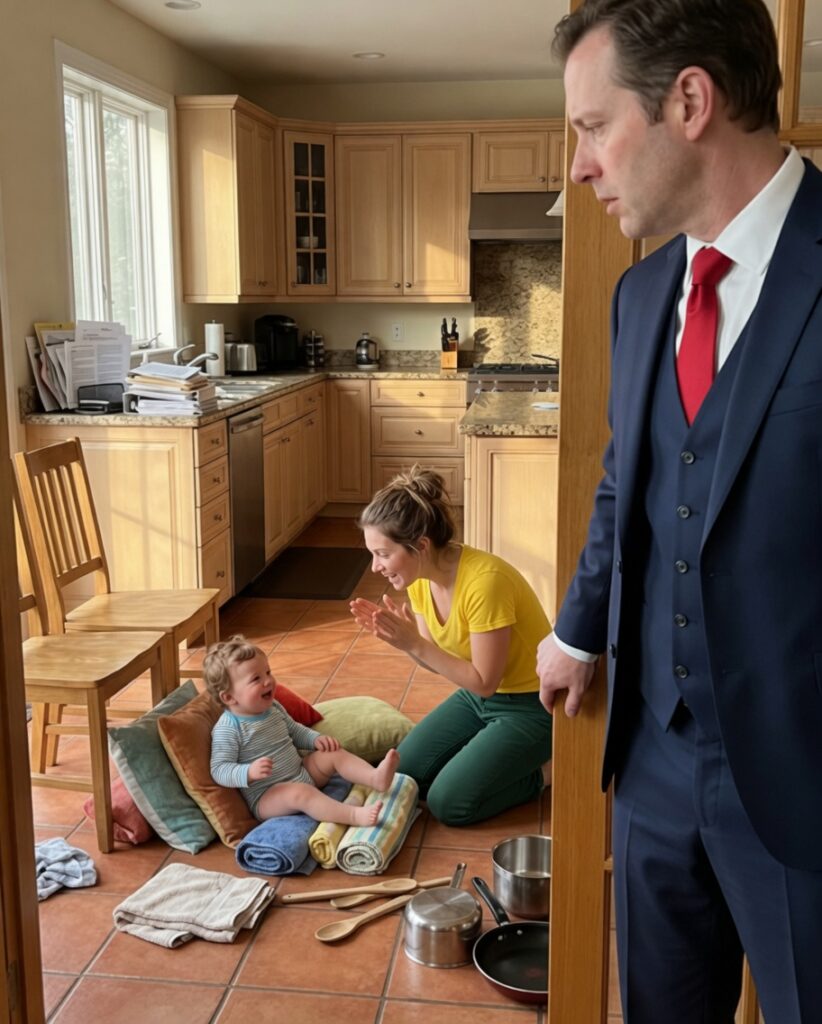
He wanted to catch Elena relaxed, careless, unguarded.
He wanted to confirm the suspicion he already felt guilty for carrying.
He had hired her only because no one else would take the job.
Every licensed nurse the agency offered had declined after learning the address or the salary or the emotional climate of the house.
Roberto’s reputation had become its own wall.
Too demanding.
Too controlling.
Impossible to please.
Difficult after the death of his wife.
Elena had arrived with no polished hospital language and no expensive references, only kind eyes, quick hands, and a certainty that made Roberto instantly distrust her.
The house had no room for certainty.
Not after Lucía.
Lucía had been the warmth of the place.
She had chosen the yellow curtains in the breakfast room and the herb pots in the kitchen windows and the little ceramic bird that still sat on the sill above the sink.
When she died from complications after an infection that should have been caught earlier, the house did not become quiet all at once.
It became quiet by layers.
The music stopped first.
Then the dinners.
Then the guests.
Then the flowers.
Finally even the staff learned to move like shadows.
Only Pedrito remained, and even he seemed to disappear behind schedules, medications, orthopedic consultations, and hushed conversations.
Roberto loved his son with ferocious sincerity, but the love came wrapped in fear so tight that everything around the child began to feel forbidden.
No lifting him too high.
No bright noise.
No unnecessary stimulation.
No experiments.
No disappointment.
When Elena suggested tummy time beyond what the therapists had assigned, Roberto shut her down.
When she asked whether Pedrito liked music, he told her music was irrelevant.
When she asked if she could move the child into the kitchen inthe morning because the natural light seemed to wake him up, Roberto said the nursery was designed for his needs and there was no reason to improvise.
Elena would nod, apologize, and then look at Pedrito with an expression Roberto could not stand.
It was not pity.
It was expectation.
Now, standing inside the shadowed hallway with his shoes finally still, Roberto heard his son laugh.
The sound did not resemble anything he had known in that house.
It was bright and bursting and alive.
It came again, followed by Elena’s voice, breathless with encouragement.
He reached the kitchen doorway and saw the entire scene at once: the towels folded along the floor, the chairs set like landmarks, the pillows placed for safety, the wooden spoons in Elena’s hands as she tapped out a rhythm against an upside-down pot.
Pedrito sat supported in the middle of the makeshift course, both hands planted on a cushion, his face red with effort and joy.
Elena clapped.
Pedrito kicked.
The movement was small, but it was deliberate.
Again, Elena said softly, like she was speaking to a miracle she did not want to scare away.
Pedrito squealed and tried once more.
One leg dragged.
The other trembled and lifted.
His whole body pitched forward.
Elena caught him before he could tip, steadied him, kissed the top of his hair, and laughed with him.
Roberto took one step into the room.
Elena looked up.
For a second her face lost all color.
She rose too quickly, wiping her hands on her pants.
Roberto saw fear there, but he also saw something else that unnerved him even more: she did not look guilty.
She looked interrupted.
You came back early, she said.
The sentence was simple, but it cut straight through him.
No apology.
No panic.
No fumbling excuse.
What is this, Roberto asked.
His voice came out rougher than he intended.
Pedrito turned toward the sound, and when he saw his father he gave a happy cry instead of shrinking from the unfamiliar tone.
That alone stunned Roberto into silence.
Usually sudden noise made the child fold inward.
Elena glanced at the papers on the counter, then back at Roberto.
Stimulation work, she said.
Movement play.
Balance practice.
Rhythm cues.
I was going to talk to you tonight.
You did this without my permission.
I did not do anything unsafe.
That answer, calm and direct, should have angered him more.
Instead it left him feeling clumsy.
He looked down at his son, who was batting one hand against a cushion and making delighted sounds as though the entire room had become his private discovery.
Roberto had seen therapists move Pedrito through exercises before.
He had seen charts and braces and careful clinical motions.
He had never seen him look like this.
Why the kitchen, he asked.
Because he loves the light in here.
Because the floor is wide.
Because he responds to echo and rhythm.
Because the same four walls in the nursery were teaching him nothing except how to wait.
The last sentence landed like a slap, though Elena’s tone remained gentle.
Roberto stared at the papers on the counter.
There were articles printed from medical journals, activity sheets, a handwritten schedule of feedings, naps, sensory responses, and attempts at leg activation.
The notes were detailed, almost obsessively so.
Pedrito laughed more when music was low and percussive.
Better trunk control after morning sunlight.
Increased engagement when father absent from room.
That last note made Roberto’s stomach twist.
You kept records, he said.
Every day.
Why.
Because if I was wrong, I wanted evidence to stop.
And if I was right, I wanted evidence strong enough that no one could dismiss him again.
Roberto looked at her then, truly looked at her.
She was younger than he had first assumed, maybe twenty-seven.
Tired.
Strong.
There were shadows beneath her eyes that had not come from a restful job.
On her wrist he noticed a faded elastic band and a tiny scar.
Human details.
Lived details.
Not the outline of a careless employee he had built in his head.
Who taught you this?
My cousin Mateo, Elena said.
He was born with cerebral palsy.
Doctors told my aunt a lot of things that sounded final.
Some of them were true.
Some of them were lazy.
I grew up watching her learn the difference.
She crouched near Pedrito again, not taking her attention away from the child for long.
She placed a spoon in his hand and tapped the pot lightly so he could answer.
He did.
His giggle returned immediately.
I am not claiming miracles, Elena said.
I am saying your son is awake inside himself, and everyone around him has been so afraid of hurting him that they forgot to invite him into the world.
There was no cruelty in the sentence, which made it impossible to reject.
Roberto wanted to defend himself.
He wanted to cite every specialist, every scan, every grim consultation room where experts spoke with practiced compassion.
He wanted to say that love had driven every decision he made.
But the truth rose ahead of the defense: fear had driven most of them.
He had loved Pedrito, yes.
He had also embalmed the boy in caution.
I trusted doctors, he said finally.
So did I, Elena replied.
Good doctors matter.
But a diagnosis is a map, not a prison.
Pedrito slapped the spoon again and laughed at the noise he created.
Elena laughed with him, then tipped her head toward Roberto.
Come here, she said.
He didn’t move.
He isn’t made of glass, she said more softly.
Come here and see.
Roberto set his briefcase down by the door.
The sound seemed too loud in the strange tenderness of the room.
He removed his jacket without deciding to and knelt on the kitchen floor, ruining the crease of his trousers against a smudge of flour he had not noticed on the tile.
Pedrito stared at him with wide dark eyes.
For a terrifying instant, Roberto thought his son would become solemn again.
Instead the boy kicked once, unevenly but with intention, and leaned toward him.
Elena guided Roberto’s hands under Pedrito’s ribs.
Not gripping, she murmured.
Supporting.
Let him search for the movement.
Don’t solve it for him.
Roberto did as he was told.
Pedrito pushed down through his arms.
His torso wobbled.
His face scrunched with effort.
Elena tapped the pot twice.
Pedrito answered with a tiny, determined lift of his leg.
Roberto felt it.
Not as an abstract possibility in a report, but as warm, trembling effort inside his own hands.
A sound broke from his throat before he knew what it was.
Something halfway between a laugh and a sob.
There, Elena whispered.
He hears you.
Stay there.
They stayed like that for nearly twenty minutes.
Pedrito worked until his eyelids drooped and his movements grew soft.
Elena ended the session immediately, kissing his forehead and settling him against her shoulder with practiced care.
Overstimulation, she explained, was real.
So was progress.
The point was never to force.
It was to invite, repeat, and believe.
Roberto stood by the sink while she cleaned the spoons and folded the towels.
The kitchen window had gone gold with late afternoon light.
On the sill the little ceramic bird Lucía had bought from a street market still watched the room with its chipped blue wing.
I was going to fire you, Roberto said.
Elena did not turn around.
I guessed.
I came home to catch you doing something wrong.
Now she did turn, drying her hands on a towel.
There was no triumph in her face, only fatigue and an odd kind of mercy.
Most people don’t come home expecting to find hope, she said.
That night Roberto did something he had not done since Lucía died: he sat at the kitchen table after dinner instead of sealing himself in the study.
He read every page of Elena’s notes.
The handwriting was compact, practical, and fierce.
She had tracked not just physical responses but moods, sounds, eye contact, sleep quality, and the way Pedrito’s body changed with music.
In the margin of one article she had written, Never confuse delayed with absent.
At two in the morning Roberto called the pediatric neurologist who had delivered the harshest prognosis and demanded the earliest possible appointment.
The doctor could not see them until the next afternoon.
Roberto nearly bought the clinic before sunrise out of pure impatience.
Instead he carried Pedrito to breakfast himself while Elena watched from the doorway, careful not to intrude.
Pedrito reached for the spoon on the table and banged it twice against the tray of his chair.
Roberto laughed before he could stop himself.
The neurologist was an older woman with a severe bun, intelligent eyes, and the kind of confidence Roberto usually trusted.
He arrived ready for either vindication or fury.
Instead he received something far more uncomfortable: correction.
After watching videos Elena had taken, reviewing the home notes, and examining Pedrito again, the doctor leaned back in her chair and folded her hands.
The diagnosis remains serious, she said.
But serious does not mean static.
Your son has more potential for adaptive strength than he has been allowed to explore.
Allowed.
The word stung worse than irreversible ever had.
The doctor went on.
She explained neuroplasticity in plain language, the importance of stimulation, the risk of underestimating children whose bodies developed differently.
She did not promise a cure.
She did not sell fantasy.
She said progress would be uneven, expensive, demanding, and uncertain.
But she also said the home activities Elena had designed were thoughtful, safe, and unusually perceptive.
Whoever started this with him knew how to observe, she said.
When they returned home, Roberto found Elena in the sunroom sorting laundry while Pedrito napped beside her.
He stood there longer than necessary, humbled inside his own hands.
A sound broke from his throat before he knew what it was.
Something halfway between a laugh and a sob.
There, Elena whispered.
He hears you.
Stay there.
They stayed like that for nearly twenty minutes.
Pedrito worked until his eyelids drooped and his movements grew soft.
Elena ended the session immediately, kissing his forehead and settling him against her shoulder with practiced care.
Overstimulation, she explained, was real.
So was progress.
The point was never to force.
It was to invite, repeat, and believe.
Roberto stood by the sink while she cleaned the spoons and folded the towels.
The kitchen window had gone gold with late afternoon light.
On the sill the little ceramic bird Lucía had bought from a street market still watched the room with its chipped blue wing.
I was going to fire you, Roberto said.
Elena did not turn around.
I guessed.
I came home to catch you doing something wrong.
Now she did turn, drying her hands on a towel.
There was no triumph in her face, only fatigue and an odd kind of mercy.
Most people don’t come home expecting to find hope, she said.
That night Roberto did something he had not done since Lucía died: he sat at the kitchen table after dinner instead of sealing himself in the study.
He read every page of Elena’s notes.
The handwriting was compact, practical, and fierce.
She had tracked not just physical responses but moods, sounds, eye contact, sleep quality, and the way Pedrito’s body changed with music.
In the margin of one article she had written, Never confuse delayed with absent.
At two in the morning Roberto called the pediatric neurologist who had delivered the harshest prognosis and demanded the earliest possible appointment.
The doctor could not see them until the next afternoon.
Roberto nearly bought the clinic before sunrise out of pure impatience.
Instead he carried Pedrito to breakfast himself while Elena watched from the doorway, careful not to intrude.
Pedrito reached for the spoon on the table and banged it twice against the tray of his chair.
Roberto laughed before he could stop himself.
The neurologist was an older woman with a severe bun, intelligent eyes, and the kind of confidence Roberto usually trusted.
He arrived ready for either vindication or fury.
Instead he received something far more uncomfortable: correction.
After watching videos Elena had taken, reviewing the home notes, and examining Pedrito again, the doctor leaned back in her chair and folded her hands.
The diagnosis remains serious, she said.
But serious does not mean static.
Your son has more potential for adaptive strength than he has been allowed to explore.
Allowed.
The word stung worse than irreversible ever had.
The doctor went on.
She explained neuroplasticity in plain language, the importance of stimulation, the risk of underestimating children whose bodies developed differently.
She did not promise a cure.
She did not sell fantasy.
She said progress would be uneven, expensive, demanding, and uncertain.
But she also said the home activities Elena had designed were thoughtful, safe, and unusually perceptive.
Whoever started this with him knew how to observe, she said.
When they returned home, Roberto found Elena in the sunroom sorting laundry while Pedrito napped beside her.
He stood there longer than necessary, humbled inside his own hands.
A sound broke from his throat before he knew what it was.
Something halfway between a laugh and a sob.
There, Elena whispered.
He hears you.
Stay there.
They stayed like that for nearly twenty minutes.
Pedrito worked until his eyelids drooped and his movements grew soft.
Elena ended the session immediately, kissing his forehead and settling him against her shoulder with practiced care.
Overstimulation, she explained, was real.
So was progress.
The point was never to force.
It was to invite, repeat, and believe.
Roberto stood by the sink while she cleaned the spoons and folded the towels.
The kitchen window had gone gold with late afternoon light.
On the sill the little ceramic bird Lucía had bought from a street market still watched the room with its chipped blue wing.
I was going to fire you, Roberto said.
Elena did not turn around.
I guessed.
I came home to catch you doing something wrong.
Now she did turn, drying her hands on a towel.
There was no triumph in her face, only fatigue and an odd kind of mercy.
Most people don’t come home expecting to find hope, she said.
That night Roberto did something he had not done since Lucía died: he sat at the kitchen table after dinner instead of sealing himself in the study.
He read every page of Elena’s notes.
The handwriting was compact, practical, and fierce.
She had tracked not just physical responses but moods, sounds, eye contact, sleep quality, and the way Pedrito’s body changed with music.
In the margin of one article she had written, Never confuse delayed with absent.
At two in the morning Roberto called the pediatric neurologist who had delivered the harshest prognosis and demanded the earliest possible appointment.
The doctor could not see them until the next afternoon.
Roberto nearly bought the clinic before sunrise out of pure impatience.
Instead he carried Pedrito to breakfast himself while Elena watched from the doorway, careful not to intrude.
Pedrito reached for the spoon on the table and banged it twice against the tray of his chair.
Roberto laughed before he could stop himself.
The neurologist was an older woman with a severe bun, intelligent eyes, and the kind of confidence Roberto usually trusted.
He arrived ready for either vindication or fury.
Instead he received something far more uncomfortable: correction.
After watching videos Elena had taken, reviewing the home notes, and examining Pedrito again, the doctor leaned back in her chair and folded her hands.
The diagnosis remains serious, she said.
But serious does not mean static.
Your son has more potential for adaptive strength than he has been allowed to explore.
Allowed.
The word stung worse than irreversible ever had.
The doctor went on.
She explained neuroplasticity in plain language, the importance of stimulation, the risk of underestimating children whose bodies developed differently.
She did not promise a cure.
She did not sell fantasy.
She said progress would be uneven, expensive, demanding, and uncertain.
But she also said the home activities Elena had designed were thoughtful, safe, and unusually perceptive.
Whoever started this with him knew how to observe, she said.
When they returned home, Roberto found Elena in the sunroom sorting laundry while Pedrito napped beside her.
He stood there longer than necessary, humbled inside his own hands.
A sound broke from his throat before he knew what it was.
Something halfway between a laugh and a sob.
There, Elena whispered.
He hears you.
Stay there.
They stayed like that for nearly twenty minutes.
Pedrito worked until his eyelids drooped and his movements grew soft.
Elena ended the session immediately, kissing his forehead and settling him against her shoulder with practiced care.
Overstimulation, she explained, was real.
So was progress.
The point was never to force.
It was to invite, repeat, and believe.
Roberto stood by the sink while she cleaned the spoons and folded the towels.
The kitchen window had gone gold with late afternoon light.
On the sill the little ceramic bird Lucía had bought from a street market still watched the room with its chipped blue wing.
I was going to fire you, Roberto said.
Elena did not turn around.
I guessed.
I came home to catch you doing something wrong.
Now she did turn, drying her hands on a towel.
There was no triumph in her face, only fatigue and an odd kind of mercy.
Most people don’t come home expecting to find hope, she said.
That night Roberto did something he had not done since Lucía died: he sat at the kitchen table after dinner instead of sealing himself in the study.
He read every page of Elena’s notes.
The handwriting was compact, practical, and fierce.
She had tracked not just physical responses but moods, sounds, eye contact, sleep quality, and the way Pedrito’s body changed with music.
In the margin of one article she had written, Never confuse delayed with absent.
At two in the morning Roberto called the pediatric neurologist who had delivered the harshest prognosis and demanded the earliest possible appointment.
The doctor could not see them until the next afternoon.
Roberto nearly bought the clinic before sunrise out of pure impatience.
Instead he carried Pedrito to breakfast himself while Elena watched from the doorway, careful not to intrude.
Pedrito reached for the spoon on the table and banged it twice against the tray of his chair.
Roberto laughed before he could stop himself.
The neurologist was an older woman with a severe bun, intelligent eyes, and the kind of confidence Roberto usually trusted.
He arrived ready for either vindication or fury.
Instead he received something far more uncomfortable: correction.
After watching videos Elena had taken, reviewing the home notes, and examining Pedrito again, the doctor leaned back in her chair and folded her hands.
The diagnosis remains serious, she said.
But serious does not mean static.
Your son has more potential for adaptive strength than he has been allowed to explore.
Allowed.
The word stung worse than irreversible ever had.
The doctor went on.
She explained neuroplasticity in plain language, the importance of stimulation, the risk of underestimating children whose bodies developed differently.
She did not promise a cure.
She did not sell fantasy.
She said progress would be uneven, expensive, demanding, and uncertain.
But she also said the home activities Elena had designed were thoughtful, safe, and unusually perceptive.
Whoever started this with him knew how to observe, she said.
When they returned home, Roberto found Elena in the sunroom sorting laundry while Pedrito napped beside her.
He stood there longer than necessary, humbled by the ordinary sight of her.
Not dramatic.
Not saintly.
Just there, doing the work he had barely noticed.
I owe you an apology, he said.
Elena looked up slowly.
He continued before pride could interrupt.
I judged you.
I distrusted you.
I listened to gossip because it matched what I was already afraid of.
I nearly punished you for helping my son.
She set a folded sleeper on the arm of the chair.
Fear makes people cruel, she said.
Especially rich people who think control can bargain with grief.
He almost smiled despite the sting.
That was fair.
Then he did something even harder than apologizing.
He asked, What do we do next?
The answer changed the house.
Within a week Roberto had converted the breakfast room into a proper therapy and play space flooded with natural light.
The yellow curtains stayed because Elena said color mattered, and because Lucía had loved them.
He hired a licensed pediatric physical therapist to supervise a structured program, then insisted Elena be included in every session.
When the agency protested that she was only a temporary caregiver, Roberto bought out her contract and offered her a permanent position at triple the salary.
She did not accept immediately.
Instead she said, If I stay, I need you to stop calling him fragile every time he tries something new.
Roberto stared at her.
He had not realized how often the word ruled his mouth.
Agreed, he said.
And I need you in the room, Elena added.
Not just writing checks.
Not just reading reports.
On the floor.
In the work.
He agreed to that too.
The months that followed did not unfold like a miracle montage.
They were messy, repetitive, expensive, exhausting, and full of small defeats.
Pedrito had days when he refused every exercise.
Days when his legs seemed made of sleep.
Days when Roberto’s temper returned the instant progress slowed.
On one terrible afternoon he snapped at the therapist for changing the brace schedule, and Elena told him to go shout in the garden if he needed to feel powerful because fear was not a treatment plan.
He went.
Then he came back quieter.
But woven through the strain were changes too undeniable to dismiss.
Pedrito began vocalizing more.
He laughed often now, not only in the kitchen.
He learned to anticipate games, reach for objects, and shift his weight with growing intention.
He adored percussion.
He liked sunlight on his face.
He loved when Roberto lay flat on the floor so they were eye to eye and Elena made a drumbeat from the edge of the coffee table.
The staff changed too.
The house no longer moved like a place under mourning orders.
Music returned in careful doses, then freely.
Meals happened in the kitchen.
Toys appeared in rooms that had once looked like museums.
Roberto found himself opening windows.
He had not understood how stale sorrow had become until fresh air moved through it.
Doña Gertrudis, naturally, noticed.
One afternoon she appeared at the fence again, lips painted and curiosity sharpened.
I hear quite a lot over there these days, she said.
Roberto watered the rosemary without looking at her.
Good, he replied.
That was all he gave her.
It was enough.
By winter, the therapist recommended adaptive braces and a supported walker.
Roberto had expected the fittings to break him.
Instead he found them oddly liberating.
The devices were not symbols of failure.
They were tools.
Means, not verdicts.
Elena had been saying that in different words from the day she arrived.
Roberto simply had not been brave enough to hear it.
Pedrito hated the braces for exactly forty-eight hours.
Then Elena tied bright ribbons around the sides during practice, turned the walker into a game of exploration, and Roberto discovered his son possessed a streak of stubborn delight stronger than any diagnosis on paper.
Once Pedrito learned the walker could take him toward the kitchen cupboards where the wooden spoons lived, no one could convince him to practice anywhere else.
On the first anniversary of Lucía’s death, Roberto expected the day to collapse under its own weight.
Instead Elena asked whether he wanted to keep grieving in sealed rooms or grieve where his son could still feel his mother’s presence.
So they took Pedrito into the garden at dusk.
Roberto told him stories about Lucía’s laugh, about the yellow curtains she chose, about how she once burned an entire tray of pastries because she stopped to dance in the kitchen when a song came on.
Elena listened from a respectful distance.
When Roberto finished, Pedrito slapped his hands against his father’s chest and giggled.
Something unclenched in Roberto then.
He understood that remembering Lucía did not require freezing everything she had loved.
Spring arrived.
Pedrito turned two.
For his birthday, Roberto refused the kind of polished event his friends expected.
No imported flowers.
No string quartet.
No chandelier-level spectacle.
Just family, the therapist, a few staff members who had become real companions, and a cake shaped badly enough that Elena laughed every time she looked at it.
The party was held in the garden under a white awning with the doors open to the kitchen.
Near sunset, when the shadows lengthened and the air softened, the therapist suggested one last bit of practice before cake.
Pedrito was placed in his walker on the stone path between the rosemary beds.
Roberto crouched a few feet ahead.
Elena stood just behind, one hand hovering near the frame, ready but not touching.
Come on, campeón, Roberto said.
The old terror flashed through him immediately.
What if he fell.
What if he refused.
What if everyone watched hope fail in public.
Then he saw Elena’s face.
Calm.
Expectant.
Not demanding success.
Making room for it.
Pedrito gripped the walker.
He leaned.
One brace clicked.
Then the other.
The motion was awkward and glorious.
A half-step.
Then another.
His mouth opened in concentration.
Roberto held still, afraid that even breathing too hard might disturb the moment.
Three steps.
Four.
Then Pedrito let go with one hand and reached forward.
Instinctively, Roberto moved closer, but not too close.
The therapist said nothing.
Elena’s eyes shone.
Five steps.
When Pedrito finally reached him, Roberto gathered him into his arms and laughed with such helpless joy that several people around them started crying.
Elena did not.
She only pressed her lips together and looked at the sky for a second as if privately thanking someone.
Later, after cake and music and a level of noise the old Roberto would have called reckless, the house settled into evening.
The staff drifted away.
The therapist packed up her notes.
Pedrito fell asleep against Roberto’s shoulder, warm and heavy with the exhaustion of triumph.
Roberto found Elena in the kitchen rinsing plates beside the window.
You should not be washing dishes at your salary level, he said.
You should not be standing in my kitchen in a tie after crying in public, she answered.
He laughed.
It still surprised him when laughter arrived without permission.
Thank you, he said.
This time the words were not apology.
They were fuller than that.
Elena dried her hands and looked at Pedrito asleep in his father’s arms.
I didn’t save him, she said.
I just refused to underestimate him.
You saved me from doing exactly that.
She had no clever answer ready.
Perhaps she did not need one.
Some truths become larger when left alone.
That summer Roberto established a foundation in Lucía’s name to fund early intervention therapy for families who could not afford private care.
He insisted Elena sit on the advisory board, which horrified her until she realized he meant it.
The breakfast room remained a therapy room by morning and a family room by afternoon.
The kitchen stayed noisy.
The wooden spoons earned permanent status as sacred equipment.
Pedrito did not become a miracle child in the way newspapers like to describe children.
He became something better: himself.
A boy with braces, laughter, preferences, frustrations, stamina, moods, and a talent for banging rhythms on every available surface.
He needed help, and likely always would in certain ways.
But he was not waiting for life to begin.
He was in it.
And Roberto, who had once mistaken fear for devotion, learned a slower, steadier kind of love.
The kind that supports without smothering.
The kind that listens before deciding.
The kind that kneels on the kitchen floor in expensive trousers and discovers that dignity is worth far less than closeness.
Months after the night he came home in secret, Roberto was passing through the same hallway when he heard laughter from the kitchen again.
This time he did not tense.
He smiled before he even reached the doorway.
Inside, Pedrito was in his walker banging a spoon against a pot while Elena pretended to conduct an orchestra.
Sunlight flooded the room.
The ceramic bird sat on the windowsill.
The yellow curtains moved in a mild breeze.
It looked, Roberto realized, less like a house that had survived grief and more like a house that had finally learned how to live with love inside it again.
He stepped into the room openly, no hiding, no suspicion, no plan to catch anyone.
Pedrito squealed at the sight of him and marched forward with determined little clicks from his braces.
Roberto bent, gathered his son close, and kissed his laughing face.
Then he looked at Elena, and she smiled back with none of the caution she wore on her first day.
The truth he had once snuck home to find was standing plainly in front of him.
His son had never needed a mansion full of silence.
He had needed music, movement, faith, and people brave enough to believe that a difficult beginning was not the same thing as an ending.
And from that day on, Roberto never again confused protection with love, or diagnosis with destiny.