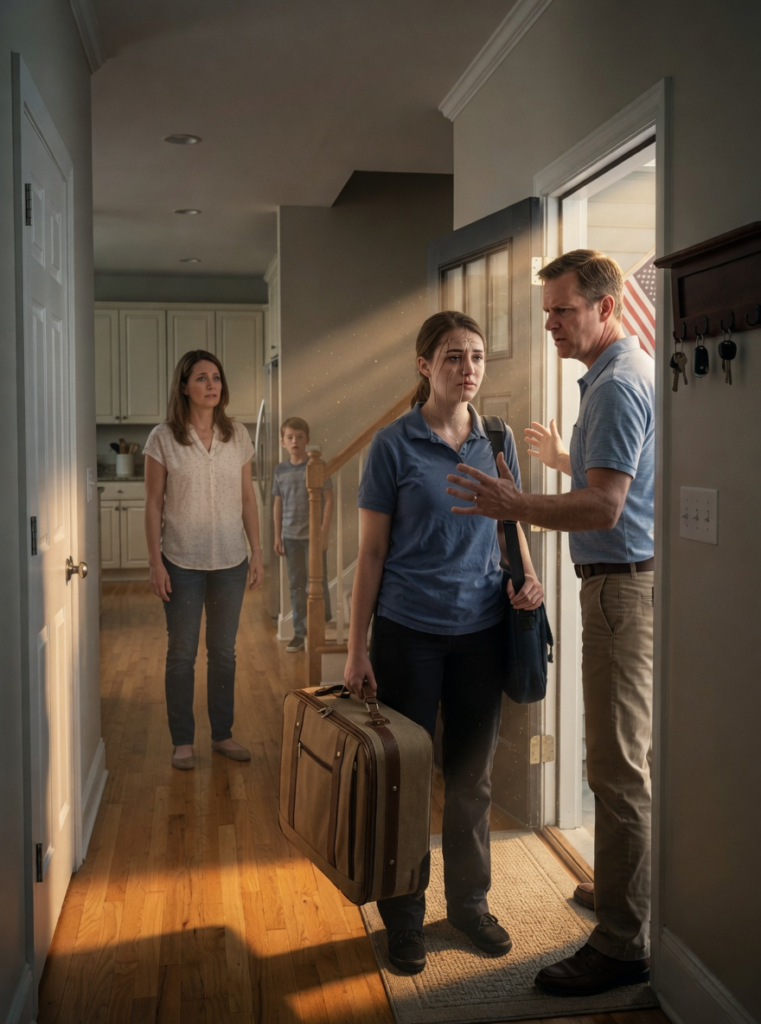
I spent my birthday working. My mom texted: “We sold your car — family comes first. Be grateful we even let you stay here.” Then another message followed: “Your brother’s starting college. You’ll cover his first semester. $6,000. This week.”
My phone buzzed halfway through a double shift, and for one stupid, fragile second, I almost smiled before I even looked.
It was my birthday.
That was the kind of thing people’s phones were supposed to remember for them, even when their families didn’t. A bright screen. A cheerful ping. A message that said something warm, something careless and ordinary like Love you, sweetheart or Don’t work too hard, we’ll celebrate tonight. I had spent the whole morning pretending not to hope for much, because hope had a way of making me feel younger than twenty-two, younger than I could afford to be, but some part of me had still been waiting for that soft little proof that I mattered.
Instead, I was standing behind the counter at Seabreeze Café with sticky caramel syrup drying on two fingers, a half-wiped espresso spill under my elbow, and a customer at the register asking whether the blueberry scones were fresh, when the screen lit up with my mother’s name and a message that made my brain stop in the middle of the sentence I was saying.
We sold your car. Family comes first. Be grateful we let you live here.
I think I blinked three or four times before the words made sense. My mouth was still moving on instinct, my customer was still standing there with sunglasses perched on her head and her beach tote hanging off one shoulder, and I heard myself say, “Yes, the scones came in this morning,” in a perfectly normal voice that did not sound at all like the voice of a girl whose life had just been yanked sideways with twelve words and a period.
My hands went cold first. Then hot.
The café noise swelled around me—the grinding whine of beans, the hiss of steam, the dull clink of ceramic cups, the low beach-town chatter of retirees and tourists and regulars who treated caffeine like religion. Everything was exactly the same as it had been thirty seconds earlier, and that made the message feel even crueler somehow. The world had not paused to acknowledge what had just been taken from me.
My car.
A modest used Honda hatchback with a dent near the passenger-side wheel well and a faint smell of coconut air freshener battling old cigarette smoke. Nothing fancy. Nothing somebody like my mother would ever have bothered to value. But it had been mine in a way very few things in my life had ever been mine. Every dawn shift. Every closing shift. Every aching ankle and fake smile and burnt coffee stain on my apron over the last two years had gone into that car. I had counted tips in the bathroom stall to save for it. I had skipped lunches for it. I had said no to nights out and yes to extra hours and told myself every hard thing was temporary because one day I would not have to ask anyone for a ride or permission or mercy. One day I would turn a key, back out of a driveway, and go wherever I wanted.
That day had come.
And now, according to my mother, it was gone.
Before I could even feel the full shape of that loss, another message landed beneath it.
Your brother’s starting college. You’ll cover his first semester. $6,000. It’s due this week.
Not Can you help? Not We need to talk. Not We’re in trouble.
It was written like an invoice. Like they had already voted and passed the resolution and my only job was compliance.
I stared at the screen long enough that I felt the line of customers shift in front of me and heard my coworker Tasha say my name from the pastry case in a low warning tone.
“Ava?”
I put the phone face-down beside the register, swallowed something jagged, finished taking the order in front of me, smiled because smiling was muscle memory by then, and made it through four more drinks before I slipped into the tiny employee hallway by the restroom and picked my phone back up with hands that were shaking too hard to feel like mine.
There are moments when your whole life stops pretending.
That hallway smelled like bleach and old cardboard boxes. The fluorescent light overhead flickered with a faint electrical buzz. There was a mop bucket against the wall, and a stack of paper towel rolls, and my reflection in the metal door of the storage closet looked pale and stunned and younger than I wanted it to look. Like a girl, not a woman. Like prey, not a person.
I typed one word.
No.
I pressed send.
My father called before I could lock my phone.
I answered because somewhere deep in me there was still a dumb, stubborn part that thought there had to be a misunderstanding, that maybe hearing his voice would make this feel less insane, that maybe he would say your mother phrased it badly, maybe we can figure something out, maybe—
“Pack your stuff,” he shouted, so loudly I jerked the phone away from my ear. “You’re dead to us. You don’t get to say no after everything we’ve done for you.”
The line went dead.
No argument. No conversation. No pause for breath.
Just a sentence like a slammed door.
For a few seconds I stood there with the dead phone in my hand and felt the café fade into distant static. It was my birthday. My car was gone. My money had already been promised away like I was an extension of their checking account. And I had just been disowned between a cappuccino rush and a restock of oat milk.
I wish I could say I cried right then. That I collapsed into some dramatic, sobbing mess and let the magnitude of it wash through me. But that wasn’t what happened. What happened was colder. Cleaner. Something in me locked into place.
I went back out front. I finished my shift. I poured lattes with a smile so polite it hurt my jaw. I handed straws to sunburned tourists and chatted with Mrs. Delgado about the weather and wiped down tables and called out names and moved through six more hours like I had stepped outside my own body and left something human in that hallway beside the mop bucket.
Every now and then my mind would swing back toward the message like a loose door in the wind.
We sold your car.
Family comes first.
Be grateful we let you live here.
Each time it landed, the pain was sharper.
By the time my shift finally ended, dusk had thickened over the parking lot. The Florida air outside wrapped around me like damp fabric, heavy and warm and full of the smell of salt and pavement. Normally my car would have been in the far corner under the weak yellow light, the place I always parked because the Honda’s old air conditioner needed a few minutes to wake up and I liked having time to breathe before driving home.
That corner was empty.
Not mistaken. Not hidden. Not temporarily borrowed.
Empty.
I stood there with my canvas tote over one shoulder and my apron balled in one fist, looking at bare asphalt, and felt the truth land all the way.
They had actually done it.
I laughed once, a small cracked sound that didn’t resemble humor at all. Then I started walking.
Three miles doesn’t sound like much until you do it in work shoes with tired legs and a stomach full of coffee instead of dinner and a birthday sitting on your chest like a stone. Clearwater Bay was the kind of Florida town that looked glossy in brochures and ordinary in real life—palms along the main roads, stucco houses aging under the sun, little pockets of water visible between buildings if you stood in the right places. By day it sold the illusion of ease. By night, in the heat, it felt like a place where secrets sweated through the walls.
As I walked, I replayed every stupid little thing I had done for my family and watched them rearrange themselves into a pattern I should have seen sooner.
My father handing me the modem because the Wi-Fi went down and muttering, “You do it. I don’t have patience for this digital crap.”
My mother calling me during a lunch rush because she couldn’t remember the password to the electric company portal again.
The shutoff notice I’d quietly covered with my tips three months earlier because there had been tears at the kitchen table and promises that it was just temporary, just until Dad’s overtime hit, just until Mason’s club fees were done, just until next week.
The bank app I had set up on my phone because they said online statements were confusing.
The budget spreadsheet I built because my mother liked seeing colorful categories as long as she didn’t have to sit with what they meant.
They had said I owed them for years.
Roof over your head.
Food in your stomach.
Everything we’ve done for you.
But what I heard, walking home in the wet heat with blisters rising under my heels, was something else. Not gratitude. Not sacrifice. Ownership.
The house looked the same when I got there. Same peeling trim on the porch. Same potted plant my mother kept forgetting to water until I rescued it. Same weak light glowing from the front room where my father always watched sports with the volume too high. It made me angrier than if it had looked haunted. The world should have looked different after what they’d done. But there it was, neat and familiar and absolutely ready to insist this was normal.
The smell hit me when I opened the door. Vanilla candles and old carpet and whatever my mother had made for dinner. Home, if you were willing to use the word loosely. I stood in the entryway with my tote still on my shoulder and asked the question even though I already knew the answer.
“Did you really sell my car?”
My mother was at the kitchen counter scrolling through her phone. She didn’t even look up right away. “We did what we had to do.”
Her tone was the same tone she used when talking about clipping coupons or switching detergent brands. Calm. Practical. As if the thing she had done was not theft but management.
“Family comes first,” she added. “Your brother’s future matters more than your convenience.”
My convenience.
The words hit with a different force than the text had because now I could see her face when she said them. Tired, yes. Pinched around the mouth. But not guilty. Not ashamed. She believed herself.
“You didn’t pay for it,” I said. “I did.”
My father came around the corner from the living room before she answered, football commentators yelling behind him through the TV. “You live under our roof,” he snapped. “You eat our food. You use our water. Don’t come in here acting like some kind of victim because we made a hard decision for this family.”
I looked at him. Really looked. The flushed neck. The broad chest pushing against his old T-shirt. The expression of a man who thought volume was the same thing as righteousness. I had seen that look my whole life. It used to scare me. Then it used to exhaust me. In that moment, it made something harden.
“You made a decision for Mason,” I said. “Not for the family. You didn’t sell anything of his. You didn’t sell your boat equipment. You didn’t sell Mom’s jewelry. You sold the one thing that belonged to me.”
My mother finally lifted her eyes. There was a brittle patience in them, the look she wore when she wanted the whole room to know I was being difficult. “You’re the oldest, Ava. That means you step up. Mason has a chance to build something better. You can take the bus. People survive without cars.”
She said it like she had not spent the last year bragging to church friends about how responsible I was, how dependable, how blessed they were to have a daughter who “handled all the online stuff.” She loved my competence when it reflected well on her. She only stopped valuing it when it belonged to me.
“You could have asked me,” I said. My voice came out quieter than theirs, and somehow that made it steadier. “You could have talked to me.”
My father stepped closer. “We don’t need permission from a child. We raised you. We kept you afloat for twenty-two years. Six thousand dollars and a used car is nothing compared to what we spent on you. You owe this family.”
There it was. The ledger. Cold and waiting.
Every meal, every ride to school, every birthday gift, every bare-minimum act required of parents converted into debt with compound interest. My whole childhood rendered as an invoice I was expected to keep paying forever.
I felt something inside me become very still.
“If I’m dead to you,” I said, “stop spending my life.”
Then I walked down the hallway to my room.
I heard him come after me. Felt, more than saw, the way his hand brushed hard against my shoulder as if he meant to stop me and then changed his mind when he realized how close that was to becoming something he couldn’t explain away. It wasn’t quite a shove. It was enough.
I closed my bedroom door and stood there for a moment in the dimness, looking at everything that had once felt temporary and now looked borrowed. The secondhand dresser. The college brochures I’d stopped reading because tuition was a fantasy when rent already lived in my throat. The string lights along the wall that only half worked. The framed photo of me and Jenna at seventeen, grinning in our graduation gowns like we thought adulthood would involve more doors and fewer traps.
Then I moved.
Clothes. Underwear. Jeans. Work shirts. Sweaters. Socks. Laptop. Charger. External hard drive. Passport. birth certificate. Social Security card. The tiny jewelry box Grandma Evelyn had given me when I was sixteen and crying over some boy who had not deserved the number of tears I’d given him. My pay stubs. The printout showing the down payment I’d made on the Honda. The envelope of cash tips I had been squirreling away in the back of a drawer in case something in this house finally snapped.
My phone buzzed on the bed. Jenna replying to the text I had sent during a break between drinks, the one that had felt dramatic when I sent it and prophetic now.
If I leave tonight, can I crash with you?
Yeah. No questions. Just come.
I nearly cried then. Not because of my parents. Because of the simplicity of that answer. No conditions. No lecture. No tallying of what she’d done for me first. Just come.
I packed faster.
What my parents never understood was that I wasn’t just the extra income in that house. I was infrastructure. My father called it “the computer stuff” as if it were a minor hobby, but their lives ran smoother because I was there to catch everything before it fell. I knew the password resets, the due dates, the logins, the security questions, the autopay settings, the weird little glitches in the insurance portal and the bank app and the internet provider’s billing system. I was the one who noticed when the electric bill didn’t draft. The one who moved money between accounts to prevent overdrafts. The one who set calendar reminders so the water wouldn’t get shut off and my mother wouldn’t have to be embarrassed in front of her Bible study friends.
If I was selfish. Ungrateful. Dead to them.
Then they did not get to keep using my spine as a support beam.
I was stuffing a hoodie into my duffel when my mother appeared in the doorway. Arms crossed. Expression carved out of disapproval and certainty.
“You’re not really leaving,” she said. “You’re being dramatic. Sleep on it and apologize in the morning.”
Behind her, my father stood in the hall like a wall that thought it had won by existing. “Put the bags down,” he said. “You’re not walking out over this.”
Over this.
As if “this” were a small disagreement, not the sale of my property and a demand for thousands of dollars and a declaration that I no longer belonged.
I zipped the duffel and lifted it. “I’m not walking out over this. I’m walking out because you finally said the quiet part out loud.”
My father’s jaw tightened. “Don’t twist our words.”
I looked at both of them and something strange passed through me—not just anger, but clarity sharp enough to feel like peace.
“You don’t get to call me family when you mean resource,” I said.
Then I brushed past my mother, walked straight toward the front door, and did not stop when my father took one step as if to block me and then froze. Maybe he thought I would crumble. Maybe he thought the night air would frighten me back into obedience. Maybe men like him always believe the people they use have nowhere else to go.
Outside, the heat wrapped around me again. I didn’t feel it this time.
At the end of the street, under a leaning palm and a buzzing streetlight, I set my bags down to wait for Jenna and pulled out my phone. My hands were steady now.
I opened a note I had been adding to for months. Not because I had planned revenge. Because chaos requires record-keeping if you want to survive it.
Power. Water. Internet. Streaming. Mortgage alerts. Bank. Credit cards. Budget spreadsheet. Insurance portal. Tax site. Password manager. My mother’s email. My father’s old email he never checked. The account I used as backup for nearly everything because they forgot their login details every three days and preferred accusing systems of incompetence to learning how they worked.
I scrolled down the list slowly while insects rattled in the shrubs and a distant motorcycle passed on the main road.
Then I texted Jenna again.
On my way. And before morning, they’re going to find out what it costs when I stop being useful.
Jenna lived in a one-bedroom apartment over a bait-and-tackle shop near the marina, and it was the kind of place nobody would ever describe as elegant but I swear it felt like sanctuary the second she opened the door. The air-conditioning hummed. The room smelled faintly of reheated Thai food and vanilla candles. A fan turned lazily in the corner. There was a blanket already folded on the couch for me, as if she had known before I did that this wasn’t one of those situations where a girl storms out, calms down, and goes home by midnight.
Jenna wore pale blue scrubs from her shift at the nursing home and had her dark hair piled on top of her head in the world’s least stable bun. She took one look at my face, set down the spoon she’d been eating noodles with, and crossed the room.
“What happened?”
I told her.
Not beautifully. Not in order. It came out in pieces while she handed me water and sat me down and coaxed the story from me with the kind of silence only real friends know how to use. The texts. The phone call. The empty parking spot. The walk. The confrontation. The shoulder. The demand for six thousand dollars as if my brother’s future had simply been transferred into my name without my consent.
When I was done, Jenna leaned back in her chair and let out a slow, furious breath. “Ava,” she said, “that is insane.”
I laughed weakly. “Thank you. I was starting to wonder if I’d somehow missed a memo about this being normal.”
“It is not normal,” she said. “It is not remotely normal to steal your daughter’s car and then bill her for her brother’s tuition on her birthday.”
The sentence sounded even uglier spoken aloud. Good. Some truths deserve ugliness.
I took out my laptop.
Jenna raised an eyebrow. “You’re working?”
“I’m leaving,” I said. “There’s a difference.”
The screen glowed to life. My fingers found habits older than panic.
First: my bank. Every dollar I had earned that still touched any shared surface between me and my parents got moved. Not theirs. Mine. Tips. wages. savings. The buffer I had been quietly building for months in case the house became too tense to breathe in. It took less than ten minutes to shift everything into the separate checking account I had opened half out of caution, half out of shame, because a part of me had known I needed an exit strategy before I was willing to admit why.
Next: autopay setups. Utilities. Internet. Subscription services I had put on my card “just for a month” and somehow never moved off. I removed my payment info. Changed the recovery email from mine to addresses they technically had access to but never checked. Disabled the reminder notifications that pinged my phone whenever something got close to overdue. I didn’t cancel service. I didn’t delete anything. I simply stepped back.
It felt like setting down crates I had been carrying so long I’d forgotten they were heavy.
Jenna watched from the armchair, legs tucked beneath her. “You sure that won’t hurt you?”
“I’m not touching their money. I’m removing mine.” I clicked save on the internet account. “If they can sell my car without asking, they can figure out how to log into the electric portal.”
There was one more thing. The thing that made my pulse pick up in a way the bank transfers hadn’t.
HomeFlow.
I had named it that because I was twenty and earnest when I built the first version for an online coding course, and “Household Financial Tracking Interface” sounded like the sort of title that guaranteed nobody would download it. HomeFlow had started as a school project—a dashboard that imported transactions, sorted them by category, and generated neat visual summaries of where money was going each month. Groceries, utilities, transportation, leisure, subscriptions, debt, miscellaneous. Innocent enough. Educational. Useful.
Then my parents saw it.
At first my mother loved the pie charts. She would point to them at the kitchen table and say, “See? This is why we can’t afford nonsense right now,” but “nonsense” always meant whatever she wanted me to stop wanting. My father liked the way it let him pretend he was involved without actually learning anything. He would grunt at a bar graph and say, “Looks fine,” as if numbers were obedient if you frowned at them hard enough.
When they realized I could link bank accounts, credit cards, and monthly statements so everything updated automatically, they started handing me more. The utility logins. The mortgage alerts. The card statements. It made them feel efficient to outsource the work to the daughter they kept insisting owed them.
Over time, HomeFlow stopped being a class project and became the only clear window into how that house functioned.
And numbers, unlike families, are brutally loyal to reality.
I opened the dashboard and waited for the sync to finish. My parents’ desktop at home still mirrored the main account because troubleshooting was easier that way. I could see the categories update in real time. Latest transactions. Payment failures. Purchase history. The whole neat digital skeleton beneath their stories.
For months I had kept the report function private. The data was there, but only I saw the monthly summaries, because I knew if I sent them broadly my mother would call it disrespectful and my father would call it betrayal. They both preferred chaos as long as it stayed private enough to blame on me.
Now, in Jenna’s quiet apartment with the fan ticking overhead and my birthday turning toward midnight, I clicked into settings and changed the weekly digest from “admin only” to “linked recipients.”
Then I started adding email addresses.
My mother’s.
My father’s.
Grandma Evelyn’s, because she believed in facts even when they hurt.
Aunt Brenda’s, because she was the only one in the family who asked hard questions instead of accepting whatever emotional weather my mother produced.
Two cousins who loved commenting “family first” on my mother’s social media posts.
An uncle who had once lectured me at a barbecue about helping my parents more because “they’re doing their best.”
I wasn’t inventing anything. I wasn’t altering the data or planting accusations or writing a message that begged for sympathy. I simply enabled a weekly report that listed what money came in, what money went out, who covered what, and where spending didn’t match the story being sold.
Green for essentials.
Red for discretionary.
Blue for contributions by linked users.
Under blue, my name showed up more often than anybody but mine had ever been allowed to acknowledge.
Jenna stood and came closer, reading over my shoulder.
“Jesus,” she murmured. “Have you really been paying that much?”
Mortgage shortfall coverage. Three times.
Electric bill. Two months in one payment.
Water bill. Partial.
Internet. Full.
Mason’s club fees.
Groceries.
Emergency tire replacement for my mother’s car.
Streaming services.
A software subscription my father needed for the side hustle he talked about more than he actually worked on.
The line items told the story without adjectives, which somehow made them harsher.
Then came the other side of the report.
Sporting goods purchases.
Restaurant tabs.
Clothing orders.
A weekend fishing charter deposit.
Beauty appointments.
Gifts.
Impulse buys.
Everything filed under categories the app treated neutrally and my grandmother absolutely would not.
“You’re going nuclear,” Jenna said softly.
I looked at the screen and shook my head. “No. I’m going honest.”
She studied my face for a second and then nodded. “Same difference to people who live on lies.”
I set the digest to send at 7:02 a.m. Enough time for the earliest risers to check their email with coffee in hand. Enough time for my parents to be awake and not yet prepared. Enough time for the truth to arrive dressed like an ordinary weekly summary until someone opened it and realized the floor had moved.
When I hit save, a strange calm came over me.
They had sold my car and called it sacrifice. By morning, the people whose opinions mattered to them would see the shape of their sacrifice more clearly than they had ever allowed me to say out loud.
Jenna left a slice of grocery-store cheesecake on a paper plate by the couch before she went to bed. Birthday dessert, no candle. I cried over that harder than I cried over my parents.
At 6:14 the next morning, my phone started vibrating across the coffee table like it was trying to escape.
I woke with my heart in my throat. For a second I didn’t know where I was, only that some emergency had found me and multiplied overnight. Then I saw Jenna’s apartment ceiling, heard a gull outside, smelled coffee from the timer she’d set before leaving for an early shift, and remembered.
The report.
I snatched up the phone.
Missed calls from Mom. Dad. Mason.
Texts from my mother stacked one on top of another.
What did you do?
Call me now.
Take that down immediately.
You are humiliating this family.
Then from my father:
You’ve crossed a line.
Answer your phone.
You think you can slander us and walk away?
There were also messages from numbers I had saved but not expected to see that early.
Aunt Brenda: Honey, are you okay?
Grandma Evelyn: Call me when you wake up.
Cousin Leah: Um. Is that report real???
I opened the family group chat first because I knew if my mother had decided to manage the situation publicly it would be there. The last thing in the thread from the night before was a proud photo of Mason’s acceptance letter and my mother’s caption about sacrifices and blessings.
Below it was chaos.
Aunt Brenda had replied-all to the digest, then copied her response into the chat.
Linda, why does this show Ava covering your mortgage and utilities while you told everyone she barely helps?
Grandma Evelyn: I would like an explanation.
Uncle Ray: This says her card paid your electric bill in March. Is that accurate?
My mother had typed three long paragraphs about “misleading data,” “technical errors,” and “Ava making things look worse than they are.” No one seemed persuaded.
Mason had sent one message in all caps.
WHAT THE HELL IS GOING ON
And then, a few minutes later:
Dad says it’s hacked. Is it hacked?
I stared at that one for a while. Even then, even seeing the evidence, he had started from a place of wanting to believe them. That wasn’t stupidity. That was what happened when somebody grew up inside a story and didn’t know where the walls ended.
I typed back.
No. It’s your real accounts. I never changed the numbers. I just stopped hiding them.
The three dots appeared, disappeared, reappeared.
Before Mason could answer, my phone rang again. Aunt Brenda.
I accepted.
“Ava,” she said immediately, no greeting, voice tight and breathless like she had already had one fight this morning. “Tell me right now. Did your parents really sell your car?”
“Yes.”
“And the report?”
“Is real.”
A pause. I could hear ovens humming in the background at the bakery she owned. “Your mother told us for months that you hardly contributed because you were ‘saving for your own little things.’”
I laughed, ugly and tired. “My own little things included their internet bill.”
Brenda cursed softly, which I had heard maybe twice in my life. “I knew something was off. Every time I offered to help with Mason’s school stuff she got weird and said Gary had it handled.” Her voice hardened. “She made you look selfish.”
“She needed me selfish,” I said. “That way everything I did could still count as not enough.”
Brenda exhaled. “Are you safe?”
“Yes.”
“Good. Stay where you are.” Then, after a beat: “Happy birthday, sweetheart. I’m sorry your mother forgot how to be one.”
When I hung up, I sat very still with the phone in my lap.
That was the thing about truth. Once it escaped the room where it had been managed, people started seeing all kinds of things at once.
Mason texted again around eight.
Grandma printed the email. She’s on FaceTime with Dad and he looks like he swallowed sand.
Then another.
Mom is crying.
Then:
She keeps saying you twisted the context.
I replied: The context is in the transactions.
He didn’t answer for ten minutes. Then: I didn’t know it was that bad, Ava. I thought you just paid the Wi-Fi sometimes.
There are griefs that arrive as violence and griefs that arrive as confirmation. His message was the second kind. I had spent years trying to make what I did look smaller so I wouldn’t seem resentful, so I wouldn’t embarrass them, so I wouldn’t have to hear my mother say I was keeping score. And because I had hidden the scale of it, even my brother—the person benefiting most from the arrangement—had not understood.
I know, I wrote back. That’s part of the problem.
By the time my café shift started, the report had spread. I could tell not only from the relentless messages but from the way Tasha looked at me as she tied on her apron and said, “Hey. You okay?” in a tone that meant somebody had posted something somebody’s aunt had seen.
Small towns don’t need newspapers when they have church groups and family Facebook threads.
I worked anyway. There is something weirdly stabilizing about making drinks while your personal life detonates. The milk still has to steam. The cups still need lids. Tourists still want extra whipped cream and no one at table seven cares that your mother is accusing you of financial sabotage.
Around lunch, Jenna came in on her break from the clinic next door and slid a muffin across the counter toward me without a word. Support, in our friendship, often arrived disguised as carbs.
My break was at two. I was in the tiny back room drinking lukewarm water and staring at twelve unread messages when the door opened and Mason stepped in.
For a second I just looked at him.
He had biked, apparently. His hair was flattened on one side from a helmet, his T-shirt clung damply to his back, and his face looked younger than eighteen and older than that at the same time. Like he had crossed some line in the last twelve hours and wasn’t sure what adulthood was supposed to look like on the other side.
“Hey,” he said.
“Hey.”
He hovered until I nodded toward the folding chair across from me.
“Jenna told me when your break was,” he said, sitting. “I didn’t want to call. Dad keeps grabbing phones.”
That sounded exactly like Dad.
For a moment neither of us spoke. The break room fridge hummed. Somebody in the kitchen dropped a tray and swore. I watched Mason pick at a loose thread on his sleeve and thought about all the versions of him my parents had built over the years. The future. The investment. The son who needed more because he had more potential. The child whose wants were somehow destiny while mine were luxuries.
“Did you know?” I asked.
He looked up too fast, hurt flashing clean and immediate across his face. “About the car? No. I swear. Mom just told me last week they were ‘figuring things out’ for tuition.”
I believed him. That was the irritating part. He had never been cruel enough to design this. He had simply grown up in a house where people laid comfort at his feet and told him it was love.
He swallowed. “Grandma’s furious. She asked Dad why his daughter was paying his electric bill while he bought fishing gear. He said it wasn’t her place to question him. Grandma said it became her place when he started crying poor to family while taking money from his kid.”
A laugh tried to escape me and came out more like a breath.
Mason pulled out his phone. “You want to see what set her off?”
He showed me a screenshot from the report. A cluster of transactions from the week after I’d covered the overdue electric bill. Sporting goods. Online clothing. A dinner out. Underneath, HomeFlow’s little automatic summary:
Discretionary spending increased 42% in the seven days following essential-bill support by linked contributor.
I had written that algorithm as a neutral flagging feature for spending spikes. Seeing it now, with my father’s habits rendered in simple analysis, felt almost unreal.
“She asked him if that was fake too,” Mason said. “He just started yelling.”
Something inside me unclenched a little. Not because he was suffering. Because for the first time, I wasn’t alone inside the truth.
“What do you want, Mason?” I asked quietly.
He blinked. “What?”
“You. Not Mom. Not Dad. What do you want?”
He looked so startled it was almost painful. Then he laughed once, brittle and embarrassed. “You know what’s stupid? I don’t even want Coastal State.”
I sat back.
He stared at his sneakers. “I told them months ago I wanted to do community college first. Maybe art and design. Maybe game development. I like drawing. I like making things. Dad said that wasn’t a real future. Mom cried and said I couldn’t throw away my opportunities after all the family had invested.”
The words all the family had invested landed between us with their own ugly weight.
“So they sold my car,” I said, “and tried to force six thousand dollars out of me for a degree you don’t even want.”
He winced. “Yeah. Sounds worse when you say it straight.”
“That’s because it is straight.”
He nodded slowly. “I’m not here to ask you to help. I swear.” He finally looked at me. “I just needed you to know I didn’t know. And now that I do, I can’t really un-know it.”
For a moment all I could think was how young we both still were for this kind of sentence. How families like mine made children old in all the wrong ways.
“You don’t have to pick sides,” I said.
He gave a sad little smile. “I think the sides picked themselves.”
When he left, he hugged me awkwardly with one arm like we were both learning a language nobody had taught us growing up.
That evening my father posted on Facebook.
Kids these days don’t understand sacrifice. We put a roof over our daughter’s head for 22 years and the second we ask her to help her brother, she tries to destroy our family with lies and technology.
I didn’t know about it until Jenna came home and held out her phone with eyebrows raised. “Your dad discovered the internet. Sadly.”
The post had already collected comments.
A few sympathetic ones from men who fished with him and believed any narrative that let fathers remain heroic.
Then the rest.
You sold her car if she paid for it? one woman wrote.
Someone else had posted a screenshot of the report subject line with no caption at all.
A church acquaintance commented, Gary, maybe take this offline and apologize.
My father kept replying with big vague words: context, exaggeration, disrespect, family matters. But the problem with numbers is that they make context very hard to weaponize unless you can explain the numbers themselves.
The next day, I got my answer about whether my parents would de-escalate.
They would not.
Mason texted me midmorning: You need to see this. Then he sent a video.
It was shaky at first, pointed mostly at the floor. I heard my father’s voice before I saw anything.
“You’re going to call your grandmother and tell her your sister manipulated that report.”
The camera lifted. Our living room appeared in fragments—the sofa, the coffee table covered in printed pages, the faded curtains half closed against the glare.
“Dad,” Mason said, voice tense, “I’m not lying to Grandma.”
“You’ll do what I say.”
Mom’s voice cut in, thinner and more frantic than angry. “Gary, stop yelling.”
“I am not being made a villain in my own house over some charts!” my father roared. “That girl thinks she can walk out, embarrass me, and turn everybody against us?”
Mason said something I couldn’t hear clearly, and then my father moved.
The camera lurched. There was a grunt. A crash against the coffee table.
My stomach dropped.
“Gary!” my mother shouted.
Then another voice, sharp as a slap:
“What is wrong with you?”
Aunt Brenda entered the frame like a storm in a flour-dusted shirt, Uncle Doug behind her with his jaw set like stone.
“He mouthed off to me,” my father barked.
Brenda stepped between him and Mason without hesitation. “No. He told the truth to you, which apparently feels the same thing in this family.”
My mother started crying immediately. “Brenda, please—”
“Please what?” Brenda snapped. “Please let you keep pretending Ava did nothing while you emptied her account one payment at a time? Please act like selling her car was some noble act instead of theft?”
“It wasn’t theft,” my father said. “She lives here rent-free.”
Rent-free. Even after the report. Even after the family saw it. Still the same lie.
Brenda laughed in disbelief. “The email literally shows Ava covering your utilities and mortgage shortfalls. How exactly is that rent-free?”
The video ended there, abrupt and shaky, and I sat staring at my reflection in the black screen after it cut out.
Then another text arrived. This time from Grandma Evelyn.
He put hands on Mason. I saw enough. I am done excusing your father.
That message did something the earlier ones hadn’t. It confirmed not only that the truth was out, but that the performance was cracking all the way through. My father could shout at me. My mother could cry at relatives. But once other people started witnessing the machinery up close, denial had to work much harder.
Sunday morning, the second weekly report went out.
The night before, I had gone into HomeFlow and enabled another feature I’d built months earlier: variance alerts and late-fee logging. If a bill went unpaid, if a credit card minimum was missed, if a bank balance dipped low enough to trigger a risk flag, the digest would note it in plain language. I had originally designed it to help me stop fires before they spread.
Now I wanted the full cost of my absence to be visible.
At 7:08 a.m., Mason sent a video with the caption: They’re losing it.
The camera showed our kitchen. Printed emails everywhere. Bills fanned out across the table. My mother standing in the middle of it in a robe, one hand pressed to her mouth while she cried.
“They all got it again,” she sobbed. “My Bible study group, Brenda, your mother, everyone. Why would she do this to us?”
Do this to us.
Not we sold her car. Not we lied about her contributions. Not we tried to pressure her into funding a decision we made. Always: why would she expose the consequences of our behavior?
In the background, through the window, I could see my father pacing the backyard with his phone to his ear.
“I don’t understand these charges,” he was saying to someone, probably Mr. Lawson from the bank. “It’s making it look like we’re behind on everything.”
A muffled response.
Then my father, louder: “I don’t know how to do this online stuff. Ava always did it.”
Inside the kitchen, my mother sank into a chair like her knees had given out. “People are going to think we’re trash,” she whispered.
Mason stepped into frame and said quietly, “No. They’re just finally seeing what Ava’s been seeing.”
She looked up at him with pure betrayal. “You’re taking her side too?”
He let out a shaky breath. “I’m taking the side where nobody gets robbed for my tuition.”
The video ended when my mother started crying harder.
After that, a screenshot arrived. Grandma Evelyn had replied-all to the report and then forwarded it to the family group chat.
I have seen enough. I will not send more money to “help” while Linda and Gary spend on non-essentials and take from Ava behind her back. What has been described here is financial abuse. Mason is not to be used as an excuse. He is a child, and Ava is not your emergency fund.
The word abuse sat on my screen longer than anything else that week.
Not because I hadn’t thought it. I had, in private, in little flashes I then talked myself out of because abuse sounded too dramatic and drama was what people accused me of whenever I used accurate language. But seeing my grandmother write it publicly, calmly, with no theatrics at all, felt like a door opening in a wall I had been pressing against for years.
Mason called me that afternoon.
“I’m leaving the house for a while,” he said without preamble.
“Where are you going?”
“Grandma’s. She offered me the guest room.” He paused. “Dad says if I leave I’m disrespecting him in his own home.”
I couldn’t help it—I laughed softly. “That does sound like Dad.”
Mason’s laugh was exhausted. “I told him if a home depends on lies, maybe disrespect is just honesty with timing.” He went quiet. “Did that sound dumb?”
“No,” I said. “It sounded like somebody finally stopped repeating their script.”
He inhaled shakily. “I also told them I’m not going to Coastal State this fall.”
My hand tightened on the phone. “How’d that go?”
“About as well as you’d think. Dad said I was throwing away my future. Mom started crying again. Then Grandma got on speaker and asked why they were so eager to spend other people’s money on a plan I never agreed to.” He paused. “Grandma kind of scares me when she’s mad.”
“She should,” I said. “She’s excellent at it.”
For the first time in days, his laugh sounded real.
After we hung up, I sat on Jenna’s couch and stared at the ceiling fan while the room turned gold with late afternoon light. Everything was still unstable. I knew that. My parents were not the kind of people who absorbed humiliation and became reflective. They were the kind who became louder. More aggrieved. More determined to find a villain. I would probably spend months dealing with the echoes of this.
But beneath all of that was something I had not felt in so long I almost didn’t trust it.
Space.
Not peace. Not yet.
Just space.
No one yelling from the hallway that the printer wasn’t working. No frantic knocks on my bedroom door because a password had expired. No guilt-soaked sighs from my mother because there was a bill due and how could I sit there knowing the family was struggling? No constant low hum of being needed in ways that only counted when I complied.
That week, little things started happening—quiet things, ordinary things—that would have been invisible to anyone who hadn’t spent years surviving inside someone else’s needs.
My café manager, Rhonda, called me into the office after closing on Tuesday. She was a woman in her fifties with sharp eyeliner and the emotional style of somebody who had raised three sons and no longer had patience for nonsense. She closed the door, sat down across from me, and said, “Tasha told me enough to know you’ve got family drama. I’m not asking questions. I am, however, offering you more hours if you want them.”
I blinked. “Seriously?”
“You’re reliable,” she said. “And unlike half the staff, you know how to show up on time and not cry because Mercury is in retrograde.”
I laughed before I could stop myself.
She leaned back in her chair. “Also, the assistant shift lead is moving to Orlando in two weeks. You interested?”
The question hit me harder than it should have. Interested. As if my future might be a thing I got to participate in, not merely endure.
“Yes,” I said.
“Good. Then stop looking startled and start looking like someone who can boss around a seventeen-year-old with a septum piercing when the almond milk runs low.”
I left her office with a weird, trembling kind of hope that felt almost dangerous.
The next day I got an email from the coding course I had been dragging myself through in late-night fragments for months. One of my instructors had nominated a few students for interviews with a small software company in Tampa that liked taking chances on self-taught juniors. They had seen HomeFlow in a portfolio review and wanted to talk.
I read the email three times before it settled into reality.
HomeFlow. The thing I had built because survival required systems. The little project that had become my family’s mirror and then their undoing. The thing I had half loved and half resented because it was born out of necessity and not freedom.
Somebody thought it might be worth something outside that house.
I cried in Jenna’s kitchen over that too.
Jenna came home to find me sitting at the table with the laptop open and tears on my face. “Good tears or collapse tears?”
I turned the screen toward her.
She read the email, looked back at me, and grinned. “Oh, these are definitely good tears.”
Then she hugged me so hard I laughed into her shoulder. “See?” she said. “Turns out when you stop being everyone else’s unpaid department, you become available for your own life.”
My parents, of course, were not becoming nobler in the background. If anything, their behavior grew more desperate as more people stopped buying their version of events.
My mother started posting Bible verses on social media about forgiveness and prodigal children, paired with vague captions about “the pain of loving someone who turns their back on family.” She never used my name, but everyone knew. Relatives started replying less. Even the people who might have sympathized were tired of cryptic public martyrdom that arrived suspiciously soon after every new report.
My father’s anger turned practical.
First, he tried to call the internet company and insist he’d never authorized online billing. They told him he had, repeatedly. Then he called the bank to say he had been misled into linking his accounts to a third-party dashboard. When they asked whether unauthorized withdrawals had occurred, he had to admit no money was missing. Visibility, it turns out, is not the same thing as fraud.
He even tried to get Mason to say I had manipulated the categories in HomeFlow. Mason told him he could download the raw CSV files and check if he wanted. Dad did not know what a CSV was and reacted to that fact like it had personally insulted him.
One afternoon, while I was changing the syrup pumps at the café, Aunt Brenda came in with a box of pastries she insisted Rhonda try. She waited until the lunch rush thinned, then leaned over the counter and said, “Your mother showed up at the bakery this morning.”
That got my attention.
“What happened?”
Brenda gave me a look equal parts disbelief and fury. “She cried in front of customers for ten minutes and asked me to talk sense into you. Said you were punishing them and ruining Mason’s future. I told her Mason’s future was not something she got to build out of your backbone.”
I swallowed around a sudden thickness in my throat.
Brenda softened. “Sweetheart, I need you to hear this from somebody older who should have said it sooner. Helping family is one thing. Being trained to disappear for them is another.”
I nodded because speaking felt risky.
She touched my hand once and said, “You don’t have to go back just because they finally realize what you were worth.”
That sentence stayed with me all day.
Because that was the trap, wasn’t it? Not the cruelty. The sudden recognition after the labor was gone. People like my parents never respected boundaries in advance. They only discovered gratitude when the service ended.
A week later, my mother proved Brenda right.
She called me from a number I didn’t recognize, and against my better judgment I answered because some stupid part of me thought maybe—maybe after all this, after the family backlash and Mason leaving and the reports and the humiliation—maybe there was a chance she had reached the part where truth turns into remorse.
“Ava,” she said immediately, voice soft in a way that made my skin prickle. “Honey, can we please talk?”
Honey. A word she had not used since before the car.
“What do you want, Mom?”
Silence for just a second too long. Then: “Your father and I have made mistakes.”
That was as close to an apology as she had ever gotten in my life, and even then the phrasing slid away from ownership like oil from water.
“Mistakes,” I repeated.
“Yes, and I know you’re upset—”
“Upset.”
“Ava, don’t do that.”
“Do what? Repeat your words back so you can hear how small you’re making this?”
She inhaled shakily. “I am trying.”
“No. You’re managing.”
The silence on the line sharpened.