Part 2
My mother picked up on the first ring.
“Elena?”
I couldn’t form a full sentence. Another contraction tore through me so hard my vision whitened around the edges, and all I managed was a wet, animal sound. My cheek was pressed against the cold floorboards. My fingers were slipping on the phone.
“Mom,” I gasped. “He took it. The money. My water broke.”
There was one second of silence on the line.
Pregnancy financial planning
Not hesitation. Not confusion.
Calculation.
Then my mother’s voice changed into something I had not heard in years—steel wrapped in calm.
“Listen to me carefully,” she said. “Do not hang up. I’m calling emergency services on my other line right now. Unlock your front door if you can. Put the phone on speaker. Elena, answer me. Are you bleeding?”
“Yes—no—I don’t know—there’s so much—”
“Stay with me.”
A click. Muffled voices. My mother speaking to someone else in clipped, precise phrases. Address. Thirty-six weeks. Placenta accreta. Premature labor. Urgent obstetric transport. Possible hemorrhage. She spoke the way generals must speak in war rooms.
Then she came back to me.
“An ambulance is four minutes away. I’m also calling St. Catherine’s surgical coordinator. Dr. Ahmed is on call tonight. He owes me two favors and a decade of professional respect. You are going there. Do you understand me?”
Childbirth preparation courses
I started crying harder.
“The deposit—”
“I said you are going there.”
There are moments in life when a sentence is not just a sentence. It is a bridge. A hand. Oxygen.
For five years, Mark had told me my mother was controlling, meddling, overbearing, impossible. He had turned every concern she voiced into proof of her arrogance. When she questioned why he wanted access to my passwords “in case of emergencies,” he laughed and called her paranoid. When she asked why I had stopped accepting drafting contracts that paid directly into my personal account and instead routed everything through a household budget he supervised, he said she was trying to undermine our marriage. When I cried after one of their fights, he would cup my face and say, Your mother doesn’t want you happy. She wants you obedient.
And little by little, I had stepped back from her.
Birthdays became short calls.
Then occasional texts.
Then long silences stitched together with guilt.
Marriage counseling services
But now, as I lay shaking in a pool of fluid and pain, the only person who sounded like salvation was the woman he had spent years teaching me to fear.
“Mom,” I whispered, my teeth chattering, “I’m scared.”
“I know, baby,” she said, and her voice cracked for the first time. “I know. But you are not going to die on that floor. You hear me? You are not dying today.”
I forced my body to move.
I dragged myself by the edge of the console table, half crawling, half collapsing toward the front door. Every contraction felt like my body was being split open from the inside. I fumbled with the lock, left smears of water and sweat and something pinker than I wanted to think about across the brass handle, and then slumped beside the threshold.
The room pulsed in and out.
Somewhere far away, I heard sirens.
Then pounding footsteps.
Voices.
Hands.
Bright uniforms filling the doorway.
Financial literacy workshops
One of the paramedics knelt beside me, already gloved, already assessing. “Elena? Can you hear me? I’m Josh. We’ve got you.”
I was lifted, strapped, covered, monitored. A mask was placed over my face. Questions came at me fast and I answered what I could.
“How many weeks?”
“Thirty-six.”
“Complications?”
“Placenta accreta.”
“Pain scale?”
“Ten.”
“Any bleeding?”
“I don’t know.”
Savings plan tools
“Husband?”
“Gone.”
The paramedic’s eyes flicked to the other one for half a second. Something unreadable passed between them.
My phone was still in my hand. My mother was still on speaker.
“I’m behind the ambulance,” she said. “Elena, keep breathing. Dr. Ahmed has been called in. The hospital will admit you under my guarantee.”
Behind the ambulance.
Of course she was.
I closed my eyes and let that truth hold me together until we hit the hospital doors.
Everything after that happened too quickly and too brightly.
A ceiling flying over me in white rectangles.
Nurses cutting away my clothes.
Payment assistance programs
A woman with kind brown eyes asking my name and date of birth while another inserted an IV and someone else clipped monitors to my chest.
Consent forms.
A sonogram wand pressed to my abdomen.
A fetal heart tone, fast and wild.
“Baby’s tolerating for now.”
“For now” was a phrase I would later come to hate.
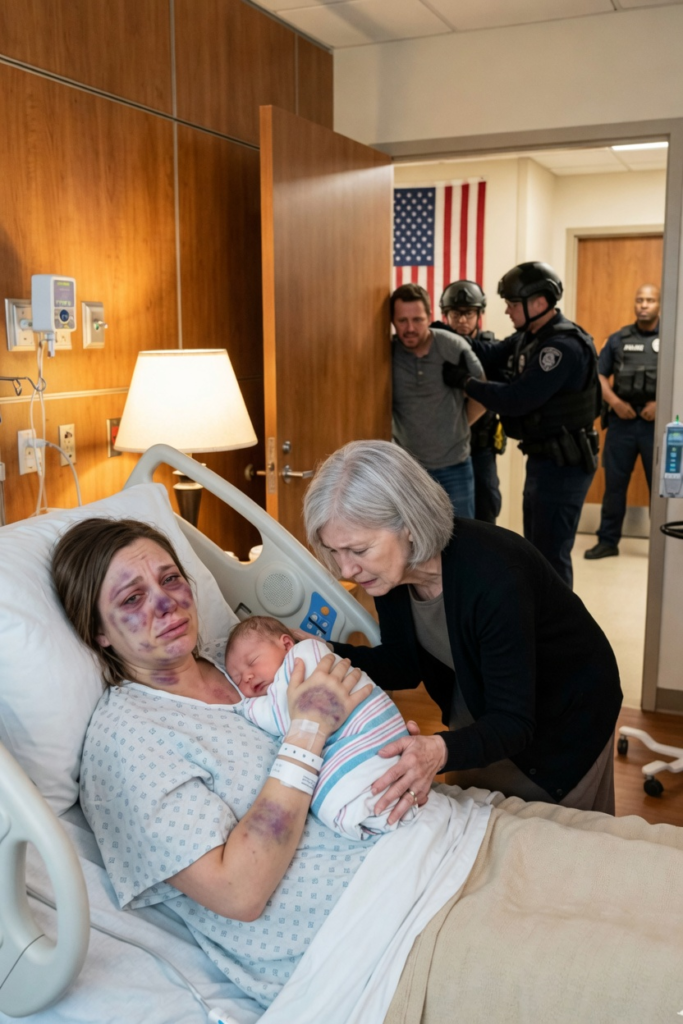
Then my mother was suddenly there beside the gurney, dressed in the first clothes she must have grabbed—dark slacks, a camel coat thrown over a black sweater, her silvering hair half fallen from its twist. Her face was pale with fury and terror, but when she took my hand, her grip was steady.
“I’m here.”
I had not been this close to her in almost a year.
I stared at her and started sobbing so hard I could barely breathe.
She bent and kissed my forehead. “Do not waste your strength apologizing to me,” she murmured, reading me the way only mothers can. “We will do that later. Right now you survive. Then the baby survives. Everything else can stand in line.”
A doctor appeared at the foot of the bed. “Elena, I’m Dr. Ahmed. Your mother briefed me. We’re taking you up now.”
He spoke quickly but clearly. Because of the labor and my condition, they could not wait until morning. They were moving me to surgery immediately. There was a real risk of massive hemorrhage. They had blood ready. They had surgical backup. Neonatology was standing by in case the baby needed respiratory support. If the placenta had invaded as deeply as imaging suggested, they might need to perform a hysterectomy to save my life.
I already knew all of this, but hearing it said aloud in that room made it sound new and brutal.
“Do you understand?” he asked.
I nodded.
My mother squeezed my hand once.
“Then sign,” she said softly. “And fight.”
I signed.
Debt relief consultation
As they wheeled me toward the operating suite, I looked back.
She was walking beside me, one hand on the rail, as far as they would let her.
The last thing I saw before the doors swung shut was her face—fierce, unsmiling, absolutely unwilling to lose me.
I woke in pieces.
Pain first.
Then heaviness.
Then the strange mechanical rhythm of machines.
I tried to move and couldn’t. My throat was raw. My mouth felt like paper.
I blinked against dim light.
ICU.
For a terrible second, I forgot whether I had lived or died.
Grief support services
Then I heard my mother’s voice nearby, low and tired, speaking to someone. I turned my head.
She was sitting in a chair beside my bed, glasses low on her nose, reading from a tablet with the posture of a woman who had been awake too long and would stay awake longer if necessary. There was a hospital blanket around her shoulders.
When she noticed me, she stood so fast the chair scraped.
“Elena?”
I opened my mouth. Nothing came out but air.
She leaned in. “You’re okay. Don’t try to talk yet.”
The monitor beside me sped up.
Her hand found mine immediately.
“The surgery is over. You lost a lot of blood, but they controlled it. You were in the OR for almost five hours. They had to perform a hysterectomy.”
The word hit me somewhere deeper than pain.
Family support network
Not because I had wanted six children and a farmhouse and a long ladder of pregnancies. I had not. But the finality of it, the fact that some future version of choice had been taken forever—it carved something raw inside me.
My eyes filled.
My mother’s face softened. “I know.”
“The baby?” I croaked.
That changed her expression completely.
A smile broke across her face, sudden and luminous and trembling.
“She’s alive. She’s beautiful. She had some breathing distress at first, but they stabilized her in NICU. Seven pounds, can you believe it? With all that drama, she still arrived looking deeply offended with the world.”
A laugh broke out of me and turned into a sob.
My mother laughed too, crying openly now. “Exactly that sound. Loud. Furious. Very likely yours.”
I shut my eyes and let tears slide into my hair.
Pregnancy financial planning
“Can I see her?”
“Not yet. As soon as they clear it. But I have pictures.”
She showed me one.
A tiny face wrapped in a striped hospital blanket. Dark hair slicked close to her head. One miniature fist lifted in outrage. A pink mouth open mid-protest.
My daughter.
My daughter.
The room blurred again.
“What’s her name?” my mother asked quietly.
Mark and I had argued names for months. He wanted a son named after himself. When the scans told us it was a girl, he lost interest in discussing names and started referring to her as “the baby” in a tone that always sounded faintly inconvenienced.
I stared at the picture.
Emergency fund guide
My mother did not push.
Finally I whispered, “Sofia.”
It had been my grandmother’s name—my mother’s mother—who had crossed an ocean with two children and no money and built a life from grit and impossible faith.
My mother inhaled shakily. “Sofia,” she repeated. “Hello, Sofia.”
She kissed my hand.
Then, just for one fractured, holy moment, there was no Mark. No vanished money. No screaming. No slammed door.
There was only survival.
The full truth returned the next morning.
By then I had been moved out of ICU to a high-dependency recovery suite. I had seen Sofia twice—once wheeled beside me in a bassinet, once brought for skin-to-skin while I cried into the warm, milky scent of her neck. She was small and fierce and perfect and astonishingly real. Every time she opened her eyes, something inside me rearranged itself around her.
Internet & Telecom
By then I had also had enough pain medication and enough hours of consciousness for memory to settle into order.
The empty account.
Mark’s face in the doorway.
“Take an aspirin or something to delay the birth.”
The way he left.
I asked for my phone.
My mother, sitting near the window with a legal pad on her lap, didn’t hand it over immediately.
“Before you read anything,” she said, “there are things you need to know.”
That legal pad should have warned me.
I stared at it. “Mom.”
She exhaled slowly. “First, the hospital has documented the circumstances of your admission, including that your husband abandoned you during active labor despite being informed of your medical risk. The social worker has already met with me. She would like to meet with you once you’re stronger.”
Infant care essentials
A strange numbness spread through me.
“Second, I called the bank last night.”
I looked up sharply.
“The transfer was made from your medical account using your credentials, but from a device registered to Mark’s office VPN. There was also a password reset from his phone ninety minutes before the wire.”
I blinked.
“That account was only in my name.”
“Yes,” my mother said. “Which means unless you authorized him, what he did was not ‘using family money.’ It was fraud.”
The word landed like a hammer.
Fraud.
Not betrayal in the private, domestic sense. Not one of those slippery marital injuries people diminish with phrases like it’s complicated or couples go through things. Fraud was concrete. Documented. Illegal.
Childbirth preparation courses
A heat rose through me that had nothing to do with fever.
“He said Chloe would die.”
My mother’s expression hardened into pure ice. “And he decided that gave him the right to potentially kill you.”
I stared toward the bassinet where Sofia had slept earlier.
My child had almost entered the world motherless because her father had decided his sister’s gambling debt was a more urgent emergency than his wife bleeding out in labor.
Something inside me did not break.
It crystallized.
“What else?” I asked.
My mother hesitated.
That scared me more than the rest.
“What?”
Child development resources
“He has been calling,” she said. “And texting. Mostly me, because I blocked his number on your phone until you were stable enough to decide otherwise.”
I almost laughed from the absurdity of it. “What does he want?”
“At first, updates. Then access. Then anger. He says I am overreacting. He says he did what he had to do. He says public hospitals exist for a reason.”
There it was—that same lazy contempt, secondhand through her mouth.
My mother’s jaw tightened. “He came to the hospital at three in the morning demanding to see you. Security removed him.”
A long silence filled the room.
Removed him.
There was something humiliating about how unsurprised I was.
“Did he ask about Sofia?”
My mother held my gaze.
Pregnancy health guide
“No.”
I turned my face away.
That answer hurt more than the hysterectomy. Not physically. Not even emotionally in the ordinary sense. It was worse than pain. It was revelation. Pain can coexist with love. Revelation cannot. Revelation is the stripping away of every excuse you ever made for someone until only the naked shape of their character remains.
I had spent years translating Mark.
He’s stressed.
He didn’t mean it like that.
He grew up taking care of Chloe.
He panics under pressure.
He’ll apologize later.
He does love me, just differently.
Family support network
But there is no alternate translation for a man who does not ask whether his daughter survived.
I closed my eyes.
When I opened them again, my mother was watching me carefully.
“I want to press charges,” I said.
She did not smile.
She did not say good or finally or I told you so.
She only nodded once, like a commander receiving a necessary order.
“All right.”
By the afternoon, everything was in motion.
A hospital social worker named Dana sat with me and took my statement gently, pausing whenever I needed water or a breath. She had the practiced kindness of someone who had heard a thousand impossible stories and still managed never to sound jaded.
Emergency fund guide
A detective came later—Domestic Financial Crimes, he said, though his eyes flicked once toward Sofia’s bassinet and softened into something personal. He took notes while I described the account, the surgery deposit, the years of saving, the exact words Mark used, the moment my labor began, the fact that I begged him to call 911 and he left anyway.
“Did he have authorization to access your account?” the detective asked.
“No.”
“Did you ever give him your passwords?”
“Not willingly.” I swallowed. “He pushed for them. Said married people shouldn’t keep secrets. I changed most of them months ago. He must have reset this one.”
My mother handed over printed bank logs she had somehow obtained within hours, because when my mother decided to move, the world often found itself trying to keep up.
The detective read them and his expression changed.
“Mrs. Vale,” he said to me, “we may be looking at identity theft and wire fraud in addition to spousal abandonment during a medical emergency.”
Marriage counseling services
Spousal abandonment during a medical emergency.
The phrase was so stark it almost sounded antique, like grounds for exile in some older, harsher century.
“Will that matter?” I asked.
“It will matter,” he said.
After he left, my mother made more calls.
I lay back, exhausted, and listened to the cadence of her voice from the other side of the room.
Attorney.
Bank manager.
Family
Hospital administrator.
A locksmith.
A private security firm.
Pregnancy financial planning
At some point, I realized with a kind of stunned clarity that while Mark had spent years shrinking my world, my mother’s world had remained enormous. She knew people. More importantly, she knew what to do with people.
That evening, she brought me a folder.
“What’s that?”
“Information,” she said.
Inside were copies of property records for the house Mark and I lived in.
I frowned. “Why do you have this?”
“Because I purchased that house through a family trust after your wedding.”
I stared at her.
Grief support services
“What?”
“You remember I offered to help with the down payment.”
“Yes, but we said no. Mark said—”
“I know what Mark said.” Her mouth thinned. “So I structured the purchase another way.”
I flipped through the papers with trembling fingers.
The home was held in a trust in my name, established from my late grandmother’s estate. I was sole beneficiary. Mark was not on the deed.
My heart started pounding.
“He thinks it’s ours.”
“He was meant to think you were secure,” my mother said. “I did not trust him enough to make you vulnerable.”
I looked up, almost dizzy.
“You never told me.”
Sibling support groups
“You stopped taking my calls often enough that there were many things I stopped trying to explain.”
The truth of that stung because it was fair.
“So he—”
“Has no ownership claim to the property,” she finished. “The locks were changed this morning.”
I stared at her and then, despite everything, a small shocked laugh escaped me.
My mother’s eyes flashed.
“I am not in the habit of allowing men who abandon my daughter in labor to sleep comfortably in homes paid for by my mother’s blood.”
For the first time since surgery, I smiled without forcing it.
Not because revenge mattered more than healing.
But because safety does strange things to the body. The moment it arrives, your soul notices before your muscles do.
Debt relief consultation
Mark’s downward spiral began, fittingly, with outrage.
His messages—once I chose to see them—were a grotesque progression of self-pity, denial, entitlement, and blame.
You’re blowing this out of proportion.
Your mother is poisoning you against me again.
I did what any decent brother would do.
Stop embarrassing me by involving police.
If you don’t answer me right now, I will come there.
You can’t keep my child from me because you’re emotional.
Do you have any idea what Chloe is going through?
There was not one genuine apology in fifty-three messages.
Not one Are you alive?
Romance
Not one How is Sofia?
Not one I was wrong.
The closest he came was: I’m sorry you felt unsupported.
That text, somehow, broke the final thread.
I showed it to my mother.
She read it once and set my phone down very carefully, like it was contaminated.
“Good,” she said.
“Good?”
“Good. We will use that.”
My mother’s first career had been medicine. Her second, after my father’s death, had been hospital administration and advocacy work. She had spent two decades on boards, in negotiations, and in rooms full of powerful men who mistook polished cruelty for intelligence. She had a particular talent for recognizing when someone had handed her the rope with which they intended to hang themselves.
Family support network
Mark kept handing her rope.
He came to the hospital again the next day.
This time he sent flowers first—white lilies, the one flower I had explicitly told him throughout our marriage I hated because they smelled like funerals.
The card read: For my girls. Let’s not let outsiders destroy our family. —M
My mother took one look at the arrangement and had security remove it before it crossed my threshold.
An hour later, he arrived in person.
I didn’t see the scene myself, but one of the nurses did and later described it with the breathless relish of a woman who had watched a billionaire get publicly told to sit down.
Mark tried charm first. Expensive coat, expensive shoes, expensive watch, carefully disheveled hair meant to suggest concern rather than inconvenience. He told the front desk there had been a misunderstanding. His unstable mother-in-law was overreacting. He was the husband and father and therefore had every right to be there.
Unfortunately for Mark, my mother was already in the hallway when he said it.
Financial literacy workshops
Apparently she walked toward him so slowly that the receptionist actually leaned back.
“Mr. Harlow,” she said, in a tone that could have frosted glass.
He smiled that smile I had once found handsome. “Vivian, this is ridiculous—”
“No,” my mother said. “What is ridiculous is stealing your wife’s life-saving medical funds, abandoning her in active labor, and then appearing here in cashmere to discuss your rights.”
He lowered his voice. “Let’s not be hysterical.”
“Security,” my mother said, without taking her eyes off him, “this man is not authorized to visit my daughter or grandchild. If he resists removal, I will personally make sure his face is familiar to every hospital within thirty miles.”
Mark tried one last tactic: wounded dignity.
“You’re going to regret alienating Sofia’s father.”
And my mother—bless the icy architecture of her soul—said, “A father is a man who shows up before the child is born.”
Security escorted him out.
Internet & Telecom
Three hours later, his attorney emailed mine.
By then, I already had one.
The divorce moved fast, because there are some facts even expensive lawyers cannot perfume.
There were the bank records.
There were the password resets.
There were the text messages.
There was the hospital documentation.
There was a statement from the paramedic who had found me alone on the floor.
There was also, unexpectedly, our next-door neighbor’s security camera.
Mrs. Alvarez had installed it after a package theft the previous Christmas. Its angle caught part of our front walk. It showed Mark leaving the house at 4:12 p.m., adjusting his coat, glancing at his watch, and getting into his car while my screams were audible through the still-open front door.
Family
It showed no ambulance yet.
No one following him.
No urgency on his face.
Just irritation.
I watched that clip once and never again.
I didn’t need to. It lived behind my eyes now.
Mark’s lawyer attempted a strategy of minimization.
My labor, he claimed, came on suddenly and unexpectedly.
Mark believed I was exaggerating pain, as many anxious pregnant women do.
The funds were marital assets used in a family emergency.
His client fully intended to repay them.
Payment assistance programs
My mother’s attorney—an elegant woman named Celeste who wore navy silk and the expression of someone who collected untruths as sport—responded by filing for emergency protective orders, sole temporary custody, exclusive possession of the home, financial injunctions, and criminal cooperation all at once.
Then she attached the video.
And the bank logs.
And the text that said take an aspirin or something to delay the birth.
I never saw the next response from Mark’s side, but Celeste later told me, “It was shorter.”
While all of that unfolded, I remained in the hospital learning how to stand again without folding around the incision, how to breathe through the deep internal ache of organs rearranged by emergency surgery, how to lift Sofia without feeling like my own body might split at the seams.
Healing after a traumatic birth is a brutal contradiction. Everyone around you wants to celebrate life while your body is still cataloging death narrowly avoided.
Some mornings I stared at Sofia sleeping and felt so much gratitude it made my ribs hurt.
Some afternoons I went to the bathroom, looked at the drainage lines, the bruising, the stitched wound beneath the waistband of my disposable mesh underwear, and cried because I could not understand how the same world could contain this much beauty and this much violence at once.
Pregnancy financial planning
My mother stayed for all of it.
She learned the nurses’ names.
She argued with billing before I had to.
She brought moisturizer because hospital air made my skin crack.
She sat upright at 3 a.m. holding Sofia after a feeding while I shook through delayed panic.
One night, three days after surgery, I woke from a nightmare in which I was back on the nursery floor and no one answered my call. I was sobbing before I was fully conscious.
My mother was beside me in seconds.
She didn’t ask what happened.
She only climbed carefully onto the side of the hospital bed, as much as the rails allowed, and gathered me against her chest like I was eight years old instead of thirty-two.
“I should have called you sooner,” I choked out.
Child development resources
Her arms tightened around me.
“Yes,” she said, because my mother has never been a woman who mistakes gentleness for dishonesty. “You should have.”
I laughed through tears.
Then she added, softer, “And I should have found a better way to stay reachable to you, even when you were making choices I hated.”
That made me pull back and look at her.
The overhead light caught the exhaustion in her face, the new lines around her mouth, the silver threaded through hair I still remembered as black.
“How did we get here?” I asked.
She gave a sad little smile. “One compromise at a time.”
I knew she meant more than Mark.
She meant all of it. The way love can curdle into persuasion. The way persuasion can become control if you’re desperate not to lose someone. The way mothers and daughters can both be proud enough to mistake distance for dignity.
Grief support services
“I thought if I defended him enough,” I whispered, “he would eventually become the man I was defending.”
My mother looked at me for a long moment.
Then she touched my cheek and said, “That is one of the cruelest lessons women are taught.”
I cried harder after that, but cleaner.
Not because everything was fixed.
Because truth, once spoken aloud, makes room for oxygen.
Outside the hospital, Chloe detonated the next stage of Mark’s collapse.
I had only met her a handful of times in recent years, because she and I never got along. She floated through life wrapped in other people’s money and emergencies. Every conversation with her was either a rescue mission or a rehearsal for one. She borrowed, lost, lied, cried, promised reform, repeated. Mark called her “troubled.” My mother called her “an accelerant in high heels.”
Apparently the twenty-three thousand dollars had not solved Chloe’s problem.
It had only postponed it.
Family support network
The men she owed were not sentimental neighborhood bookmakers with rough manners and a hidden code. They were part of a money-laundering and illegal gambling operation already under federal investigation. Chloe had been in deep enough that her debt bought her only temporary mercy. Once they saw how quickly she produced a large wire from an outside account, they decided she had access to more.
Mark, meanwhile, had already tied himself directly to the transfer.
When the bank flagged the outbound wire—large, unusual, routed into an account with compliance concerns—it triggered an internal review. That review, combined with my police report, put pressure on every system around him at once.
His employer suspended him first.
Mark worked in wealth advisory, a profession that survives almost entirely on trust and the appearance of trustworthiness. The moment compliance learned that one of their senior associates had used the firm VPN to access and empty his wife’s restricted medical account into an account under anti-money-laundering scrutiny, his badge stopped opening doors.
He was placed on immediate leave pending investigation.
Then his keycard stopped working.
Marriage counseling services
Then his firm laptop was seized.
Then, according to one of the many furious voicemails he left before Celeste instructed all communication to go through counsel, “people who owe me favors suddenly won’t even take my calls.”
I listened to that message in my hospital bed while Sofia slept against my chest.
It is a strange thing to hear a man mourn the collapse of his reputation before he mourns the harm he caused.
He never asked how my blood loss had been managed.
He did complain that I had “ruined his standing.”
He called me vindictive.
He said I was choosing my mother over my marriage.
By then, the accusation had lost its sting.
My marriage was not something I was choosing against.
It was a building I had been trapped inside while it burned.
Emergency fund guide
I was simply walking out.
When I was discharged, I did not go home with a husband.
I went home with my mother, my daughter, and a legal packet.
The house felt different the moment I entered it again.
Not haunted. Reclaimed.
The soft yellow nursery was still there, though the floor had been professionally cleaned and the rug replaced. My mother had quietly hired a postpartum nurse for the first two weeks and stocked the fridge with soups, broths, cut fruit, and the kind of practical food grief would never remember to ask for.
I stood in the nursery doorway holding Sofia and looked at the rocking chair, the mobile, the folded blankets.
This room had almost become a memorial instead of a beginning.
My knees weakened so suddenly I had to sit.
My mother, who had come in behind me carrying a bag of baby things, took one look at my face and set everything down.
Pregnancy health guide
“Don’t force happy,” she said. “Let the room earn it back.”
So I did.
For the first week, I only went in when necessary.
To feed Sofia.
To change her.
To sit at 2 a.m. in dim lamplight while she hiccuped against my shoulder and I tried not to imagine alternate endings.
By the second week, I could breathe there without flinching.
By the third, I opened the curtains every morning.
By the fourth, I bought a new rug myself.
Recovery happened like that—not as a montage, but as a thousand tiny permissions.
Walk to the kitchen.
Financial literacy workshops
Shower without help.
Laugh at the way Sofia sneezed three times in a row like an offended kitten.
Delete Mark’s contact.
Sleep for forty-seven consecutive minutes and call it victory.
Eat toast over the sink while your mother sterilizes bottles and pretends not to notice you crying because a song from the grocery store radio reminded you of the first months of your marriage, when cruelty still wore charm like cologne.
There were setbacks too.
The first envelope from Mark’s attorney made my hands shake so hard I couldn’t open it.
The first time Sofia developed a harmless newborn rash, I spiraled into panic and called the pediatrician in tears.
The first time someone casually asked whether my husband was “back at work already,” I nearly dropped my coffee.
People say healing is nonlinear.
Family
They say it kindly, as though it is a poetic inconvenience.
What they mean is that some days your body believes you are safe and some days it does not, and you have to keep living through both.
My mother understood this better than anyone.
She never rushed my grief.
She never romanticized my strength.
When people praised me for being “so resilient,” she would say dryly, “She shouldn’t have had to be.”
And somehow that protected me more than praise ever could.
The criminal case gathered teeth about six weeks after Sofia’s birth.
By then I had begun keeping a record—not because Celeste asked me to, though she did, but because I needed somewhere to put the chaos. Dates. Calls. Messages. Sleep. Symptoms. The times Mark drove slowly past the house despite the protective order, caught on the new security cameras my mother installed. The time he sent a package addressed to Sofia with a silver baby bracelet inside and a note that read No matter what they say, I will always find my way back to you.
Childbirth preparation courses
Celeste had that package logged as harassment evidence.
Mark had apparently not understood the basic principle that gifts from men under investigation tend to read differently.
The detectives did understand.
They also understood the significance of what Chloe eventually did.
She flipped.
Not nobly. Not out of conscience. Out of survival.
When federal investigators tightened pressure on the gambling ring, Chloe gave a statement. She admitted that Mark knew the funds he sent came from my surgery account. She admitted he told her, quote, “Elena will scream and cry, but the hospital can’t legally let pregnant women die.” She admitted he had promised to “smooth it over afterward” and use our daughter’s birth as leverage if I threatened him.
That statement reached my attorney before it reached me.
Celeste insisted on being present when I read it.
Romance
Wise woman.
I got through the first page. Then the room tilted.
“Stop,” she said immediately, taking it back.
I pressed a hand over my mouth.
I had known, of course. Some part of me had known. But knowledge inside your body is different from knowledge on paper. On paper, it becomes architecture.
He had calculated the odds of my survival and decided they were acceptable collateral.
For his sister.
For convenience.
For the preservation of his own self-image as family savior.
I thought I had no tears left for him.
I was wrong.
Debt relief consultation
Not because I missed him.
Because there is a specific grief reserved for the moment you finally accept that someone you loved was never confused. They were simply cruel, and your suffering was not an accident in their story. It was a cost they were willing to pay.
My mother found me sitting on the floor of the study afterward, one hand braced on the desk, the other over my still-healing abdomen.
She didn’t ask to see the statement.
She only said, “You know now.”
I nodded.
And then, with a clarity so cold it felt like peace, I said, “He’s never touching her.”
My mother crouched carefully in front of me.
“No,” she agreed. “He isn’t.”
The custody hearing was set for three months after Sofia’s birth.
Communications & Media Studies
By then I was stronger. Still not whole, not the old version of myself—I doubted she was coming back—but stronger in the way reforged things are stronger: less decorative, more honest.
I wore a dark green dress that concealed the scar ridge still tender beneath it. My mother wore charcoal. Celeste wore confidence. Sofia stayed with Dana, our postpartum nurse turned occasional caregiver, because there are some rooms babies should not have to enter.
Mark was already in the courthouse hallway when we arrived.
He looked worse than I expected.
Not broken. Men like Mark rarely look broken when they first start falling. They look insulted by gravity.
But the polish was slipping.
His suit was expensive and badly pressed. There were bruised crescents under his eyes. He had lost weight in a way that didn’t make him leaner, only more brittle. His hair was cut too recently, as if he still believed grooming could outvote evidence.
When he saw me, something moved across his face—relief, anger, possession, I couldn’t tell.
“Elena—”
Internet & Telecom
Celeste stepped between us so efficiently it was almost elegant.
“All communication goes through counsel.”
Mark ignored her. He looked directly at me.
“You’re really doing this.”
There was genuine disbelief in his voice, and something about that finally exposed the core of him more nakedly than any court filing ever had. He still, after everything, believed my resistance should have limits. He still thought betrayal was survivable but consequences were unforgivable.
I met his eyes.
“Yes,” I said.
His jaw flexed. “You think your mother can erase me?”
“No,” I said quietly. “You did that yourself.”
That hit.
Family support network
I saw it land.
Then his attorney arrived and shepherded him away before his face could fully rearrange into the rage it wanted.
Inside, the hearing was devastatingly simple.
Evidence matters. Documentation matters. Patterns matter.
Mark’s lawyer argued for supervised visitation and claimed my trauma had made me vindictive. He spoke of fathers’ rights. He spoke of family unity. He spoke of one regrettable financial decision made under duress.
Then Celeste rose.
She walked the court through the transfer records. The unauthorized access. The messages. The hospital documentation. The security footage. The police report. Chloe’s statement. The fact that Mark made no effort to summon help during a life-threatening medical emergency. The fact that he attempted repeated unauthorized contact afterward. The fact that he showed no sustained concern for Sofia except as leverage in litigation.
When I testified, I did not try to be dramatic.
I had learned by then that truth does not need ornament.
Marriage counseling services
I described saving the money.
I described opening the account.
I described his words.
I described the pain, the fear, the door closing.
I described calling my mother because I believed I might die.
At one point, Mark’s attorney asked, “Mrs. Harlow, is it possible your husband believed you would be adequately cared for at a public hospital?”
I looked at him for a long time.
Then I said, “A man doesn’t tell a woman in premature labor to take aspirin to delay birth if he believes she’ll be adequately cared for anywhere.”
There was complete silence in the courtroom after that.
When the judge ruled, she did so with the kind of controlled anger that only judges who have seen too much injustice learn to perfect.
Infant care essentials
Temporary sole legal and physical custody to me.
No unsupervised visitation.
All contact conditioned on the outcome of the criminal case and a full psychiatric and parental fitness evaluation.
Continued protective measures.
Mark’s face went white.
He started to speak.
The judge cut him off with one raised hand.
“Mr. Harlow, parenthood is not a title you retain by biology alone.”
He sat down.
My mother, beside me, did not move.
But I felt the satisfaction radiate from her like heat from stone.
Pregnancy health guide
The criminal proceedings took longer.
Justice, unlike revenge fantasies, is full of paperwork and postponements and mornings where nothing happens except another filing stamped into existence.
During those months, I built a life.
A real one.
Not a dramatic one. Not an inspiring one. A life.
Sofia grew rounder and more expressive. She had my mouth, my father’s dimple, and an alarming talent for making solemn eye contact moments before spitting up down the front of whichever shirt I had most recently changed into.
My body slowly relearned trust. I could walk three blocks without pain. Then five. Then, one clear autumn morning, I carried Sofia in her sling through the farmers’ market with my mother at my side and realized an hour had passed without me thinking about Mark at all.
That frightened me at first.
Then it thrilled me.
Grief support services
For years, he had occupied so much psychic space in me that forgetting him for sixty minutes felt like stealing land back from an empire.
Work came back too, cautiously. I resumed freelance drafting in smaller contracts, this time with separate accounts, encrypted passwords, and a quiet ferocity about invoicing. My mother set me up with a financial adviser who taught me not just how to protect money, but how to understand it. There is power in no longer delegating the language of your survival to someone else.
At night, when Sofia slept, I sometimes sat in the yellow nursery rocker and wrote letters I never meant to send.
To my old self.
To Mark.
To the women in waiting rooms who had looked at my scar when my hospital gown shifted and looked away politely because they didn’t know whether it was rude to see pain.
To my daughter.
Those letters were how I taught myself the difference between bitterness and witness.
Bitterness wants the wound to become your identity.
Childbirth preparation courses
Witness insists the wound happened and then keeps going.
One evening, months after the birth, I found my mother in the kitchen bottle-feeding Sofia while reading over a binder of case notes from one of her board committees.
“You know,” I said, leaning in the doorway, “I’m starting to think you may actually be terrifying.”
My mother looked up over the bottle, amused. “Starting?”
I laughed.
Then, unexpectedly, I began to cry.
Not hard. Just a quiet spill of tears I didn’t have the energy to stop.
She set the bottle down against her shoulder, rose, and crossed to me.
“What is it?”
I looked at Sofia’s tiny hand curled against the blanket.
“I almost lost all of this because I was so busy trying to keep the peace.”
Sibling support groups
My mother put one hand behind my neck.
“No,” she said gently. “You almost lost all of this because he was willing to destroy it.”
The distinction mattered.
She knew it mattered.
I rested my forehead against her shoulder and let that truth settle where shame used to live.
Mark’s life, meanwhile, kept collapsing in precisely the places he valued most.
His firm terminated him.
Not loudly—they were far too polished for loud—but thoroughly. Internal compliance found policy violations, misuse of company systems, and conduct incompatible with fiduciary trust. The professional licensing review that followed dragged his name through enough mud that even if he avoided prison, his career in finance was functionally dead.
Then the apartment he rented after being locked out of the house was raided as part of the gambling investigation because, in an act of astonishing stupidity, he had allowed Chloe to “store a few things” there. Those things turned out to include cash, ledger books, and two phones investigators found deeply interesting.
Family
Mark was not charged with running the operation.
He was charged with enough adjacent crimes to make distinctions academic.
Wire fraud. Identity theft. Obstruction questions. Financial facilitation concerns. Harassment violations after he ignored the terms restricting contact.
Celeste said, with professional restraint, “The government appears motivated.”
My mother said, “Excellent.”
Chloe disappeared for a while, then resurfaced in rehab under court pressure, then attempted to contact me through social media with a ten-paragraph message about family, mistakes, and how no one understood what she had been going through.
I deleted it unread after the first three lines.
There are some people whose suffering is real and still not your responsibility.
I learned that too late, but not too late for Sofia.
Mark tried once more to contact me directly.
Payment assistance programs
It was six months after the birth. I was sitting in the nursery trimming Sofia’s impossibly tiny fingernails while she glared at me with betrayed concentration. My phone buzzed from an unknown number.
Against my better judgment, I read it.
I never wanted it to go this far.
I stared at the sentence for a long time.
Then I typed back my only direct response to him since the hospital:
Neither did I. That’s why I begged you to stay.
He never texted again.
The plea deal came in early spring.
I did not attend the initial conference. My attorney did. My mother insisted I spend that afternoon in the park with Sofia instead, because “federal buildings are no place to celebrate crawling.”
So I sat on a blanket under a flowering tree while Sofia lunged enthusiastically at a rubber giraffe and ate more grass than dignity would recommend.
Communications & Media Studies
When my phone rang, it was Celeste.
“He’s taking the deal,” she said.
I closed my eyes.
“What does that mean?”
“Reduced exposure if he pleads to wire fraud and identity theft, cooperates fully on the financial side, and accepts terms relating to harassment violations. It also strengthens your civil position and the custody restrictions.”
My fingers tightened around the phone.
“Will he go to prison?”
“Yes.”
I looked at Sofia, who had just discovered her own toes with religious awe.
“How long?”
“Not forever,” Celeste said, because good attorneys don’t decorate hard truths. “But long enough.”
Family support network
I thanked her and hung up.
Then I sat very still.
The breeze moved through the tree overhead. Children laughed somewhere beyond the hedge. Sofia squealed at a pigeon like it was a personal miracle.
This, I realized, was what resolution often feels like in real life.
Not fireworks.
Not vindication roaring through your bloodstream.
Just a door quietly closing in a hallway you no longer have to walk.
When I told my mother that evening, she poured two glasses of sparkling water, added lemon to mine, and said, “To consequences.”
I clinked her glass.
“To survival,” I said.
Marriage counseling services
She smiled. “That too.”
The sentencing hearing was the only proceeding I chose to attend after that.
Not because I needed to see him ruined.
Because I needed my own story back in the room.
Victim impact statements are strange documents. They ask you to translate devastation into terms the court can process—financial loss, physical injury, emotional harm—when the true damage is often more intimate and harder to quantify.
How do you explain that after being abandoned in labor, every silence sounds sharper?
How do you quantify the number of times you checked your daughter’s breathing in the night because somebody once treated both your lives like a negotiable inconvenience?
How do you put a dollar amount on trust?
Still, I wrote mine.
I spoke about the six months of work it took to save the money.
Pregnancy financial planning
I spoke about the surgery.
I spoke about the door closing.
I spoke about waking up without a uterus and then learning that while I was in surgery, Mark was texting complaints about hospital security.
I did not raise my voice.
I did not look at him until the very end.
When I finally did, he was staring at me with an expression I could not immediately identify. Not remorse. Not exactly. More like bewilderment that the version of me he had counted on—the one who softened, second-guessed, translated, forgave—had not appeared to rescue him from the consequences of who he was.
In his statement, he apologized to the court, to his family, to “everyone affected.”
He never used Sofia’s name.
The judge noticed.
So did I.
Emergency fund guide
The sentence was not cinematic. Real judges do not thunder for television. They speak in measured language and then alter the shape of someone’s life all the same.
When it was over, Mark was led away.
He turned once, as if expecting someone—me, maybe—to call out.
I did not.
My mother touched the center of my back as we left the courtroom.
Outside, the sky was almost painfully blue.
I inhaled until my lungs hurt.
Then I kept walking.
A year later, Sofia took her first steps in the yellow nursery.
Not dramatic steps. Suspicious ones.
She stood clutching the edge of the rocker, looked at me with deep legal concern, and then lurched forward in three furious, unsteady motions before collapsing into my lap with a triumphant shriek.
Childbirth preparation courses
My mother, who happened to be visiting with a casserole and three books she insisted I needed to read, nearly dropped her phone trying to record it.
“Oh my God,” she cried, laughing. “She did it!”
Sofia clapped for herself.
I kissed the top of her head and breathed in the warm powdery scent of toddler hair and toast crumbs.
The room no longer frightened me.
It held books and blocks and a low shelf of folded clothes and the framed NICU photograph of Sofia’s first day—the one where she looked enraged to be born, as if she already suspected the world would need managing.
The house was legally and emotionally mine now.
The divorce had finalized months earlier.
The custody terms remained heavily restricted, and after sentencing, Mark’s contact had dwindled into the occasional court-monitored request for updates that I answered, when required, with factual brevity. Height. Weight. No personal photographs. No openings.
Financial literacy workshops
Not out of vengeance.
Out of stewardship.
He had forfeited intimacy the day he made survival a math problem.
People occasionally asked whether I believed in forgiveness.
I learned to answer carefully.
I believe in release.
I believe in refusing to carry someone else’s rot in your own bloodstream.
I believe in not letting hatred become a second inheritance you pass to your child.
But forgiveness, as the world often defines it, tends to demand access from the wounded person and absolution for the one who wounded them. I no longer believed in that bargain.
Some things are not forgiven.
They are outlived.
Grief support services
That spring afternoon, after Sofia’s first steps, my mother and I sat on the back porch while she napped.
The garden hummed with bees. The hydrangeas were coming in. Somewhere down the block, a dog barked with unnecessary drama.
My mother handed me a mug of tea.
“You look different,” she said.
I smiled. “Older?”
“More expensive,” she said dryly.
I laughed so hard I nearly spilled the tea.
Then I looked at her—the woman I had almost lost through distance, who had answered on the first ring and rebuilt the bridge I had helped burn.
“I’m glad I called you,” I said.
Her expression changed. Became softer than it had once known how to be.
Family
“I’m glad you still knew you could.”
For a moment neither of us spoke.
Then I said the thing that had lived in me for over a year.
“When he walked out, I thought that was the moment my life ended.”
My mother waited.
I looked through the open door toward the hallway where the yellow nursery stood bright with afternoon light.
“But it wasn’t,” I said. “It was the moment I finally saw it clearly.”
She reached across the little iron table and covered my hand with hers.
“Yes,” she said.
And that was the truest ending I could imagine.
Not that justice fixed everything.
Child development resources
Not that scars vanished.
Not that evil men always get everything they deserve.
But this:
He walked out believing I would break around the shape he left behind.
Instead, I survived the birth.
I survived the betrayal.
I survived the surgery, the grief, the courtrooms, the paperwork, the long nights, the rewiring of trust.
I got my daughter.
I got my mother back.
And piece by piece, breath by breath, choice by choice, I got myself back too.
So if you ask me when Mark Harlow’s life began its downward spiral, the answer is simple.
Family support network
It began the moment he left me on that nursery floor and I made the one call he thought he had trained me never to make.
Because that call did not just save my life.
It ended his place in it.
And that, in the end, was the clearest justice of all.