PART 2: The Price of Leaving
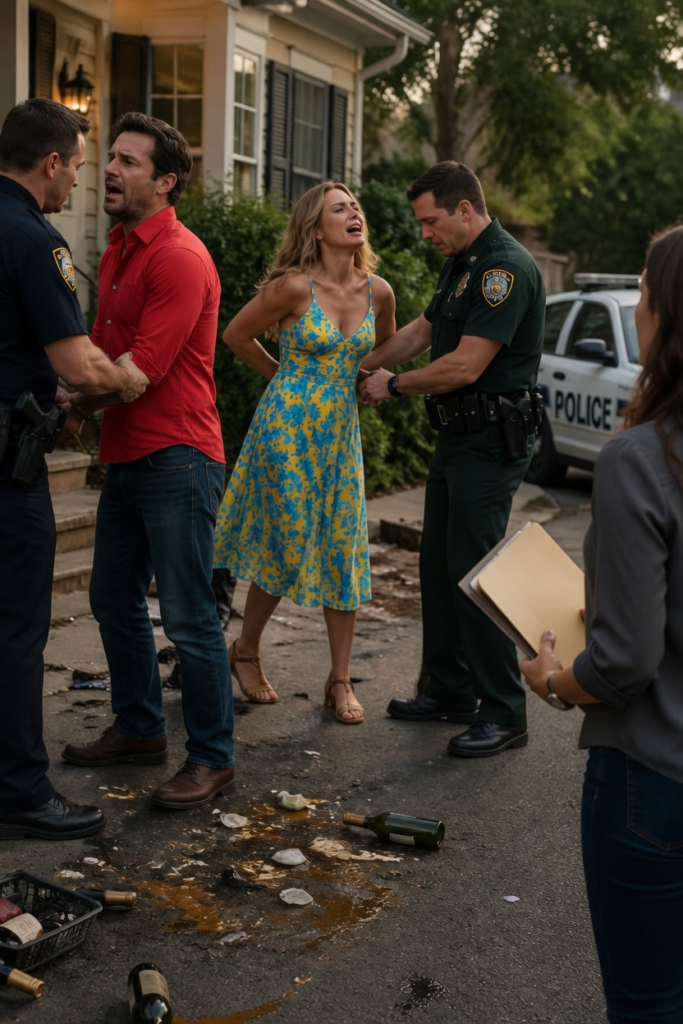
Mark dropped his bags. A bottle of expensive rum shattered on the concrete.
Handbags& Purses
“What?”
The word came out of him like all the air had been punched from his lungs.
Vivian’s smile froze.
For the first time since I had known her, my mother-in-law looked genuinely confused. Not offended. Not theatrical. Not calculating. Confused. As if the universe had made a clerical error and placed her in a scene where she was not in control.
I looked at the broken glass spreading across the walkway between us.
“Ethan is in the cardiac intensive care unit,” I repeated. “He had emergency intervention after you left. He’s alive because I called for help after you stole my phone, my purse, and my credit card.”
Mark’s face went white beneath his sunburn.
Vivian recovered faster. She always did.
“Oh, for heaven’s sake.” She adjusted one of the shopping bags on her wrist, the gold logo catching the afternoon sun. “You’re blaming us because the baby had some hidden condition? Claire, that’s not fair. Nobody could have known.”
Shopping& Retailers
I turned my eyes to her.
“You saw his lips turn blue.”
Her mouth tightened.
“You grabbed my wrist when I tried to call 911.”
“I was trying to calm you down.”
“You took my purse.”
“To stop you from making a hysterical mistake.”
“You told my husband I was hallucinating for attention while his son was suffocating in my arms.”
Mark flinched.
Vivian’s gaze flickered toward him.
That small movement told me everything. She wasn’t sorry. She was checking whether her favorite puppet still had strings attached.
Mark stepped toward me, his hand trembling. “Claire, I didn’t know.”
“No,” I said. “You didn’t want to know.”
His eyes filled instantly, but tears did not move me anymore. Tears were cheap. Ethan’s oxygen had been expensive. Ethan’s heartbeat had been priceless.
“Please,” Mark whispered. “Please tell me he’s okay.”
I let the silence stretch long enough for him to feel a fraction of what I had felt in that ambulance.
“He survived.”
Mark bent forward with one hand on his knee, as if he might vomit. “Thank God.”
“Don’t thank God yet,” I said. “You haven’t heard the rest.”
Vivian’s expression sharpened. “What is that supposed to mean?”
The front door opened behind me.
Detective Alan Reeves stepped onto the porch in a dark jacket, his badge clipped at his belt. Beside him was a uniformed officer. Two more approached from the street.
Vivian took one look at them and laughed.
She actually laughed.
“Claire, what have you done now?”
Detective Reeves descended the porch steps slowly, his face unreadable.
“Vivian Hart?”
Her laugh died.
“Yes?”
“You’re being placed under arrest for assault, credit card fraud, theft, and reckless endangerment of a child pending further charges.”
The shopping bags slid from her arms.
Shopping& Retailers
Designer tissue paper spilled onto the concrete like bright, useless confetti.
“This is absurd,” Vivian snapped. “I am his grandmother.”
Detective Reeves took her wrist.
She tried to pull away. “Do not touch me. Mark, tell him.”
Mark did not speak.
He was staring at the police with the expression of a man who had just woken up in the ruins of his own life.
“Mark Hart?” the second officer said.
Mark looked at him slowly.
“You need to come with us as well.”
His head whipped toward me.
Handbags& Purses
“Claire?”
That one word carried a whole marriage inside it. Confusion. Fear. Pleading. Betrayal, as if I had betrayed him by surviving.
I did not move.
“Tell them,” he said. “Tell them I didn’t understand.”
“You understood enough to leave.”
His mouth opened.
Nothing came out.
Vivian exploded.
“This is her fault!” she screamed, twisting as the detective cuffed her. “She planned this! She wanted to ruin my vow renewal because she can’t stand not being the center of attention. She’s unstable. Ask Mark. Ask my son. She’s been strange since the birth.”
Detective Reeves looked at me.
I gave him one small nod.
He turned back to Vivian. “We have the video.”
That silenced her.
Not completely. Vivian was not a woman who surrendered to silence easily. But it changed the shape of her face. Her confidence cracked down the middle.
“What video?” Mark asked.
I stared at him.
“The living room camera. The nursery camera. The hallway camera. The front door camera. The audio is very clear.”
His lips parted.
I saw the exact second he remembered.
My hand reaching for the phone.
Vivian’s fingers digging into my wrist.
Ethan’s terrible little sound.
My voice saying, “Your son cannot breathe.”
His own voice saying, “Maybe we should all calm down.”
Mark closed his eyes.
“Claire,” he whispered.
But my name in his mouth no longer sounded like love. It sounded like evidence.
The officers led them toward the sedans. Vivian fought the whole way with words.
“You can’t do this. My husband knows people. We’ll sue. We’ll destroy you. Mark, stop standing there like a corpse and do something.”
Mark did nothing.
When they reached the car, he turned once.
He looked at me with wet eyes, sunburned cheeks, and the ridiculous remains of vacation still clinging to him. A cheap plastic lei hung around his neck, crushed beneath the collar of his floral shirt.
“Can I see him?” he asked.
“No.”
The answer left my mouth without effort.
His face broke.
“He’s my son.”
“He needed you,” I said. “You chose Hawaii.”
The officer guided him into the back seat.
The door shut.
Vivian’s voice was still audible through the glass, muffled and furious, as the sedans pulled away from the curb.
For a moment, the street went quiet.
A neighbor’s sprinkler ticked softly across the lawn. Somewhere, a dog barked. The broken rum soaked into the concrete, sticky and sweet, beneath thousands of dollars’ worth of luxury bags bought with stolen money.
Handbags& Purses
I looked at the house where I had tried so hard to build a family.
Then I locked the door behind me and never slept under that roof again.
That night, I returned to the hospital.
Ethan was under soft blue-white light, tubes taped carefully to skin so thin it looked almost transparent. His tiny chest rose and fell with the rhythm of a machine that had become the sound of my entire world.
Sarah was waiting near his incubator with two paper cups of coffee.
“You look like you arrested the devil,” she said.
“Her name is Vivian.”
“Same thing.”
I almost smiled.
Family
Almost.
Sarah handed me the coffee, then softened. “How are you holding up?”
I looked through the glass at my son.
“I don’t know how to answer that anymore.”
“That’s honest.”
“I keep replaying it,” I said. “Every second. Every sound he made. Every time Mark looked at his mother instead of at Ethan.”
Sarah’s jaw tightened.
“I’ve treated a lot of infants,” she said quietly. “I’ve seen frightened parents, ignorant parents, poor parents, young parents, overwhelmed parents. Most of them would run barefoot through fire if someone said their child needed help. What happened in that house was not confusion, Claire.”
I swallowed.
“It was a choice.”
“Yes.”
The word settled between us.
I had spent my whole marriage trying to soften Mark’s choices into misunderstandings. He didn’t mean to embarrass me when he let Vivian criticize my cooking. He didn’t notice when she opened my mail. He was just tired when he told me to apologize after she insulted my job. He was caught in the middle. He hated conflict. He loved me in his own way.
But when Ethan turned blue, there had been no middle.
There was a baby who needed air.
There was a mother trying to save him.
There was a grandmother blocking the phone.
And there was a father who chose the wrong side.
The next morning, my attorney arrived at the hospital before sunrise.
Her name was Maren Cole, and she had the kind of calm that made dangerous people nervous. She wore a charcoal suit, carried a leather folder, and looked at the NICU security doors as if she could subpoena them if necessary.
“I reviewed everything you sent,” she said after Sarah cleared us into a private consultation room. “The footage, the financial records, the medical report, the police intake notes. Claire, I need you to understand something. This is not just a divorce.”
“I know.”
“No,” she said. “You don’t. Not yet. This is the kind of case judges remember.”
I sat very still.
Maren opened her folder.
“Emergency protective order first. Vivian is to have no contact with you or Ethan. Mark also, pending the initial hearing. We will file for temporary sole legal and physical custody. Given the facts, I expect it to be granted.”
My fingers tightened around the coffee cup.
“He’ll fight.”
“Maybe. But fighting requires a position. His position is very weak.”
“He’ll say his mother manipulated him.”
“Then he can explain why he allowed himself to be manipulated while his newborn was in respiratory distress.”
I looked down.
Maren’s tone became less sharp. “Claire. I am going to ask you a difficult question because opposing counsel will ask worse ones. Did you ever prevent him from seeking care for Ethan before this incident?”
“No.”
“Did you exaggerate any medical concerns previously?”
“No.”
“Any documented postpartum psychiatric diagnosis?”
“No.”
“Any history of hallucinations, delusions, psychiatric hospitalization, substance abuse?”
“No.”
“Good.”
The word hit me strangely.
Good.
As if the truth itself had become a defense strategy.
Maren slid another page toward me. “Now the credit card. You did not authorize the charges.”
“No.”
“Did Mark have permission to use the emergency card at any point?”
“No. He knew what it was for.”
“Did Vivian?”
“She knew. She mocked me for calling it an emergency card. She said her vow renewal was an emergency because canceling would be humiliating.”
Maren made a note.
“That line is on video?”
“Yes.”
A thin smile crossed her face. “Excellent.”
For the first time in five days, I felt something like oxygen enter my own lungs.
Not happiness. Not relief.
A foothold.
By noon, the story had begun spreading.
Not because I posted anything. I did not need public sympathy, and I did not want Ethan’s medical crisis turned into neighborhood entertainment. But arrests create records. Police cars create whispers. Vivian had spent decades cultivating an audience, and audiences are never loyal. They are hungry.
The first call came from Mark’s sister, Dana.
I almost didn’t answer.
Dana had always been polite to me in the passive way people are polite when they do not want involvement. She had never defended me from Vivian. She had never attacked me either. In that family, neutrality had masqueraded as kindness.
Family
I answered because Maren told me to let calls go to voicemail unless I felt steady.
At that moment, I wanted to know which way the wind was blowing.
“Claire?” Dana’s voice trembled. “Is Ethan alive?”
“Yes.”
A sob broke through the line. “Thank God. I just heard Mom and Mark were arrested. Nobody would tell me anything. Mom called Dad from holding and said you fabricated a medical emergency to punish them.”
“Ethan had a congenital heart defect. He nearly died.”
Silence.
Then Dana whispered, “She said it was a cold.”
“She saw him blue.”
A longer silence.
“I believe you,” Dana said.
I closed my eyes.
Those three words should not have mattered. But after years of being treated like a translator for my own reality, they landed hard.
“Thank you.”
“Claire, I’m sorry.”
I said nothing.
Dana began crying. “I should have said something years ago. I know how she is. We all know. We let Mark be her favorite little soldier because it kept her from turning on us. That’s not an excuse. I know it’s not. But I’m sorry.”
I looked through the small window in the consultation room door. Nurses moved softly around incubators. Machines blinked. Life continued with careful precision.
“Your apology doesn’t help Ethan,” I said.
“I know.”
“But it’s more than Mark has given me.”
Dana inhaled shakily. “Can I do anything?”
“Yes.”
“Anything.”
“Tell the truth when someone asks.”
She did.
By the end of the week, Vivian’s version of events had collapsed under the weight of people who had spent years being afraid of her and were suddenly very tired.
Dana gave a statement about Vivian controlling Mark’s finances and routinely belittling my parenting before Ethan was even born. Vivian’s former assistant produced texts showing Vivian bragged about “borrowing Claire’s card” because “the girl is too spineless to object.” A cousin forwarded screenshots from the Hawaii trip: Vivian posing beneath a sunset in a white silk dress with the caption, “Worth every penny, even the dramatic ones.”
Apparel
Every penny.
The detective printed that one.
Mark was released on bond first.
He tried to come to the hospital.
He did not make it past security.
I was sitting beside Ethan, humming under my breath, when my phone rang from an unknown number. Maren was there, reviewing filings on her tablet. She looked at the screen and shook her head.
“Let it go.”
I let it go.
A voicemail appeared.
Maren listened first. Her expression hardened, but she handed me the phone.
Mark’s voice filled the room, raw and wrecked.
“Claire, please. I’m at the hospital. They won’t let me upstairs. I know you hate me. You should. I hate me too. But I need to see him. I need to tell him I’m sorry. I need to tell you—God, Claire, I don’t even know what to say. Mom said you were unstable, and I believed her because it was easier than admitting she was wrong. It was easier than standing up to her. I know that sounds pathetic. It is pathetic. Please. Just five minutes. Please don’t take my son from me.”
The message ended.
My hand was steady when I lowered the phone.
Maren watched me. “Do you want to respond?”
I looked at Ethan.
His eyelids fluttered. One tiny fist opened and closed, no bigger than a walnut.
“No.”
Maren nodded once. “Good.”
On the eighth day, Ethan had surgery.
No courtroom, no arrest, no betrayal, no stolen money mattered inside that waiting room. There was only a clock on the wall and the terrible knowledge that someone had opened my newborn son’s chest to repair a heart that had been struggling since before I ever kissed his forehead.
Sarah sat on one side of me.
My sister, Naomi, sat on the other.
Naomi had driven through the night from Chicago the moment I called. She arrived with two suitcases, a folder of paid leave documents, and the kind of rage that made nurses step carefully around her.
“I want one minute with Mark,” she said for the ninth time.
“No.”
“Thirty seconds.”
“No.”
“Claire, I can be efficient.”
Despite everything, I laughed.
It came out cracked and unfamiliar, but it was a laugh.
Naomi looked satisfied. “There you are.”
I leaned my head against her shoulder.
“I’m scared.”
“I know.”
“What if he doesn’t—”
“Don’t finish that sentence.”
“I have to think it.”
“No, you don’t. You have to breathe until the surgeon comes out. That is your entire job.”
So I breathed.
One minute.
Then another.
Then another.
Four hours later, the surgeon walked into the waiting room with tired eyes and a gentle smile.
“The repair went well.”
My body folded forward.
Naomi caught me.
Sarah started crying before I did.
“He is stable,” the surgeon continued. “There will be a long recovery and close monitoring, but we are very optimistic.”
Optimistic.
The word was almost too large to hold.
When I saw Ethan afterward, he looked impossibly small beneath the bandages and wires. But his color was better. The frightening blue tint was gone. His lips were soft pink. His tiny heart, repaired by hands more faithful than his father’s, beat steadily beneath the monitors.
I placed one finger against his palm.
He gripped it.
That was the moment I stopped feeling like I had lost everything.
I had not lost everything.
I had saved what mattered.
The first custody hearing happened two weeks later.
I did not want to leave Ethan, but Maren insisted my presence mattered. Naomi stayed at the hospital. Sarah promised to call if anything changed. I wore a navy dress that still strained slightly at the waist because my body had given birth less than three weeks ago and had not yet recovered from being treated like a battlefield.
Apparel
In court, Mark looked smaller.
He wore a dark suit and no tie. There were circles under his eyes. He kept glancing at the door, maybe expecting Vivian to sweep in and command the room back into alignment.
She did not.
Vivian was there in a separate row with her attorney, wearing cream, pearls, and an expression of disciplined martyrdom. She had styled herself as the victim beautifully. Soft makeup. Small diamond cross. Hands folded as if she had spent the morning praying instead of threatening half the family through intermediaries.
When I entered, Mark stood.
I walked past him without looking.
The judge was a woman in her late fifties named Honorable Elaine Porter. She read the filings with the slow, unpleasant focus of someone who had seen too much human cruelty to be easily surprised, but not enough to become numb.
Family
Maren spoke first.
She did not dramatize. She did not need to.
She played thirty-seven seconds of video.
Not the whole thing. Just enough.
On the courtroom screen, I appeared pale and shaking in my own living room, Ethan clutched against me.
“Call 911,” video-me said.
Vivian’s voice answered, crisp and dismissive. “Stop being dramatic, Claire.”
Then Ethan made that tearing-paper sound.
Even the court reporter looked up.
Video-me moved toward the phone.
Vivian blocked me.
I shoved past her.
She grabbed my wrist.
Judge Porter’s face changed.
Only slightly.
But I saw it.
Maren paused the footage there. Vivian’s fingers were visibly digging into my skin. Ethan’s tiny blue face was turned toward the camera.
“That infant,” Maren said, “was diagnosed less than an hour later with a life-threatening cardiac defect. Medical testimony submitted to the court states delay would likely have been fatal.”
Mark’s attorney stood and tried to argue that Mark had been overwhelmed, misled, emotionally manipulated by a domineering parent.
Judge Porter looked at him over her glasses.
“Counsel, is it your argument that an adult father is not responsible for recognizing visible respiratory distress in his three-day-old newborn when the child’s mother directly states the baby cannot breathe?”
The attorney hesitated.
“No, Your Honor, but—”
“Then proceed carefully.”
He sat down sooner than planned.
Vivian’s attorney tried another route. He suggested I had escalated a family disagreement. He emphasized that Vivian was not a medical professional and could not have been expected to diagnose a congenital defect.
Judge Porter’s voice cooled.
“She was not required to diagnose the child. She was required not to physically prevent the child’s mother from seeking emergency care.”
Vivian’s attorney stopped smiling.
By the end of the hearing, I was granted temporary sole legal and physical custody. Mark was allowed no visitation until further review, pending a psychological evaluation, parenting assessment, and the resolution of criminal charges. Vivian was barred from any contact with Ethan indefinitely.
When Judge Porter announced it, Mark put his face in his hands.
Vivian stared straight ahead, as if denial itself could become a wall.
Outside the courtroom, Mark tried to approach me.
Maren stepped between us.
“Don’t,” she said.
Mark looked past her at me. “Claire, please.”
I stopped.
Not because he deserved it.
Because I did.
For years, my silence had been mistaken for permission. I wanted him to hear my voice clearly in a place where no one could pretend not to understand.
“You left him,” I said.
His eyes reddened. “I know.”
“No. You still don’t. You left him while he was dying. Then you drank cocktails on a beach with the woman who stopped me from calling 911. You smiled in pictures while our son was on a ventilator.”
His lips trembled. “I didn’t know.”
“You chose not to know.”
“I’ll spend the rest of my life making it right.”
“No,” I said. “You’ll spend the rest of your life knowing there are some things you don’t get to make right.”
He began to cry.
This time, I felt nothing but a quiet sadness for the woman I had been. She would have reached for him. She would have comforted him for the pain he caused her. She would have turned his guilt into her responsibility.
I was not her anymore.
I walked away.
The criminal case moved slower.
Cases always do. Justice is not lightning. It is paperwork, hearings, continuances, motions, signatures, statements, evidence logs, and the slow tightening of a net.
Vivian tried to regain control through reputation.
She told her church group I had suffered a postpartum break and was using the legal system to punish her. She told neighbors Mark was being alienated from his child by a vindictive wife. She told relatives the video had been “taken out of context,” though no one could explain a context in which stopping a mother from calling 911 for a blue newborn became reasonable.
Then the prosecutor played the full audio for her attorney.
After that, Vivian stopped giving interviews to her friends.
The credit card charges were undeniable. Flights. Resort suite. Spa package. Bridal boutique. Jewelry. Restaurant tabs. Designer shopping. All charged to my emergency card after Vivian physically removed it from my purse on camera.
Shopping& Retailers
The prosecutor added exploitation and identity-related charges. Because the card had crossed state lines, federal interest became possible, though the final case remained local and state-based through a plea agreement.
Mark’s charges were different. Less financial exposure, more parental negligence. His attorney pushed hard for diversion, counseling, anything that would keep him from jail. The prosecutor refused to dismiss the child endangerment count completely.
Ethan came home after twenty-six days.
Not to the house with the oak door.
To Naomi’s guest room, which had become a nursery.
There were no designer curtains, no heirloom crib Vivian had insisted on choosing, no framed wedding photos, no polished dining table where I had swallowed insults with cold mashed potatoes.
There was a secondhand rocking chair.
Handbags& Purses
There were folded onesies.
There was a tiny monitor that beeped softly beside the crib.
There was my sister sleeping on an air mattress outside the door because she said nobody with my recent history should have to wake up alone.
And there was Ethan.
Alive.
Pink-cheeked.
Furious when hungry.
Sleeping with one hand curled near his face like a prizefighter.
Every night, I sat in that rocking chair and fed him slowly. Sometimes I cried so quietly even he did not wake. Sometimes I simply stared at him, counting breaths, counting miracles, counting the cost of ten minutes.
Mark wrote letters.
The first one arrived a month after Ethan came home.
Maren screened it, then asked if I wanted to read it.
I said yes.
Claire,
I know I have no right to ask for anything. I know “sorry” is too small. I have replayed that morning until I can barely stand my own mind. I keep hearing his breathing. I keep seeing you look at me. I failed you both.
I am in therapy. Not because it fixes anything, but because I need to understand why I became the kind of man who could stand there and do nothing.
My mother is not an excuse. She is part of the explanation, but I am the reason. I chose cowardice. I chose comfort. I chose being her son over being Ethan’s father.
Please tell him someday that I loved him, even if I did not protect him when it mattered.
Mark.
I read it twice.
Then I placed it in a file.
I did not answer.
Love without protection was just decoration.
Two months later, Vivian took a plea.
Her attorney called it pragmatic. The prosecutor called it accountability. Naomi called it “not enough, but I’ll take the appetizer.”
Vivian pled guilty to felony credit card fraud and misdemeanor assault, with the child endangerment charge reduced as part of the agreement, though the factual basis remained on record. She received probation, restitution, mandatory counseling, community service, and a permanent criminal protective order barring contact with me or Ethan.
She also lost something she valued more than freedom: public dignity.
Her church removed her from the charity committee. Friends stopped inviting her to luncheons. The vow renewal photos disappeared from her social media, but screenshots survived everywhere. The woman who had spent her life controlling stories discovered that the internet loves a villain with receipts.
Mark did not take a plea immediately.
He held out, not because he believed he was innocent, but because accepting guilt meant losing the fantasy that he was merely weak.
The divorce negotiations became the place where that fantasy finally died.
We sat across from each other in a mediation room six months after Ethan’s birth. Ethan was with Naomi, chunky and alert, his surgery scar healing into a thin pale line that made me ache and marvel every time I saw it.
Mark looked older. His hair had grown out unevenly. He wore a plain gray suit. No Vivian. No family entourage. Just his attorney and a manila folder.
Family
Maren sat beside me, posture perfect.
The mediator began with property division, but Mark interrupted.
“I’ll sign the custody terms.”
His attorney turned sharply. “Mark—”
“I’ll sign them.”
The room went still.
I looked at him fully for the first time in months.
His eyes were tired, but clear.
“I’m not going to drag Claire through a trial pretending I deserve equal custody right now,” he said. “I don’t. Ethan needs stability. He needs his mother. I’ll do the evaluations. I’ll do supervised visitation if and when the court allows it. I’ll pay support. I’ll pay the medical bills not covered by insurance. I’ll sign the house over if that’s what she wants.”
His attorney looked pained.
Maren watched him with narrow professional interest.
The mediator cleared her throat. “Mr. Hart, are you certain?”
Mark nodded.
Then he looked at me.
“I can’t undo what I did. But I can stop making you fight for what should have been yours automatically.”
It was the first decent thing he had done.
That did not make him safe.
That did not make him forgiven.
But it mattered.
I leaned back in my chair. “I don’t want the house.”
Mark blinked.
I looked at Maren, then back at him.
“Sell it. Pay off the card, reimburse every stolen charge, cover Ethan’s medical debt, and put the remainder of your share into an irrevocable trust for Ethan’s care.”
Mark swallowed. “Okay.”
“I want the family car.”
“Okay.”
“I want my name restored.”
His eyes flickered.
Claire Hart had been the name on hospital forms, police reports, court filings, credit statements, and surgical consent documents. I wanted it gone.
“I want to be Claire Bennett again.”
Mark’s face tightened with grief.
Then he nodded.
“Okay.”
The divorce was final three months later.
By then, Ethan had learned to smile.
Not the accidental newborn grimace everyone lies about. A real smile. A bright, gummy, whole-face smile that arrived one morning while I was singing badly over a bottle warmer.
Naomi screamed so loudly I nearly dropped the milk.
“He did it! He smiled!”
Ethan startled, then smiled again as if our panic amused him.
I cried so hard Naomi had to take the bottle.
The final criminal hearing for Mark happened after the divorce.
I gave a victim impact statement.
I stood in court with my hands steady and my son’s tiny hospital bracelet folded in my pocket.
I did not look at Vivian, who had come despite the protective order allowing her presence only because it was a public proceeding related to her son. She sat in the back wearing black, as if mourning a tragedy she had not caused.
I looked at the judge.
“My son Ethan was three days old when his father chose not to help him breathe. I have been asked many times whether I believe Mark Hart is a monster. I do not. I believe he is something more ordinary and more frightening. He is a man who spent so long avoiding conflict that he mistook cowardice for peace. He allowed another adult’s pride to become more important than his child’s life.”
Mark lowered his head.
“My son survived because I found a way around the people who should have protected him. He will grow up with a scar on his chest. I will grow old knowing how close I came to burying him because someone did not want to miss a flight.”
The courtroom was silent.
“I am not asking the court for revenge. Revenge will not help Ethan. I am asking for a sentence that recognizes neglect is not passive when a child is dying in front of you. Doing nothing was a decision.”
Mark pled guilty to child endangerment.
He received probation, mandatory parenting classes, court-ordered therapy, community service, and supervised visitation eligibility only after compliance and court review. No jail. Naomi was furious. Maren said it was within the realistic range.
I did not feel victorious.
I felt finished.
That was better.
One year later, Ethan took his first steps in my sister’s backyard.
It was late spring. The grass was uneven, the kind of lawn that would have horrified Vivian because it contained actual life instead of landscaping. Naomi had set up a small blue blanket under the maple tree. Sarah was there with iced tea. Maren came by for twenty minutes and stayed two hours, pretending she did not like babies until Ethan grabbed her finger.
He stood near the blanket, wobbling on thick little legs.
“Come here, baby,” I whispered.
He looked at me with solemn concentration.
Then he took one step.
Another.
Then he tipped forward into my arms.
The cheering startled three birds out of the tree.
I held him against me, laughing into his soft hair.
His heart beat strong beneath my hand.
Later that afternoon, after Ethan fell asleep in his stroller, a notification appeared on my phone.
A supervised visitation review had been completed.
Mark had complied with therapy, classes, support, and every court order. The evaluator recommended short, supervised visits twice a month at a family center, with no contact between Mark and me and absolutely no third-party relatives present.
Family
I read the report twice.
Naomi watched my face. “You okay?”
“Yes.”
“You don’t have to agree.”
“I know.”
“What are you going to do?”
I looked at Ethan sleeping under the shade, his lashes resting on round cheeks, his little chest rising and falling with the ordinary ease I would never take for granted.
“I’m going to follow the order,” I said. “Exactly. Nothing more.”
The first visit happened in a room with padded mats, plastic toys, and a supervisor taking notes in the corner.
I watched from behind one-way glass.
Mark entered slowly, carrying no gifts except a small board book approved by the center. He looked nervous. When the supervisor placed Ethan on the mat, Mark did not rush him. He sat cross-legged several feet away.
“Hi, Ethan,” he said softly. “I’m Mark.”
Not Dad.
Mark.
I respected that.
Ethan stared at him, then resumed chewing on a toy giraffe.
Mark smiled sadly and opened the book.
His voice shook on the first page but steadied by the third.
I did not cry.
I did not soften into old habits.
I simply watched.
A person can become better and still not be allowed back into the place they burned down. That was the lesson I had learned with blood, oxygen, surgery, and law.
Years passed in careful increments.
Ethan grew.
His cardiologist remained pleased. Annual checkups became less terrifying, though I still held my breath before every echocardiogram. His scar faded as his body lengthened. He became a boy with bright eyes, stubborn curls, and a fascination with garbage trucks so intense that our neighborhood sanitation workers knew him by name.
Mark earned expanded supervised time, then limited unsupervised daytime visits when Ethan was older. He never missed child support. He never violated the order. He never brought Vivian near him.
Vivian tried twice.
The first time, she sent a birthday card addressed to “my precious grandson,” filled with glitter and a handwritten note about forgiveness. Maren forwarded it to the court.
The second time, she appeared at a playground where Mark had Ethan.
Mark picked Ethan up, walked directly to his car, called the supervisor, called me, and reported his own mother.
That was the day I believed he had changed.
Not enough to be my husband again.
Never that.
But enough to be something safer than he had been.
Vivian was sanctioned for violating the protective order. After that, she disappeared into the lonely kingdom she had built for herself.
When Ethan was five, he asked about the scar.
We were sitting on the bathroom floor after his bath. He was wrapped in a dinosaur towel, warm and damp and serious.
“Mommy?”
“Yes?”
“Why do I have a line here?”
He touched the center of his chest.
I had practiced answers. Simple ones. Age-appropriate ones. Truthful ones.
“When you were a tiny baby,” I said, “your heart needed help. Some very smart doctors fixed it.”
“Was I brave?”
“The bravest person I ever met.”
“Were you scared?”
“Yes.”
He considered this.
“Did Daddy Mark get scared?”
I brushed a curl from his forehead.
“Yes,” I said. “But he got scared too late.”
Ethan nodded with the solemn wisdom of small children who accept truth better than adults.
“Can I have cereal?”
And just like that, the great tragedy of my life became less interesting than cereal.
I laughed and kissed his forehead.
“Yes, baby. You can have cereal.”
On Ethan’s sixth birthday, we held a party in the park.
Naomi organized games. Sarah brought a cake shaped like a rocket ship. Maren sent a gift because she claimed court filings had made her emotionally invested. Mark came for the last hour, as agreed, and helped Ethan assemble a ridiculous plastic dinosaur racetrack.
He kept his distance from me, respectful and quiet.
When the party ended, Ethan ran between us holding a balloon.
“Look!” he shouted. “It’s shaped like a heart!”
It was not. It was shaped like a lopsided dog.
Mark and I both said, “Wow,” at the same time.
For one brief second, we looked at each other.
There was grief there.
But not longing.
Not anymore.
Just the recognition that once, in another life, we had stood on the edge of becoming a family. Then he had stepped back, and I had carried our son across the line alone.
Family
Mark cleared his throat. “He’s amazing.”
“Yes,” I said. “He is.”
“You did that.”
“No,” I replied, watching Ethan try to tie the balloon to his shoe. “He did. I just stayed.”
Mark’s eyes lowered.
“I should have stayed.”
“Yes,” I said.
No cruelty.
No comfort.
Just the truth.
He nodded.
Then Ethan called for him, and he went.
That evening, after everyone left, Ethan fell asleep in the back seat before we reached home.
Home was no longer Naomi’s guest room.
It was a small yellow house I had bought with savings, settlement money, and the quiet determination of a woman who had rebuilt more than credit. It had a porch swing, a vegetable garden, and a bedroom painted green because Ethan had insisted green was “the color of brave dragons.”
Inside, I carried him to bed.
He stirred as I tucked the blanket around him.
“Mommy?”
“I’m here.”
“Don’t go.”
“I won’t.”
He sighed and slipped back into sleep.
I stood there for a long time, listening to him breathe.
Steady.
Easy.
Alive.
On the wall above his dresser was a framed photo from the hospital fundraiser we started after his recovery. The Ethan Bennett Heart Fund helped parents pay for emergency travel, infant cardiac screenings, and medical monitoring devices. Sarah served on the board. Naomi ran events like a military operation. Maren handled legal structure pro bono and complained about it every year while donating more than anyone.
The first grant we ever gave went to a mother whose newborn had been dismissed twice as “just fussy.”
Her baby lived.
That was the ending Vivian never understood.
She thought power meant controlling the room.
She thought winning meant taking what she wanted and making everyone else apologize for bleeding.
But real power was quieter.
It was a mother pressing a panic button with one hand while holding a dying child with the other.
It was a surgeon repairing a heart smaller than a plum.
It was a judge saying no.
It was a woman signing her old name back into existence.
It was a little boy running across a park with a crooked balloon, laughing like the world had always been kind.
I turned off Ethan’s lamp.
In the hallway, I paused beside a small framed document.
Final Decree of Dissolution.
Below it, another frame.
Certificate of Name Restoration: Claire Elise Bennett.
And beside that, my favorite one.
A crayon drawing Ethan had made at school. Two stick figures stood under a huge green dragon. One was small. One wore a messy crown.
At the bottom, in uneven letters, he had written:
ME AND MOMMY. SHE SAVED ME.
I touched the frame lightly.
For years, I had thought a perfect ending meant getting back what was stolen. The marriage. The house. The trust. The family I tried to build.
Family
I was wrong.
Family
A perfect ending was knowing exactly what could never be returned—and realizing I did not need it anymore.
From the bedroom, Ethan murmured in his sleep.
I opened the door just enough to see him curled safely under his blanket.
His chest rose.
His chest fell.
And in the quiet yellow house that belonged to us, my son kept breathing.