“Do you have five minutes?” she asked.
“For you?” He set the folder down. “Always.”
She smiled, but her hands trembled.
Nathan noticed immediately. “What happened?”
“Nothing bad.”
“Emma.”
She inhaled. Her eyes shone. “I was going to wait until tonight, but I couldn’t. I tried. I made it all the way from the parking garage to the elevator, and then I realized I was going to explode if I sat through budget review pretending to be normal.”
A strange warmth moved through him. “You’re scaring me.”
“I’m pregnant.”
The room went silent.
https://googleads.g.doubleclick.net/pagead/ads?client=ca-pub-4718555627628568&output=html&h=280&slotname=6808460586&adk=3512117259&adf=2026028295&pi=t.ma~as.6808460586&w=794&fwrn=4&fwrnh=100&lmt=1777686346&rafmt=1&format=794×280&url=https%3A%2F%2Fen12.spotlight8.com%2Fhoanganh1%2Fmillionaire-refused-to-sign-his-newborn-sons-birth-certificate-until-the-dna-test-exposed-the-lie-that-almost-destroyed-his-marriage%2F%3Ffbclid%3DIwY2xjawRjH5hleHRuA2FlbQIxMABicmlkETE5ZXVocjdLYktFcnlqeThuc3J0YwZhcHBfaWQQMjIyMDM5MTc4ODIwMDg5MgABHuWCjy4nMOPmkh3HfeP0AqLKuvdAclFVzMb__eO_hHfB1sOcztnBd8fV8jPL_aem_St_FZAp7myEheN5izLCunw&fwr=0&fwrattr=true&rpe=1&resp_fmts=3&asro=0&aiapmid=0.0001&aiactd=0&aicctd=0&ailctd=0&aimartd=4&aieuf=1&aicrs=1&uach=WyJXaW5kb3dzIiwiMTAuMC4wIiwieDg2IiwiIiwiMTQ3LjAuMzkxMi45OCIsbnVsbCwwLG51bGwsIjY0IixbWyJNaWNyb3NvZnQgRWRnZSIsIjE0Ny4wLjM5MTIuOTgiXSxbIk5vdC5BL0JyYW5kIiwiOC4wLjAuMCJdLFsiQ2hyb21pdW0iLCIxNDcuMC43NzI3LjEzOCJdXSwwXQ..&abgtt=6&dt=1777746094068&bpp=1&bdt=13782&idt=0&shv=r20260428&mjsv=m202604270101&ptt=9&saldr=aa&abxe=1&cookie=ID%3D6b17831eef97edff%3AT%3D1777130838%3ART%3D1777615822%3AS%3DALNI_MbeF3F0oFp6yygJ-FHqtDbjHRyhhQ&gpic=UID%3D000013ce152daed8%3AT%3D1777130838%3ART%3D1777615822%3AS%3DALNI_MbAAho6a1HFT7D9ZNqHhaWMTbc_dA&eo_id_str=ID%3D05f998db86de8df8%3AT%3D1777130838%3ART%3D1777615822%3AS%3DAA-AfjZ9SPdmvD5y2LVsJJpnybIH&prev_fmts=0x0%2C794x280%2C794x280&nras=1&correlator=337875372660&frm=20&pv=1&u_tz=-240&u_his=1&u_h=1080&u_w=1920&u_ah=1050&u_aw=1920&u_cd=32&u_sd=1&dmc=32&adx=552&ady=1567&biw=1897&bih=966&scr_x=0&scr_y=0&eid=95387509%2C95372614%2C95387778%2C95389571&oid=2&pvsid=3402451001461883&tmod=1912663002&uas=1&nvt=1&ref=https%3A%2F%2Fl.facebook.com%2F&fc=1920&brdim=0%2C0%2C0%2C0%2C1920%2C0%2C1920%2C1050%2C1912%2C966&vis=1&rsz=%7C%7CeEbr%7C&abl=CS&pfx=0&fu=128&bc=31&bz=1&pgls=CAEaBTYuOS40&ifi=12&uci=a!c&btvi=1&fsb=1&dtd=6
Emma laughed once through tears. “We’re having a baby, Nathan.”
She held out the envelope. Inside was a lab confirmation from her doctor.
Pregnancy confirmed.
Six weeks.
Nathan looked at the paper.
Then at his wife.
Then back at the paper.
For three seconds, he felt something almost like wonder. It rose in him bright and impossible, a door opening onto a life he had spent eight years refusing to imagine.
A nursery down the hall.
Small shoes by the back door.
https://googleads.g.doubleclick.net/pagead/ads?client=ca-pub-4718555627628568&output=html&h=280&slotname=6292621119&adk=4137745574&adf=2093916922&pi=t.ma~as.6292621119&w=794&fwrn=4&fwrnh=100&lmt=1777686346&rafmt=1&format=794×280&url=https%3A%2F%2Fen12.spotlight8.com%2Fhoanganh1%2Fmillionaire-refused-to-sign-his-newborn-sons-birth-certificate-until-the-dna-test-exposed-the-lie-that-almost-destroyed-his-marriage%2F%3Ffbclid%3DIwY2xjawRjH5hleHRuA2FlbQIxMABicmlkETE5ZXVocjdLYktFcnlqeThuc3J0YwZhcHBfaWQQMjIyMDM5MTc4ODIwMDg5MgABHuWCjy4nMOPmkh3HfeP0AqLKuvdAclFVzMb__eO_hHfB1sOcztnBd8fV8jPL_aem_St_FZAp7myEheN5izLCunw&fwr=0&fwrattr=true&rpe=1&resp_fmts=3&asro=0&aiapmid=0.0001&aiactd=0&aicctd=0&ailctd=0&aimartd=4&aieuf=1&aicrs=1&uach=WyJXaW5kb3dzIiwiMTAuMC4wIiwieDg2IiwiIiwiMTQ3LjAuMzkxMi45OCIsbnVsbCwwLG51bGwsIjY0IixbWyJNaWNyb3NvZnQgRWRnZSIsIjE0Ny4wLjM5MTIuOTgiXSxbIk5vdC5BL0JyYW5kIiwiOC4wLjAuMCJdLFsiQ2hyb21pdW0iLCIxNDcuMC43NzI3LjEzOCJdXSwwXQ..&abgtt=6&dt=1777746094101&bpp=1&bdt=13815&idt=1&shv=r20260428&mjsv=m202604270101&ptt=9&saldr=aa&abxe=1&cookie=ID%3D6b17831eef97edff%3AT%3D1777130838%3ART%3D1777615822%3AS%3DALNI_MbeF3F0oFp6yygJ-FHqtDbjHRyhhQ&gpic=UID%3D000013ce152daed8%3AT%3D1777130838%3ART%3D1777615822%3AS%3DALNI_MbAAho6a1HFT7D9ZNqHhaWMTbc_dA&eo_id_str=ID%3D05f998db86de8df8%3AT%3D1777130838%3ART%3D1777615822%3AS%3DAA-AfjZ9SPdmvD5y2LVsJJpnybIH&prev_fmts=0x0%2C794x280%2C794x280%2C794x280%2C794x280&nras=1&correlator=337875372660&frm=20&pv=1&u_tz=-240&u_his=1&u_h=1080&u_w=1920&u_ah=1050&u_aw=1920&u_cd=32&u_sd=1&dmc=32&adx=552&ady=2762&biw=1897&bih=966&scr_x=0&scr_y=0&eid=95387509%2C95372614%2C95387778%2C95389571&oid=2&pvsid=3402451001461883&tmod=1912663002&uas=1&nvt=1&ref=https%3A%2F%2Fl.facebook.com%2F&fc=1920&brdim=0%2C0%2C0%2C0%2C1920%2C0%2C1920%2C1050%2C1912%2C966&vis=1&rsz=%7C%7CeEbr%7C&abl=CS&pfx=0&fu=128&bc=31&bz=1&pgls=CAEaBTYuOS40&ifi=14&uci=a!e&btvi=3&fsb=1&dtd=7
Emma asleep with a child tucked against her.
A little hand wrapped around his finger.
Then the old medical report in his locked drawer came roaring back.
Impossible.
The word cut through him.
Emma’s smile faltered. “Nathan?”
He could not breathe properly.
“How far along?” he asked.
She blinked. “About six weeks.”
Six weeks.
His mind moved with brutal efficiency. Six weeks ago, he had been traveling. Tokyo. London. Washington, D.C. Emma had stayed in Seattle, working late on the Atlas navigation audit.
Working late with Owen Mercer.
https://googleads.g.doubleclick.net/pagead/ads?client=ca-pub-4718555627628568&output=html&h=280&slotname=8776148374&adk=3866433158&adf=3009922137&pi=t.ma~as.8776148374&w=794&fwrn=4&fwrnh=100&lmt=1777686346&rafmt=1&format=794×280&url=https%3A%2F%2Fen12.spotlight8.com%2Fhoanganh1%2Fmillionaire-refused-to-sign-his-newborn-sons-birth-certificate-until-the-dna-test-exposed-the-lie-that-almost-destroyed-his-marriage%2F%3Ffbclid%3DIwY2xjawRjH5hleHRuA2FlbQIxMABicmlkETE5ZXVocjdLYktFcnlqeThuc3J0YwZhcHBfaWQQMjIyMDM5MTc4ODIwMDg5MgABHuWCjy4nMOPmkh3HfeP0AqLKuvdAclFVzMb__eO_hHfB1sOcztnBd8fV8jPL_aem_St_FZAp7myEheN5izLCunw&fwr=0&fwrattr=true&rpe=1&resp_fmts=3&asro=0&aiapmid=0.0001&aiactd=0&aicctd=0&ailctd=0&aimartd=4&aieuf=1&aicrs=1&uach=WyJXaW5kb3dzIiwiMTAuMC4wIiwieDg2IiwiIiwiMTQ3LjAuMzkxMi45OCIsbnVsbCwwLG51bGwsIjY0IixbWyJNaWNyb3NvZnQgRWRnZSIsIjE0Ny4wLjM5MTIuOTgiXSxbIk5vdC5BL0JyYW5kIiwiOC4wLjAuMCJdLFsiQ2hyb21pdW0iLCIxNDcuMC43NzI3LjEzOCJdXSwwXQ..&abgtt=6&dt=1777746094134&bpp=1&bdt=13848&idt=1&shv=r20260428&mjsv=m202604270101&ptt=9&saldr=aa&abxe=1&cookie=ID%3D6b17831eef97edff%3AT%3D1777130838%3ART%3D1777746007%3AS%3DALNI_MbeF3F0oFp6yygJ-FHqtDbjHRyhhQ&gpic=UID%3D000013ce152daed8%3AT%3D1777130838%3ART%3D1777746007%3AS%3DALNI_MbAAho6a1HFT7D9ZNqHhaWMTbc_dA&eo_id_str=ID%3D05f998db86de8df8%3AT%3D1777130838%3ART%3D1777746007%3AS%3DAA-AfjZ9SPdmvD5y2LVsJJpnybIH&prev_fmts=0x0%2C794x280%2C794x280%2C794x280%2C794x280%2C794x280%2C794x280&nras=1&correlator=337875372660&frm=20&pv=1&u_tz=-240&u_his=1&u_h=1080&u_w=1920&u_ah=1050&u_aw=1920&u_cd=32&u_sd=1&dmc=32&adx=552&ady=3795&biw=1897&bih=966&scr_x=0&scr_y=0&eid=95387509%2C95372614%2C95387778%2C95389571&oid=2&pvsid=3402451001461883&tmod=1912663002&uas=1&nvt=1&ref=https%3A%2F%2Fl.facebook.com%2F&fc=1920&brdim=0%2C0%2C0%2C0%2C1920%2C0%2C1920%2C1050%2C1912%2C966&vis=1&rsz=%7C%7CeEbr%7C&abl=CS&pfx=0&fu=128&bc=31&bz=1&pgls=CAEaBTYuOS40&ifi=16&uci=a!g&btvi=5&fsb=1&dtd=74
Owen was head of physical security at Carlisle Aerospace. Former military. Confident. Friendly. The kind of man who knew everyone’s name and somehow made employees laugh even during stressful weeks. Nathan had seen him bring Emma coffee during late shifts. He had seen them speak quietly outside conference rooms. Once, he had watched Emma smile at her phone and say, “Owen sent the funniest thing.”
At the time, Nathan dismissed the sting in his chest as irritation.
Now it became evidence.
“Nathan,” Emma said carefully. “Say something.”
He placed the paper on his desk with deliberate calm.
“This is unexpected.”
Her expression cracked. “Unexpected?”
“We weren’t planning this.”
“No, but…” She stepped toward him. “I thought you’d be shocked. I thought you might need a second. But you look like I just confessed to a crime.”
He flinched.
She saw it.
Emma’s face changed. The joy drained from it so quickly Nathan almost reached for her.
Almost.
https://googleads.g.doubleclick.net/pagead/ads?client=ca-pub-4718555627628568&output=html&h=280&slotname=3994594982&adk=2336656107&adf=80838473&pi=t.ma~as.3994594982&w=794&fwrn=4&fwrnh=100&lmt=1777686346&rafmt=1&format=794×280&url=https%3A%2F%2Fen12.spotlight8.com%2Fhoanganh1%2Fmillionaire-refused-to-sign-his-newborn-sons-birth-certificate-until-the-dna-test-exposed-the-lie-that-almost-destroyed-his-marriage%2F%3Ffbclid%3DIwY2xjawRjH5hleHRuA2FlbQIxMABicmlkETE5ZXVocjdLYktFcnlqeThuc3J0YwZhcHBfaWQQMjIyMDM5MTc4ODIwMDg5MgABHuWCjy4nMOPmkh3HfeP0AqLKuvdAclFVzMb__eO_hHfB1sOcztnBd8fV8jPL_aem_St_FZAp7myEheN5izLCunw&fwr=0&fwrattr=true&rpe=1&resp_fmts=3&asro=0&aiapmid=0.0001&aiactd=0&aicctd=0&ailctd=0&aimartd=4&aieuf=1&aicrs=1&uach=WyJXaW5kb3dzIiwiMTAuMC4wIiwieDg2IiwiIiwiMTQ3LjAuMzkxMi45OCIsbnVsbCwwLG51bGwsIjY0IixbWyJNaWNyb3NvZnQgRWRnZSIsIjE0Ny4wLjM5MTIuOTgiXSxbIk5vdC5BL0JyYW5kIiwiOC4wLjAuMCJdLFsiQ2hyb21pdW0iLCIxNDcuMC43NzI3LjEzOCJdXSwwXQ..&abgtt=6&dt=1777746094139&bpp=1&bdt=13853&idt=1&shv=r20260428&mjsv=m202604270101&ptt=9&saldr=aa&abxe=1&cookie=ID%3D6b17831eef97edff%3AT%3D1777130838%3ART%3D1777746007%3AS%3DALNI_MbeF3F0oFp6yygJ-FHqtDbjHRyhhQ&gpic=UID%3D000013ce152daed8%3AT%3D1777130838%3ART%3D1777746007%3AS%3DALNI_MbAAho6a1HFT7D9ZNqHhaWMTbc_dA&eo_id_str=ID%3D05f998db86de8df8%3AT%3D1777130838%3ART%3D1777746007%3AS%3DAA-AfjZ9SPdmvD5y2LVsJJpnybIH&prev_fmts=0x0%2C794x280%2C794x280%2C794x280%2C794x280%2C794x280%2C794x280%2C794x280%2C794x280&nras=1&correlator=337875372660&frm=20&pv=1&u_tz=-240&u_his=1&u_h=1080&u_w=1920&u_ah=1050&u_aw=1920&u_cd=32&u_sd=1&dmc=32&adx=552&ady=3678&biw=1897&bih=966&scr_x=0&scr_y=0&eid=95387509%2C95372614%2C95387778%2C95389571&oid=2&pvsid=3402451001461883&tmod=1912663002&uas=1&nvt=1&ref=https%3A%2F%2Fl.facebook.com%2F&fc=1920&brdim=0%2C0%2C0%2C0%2C1920%2C0%2C1920%2C1050%2C1912%2C966&vis=1&rsz=%7C%7CeEbr%7C&abl=CS&pfx=0&fu=128&bc=31&bz=1&pgls=CAEaBTYuOS40&ifi=18&uci=a!i&btvi=7&fsb=1&dtd=320
Instead, he turned toward the window.
“Nathan, what are you thinking?”
He stared at the city below. Rain streaked the glass like cracks.
“I have a board call in ten minutes.”
“Forget the board call.”
“I can’t.”
“I just told you we’re having a child.”
His hands closed into fists. “So you did.”
The words were colder than he meant them to be.
Emma stepped back. “Do you not want this baby?”
He closed his eyes.
Wrong question, he thought.
The question was not whether he wanted the baby.
The question was whose baby it was.
But he could not say that. Not yet. Not without proof. Not while some desperate part of him still wanted to be wrong.
“I need time,” he said.
Emma stared at him as if she were trying to recognize the man beneath the suit.
Finally, she nodded once.
“Take time, then.”
She turned to leave.
At the door, she paused. “I had this whole speech planned. I was going to tell you I know we’re both busy and scared, but I believed we could figure it out together because that’s what we do. We solve hard things together.”
Her voice broke slightly.
“I didn’t know I’d have to solve your reaction too.”
The door closed quietly behind her.
Nathan stood alone, surrounded by steel, glass, and certainty.
For the first time in years, none of it helped him.
Over the next week, suspicion became a second heartbeat.
Nathan watched Emma the way a man watches ice under his feet.
Every smile looked rehearsed. Every late meeting looked suspicious. Every text message became a possible confession. He told himself he was being rational, but rationality had nothing to do with the way his stomach tightened whenever Owen Mercer walked through the lobby.
Emma tried for three days.
On Wednesday night, she left ginger tea on Nathan’s desk and said morning sickness had started early.
He said, “You should see a doctor.”
She answered, “I have an appointment Friday. I was hoping you’d come.”
He told her he had a call with Zurich.
On Thursday, she sent him a photo of a tiny pair of yellow baby socks she had passed in a store window.
He typed, Cute.
Then deleted it.
Then typed, We’ll talk later.
On Friday, she returned from the appointment with ultrasound images in her purse and red eyes.
Nathan was in his home office when she came in.
“Do you want to see?” she asked.
He looked at the envelope.
His throat tightened.
“Not tonight.”
Emma stood very still. “You don’t want to see our baby?”
“I said not tonight.”
“Our baby, Nathan.”
The words hit the locked room inside him.
He looked up sharply. “Are you sure that’s what we should call it?”
The silence that followed was so complete he could hear the rain ticking against the windows.
Emma’s face went pale.
“What did you just say?”
Nathan knew then that he had crossed a line. But pride and fear are dangerous partners. Once they begin speaking for a man, they rarely stop at the truth.
“I’m asking whether we should be careful with assumptions.”
“Assumptions,” she repeated.
“Emma—”
“No. Say it plainly.” She moved closer, trembling. “You think I cheated on you.”
Nathan said nothing.
Her eyes filled, but the tears did not fall. “With who?”
Again, silence.
Then Nathan’s gaze shifted—just slightly—to the live security feed on one of his monitors. Owen Mercer was visible in the lobby, speaking to the night receptionist.
Emma followed his eyes.
“Owen?” she whispered. “You think I’m pregnant by Owen?”
Nathan hated the hurt in her voice because it made him feel guilty, and guilt made him defensive.
“You’ve been spending a lot of time together.”
“He’s security. He checks on employees who work late.”
“He brings you coffee.”
“He brings everyone coffee.”
“You laugh with him.”
“I laugh with people, Nathan. That’s not adultery.”
“He texts you.”
Emma stared at him. “He texts the staff group chat. His girlfriend is friends with me. I helped him plan her birthday dinner.”
Nathan’s certainty faltered.
Only for a moment.
Then the old report returned like a verdict.
Complete azoospermia.
Impossible.
“You expect me to believe that?”
Emma stepped back as if he had struck her.
“No,” she said quietly. “I expect my husband to believe me.”
She placed the ultrasound envelope on his desk.
Then she removed her hand from it slowly, as if leaving behind something fragile and sacred.
“You can look when you’re ready,” she said. “Or you can keep staring at cameras until you convince yourself they love you back.”
That night, Nathan unlocked the drawer.
The medical report was still there, sealed in a file stamped with the name of his old specialist, Dr. Richard Alden. Eight years had yellowed the edges slightly. The words remained merciless.
He read the diagnosis again.
He remembered Dr. Alden’s office. The quiet voice. The pity. The suggestion that Nathan consider “alternative paths to fatherhood” someday. He remembered leaving in a numb fog and deciding there would be no someday.
Now Emma was pregnant.
A woman he loved.
A woman he wanted to trust.
A woman carrying a child his body supposedly could not create.
At 1:13 a.m., Nathan called a private investigator named Victor Hale.
By sunrise, the investigation had begun.
Victor was not dramatic. He was a former detective with tired eyes and a habit of telling uncomfortable truths.
“You want surveillance on your wife?” he asked when Nathan met him in a discreet office near Pioneer Square.
“I want facts.”
“People always say that when what they really want is permission to believe what they already believe.”
Nathan’s eyes hardened. “Can you do the job?”
“Yes.”
“Then do it.”
Victor leaned back. “Before I take your money, have you considered talking to her?”
Nathan stood. “Send reports directly to my private email.”
Victor sighed. “That’s what I thought.”
For ten days, Nathan lived in a private hell of his own making.
He avoided Emma at breakfast by leaving early. He stayed at the office until after midnight. He slept in the guest room twice, claiming late calls with Europe. Emma stopped asking him to come to appointments. She stopped sending baby updates. She stopped touching him when they passed in the hallway.
The distance did not make Nathan feel safer.
It made him more certain he was losing her.
And because he did not know how to grieve without blaming someone, he blamed her.
Then Victor called.
“Meet me at Canlis,” he said. “Private room. Seven o’clock.”
Nathan arrived prepared to have his heart destroyed.
Victor slid a folder across the table.
“Owen Mercer is not having an affair with your wife.”
Nathan did not touch the folder.
Victor opened it anyway.
“Owen has been in a committed relationship for three years with a pediatric nurse named Lily Donovan. Your wife and Lily are friends. Emma helped Owen plan a proposal. That’s why they were talking late. That’s why he brought coffee. That’s why there were texts.”
Nathan stared at the photographs.
Owen kneeling in a small restaurant courtyard.
Lily covering her mouth, crying.
Emma standing to one side, clapping, laughing with unmistakable joy.
Victor continued. “There’s no hotel. No secret apartment. No inappropriate contact. No affair.”
Nathan’s mind resisted the evidence like a locked door resisting a key.
“That doesn’t prove the child is mine.”
Victor’s expression hardened.
“No. But it proves you’ve been punishing an innocent woman for a theory you were too afraid to discuss.”
Nathan looked up slowly.
Victor was not finished.
“I also found something else. Not about Emma. About your old doctor.”
Nathan’s pulse changed.
“What?”
“Dr. Richard Alden retired six years ago after two malpractice settlements. One involved misfiled lab results. Another involved undisclosed conflicts with a private genetic testing contractor. I’m not saying your report was wrong. I’m saying if your entire belief rests on one eight-year-old test from that clinic, you might want a second opinion before you burn your life down.”
Nathan left the restaurant with the folder under his arm and a sickness in his chest.
At home, he found Emma in the nursery.
He stopped in the doorway.
She had painted one wall soft green. A crib stood half-assembled in the middle of the room. Open boxes surrounded her. Tiny onesies. A mobile with wooden stars. A stack of children’s books on the rocking chair.
Emma was sitting on the floor, holding a small stuffed bear.
She looked up.
For a moment, neither spoke.
Then she said, “I didn’t know if you’d want this room used.”
Nathan flinched.
“Emma.”
Her eyes were tired. Too tired. “I’m not asking you to be excited anymore. I’m not asking you to believe me. I’m just trying to prepare for a baby who will need somewhere to sleep.”
He wanted to tell her about Victor’s report.
He wanted to say Owen was innocent, which meant maybe she was too.
But even in that thought, he heard the ugliness.
Maybe.
As if her truth required confirmation from men he paid.
So instead, he said the thing he should have said weeks earlier.
“Years ago, a doctor told me I couldn’t have children.”
Emma went completely still.
Nathan stepped into the room.
“I should have told you before we married. I should have told you when you said you wanted kids someday. I should have told you the second you showed me the test.”
Emma stared at him, and the hurt in her face deepened because the confession explained everything and excused nothing.
“That’s why,” she said.
“Yes.”
“You believed you were sterile.”
“Yes.”
“And instead of telling me, you decided I must have betrayed you.”
Nathan closed his eyes. “I was scared.”
Emma stood slowly, one hand on her stomach. She was beginning to show now, the curve small but undeniable.
“You were scared,” she said. “So you made me feel dirty. You made me feel like my joy was evidence against me.”
“I know.”
“No, Nathan. You don’t know.” Her voice rose, finally breaking through weeks of restraint. “You don’t know what it feels like to be pregnant and alone in your own marriage. You don’t know what it feels like to go to an ultrasound by yourself while your husband sits behind a desk wondering whose baby is inside you.”
Tears ran down her face now.
“And the worst part? I would have understood your fear. I would have held your hand. I would have gone with you to every specialist in Seattle. I would have cried with you. But you didn’t give me the chance to love you through it.”
Nathan felt that sentence enter him like a blade.
Emma picked up the ultrasound envelope from the rocking chair and held it against her chest.
“I’m going to my sister’s in Portland.”
Panic hit him. “No.”
“Yes.”
“We can fix this.”
“We?” She shook her head. “There was no we when you suspected me. There was no we when you investigated me.”
Nathan froze.
Emma’s eyes narrowed.
“Oh my God,” she whispered. “You did, didn’t you?”
He said nothing.
Her face crumpled.
“You hired someone to follow me.”
“Emma—”
“While I was pregnant.”
“I needed—”
“You needed proof.” Her voice turned quiet, and somehow that was worse than yelling. “My word was not proof. My character was not proof. Our marriage was not proof.”
She walked past him toward the bedroom.
Nathan followed, desperate. “Please don’t leave tonight.”
Emma pulled a suitcase from the closet.
“I am carrying a child, Nathan. I cannot spend another night in a house where I am being silently tried for crimes I didn’t commit.”
He stood helplessly as she packed.
The billionaire who could command rooms of generals and investors could not find one sentence powerful enough to undo the damage he had done.
At the door, Emma paused.
“I’ll tell you about major medical appointments,” she said. “I won’t keep you from the baby if you decide you want to be involved. But I need space from you.”
“I love you,” Nathan said.
Emma’s face twisted with pain.
“I know,” she whispered. “That’s what makes this so terrible.”
Then she left.
The house did not become quiet after Emma left.
It became accusing.
Every room reminded Nathan of a version of himself he could no longer defend. The dining room where Emma had once read him ridiculous headlines over breakfast. The kitchen where she danced barefoot while making pasta. The living room where she had fallen asleep against him during old movies. The unfinished nursery with one green wall and a crib he could not bear to assemble.
The next morning, he called a new fertility specialist.
Dr. Maya Sorenson was direct, which Nathan appreciated until her directness turned on him.
“You based your assumption of permanent sterility on one test from eight years ago?” she asked during their first appointment.
“The specialist was reputable.”
“Reputable clinics still make mistakes. Bodies change. Samples get contaminated. Lab chains fail. Why didn’t you follow up?”
Nathan looked at the floor.
“Because I didn’t want to hear it again.”
Dr. Sorenson studied him. “Avoidance is not evidence, Mr. Carlisle.”
The tests took two weeks.
Those two weeks hollowed him out.
Emma answered only practical texts.
Doctor appointment Friday. Baby measuring normally.
Morning sickness improving.
I will send ultrasound image after appointment.
Nathan wanted to respond with apologies, paragraphs, pleas. He typed them and deleted them. He had used words to defend himself too often. Now words felt cheap.
When Dr. Sorenson finally called him in, she did not soften the truth.
“Your sperm count is normal,” she said. “Motility is normal. Morphology is within healthy range. There is no evidence that you are sterile.”
Nathan gripped the armrests.
“That’s impossible.”
“No,” Dr. Sorenson said. “It means the original report was wrong or no longer accurate.”
She opened another file.
“I requested records from Dr. Alden’s clinic. It took pressure, but we got them. Your original sample identification number appears twice in the archive. Another patient’s result was attached to your demographic sheet. It looks like a clerical error.”
Nathan could not speak.
“For eight years,” he finally said.
“I’m sorry.”
His laugh was dry and broken. “I destroyed my marriage over a clerical error.”
Dr. Sorenson’s expression softened slightly. “You made choices based on incomplete information. What you do with complete information is what matters now.”
But Nathan already knew what he had done.
The report had been a match.
The fire had been his.
He drove to Portland that evening.
Emma’s sister, Rachel, lived in a blue craftsman house in a quiet neighborhood east of the Willamette River. Rachel opened the door and looked at Nathan as if he were something she had scraped off her shoe.
“No.”
“Rachel, please.”
“She doesn’t need this.”
“I have the test results.”
Rachel crossed her arms. “Congratulations. You discovered your wife wasn’t lying.”
Behind her, Nathan saw Emma on the couch, wrapped in a gray cardigan, her hand resting over her stomach. She looked smaller somehow, though the baby had grown.
Their eyes met.
Emma said, “It’s okay, Rachel.”
Rachel did not move.
“Five minutes,” Emma added.
Only then did Rachel step aside.
Nathan and Emma sat on the porch, rain dripping from the eaves between them.
“I can have children,” Nathan said. “The old test was wrong. A sample mix-up.”
Emma nodded once.
“You were right,” he continued. “About everything.”
“I know.”
The simplicity of it crushed him.
“I am so sorry.”
Emma looked out at the wet street. “I believe you’re sorry.”
He reached toward her, then stopped. “Can we come back from this?”
She was quiet for a long time.
“I don’t know.”
Nathan swallowed. “Tell me what to do.”
“That’s part of the problem, Nathan. You want instructions. You want a procedure. Marriage isn’t one of your aerospace systems. I can’t hand you a repair manual.”
“I’ll do anything.”
Emma finally looked at him. “Then start by asking yourself why fear made you cruel.”
He had no answer.
She stood. “I’m not filing for divorce yet. But I am staying here. I need peace. The baby needs peace.”
“The baby,” he said softly.
Emma’s expression tightened.
“Our baby,” she corrected. “Whether you were ready to believe it or not.”
The next months changed Nathan in ways humiliation alone never could have.
He began therapy with Dr. Samuel Grant, a quiet man with a merciless ability to ask simple questions Nathan could not evade.
“When Emma told you she was pregnant, what did you feel before suspicion?” Dr. Grant asked in their third session.
Nathan stared at his hands.
“Joy,” he admitted. “For a second.”
“What happened to it?”
“I killed it.”
“Why?”
Nathan’s throat tightened. “Because joy felt dangerous.”
They spoke about his father, Patrick Carlisle, who had left when Nathan was twelve. Not quietly. Not gently. Patrick had emptied the savings account, moved in with a younger woman, and sent birthday cards for two years before disappearing entirely.
Nathan had watched his mother break.
He had decided love made people weak.
Then he had become powerful enough to never feel weak again.
Except Emma had made him weak.
And when pregnancy threatened the story he had built around himself, he chose suspicion because suspicion felt like control.
Therapy did not absolve him.
It stripped him.
Week by week, Nathan saw the architecture of his fear. How he confused vigilance with wisdom. How he called control protection. How he believed being wounded first was safer than being surprised.
Meanwhile, Emma kept her boundaries.
She allowed him to attend a twenty-week appointment.
He saw his son on the ultrasound screen, one tiny hand floating near his face.
“A boy,” Dr. Park said.
Emma smiled through tears.
Nathan turned toward her. “A son.”
Emma nodded. “A son.”
He wanted to touch her hand.
He did not.
On the way to the parking lot, she said, “I’m naming him Noah if you don’t object.”
Nathan’s chest tightened.
“Noah,” he repeated.
“It means rest. Peace. I want that for him.”
Nathan looked at her, understanding the rebuke and the hope inside it.
“It’s perfect,” he said.
Later, she allowed him to attend childbirth classes. They sat side by side on folding mats while other couples laughed and leaned into each other with easy intimacy. Nathan learned how to support her back during contractions, how to time breathing, how to advocate without controlling.
Once, during practice, Emma winced when he placed his hand too firmly on her shoulder.
“Too much,” she said.
He removed it immediately. “Sorry.”
She looked surprised.
“What?” he asked.
“You didn’t argue.”
“I’m learning not to treat correction as rejection.”
Something softened in her face.
It was not forgiveness.
But it was a door not closing.
By the time Emma went into labor, their relationship had become a bridge made of cautious planks. Not strong enough to run across. Strong enough, perhaps, to stand on.
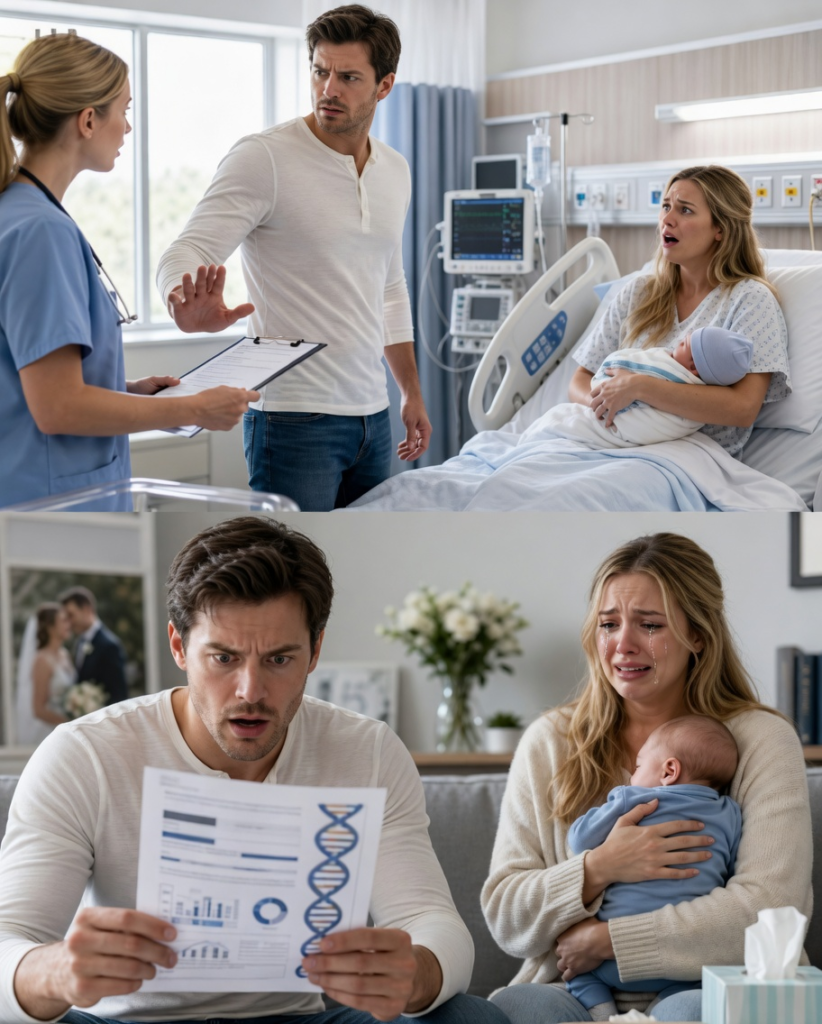
Nathan arrived at Evergreen Memorial at 3:42 a.m., soaked from rain and terrified. Emma was already in a labor room, gripping Rachel’s hand and breathing through a contraction.
When Nathan entered, Emma looked at him.
For one second, old history passed between them.
Then she reached out.
He took her hand.
“Help me,” she whispered.
And he did.
For sixteen hours, Nathan became useful in the simplest ways. He held ice chips to her lips. He rubbed her lower back. He counted breaths. He whispered, “You’re safe. Noah is safe. I’m here.”
During transition, when the pain became so fierce Emma sobbed that she could not do it, Nathan knelt beside the bed.
“Look at me,” he said.
“I can’t.”
“You can. Emma, you can. You are the bravest person I know.”
She gripped his hand hard enough to hurt.
“You didn’t believe that before.”
“I know,” he said, tears in his eyes. “But I believe it now. Completely.”
She stared at him, shaking, and something passed through her expression—not trust, not yet, but the memory of it.
Then she pushed.
Noah Carlisle was born at 7:18 p.m. during a thunderstorm.
He entered the world furious, strong-lunged, and alive.
For a few minutes, everything else disappeared.
Emma wept as Dr. Park placed him on her chest. Nathan stood beside the bed, one hand covering his mouth, unable to comprehend that this small red-faced boy was real.
His son.
Their son.
Noah quieted against Emma’s skin.
“He knows you,” Nathan whispered.
Emma looked down, exhausted and radiant. “Hi, baby. Hi, Noah.”
Dr. Park offered Nathan the scissors to cut the cord.
He looked at Emma for permission.
She nodded.
His hands trembled as he cut.
It should have been the beginning of healing.
Instead, it became the moment he ruined what little trust had begun to grow.
Because when the nurse brought the birth certificate form, old fear surged one last time.
Nathan looked at the blank line labeled Father.
The room seemed to tilt.
He heard Dr. Sorenson’s report in his memory. Normal. Capable. Lab error.
But fear is not always logical. Sometimes it waits until joy is most vulnerable, then strikes from the dark.
What if?
What if the new tests were wrong too?
What if Emma had forgiven him only because the truth had not yet been exposed?
What if he signed, loved this child, built his soul around him, and later discovered—
“Do not put my name on that paper until there’s a DNA test,” he said.
And the bridge collapsed.
The hospital offered a legal paternity test.
Emma consented immediately.
Not because Nathan deserved the answer.
Because Noah did.
The sample was collected with a cheek swab.
Nathan watched the nurse gently swab Noah’s tiny mouth, then his own. The absurd simplicity of it made him feel sick. Months of pain. A marriage almost destroyed. A child’s first hours poisoned.
All reduced to cotton, plastic tubes, and paperwork.
Emma refused to speak to him after that.
Rachel arrived and stood guard like a wall.
Nathan spent the night in the hospital chapel.
He did not pray often. He did not know how without sounding like a man negotiating a contract. So he sat in the back pew with his elbows on his knees and whispered the only honest thing he had left.
“I don’t know how to stop being afraid.”
No answer came.
Only thunder. Rain. The faint hum of hospital lights.
The DNA results returned forty-eight hours later.
Nathan was in the hallway when Dr. Park came out.
Emma was inside the room, holding Noah. Rachel stood beside her.
Dr. Park’s expression was unreadable.
“The test confirms biological paternity,” she said. “Nathan Carlisle is Noah’s father.”
The words did not bring relief.
They brought judgment.
Nathan entered the room slowly.
Emma looked at him, calm in a way that frightened him.
“There,” she said. “Science has spoken. Again.”
Nathan’s throat closed.
Noah slept in her arms, unaware that his father had demanded proof before offering love.
“I’m sorry,” Nathan whispered.
Emma’s eyes filled with tears, but they did not fall.
“You keep saying that after you cut me open.”
He flinched.
“I don’t know what else to say.”
“Then don’t say anything.” She looked down at Noah. “Listen instead.”
Nathan nodded.
Emma’s voice trembled. “I loved you through your silence. I loved you through your suspicion. I loved you enough to let you come to appointments. I loved Noah enough to let you be there when he was born. And the moment he arrived, you looked at him like he was evidence.”
Nathan covered his face with one hand.
“I know.”
“No, you don’t. Not yet.” She adjusted Noah gently against her chest. “A baby should not have to pass a test to be loved by his father.”
That sentence broke something in him that therapy had only cracked.
He sank into the chair beside the bed, not because he expected comfort, but because his legs no longer trusted him.
“I’m going to keep working on myself,” he said. “Not to win you back. Not as a strategy. Because if I don’t, I’ll pass this fear to him.”
Emma looked at him then.
For the first time since the test, her expression was not only hurt. It was measuring.
“You need to understand something, Nathan. I am not taking Noah away from you. I won’t punish our son for your failures. But I am not coming home with you.”
He nodded, tears finally falling.
“I know.”
“I’ll stay in Portland with Rachel for a while. We’ll arrange visits. You can be his father. But being my husband again…” She stopped, breathing through the pain of the words. “I don’t know.”
Nathan looked at Noah.
His son’s tiny fingers opened and closed in sleep.
“I’ll earn whatever place you allow me to have,” he said.
Emma’s voice softened, almost imperceptibly.
“Start with him.”
So Nathan did.
He learned fatherhood in fragments.
Saturday mornings in Portland with Noah asleep against his chest.
Diaper changes performed with the focus he once reserved for aerospace launches.
Bottles warmed at 2 a.m. while Emma napped in the next room during his weekend visits.
Doctor appointments where he asked questions but did not dominate.
Texts to Emma that were transparent and simple.
Noah ate four ounces at 9:10.
He slept from 10:30 to 12:05.
He smiled in his sleep. I know it’s probably gas, but I’m counting it.
Emma sometimes answered with a smile emoji.
Sometimes with practical notes.
Sometimes not at all.
Nathan accepted each response as more than he deserved.
He continued therapy. Every week at first, then every other week. He joined a fatherhood group at Dr. Grant’s suggestion and sat in a circle with men who were not impressed by his money because all of them had been humbled by babies.
One night, a mechanic named Luis said, “My kid doesn’t care if I had a bad childhood. He just needs me not to make it his problem.”
Nathan wrote that sentence down.
Months passed.
Noah grew.
Emma softened by inches.
Not because Nathan gave grand speeches, but because he stopped making everything a performance. He apologized without demanding forgiveness. He asked instead of assumed. He told the truth even when hiding would have been easier.
When he had to fly to Denver for an emergency contract meeting, he texted Emma the itinerary before she asked.
When an old fear rose because Emma mentioned having dinner with a male colleague, he called Dr. Grant instead of interrogating her.
When Emma asked, “Are you upset?” he answered honestly.
“I felt insecure for a minute. That’s mine to manage. You didn’t do anything wrong.”
There was a long pause on the phone.
Then Emma said quietly, “Thank you for telling me without making it my burden.”
It was a small moment.
But rebuilding trust is mostly small moments repeated until the heart believes the pattern has changed.
Noah’s first birthday was held in Rachel’s backyard under strings of warm lights.
He smashed vanilla cake across his cheeks while Emma laughed so hard she cried. Nathan took pictures, but mostly he watched.
Emma wore a yellow dress. Her hair was pinned back loosely. There was frosting on her wrist from where Noah had grabbed her.
Nathan thought she looked more beautiful than she had on their wedding day, not because she was untouched by pain, but because she had survived it without becoming cruel.
After the guests left and Rachel took Noah inside for a bath, Emma and Nathan stood alone beneath the lights.
“He looks like you when he’s serious,” Emma said.
Nathan smiled. “He looks like you when he’s planning trouble.”
She laughed softly.
The sound entered him like forgiveness, though he knew better than to claim it too soon.
Emma looked at him. “You’ve changed.”
“I’m trying to.”
“No,” she said. “You have. Trying is part of it, but I see the change.”
His chest tightened. “Does that scare you?”
“Yes.”
He nodded.
She appreciated that he did not argue.
“I miss you sometimes,” she admitted.
Nathan went still.
Emma looked toward the house, where Noah’s delighted shriek rose from the bathroom.
“I don’t miss what happened. I don’t miss who we became. But I miss who we were before fear got between us. And sometimes I wonder if there’s a version of us after it.”
Nathan’s voice was careful. “I wonder that every day.”
She turned back to him. “If we tried again, it would be slow.”
“Yes.”
“Couples therapy.”
“Yes.”
“No moving back into the same house just because it’s convenient.”
“Agreed.”
“And if you ever investigate me again instead of talking to me, I will walk away permanently.”
Nathan met her eyes. “If I ever become that man again, you should.”
Emma’s eyes filled.
“That’s the first answer that makes me believe you.”
Six months later, Emma moved back to Seattle.
Not into the mansion at first.
She rented a townhouse ten minutes away, close enough that Noah could see both parents easily, far enough that Emma still had her own locked door.
Nathan did not protest.
They attended couples therapy every Tuesday evening. Some sessions were gentle. Others were brutal. Emma spoke of humiliation, loneliness, and the terror of giving birth beside a man she could not fully trust. Nathan listened, sometimes crying, sometimes ashamed, but no longer defensive.
He learned that remorse was not the same as repair.
Remorse looked backward.
Repair showed up on time.
Eventually, Emma began coming to the Bellevue house on Sundays for dinner.
Then staying through Noah’s nap.
Then lingering after bedtime.
One rainy night, after Noah had finally fallen asleep, Emma stood in the doorway of the nursery Nathan had finished months earlier. The green wall remained. The crib was there. The wooden stars turned slowly above it.
“You kept the room,” she said.
Nathan stood behind her, leaving space.
“I kept hope,” he answered. “But I tried not to make it your responsibility.”
She looked back at him.
Then she reached for his hand.
It was the first time she had done that in nearly two years.
He did not move quickly. He did not pull her close. He simply held her hand like something entrusted to him.
Emma leaned her head against his shoulder.
“I’m tired of being almost home,” she whispered.
Nathan closed his eyes.
“Then come home when you’re ready. Not one day before.”
She turned toward him.
“I’m ready.”
The return was not cinematic.
There were boxes. Missing pacifiers. A fight about closet space. Noah crying the first night because the shadows in his new room looked different. Emma standing in the kitchen at midnight, overwhelmed by memory, and Nathan asking, “Do you want comfort, space, or a solution?”
She laughed through tears.
“Comfort. Definitely not a solution.”
So he held her.
That was how they rebuilt.
Not in one dramatic kiss.
Not because a DNA test proved biology.
But because Nathan finally understood that fatherhood was not proven by matching genes, and marriage was not saved by being right.
It was saved by becoming safe.
Two years after Noah’s birth, Nathan stood in the same hospital where he had nearly destroyed everything.
This time, they were there for a routine pediatric appointment.
Noah ran ahead down the hallway in tiny sneakers, pointing at a mural of whales.
“Daddy! Big fish!”
“That’s a whale, buddy,” Nathan said, scooping him up before he could collide with a nurse. “Very big fish.”
Emma walked beside them, laughing. Her wedding ring was back on her finger. She had put it on again six months earlier during a quiet dinner at home, sliding it from a chain around her neck back onto her hand.
“I’m not pretending nothing happened,” she had told Nathan then. “I’m choosing what we’ve built after it.”
He had cried so hard Noah patted his face and said, “Daddy leak.”
Now, in the hospital waiting room, Emma filled out paperwork while Nathan bounced Noah on his knee.
His phone buzzed.
A message from Dr. Grant.
Checking in. How’s the family?
Nathan showed Emma the screen without thinking.
She smiled.
That small gesture—transparency without being asked—meant more than any speech he could have given.
“Tell him we’re good,” she said.
Nathan typed: We’re good. Still learning. Still grateful.
After Noah’s appointment, they walked outside into a bright October afternoon. Seattle glittered after rain, all wet pavement and silver light.
Noah demanded pancakes.
Emma raised an eyebrow. “It’s three in the afternoon.”
Nathan looked at his son. “Pancakes are a timeless food.”
“Noah agrees,” Emma said as their boy clapped.
They drove to a diner near Lake Union, the kind of place Nathan once would have considered too ordinary. Now ordinary felt like grace.
Noah colored with crayons while Emma stole fries from Nathan’s plate.
He watched her, smiling.
“What?” she asked.
“Nothing.”
“Nathan.”
He laughed softly. “I was thinking that I almost lost this.”
Emma’s expression gentled.
He continued, “Not because of the wrong lab report. Not because of the DNA test. Because of me.”
She reached across the table and took his hand.
“And you came back from it.”
“We came back from it.”
Emma squeezed his fingers. “No. You had to come back from your part first. Then we could come back together.”
Nathan nodded, accepting the correction with gratitude.
Noah held up his drawing. It was mostly blue circles, red lines, and one green shape that might have been a dinosaur or a chair.
“Family,” Noah announced proudly.
Emma smiled. “That’s us?”
Noah pointed with a crayon. “Mama. Daddy. Me.”
Nathan felt the old ache rise, but this time it did not become fear. It became humility.
He looked at the drawing, then at his wife, then at his son.
For years, he had believed certainty would protect him.
But the life he almost lost had not been saved by certainty.
It had been saved by truth.
By accountability.
By a woman strong enough to demand dignity.
By a child who deserved a father better than fear.
And by the painful, ordinary, miraculous work of choosing love after trust had been broken.
Outside, the city moved beneath a clearing sky.
Inside the diner, Noah dragged a purple crayon across the paper and added another wild shape to the family portrait.
“What’s that one?” Nathan asked.
Noah grinned.
“Baby,” he said.
Nathan froze.
Emma’s cheeks turned pink.
He slowly looked at her.
She smiled, nervous and radiant in a way that carried him back to another morning, another announcement, another chance he had failed to honor.
This time, he did not let fear speak first.
This time, he stood, came around the table, knelt beside her, and took both her hands.
“Emma,” he whispered, voice breaking, “are we having another baby?”
Tears filled her eyes.
“Yes.”
Nathan pressed his forehead to her hands.
Around them, the diner continued—plates clattering, coffee pouring, Noah singing nonsense to his crayons—but for Nathan, the world narrowed to the woman he loved and the future she was brave enough to offer him again.
When he looked up, his eyes were wet.
“Thank you for telling me,” he said. “Thank you for trusting me with your joy.”
Emma touched his face.
“Thank you for knowing what to do with it this time.”
Nathan laughed through tears, then kissed her gently.
Noah wrinkled his nose. “No mushy.”
Emma laughed, and Nathan scooped his son into one arm while keeping his other hand wrapped around his wife’s.
They left the diner together beneath the soft gold of late afternoon, no longer a perfect family, but a real one.
And for Nathan Carlisle, who had once demanded proof before love, real was the greatest miracle of all.
THE END