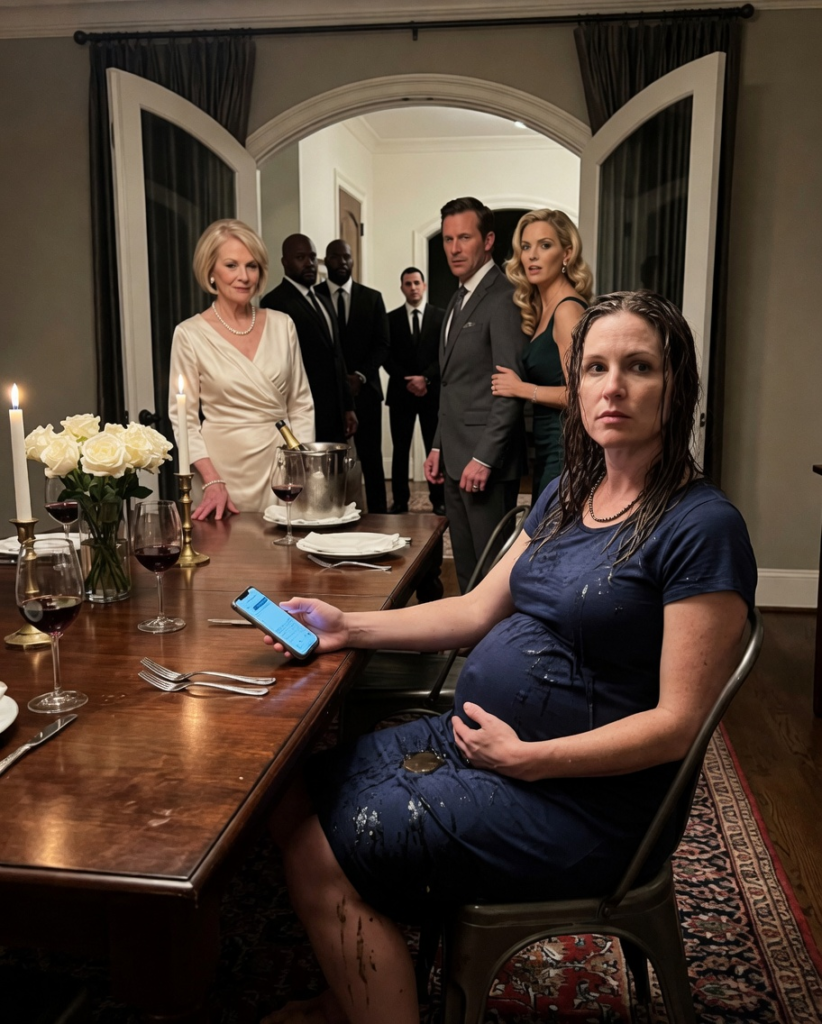
I never told my ex-husband or his wealthy family that I secretly owned the company they worshipped like a god.
To them, I was just Cassidy Morrison, the woman Brendan had married too quickly, regretted too publicly, and discarded as soon as I became inconvenient.
By the time I was seven months pregnant, I was the family embarrassment.
The burden.
The mistake they all talked about in lowered voices and then insulted loudly to my face.
They thought I had nothing.
That was the part that made them careless.
The Morrison family didn’t just have money.
They had the kind of polished, inherited wealth that trained people to smile while they ruined someone’s life.
Their estate sat behind iron gates and trimmed hedges, all limestone walls and imported chandeliers, the kind of place that made visitors feel they should apologize for breathing too hard.
Diane Morrison loved that house because it looked exactly how she wanted the world to see her: expensive, controlled, and untouchable.
She had hated me from the day Brendan brought me home.
Not because I was rude.
Not because I was unstable.
Not because I had done anything to deserve it.
She hated me because I didn’t come from the right circles, and worse, because Brendan had fallen for me without asking her permission.
What Diane never knew was that my last name before marriage had opened more doors than hers ever could.
I had spent years keeping my life compartmentalized.
My private family office operated through holding companies and layers of legal insulation.
My role in Halcyon Global had never been public-facing by design.
I preferred strategy to spotlight.
The board knew me.
My executive team knew me.
Regulators and counsel knew me.
The press did not.
And the Morrisons certainly did not.
Brendan met me at a charitable foundation dinner in Boston, where I attended under a quiet subsidiary name and he attended to impress donors.
He mistook my lack of flash for lack of status.
When he asked what I did, I told him I worked in corporate development.
That was true.
I just didn’t mention that I made final decisions worth billions.
At first, Brendan was charming in the way men like him often are when they think they are choosing a woman beneath their station.
He liked paying for dinner.
He liked explaining things I already knew.
He liked imagining himself generous.
The minute we married, the generosity started turning into ownership.
Then into contempt.
By the second year, every disagreement somehow became proof that I was too emotional, too private, too difficult, too proud for someone who “should be grateful.”
When I found messages between him and Jessica, the timeline stretched back months.
There were hotel reservations, private jokes about me, and one message that burned into my mind so hard I could still see it if I closed my eyes.
She’s so easy to outclass.
I left the next morning.
The divorce moved quickly because Brendan assumed I would fight for money, and I didn’t.
I asked only for privacy and a clean separation while our attorneys handled the pregnancy-related support terms.
He took my silence for weakness.
Diane took it as permission.
After that, they behaved as if I had failed some secret examination and deserved public punishment.
The invitations kept coming anyway.
Not kind invitations.
Strategic ones.
Come discuss the baby.
Come be reasonable.
Come settle this like adults.
I knew Diane’s style.
Every dinner was a stage.
Every witness at the table was there to reinforce her version of reality.
She wanted me in her house because she believed humiliation worked best when served on china.
I stopped attending for months.
Then her assistant called on a Sunday morning saying Diane wanted to review a revised trust proposal for the baby and that Brendan would be there.
I nearly declined.
But the attorney note attached to the message referenced emergency custodial language, and that changed everything.
I went because I would not let them build legal traps around my child while I stayed home protecting my pride.
I also went alone.
That was my first mistake.
The second was believing they would limit themselves to words.
The dining room looked exactly as I remembered it.
Long walnut table.
Silver service.
Fresh white roses that smelled too sweet by candlelight.
A portrait of Brendan’s grandfather watching from above the mantle like disapproval had been framed and inherited.
Diane sat at the head of the table in cream silk, perfectly arranged.
Brendan was to her right, scrolling through his phone until I entered.
Jessica sat to his left in a fitted pale dress, smiling with the bright softness of a woman who enjoyed cruelty most when she could disguise it as elegance.
I should have turned around then.
Instead, I took the empty chair they had left for me midway down the table, far from the warmth of the fireplace and directly under the air vent.
Not subtle.
“Cassidy,” Diane said, as if greeting a disappointing caterer.
“You made it.”
“You said there were documents,” I replied.
“In time.
Sit.
You look tired.”
I was tired.
Pregnancy had sharpened some senses and dulled others.
I could smell the wine before it was poured.
I could feel tension like static on my skin.
My feet swelled by evening.
My back ached in ways that made sleep feel theoretical.
Still, I had spent the day composed, prepared, careful.
Then Jessica let her gaze drop to my stomach and smiled.
“Motherhood suits you,” she said.
“It makes you look…
settled.”
It was the kind of sentence designed to sound harmless until you heard the poison under it.
Brendan smirked.
“Jessica means you seem less intense now.”
I folded my hands in my lap.
“Let’s discuss the documents.”
Diane ignored that.
She preferred stretching the first layer of humiliation slowly, like a violin string pulled until it sang.
She asked whether I was still in the apartment.
Whether I had considered moving somewhere smaller.
Whether I had looked into less expensive medical providers because, in her words, “children don’t need luxury before they can walk.”
Brendan chimed in only to correct me when I answered briefly, as if I were already incapable of managing my own decisions.
Jessica contributed little droplets of insult between sips of wine.
“Some women really glow during pregnancy,” she said.
“I guess everyone carries stress differently.”
At one point Diane asked a maid to bring soup, then looked directly at me and said, “Oh, perhaps not for Cassidy.
Salt makes people retain water.”
The maid looked horrified.
I almost felt sorry for her.
Almost.
I kept waiting for the legal papers.
They never came.
Instead Diane leaned back and said, “You know, Cassidy, I have spent months asking myself how my family ended up in this position.”
I looked at her.
“This position?”
“Entangled,” she said.
“With someone who doesn’t fit.
Someone who creates drama, refuses guidance, and still expects consideration.”
Brendan didn’t stop her.
He never stopped her.
That had once been one of the saddest truths in my marriage.
By then it was just a fact.
“I’m here to discuss terms regarding my child,” I said.
“Not to be insulted in your dining room.”
Diane gave me a long look, then smiled.
“And yet here you are.”
She stood up.
At first I thought she was reaching for the decanter behind her.
Instead, she lifted a polished silver ice bucket from the sideboard.
The water inside was gray with melted cubes and the remains of crushed mint from cocktails.
A few lemon rinds floated at the top.
My body reacted before my mind did.
I started to rise.
Too late.
She tipped the bucket over my head.
The cold hit like glass.
I gasped so hard my chest seized.
Water slammed into my scalp, down my face, through the collar of my dress, under the fabric and all the way to my skin.
Dirty ice slid into my lap.
One cube lodged briefly against my stomach before falling to the floor.
My baby kicked.
Sharp.
Hard.
Startled.
For a second the room blurred.
Then I heard Diane’s voice, bright with pleasure.
“Look on the bright side,” she said.
“At least you finally got a bath.”
Brendan laughed.
Actually laughed.
Jessica covered her mouth, eyes glittering over her fingers.
“Use an old towel,” she said.
“We wouldn’t want that smell on the expensive linens.”
Water dripped from my hair into my eyelashes.
Down my neck.
Off my sleeves.
Onto the Persian rug beneath my chair.
That rug had cost forty-three thousand dollars and had been approved in a renovation budget I signed off on myself three years earlier, when Halcyon acquired the luxury hospitality group Diane bragged about to her friends as if the interiors reflected her own taste.
A strange thought to have in a moment like that.
But trauma sometimes sharpens the most ironic details.
I sat very still.
Shivering.
One hand pressed against my stomach.
The maid near the doorway looked sick.
Another staff member froze beside the wall, eyes down, as though witnessing this family’s behavior required its own confidentiality agreement.
Diane returned to her chair and lifted her wine.
“Brendan,” she said, not taking her eyes off me, “give her twenty dollars for a taxi so she leaves already.”
Jessica laughed again.
“Who are you calling, anyway? A charity office? It’s Sunday, sweetheart.”
Because yes, I had reached into my bag.
Not for a tissue.
Not for a towel.
For my phone.
Something inside me had gone completely still.
There is a point beyond humiliation where pain stops acting like pain and starts acting like clarity.
I had tolerated their sneers for months because of legal timing, because of the baby, because I wanted distance without war.
But there are lines.
And Diane had crossed all of them in front of
witnesses.
My thumb moved over the screen without hesitation.
Arthur – EVP Legal.
He answered immediately.
“Cassidy?” His tone changed at once.
“Is everything okay?”
My voice came out calm enough to chill the room more than the water had.
“Execute Protocol 7.”
Silence.
Not confusion.
Recognition.
Protocol 7 had been drafted after a kidnapping threat years earlier, then revised by legal and security to cover extortion, reputational coercion, family-targeted harassment, and executive safety breaches.
The board called it extreme.
I called it insurance against arrogance.
It allowed immediate suspension reviews, credential locks, internal investigations, personal conduct clauses, and emergency asset shields connected to anyone using company affiliation to endanger or degrade a protected principal.
A protected principal was me.
The Morrisons had never known that because they had never asked the right questions.
Arthur lowered his voice.
“Cassidy, if I initiate this, every Morrison-related access point gets frozen.
Pending compensation.
Pending equity.
Pending title review.
Diane’s board seat support.
Brendan’s division authority.
All of it.”
I looked directly at Brendan.
The laughter was gone now, replaced by the first thin crack of worry.
“I’m certain,” I said.
“Effective immediately.”
I ended the call and set my phone beside Diane’s crystal glass.
Brendan tried to scoff, but the sound landed wrong.
“Protocol 7? What is that supposed to mean? Some kind of movie reference?”
I said nothing.
Diane waved a dismissive hand.
“She wants attention.
Don’t indulge her.”
Then Brendan’s phone buzzed.
He glanced down.
His expression changed.
Another buzz.
Then another.
Jessica checked hers too, smile fading.
“Why is my card declining?” she whispered.
Brendan stood so fast his chair scraped the floor.
“What did you do?”
Before I could answer, footsteps echoed in the front hall.
Measured.
Multiple.
Male and female.
Professional.
Not servants.
The dining room doors opened, and three people entered in dark suits, followed by the head of corporate security I had personally hired after a hostile acquisition attempt in Chicago.
Arthur came in behind them, face grave, coat still unbuttoned from the speed of his arrival.
Diane stared.
“Excuse me? This is a private residence.”
Arthur didn’t even look at her first.
He looked at me.
“Ms.
Vale,” he said.
The room went dead silent.
Not Mrs.
Morrison.
Not Cassidy.
Ms.
Vale.
My name before Brendan.
My real name.
The one attached to the trust that controlled fifty-one percent of Halcyon Global voting stock.
Brendan blinked as if his brain had failed to translate what he’d heard.
“Why did he call you that?”
Arthur placed a folder on the table.
“Per Protocol 7, this household is now under immediate notice of internal and external legal action connected to executive harassment, discriminatory conduct, retaliatory intimidation, and fiduciary review.
Effective as of twelve minutes ago, all Morrison family operational privileges within Halcyon Global and its subsidiaries are suspended pending investigation.
Security credentials have been revoked.
Company devices are locked.
Accounts tied to compensation advances are frozen pending counsel review.”
Jessica’s face drained of color.
Brendan looked from Arthur to me and back again, like a man searching for the hidden camera that would explain reality away.
Diane laughed once.
It was brittle.
“This is absurd.
Brendan works for Halcyon.
I sit on two philanthropic advisory boards connected to its foundation.
My husband’s estate—”
“Was leveraged through
voting assumptions that never belonged to you,” Arthur said.
Diane stopped talking.
Arthur opened the folder and turned the first page toward Brendan.
There, in black and white, was the ownership chart.
The holding trust.
The controlling interest.
My signature.
Cassidy Vale.
Brendan stared at it.
Then at me.
His mouth opened but no words came out.
I rose slowly from my chair, soaked dress clinging to my legs, hair dripping down my back, one hand steady on the table and the other over my stomach.
“You all worked for me,” I said quietly.
“You just never knew it.”
Jessica let out a sound somewhere between a gasp and a whimper.
Diane’s glass slipped from her hand and shattered across the table runner.
Brendan took one step back.
“No,” he said.
“No, that’s not possible.”
“It is,” Arthur replied.
“And there’s more.”
There was.
Brendan’s entire rise in the company had been quietly protected by buffers I never advertised.
When his regional numbers dipped, operations gave him extra runway because I refused to humiliate him professionally over personal failure.
Diane’s favored charity events received sponsorship because I signed off on community positioning despite finding her unbearable.
Even the renovation of this very house for their hospitality partnership had survived a cost review because I let it.
I had sheltered them from the consequences of their own mediocrity.
And they had mistaken shelter for superiority.
Arthur continued speaking, but Brendan wasn’t listening anymore.
He was watching me with the horror of a man realizing his entire marriage had been lived on the wrong side of the glass.
“Cassidy,” he said hoarsely, “why didn’t you tell me?”
The question was almost funny.
Why hadn’t I trusted a man who mocked my clothes, cheated on me, and sat laughing while his mother poured filthy ice water over the mother of his child?
“Because you told me exactly who you were long before tonight,” I said.
Diane found her voice again.
“This is blackmail.”
Arthur turned to her.
“No.
This is consequence.”
She straightened in her chair, clawing for authority.
“You can’t strip my son’s livelihood because of a domestic disagreement.”
“I can suspend anyone whose conduct creates legal liability, executive endangerment, and reputational exposure,” I said.
“Especially when that conduct includes witness-supported abuse against the controlling owner of the company.
In your home.
In front of staff.”
The maid by the doorway flinched.
Arthur noticed.
So did I.
“Counsel will collect statements from everyone present,” he said.
Jessica finally tried to recover.
“I didn’t do anything.
I barely said a word.”
I looked at her wet reflection in the dark window behind the table.
“You laughed.”
She looked away.
Brendan stepped toward me.
Security moved between us instantly.
He stopped, hands raised, face collapsing under panic.
“Cassidy, listen to me.
I didn’t know.
I swear to God, I didn’t know any of this.
My mother—she takes things too far.
You know how she is.”
That was the sentence he chose.
Not I’m sorry.
Not Are you hurt?
Not Are you and the baby okay?
Just an appeal to context.
To technicality.
To the possibility that if he said the right version of events, he could climb back into a world that was closing around him.
I had loved that man once.
The grief
of that sat strangely beside the satisfaction.
“You laughed,” I said.
He went silent.
Arthur handed me a clean towel one of the staff had brought from somewhere in the house.
I accepted it, wiped my face, and then set it down untouched over the back of a chair.
I wanted them to keep seeing exactly what they had done.
Diane’s voice turned sharp again, desperate now.
“Cassidy, be reasonable.
You’re carrying my grandchild.
We should not make decisions in anger.”
I looked at her for a long moment.
There it was.
The pivot.
The fast retreat from cruelty to family language.
From insult to bloodline.
As if the word grandchild could erase the image of dirty water hitting my stomach.
“You should have thought about that before you touched me,” I said.
Arthur slid the final document from the folder.
This one concerned the house.
Diane frowned as she scanned it, then looked up too fast.
“What is this?”
“The property improvement lien and equity conversion attached to your hospitality partnership extension,” Arthur said.
“Triggered by executive abuse and brand-risk breach.
In plain language, the company now has enforceable rights over a significant portion of this estate until damages and liabilities are resolved.”
For the first time that evening, Diane truly looked afraid.
Her hand trembled.
Brendan saw it and went pale.
The family wealth they loved performing wasn’t all as liquid as it looked.
Too much of it sat inside leveraged prestige, lifestyle debt, and assumptions about future income from Halcyon.
Assumptions that had just been shattered.
Jessica backed away from the table entirely, as if embarrassment might be contagious.
“I need to go,” she whispered.
No one tried to stop her.
Brendan turned to his mother, then back to me, and finally dropped the last of his pride.
“Please,” he said.
The room froze around that one word.
He had never said it to me without impatience before.
Now it came out broken.
“Please don’t do this.
Suspend me, fine.
Yell at me, fine.
But my mother—this house—our name—”
“Our name?” I repeated.
He swallowed.
That was the problem with men like Brendan.
Even at the edge of ruin, they still reached for ownership.
I stepped closer, enough that he could see the water still clinging to my lashes.
“You already did this,” I said.
“Not me.”
Then I told Arthur to proceed fully.
Not partially.
Not conditionally.
Fully.
Diane stood so abruptly her chair toppled backward.
“You vindictive little—”
“Careful,” Arthur said.
She looked around the room and finally understood the hierarchy had changed.
Not on paper.
In the air.
In the eyes of everyone present.
In the silence of staff no longer pretending she ruled it.
Her shoulders lowered first.
Then her voice.
“Cassidy,” she said, and this time it sounded almost human.
“Please.”
A few minutes earlier she had poured a bucket of filth over me and called it a bath.
Now she was asking for mercy.
I wish I could say I felt triumphant in some clean, uncomplicated way.
The truth was messier.
I felt cold.
Tired.
Protective.
Furious.
And underneath all of it, deeply, strangely sad that this was the only language they respected.
I told Arthur to arrange medical transport to my doctor for an immediate check on the baby.
instructed security to preserve staff statements and camera footage.
I directed counsel to pursue a restraining order against Diane pending the custody proceedings.
Then I looked at Brendan one last time.
He seemed smaller somehow, though nothing about his body had changed.
Maybe power does that when it leaves a person too quickly.
Maybe it reveals scale.
“You will communicate with me through attorneys regarding the child,” I said.
“Nothing else.”
He nodded because there was nothing left for him to do.
I turned to leave.
Behind me, glass crackled under someone’s shoe.
Diane started crying, though whether from fear, humiliation, or fury, I couldn’t tell.
Arthur held the door for me like he always had, with that quiet professionalism that never asked personal questions and never forgot where loyalty belonged.
By the time I reached the front steps, the night air felt warmer than the dining room.
At the hospital, the baby’s heartbeat was strong.
That was the only sound that mattered.
The legal aftermath lasted months.
Brendan lost his role permanently after the internal review uncovered expense abuse, policy breaches, and communications that made retaining him impossible.
Diane was removed from every board and advisory connection tied to Halcyon and eventually forced to sell part of the estate to settle damages and debt exposure.
Jessica disappeared the moment the money stopped feeling safe.
Some people called what I did ruthless.
Others called it overdue.
I called it a line.
One they should never have crossed.
When my daughter was born, I held her and understood something with terrifying clarity: the world would always have people who mistake patience for powerlessness.
My job was never to impress them.
It was to make sure she never learned to kneel before them.
Years from now, if she asks me what happened that night, I won’t tell her about the silver bucket or the wine or the laughter first.
I’ll tell her this instead.
The moment I realized what kind of family I was really dealing with, I stopped asking to be treated with dignity and started enforcing it.
And maybe that’s the part people will always debate.
Whether Brendan deserved one last chance because he was weak instead of evil.
Whether Diane’s cruelty was calculated or simply the final form of entitlement left unchallenged too long.
Whether I went too far.
I know only one thing for certain.
No one who watched a pregnant woman shiver in dirty water and laughed gets to complain about the storm that followed.