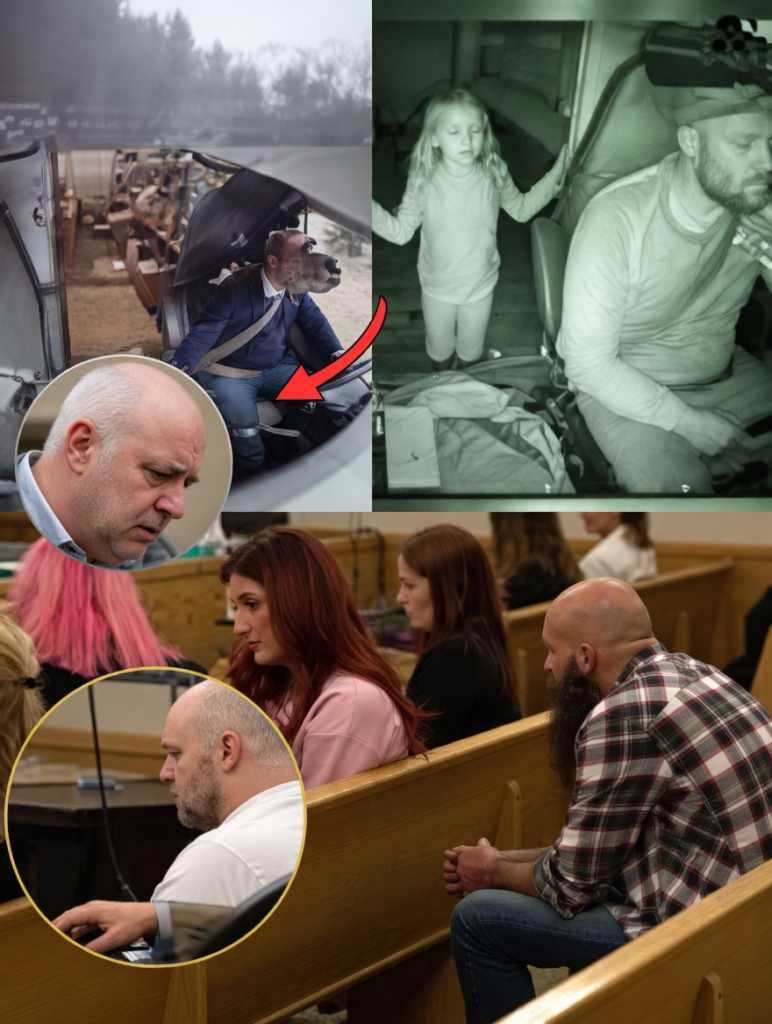
The corridors of justice have become a somber theater for a narrative that challenges the very boundaries of human empathy, as the declassified accounts of the Tanner Horner trial emerge into the public record. Recent testimony has centered on a harrowing verbal exchange within the confines of a service vehicle, where the perpetrator reportedly issued a cold, mechanical command to silence the pleas of young Athena Strand. The phrase “Sit still if you don’t want me to hurt you more” serves as a devastating psychological marker, indicating a predatory presence that utilized primal fear as a tool of total suppression. Academically, this behavior is analyzed as a profound rupture in the social contract, where a standard service interaction was weaponized into a nightmare, leaving the community to grapple with the terrifying reality of a child’s final moments spent under the shadow of a calculated ultimatum.
The technical authenticity of the evidence, specifically documented in the visual dossier, is anchored in the raw, unpolished nature of the surveillance metadata recovered from the abduction site. By analyzing the high-contrast infrared grain of the cabin interior and the specific chronological timestamps embedded in the transport security feed, forensic digital experts can verify the legitimacy of these records within the context of current judicial standards. The presence of the defendant’s physical profile in the courtroom, juxtaposed against the grainy night-vision captures of the initial encounter, provides a logical bridge between the past event and the present pursuit of accountability. This pH๏τographic evidence is not merely a depiction but a forensic anchor, proving that the digital footprints of the modern world have become the primary instruments for deconstructing a facade of innocence and exposing the unvarnished truth of a domestic tragedy.
In a revelation that has deeply moved the jury, the prosecution has presented a biological testament to Athena’s indomitable spirit: a forensic map of the struggle found beneath her own fingernails. Testimony confirmed that the recovery of Horner’s DNA from the victim’s hands serves as a microscopic battleground, proving that Athena fought her captor with an intensity that defied the physical disparity between them. In the rigorous field of forensic pathology, such evidence is regarded as the ultimate “silent witness,” a physical manifestation of resistance that remains long after a voice has been silenced. This DNA trail is more than a link to the suspect; it is an irrefutable record of agency, illustrating that even in the face of overwhelming malice, the human drive to endure can leave behind the very evidence required to secure justice.
As the legal proceedings navigate the grim topography of this case, the emotional core remains fixed on the unwavering figure of the victim’s mother and her pursuit of the maximum penalty. The transition from the low-light, terrifying reality of the abduction captures to the sterile, high-definition environment of the courtroom, maps the painful journey from a local nightmare to an international study of judicial resolve. The evidence presented—from the chilling commands heard in testimony to the forensic mapping of the crime—paints a picture of a community refusing to allow such darkness to go unanswered. As the jury deliberates, the focus remains on the profound contrast between the perpetrator’s demand for stillness and the enduring, biological legacy of a young girl whose final acts of bravery have ensured that her killer faces the full weight of the law.