PART 1
The airport security officer pulled me out of line just as my boarding group was called over the speakers.
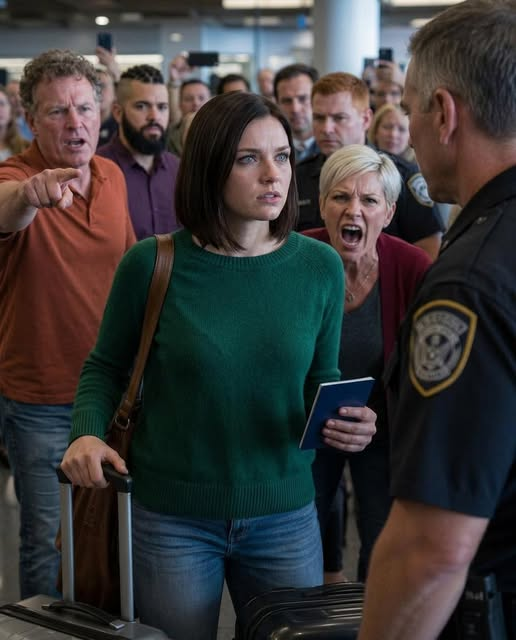
Behind him, my mother was yelling so loudly that travelers near the Delta counters stopped dragging their luggage. “She stole from us!” Brenda Cook screamed, jabbing a finger at me with the same hand she had always used to point at dirty plates, overdue bills, and every disappointment she ever pinned on me. “That girl drained our business accounts and tried to run out of the country!”
My father, Richard, stood next to her with his chest pushed forward and fury burning across his face. “Arrest her,” he snapped at the airport officers. “Right now. Before she boards that plane.”
Dozens of people turned to watch. A small boy grabbed onto his mother’s sleeve. A businessman lowered his cellphone. Someone whispered, “Oh my God.” The terminal at Louis Armstrong New Orleans International Airport turned into a stage, and my family had chosen to make me the public villain.
But I was not watching my parents.
I was staring past them at the tall Customs and Border Protection officer approaching us with a calm that felt tightly controlled and dangerous. His uniform looked crisp enough to slice skin. His eyes shifted from my passport to my face, then to my mother’s trembling hands, and back again.
For one brief second, confusion crossed his expression.
Then recognition appeared.
“Miss Cook?” he asked.
My mother stopped screaming for half a heartbeat.
That was when she realized this was not going to end the way she imagined.
Three weeks earlier, I had been standing in my parents’ kitchen in rural Louisiana with an empty metal lockbox in my hands. My passport was missing. Not misplaced. Not accidentally lost. Gone.
My mother stood at the stove stirring seafood gumbo as though she had not just stolen the one document that could let me leave the country.
“You’re not going anywhere,” she said.
My father leaned against the counter with his arms folded. “Who’s supposed to keep the business alive?”
“My flight leaves tomorrow morning,” I said, barely able to get the words out. “The program starts Monday.”
Brenda never even looked back at me. “Your sister is pregnant. Harper needs support. The business needs you. Italy can wait.”
Italy could not wait. This was not some holiday trip. It was an elite culinary management program in Rome, the kind of opportunity people spend years dreaming about. For three years I had worked eighty-hour weeks inside Cook Catering, handling bookkeeping, preparing food, calming furious clients, and rescuing the company every time Richard’s ego and Brenda’s obsession with appearances nearly destroyed it.
While they pretended to be successful business owners, I secretly built an escape route for myself. I accepted private premium catering orders from corporate clients, tracked every cent legally, and saved forty-two thousand dollars in an account they were never meant to access.
That money was my freedom.
That passport was the only door out.
And my parents had taken both.
At first, I reacted exactly the way they expected. I locked myself in my room and cried until my ribs hurt. I watched my Rome flight leave on my phone screen, the tiny airplane icon crossing the Atlantic without me. Downstairs, my mother hummed while cooking dinner. My father sharpened kitchen knives. Harper complained about baby nursery decorations.
To them, life had settled back into place.
I was the engine.
Harper was the passenger.
And engines did not get to fly to Italy.
By the second night, the tears were gone. I opened my banking app expecting to see my forty-two thousand dollars untouched. Instead, a red notification flashed across the screen.
Pending transfer: $15,000.
Destination: Harper Cook Baby Shower Fund.
My mother had used an old joint student account from when I was sixteen to start siphoning my savings away.
That was the exact moment heartbreak froze into something colder.
The following morning, I drove to the bank, canceled the transfer, shut down the joint account, and moved every dollar into a national account under my name only. Then I went home, tied on my apron, and chopped onions like the obedient daughter they believed they still controlled.
Brenda smiled when she saw me.
She thought I had finally surrendered.
She had no idea I had only just started.
That night, a message arrived from an unknown number through an encrypted link.
It was from Valerie, the estranged wife of my older brother. Valerie worked as a federal auditor in Baton Rouge, and years earlier she had escaped the Cook family with the precision of someone dismantling a bomb.
Her message read:
“I know what they did to your passport. Meet me tomorrow at 6:00 a.m. Bring your birth certificate and two forms of ID. Come alone.”
The next morning, Valerie looked directly at me over a cup of black coffee and said, “Your mother didn’t just hide your passport. She contacted the State Department and reported it stolen while pretending to be you.”
My stomach dropped instantly.
“If you had recovered it and tried to travel,” Valerie continued, “you could have been detained at the airport.”
That was the moment everything became clear.
My mother had not simply built a wall.
She had built a trap.
PART 2
Valerie managed to get me an emergency appointment at the passport agency in New Orleans. I signed a sworn affidavit confirming my passport had been taken and that unauthorized actions had been carried out in my name. The employee behind the glass stamped the paperwork with a heavy, final thud.
“Your replacement will be ready in ten days,” he said.
Ten days.
Ten days pretending I still belonged in that kitchen. Ten days allowing Brenda to believe she had beaten me. Ten days smiling at Harper while she organized a baby shower she fully expected me to finance, cook for, clean up after, and endure.
When I got back home, Richard was standing in the prep kitchen with his phone clenched tightly in one hand.
“Where the hell were you?” he shouted.
“At the wholesale market,” I lied. “We were running low on shrimp.”
His eyes narrowed. He was searching my face for signs of rebellion. Instead, he found exhaustion, obedience, and flour smeared across my sleeves. I tied my apron back on and picked up my chef’s knife.
“Next time call the police,” I said evenly. “Maybe they can help roll the boudin balls.”
He grunted and walked away.
That night, I realized the passport was only the start.
At two in the morning, while the house slept and bullfrogs groaned in the marsh behind us, I crept into Richard’s office carrying the master key ring. My father kept a locked gray filing cabinet in the corner, the one he always called “adult business” that supposedly had nothing to do with me.
It turned out it had everything to do with me.
Inside, I found the IRS letter he had ripped out of my hands days earlier. It was addressed directly to me. Not Cook Catering. Not Richard Cook. Not Brenda Cook.
Me.
It was a notice of intent to levy over seventy thousand dollars in unpaid payroll taxes.
My hands went numb.
The company was supposed to belong to my parents. I was only their daughter. Their unpaid chef. Their emergency accountant. The human plug they shoved into every hole they tore into the sinking ship.
Unless I was not.
I searched through the bottom drawer until I found the black binder containing Cook Catering’s amended operating agreement. Beneath the dim desk lamp, I flipped through the pages while holding my breath.
There it was.
Richard Cook: 0%.
Brenda Cook: 0%.
Farrah Cook: 100% managing member.
My signature appeared at the bottom.
Except I had never signed it.
My parents had forged my signature, transferred their collapsing company into my name, and used my clean credit to keep it alive. Loans, vendor accounts, equipment leases, payroll tax debt—every piece of it had been quietly shifted onto my shoulders.
They had not stolen my passport because Harper needed help.
They had stolen it because if I left, Cook Catering would implode, and the government would come after the legal owner.
Me.
I photographed everything: the forged agreement, the notary seal from one of Brenda’s country club friends, the IRS notice, the vendor contracts, the loans opened using my Social Security number. Then I sent every file to Valerie.
Her response arrived before sunrise.
“Do not panic. I’m sending you an attorney.”
By nine the next morning, I stood inside the walk-in cooler with my phone pressed against my ear, watching my parents through the small glass window. Brenda flipped through a magazine, circling flower arrangements for Harper’s baby shower. Richard drank coffee I had brewed for him.
On the line was Marcus Vance, a corporate attorney in New Orleans whose voice sounded sharp enough to cut through steel.
“You’re telling me,” he said, “that you are the sole registered owner because of a forged transfer?”
“Yes.”
“And you want out?”
“I want Cook Catering dissolved.”
“When?”
I stared through the cooler window at my father laughing at something on his phone.
“In ten days,” I said quietly. “The same day I leave the country.”
Real revenge does not always arrive as screaming. Sometimes it arrives as paperwork. Sometimes it looks like removing a payment method. Sometimes it looks like signing into vendor portals at midnight and quietly severing every financial artery your abusers depended on.
During the next week, I dismantled Cook Catering from the inside out.
I removed my personal credit card from every vendor account. Seafood, beef, produce, linens, rental equipment. Everything. I switched all automatic payments to cash on delivery, fully aware my parents had no cash available. I scheduled the dissolution paperwork to file at exactly 8:00 a.m. on the morning of Harper’s luxury baby shower.
Then I booked my real ticket.
New Orleans to Rome, with a layover in Frankfurt. Departure: 1:00 p.m. Saturday.
But Richard was suspicious by nature. He searched trash cans, opened mail that did not belong to him, and dug through drawers whenever fear started eating at him. So I gave him something to discover.
I created a fake domestic itinerary to New York. LaGuardia. Terminal B. Departure: 3:00 p.m. Saturday. I slipped it inside a culinary magazine on his office desk with one white corner sticking out just enough to catch attention.
Two days later, I watched through the office glass as Richard found it.
He read it.
He smiled.
He believed he had uncovered my escape plan.
What he had really done was swallow the bait.
PART 3
The closer Saturday got, the calmer my parents became.
That was the most twisted part of all. They genuinely believed that stealing my passport, trying to drain my savings, and burying me in tax debt had restored order to the family. Brenda hosted women from the country club on the veranda and told them I had “finally grown up.” Richard boasted to clients that Cook Catering was preparing to “move into premium events.” Harper drifted around the house in silk robes, rubbing her barely visible stomach and demanding imported wallpaper.
I served iced tea to Brenda’s guests with a polite smile.
“Farrah understands that family comes first,” Brenda told a woman wearing a wide-brimmed hat. “Young people go through rebellious phases, but she finally understands where she belongs.”
I poured tea.
I stayed quiet.
Inside the prep kitchen, I designed beautiful schedules for Harper’s baby shower. The corkboard listed lobster tartlets, prime rib carving stations, oysters on ice, imported cheeses, vanilla bean buttercream cake, and champagne service. It looked like the work of a flawless event planner.
But the walk-in cooler was almost bare.
I had ordered nothing.
No lobster. No beef. No oysters. No champagne glasses. No imported cheese.
Inside the cooler sat two gallons of milk, wilted celery, three tubs of mustard, and silence.
Harper expected a luxury shower for one hundred and fifty wealthy guests at a riverfront estate. Her future in-laws expected sophistication. Brenda expected admiration.
What they were actually going to receive was an empty room.
Forty-eight hours before the shower, Harper stormed into the kitchen clutching her phone.
“The interior designer found an Italian crib,” she announced. “And custom silk wallpaper. She needs a deposit. Transfer me ten thousand dollars.”
I kept wiping down the stainless-steel counter. “No.”
Harper blinked as if the word had slapped her across the face. “Excuse me?”
“No,” I repeated. “I do not have ten thousand dollars for wallpaper.”
“You have forty-two thousand sitting there doing nothing.”
“It is not doing nothing,” I replied. “It is keeping me alive.”
She stomped her foot like a furious child. “I’m having a baby.”
“Then ask the baby’s father.”
The swinging kitchen doors opened.
Brenda walked in wearing pearls and carrying a yellow legal pad sheet. She placed it in front of me on the counter. Written in her looping cursive handwriting was a contract declaring that I agreed to transfer all my personal savings into the Cook Catering operating account for “family needs and event expenses.”
At the bottom sat a blank line for my signature.
“What is this?” I asked.
“Your rent,” Brenda replied. “You live under our roof. You eat our food. Sign it, or you can sleep on the street.”
A year earlier, I would have cried. I would have begged. I would have tried to explain that I earned that money one sleepless night at a time.
But betrayal had burned all the softness out of me.
I picked up the paper, folded it carefully, and slipped it into my apron pocket.
“Give that back,” Brenda snapped.
“You wrote it for me,” I said calmly. “I think I’ll keep it.”
Richard entered then, red-faced and thundering. “You ungrateful little brat. You owe this family everything.”
I looked at him carefully. Really looked at him. The sweaty forehead. The shaking finger. The man who had spent my entire life making himself look enormous suddenly seemed very small.
“Let’s do the math, Richard,” I said.
His finger hesitated.
“I worked eighty-hour weeks for three years. I handled inventory. I balanced your books. I cooked events you sold but were incapable of delivering. At a normal salary for a chef and operations manager, you owe me roughly one hundred and fifty thousand dollars in unpaid wages.”
Harper gasped.
“You do not own my savings,” I continued. “You do not own my future. I am not your bank account. I am not your maid.”
The silence that followed was beautiful.
Then Brenda did what weak people always do when the truth traps them. She called me hysterical.
“She needs a timeout,” she told Richard.
A timeout.
I was twenty-six years old.
Richard grabbed my arm and dragged me upstairs to the storage room above the prep kitchen, a hot, dusty space crammed with old linens, broken equipment, and archive boxes. He locked the deadbolt from the outside.
“We’ll let you out when you’re ready to apologize,” he said.
His footsteps disappeared.
I stood alone in the heat surrounded by years of hidden financial paperwork.
Then I smiled.
They thought they had locked me inside a prison.
Instead, they had locked me inside their vault.
I opened my laptop, connected to my phone hotspot, and logged into the state business registry portal. Marcus Vance had already prepared the dissolution filings. I uploaded the documents, signed electronically, and scheduled the filing for 8:00 a.m. Saturday.
Then I created an encrypted folder named Exhibit A.
Inside it, I stored the forged operating agreement, the IRS levy notice, proof of loans opened in my name, vendor contracts, and Brenda’s handwritten extortion demand. I sent one copy to Valerie, one to Marcus, and one to myself.
Valerie replied with a single sentence.
“Now leave clean.”
So I did.
The following morning, Richard unlocked the storage room expecting tears. I walked right past him without speaking, went downstairs, tied on a fresh apron, and mopped an already spotless floor.
Brenda watched me from the doorway.
“Silent treatment?” she asked.
I dipped the mop into bleach water and kept moving.
She believed silence meant surrender.
Sometimes silence means the fuse has already been lit.
PART 4
By Friday afternoon, the entire house was shaking under the weight of its own lies.
Harper found my packed suitcases hidden beneath a canvas tarp in my closet. I heard her shriek from the prep kitchen.
“Mom! She’s leaving! She packed bags!”
Richard stormed into his office and returned waving the fake itinerary I had planted.
“New York,” he announced triumphantly. “Three o’clock tomorrow. Terminal B.”
Brenda laughed, sharp and ugly. “You thought you could run off to New York and play chef?”
I leaned against the prep table. “My flight is booked.”
That was technically true. Just not the flight they believed.
Richard moved to block the exit. Brenda stepped in front of the swinging doors. Harper hovered behind them, breathing hard, eyes frantic.
“You’re not leaving,” Richard said. “You belong to this family until we decide otherwise.”
Brenda raised her phone. “If you walk out that door, I’ll call the police and tell them you stole from the business.”
I stepped toward her.
“Are you sure you want police investigating your finances, Brenda?”
The use of her first name hit her like a slap. In twenty-six years, I had never called her anything except Mom. The word ripped away the illusion. She was not my mother standing in that kitchen. She was a desperate business owner standing on top of a mountain of fraud.
Her hand slowly lowered.
“If the police come,” I said, “I’ll hand over the ledgers. I’ll let detectives audit every account. Go ahead. Make the call.”
Brenda stepped away from the doorway.
The phone stayed silent.
That evening, relatives started texting me. Aunt Susan said my mother was crying. Uncle David accused me of trying to destroy the family. One cousin said Harper believed I needed a psychological intervention.
Brenda was building her public narrative. I was unstable. Cruel. Selfish. Mentally unraveling.
I never responded.
The IRS does not care about family gossip.
At four in the afternoon, I looked through my bedroom window and watched Richard park his massive SUV directly behind my compact sedan, trapping it between the brick kitchen wall and a drainage ditch.
He glanced up toward my window with satisfaction.
He thought he had trapped me.
But I had never planned on driving myself.
At 1:45 in the morning, I dressed in black, rolled my suitcases quietly down the hallway, and descended the back staircase into the commercial kitchen. The house was silent. My parents slept peacefully, convinced the SUV outside had sealed my fate.
I switched on a single dim light above the range hood.
Before leaving, I cleaned my station one last time. I polished the stainless-steel prep table until it reflected light like glass. I opened the walk-in cooler and stared at the empty shelves. No lobster. No prime rib. No oysters. No future left for Cook Catering.
Then I removed my stained white apron.
That apron carried grease burns, wine stains, and three years of unpaid labor. I folded it neatly and placed it in the center of the prep table. Underneath it, I slid Brenda’s yellow extortion contract.
Unsigned.
At the end of the driveway, Valerie waited in a dark sedan with the headlights turned off.
The wheels of my luggage crunched against gravel.
Halfway down the drive, the motion-sensor lights suddenly blazed on. Richard burst onto the porch wearing a bathrobe.
“Stop!” he roared. “I blocked your car!”
I kept walking.
“You’re not going anywhere!” he shouted.
Valerie popped open the trunk. I loaded my bags, climbed into the passenger seat, and shut the door.
She drove away without turning on the headlights until we reached the county road.
“You left the kitchen clean?” she asked.
“Spotless.”
“And the cooler?”
“Empty.”
Valerie let out a low whistle. “That baby shower is about to turn into a public massacre.”
“No,” I said quietly. “Massacre was stealing my passport.”
At exactly 8:00 a.m., while we were eating breakfast in a quiet hotel near the airport, my phone exploded with notifications.
The dissolution filing had gone through.
Cook Catering’s bank account froze. Vendor charges were declined. Insurance policies lapsed. Delivery drivers demanded cash payments. Florists refused to set up without final balances. The event planner called Harper. Harper called Brenda. Brenda called Richard. Richard called me forty-three times.
I never answered.
By ten o’clock, videos started appearing in family group chats. Harper stood at the riverfront estate in full makeup, screaming beside empty buffet tables. Brenda cried into her phone while guests arrived. Richard argued with a seafood supplier in the parking lot. One guest loudly asked, “Where’s the food?”
Valerie watched one clip and murmured, “That’s brutal.”
“No,” I replied. “Brutal was stealing my passport.”
At eleven, we walked into the airport.
My replacement passport sat safely in my bag. My evidence had been backed up in three different places. My ticket was real. My money was secure.
For the first time in my life, I felt nervous for the right reason.
I was not afraid of my parents anymore.
I was afraid of freedom.
At security, Valerie hugged me once, fast and fierce.
“Don’t look back,” she said.
“I won’t.”
I cleared check-in. I passed the first passport inspection. I was standing near the international departures line when my mother’s voice ripped through the terminal.
“There she is!”
My blood instantly turned cold.
Brenda and Richard came charging toward me with two airport police officers behind them. Harper was absent. Maybe even she had enough sense not to follow me into federal territory.
“She stole from our company!” Richard shouted. “She’s fleeing the country!”
A security officer stepped in front of me.
“Ma’am, please step out of line.”
And suddenly I was standing in the middle of the terminal, with my parents screaming, travelers staring, and my flight to Rome counting down minute by minute.
Then Officer David Rollins walked toward us.
And recognized me.
PART 5
Officer Rollins had met me two years earlier at a Customs and Border Protection memorial banquet in New Orleans.
The original catering company had canceled forty-eight hours before the event. Richard accepted the contract for three hundred guests, promised luxury-level service, then deliberately understaffed the kitchen to increase profits. I ended up cooking almost the entire dinner myself. Braised short ribs. Shrimp and grits. Cornbread madeleines. Three separate sauces. Two desserts. My hands blistered so badly I wrapped them in towels and kept plating anyway.
At the end of the night, Richard tried to stand there and absorb all the praise.
Officer Rollins walked right past him and shook my hand instead.
“Miss Cook,” he had said, “you walked into a disaster and delivered perfection.”
It was the first time a powerful man had ever looked at me and seen my work instead of my usefulness.
Now he stood in front of me in an airport terminal while my parents tried to turn him into a weapon against me.
“Miss Cook,” he repeated. “What exactly is happening here?”
Before I could speak, Brenda rushed forward. “Officer, thank God. She’s unstable. She stole business funds. She emptied our accounts. We’re terrified she’s having some kind of breakdown.”
Richard pointed aggressively at my suitcase. “She’s trying to flee.”
Rollins looked completely unimpressed. “And you are?”
“Her father.”
“Her mother,” Brenda added quickly, switching instantly to tears. “We’re only trying to protect her.”
A laugh escaped me before I could stop it. Small. Cold.
Rollins turned toward me. “Do you have identification?”
I handed him my replacement passport along with my driver’s license. His eyes paused briefly on the passport.
“There was a prior stolen-passport flag attached to your name,” he said carefully.
“Yes,” I answered. “Because my mother impersonated me and reported it stolen after taking it from my lockbox.”
Brenda gasped dramatically. “That is a lie.”
I reached into my bag and pulled out a small digital drive. “This contains the affidavit, the attorney records, the forged business documents, the IRS notice, and the extortion contract she attempted to force me to sign.”
Rollins held my gaze. “Extortion contract?”
I unfolded the yellow legal paper and handed it to him.
Brenda’s face lost all color.
“This is my mother’s handwriting,” I explained. “She demanded that I sign over my life savings to cover Cook Catering and Harper’s baby shower. When I refused, they locked me inside a storage room above the kitchen.”
“My God,” somebody in the crowd whispered.
Brenda’s sobbing intensified. “She’s unwell. She twists everything. She’s always been dramatic.”
Rollins read the contract slowly. Then he looked at Richard.
“Sir, you reported that your daughter stole from the business.”
“She did,” Richard snapped.
“Interesting,” Rollins replied. “Because according to the preliminary documents she provided, she appears to be the sole registered owner of that business.”
Richard opened his mouth.
Nothing came out.
I watched the confidence drain from his face in real time.
Rollins continued in a calm voice that somehow sounded deadly. “You summoned law enforcement to an international airport based on a theft allegation involving a company she legally appears to own. You also reported a flight risk tied to a passport theft claim that may have involved impersonation. Do you understand how serious that is?”
Brenda stopped crying.
Rollins turned toward the airport police officers. “Separate them.”
Two officers immediately moved toward my parents.
Richard made one final attempt. “This is a family matter.”
“No,” Rollins said flatly. “This is possible false reporting, identity theft, extortion, corporate fraud, and misuse of federal security procedures. Those are not family matters.”
The word federal changed the atmosphere instantly.
Brenda’s knees weakened. Richard’s face turned gray.
Travelers now had phones raised everywhere around us. Recording. Whispering. Watching the perfect Cook family collapse beneath fluorescent airport lights.
Rollins looked back at me. His expression softened by the smallest degree.
“Miss Cook, you have the right to press formal charges immediately. We can begin that process now.”
For a second, I looked at my parents.
I expected anger. Satisfaction. Some explosion of revenge inside my chest.
Instead, I felt nothing.
They had already stolen years from me. They took sleep, money, labor, holidays, birthdays, and the version of me that once begged for their love. If I stayed in that terminal filing paperwork, they would steal one more afternoon.
I shook my head.
“They’re not worth missing my flight.”
Brenda flinched.
Richard stared at me like he no longer recognized me.
Rollins nodded once. “Understood. We’ll retain copies of the evidence and proceed with questioning based on the false report made today. You may be contacted later.”
“Thank you,” I said.
As airport police escorted my parents away, Brenda twisted around toward me.
“Farrah,” she pleaded, suddenly gentle. “Baby, please. Don’t do this to your family.”
There it was.
Baby.
The word she saved for emergencies. The word she used when commands stopped working. The word that once would have broken me open.
I looked down at the handcuffs around her wrists.
“You did this to your family,” I said quietly. “I’m just leaving it.”
Then I turned around.
My gate was already boarding.
I walked toward it with my passport in my hand and never looked back.
PART 6
The flight to Frankfurt departed at 1:07 p.m.
I watched Louisiana disappear beneath the plane until the swamps, highways, and neighborhoods blurred into green and brown beneath layers of white cloud. Somewhere below me, Harper’s baby shower was collapsing. Somewhere below me, my parents were trying to explain themselves to federal officers. Somewhere below me, Cook Catering was no longer surviving through my credit.
For the first hour, I did not cry.
I sat perfectly still with my hands folded in my lap, waiting for panic to arrive. My body had lived under pressure for so many years that peace felt suspicious. Every time a flight attendant walked past, my heart jumped. Every time the seatbelt sign chimed, I expected someone to call my name and drag me back.
But nobody came.
Somewhere over the Atlantic, after the cabin lights dimmed and strangers around me fell asleep, the tears finally arrived. Quietly. Not dramatic sobbing. Not the kind Brenda performed for audiences. Just silent, steady grief for the girl who spent years confusing usefulness with love.
I cried for every dinner I missed because Richard overbooked events.
I cried for every time Harper called me selfish while wearing clothes purchased with money I earned.
I cried for every birthday cake I baked for everyone else while nobody remembered mine.
Then I slept.
When I woke up, the sun was rising over Europe.
Rome smelled like espresso, rain, old stone, and possibility.
Two days later, my culinary program director shook my hand like I truly belonged there. My apartment was tiny, with a narrow balcony overlooking a street where scooters buzzed past like angry insects. I bought tomatoes, basil, eggs, and fresh bread from a market where nobody knew my last name. That first night, I cooked dinner for myself and ate slowly at a tiny wooden table.
Nobody demanded a plate.
Nobody asked why the sauce was late.
Nobody called me ungrateful.
Weeks passed. Then months.
Marcus Vance handled the legal collapse back in Louisiana. Valerie only forwarded updates when necessary. My parents were investigated for identity theft, forged business documents, tax fraud, and filing a false report at an international airport. Brenda’s country club friends disappeared. Richard’s clients vanished. Harper’s wealthy future in-laws quietly postponed every public family event “until things settled.”
Things never settled.
They surfaced.
The forged company transfer was reversed. My personal liability was challenged and separated from the fraudulent filings. The IRS investigation widened toward Richard and Brenda. Cook Catering’s equipment was liquidated. The house went up for sale.
Once, Harper sent me an email.
The subject line read: “You ruined everything.”
I deleted it without opening it.
One year later, I stood inside a training kitchen in Rome watching American tourists taste a dish I had created: Gulf shrimp with saffron risotto and pickled celery leaf. It was a bridge between where I came from and where I chose to go.
After service, my instructor pulled me aside.
“There’s a restaurant group in Chicago asking about you,” she said. “They want someone who understands Southern American cuisine and European operations.”
I laughed softly.
For the first time, America sounded like a place I could return to on my own terms.
Two years after the airport incident, I opened a small restaurant in Charleston. Not enormous. Not flashy. Just mine. I named it Second Passport.
On opening night, Valerie sat at the best table in the restaurant. Officer Rollins came too, out of uniform, with his wife. When I saw him, I stepped out of the kitchen and shook his hand.
“You made your flight,” he said.
“I did.”
“And the food?”
I smiled. “Better than the memorial dinner.”
He laughed. “That’s a high standard.”
Near closing time, I stepped outside into the warm Carolina night. Behind me, the restaurant windows glowed with golden light. Inside, people were eating food I created because I wanted to, not because someone trapped me into it.
My phone buzzed.
A message from an unknown Louisiana number.
“Your mother is sick. She wants to hear your voice.”
I stared at the screen for a long moment.
Then I typed one sentence.
“I hope she receives the care she needs.”
After that, I blocked the number.
Some people would call that cruel.
I call it accurate.
Family is not a life sentence. Blood is not a binding contract. Love does not require you to surrender your passport, your savings, your labor, your future, or your name.
My parents tried to stop me from leaving the country.
A customs officer recognized me anyway.
But the truth is, I recognized myself first.
And once I did, nobody could erase me again.