Chapter 1: The Anatomy of Erasure
The journey up to the third floor of my apartment building was an agonizing trial. Every step sent a sharp, burning flare of pain through my abdomen, radiating from the fresh, stapled incision site of a grueling emergency appendectomy that had nearly turned septic. I was exhausted, pale, and moving with the slow, trembling gait of a woman who had just fought her way back from the edge.
All I craved was the quiet sanctuary of my home. I wanted my worn, comfortable gray sofa. I wanted the custom oak desk I had saved up for months to buy. I wanted the soft, familiar scent of vanilla and old books that permeated my small, safe corner of the world.
I fumbled with my keys, my hands shaking slightly, and pushed the heavy door open.
I stopped dead in the threshold, the breath catching painfully in my throat.
The apartment was a void.
It wasn’t just messy, or rummaged through. It had been systematically, ruthlessly stripped to the bare drywall. My sofa was gone. My desk was gone. The TV, the bookshelf, even the cheap, mismatched plates from my kitchen cabinets had vanished. The pale, rectangular ghosts on the walls where my childhood photos and artwork used to hang were a violent, blinding erasure of my history. The only thing left in the living room was a single, crumpled fast-food wrapper on the hardwood floor.
Panic, cold and sharp, pierced through my post-surgical haze. I had been robbed.
With shaking hands, I pulled my cell phone from my pocket and dialed my mother. She had the only spare key to my apartment, meant for emergencies.
She picked up on the third ring. The background noise on her end sounded like a busy restaurant, complete with the clinking of wine glasses and light jazz music.
“Mom,” I whispered, my voice cracking, my stitches pulling painfully as I leaned heavily against the doorframe. “Mom, what happened to my apartment? It’s empty. Everything is gone.”
She didn’t ask how my surgery went. She didn’t ask if I was okay, or if I needed her to come over.
Instead, my mother let out a light, airy laugh.
“Oh, Emily. Honestly, you’re always so dramatic,” she said, her voice dripping with dismissive condescension. “I just decided to clean up the fantasy. Jason needed a new car, and your father’s business is struggling. You were practically living in a coma in that hospital anyway. We knew you wouldn’t mind helping out the family.”
“You sold my things?” I gasped, the sheer, breathtaking audacity of her words failing to compute. “Mom, my clothes… my laptop. Everything is gone.”
“Well, yes,” she sighed, sounding profoundly annoyed that I was ruining her lunch. “And honestly, you should be thanking me. When we told your landlord you had passed away from surgical complications, he was incredibly sympathetic. He was more than happy to let us clear the unit without charging a penalty for breaking the lease. You’re welcome.”
The line went dead.
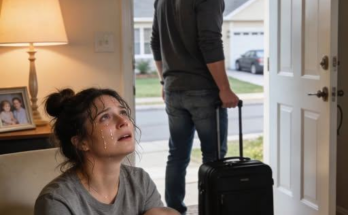
I stood in the empty, echoing apartment, the phone slipping from my hand and clattering onto the bare floor.
Passed away.
She had told my landlord I was dead.
Driven by a sudden, sickening intuition, I picked my phone back up and opened the Facebook app. I navigated to my mother’s public profile.
There, pinned to the top of her page, was a photograph of me from college. It was framed by digital white lilies and a tasteful black border. The caption, written by my mother and heavily tagged with my brother Jason’s account, read:
“Our beautiful Emily was taken from us far too soon. A tragic surgical complication has left a hole in our hearts that can never be filled. In lieu of flowers, the family has set up a memorial fund to help cover the devastating costs of her funeral and hospital bills. Any donation helps in this incredibly dark time.”
Beneath the post, a GoFundMe link glowed bright blue. I clicked it. The progress bar showed they had already collected over $25,000 in fraudulent donations from distant relatives, old high school friends, and sympathetic strangers.
They didn’t just want to hurt me. They didn’t just want to steal my cheap furniture. They had actively, premeditatedly erased my existence to turn a massive, illegal profit. They had sacrificed me on the altar of their greed.
I slid down the wall, sinking onto the cold hardwood floor, clutching my burning abdomen.
A lesser woman might have broken down into hysterical tears. She might have called the police right then, screaming into the phone, engaging in a messy, public battle of he-said, she-said with a family composed of master manipulators.
I did none of those things.
Lying on the floor of the empty apartment, staring at the pale rectangular ghost of a picture frame on the wall, the timid, people-pleasing daughter who had spent her entire life trying to earn her toxic family’s love simply died. The desperate need for their validation evaporated, incinerated by a white-hot, absolute rage.
In her place, an architect was born.
I didn’t cry. I pulled a small notepad and a pen from my hospital bag. I clicked the pen, my hand remarkably steady, and began to write the first name on my list.
Chapter 2: The Architect in the Shadows
For three years, I became exactly what my mother claimed I was: a ghost.
I realized immediately that confronting them in that empty apartment would yield nothing but gaslighting and denial. They would claim I was hysterical, that the GoFundMe was a misunderstanding, that they were “holding” my things for safekeeping. I would be dragged into a drawn-out, agonizing civil dispute that would drain my energy and result in a slap on the wrist.
I didn’t want a slap on the wrist. I wanted an execution.
I packed my single bag and left the city that night. I utilized the fake death to my absolute advantage. Since my landlord believed I was dead and my mother had forged the lease termination, I simply vanished from their radar. I legally changed my name to E.C. Vance. I moved three states away.
I had always been brilliant with numbers, possessing a mind that saw the world in ledgers and algorithms. I took that raw intellect and forged it into a weapon. I joined a top-tier corporate forensic accounting firm, specializing in fraud recovery and high-stakes financial investigations. I worked ninety-hour weeks. I ate, slept, and breathed the law. I rose through the ranks with a terrifying, single-minded focus, earning a reputation as a ruthless, brilliant auditor who could track a single missing penny through a labyrinth of shell companies.
Across the state, entirely ignorant of the monster they had created, my parents and my older brother, Jason, were living the high life.
Through dummy social media accounts and discrete background checks, I monitored their descent into arrogant, reckless greed. Fueled by the $50,000 they eventually netted from the fake memorial fund, and the absolute lack of consequences, they believed they were invincible. Jason bought a brand-new BMW. My parents moved into a sprawling luxury home in a gated community, taking out massive, high-interest mortgages they could barely afford, convinced their superior intellect would always keep them afloat.
But their greed made them sloppy. They were addicted to the rush of unearned wealth.
Two and a half years into my self-imposed exile, a massive, multi-million-dollar commercial real estate venture was flagged by the federal government for severe money laundering and wire fraud. It was a Ponzi scheme wrapped in legitimate corporate shell companies.
When my firm was contracted by the federal authorities to execute the “Clawback” protocol—a ruthless legal maneuver designed to seize, freeze, and liquidate the assets of every single investor involved in the scheme to pay back the victims—I personally requested the lead position on the audit team.
Sitting in my sleek, high-rise corner office, bathed in the glow of three massive computer monitors, I stared at the financial dossiers of the scheme’s investors.
Right there, on line 42, were the names of my parents and my brother. They had heavily invested all of their money, and leveraged their new luxury home, entirely into the fraudulent venture.
They had no idea that the federal government was watching them. And they certainly had no idea that the Lead Forensic Auditor appointed to dismantle their entire existence was the very daughter they had claimed was dead.
I leaned back in my heavy leather executive chair, tracing the digital lines of their massive, crippling debt on the screen. The trap was perfectly set.
I smiled, a cold, predatory expression that reached my eyes.
“Time to resurrect the dead,” I whispered softly into the quiet office.
I moved my mouse over the execute command, authorizing the federal asset freeze across all of their linked accounts, and clicked a single button.
Chapter 3: The Ghost Answers
The collapse of their financial empire was not a slow decline; it was a sudden, violent, catastrophic implosion.
It began on a Tuesday morning. Jason attempted to buy a round of expensive drinks for his friends at a high-end golf club. His platinum credit card declined. Annoyed, he handed the bartender his debit card. It also declined. When he logged into his mobile banking app, the screen didn’t show his usual padded balance. It showed a stark, terrifying string of red zeros, accompanied by a banner that read: ACCOUNT FROZEN. CONTACT YOUR FINANCIAL INSTITUTION.
Simultaneously, my parents returned from a lavish weekend getaway to find a thick, legally binding foreclosure notice taped to the heavy oak door of their gated home.
Panic, sudden and suffocating, set in.
Jason spent the next forty-eight hours frantically calling their bank managers, their financial advisors, and their lawyers, only to hit an impenetrable wall of bureaucracy. They were finally informed that their assets had been seized by a federal audit firm executing a mandated Clawback protocol due to their involvement in a massive money-laundering syndicate.
They were broke. They were under federal investigation. And they were entirely out of options.
Desperation makes people do irrational things. Driven to the absolute brink, Jason began tearing through old address books and digital archives, searching for anyone, any old connection, who might have capital to lend them for emergency legal defense. In his frantic search, he stumbled upon an old, unlisted emergency contact cell phone number I had set up years ago—a number I had purposefully kept active, waiting for this exact moment.
It was 5:00 a.m. The city outside my penthouse window was still dark, the streets quiet and empty.
My private cell phone rang on the nightstand. The caller ID flashed Jason’s number.
I picked up the phone, answered the call, and held it to my ear. I didn’t say a word. I let the silence stretch, heavy and pregnant with tension.
“Emily?” Jason’s voice filtered through the receiver. He wasn’t arrogant. He wasn’t dismissive. He was sobbing, his voice cracking with pure, unadulterated terror. “Emily, is that you? Please, God, tell me it’s you. I know we messed up. I know what Mom did was wrong, but we thought you were gone.”
I listened to him weep.
“Mom’s in the hospital,” Jason continued, his voice hitching as he gasped for air. “She had a severe panic attack when the federal agents showed up at the house to serve the warrants. Dad’s completely breaking down. The lawyers won’t stop calling, but we can’t pay them. Our accounts are entirely frozen. We are losing the house, Emily. We are losing everything. They’re talking about prison time. Please… you have to help us. Make it stop.”
I listened to the panic of the brother who had gleefully helped sell my childhood photos to buy a BMW. The brother who had happily spent the money raised off my fake obituary.
I looked out the floor-to-ceiling windows of my penthouse, watching the first grey light of dawn begin to bleed over the city skyline. I didn’t feel a spike of anger. I didn’t feel a drop of pity, nor the familiar, toxic guilt that used to control me.
I felt the cold, steady, magnificent adrenaline of a sniper slowly exhaling before pulling the trigger.
I took a slow sip of my coffee, the porcelain cup clinking softly in the quiet room.
“I’m sorry, Jason,” I stated evenly. My voice was perfectly modulated, entirely devoid of any sisterly warmth, adopting the crisp, professional tone of a corporate stranger. “You must have the wrong number. According to public record, Emily Carter passed away three years ago due to severe surgical complications.”
Before Jason could scream, before he could beg or process the terrifying finality of my words, I ended the call.
I set the phone down, walked to my closet, and pulled out my sharpest, most impeccably tailored charcoal power suit. It was time for the final audit.
Chapter 4: The Resurrected Executioner
The VIP recovery room at St. Jude’s Medical Center smelled of sterile bleach and expensive flowers—a sharp contrast to the dingy, crowded recovery ward I had woken up in three years prior.
My mother lay in the adjustable hospital bed, an IV line taped to the back of her bruised hand. She looked pale and frail, the arrogant matriarchal facade entirely shattered by the stress of impending federal indictment. My father and Jason sat in vinyl chairs beside her bed, their heads in their hands, looking like men waiting for the firing squad.
The heavy door to the recovery room swung open.
My father and Jason spun around instantly, expecting doctors or nurses.
Instead, I walked into the room.
I was immaculate. I was terrifying. I wore the charcoal suit like armor, my posture radiating absolute, unshakeable authority. Flanking me were two stern-faced federal agents wearing windbreakers with bold yellow FBI lettering, and a corporate attorney carrying a thick, red leather folder.
The heart monitor attached to my mother’s finger spiked wildly, the rhythmic beeping accelerating into a frantic, high-pitched trill as she opened her eyes and saw her “dead” daughter standing over her bed.
“Emily?” my father gasped, staggering backward, knocking his vinyl chair over with a loud clatter. All the color drained from his face as if he were truly looking at a ghost.
Jason stood frozen, his mouth opening and closing soundlessly, his eyes darting between me and the federal agents.
I didn’t smile. I didn’t greet them. I walked directly to the foot of the hospital bed and dropped the thick, red folder onto my mother’s lap with a heavy, final thud.
“My name is E.C. Vance,” I stated clinically, my voice echoing off the sterile tile walls. “I am the Lead Forensic Auditor for the federal recovery initiative handling the liquidation of the Vanguard Real Estate Ponzi scheme.”
The realization hit them like a physical blow. The absolute, soul-crushing horror dawned on my father’s face as he connected the dots—the frozen accounts, the seized assets, the relentless efficiency of the audit. It wasn’t just a faceless government agency destroying them. It was me.
“I am here to serve you with formal indictments,” I continued relentlessly, my gaze locked onto my mother’s terrified, wide eyes. “The federal government is charging all three of you with grand larceny, severe wire fraud regarding the fraudulent ‘Emily Carter Memorial Fund,’ and multiple counts of money laundering.”
My mother let out a shrill, hysterical gasp, clutching her chest as if she were having another panic attack.
“Your home in the gated community is currently being repossessed by the bank,” I announced, delivering the execution with surgical precision. “Your luxury vehicles have been impounded. And every single asset you possess is currently being liquidated to pay back the victims of the real estate fraud you so eagerly participated in.”
Jason’s knees buckled. He fell heavily to the linoleum floor, weeping instantly, his face buried in his hands. The arrogant brother who had driven a BMW bought with my blood money was reduced to a pathetic, sobbing mess.
The two federal agents stepped forward, pulling zip-ties from their belts.
“Jason Carter, Richard Carter, you are under arrest,” the lead agent announced, his voice booming in the small room. He began to formally read them their Miranda rights as they hauled my weeping father and brother to their feet.
As the agents moved to secure the men, my mother reached out. Her hand, trembling violently, the IV line pulling taut, reached toward my arm.
“Please, Emily!” she shrieked, real tears of absolute terror streaming down her pale face. “Please! We made a mistake! We were desperate! You can’t let them do this! We’re your family!”
She genuinely believed that groveling would save her. She believed that the desperate, approval-seeking daughter she had abused for decades still existed somewhere inside of me. She didn’t realize that every piece of furniture she sold, every dollar she stole from my fake obituary, had hammered my heart into cold, unyielding iron.
I looked down at her outstretched hand. My eyes were like chips of flint.
“My family died three years ago,” I whispered softly, ensuring only she could hear the final, lethal verdict. “I have the Facebook post to prove it.”
I turned my back on her entirely, ignoring her hysterical screams as I walked out of the hospital room, leaving them to the federal agents.
Chapter 5: The Sunlight and the Ash
Six months later, the contrast between our realities was nothing short of staggering.
The Carter family had been utterly, comprehensively annihilated. My mother, father, and Jason were sitting in separate, cold, concrete federal holding cells at the downtown detention center. They had been denied bail, deemed a severe flight risk due to the massive, complex nature of the wire fraud and money laundering charges.
Their luxury cars, the designer clothes, and the sprawling house in the gated community had been sold at a public federal auction. The proceeds barely covered a fraction of the restitution they owed the victims. Worse than the financial ruin was the social devastation. When the news networks picked up the story of the family who had faked their daughter’s death to run a fraudulent GoFundMe scheme, they became universally despised pariahs. They were entirely destitute, facing decades in federal prison, stripped of the arrogance and wealth they thought made them untouchable.
Across the city, a very different reality was unfolding.
Sunlight poured through the massive, floor-to-ceiling windows of my sprawling penthouse apartment, illuminating the gleaming hardwood floors and the sleek, modern art on the walls.
I was sitting on a plush, custom-built charcoal velvet sofa—a piece of furniture infinitely nicer, larger, and more comfortable than the worn gray couch my mother had sold out from under me three years ago. I was wearing comfortable, expensive loungewear, sipping a cup of perfectly brewed espresso.
The heavy, dark anxiety of needing my family’s validation—the constant, exhausting effort of making myself smaller to appease their narcissism—had evaporated completely. It had been scrubbed clean. The apartment felt massive, airy, and deeply peaceful. The oppressive weight of my abusers had been lifted, replaced by a lightness I never knew existed.
I hadn’t just survived the vacuum they left me in; I had filled it with an empire. The successful, flawless execution of the real estate audit had cemented my status as a titan in the forensic accounting industry. I was recently promoted to Senior Partner at the firm, commanding absolute respect from my peers.
As I set my espresso cup down on the marble coffee table, my cell phone buzzed. It was a call from the lead federal prosecutor handling the Carter case.
“Good morning, E.C.,” the prosecutor said, his voice carrying a tone of professional satisfaction. “I just got off the phone with Jason Carter’s public defender.”
“Oh?” I murmured, leaning back into the soft cushions. “What are they offering?”
“They are begging for a plea deal,” the prosecutor explained. “Jason is terrified of the maximum-security facility. He is offering to testify fully against your parents regarding the inception of the fake memorial fund in exchange for a reduced sentence in a minimum-security camp. But… there’s a catch.”
“Go on,” I said.
“His attorney is asking if you, as the primary victim of the memorial fraud, would be willing to sign a character reference recommendation. He says if you vouch for him, the judge might accept the plea. He’s begging you, E.C. He says he’s a changed man.”
The prosecutor paused, letting the weight of the moment settle. “The prosecution will honor your wishes. You have the ultimate, final power over his destiny. What do you want me to tell them?”
I looked at the reflection of the morning sun dancing on the glass of my windows. I remembered the feeling of standing in the doorway of my empty apartment, my stitches burning, my heart breaking as I realized I was entirely alone in the world.
“Tell his attorney,” I said, my voice as calm and unshakeable as a mountain, “that I recommend they pursue the absolute maximum sentence allowed by federal law. No deals. No leniency. Tell them to bury him.”
“Understood,” the prosecutor said, a hint of a smile in his voice. “I will relay the message. Enjoy your weekend, Vance.”
I hung up the phone and placed it on the table. The trauma of the betrayal hadn’t disappeared entirely—there were still moments of phantom sadness for the family I never truly had—but it was entirely eclipsed by the fierce, unshakeable reality of my own strength.
I had been forged in the fire of their cruelty, and I had emerged as steel.
Chapter 6: The Architect of the Horizon
One year later.
I stood on the massive, glass-paneled balcony of my penthouse, the crisp, invigorating evening wind blowing through my hair. The city spread out beneath me, a glittering sea of millions of lights, alive with energy and possibility.
I held my phone in my hand, looking down at an email thread forwarded by the prosecutor’s office.
Attached to the legal jargon was a desperate, handwritten letter from Jason, scanned into the system before his final sentencing hearing. It was a pathetic, groveling document. He begged for mercy. He claimed that “blood is thicker than water,” and that family should forgive each other. He pleaded with me to remember the good times we had as children.
I ran my thumb over the smooth, cold edge of the wine glass in my other hand, containing a very expensive, very bold Cabernet.
A year ago, reading those words might have caused my hand to shake. It might have sent a spike of toxic guilt straight through my heart.
Today, I felt absolutely nothing.
I didn’t feel a single ounce of pity for his suffering. I didn’t feel anger at his audacity to use our shared blood as a bargaining chip. I felt the profound, untouchable apathy of a woman looking at a stranger’s junk mail. Jason Carter was not a brother who haunted my memories; he was an accounting error I had successfully corrected and deleted from the ledger.
With a calm, perfectly steady hand, I tapped the screen. I hit ‘Decline’ on the legal request, ensuring the judge would reject the plea and sentence him to a decade in federal prison.
Without a second thought, I permanently deleted the email thread, erasing his voice, his apologies, and his pathetic existence from my life forever.
I slipped the phone into my pocket, raised my wine glass, and took a slow, satisfying sip, the rich liquid warming my chest.
I looked out at the endless, glowing horizon of the city skyline, a soft, genuine smile touching my lips.
My mother had looked at my vulnerable, post-surgical state and assumed I was weak. She had tried to erase my existence with a fake obituary, believing that if she took my cheap furniture and my childhood photos, I would simply fade away so she could make a quick profit.
She never understood the most fatal, terrifying mistake an arrogant predator can make.
When you prematurely bury a woman who knows how to build, she doesn’t just rest in peace. She doesn’t scream from the grave. She simply spends the time underground, in the quiet dark, meticulously designing the exact explosive charges needed to blow your entire world to pieces.