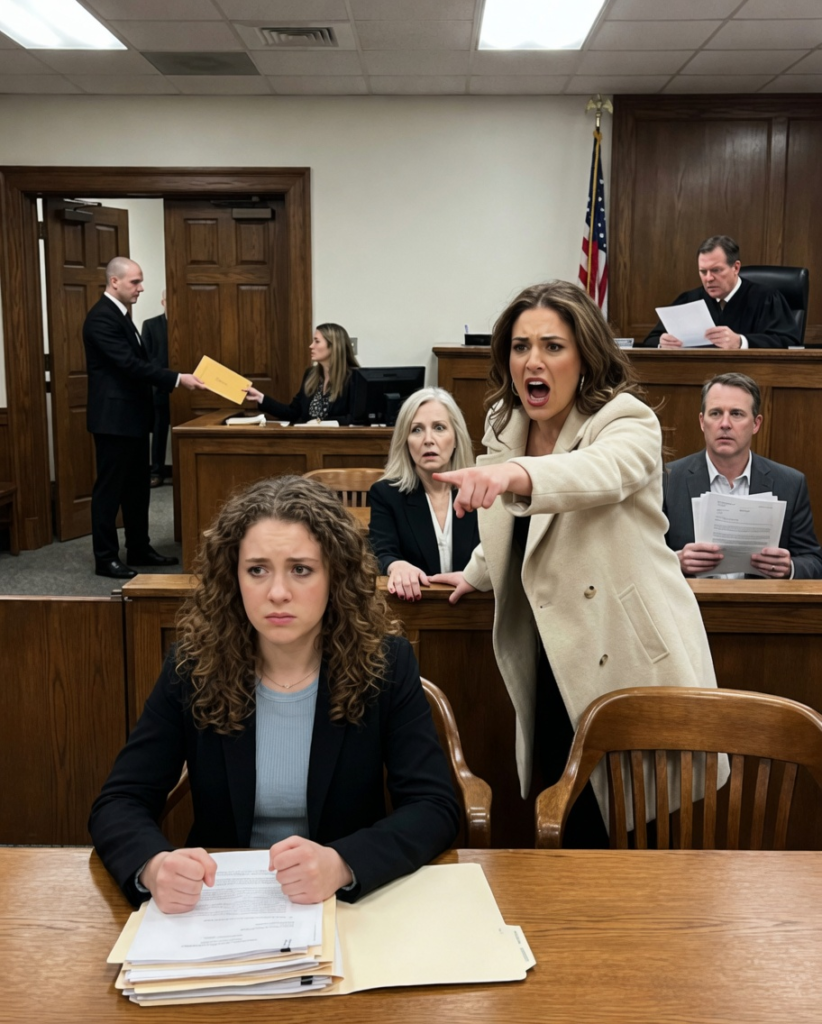
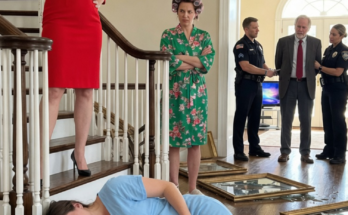
My sister walked into probate court wearing a cream coat and immediately asked the judge to transfer our grandfather’s entire inheritance to her that very day.
That alone would have been obscene enough.
Our grandfather had been dead nine days.
His coffee mug was still on the kitchen windowsill because I hadn’t yet been able to move it.
His jacket still hung by the back door.
His voice still lived in the house if you stood in the hallway at night and remembered hard enough.
But Victoria wasn’t carrying grief into that courtroom.
She was carrying timing.
Our parents sat behind her like they had practiced the seating arrangement.
Her lawyer slid the motion forward, called me unfit, and when the judge asked whether I objected, I said the only thing my grandfather told me to say if this ever happened.
Wait, I said.
Until the last person arrives.
They all thought I was stalling.
For about twenty seconds, they were right.
The bailiff called our case as flatly as if he were announcing parking citations.
Victoria stood before the last syllable left his mouth.
She didn’t look like a granddaughter.
She looked like a claimant.
Her cream coat was expensive, immaculate, and entirely wrong for mourning.
It was the kind of piece you wear when you intend to be remembered in a room.
Behind her, our mother folded her hands in her lap and arranged her face into practiced sorrow.
Our father stared at the bench with a rigid jaw, the expression he used in negotiations when he wanted everyone to know he considered the outcome already settled.
I remember thinking that none of them looked like they had buried anyone.
They looked like they had come to close on a property.
The judge, an older man with tired eyes and a reputation for hating family theatrics, adjusted his glasses and reviewed the file.
Victoria’s attorney rose with polished ease.
Your Honor, he said, we request an immediate transfer of estate authority to my client, effective today.
Effective today.
The phrase made something in my chest tighten.
My grandfather’s savings, his house, his workshop, his records, his war medals, the orchard land he never sold even when everyone told him to—reduced to two neat words and a signature line.
The attorney kept talking, explaining urgency, stability, protection of assets.
Then he said the word I had heard all my life whenever my parents wanted me dismissed.
Ms.
Hail has been uncooperative.
My client is the responsible party.
Responsible.
In our family, that word meant easiest to control.
Victoria was two years older than me and had spent most of our lives being treated like a future investment.
She was the daughter who wore what was expected, dated who was approved, smiled at the right people, and learned early that charm could do more than honesty.
I was the one who asked follow-up questions, stayed too long in uncomfortable silences, and refused to agree just because agreement made dinner easier.
By the time we were adults, our roles had calcified into family law.
Victoria was capable.
I was difficult.
Grandpa never used those words.
He called Victoria bright and ambitious.
He called me steady.
He said both of us had sharp eyes, but only one of us liked to keep them open when it mattered.
The judge looked at me.
Ms.
Hail, do you object?
I do, I said.
Victoria’s mouth curved like she expected tears next, maybe a messy speech the judge could swat aside.
Her lawyer asked, On what legal basis?
I’m not making my argument yet, I said.
I’d like to wait until the last person arrives.
Victoria laughed.
My father muttered that I was turning everything into a spectacle.
The judge reminded me it was probate court, not a stage.
I told him my objection was legal and timely, but the full record was not yet before the court.
That was the first time Victoria’s face flickered.
Only a little.
A tightening at the mouth.
A glance at her attorney.
But I saw it, because I had seen that exact expression three months earlier in my grandfather’s kitchen when he asked a very simple question and no one in my family wanted to answer it.
It happened on a Sunday in February.
My father was helping Grandpa with online banking.
Victoria was by the sink scrolling through a real estate app.
My mother was making tea and loudly pretending not to listen.
Grandpa asked why there was a transfer he didn’t remember approving.
My father said it was for repairs.
Grandpa asked which repairs.
Victoria jumped in and said the roof.
Grandpa said the roof had been fixed six years earlier.
No one spoke for a beat too long.
I watched my grandfather look from one face to another, and that was the first time I saw something harden in him.
Not confusion.
Clarity.
After they left, he sat at the table and lined up his pillbox, his reading glasses, and a stack of bank printouts so neatly it hurt to look at.
Then he tapped the top page and said, Doing things properly means having receipts.
He had said that to me since I was a child.
Proof first.
Feelings later.
A month after that, he called and asked me to drive him downtown.
He told my parents he had a cardiology follow-up.
He told me to say nothing.
He wore his good gray coat and carried a file folder thick enough to bend at the corners.
I parked near an old brick building with brass names by the elevator.
He told me to wait in the car.
He was gone fifty-six minutes.
I know because I watched the dashboard clock the whole time.
When he came back, he looked tired, but lighter.
He rested the folder on his knees, stared through the windshield, and said, Sometimes the people who rush you the hardest are the ones most afraid of paper.
I asked if he was all right.
He said, I am now.
He wouldn’t tell me more.
Not that day.
Not even when I made him soup later and he complained it needed more pepper.
But two weeks afterward, he asked me where I kept my important documents.
I told him in a fireproof box in my hall closet.
He nodded approvingly and said, Good.
Keep your copies.
Even from family.
I didn’t understand how prophetic that was until we buried him.
The week after his funeral was strange in the way bad weather is strange when the sky looks normal but the animals act wrong.
Victoria called twice asking whether I had found all the house papers.
My father asked for Grandpa’s banking passwords under the excuse of unpaid utilities.
My mother wanted to know if I intended to make things easier for everyone by letting Victoria handle probate.
Every conversation had the same undertone: speed.
Sign now.
Decide now.
Move now.
Grandpa had been dead nine days when they filed the emergency petition.
Back in court, Victoria’s attorney was still speaking about urgency when the doors opened.
A man in a plain black suit entered carrying a sealed courier envelope.
He was not a local attorney, not a grieving relative, not anyone our family knew.
He moved to the clerk, handed over identification, and said, Courtesy copy for the bench.
From the trustee.
The judge put out his hand immediately.
He read the cover page once, then again.
His posture changed.
Victoria stopped smiling.
Her attorney asked to inspect the documents.
The judge said he could review them after they were marked.
Victoria then made the mistake that broke the whole performance.
There is no trustee, she said.
Too quick.
Too certain.
Grandpa never activated—
She cut herself off.
The judge lifted his eyes.
Ms.
Hail, sit down.
Instead, she stood straighter and pointed at me.
This is elder abuse, she said.
She manipulated him when he wasn’t well.
She kept us out.
She put ideas in his head.
My mother gasped at exactly the volume needed to seem shocked.
My father half-rose from his seat.
Then the bailiff leaned toward the judge and whispered something.
A side door opened, and a uniformed deputy walked in carrying an envelope with my father’s name on it.
Mr.
Hail?
My father took the documents.
I watched his face drain as he read the first paragraph.
It had nothing to do with probate.
That was true.
It was a civil restraining order filed that morning by the independent trustee, freezing funds transferred out of Grandpa’s accounts during the last six months of his life pending forensic review and return.
My father read the caption twice, as if the words might rearrange themselves into something kinder.
They didn’t.
The man in the black suit introduced himself as Dane Mercer, authorized representative for Halcyon Fiduciary Services, successor trustee under the amended Hail Family Trust.
He spoke in the calm voice of someone who knew emotion was a luxury other people had.
Inside the envelope, he said, were the trust amendment, the acceptance of trusteeship, the treating physician’s certification of capacity, notice to interested parties, and a sealed instruction from the settlor—my grandfather—to be opened if any family member attempted to secure emergency control of the estate.
Even Victoria’s attorney went pale at that.
The judge asked the only question that mattered first.
Why is none of this referenced in the petition before me?
Silence.
Then Victoria’s lawyer said, carefully, My client represented that no operative trust had been activated.
Mercer handed the clerk certified copies.
Your client was wrong, he said.
That was the beginning, not the end.
The judge recessed for fifteen minutes to review the filings.
In those fifteen minutes, my mother whispered furiously to Victoria, my father refused to meet anyone’s eyes, and I sat alone at counsel table trying not to remember the last time I had buttoned Grandpa’s coat for him because arthritis made his fingers clumsy.
When the judge returned, he denied the emergency transfer on the spot.
Then he did something even worse, from Victoria’s point of view.
He ordered the sealed instruction opened and read into the record.
The letter was handwritten, scanned, and certified by the estate attorney who had supervised the trust amendment.
I knew Grandpa’s script before the first full sentence landed.
The same sturdy slant he used on birthday cards and mechanic receipts.
The same pressure that carved through paper.
If this letter is being read in court, it began, then someone in my family has tried to move faster than the truth.
The room went still.
The letter was only two pages, but it shattered everything they had built.
Grandpa wrote that he had become concerned after noticing unexplained transfers, pressure to sign documents he had not reviewed, and repeated suggestions that Victoria should just have the house now so matters are simpler later.
He wrote that he had retained independent counsel, undergone a capacity evaluation by his treating physician and a geriatric specialist, and amended his estate plan because he no longer trusted certain family members to handle his affairs honestly.
He wrote that I had not asked for money, property, or control.
In fact, he wrote, I had resisted even discussing inheritance because it made him tired and sad.
He called me the only one who still sat with me when there was nothing to gain.
Then came the sentence that broke Victoria’s composure.
If Victoria argues that her sister manipulated me, that accusation is false.
I am making these changes because of Victoria and her father, not because of my younger granddaughter.
Victoria made a strangled sound in the courtroom that I had never heard from her before.
It wasn’t grief.
It was humiliation.
Pure and unfiltered.
The judge asked Mercer whether there was more.
There was.
The trust amendment, executed three months before Grandpa’s death, left my grandfather’s house to me outright, along with his workshop tools, journals, and personal papers.
The remaining liquid assets were to be divided between a hospice foundation in my grandmother’s name and a scholarship fund for trade apprentices from our county.
My mother was left a box of family photographs and my grandmother’s china.
My father was left nothing beyond forgiveness of a documented personal loan, already offset against the suspicious transfers now under review.
Victoria was left a conditional bequest of fifty thousand dollars in a spendthrift trust if—and only if—she did not contest, obstruct, or interfere with administration.
Her emergency petition, the judge observed aloud, had likely just cost her even that.
You could feel the heat coming off her anger.
That is insane, she said.
He would never do that.
He loved family.
He did, I said before I could stop myself.
That was the problem.
He kept confusing love with access until he finally didn’t.
The judge banged his gavel once.
Victoria’s attorney put a hand on her arm, but she jerked away.
My father had stopped pretending calm altogether.
He was flipping through the civil papers with frantic little motions, hitting the same pages again and again.
My mother, for the first time in my life, looked less righteous than frightened.
Mercer then submitted the physician certifications.
Grandpa’s longtime doctor had examined him forty-eight hours before the trust execution and found him fully oriented, decisional, and capable of understanding the nature and extent of his assets and the natural objects of his bounty.
A geriatric specialist had reached the same conclusion.
There was also a recorded video statement made in the attorney’s conference room.
The judge watched part of it in chambers with counsel that afternoon and summarized it on the record.
Grandpa, wearing the same gray coat I had driven him downtown in, looked directly at the camera and said, I know exactly what I own, exactly who my family is, and exactly why I am changing this.
My younger granddaughter drove me here.
That is all she did.
The decisions are mine.
The elder abuse accusation died there.
But the money trail had only started to surface.
The judge set an evidentiary hearing for the following month, ordered preservation of all financial records, and prohibited my father and Victoria from entering Grandpa’s house or contacting banks on behalf of the estate.
Mercer’s separate civil action moved faster than I expected.
Within two weeks, forensic accountants traced a pattern of transfers from Grandpa’s checking and brokerage accounts into a business account controlled by my father, then into payments for credit cards, travel, and a down payment on an SUV Victoria had been driving around town while telling everyone she was barely holding it together.
The sum was not catastrophic by billionaire standards.
It was catastrophic by ours.
Eighty-seven thousand, four hundred and twelve dollars.
There were also drafts of documents saved on Victoria’s laptop that turned my stomach when Mercer’s lawyer showed them at the hearing.
One was a proposed property listing for Grandpa’s house with the square footage and neighborhood comps already filled in.
Another was an unsigned deed transfer template dated eleven days before he died.
There were text messages, too.
Victoria to my father: We need this wrapped fast before she starts digging.
My father’s reply: Judge just needs to see she’s unstable.
That word again.
Unstable.
It had been seeded into the petition, into declarations, into whispered phone calls to family friends.
It was the family version of character assassination—cheap, efficient, and difficult to wash off once thrown.
But documents are stubborn things.
They do not blush or retreat when people lie confidently around them.
At the evidentiary hearing, Victoria took the stand and tried to claim Grandpa had promised her the house for years.
Mercer asked if she had anything in writing.
She said family promises are not always written down.
Except when you prepared a draft deed, he replied, holding up the exhibit.
She said she had only been helping.
He showed her the text about wrapping everything fast before I started digging.
She said it was taken out of context.
He showed the real estate comp sheet created before Grandpa’s death.
She cried then.
Not because she was sorry.
Because the story she relied on—daughter tries to keep family together while difficult sister creates chaos—had finally met a record it could not overpower.
My father did worse.
Under oath, he first called the transfers loans.
When asked for promissory notes, he had none.
Then he called them reimbursement for caregiving expenses. Mercer presented invoices showing I had paid most of Grandpa’s day-to-day bills during the last year and that hospice had covered the rest.
Then my father said Grandpa had verbally authorized him to move money around.
Mercer asked why, if that were true, the transfers were routed through the business account rather than directly documented.
My father said he didn’t know.
The judge’s face at that answer was not kind.
The hardest moment, unexpectedly, was my mother.
She had signed a declaration attached to Victoria’s petition saying I was emotionally volatile, isolated Grandpa, and interfered with family access.
Mercer asked her whether she remembered telling hospice staff that Victoria had upset him again about the house two days before he died.
My mother said she did not recall.
Mercer produced the hospice note.
Then he asked whether she had read her declaration carefully before signing.
My mother looked at Victoria.
Victoria looked back without a trace of softness.
And in that tiny silence, something in my mother finally collapsed.
No, she whispered.
The courtroom heard it.
No, she said again, louder.
Victoria brought it to me.
She said it was just procedure.
It was the first honest thing my mother had said in months, and it came too late to save anyone.
By the end of the hearing, the judge’s findings were devastating.
He held that the amended trust was valid, that Grandpa had full capacity, that the emergency petition had been filed on materially incomplete and misleading information, and that Victoria’s conduct constituted interference under the trust’s no-contest provision.
Her conditional bequest was revoked.
The funds were redirected, per the trust language, to the hospice foundation.
My father was ordered to account for every transfer, return the misappropriated funds with interest, and pay a surcharge for breach of fiduciary conduct arising from his informal control over Grandpa’s accounts before death.
The civil freeze remained in place until settlement.
Within three months, he sold the SUV and borrowed against his business to repay most of what he had taken.
The rest was secured by judgment.
My mother got the china and the photographs, just as the trust stated.
She looked embarrassed receiving them, as though porcelain could become accusatory.
As for me, I got the house.
When Mercer handed me the keys formally two weeks after the final order, I stood in the front hallway and cried harder than I had at the funeral.
Not because of the money.
The money felt abstract, almost beside the point by then.
It was because the house still sounded like him.
The floorboard outside the study still clicked under weight.
The kitchen window still caught late afternoon light on the little scratches in the table where he used to sort screws into jam jars.
In the workshop, his pencil marks were still visible on the wall where he had measured wood.
Truth had won in court, but it had not returned the person who taught me how to recognize it.
A week later, I found the box he had meant me to have.
It was in the study closet, labeled in his handwriting: Receipts.
Inside were file folders, bank copies, insurance papers, photographs, and a smaller envelope with my name.
In the envelope was a note.
You were never hard to love, it said.
You were hard to fool.
There is a difference.
Don’t punish yourself for other people needing the easier version of a daughter.
I sat on the floor for a long time after reading that.
Victoria did not call me again.
She sent one email through her attorney demanding a family heirloom watch she claimed Grandpa had promised her.
Mercer denied the request because the trust’s personal property memorandum left the watches with the house contents.
She threatened to appeal.
Her lawyer withdrew two weeks later.
I heard through a cousin that she told people I had turned Grandpa against the family.
Maybe she believes that.
Maybe it is easier than admitting he simply saw clearly at the end.
My father called once, late at night, after the settlement papers were signed.
I almost didn’t answer.
When I did, he was quiet for so long I thought the line had dropped.
Finally he said, You made your point.
I looked around Grandpa’s dark kitchen, at the window over the sink and the mug still sitting on the sill because I still wasn’t ready to move it.
No, I said.
He did.
He hung up.
I never heard an apology from him.
Not a real one.
My mother sent a card at Christmas with no message inside beyond her name.
Victoria sent nothing.
People love clean endings.
They want a courtroom, a ruling, a restored balance, and then peace descending like a curtain.
It didn’t happen that way.
The truth came out, yes.
The judge saw exactly what they were trying to do.
The money was clawed back.
The trust held.
The house stayed where Grandpa intended it to stay.
On paper, that is justice.
In the body, it feels different.
It feels like unlocking a door with hands that shake because the person who gave you the key is gone.
It feels like winning an argument you never wanted to have.
It feels like reading old receipts at a kitchen table and realizing the biggest red flag was never the missing money, not even the rushed petition.
It was how quickly the people closest to him mistook his death for an opening.
Sometimes I still think about Victoria in that cream coat, standing up too early, already claiming ownership before the bailiff had finished speaking.
That was the moment, more than any document, when the whole truth was visible.
Grief waits.
Greed doesn’t.
And every now and then, when I open the study closet and see Grandpa’s labeled folders stacked exactly as he left them, I wonder what hurts more—that he had to protect himself from his own family, or that he knew exactly which one of us would still be there when the receipts were finally opened.