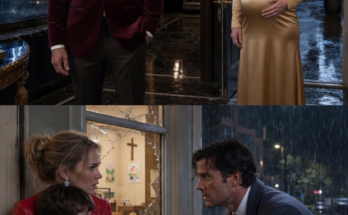
My Spoiled Sister Was Always The Star — Private School, Luxury Trips, And A New Car At 18. At Our Grandma’s Birthday Dinner, She Found Out I Quietly Bought A Penthouse In NYC… And She Lost Her Mind. She Screamed, My Dad Dropped His Fork, And My Aunt Said Something That Made Everyone Freeze.
Part 1
You ever have that one sibling who seems to get handed a life wrapped in ribbon while you’re standing there with the receipt for yours, wondering why you had to pay full price?
That was Paige.
My younger sister was the kind of person people made room for before she even entered it. When she was little, my mother called her “our miracle.” She had this soft voice she used only for Paige, like every word needed to land on a pillow. My father carried her backpack, fixed her cereal, warmed up the car for her. At family parties, aunts leaned in and asked what Paige was doing lately, as if a seven-year-old’s tap class was breaking national news.
I was Jaden. Three years older. Accidentally born before the miracle arrived.
No one ever said that out loud to my face when I was a kid. Not directly. But families have ways of teaching you where you belong. Paige got private school with red-brick buildings, uniforms pressed so sharp they could cut paper, and music lessons in rooms that smelled like polished wood. I got public school, a bus stop with a cracked bench, and a “you’ll figure it out, buddy” whenever I needed anything.
When Paige turned sixteen, my parents surprised her with a white Audi in the driveway. It had a red bow on the hood so big it looked like Christmas had swallowed the engine. She screamed, cried, filmed it from three angles, and hugged our parents like they had rescued her from poverty instead of upgrading her from being driven everywhere.
On my sixteenth birthday, I worked a closing shift at Henderson’s Grocery. My father texted, “Happy birthday, champ,” at 9:42 p.m. My mother added a cake emoji. I ate a gas station muffin in my car before driving home.
That was normal.
The crazy part was Paige believed she deserved it. Not in a mean-girl movie way, at least not at first. More like the world had taught her she was special, and she never questioned who had been made small so she could feel bigger.
After high school, she went to an expensive performing arts college in Los Angeles. My parents talked about it like she’d been accepted into NASA. I moved to New York with two duffel bags, a cracked laptop, and $430 hidden in an old sock. I studied computer science by day, worked tech support by night, and learned how to sleep through sirens, radiator clanks, and roommates arguing through paper-thin walls.
I didn’t tell my family when my first software tool blew up online.
I didn’t tell them when I built a freelance business.
I didn’t tell them when my startup got funded.
And I definitely didn’t tell them when a larger company acquired us and the number in my bank account started looking like a typo.
It wasn’t shame. It was protection.
Because I knew my family. If I told them I had money, they wouldn’t be proud. They’d measure it, question it, resent it, then find a way to connect it back to Paige.
So I stayed quiet.
Last year, I bought a three-bedroom penthouse on the Upper East Side. Floor-to-ceiling windows. A kitchen island big enough to land a small plane on. A view of the park that changed colors depending on the hour. I moved in on a rainy Thursday with one suitcase and no announcement.
Then Grandma turned eighty-five.
She was the only person in the family who ever looked at me like I had arrived before I became useful. So when she asked everyone to come to dinner at her favorite old restaurant, I booked the flight without hesitation.
The place smelled like lemon polish, butter, and expensive wine. Paige was already at the center of the table, laughing too loudly in a silver dress, one hand lifted like she was accepting applause. My parents sat on either side of her, glowing.
I handed Grandma white roses, her favorite.
“Oh, Jaden,” she whispered, hugging me tight. “You always remember.”
Paige rolled her eyes. “We were just talking about my callback. It might be for a streaming show.”
Everyone turned back to her.
I sat at the end of the table, sipped my water, and listened to my sister describe a career that existed mostly in captions and almosts.
Then, halfway through dinner, she looked at me with that old little smile.
“So, Jaden,” she said, “are you still doing that computer thing?”
A few people chuckled before I even answered.
I looked at her glossy mouth, my mother’s proud face, my father’s bored smile, and felt something cold and steady settle inside me.
For the first time in my life, I didn’t feel invisible.
I felt dangerous.
Part 2
I didn’t respond the way Paige wanted.
That was probably what bothered her most.
Old Jaden would have laughed awkwardly, looked down at his plate, and let the table move on. Old Jaden had mastered the art of disappearing while still sitting in plain sight. But that night, I smiled like she had handed me something useful.
“Yeah,” I said. “Still doing that.”
Paige tilted her head. “Must be nice working in pajamas. I’d go crazy if I didn’t have auditions, events, actual people depending on me.”
My cousin Lily coughed into her napkin, trying not to laugh. Aunt Cheryl smiled because Aunt Cheryl smiled whenever cruelty came wrapped as a joke. My father reached for his steak like the conversation had nothing to do with him.
Grandma’s hand tightened around her fork.
I noticed.
That tiny movement stayed with me long after dinner ended. Grandma had heard it. She had always heard more than she said.
I flew back to New York the next morning. The city met me with gray skies and wet sidewalks, steam rising from the grates like the streets were breathing. My driver dropped me at my building, and the doorman nodded.
“Welcome home, Mr. Carter.”
Home.
I rode the elevator up in silence. When the doors opened into my apartment, the lights warmed automatically. My shoes clicked across marble floors. The skyline stood behind the glass, huge and glittering, like proof I wasn’t the boy at the end of the table anymore.
Still, I felt twelve.
That was the thing nobody tells you about building a life your family can’t ignore. Sometimes, when they finally look, you realize you’re still waiting for people who never learned how to see you.
I tried to bury it in work. Calls, meetings, product strategy, investor updates. I flew to Austin, then Chicago, then back to New York in one week. My assistant, Nora, left oat milk lattes on my desk and told me I looked like a ghost with a calendar.
Then my father texted.
“Hey Jaden. Paige’s 25th birthday is coming up. We’re doing a surprise weekend in Miami. Flights and hotel already booked. Need you to chip in for the group gift.”
No “How are you?”
No “Are you free?”
No “We’d love to see you.”
Just an invoice disguised as family.
I stared at the message while standing in my kitchen, barefoot, the refrigerator humming softly beside me. The group gift, I learned after asking, was a new MacBook Pro, a ring light setup, and “some starter equipment” because Paige wanted to launch a beauty channel.
I almost laughed.
When I turned twenty-five, I bought myself a secondhand office chair with a broken lever and ate dollar-slice pizza alone on a fire escape.
I texted back, “I won’t be able to make it. I hope she has fun. I’ll pass on the gift. Already handled something separately.”
That last part was a lie.
Not a cruel one. Just a shield. I knew if I said no directly, they’d turn it into a courtroom.
Within twenty minutes, the family group chat lit up.
Aunt Cheryl: “Jaden, Paige was really hoping you’d be there.”
Mom: “We already booked the suite, honey. Please don’t make this difficult.”
Paige: “It’s not about money. It’s about showing up for family. But whatever. Not surprised.”
I didn’t answer.
Instead, I poured coffee I didn’t want and opened an old shared Dropbox account my mother used when we were teenagers. I don’t know why. Maybe I needed evidence. Maybe I needed to prove to myself I hadn’t invented the imbalance.
Folders loaded slowly.
“Family Vacations.”
“Paige Dance.”
“Paige College.”
“Jaden School Stuff.”
My folder had one document: “Scholarship Essays Draft.”
Paige’s had tuition invoices, private coaching receipts, housing deposits, headshot packages, travel confirmations, and a scanned acceptance letter my parents had framed like a holy document.
One invoice alone was more than my entire first year in New York.
I sat there as the screen glowed against my face. The apartment was quiet except for the soft tick of the clock over the stove. My hands weren’t shaking. That surprised me. I wasn’t furious.
I was clear.
The Miami photos started appearing days later. Paige on a rooftop in a white dress. Paige on a boat with sunglasses bigger than her future. Paige holding a champagne flute angled perfectly toward the sunset, captioned: “Surrounded by the people who matter most.”
I closed the app.
A week later, Grandma called.
Her voice was soft. Careful.
“Your father told me you sent Paige something beautiful for her birthday.”
I frowned. “I didn’t send anything.”
Silence stretched across the line.
Then Grandma exhaled slowly. “She told everyone the bracelet was from you.”
My apartment suddenly felt colder.
“What bracelet?”
“A Cartier one,” Grandma said. “She made quite a speech about how even you came through for her.”
I looked out at the skyline, all that glass and steel staring back at me, and felt the old version of myself finally step away from the table.
Paige hadn’t just taken my place in the family.
Now she was using my name to decorate hers.
Part 3
I didn’t call Paige.
That would have been too easy for her.
Paige loved phone calls because phone calls vanished. She could cry, twist, deny, accuse, and by the end, everyone would be arguing about tone instead of truth. I had watched her do it since childhood.
So I waited.
Not passively. Strategically.
Grandma’s eighty-sixth birthday was coming up, and like every year, she wanted dinner at the same restaurant. Same corner room. Same lemon candles. Same family pretending time had made us closer instead of just older.
This time, I prepared.
Three weeks before the dinner, I called the real estate attorney who handled my closing.
“I need a certified copy of my deed,” I said.
There was a pause. “Everything okay?”
“Family dinner.”
He laughed once. “Say no more.”
The night of Grandma’s dinner, I wore a navy suit tailored so cleanly it made the hostess look twice before asking my name. The restaurant windows reflected me as I walked in: polished shoes, calm face, shoulders back.
For once, I looked like the life I had built.
Paige was already performing when I entered.
She wore emerald satin and sat with one elbow on the table, talking about a director who had “basically promised” her something. My father listened like she was delivering a TED Talk. My mother adjusted Paige’s necklace while Paige kept talking.
Grandma saw me first.
Her whole face changed.
“Jaden.”
I kissed her cheek and handed her a single white rose. She touched the petals, smiled, then looked at my suit with quiet pride.
“You look well,” she said.
“I am.”
Paige’s eyes traveled from my shoes to my watch. She noticed quality the way sharks notice blood.
“Well,” she said brightly, “look who finally decided to show up.”
“I wouldn’t miss Grandma’s birthday.”
“No, just mine.”
The table went still for half a second. My mother made a tiny noise, like she wanted to soften it but didn’t know how.
I sat down.
Dinner moved in familiar circles. Paige dominated. My parents fed her questions. Aunt Cheryl nodded too much. Uncle Ron ordered another side dish nobody wanted. Lily kept glancing at me like she sensed something was different but couldn’t name it.
When dessert arrived, Grandma turned to me.
“So, sweetheart,” she said, “what’s new in your world?”
There it was.
The opening.
I wiped my mouth with the napkin, reached into my jacket, and removed the folded document. Not rushed. Not dramatic. Just calm.
“Well,” I said, “since you asked, I bought a place.”
Paige laughed immediately. “Another apartment?”
“Not exactly.”
I unfolded the deed and slid it across the table.
The paper made a soft whisper against the white tablecloth. That sound might as well have been a thunderclap.
My father leaned in first. Then Aunt Cheryl. Then Paige, her smile thinning.
The bold text at the top said enough.
Ownership.
Jaden Elias Carter.
Three-bedroom penthouse. Upper East Side. Manhattan.
No one spoke.
A fork hit a plate somewhere down the table.
“You bought this?” Aunt Cheryl asked.
“Yes.”
“In Manhattan?” my father said.
“Yes.”
Paige snatched the paper closer. “This is fake.”
I looked at her. “It’s certified.”
Her face flushed, then drained. For the first time in my life, Paige Carter had no script.
My mother’s voice came out small. “Jaden, how?”
“Work,” I said.
That one word landed harder than any speech.
Paige stood so fast her chair screamed against the floor. Heads turned from nearby tables.
“Why didn’t you tell us?” she demanded.
I folded my hands.
“Because you never asked.”
Grandma closed her eyes briefly, like the truth hurt but also relieved her.
Dad tried to recover. “Son, this is impressive. We just didn’t realize your computer thing was so… serious.”
“Most people don’t build penthouses with pajamas,” I said.
Lily choked on a laugh.
Paige glared at her, then at me. “So what? You waited all this time to embarrass me?”
“No,” I said. “I waited until someone showed interest in my life.”
“You’re jealous,” she snapped.
I shook my head. “I was ignored. There’s a difference.”
Her mouth trembled, but not with sadness. With rage.
Then I added, “And since we’re discussing things that weren’t true, I didn’t buy you that bracelet.”
The room went colder than the water glasses.
Paige froze.
Grandma opened her eyes.
My mother looked at Paige.
For the first time, the table didn’t turn toward me.
It turned toward her.
Part 4
Paige tried to laugh.
It came out wrong.
Too sharp. Too quick. Like a glass cracking under hot water.
“Oh my God,” she said, touching her necklace. “Are we seriously doing this at Grandma’s birthday dinner?”
“You did it at your birthday weekend,” I said. “I’m just correcting the record.”
Aunt Cheryl’s eyes widened. Uncle Ron suddenly became very interested in his coffee. Lily looked down at her lap, but I saw her mouth open slightly.
My mother’s voice shook. “Paige?”
Paige threw her hands up. “It was a joke.”
Grandma’s voice cut through the table.
“No, it wasn’t.”
Everyone looked at her.
Grandma wasn’t loud. She never needed to be. Her voice had that old Southern edge she used when someone had mistaken kindness for weakness.
“You told me your brother sent you that bracelet. You let me thank him for it in my heart. You made him part of a lie he didn’t even know existed.”
Paige’s eyes shone, but tears had always been her emergency exit.
“I can’t believe you’re all attacking me.”
“No one is attacking you,” I said. “We’re just not protecting the lie.”
Her face twisted. “You think because you have money now, you’re better than me?”
“No.”
“You’ve been waiting for this,” she said, voice rising. “You’ve been waiting to humiliate me because I had things you didn’t.”
I leaned back and let myself really look at her.
The perfect makeup. The trembling hands. The anger that wasn’t really anger but panic dressed in designer fabric.
“I didn’t want your things, Paige,” I said. “I wanted parents who remembered I existed.”
My mother covered her mouth.
My father looked down.
Paige scoffed. “Please. You loved being the poor little victim. It made you feel special.”
Something inside me went quiet.
Not numb. Quiet.
“You got the car,” I said. “The private school. The trips. The tuition. The tutors. The attention. The birthday weekends. The emergency money. The benefit of the doubt every single time. I got told to be mature because I was older.”
Paige’s eyes darted to our parents.
They didn’t save her.
That was new.
She grabbed her purse. “This is pathetic.”
Grandma stood slowly.
“No,” she said. “What’s pathetic is watching you become cruel and calling it confidence.”
Paige stared at her like she’d been slapped.
“Grandma.”
“I love you,” Grandma said. “But I do not admire who you’ve become.”
The entire room held its breath.
Paige looked at Mom. Mom’s lips parted, but nothing came out. She looked at Dad. He rubbed his forehead and stayed seated.
For the first time in her life, Paige stood in the wreckage of her own behavior without someone rushing in with a broom.
She left without another word.
Her heels struck the floor hard all the way to the exit. The restaurant door opened, letting in cold air and street noise, then shut behind her.
No one followed.
That might have been the loudest part.
The rest of dinner happened in pieces. Aunt Cheryl apologized without making eye contact. Uncle Ron mumbled that he “hadn’t known things were that bad.” Lily whispered, “I’m sorry,” when she passed me the dessert menu. My father cleared his throat eight times and said nothing meaningful.
Grandma reached for my hand under the table.
“I’m proud of you,” she said.
I nodded, but my chest felt hollow.
I thought telling the truth would feel like winning. I thought I’d walk out lighter, cleaner, maybe even satisfied.
Instead, when I stepped into the night, the air smelled like rain and exhaust, and all I felt was tired.
My driver opened the car door. I looked back once through the restaurant window.
My mother was crying into a napkin while my father stared at the empty chair Paige had left behind.
And for the first time, I wondered whether my family had lost Paige years ago and simply called it love.
Part 5
After that dinner, my phone became a museum of things left unsaid.
Dad called once. I let it ring.
Mom called twice. I watched her name glow across the screen until it disappeared.
Paige sent an email with no subject line and six paragraphs of polished injury. I read the first sentence, saw the phrase “your sudden need to punish me,” and archived it.
Grandma texted every morning.
“Did you eat?”
“Beautiful sunrise today.”
“Your grandfather would have liked your apartment.”
Those were the messages I answered.
New York kept moving like nothing had happened. Yellow cabs leaned on their horns. Elevators rose. Meetings started. People wanted updates, projections, strategy, decisions. I had built a life where dozens of people depended on my focus, but for two weeks, my focus was a torn thread.
I slept badly.
At three in the morning, the penthouse felt too large. The city blinked beyond the glass like a machine that never got tired. I would stand barefoot on the cold floor, looking down at traffic, and hear Paige’s voice in my head.
You’ll always be the weird quiet one.
The worst part was that some old, bruised part of me believed her.
Success doesn’t erase the version of you that learned to expect less. It just gives him better furniture to sit on while he waits for the pain to leave.
One afternoon in March, I walked home from a coffee shop carrying a paper cup that had gone lukewarm in my hand. Rain came down suddenly, hard enough to turn the sidewalk silver. I ducked under an awning beside a father and his little boy.
The boy wore a red hoodie and kept staring up at the buildings.
“Dad,” he asked, “is this where Spider-Man lives?”
His father laughed. “Pretty close.”
The boy looked at me. “Do you live here?”
“Yeah,” I said.
His eyes widened. “That’s cool.”
His dad smiled at me politely. “Must’ve worked hard.”
That was all.
Must’ve worked hard.
No suspicion. No comparison. No hidden accusation. Just a stranger looking at me and reaching the obvious conclusion my family had avoided for years.
Something in me unclenched.
I walked home in the rain after that. Didn’t run. Didn’t cover my head. Just let the water soak my coat and cool my face.
The next morning, I called a therapist.
Then my co-founder.
Then my trainer.
Then a scholarship program I had quietly donated to before and asked what they needed most.
Slowly, I came back to myself.
I stopped checking the family group chat. I cooked dinners in my own kitchen, garlic and rosemary warming the air while jazz played through hidden speakers. I hosted friends who asked real questions and remembered the answers. I invited Grandma to stay for a weekend, and when I told her she could take the master bedroom, she pressed her hand to her heart like I’d given her a palace.
“You made a home,” she said, standing by the window.
“I’m trying.”
“No,” she said. “You did.”
For a while, that was enough.
Then my father called on a Tuesday evening.
I almost didn’t answer, but something about the third ring made me pick up.
“Jaden,” he said.
His voice sounded strained. Smaller than I remembered.
“What is it?”
He breathed out. “We need to talk.”
I looked across my living room, where the sunset had turned the windows gold.
“It’s about Paige,” he said.
Of course it was.
But then he said the next sentence, and every quiet thing I had rebuilt inside myself went still.
“She’s being sued.”
Part 6
I sat down slowly.
The leather chair made a soft creak under me. Outside, the sky had gone purple over Manhattan, that strange hour when the city looks almost gentle if you’re high enough above it.
“By who?” I asked.
“Her old roommate,” Dad said. “And the building management company. There were damages. Missed payments. Lease issues.”
Lease issues.
That phrase had family disaster written all over it.
“How much?”
Dad hesitated. “A little under twelve thousand.”
I almost laughed, not because twelve thousand dollars wasn’t serious, but because suddenly my parents knew how to say a number like it hurt. These were people who had once spent nearly that much on Paige’s summer “creative intensive” in Florence because she said American sunlight didn’t inspire her.
“What does this have to do with me?” I asked.
Silence.
Then Dad said, “She told them you’d cover it.”
I stared at the wall.
There it was again. My name, taken off the shelf and used like a credit card.
“She did what?”
“She said you were backing her financially,” he said quickly. “That maybe you had offered to help. We don’t know. She might have misunderstood.”
I stood up. My chair rolled back and tapped the floor-to-ceiling window behind me.
“She didn’t misunderstand anything. I haven’t spoken to Paige since Grandma’s dinner.”
“I know,” Dad said. “I know. But she’s not doing well.”
There was the hook. Not accountability. Concern. Not truth. Emergency.
“She’s been posting strange things,” he continued. “She lost some opportunities. She barely leaves her apartment. Your mother is worried sick.”
“Then get her help.”
“We thought maybe you could talk to her.”
I closed my eyes.
It would have been funny if it weren’t so predictable. Paige had burned bridges, handed out my name as a bridge replacement, and now the same parents who built her stage wanted me to clean up backstage.
“She doesn’t listen to me,” I said.
“She looks up to you.”
I opened my eyes.
That lie offended me more than the money.
“No,” I said. “She looks for me when she needs something solid to stand on.”
Dad didn’t answer.
I heard Mom in the background, whispering. Then Dad lowered his voice.
“She’s your sister.”
I looked around my apartment. The quiet kitchen. The clean lines. The framed photo of Grandma on the bookshelf. The life I had built with nobody’s applause.
“I know,” I said. “That’s why I’m going to let her face consequences like a person, not rescue her like a child.”
I hung up.
The next morning, I called a lawyer friend named Marcus. He was sharp, calm, and allergic to drama unless billable hours were involved.
After I explained the situation, he whistled.
“Did you sign anything?”
“No.”
“Text anything promising payment?”
“No.”
“Email?”
“No.”
“Then she’s performing community theater with your name in the program. We’ll shut it down.”
By noon, Marcus had drafted a formal letter denying financial responsibility. It was clean, cold, and impossible to misread. We sent it to the landlord, the management company, Paige, and my parents.
Paige didn’t respond.
But two days later, a friend of mine from college called. His name was Everett, and he worked in digital reputation management. He had the kind of job people didn’t understand until their public life caught fire.
“You asked me to keep an eye on your sister’s accounts,” he said. “You may want to sit down.”
“I already am.”
“She’s been claiming brand partnerships that don’t exist.”
I frowned. “What?”
He sent screenshots.
Paige holding a serum bottle with the label turned just enough to look intentional but not enough to verify. Paige promoting discount codes for companies whose websites barely loaded. Paige telling followers she was “collabing” with a designer brand that, according to Everett, had never heard of her.
Then he sent one more screenshot.
A deleted post.
The caption read: “Funny how family can abandon you when you stop being useful to them.”
My face went hot.
Everett said, “There are comments. People are asking questions. If one real brand responds publicly, this gets ugly.”
I stared at the screenshots until the words blurred.
Paige wasn’t spiraling in private.
She was building a public story where I was the villain.
And for the first time, I understood that silence wasn’t protecting me anymore.
It was feeding her version.
Part 7
Mom called that Friday.
I knew it was her before I looked, because mothers have a way of making a phone vibrate with guilt.
I answered and said nothing.
“Jaden?” Her voice was thin. “Sweetheart?”
Sweetheart.
I couldn’t remember the last time she’d used that word without needing something.
“What do you need, Mom?”
She inhaled shakily. “Please don’t be cold.”
“I’m being direct.”
“She’s struggling.”
“So was I.”
The silence that followed had weight.
I stood in my office, looking at the city through rain-streaked glass. A siren wailed below, then faded.
Mom said, “This isn’t about the past.”
“That’s the problem,” I said. “For you, it never is.”
“She made mistakes.”
“She used my name in a legal issue. She lied about me funding her. She’s hinting online that I abandoned her. Those aren’t mistakes. Those are choices.”
“She’s scared.”
“Good,” I said, and surprised both of us with how calm I sounded. “Fear means the floor is finally real.”
Mom began to cry. Not loudly. Just soft, exhausted breaths.
“She’s still your sister.”
“I know.”
“Then help her.”
“I am.”
“How is this helping?”
“I’m refusing to reward the behavior that’s destroying her.”
Mom didn’t like that. People rarely like truth when it arrives without cushions.
Later that night, I called Grandma.
She listened without interrupting while I told her about the lawsuit, the false claims, the posts, the fake partnerships. I expected shock. Maybe outrage.
Instead, she sighed.
“I wondered when the bill would come due.”
That sentence made my stomach tighten.
“What does that mean?”
“It means,” Grandma said carefully, “a child can be loved into strength or spoiled into weakness. Your parents mistook one for the other.”
I sat in the dark living room, city lights scattered across the floor.
“I don’t want to ruin her,” I said.
“I know.”
“I just want the truth to stand for once.”
“Then make it stand,” Grandma replied. “But do it like you. Not like her.”
That stayed with me.
Do it like you.
Paige would scream. Paige would post. Paige would weaponize tears and timing. I wasn’t Paige.
I spent the next week gathering what already existed. I didn’t hack. I didn’t spy. I didn’t invent. I collected public posts, emails sent to me, legal letters, screenshots people had already forwarded, and the old documents from Dropbox that showed the years of imbalance.
Not to destroy her.
To protect myself from being rewritten again.
Then I sent one invitation.
Dinner at my place. Saturday, 7:00 p.m. Bring nothing. Just yourselves.
Grandma replied first.
“I’ll be there.”
Aunt Cheryl asked if it was “casual.” Uncle Ron wanted to know about parking. Lily sent a thumbs-up and then, privately, “Are you okay?”
Mom and Dad replied together.
“We’ll come.”
Paige waited until the next morning.
Her response was one letter.
“K.”
I stared at it longer than I should have.
No anger. No apology. No fear she was willing to show. Just a tiny, sharp hook.
But I knew Paige.
That “K” wasn’t indifference.
It was a warning that she was coming prepared to win.
Part 8
On Saturday, I cleaned the penthouse myself.
I know that sounds ridiculous. I had people who could do that. But there are moments when you need your own hands involved. I wiped the kitchen counters until the marble shone. I adjusted the chairs around the dining table. I opened the windows for ten minutes, letting in cold spring air that smelled faintly of rain and hot pavement.
The table was set for eight.
Grandma at my right. Paige far enough away that she couldn’t perform intimacy. Mom and Dad together. Aunt Cheryl and Uncle Ron near the windows. Lily beside Grandma because Lily had always been kinder when nobody rewarded it.
Under my chair sat a black leather folio.
Inside: everything.
Not because I planned to read it aloud. I wasn’t interested in humiliating Paige line by line. But I wanted it there, close enough to touch, a physical reminder that truth did not need to shout to exist.
They arrived at 6:58.
Paige was on time, which told me she was nervous.
She wore black. Sleek dress, high heels, too much confidence on her face and too little rest beneath her eyes. She walked in and looked around like she was appraising a hotel she might leave a bad review for.
“Nice view,” she said.
“Thanks.”
“Kind of empty.”
“Helps me think.”
Her smile tightened.
Mom hugged me too long. Dad shook my hand like we were business partners. Aunt Cheryl brought flowers even though I had said bring nothing. Uncle Ron made a joke about needing a map to find the bathroom. Lily hugged me quietly and whispered, “This place is insane.”
Grandma came last.
She removed her coat slowly, looked around, then looked at me.
“This feels peaceful,” she said.
That almost undid me.
Dinner began with polite noise. Forks against plates. Wine poured. The hum of the city behind glass. Uncle Ron talked about a neighbor’s fence dispute like it was national security. Aunt Cheryl complimented the salmon twice. Mom asked if I was seeing anyone. Paige spent most of the appetizer scrolling, thumb moving fast, face blank.
She wanted me to ask what she was doing.
I didn’t.
During the main course, I set down my fork and stood.
The conversations died one by one.
“I appreciate everyone coming,” I said. “I know this family isn’t used to meeting on my terms.”
Dad shifted. Mom looked down. Paige leaned back as if bored.
I continued.
“For years, I thought peace meant staying quiet. I thought if I didn’t complain, didn’t ask for too much, didn’t make people uncomfortable, eventually someone would notice I was being reasonable.”
Grandma’s eyes stayed on me.
“I was wrong. Silence doesn’t always keep peace. Sometimes it gives dishonest people room to decorate.”
Paige laughed once. “Here we go.”
I reached under my chair and placed the black folio on the table.
The sound was soft.
Everyone heard it.
“This contains every lie told about me in the last six months that I can prove. False claims about gifts. False promises of financial support. Public posts suggesting I harmed this family by refusing to be used by it.”
Paige’s face changed.
Not much.
Enough.
“I’m not passing it around,” I said. “I’m not reading from it. I’m not here to put anyone on trial.”
“Could’ve fooled me,” Paige muttered.
I looked at her.
“I’m here to retire from a role I never agreed to play.”
The apartment went silent except for the faint rush of traffic far below.
For once, my family wasn’t waiting for Paige to explain me.
They were waiting for me to explain myself.
And I realized, with a strange calm, that I didn’t need to.
Part 9
Paige stood first.
Of course she did.
She pushed back from the table, chin raised, eyes bright with the kind of fury that wanted witnesses.
“You are so dramatic,” she said.
“No,” I replied. “I’m precise.”
Her mouth twitched.
“You bring us to your fancy apartment, put some scary folder on the table, and make a speech like you’re the main character now?”
I almost smiled.
“Not now,” I said. “I always was in my own life. You just never watched that version.”
Aunt Cheryl’s lips parted. Dad stared at his plate. Mom’s eyes were wet already, which annoyed me more than it softened me.
Paige pointed at the folio. “What’s in there? Screenshots? Out-of-context messages? You’ve always been good at hiding behind computers.”
Grandma’s chair scraped.
Slowly, she stood.
“Enough.”
Paige blinked. “Grandma, don’t.”
“No,” Grandma said, voice steady. “You don’t get to tell me what not to do in a home your brother built while the rest of us were busy applauding your excuses.”
The room froze.
Grandma had never spoken to Paige that way. Not once. She had corrected her, guided her, sighed at her, but never sliced through the performance with both hands.
My grandmother looked at my parents next.
“And you two,” she said, “have spent years calling favoritism support because it sounded nicer.”
Mom flinched.
Dad whispered, “Mother—”
“No. I am old, not blind.”
The city lights reflected in the windows behind her, making her look taller than she was.
“You gave Paige everything she wanted and called it love. You gave Jaden nothing he needed and called it independence. Then you praised yourselves for raising one dreamer and one survivor, as if survival had been a gift.”
My throat tightened.
I hadn’t expected this.
Paige’s face crumpled with anger. “I cannot believe you’re all acting like I’m some monster.”
“You’re not a monster,” Grandma said. “That would be easier. You are a spoiled woman who has mistaken attention for worth.”
Paige turned to our parents.
“Say something.”
Mom opened her mouth, but Dad spoke first.
“Maybe,” he said slowly, painfully, “maybe it’s time we stop pretending everything is fine.”
Paige stared at him like he had changed languages.
“You’re choosing him?”
I sat down again.
“No one is choosing me,” I said. “That’s what you still don’t understand. This isn’t a crown being passed across the table. This is a mirror.”
She grabbed her purse.
“You’ll regret this.”
“No,” I said. “I already regret waiting this long.”
She looked at me with pure hatred then. Not sadness. Not remorse. Hatred, because I had stepped out from under the shape she needed me to hold.
Then she left.
No one moved.
The door shut softly behind her, and somehow that soft click was worse than a slam.
After dinner, people left in quieter versions of themselves. Aunt Cheryl hugged me and whispered, “I should have said something years ago.” Uncle Ron gave me a stiff nod. Lily squeezed my arm.
Mom lingered in the hallway, staring at a framed photo of Grandma and me from years ago. I was maybe ten, missing a front tooth, holding a fishing rod Grandpa had helped me cast.
Mom touched the frame.
“Were we really that bad?” she asked.
I looked at her hand on a memory she had never bothered to keep.
“Yes,” I said.
Her shoulders folded inward.
Then my phone buzzed.
A message from Paige.
“Ask Grandma what she changed.”
I read it twice, and the peace I’d fought for cracked open under my feet.
Part 10
I didn’t show the message to Mom.
I turned my phone face down and watched her wipe her cheeks with the edge of her sleeve. There was a time I would have comforted her automatically. I would have softened my own pain because hers was visible and mine had practice hiding.
Not anymore.
“Goodnight, Mom,” I said.
She nodded like she had expected more and knew she hadn’t earned it.
After everyone left, the penthouse felt different. Not empty. Charged. The plates still smelled faintly of lemon, butter, and roasted garlic. A wineglass sat untouched where Paige had been. Her napkin was twisted tight, like she had been strangling it under the table.
I stood alone by the window and opened her message again.
Ask Grandma what she changed.
It sounded like a threat, but Paige had never been good with details unless the detail could hurt someone. If she knew something, she had learned it from listening where she shouldn’t have.
I called Grandma the next morning.
She answered on the second ring. “I wondered when you’d ask.”
My stomach dropped.
“You know what Paige meant?”
“Yes.”
“What changed?”
A pause.
“Come over,” she said.
Grandma lived in the same little brick house she’d owned since before I was born. The porch paint was peeling at the corners, and the wind chimes still sounded like old spoons in a drawer. Inside, the house smelled like lavender soap, furniture polish, and the cinnamon tea she drank every afternoon.
She had set out two cups.
That scared me more than if she had been crying.
We sat at the kitchen table where I had once done homework while Paige took dance pictures in the living room. Grandma pushed a metal tin toward me. It was blue, dented, with faded snowflakes on the lid.
“Your grandfather kept everything,” she said.
Inside were documents. Bank statements. Trust papers. Letters with my grandfather’s careful handwriting.
My fingers went cold as I read.
The Carter Education Trust.
Two accounts.
One for Paige.
One for me.
Funded by my grandparents after Grandpa sold a piece of land upstate. Not millions. Not a fortune. But enough to change the beginning of a young person’s life. Enough for tuition. Rent. Books. Breathing room.
I looked up.
“I never knew this existed.”
“I know,” Grandma said.
Her voice broke on those two words.
The papers showed deposits made when I was ten. Twelve. Fifteen.
Then withdrawals.
Large ones.
The year Paige started private high school.
The year Paige went to Los Angeles for audition coaching.
The year I was seventeen and applying for scholarships alone at the kitchen table under a flickering light.
One withdrawal had my name beside it.
Educational support.
Amount: $86,400.
Date: October 3.
I remembered that week. I had been working extra shifts and eating peanut butter from the jar because my parents said money was tight.
My mouth went dry.
“Who took this?”
Grandma looked older than I had ever seen her.
“Your father had authority when you were minors. I thought he was managing it. Your grandfather trusted him. I trusted him.”
I stared at the number until it stopped looking like money and started looking like years.
“What did they use it for?”
Grandma closed her eyes.
“I didn’t know then.”
“But you know now.”
She nodded.
“Paige’s school. Her apartment deposits. Her car. Some of the trips. Your mother said Paige needed more support because her path was less stable.”
I laughed once.
It didn’t sound like me.
“My unstable path had cockroaches and a broken laptop.”
Grandma reached for my hand, but stopped before touching me.
“I changed my will,” she said quietly. “That’s what Paige meant.”
The room tilted.
Outside, the wind chimes clattered against the porch.
And suddenly I understood Paige’s message wasn’t just a threat.
It was a doorway into a betrayal older than I had imagined.
Part 11
I called Marcus from Grandma’s porch.
The air smelled like wet leaves and old wood. Across the street, a neighbor dragged trash bins to the curb, wheels grinding over concrete. It felt obscene that the world could keep doing ordinary things while I stood there holding proof that my childhood had been quietly robbed.
Marcus listened without interrupting.
When I finished, he said, “Send me photos of everything.”
“Is this legal?”
“That depends on the trust language, the authority granted, the timing, and what they represented the withdrawals were for.”
I leaned against the porch railing.
“But morally?”
“Morally?” Marcus gave a humorless laugh. “Morally, it’s a landfill.”
By evening, he had reviewed the documents.
“This isn’t just favoritism,” he said. “It may be misappropriation. At minimum, it’s a serious breach of duty.”
I sat in my office with the lights off.
Breach of duty.
Such a clean phrase for something so dirty.
My father had looked me in the eye while I filled out scholarship essays, knowing there had been money meant for me. My mother had packed Paige’s luggage for Los Angeles while I counted coins for subway fare. They had watched me struggle and called it character.
The next day, I asked my parents to meet me at Grandma’s house.
Not my penthouse. Not a restaurant. Grandma’s kitchen. The place where the lie had once sat invisible between us.
Dad arrived wearing a gray sweater and the careful face he used when he wanted to seem reasonable. Mom looked pale. Paige wasn’t invited, but I knew better than to assume she wouldn’t appear somehow.
Grandma sat at the head of the table.
I placed copies of the trust documents in front of my parents.
Dad didn’t touch them.
Mom looked once and started crying immediately.
That told me enough.
“How long did you know?” I asked.
Dad rubbed his jaw. “Jaden, it was complicated.”
“No,” I said. “Complicated is a tax return. This is theft with family photos.”
Mom whispered, “We always planned to make it right.”
“When?”
Neither answered.
I leaned forward. “When I was sleeping in a room with three strangers? When I was working nights? When my laptop battery died during finals and I had to write code plugged into a laundromat wall?”
Dad’s face tightened. “We didn’t think you needed it the same way.”
There it was.
Not an apology.
A philosophy.
Mom reached across the table. “You were so capable, honey.”
I pulled my hand back.
“You punished me for surviving what you withheld.”
Grandma made a small sound, like pain escaping before she could stop it.
Dad stood. “We made choices we thought were best for the family.”
“The family,” I said. “Or Paige?”
He looked away.
Mom wiped her face. “She was fragile.”
“I was a child.”
The words landed hard enough to quiet the room.
For a moment, nobody moved.
Then the back door opened.
Paige stepped into the kitchen like she had been waiting outside.
Of course.
She wore sunglasses even though it was cloudy, pushed them up onto her head, and smiled without warmth.
“So,” she said, “are we suing each other now?”
Grandma’s face hardened. “You were not invited.”
Paige ignored her and looked at me.
“You got rich anyway. What do you even want?”
I stared at my sister, at the woman who had lived inside the life padded with pieces of mine, and felt no envy left.
Only distance.
“I want you to understand what it cost.”
She laughed.
“No, Jaden. You want everyone to clap because poor you had to work hard.”
Dad said, “Paige, stop.”
She didn’t.
“You want revenge? Sue them. Drag Mom and Dad into court. Break Grandma’s heart. See how righteous you feel then.”
The room went silent.
And in that silence, I realized Paige didn’t deny it.
She knew.
Maybe not everything.
But enough.
### Part 12
I didn’t sue my parents.
That surprised people later, when parts of the story came out in smaller circles. They expected revenge to look like court filings, public statements, frozen accounts, headlines. Maybe another version of me would have wanted that.
But I had learned something from years of being underestimated.
The most permanent consequences aren’t always the loudest.
Marcus helped me build a different path.
First, a written admission.
Not an apology letter full of foggy language. Not “mistakes were made.” A clear acknowledgment that funds intended for my education had been redirected to Paige’s expenses without my knowledge.
Dad resisted for eleven days.
Mom called me twice during that time. I didn’t answer. She left one voicemail.
“I don’t know how to say sorry for something this big.”
I listened to it once, standing in my kitchen at midnight while the dishwasher hummed.
Then I deleted it.
On day twelve, they signed.
Second, repayment.
Not to me.
I didn’t need their money, and I refused to let them turn restitution into another emotional transaction. Instead, Marcus arranged for them to fund scholarships in my grandfather’s name through a nonprofit that helped first-generation and unsupported students in tech.
The amount wasn’t symbolic.
It hurt them.
Good.
Third, boundaries.
Written ones.
No financial requests. No use of my name. No public statements involving me. No access to my home without invitation. No messages passed through Grandma. No emergency that began with Paige and ended with my wallet.
Paige refused to sign anything.
That was fine.
She was already covered by the legal notice Marcus sent after her landlord stunt and public insinuations.
Her online life kept unraveling anyway.
A brand publicly denied working with her. A few followers posted receipts. One video of hers, where she tried to frame herself as a victim of “jealous family energy,” was mocked so widely she deleted it within hours. Then she disappeared for a while.
No dramatic goodbye.
No accountability tour.
Just silence.
Mom and Dad sold the lake timeshare they had bragged about for years. Aunt Cheryl told Lily it was because they were “simplifying.” Lily told me the truth without me asking.
“They look smaller,” she said over coffee one afternoon.
I stirred my drink and watched steam curl up between us.
“They’re not smaller,” I said. “They’re just not standing on me anymore.”
Grandma changed her will, but not in the way Paige had tried to weaponize. She left most of her estate to a scholarship foundation we created together: The Elias Carter Second Chance Fund, named after my grandfather.
When she told me, I argued.
She tapped my hand.
“Let an old woman decide what her money means.”
So I did.
The first scholarship ceremony was held six months later in a modest hall in Queens. Nothing flashy. Folding chairs, coffee in paper cups, a microphone that squealed twice. Five students received grants that night. One of them was a nineteen-year-old kid from Ohio who had built an app on a borrowed laptop and looked like he hadn’t slept properly in a year.
When he shook my hand, he said, “I didn’t think people like me got help like this.”
I had to look away for a second.
Grandma sat in the front row, crying openly.
Mom and Dad were not invited.
Paige was definitely not invited.
But halfway through the reception, while I was talking to one of the students’ mothers, my phone buzzed.
A text from an unknown number.
“I’m outside. We need to talk.”
I looked toward the glass doors.
Paige stood beyond them in the cold, arms folded, face pale under the streetlight.
And for the first time, she wasn’t dressed like the star of anything.
Part 13
I went outside because avoiding Paige would have made the moment bigger than it deserved to be.
The night air was cold enough to sting. Cars passed in wet streaks of light. From inside the hall came the muffled sound of laughter, applause, someone testing the microphone again.
Paige stood near the curb in a beige coat I recognized from one of her birthday trips. It looked less glamorous under Queens streetlights.
“You changed your number,” I said.
She shrugged. “You blocked me.”
“I did.”
Her mouth tightened, but she let it pass. That was new.
For a moment, neither of us spoke.
Up close, she looked tired. Not ruined. Not humbled in some cinematic way. Just tired, like a person who had spent too long performing for a room that had finally emptied.
“I heard about the scholarship thing,” she said.
“It’s not a thing.”
“You know what I mean.”
“No,” I said. “I don’t think you do.”
She looked toward the hall. Through the glass, Grandma was laughing with Lily, one hand resting on her cane.
Paige’s face flickered.
“Grandma won’t answer my calls.”
“That’s between you and Grandma.”
“She talks to you.”
“Yes.”
“That must feel good.”
I took a breath, watched it fog in front of me, and decided not to pick up the knife she had placed between us.
“What do you want, Paige?”
Her eyes shone.
“I don’t know.”
For the first time, I believed her.
That didn’t make it my problem.
She rubbed her hands together. “Everything is messed up. I lost the apartment. Mom and Dad are acting like I destroyed the family. People online are insane. I can’t get meetings. Nobody trusts me.”
“That sounds lonely.”
She stared at me, maybe expecting sarcasm.
It wasn’t.
Then she said, “Are you happy?”
I thought about lying. Thought about giving her the clean, brutal answer she deserved.
Instead, I gave her the truth.
“I’m peaceful.”
She looked down.
“I’m sorry,” she whispered.
The old Jaden would have stepped toward her. He would have grabbed those words like a starving person grabbing bread. He would have mistaken lateness for love because he had waited so long for anything that sounded close.
But I wasn’t him anymore.
“What are you sorry for?” I asked.
She wiped under one eye quickly. “Everything.”
I shook my head.
“That’s not an apology. That’s fog.”
Her jaw tightened. There she was again, just beneath the surface.
“I’m trying.”
“No,” I said gently. “You’re uncomfortable. Trying comes later, when no one is watching.”
A car horn blared down the block. Paige flinched.
“I don’t have anyone,” she said.
I believed that too.
And still, I did not move closer.
“You had people,” I said. “You used them as mirrors.”
She cried then. Quietly. Not the big performance tears I knew from childhood. Smaller. More frightening because they seemed real.
“I don’t know how to fix it.”
“You start by telling the truth when it doesn’t benefit you,” I said. “You get a real job if you need one. You pay people back. You apologize specifically. You stop treating consequences like betrayal.”
She laughed through tears, bitterly. “You sound like a therapist.”
“I pay mine well.”
That almost made her smile.
Almost.
Then she looked at me with the question I had known was coming.
“Can you help me?”
There it was.
The bridge.
The test.
The old family story waiting for me to step back into character.
I looked through the glass at the scholarship students taking pictures with their families. I looked at Grandma, who had chosen truth even when it cost her peace. I looked at my own reflection in the door: older, steadier, no longer waiting at the end of someone else’s table.
“I am helping you,” I said.
Paige frowned.
“I’m not rescuing you.”
Her face crumpled, then hardened, then softened again. She had no practice holding one honest emotion at a time.
“So that’s it?”
“That’s it.”
“You don’t forgive me?”
I looked at my sister, the golden child, the star, the girl who had been handed silver platters until she mistook hunger in others for jealousy.
“No,” I said. “Not tonight. Maybe not ever. Forgiveness isn’t a bill you can hand me because your life got expensive.”
She looked away.
I opened the door to go back inside.
“Jaden,” she said.
I paused.
“I really did think you were jealous.”
“I know.”
“That was easier than thinking I was cruel.”
I nodded once.
“Most lies are easier than mirrors.”
Then I went inside.
Grandma looked up as I returned. She didn’t ask what Paige wanted. She simply reached for my hand, and I took it.
A young scholarship recipient stepped onto the little stage, nervous and smiling, and began talking about the laptop he could finally buy, the classes he could finally take, the future that suddenly felt less locked.
I listened.
For once, no part of me was waiting for my family to notice.
Years later, people would ask if exposing the truth healed everything. It didn’t. Healing wasn’t a lightning strike. It was a thousand ordinary choices. Blocking a number. Opening the curtains. Showing up for people who showed up for me. Letting love prove itself by action, not blood.
My parents wrote letters. I read some. Not all. We became distant in a way that was honest, which was better than closeness built on denial.
Paige eventually got a regular job managing appointments at a small salon outside the city. Grandma told me she was learning to be on time. That made me smile, but I still didn’t call.
As for me, I kept the penthouse. I filled it with books, plants, music, friends, and Sunday dinners where nobody had to earn their seat. I built another company. I grew the scholarship fund. I learned that being unseen for years had given me one strange gift: I knew exactly how to recognize people who were standing in the shadows.
So I reached back for them.
Not for applause.
Not for revenge.
Because I knew what it felt like to be the child told to scrape by while someone else got the bow, the camera, the car, the trip, the dream.
Paige had always wanted to be the star.
I used to think that meant I had been left in the dark.
But I was wrong.
The dark was where I learned to build my own light.
THE END!