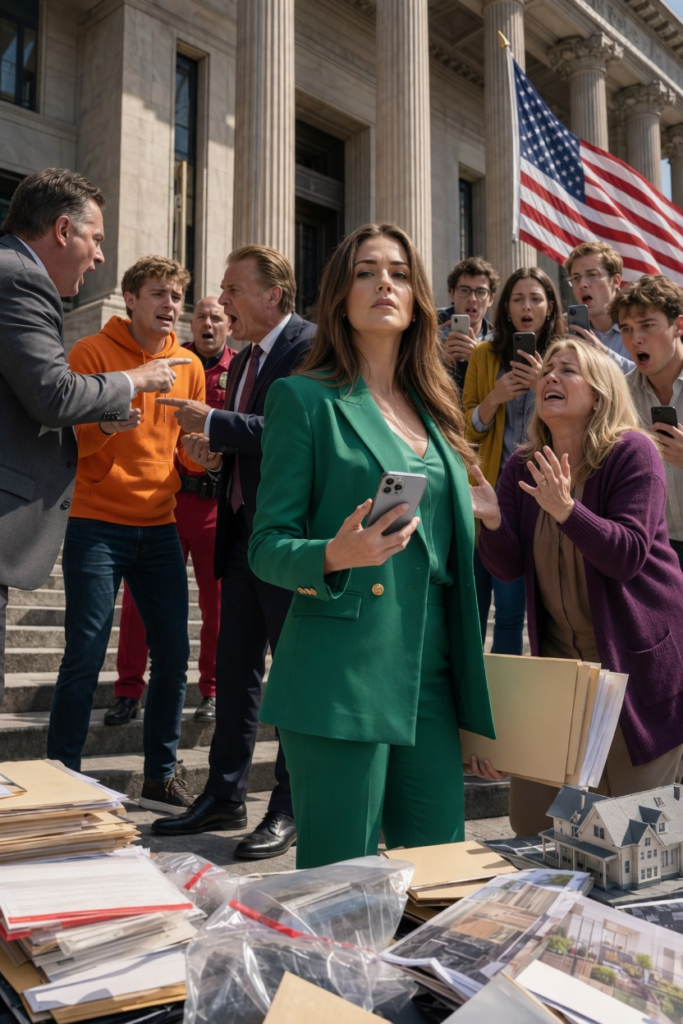
“Sold Your Cute Little House To Real Investors,” Brother Texted The Family Group. Mom Replied, “Thank God Someone’s Making Smart Decisions!” I Forwarded The Texts To My Supervisor. Tuesday, Wire Fraud Charges Were Filed.
### Part 1
The first thing I heard was my phone buzzing against the wooden nightstand.
Not ringing. Buzzing.
That small, angry vibration that somehow sounds louder when you are alone in a hotel room three thousand miles from home.
I opened one eye and saw the red numbers on the alarm clock: 3:47 a.m.
Prague was black outside my window. Rain tapped against the glass. Somewhere below, a delivery truck groaned over wet cobblestones, and the old radiator in my room clicked like somebody quietly counting down.
I reached for my phone, expecting a message from my supervisor, Janet, or one of the analysts in Frankfurt who always forgot time zones existed.
Instead, it was our family group chat.
The preview showed my brother Marcus’s name, followed by a photo.
I tapped it.
For a second, my brain refused to understand what I was looking at.
There was my house in Arlington, Virginia. My small, plain, two-bedroom house with the blue-gray shutters I painted myself one Saturday while my neighbor’s golden retriever kept stealing my gloves.
The lawn looked freshly cut. The sidewalk was clean.
And in the front yard, jammed into the grass like a flag of conquest, was a bright red SOLD sign.
Marcus had written:
Finally got rid of that starter home albatross. Investors paid $400K cash. Maya’s going to thank me when she stops playing government desk jockey and gets a real job that can afford something decent.
Three champagne emojis followed.
I sat upright so fast the blanket slid to the floor.
My coffee from the night before sat cold beside my laptop. The air smelled like burnt espresso and rain-soaked stone. I stared at the photo, zoomed in, zoomed out, then zoomed in again, as if the image would change if I looked at it hard enough.
It didn’t.
Mom replied first.
Thank God someone in this family has business sense.
Dad wrote:
About time. That mortgage was probably eating her alive.
My sister Jessica added:
Maybe now she can move somewhere actually nice instead of that basic little box.
Seventeen messages rolled in over the next few minutes, each one more cheerful than the last. They congratulated Marcus. They praised his initiative. They talked about me like I was a child who had wandered too close to traffic and needed an adult to yank me back by the collar.
Nobody asked where I was.
Nobody asked whether I knew.
Nobody asked whether I had agreed.
I placed the phone flat on the desk and stared at it while my pulse slowed into something cold and clean.
My family thought I was a low-level government employee. They thought I filed paperwork in some windowless federal office and barely scraped together enough money to keep my “starter home.” That was the phrase they loved. Starter home. Cute little box. Government girl house.
I let them think that because it was safer.
When you work in financial crimes, safer matters.
I took a screenshot of Marcus’s message. Then another of the responses. Then another of the photo.
My laptop was already open to a spreadsheet involving shell companies, layered transfers, and suspicious trade finance patterns moving through three European banks. Boring work, my family would have said.
I opened a secure channel and forwarded everything to Janet.
Unauthorized property transfer. Please advise.
I sent it.
Then I sat there in the blue light of my laptop, listening to rain hit the window in a city my family couldn’t even find on a map.
Three minutes later, Janet replied.
Do not engage with family. Continue audit. Federal asset monitoring already flagged movement. I’m initiating protocol.
I read that sentence twice.
My hands were steady now.
Marcus thought he had sold my house.
What he had actually done was wake up a system built to catch people much smarter than him.
And somewhere in Virginia, before the sun had even risen, federal alarms had already started going off.
### Part 2
I did not answer the group chat.
That was the first rule Janet taught me years earlier, back when I still believed family problems could be solved with explanations.
“Never correct someone while they’re still confessing,” she had said, tapping a pen against my training binder. “People tell you everything when they think they’re winning.”
So I let them win.
At least, I let them think they were.
By 4:20 a.m., Marcus had posted another photo, this one of himself at a steakhouse. He sat in front of a bone-in ribeye and a glass of champagne, grinning like a man who had just saved the village.
To smart financial decisions, he wrote. And family looking out for family.
Mom replied with prayer hands.
Dad said he was proud.
Jessica asked if he had buyer contacts because she wanted to “get into investment properties too.”
I almost laughed.
Not because it was funny, but because the room felt too small for the amount of stupidity glowing from my phone.
I got dressed in silence. Black slacks, white blouse, navy blazer. The kind of outfit that could disappear in a courthouse, embassy, bank lobby, or congressional hearing. My whole career had been built on being forgettable.
At breakfast downstairs, tourists filled the hotel dining room. A German couple argued softly over a map. An American man in a baseball cap complained that the eggs were “too European.” The coffee machine hissed and spat.
I took my cup to the corner and opened my laptop.
Work steadied me.
Numbers didn’t care about feelings. Wire transfers either matched declared business activity or they didn’t. Beneficial ownership either lined up or it disappeared behind five shell companies and a mailbox in Cyprus.
My job was to follow money until lies ran out of places to hide.
Marcus had never understood that.
To him, money was theater. Watches, leased cars, steakhouse photos, office plaques, oversized confidence. He had a real estate business with glass walls and motivational quotes, and he talked about “deal flow” the way preachers talked about salvation.
When I bought my Arlington house three years earlier, he walked through it once and smirked.
“This is it?” he asked, tapping one knuckle against the kitchen counter. “You work for the government, so I guess this makes sense.”
I had smiled and said, “It fits my needs.”
He had looked at me with pity.
That pity was in every message now.
Around noon Prague time, Janet sent a secure update.
Three banks filed suspicious activity reports. Wire transfer connected to your SSN and federal employment profile. Possible forged POA. FBI financial crimes looped in.
I read the message while pretending to review bank audit files.
Possible forged power of attorney.
That meant Marcus hadn’t just talked some buyer into signing a contract. He had created documents claiming he had legal authority over my property. He had signed my name somewhere. Maybe multiple times.
A memory surfaced.
Two months earlier, at Dad’s birthday dinner, Marcus had asked if I still used my middle initial on “official stuff.”
I thought he was teasing me about being formal.
I told him yes.
Then Mom asked whether my work ever made me fill out “those government disclosure forms,” and Dad joked that my little house probably wasn’t worth disclosing.
Everyone laughed.
I didn’t.
At the time, it felt like ordinary family condescension. Annoying, but familiar.
Now it felt like a handprint on a window after someone had already left the room.
By late afternoon, my family’s celebration had gone public. Mom shared Marcus’s steakhouse post with her church friends. Dad sent it to his golf buddies with a message about “kids finally learning real estate.” Jessica reposted the house photo and wrote:
When your brother saves your sister from her own bad decisions.
I saved every screenshot.
Not because I needed revenge.
Because evidence likes to disappear when consequences arrive.
At 6:03 p.m., Janet called through the secure line.
Her voice was calm, but thinner than usual.
“Maya,” she said, “I need you to listen carefully. This is no longer a family property dispute.”
I looked out the hotel window. The rain had stopped. Prague Castle glowed above the dark river like something carved from old gold.
“What is it?” I asked.
There was a pause.
“Your brother didn’t just sell your house. He triggered a federal investigation involving monitored employee assets.”
The room seemed to tilt slightly.
Then Janet said the sentence that made the back of my neck go cold.
“And Maya, based on what we’re seeing, he planned this.”
### Part 3
I landed at Dulles Thursday evening with one carry-on, a stiff neck, and a folder of briefing notes encrypted on my work laptop.
The airport smelled like jet fuel, floor cleaner, and burnt coffee. Everyone looked exhausted in the same American way: sneakers, backpacks, phones held inches from faces, mouths half-open under fluorescent lights.
I moved through customs on autopilot.
My family had sent forty-three messages since Prague.
Marcus posted once more before disappearing from the chat.
Closing was smooth. Cash buyers know opportunity when they see it. Maya, you’re welcome.
Mom replied:
Don’t be stubborn when you get back. Say thank you.
Dad added:
We expect you to handle this maturely.
I didn’t answer.
On the Metro into Arlington, I stood near the doors and watched my reflection flicker in the dark glass. I looked ordinary. Tired woman in a trench coat. Government badge tucked away. Hair pinned back. No jewelry except small silver studs.
That ordinariness had kept me safe in cities where people watched Americans too closely.
It had not protected me from my own family.
By the time I reached my neighborhood, the sky had gone purple. Rainwater shone under the streetlights. Someone nearby was grilling burgers, and the smell made my stomach tighten because I hadn’t eaten anything real in nearly a day.
My house looked exactly the same.
That was the strangest part.
The maple tree leaned over the driveway. The porch light glowed warm. My cheap-looking mailbox sat slightly crooked because I kept forgetting to fix it. No broken window. No moving truck. No stranger on the porch with a contract and a smile.
The SOLD sign was gone.
Marcus had posted about that too.
Investors move fast when the deal is clean.
I stood on the sidewalk for a long moment, listening.
A dog barked two houses down. A car rolled past slowly. Somewhere, wind chimes rang once, then went still.
I unlocked the door.
The security panel blinked green.
Inside, everything was where I had left it. My books on the shelf. My coffee mug in the sink. My framed photo from a hiking trip in Shenandoah. The air smelled faintly of cedar and dust.
Nobody had been inside.
That almost made it worse.
Marcus had managed to sell my house without entering it, without seeing it, without touching the actual life inside it. To him, my home had been a line item. An asset. A chance to prove he knew better.
I set down my bag and checked the security logs.
No unauthorized entry.
Then I opened the packet Janet had sent.
The preliminary investigation was already thick.
Forged power of attorney.
Fabricated financial hardship letter.
False claim of impending mortgage default.
Seller identity verified remotely through documents now believed fraudulent.
Wire transfer: $400,000.
Three suspicious activity reports.
One newly opened receiving account tied to a business address Marcus used.
I read that line three times.
A business address Marcus used.
Not my account.
Not my bank.
Not anywhere money from a legitimate sale of my property should have gone.
My phone rang.
Marcus.
I let it ring twice before answering.
“Maya,” he said, and his voice was not the steakhouse voice. It was thin, stretched, and breathless. “There’s some kind of mistake.”
I walked into my kitchen and filled the kettle.
“What kind of mistake?”
“FBI agents came to my office.”
The kettle clicked on.
“They’re asking about your house sale. They said something about federal property violations. I told them this was a family thing. I told them I was helping you.”
“I’m sure it’s just paperwork,” I said.
“Maya, don’t do that.”
“Do what?”
“Talk like that. Like you know something.”
I watched steam begin to cloud the kettle’s glass.
“Do you?”
He went silent.
Then, very softly, he asked, “What kind of government job do you actually have?”
Before I could answer, another voice came through in the background.
“Mr. Chen, step away from the phone.”
Then the line went dead.
I stood in my kitchen, listening to the kettle boil.
For the first time since Prague, my hands started to shake.
Not because Marcus had been caught.
Because he finally understood he had stolen from someone he had never bothered to know.
### Part 4
Mom called thirty-two minutes later.
I was still standing in the kitchen, holding a mug I hadn’t filled.
Her ringtone was a piano version of some hymn she loved, bright and sweet and completely wrong for the moment. I answered on speaker.
“Maya,” she said. “They arrested your brother.”
I looked at the steam rising from the kettle.
“In front of clients,” she continued, voice breaking. “In his office. Like he was some criminal.”
I poured hot water over coffee grounds and waited.
“He is accused of crimes, Mom.”
“He was helping you.”
The words came out automatic, like she had practiced them.
“With what?” I asked.
“With the house. With your situation.”
“What situation?”
She inhaled sharply. “Don’t be difficult. Everyone knows you’ve been struggling.”
That sentence landed with a familiar dull thud.
Everyone knows.
In my family, “everyone knows” usually meant nobody had asked the person involved. Everyone knew I was lonely because I wasn’t married. Everyone knew my job was boring because I didn’t brag about it. Everyone knew my house was pathetic because it didn’t have a two-story foyer.
“What exactly do you think you know?” I asked.
Mom started crying harder. “This isn’t the time for your attitude. Your brother is in custody.”
“Then maybe accuracy matters.”
She hung up.
Dad called next.
I almost didn’t answer, but curiosity got the better of me.
“What did you do?” he demanded.
No hello. No are you okay. No did Marcus really sell your home without permission.
Just that.
“What did I do?” I repeated.
“You must have said something to your job. Some bureaucrat nonsense. Marcus tried to help you, and now federal agents are treating him like a terrorist.”
I took my coffee into the living room and sat in my reading chair.
Dad’s anger always had a physical memory for me. The slammed cabinets when I got an A-minus instead of an A. The red face when I chose a public university over the private one he wanted to brag about. The finger pointed across dinner tables.
He believed volume was evidence.
“Dad,” I said, “Marcus forged documents.”
“He had to. You’re impossible to help.”
I closed my eyes.
There it was.
The family logic in its purest form.
If they hurt me, it was because I made helping me too difficult.
“If he had asked,” I said, “I would have told him no.”
“Exactly. That’s why he couldn’t ask.”
For a moment, I was too stunned to speak.
Dad took my silence as surrender.
“You need to go down there and straighten this out. Tell them it was a misunderstanding. Tell them you consented.”
“I did not consent.”
“You’re going to ruin his life over paperwork?”
“No,” I said. “Marcus may have ruined his life with felony fraud.”
Dad cursed under his breath.
I heard Mom in the background crying again.
“Your mother and I are coming over tomorrow,” he said. “We’re going to talk sense into you.”
He hung up before I could respond.
I sat there as the house settled around me.
The living room lamp cast a warm circle over the rug. Outside, rainwater dripped from the gutter in slow, even beats. My home looked modest because I had designed it that way. Not poor. Not desperate. Just quiet.
The next morning, I cleaned.
Not because the house needed it, but because my parents were coming, and a part of me still remembered being a girl who could avoid criticism if the counters shone.
I hated that part.
At 9:12 a.m. Saturday, the doorbell rang.
On the security camera, Dad stood with his jaw tight, wearing his golf jacket. Mom stood beside him in a cream church dress, clutching her purse like a shield.
I opened the door with coffee in hand.
“Morning,” I said.
Dad pushed past me.
Mom followed, eyes red.
“This ends today,” Dad said.
I closed the door behind them.
They stood in my living room, surrounded by the furniture they had mocked for years.
Dad pointed toward the hallway.
“This house was drowning you.”
I set my mug on a coaster.
“No,” I said quietly. “It wasn’t.”
Mom wiped her cheek. “Maya, please. We all know government salaries aren’t enough for Arlington.”
I looked from her to Dad.
Then I gave them the first piece of truth they had never thought to ask for.
“There is no mortgage.”
Dad blinked.
Mom stopped crying.
“I paid cash for this house three years ago,” I said.
The room went so still I could hear the refrigerator humming from the kitchen.
And for the first time in my life, both of my parents looked afraid of me.
### Part 5
Dad sat down like his knees had been cut.
Mom didn’t move at all.
Her hand stayed pressed against her purse, knuckles pale, lips parted slightly. She looked around my living room as if the walls had rearranged themselves while she wasn’t paying attention.
“Cash?” Dad said.
His voice sounded smaller than I had ever heard it.
“Yes.”
“For this?”
“For this.”
Mom swallowed. “But Marcus said—”
“I know what Marcus said.”
Dad leaned forward, elbows on his knees. “Two hundred eighty-five thousand dollars?”
“Two hundred eighty-five thousand,” I said. “Plus closing costs. No loan. No mortgage. No default risk. No financial hardship.”
Mom’s eyes filled again, but these tears were different. The first ones had been for Marcus. These were for the story collapsing around her.
“But you drive that old Honda,” she said.
“It runs.”
“You shop at Target.”
“So do senators.”
Dad stared at me. “How?”
I almost laughed at the simplicity of the question.
How did you buy a house?
How did you have money?
How did you become someone we couldn’t look down on?
“I work,” I said.
Dad’s face hardened out of habit. “Don’t be cute.”
“I’m not.”
“You said you did government paperwork.”
“I said I worked in government financial oversight.”
“You let us think—”
“No,” I said. “You decided.”
That stopped him.
Outside, a lawn mower started up across the street. The sound rolled through the window, ordinary and steady. A Saturday sound. A neighborhood sound. It made the conversation feel even stranger, like we were discussing a crime scene in the middle of a barbecue.
Mom lowered herself onto the couch.
“What do you really do?” she whispered.
I chose my words carefully.
“I work with financial crime intelligence. I analyze money laundering networks, suspicious banking activity, and international financial flows. I travel because a lot of that work involves foreign institutions and partner agencies.”
Dad’s mouth opened, then closed.
Mom blinked slowly.
“That’s not paperwork,” she said.
“It includes paperwork.”
“Maya.”
I stood and walked to the small table near the window. To them, it probably looked like a place where I kept mail and keys. They had never noticed the reinforced drawer. The secure hardware. The quiet precautions built into ordinary objects.
“When you work in my position,” I said, “certain assets are monitored. Not because they belong to the government, but because people with access to sensitive financial systems can be targeted, pressured, bribed, or compromised.”
Dad’s eyes moved around the room again.
I watched him notice things he had ignored for years.
The alarm sensors tucked into trim.
The upgraded window locks.
The router equipment that wasn’t quite consumer grade.
“The house,” I continued, “is registered as my secure residence. My accounts are monitored for unusual activity. Large transfers connected to my identity are automatically reviewed. Forged documents involving my property don’t just sit in a county office until someone gets suspicious.”
Mom whispered, “They trigger something.”
“Yes.”
Dad rubbed both hands over his face.
“So when Marcus…”
“When Marcus forged power of attorney documents, fabricated financial hardship, and arranged a $400,000 transfer connected to my identity, he activated systems designed to detect compromise of a federal employee.”
Mom let out a sound that wasn’t quite a sob.
Dad looked at me with anger returning, but now it had nowhere to go.
“You could have told us,” he said.
“Told you what? That my job was sensitive? That I had clearance? That my finances weren’t your business?”
“We’re your parents.”
“And you used that as an excuse to believe Marcus over me.”
My phone buzzed.
Janet.
I glanced at the message.
Arraignment Monday. Charges filed: wire fraud, identity theft, federal monitored asset violation. Sentencing exposure 4–7 years. FBI interview scheduled before hearing.
I turned the screen toward them.
Mom read it first.
Her mouth trembled.
“Seven years?”
Dad stood abruptly. “No. No, that’s not possible.”
“It is possible.”
“He was helping.”
“He was stealing.”
“He’s your brother.”
“I know exactly who he is.”
The words came out colder than I expected.
Mom looked up at me like I had slapped her.
“Can you stop it?” she asked.
I picked up my coffee, now lukewarm, and took one small sip.
“I already did what I was required to do.”
“What does that mean?” Dad asked.
“It means I reported the unauthorized transfer to my supervisor as soon as I saw Marcus’s message.”
Mom’s eyes widened.
“The group chat?” she whispered.
I nodded.
“The message where he bragged about selling my house.”
Dad stared at me.
Then I watched the last piece fall into place.
Marcus hadn’t just left fingerprints.
He had sent a confession to everyone who had trained me to save evidence.
### Part 6
My parents left twenty minutes later.
They didn’t hug me.
Mom paused at the doorway as if she wanted to say something motherly, but all that came out was, “I don’t know what we’re supposed to tell people.”
That told me everything.
Not are you safe.
Not I’m sorry.
Not what did Marcus do to you?
Just what do we tell people?
I held the door open.
“The truth is available,” I said. “Use it or don’t.”
Dad walked to the car without looking back.
Mom followed, shoulders curved inward.
I watched through the front window as Dad struggled with the keys. His hands shook enough that the metal flashed in the morning light. Then the car pulled away, slow and crooked, like the person driving had forgotten the road.
The family group chat went quiet for nine hours.
Then Jessica detonated it.
Does anyone know a good federal criminal defense lawyer???
Dad sent three links about wire fraud sentencing.
Mom posted nothing but crying emojis.
Then Jessica wrote:
Maya, whatever you did, fix it.
I stared at those words for a long time.
Whatever you did.
Not what Marcus did.
I put my phone facedown and went back to work.
Monday morning came gray and heavy.
I wore my standard interview suit, charcoal with a white blouse, black flats, no perfume. I made coffee at 5:30 and drank it standing at the kitchen counter while the house was still dark.
The FBI field office smelled exactly like every federal building I had ever entered: carpet cleaner, stale air, paper, and burnt coffee.
Special Agent Rebecca Chin met me in a conference room with gray walls and a table polished to a dull shine. She was compact, sharp-eyed, and direct in the way people become when they spend years watching liars perform innocence.
She turned on the recorder.
“For the record, please state your name.”
“Maya Elaine Chen.”
We walked through everything.
The house purchase. My role. My travel. Marcus’s messages. My family’s assumptions. The forged documents. The false hardship claim.
Agent Chin slid a copy of the power of attorney across the table.
Seeing my name on it made my stomach tighten.
The signature was close enough to be insulting.
Not perfect. Not terrible.
Close enough for someone who had seen my Christmas cards, birthday notes, and family paperwork over the years.
“Is this your signature?” Agent Chin asked.
“No.”
“Did you authorize Marcus Chen to act on your behalf in any property sale?”
“No.”
“Did you ever tell him you were unable to afford mortgage payments?”
“There were no mortgage payments.”
She looked up.
I let the silence sit.
Her pen paused.
“No mortgage,” she repeated.
“No.”
“That will be important.”
Then she showed me the hardship letter.
It was worse than the signature.
To Whom It May Concern,
My current government income has made it difficult to maintain the monthly mortgage obligation on my Arlington residence…
I stopped reading.
My skin felt hot.
Marcus had not just stolen my property. He had invented a weaker version of me, put my name on it, and handed her to strangers.
Agent Chin watched my face.
“Take your time.”
“I’m fine,” I said.
I wasn’t.
But I was functional, and in my line of work that counted.
The arraignment was that afternoon.
Federal court always feels designed to shrink people. High ceilings. Hard benches. Stone floors. Voices that echo even when people whisper.
Marcus stood beside his attorney in a gray suit that hung loose around his shoulders. He didn’t look at me at first.
When he finally did, his face changed.
Not guilt.
Fear.
The prosecutor spoke in clean, measured sentences.
Four hundred thousand dollars in fraudulent wire transfers.
Forged legal authority.
Identity theft.
Unauthorized transfer involving monitored federal employee property.
Research history showing federal salary searches and document templates.
Marcus pleaded not guilty.
His voice barely reached the microphone.
His attorney argued for reduced bail, describing him as a respected business owner and devoted family member.
The prosecutor described him as someone willing to forge documents, exploit family access, and move six figures through questionable accounts.
The judge set bail at $150,000 cash.
As the courtroom cleared, Marcus’s lawyer approached me in the hallway. He had soft hands, expensive shoes, and the desperate smile of a man already losing.
“Ms. Chen,” he said, “your family is hoping you’ll consider helping us frame this as a misunderstanding.”
Behind him, Marcus stared at me over his shoulder.
And for one brief second, he looked exactly like he had when we were children and he had broken something valuable, waiting to see whether I would take the blame.
### Part 7
I knew that look.
When we were kids, Marcus broke Dad’s signed baseball knocking a tennis ball around the living room.
He told everyone I did it.
I was nine. He was twelve. Dad yelled until my ears rang, and Marcus stood behind him with wide innocent eyes.
Later, when I cried in the bathroom, Marcus pushed the door open and said, “You should’ve denied it better.”
That was Marcus.
Not evil in a movie way. Not dramatic. Not a villain stroking a cat in a leather chair.
Worse.
He had always believed rules were things other people failed to work around.
Now, in the courthouse hallway, his lawyer was asking me to help him do it again.
“A misunderstanding?” I repeated.
The lawyer folded his hands. “A family member acting with poor judgment under the sincere belief that his sister was in financial distress.”
“No.”
His smile tightened. “A statement from you could affect charging posture.”
“I’ll tell the truth.”
“The truth has context.”
“The truth is that he forged documents.”
Marcus’s jaw flexed.
His lawyer lowered his voice. “Ms. Chen, federal prison is a serious consequence.”
“So is having your home stolen.”
He glanced around, as if hoping someone nearby would rescue him from my lack of cooperation.
“My client believed—”
“Your client believed I was too weak to stop him.”
The lawyer had no answer for that.
I walked past him.
Mom intercepted me near the courthouse doors.
Her eyes were swollen, and her lipstick had bled slightly into the lines around her mouth. Dad stood behind her, stiff and silent. Jessica hovered by a pillar, arms crossed, wearing sunglasses indoors like she had been personally victimized by lighting.
“Maya,” Mom said, reaching for my hand.
I stepped back.
Her face crumpled.
“Please don’t be cruel.”
The courthouse lobby smelled of wet wool and old paper. People moved around us with folders, briefcases, quiet urgency. Nobody cared that my family was falling apart near the metal detectors.
“Cruel?” I asked.
“Marcus made a mistake.”
Jessica snapped, “A mistake that wouldn’t have happened if you weren’t so secretive.”
I looked at her.
She had said plenty of stupid things in my life, but that one was almost impressive.
“If I don’t tell you my bank balance,” I said, “that doesn’t make fraud reasonable.”
Dad finally spoke.
“He thought you needed help.”
“He thought I was beneath him.”
Mom shook her head. “No.”
“Yes.”
“No mother wants to believe that about her son.”
“And no daughter wants to learn her whole family celebrated her being robbed.”
That hit.
Mom looked away first.
Jessica made a disgusted sound. “You always have to make yourself the victim.”
“I am the victim.”
“You’re fine. Look at you. He’s the one in trouble.”
There it was again.
The damage didn’t count because I survived it.
My phone buzzed.
Agent Chin.
I stepped away and answered.
“We found additional evidence,” she said.
I watched my family watching me.
“What kind?”
“Your brother researched federal employee salary ranges six weeks before the forged hardship letter. He also searched county transfer procedures, remote notarization requirements, and phrases like ‘sell property with power of attorney without owner present.’”
My eyes moved to Marcus across the lobby.
He was speaking with his lawyer, but he kept glancing at me.
Agent Chin continued.
“And Maya, there’s more. He had a buyer lined up before the power of attorney document was created.”
I turned slightly away from my family.
“What does that mean?”
“It suggests the hardship story wasn’t the reason for the sale. It was the cover.”
For a moment, the lobby noise fell away.
The shoes on tile. The elevator bell. The murmur of strangers.
All I could hear was Marcus years ago, whispering through the bathroom door.
You should’ve denied it better.
I looked back at him.
This had never been about helping me.
And suddenly, the question wasn’t whether Marcus had misunderstood my life.
The question was what he had planned to do with the money after he erased me from my own home.
### Part 8
The buyers were not a married couple looking for a starter home.
They were not retirees paying cash.
They were not investors in the simple, harmless way Marcus had made it sound in the group chat.
They were an LLC.
A clean little shell with a generic name, formed eighteen days before the contract. The listed office address belonged to a mailbox store near Tysons Corner, tucked between a nail salon and a place that sold protein smoothies.
Agent Chin couldn’t tell me everything. Open investigation. Ongoing review. Standard phrases.
But she told me enough.
The purchase agreement had been arranged through Marcus’s business network. A “consulting fee” was scheduled to go to his real estate company after closing. A second transfer appeared set up for a management account that used my initials but not my bank.
My initials.
My identity.
His control.
I sat in my car in the federal courthouse parking garage after the call ended, hands gripping the steering wheel.
The garage smelled like damp concrete, gasoline, and hot brakes. Somewhere below, a car alarm chirped twice. My reflection in the windshield looked pale and sharp.
Marcus had sold my house for $400,000, and he had not intended to hand me a check.
That was the piece my parents still refused to see.
They wanted this to be a bad rescue mission. A brother overstepping. A family misunderstanding.
But rescue doesn’t require forged signatures.
Rescue doesn’t create fake hardship letters.
Rescue doesn’t route money toward the rescuer.
By evening, the group chat had become a courtroom of its own.
Dad:
The lawyer says family character statements matter.
Mom:
Maya, please pray on forgiveness.
Jessica:
You’re going to let your brother go to prison while you sit in your paid-off house?
I typed one message.
Marcus attempted to steal my home using forged documents. Do not contact me about leniency again.
I sent it and muted the chat.
Ten minutes later, Mom called.
Then Dad.
Then Jessica.
Then Mom again.
I let all of them go to voicemail.
At 8:40 p.m., my doorbell rang.
I checked the camera.
Mom.
Alone.
She stood under the porch light with a casserole dish covered in foil.
For a few seconds, I considered not opening the door.
Then I did.
She looked older than she had that morning.
“I brought dinner,” she said.
“I’m not hungry.”
“You have to eat.”
That almost broke me.
Not because it was kind, exactly.
Because it was close enough to kindness to hurt.
I stepped aside.
She entered slowly, eyes moving around the living room again. This time, she looked less afraid and more ashamed.
The casserole smelled like cheese, onions, and childhood Sundays. She set it on my kitchen counter with shaking hands.
“I didn’t know about the money routing,” she said.
I stayed near the doorway.
“But you knew about the sale.”
Her shoulders tightened.
“Marcus told us he was helping you.”
“Did he tell you he had legal authority?”
She pressed her lips together.
“Mom.”
“He said you were embarrassed,” she whispered. “He said you had signed something but didn’t want to tell us because you were proud.”
“And you believed him.”
“You never tell us anything.”
I stared at her.
Rain ticked softly against the kitchen window. The overhead light buzzed faintly.
“That’s your defense?” I asked. “Because I’m private, you believed I secretly authorized my brother to sell my house and then pretended not to know?”
Her eyes filled.
“I wanted to believe he was doing something good.”
There it was.
Not truth.
Not evidence.
Want.
She wanted Marcus to be the capable son. She wanted me to be the stubborn daughter who needed saving. She wanted the story that kept everyone in their assigned seats.
I walked to the drawer near the sink and pulled out a folder.
Inside were copies Agent Chin had cleared me to see.
I placed one page on the counter.
Mom looked down.
Her face changed before she even read it fully.
A supporting statement.
Not legal authority, not ownership, but a statement attached to Marcus’s hardship narrative. It described me as financially overwhelmed, emotionally avoidant, and unable to make “practical decisions” regarding the property.
At the bottom was my mother’s handwriting.
Her signature.
I felt the room tilt, but my voice stayed calm.
“You signed this.”
Mom gripped the counter.
“Maya,” she whispered.
And in that instant, I understood the betrayal had not begun with Marcus at all.
It had been witnessed, softened, and handed forward by the woman who had brought me dinner.
### Part 9
Mom tried to explain before I said another word.
That was how I knew she had known enough to feel guilty.
“Marcus said it was just to support the file,” she rushed out. “He said the buyers needed proof that the family understood your situation.”
“My situation.”
“He said you were going to lose the house if someone didn’t step in.”
“And you signed a statement saying I was financially and emotionally incapable.”
Her face crumpled.
“I didn’t say incapable.”
I tapped the page.
“You signed it.”
Rain tapped harder against the kitchen window.
The casserole sat between us, still warm under the foil. The smell that had almost softened me now turned my stomach.
Mom reached for my arm.
I stepped back.
“Maya, I thought it was for a refinance.”
“No, you didn’t.”
She froze.
“You knew it was about a sale. Maybe you didn’t know every detail, but you knew Marcus was moving my property without talking to me. You helped him build a story where I was too ashamed or too unstable to object.”
Her tears spilled over.
“I’m your mother.”
“I know.”
“I would never hurt you on purpose.”
That sentence exhausted me.
People loved saying that after the damage was done, as if intention could sweep broken glass off the floor.
“Did you ask me?” I said.
She didn’t answer.
“Did you call me once? Text me? Email me? Did you say, ‘Maya, Marcus is telling us something concerning about your house. Is it true?’”
Mom looked down.
“No.”
“Why?”
Her voice was barely there.
“Because I thought you’d get defensive.”
I laughed once.
Not because anything was funny.
Because my family had built an entire criminal event around avoiding my tone.
The next morning, Dad came over too.
Mom must have told him I had the statement, because he arrived without bluster. No golf jacket. No raised voice. Just a man in an old navy sweater standing on my porch like he wasn’t sure he still had permission to knock.
He did not bring food.
He brought a folder.
Inside were copies of emails Marcus had sent him.
Not all of them. Just the ones Dad wanted me to see.
Marcus had written things like:
Maya is too proud to admit how bad it is.
She’ll fight us now but thank us later.
I need family support in case she panics.
Dad had responded:
Do what you need to do. She never listens until things are already a mess.
I read that line three times.
She never listens.
Not he should ask her.
Not this sounds illegal.
Not does Maya know?
Just permission dressed up as frustration.
Dad stood in my living room while I held the paper.
His face looked gray.
“I didn’t understand the legal side,” he said.
“You understood the disrespect.”
He flinched.
“I thought Marcus knew what he was doing.”
“He did know.”
Dad looked at me then.
I saw the answer land.
Marcus had known exactly what he was doing. That was the problem.
“Are you going to give that to the FBI?” he asked.
“It’s already in discovery.”
His eyes closed.
Mom made a small sound from the couch.
I hadn’t invited her to sit, but she had anyway.
“You’re going to destroy this family,” she whispered.
I folded the email and placed it back in the folder.
“No,” I said. “I’m going to stop pretending it was whole.”
Dad’s face hardened again, but this time the anger looked tired.
“You want us to choose?”
I looked at him for a long time.
“No. You already did.”
The silence after that felt final.
Then Mom said the thing that cut deeper than anything else.
“If you don’t forgive him, we lose our son.”
I looked at my mother, sitting in the house she had helped someone steal.
And I realized she was still willing to lose her daughter first.
### Part 10
The case moved faster after that.
Federal cases have their own weather.
Deadlines. Motions. Conferences. Plea discussions. Emails that arrive at 6:12 a.m. with subject lines so dry they feel unreal.
United States v. Marcus Daniel Chen.
Seeing his name that way did something strange to me.
It pulled him out of family mythology and placed him somewhere colder.
A defendant.
Not the golden son.
Not the businessman.
Not the brother who “meant well.”
A defendant.
Six weeks after the arraignment, Janet called while I was reviewing a banking compliance packet involving twelve countries and more shell entities than any honest business would ever need.
“Plea agreement,” she said.
I pushed away from my desk.
“What are the terms?”
“Guilty plea to wire fraud and identity theft. The monitored asset violation will be considered at sentencing. Recommended sentence: four years. Restitution and fines. The final number is up to the judge.”
I looked around my home office.
The room was simple. Desk. Lamp. Two monitors. A bookshelf organized by subject because chaos annoyed me. On the wall, a small framed print of the Potomac at dawn.
Four years.
It sounded huge.
It sounded small.
“How do you feel?” Janet asked.
I almost gave the professional answer.
Fine.
Instead, I told the truth.
“Like everyone will expect me to feel guilty.”
Janet was quiet for a moment.
Then she said, “That doesn’t mean you have to.”
The night before sentencing, I couldn’t sleep.
The house made every sound louder. The air vent clicked. A branch scratched the side window. Somewhere outside, a car door closed, and I sat upright before my brain reminded me I had security systems for a reason.
At 2:00 a.m., I went to the kitchen and opened the refrigerator.
Nothing looked edible.
The casserole Mom had brought weeks earlier had gone untouched and then into the trash. Still, for some reason, I remembered the smell of it. Cheese, onion, guilt.
I made toast and burned one corner.
While scraping it over the sink, I thought about forgiveness.
Not the soft kind people mean when they say “let go.” The other kind. The kind demanded by people who don’t want consequences near them.
In my family, forgiveness had always meant silence.
Forgive your brother for lying.
Forgive your father for yelling.
Forgive your mother for comparing.
Forgive Jessica for mocking.
Forgive, forgive, forgive, until the word became a mop they handed me after every mess they made.
I was tired of cleaning.
At sentencing, the courtroom was fuller than I expected.
Mom and Dad sat together. Jessica sat beside Mom, holding tissues with the solemn intensity of someone performing grief. Marcus sat at the defense table in another gray suit. He looked thinner. His hair had been cut shorter.
When he turned and saw me, his expression shifted.
For one second, I saw anger.
Then fear covered it.
Then something like pleading.
His attorney spoke first.
He described Marcus as hardworking, family-oriented, remorseful. He said Marcus had made a terrible error while attempting to protect his sister from financial harm. He mentioned stress, misunderstanding, and family pressure.
I watched the judge take notes without expression.
Then the prosecutor stood.
Her voice was steady.
“This was not a single impulsive act. The defendant researched, prepared, forged, and executed a fraudulent property transfer. He created a false narrative of financial hardship, exploited family assumptions, and attempted to route proceeds through accounts outside the victim’s control.”
Mom began crying.
Marcus stared at the table.
Then the judge called for victim impact.
My legs felt heavy when I stood.
The walk to the microphone seemed longer than it was. I could feel my family’s eyes on my back.
I unfolded the statement I had printed that morning.
My hands did not shake.
Before I began, Marcus looked up.
He mouthed three words.
Don’t do this.
And for a moment, every childhood instinct in me came awake, begging me to make it easier for him.
Then I looked at the judge and started speaking.
### Part 11
“Your Honor,” I said, “the defendant did not make a mistake about my finances. He made a decision about my autonomy.”
The courtroom went very quiet.
My voice sounded calm through the microphone. Almost detached. But under the lectern, my left hand pressed against my thigh so hard I could feel my fingernails through the fabric.
“He did not ask whether I needed help. He did not ask whether I wanted to sell my home. He did not verify a mortgage because no mortgage existed. Instead, he created a version of me that was weak enough to justify his control.”
I saw Marcus lower his head.
Good, I thought.
Look down.
“He forged documents. He involved family members in supporting statements that portrayed me as financially distressed and incapable of practical judgment. He used those assumptions to move a $400,000 transaction involving my residence while I was overseas performing federal work.”
Dad shifted in his seat.
I continued.
“The financial harm matters, but it is not the full harm. My residence is part of my security posture as a federal financial crimes employee. Unauthorized transfers, false hardship claims, and identity theft connected to my assets create professional and personal risk. His actions did not simply inconvenience me. They threatened my clearance, my work, and my safety.”
The judge watched me closely.
I took one breath.
“The defendant has described this as helping family. But help requires consent. Help requires truth. Help does not require forged signatures, false statements, shell buyers, or diverted funds.”
Mom sobbed once.
I did not look at her.
“I ask the court to consider the pattern: the research, the planning, the exploitation of family assumptions, and the attempt to benefit from the transaction. I also ask the court to reject the idea that family relationships reduce the seriousness of the crime. In this case, family access made the crime possible.”
I folded the paper.
“That is all.”
Walking back to my seat felt like walking out of a burning building without turning around.
Marcus did not look at me again.
The judge sentenced him to four years and two months in federal prison, followed by supervised release, restitution, and fines totaling more than the original sale amount once penalties and costs were included.
Four years and two months.
Mom made a sound like her body had cracked open.
Jessica wrapped an arm around her.
Dad stared straight ahead.
Marcus stood still while the sentence was read. For a moment, I thought he might finally show remorse.
Then his eyes found mine.
And there it was.
Blame.
Not shock. Not shame.
Blame.
Outside, the courthouse parking lot was bright with afternoon sun. Cars flashed silver. Someone laughed near the steps, completely unaware that my family had just been rearranged by a federal judge.
Mom clung to Jessica.
Dad approached me slowly.
“Four years,” he said.
“Yes.”
“For trying to help.”
I looked at him.
Even now.
Even after the evidence, the plea, the statement, the judge.
Even now, he was reaching for the old story because the truth required him to see himself.
“No,” I said. “For committing federal crimes.”
His jaw tightened.
“You had to say all that?”
“Yes.”
“He’s your brother.”
“I was his sister when he stole from me.”
Mom lifted her head.
Her face was wet and twisted.
“How can you be so cold?”
I felt something inside me close.
Not slam. Not break.
Close.
“You weren’t worried about cold when you signed a statement calling me incapable.”
She recoiled.
Dad said, “We didn’t understand.”
“You didn’t want to.”
Jessica snapped, “Are you happy now?”
I looked at all three of them.
My mother grieving the son she still excused.
My father angry that consequences had ignored his authority.
My sister furious that I had refused my assigned role.
“No,” I said. “But I am finished.”
Dad frowned.
“With what?”
“With being the cost of keeping this family comfortable.”
Then I walked away before any of them could decide I owed them comfort too.
Behind me, Mom called my name once.
I did not turn around.
### Part 12
The first month after sentencing was quiet.
Not peaceful.
Quiet.
There’s a difference.
Peace has softness in it. Quiet can still have teeth.
The family group chat became a dead room on my phone. No memes. No dinner plans. No Dad sending articles about interest rates. No Mom asking who was bringing pie to Thanksgiving. No Jessica posting photos of restaurant cocktails with captions about “living blessed.”
Just silence.
At work, the clearance review came and went.
That was the part nobody in my family had cared to ask about.
Marcus’s crime had created paperwork. Interviews. Internal reporting. Risk assessment. Questions from people whose job was to assume every anomaly might be the edge of something worse.
Janet sat beside me during one review and answered only when necessary.
The reviewing officer asked whether I believed my family members could be exploited to pressure me.
I almost laughed.
“Yes,” I said. “But less effectively now.”
He wrote that down.
My house sale was reversed. The fraudulent deed transfer was voided. The LLC disappeared under investigative pressure like a cockroach under kitchen light. The receiving accounts were frozen. Marcus’s business license came under review.
Normal people think the end of fraud is dramatic.
It is mostly administrative.
Forms. Court orders. Bank reversals. Certified mail.
Still, each envelope felt like reclaiming a brick.
I changed the locks even though nobody had entered.
I upgraded the security system even though it had worked.
I replaced the mailbox even though the old one was fine.
Some repairs are not about the object.
Thanksgiving came.
Mom left one voicemail.
“We’re having dinner at three. I know things are hard, but family shouldn’t be alone on holidays.”
I deleted it.
Christmas came.
Jessica texted:
Mom is devastated. You could at least send a card.
I did not respond.
Dad sent nothing.
In January, the first letter from Marcus arrived.
The envelope had the flat, institutional look of prison mail. My name was written in his handwriting, smaller than I remembered.
I left it on the kitchen table for three days.
On the fourth, I opened it with a butter knife.
Maya,
I’ve had a lot of time to think.
That was how it started.
He wrote that he was sorry.
He wrote that he had convinced himself he was helping.
He wrote that he had resented me for making him feel small without saying a word.
That line held me for a while.
I had never tried to make Marcus feel small.
I had simply stopped shrinking on command.
Near the end, he wrote:
I hope someday you can understand that I didn’t know who you really were.
I set the letter down.
There it was.
The closest thing to honesty he had ever given me, and still it stepped around the center.
He didn’t know who I really was because knowing required asking.
Knowing required listening.
Knowing required accepting that I existed outside the role he preferred.
I wrote back once.
Marcus,
I hope you use this time to understand the difference between helping someone and controlling them. I also hope you understand that not knowing someone is not permission to harm them.
Maya.
I did not say I forgave him.
Because I didn’t.
Three weeks later, another envelope arrived.
This one wasn’t from Marcus.
It came from the prosecutor’s office, thin but heavy in the way official mail always feels. Inside was a copy of the final financial tracing summary.
I read it standing in my kitchen.
Then I read it again sitting down.
The planned disbursement schedule showed exactly where the money had been meant to go.
A consulting fee to Marcus’s business.
A debt payment.
A reserve account he controlled.
And one small line item labeled:
Family reimbursement.
My parents’ names were beside it.
My throat went dry.
For months, they had told themselves Marcus was helping me.
But the money trail suggested something uglier.
The question was no longer whether they had believed his lie.
It was whether part of them had expected to be paid for it.
### Part 13
I called Agent Chin.
Not Janet. Not my parents. Not a friend.
Agent Chin.
She answered on the third ring.
“I wondered when you’d get that packet,” she said.
I stood at the kitchen window, looking out at the yard where Marcus had planted his fake SOLD sign. Winter had thinned the grass to a dull brown. The maple tree was bare, every branch sharp against the pale sky.
“What is family reimbursement?” I asked.
Agent Chin exhaled softly.
“It appears your brother represented certain payments as reimbursements for family assistance connected to the transfer.”
“Were my parents under investigation?”
A pause.
“Not criminally charged. The evidence supported that they signed statements and repeated claims, but not that they knowingly participated in wire fraud or expected payment with full knowledge of the scheme.”
“That’s not what I asked.”
“I know.”
I closed my eyes.
Agent Chin’s voice softened slightly.
“Maya, there’s a difference between what can be charged and what can be understood.”
After we hung up, I sat at my kitchen table for a long time.
The house was quiet around me. My house. Not a starter home. Not an albatross. Not a symbol of failure. Mine.
That evening, Dad called.
For once, I answered.
He sounded older.
“Your mother wants to see you,” he said.
“What do you want?”
Silence.
Then, “I want this to end.”
“It ended in court.”
“You know what I mean.”
“Yes,” I said. “You want it to stop making you uncomfortable.”
He sighed. “Maya.”
“I received the final tracing summary.”
Another silence.
Longer this time.
“What summary?” he asked.
I almost smiled.
He had never been good at sounding innocent.
“The one showing Marcus planned a family reimbursement.”
Dad breathed once, hard.
“We didn’t know.”
“Did you expect money?”
“No.”
“Dad.”
He said nothing.
Outside, a crow landed on the fence and shook its wings.
Dad finally said, “Marcus mentioned that if the sale helped stabilize things, he’d make sure we weren’t out anything.”
“Out anything for what?”
“For stress. For helping.”
I pressed my palm flat against the table.
The wood was cool.
“You mean for helping him sell my house.”
“We thought we were helping you.”
“No. You thought you were managing me.”
His voice sharpened. “You make everything sound malicious.”
“No. I make it sound accurate.”
Mom came on the line then, probably grabbing the phone from him.
“Maya, please,” she said. “We can’t live like this forever.”
“You can live however you want.”
“You’re punishing us.”
“I’m protecting myself.”
“From your own parents?”
“Yes.”
The word came out without hesitation.
Mom began to cry.
That sound used to pull me across rooms. It used to make me apologize even when I had done nothing wrong. It used to turn my spine soft.
This time, it just sounded far away.
“We’re sorry,” she said.
I waited.
The apology hung there, thin and late.
“For what?” I asked.
She cried harder.
“Maya, don’t do this.”
“For what, Mom?”
“For believing Marcus.”
“And?”
“For signing the paper.”
“And?”
“For not asking you.”
Almost.
Almost enough to sound like a beginning.
Then she added, “But you have to understand how scared we were for him.”
There it was.
Him.
Always him.
I looked around my kitchen. The clean counters. The secure drawer. The coffee maker. The small crack in one tile near the stove that I kept meaning to fix. Ordinary things. Mine.
“I understand,” I said. “And that’s why I’m done.”
Mom went silent.
Dad came back on the line.
“What does that mean?”
“It means I’m not coming to family dinners. I’m not giving character statements. I’m not pretending this was a misunderstanding. I’m not accepting apologies that are really requests for access.”
“Maya, family is family.”
“No,” I said. “Family is behavior.”
I ended the call.
Then I blocked the group chat.
The quiet that followed was different.
Still sharp.
But cleaner.
### Part 14
Four years and two months sounds like a long sentence until you start measuring what came before it.
Three years of them mocking my house.
Ten years of Marcus calling my work “government busywork.”
A lifetime of being the daughter who could be dismissed because I did not perform success loudly enough for them to recognize it.
Marcus served his time in Pennsylvania.
Minimum security, according to the paperwork. Work assignments. Classes. Letters on approved paper. The kind of place my mother described as “still prison” whenever she wanted sympathy from church friends.
I knew because people told me things even after I stopped asking.
Jessica got very interested in “healing” once she realized I was serious about distance. She sent long messages from new numbers about trauma, boundaries, and how cutting off family was “also a form of harm.”
I blocked those too.
Dad mailed one handwritten apology six months after our final call.
It was stiff, formal, and clearly rewritten several times.
He admitted he had underestimated me.
He admitted he had trusted Marcus because Marcus’s version of events fit what he already believed about me.
He did not ask for money.
He did not ask me to visit.
He did not ask me to forgive anyone.
That was why I read the whole thing.
I sent back a short note.
Thank you for acknowledging that.
Nothing more.
Mom’s apology came later.
Nearly a year later.
Hers was messier. Tear stains on the paper. Uneven handwriting. She wrote that she had confused worry with control. She wrote that she had loved the version of family where Marcus was successful and I was difficult because that story made her feel like she understood her children.
That line hurt.
Because it was true.
I did not write back right away.
When I finally did, I told her I hoped she kept examining that.
I did not say I missed her.
I did.
But missing someone is not proof they belong in your life.
Marcus wrote twice more.
The first letter still carried the old shape of him.
I know I hurt you, but prison has been hard on all of us.
I threw that one away.
The second came near the end of his sentence.
It was shorter.
No excuses. No family language. No “but.”
He wrote:
I stole from you because I thought your life was smaller than mine. I was wrong. I’m sorry.
I sat with that letter for a long time.
Then I placed it in a folder with the court documents.
Not because it fixed anything.
Because it belonged with the record.
When Marcus was released, Mom asked through Dad whether I would meet him.
I said no.
Not angrily.
Not dramatically.
Just no.
I had no interest in a reunion staged around his relief. I had no desire to sit across from him in some restaurant while everyone watched my face for signs of mercy.
Forgiveness, if it ever came, would not be a performance for people who wanted closure cheaper than accountability.
Spring returned to Arlington slowly that year.
The maple tree leafed out in cautious green. My neighbor’s golden retriever got older and slower but still dragged stolen gloves across the lawn like trophies. The new mailbox stood straight. The porch light glowed warm every evening.
One Saturday, I repainted the shutters.
The same blue-gray as before.
A man walking his dog stopped and said, “Nice place.”
I looked at the small house, the neat lawn, the ordinary windows hiding very unordinary protections.
“Thanks,” I said. “It’s mine.”
That night, I made coffee even though it was too late for caffeine. I sat in my reading chair with the window cracked open, listening to crickets and distant traffic.
My phone was silent.
No group chat.
No demands.
No one telling me what family meant while standing in the wreckage of what they had done.
I thought about the sold sign Marcus had planted in my yard, bright red and smug.
He had believed a sign could make something true.
He had believed paperwork could replace permission.
He had believed my silence meant weakness.
He had been wrong every time.
The house stayed mine.
My career stayed mine.
My name stayed mine.
And the family that had mistaken control for love finally learned that some doors do not reopen just because the people outside regret losing their keys.
THE END!