Chapter 1: The Vintage of Humiliation
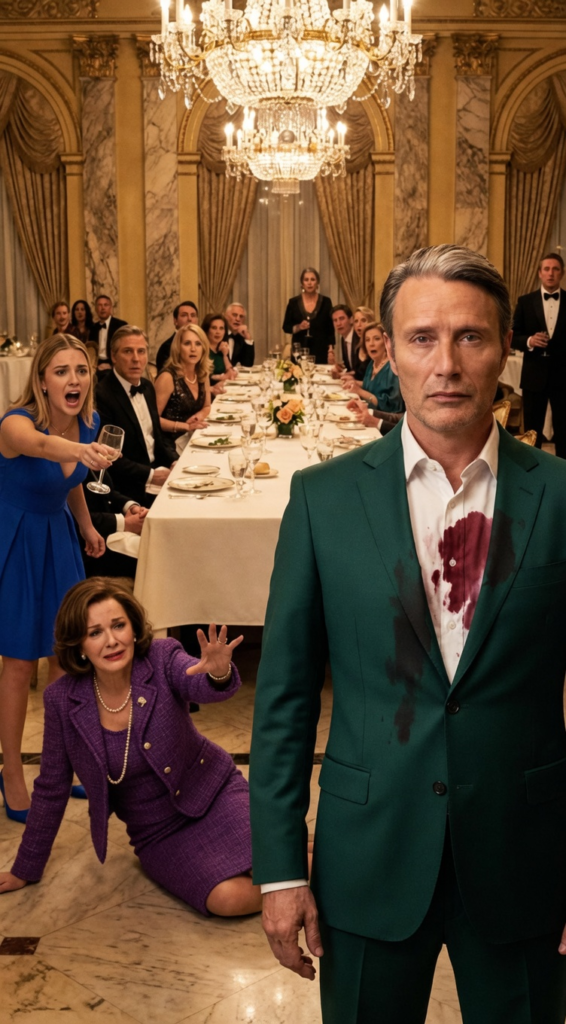
The Cabernet Sauvignon bled down the crisp white collar of my tailored shirt, tracing a cold, sticky path against my collarbone. It wasn’t the thrown wine that finalized the death of my marriage, though. It was the laughter that followed.
We were seated in the private dining alcove of an obscenely expensive downtown steakhouse, ostensibly celebrating my stepdaughter Chloe’s twenty-first birthday. Twenty relatives crowded around the heavy oak table, feast and excess sprawling before them. I was the one footing the three-thousand-dollar bill. All I had done was lean over and quietly ask Chloe to lower her voice because she was viciously mocking our waiter’s slight limp.
She didn’t merely react poorly. She detonated.
“You’re a pathetic loser, Michael,” she spat, her voice slicing through the ambient hum of the restaurant, rendering our corner deafeningly silent. “You’re just the guy who pays the bills. You have zero authority over me. You’re nothing but a walking bank account with a receding hairline.”
Then, with a flick of her wrist, she hurled the contents of her crystal goblet directly at my chest.
I sat paralyzed, the sweet acidity of the wine blooming in my nostrils. Instinctively, I turned my gaze toward my wife, Emily. I expected her to intervene, to reprimand her daughter, or at the very least, to project an ounce of maternal horror.
Instead, Emily leaned closer to me, ensuring her voice carried down the length of the table. “Sit down, Michael. You’re embarrassing her. You’re not her father. Do not demand respect from a girl who owes you absolutely nothing.”
The table erupted.
The laughter lasted perhaps five or six seconds, but in the theater of my mind, it hung in the suffocating air like someone pressing down a dissonant piano chord and refusing to lift their foot off the pedal. I watched Emily’s cousin suppress a giggle behind her linen napkin. I observed Uncle Richard staring at his half-eaten ribeye, a crooked, amused smirk playing on his lips. Chloe stood tall, clutching the empty stemware, before slamming it onto the mahogany with a sharp, satisfied clink.
Beside me, Emily didn’t even grant me a sideways glance. She calmly plucked her napkin from her lap, folded it into perfect halves, and reached for her sparkling water. The absolute tranquility of her dismissal stunned me far more than the airborne alcohol. She behaved as though she had just swatted away a minor gnat.
I remained anchored to my chair. The waiter Chloe had been tormenting approached tentatively, a white towel clutched in his trembling hands. I caught his eye and offered a microscopic shake of my head—Leave it. He nodded gratefully and retreated into the shadows.
I didn’t utter a syllable to Emily. I offered no rebuttal to Chloe. I picked up my own napkin, meticulously dabbed the purple moisture from my jawline, and set the cloth beside my untouched glass.
“Dessert, anyone?” Emily’s sister chirped from the far end, her high-pitched tone a desperate bid to pave over the awkwardness. She flagged down the staff. “Can we get menus over here?”
When the leather-bound menu reached me, I opened it. I read the elegant, embossed font with absolute focus. Dark chocolate tart with sea salt, Madagascar vanilla crème brûlée, yuzu cheesecake. I tabulated the inflated numbers beside them. If all twenty parasites ordered a dessert, plus espressos and after-dinner cognacs, it would easily tack another five hundred dollars onto my tab.
“I’m getting the cheesecake,” Chloe announced, projecting her voice as though she had just delivered a triumphant keynote address. “And a double macchiato.”
“Tart for me,” the cousin chimed in.
“Crème brûlée,” Richard grunted.
When the waiter paused at my shoulder, pen poised, I looked up. “I won’t be having anything,” I murmured evenly.
Emily’s sister faltered, her pen hovering over the napkin where she had appointed herself the unofficial scribe of the evening. “Are you absolutely sure, Michael?”
“Yes.”
As the menus were gathered and polite, fragmented conversations resumed regarding traffic and real estate, I sat in my ruined shirt, staring intently at the elaborate centerpiece of white hydrangeas.
My thoughts drifted to my father, who had passed away two years prior. I recalled a rainy Tuesday morning in his kitchen, shortly before I married Emily. He had been pouring black coffee when he offered a piece of unsolicited wisdom to the wall rather than to me. “Son, some women choose you because they truly love you. Others choose you simply because you are useful.”
At thirty-two, I had brushed it off as the cynical ramblings of a tired widower. Now, marinated in Cabernet and public humiliation, the profound clarity of his words struck me like a physical blow.
My mind pivoted from philosophy to brutal, mechanical logistics.
Automatic drafts. Monthly ACH transfers. Co-signed agreements. I began to mentally audit every legal and financial tether binding me to this table. Chloe’s university tuition evaporated directly from my primary checking account. Her luxury apartment lease bore her name, but my signature served as the ironclad guarantor. The SUV she drove was financed on my pristine credit. The five-line family cellular plan? Mine. The supplementary platinum card in her wallet? Drawn on my primary account. Health insurance, streaming platforms, boutique gym memberships.
Fourteen. Fifteen. Sixteen separate financial lifelines.
I calculated the business hours. If I initiated the sequence by 7:30 the following morning, I could financially sever this entire family from my grid before the lunch hour.
“Michael, are you holding up alright?” Emily’s mother inquired from across the floral arrangement. It was the sole scrap of humanity directed my way since the outburst.
I looked up and offered a chillingly polite smile. “I am perfect,” I replied.
When the check finally arrived, I dropped my card onto the leather folio without reviewing the itemized extortion. I tipped the waiter two hundred dollars in cash. I knew, with absolute, crystalline certainty, that it was the last invoice I would ever finance for the people at this table.
I just had to survive the night.
Chapter 2: The Severing
The drive back to the suburbs was a masterclass in suffocating silence. Chloe occupied the backseat, furiously texting and giggling at her illuminated screen. Emily stared out the passenger window, watching the streetlights bleed across the glass.
When my tires hit the driveway pavement, Chloe bolted from the vehicle, disappearing into the house without a backward glance. Emily lingered in the leather seat.
“Are you coming inside?” I asked, my tone hollow.
She shot me a perplexed look, as if my question was absurd. “Yes, obviously.”
I poured myself a glass of tap water in the kitchen, letting the dried, stiffened patches of my shirt scratch against my skin. When I eventually trudged upstairs, Emily was propped against the headboard in silk pajamas, scrolling through her feed.
“Aren’t you going to peel that off?” she asked without looking up.
“I’m showering first.”
“Michael, wait.” I paused at the bathroom threshold, foolishly bracing for an apology. Instead, she sighed heavily. “Tomorrow, you need to sit down with Chloe and apologize. This toxic dynamic cannot continue. She is incredibly sensitive, and you provoked her.”
I stared at the woman I had shared a bed with for fifteen years. I didn’t utter a single syllable. I stepped into the bathroom, closed the door, and let the stained shirt drop to the tile floor like a discarded skin.
I didn’t sleep. I lay rigid on the far edge of the mattress, my mind constructing a ruthless spreadsheet. I cataloged the customer service numbers, the time zones, the necessary security pins.
At 5:30 AM, I slipped out of bed, dressed in the pitch blackness of the room, grabbed my briefcase, and walked out the front door.
I unlocked my private office downtown at 6:10 AM. The building was eerily quiet. I booted up my workstation, opened a blank Excel document, and meticulously typed out the sixteen targets.
At 7:31 AM, my finger hit the dial button for the university’s bursar office.
“Good morning,” a cheerful voice answered.
I provided the student identification number and my security credentials. “I am formally withdrawing my authorization as an external payer, effective immediately. Any outstanding tuition balances for the upcoming semester must be redirected to the student.”
“Sir, are you certain? This will place an immediate hold on her academic registration.”
“I have never been more certain.” Click. Three minutes, forty seconds.
At 7:40 AM, I connected with the bank. In a single, devastating twelve-minute call, I revoked the automatic drafts for the auto loan, the premium car insurance, the health policies, and the gym memberships.
At 8:00 AM, I left a voicemail for Chloe’s property manager. He called back twenty minutes later.
“Michael, what’s going on? You want off the lease?” the manager asked, a hint of concern in his voice.
“I am legally withdrawing my guarantor status. Today.”
“If you do that, her income bracket won’t qualify. I’ll have to issue a notice to vacate.”
“Please ensure it is sent to her in writing today.” Click.
By 8:40 AM, I had navigated the labyrinth of the telecom provider. Because I held the master PIN, I disconnected Chloe’s line in real-time. Her device turned into a useless brick of glass and metal before 9:00 AM.
The final item was the supplementary platinum card.
“Is the authorized user aware this line of credit is being terminated?” the bank representative inquired.
“That is a private domestic matter,” I countered. The card was instantly frozen.
It was 9:13 AM. One hour and forty-two minutes to dismantle a life of privilege. I walked over to the floor-to-ceiling window, watching the morning commuters scurry across the concrete far below. I felt lighter than I had in a decade.
My executive assistant, Helen, arrived at 9:30. She brought me a black coffee, her eyes lingering on my face a fraction longer than usual, but her professionalism kept her silent.
At 9:47 AM, my personal cell phone buzzed in the desk drawer. Emily.
I let it ring. At 9:51, it vibrated again. Then the text messages began to flood the screen in a desperate, frantic cascade. Twenty-seven messages over thirty minutes. I silenced the device entirely and pushed the drawer shut.
At 10:45 AM, the secure landline on my desk flashed. Only five human beings possessed that direct routing number.
I picked up the receiver. “Michael.”
“Where the hell are you?!” Emily’s voice was ragged, stripped of its usual polished superiority. “Chloe is having a panic attack! The university just emailed her about a tuition freeze. The leasing office slipped an eviction warning under her door! Her phone says ‘No Service,’ and her card declined at the coffee shop! What is happening?”
“I am acting upon what you advised last night,” I replied calmly.
“What I advised?!”
“You explicitly stated I am not her father. You reminded me she owes me nothing. I simply aligned my financial portfolio with your philosophy.”
I heard a sharp, ragged intake of breath over the line. Her tone instantly downshifted from righteous fury to profound, creeping terror. “Michael. We need to talk. Tonight. At home.”
“I will not be returning to that house tonight. I will initiate conversation when I determine it is necessary.” I placed the receiver gently back onto its cradle.
Barely a minute later, Helen knocked gently and cracked the door open. “Michael? There is a gentleman in the reception area. Your accountant, Frank. He says you requested an emergency audit?”
“Send him in.”
Frank entered clutching a leather folio and a heavy laptop. He sat across the mahogany desk, his expression uncharacteristically grim. He opened the machine and pivoted the screen toward me.
“Michael,” Frank started, his voice hushed. “I pulled the twenty-four-month history on the supplementary card as you asked. But before I show you this… I need to know if you are prepared for what I found.”
Chapter 3: The Ledger of Lies
“Show me,” I commanded, leaning forward.
Frank tapped his trackpad. A highlighted spreadsheet materialized, detailing line after line of exorbitant charges on the supplementary card I assumed Chloe was using for textbooks and groceries.
It started with a few hundred dollars at designer boutiques. Then it ballooned. Four thousand dollars for an online wellness retreat that was never attended. High-end cosmetic clinics. Five-star dining.
“What is the total aggregate?” I asked, my voice terrifyingly flat.
“Forty-two thousand, eight hundred dollars,” Frank murmured. “Over exactly twenty-three months.”
I stared at the glowing numbers. I didn’t feel the hot sting of betrayal; I felt the cold, sharp focus of a predator finally spotting its prey in the brush. “These were approved by the supplementary cardholder?”
“Technically, yes,” Frank nodded. “But here is the anomaly. I pulled the monthly household statements. Emily is listed as the financial administrator for these accounts. She digitally verified and approved every single one of these billing cycles without raising a single fraud dispute.”
“Show me the rest.”
Frank pulled up a secondary tab. A geographical pattern of charges clustered around a single merchant. The Alameda Hotel, located in a neighboring city three hours away. Twelve separate weekend stays. Room service, couples’ spa treatments, expensive champagne debits.
“Chloe was traveling?” I asked.
“I cross-referenced the dates against Chloe’s university attendance records and social media footprint,” Frank explained. “She was in town during every one of these bookings. However, these twelve dates perfectly align with the ‘corporate retreats’ Emily claimed she was attending.”
I pressed my fingertips together, the architecture of the deception coming into vivid focus. “Emily was having an affair. She used Chloe’s physical credit card to fund the hotel stays so the merchant names wouldn’t appear on our joint accounts.”
“And she had Chloe sign the physical folios to mask the paper trail,” Frank finished. “But it gets worse. You never received the automated high-balance alerts from the bank because Emily covertly altered the primary contact email on the account to a burner address.”
“How do you know that?”
Frank offered a tight smile. “Because when you aggressively disconnected the family cellular plan this morning, the two-factor authentication on her burner email failed. The bank’s security protocol automatically defaulted and dumped the last six months of suppressed fraud alerts directly into your primary inbox.”
I opened my email client. Twenty-nine unread notifications sat boldly at the top of the screen.
“Frank,” I said, looking up at my trusted accountant. “Print it all. Bind it. And give me the name of the most ruthless, discreet divorce attorney in this city.”
Frank slid a business card across the desk. “Margaret. She’s a shark. Tell her I sent you.”
I spent the next three nights sleeping on the leather sofa in my office. On Thursday morning, I met with Margaret. I handed her Frank’s explosive dossier.
After twenty minutes of silent reading, she took off her reading glasses. “Michael. We can make this a clean surgical strike, or we can make it a devastating bloodbath. You possess enough leverage here to completely annihilate her.”
“I don’t want a bloodbath,” I replied. “I want an execution. Fast and final.”
At 2:00 PM that afternoon, my newly purchased burner phone buzzed. It was Helen. “Michael, your wife is in the lobby. She brought Chloe. They are demanding to see you.”
“Put them in Conference Room B,” I instructed. “I’ll be there in five minutes.”
When I pushed open the glass door, Emily and Chloe were seated rigidly side-by-side. Emily immediately stood up, her face drawn and exhausted. Chloe remained seated, her arms crossed defensively over her chest, projecting a fragile aura of defiance.
“Michael,” Emily pleaded, her voice trembling. “Thank you for seeing us.”
I sat opposite them. I didn’t return the greeting.
“Chloe has something she wants to say,” Emily prompted, nudging her daughter.
Chloe refused to meet my eyes. “I’m… sorry about the wine,” she mumbled to the polished table. “I was drinking. I didn’t mean what I said.”
“Acknowledged.”
She blinked, thrown by my lack of emotion. “So… what now? Are you turning my phone back on? When do I get my car back?”
“You don’t,” I stated simply. “Your lease is terminating. The dealership is repossessing the vehicle on Tuesday. Your tuition is your mother’s problem now. I am no longer funding your existence.”
Chloe’s jaw dropped. “You can’t do that!”
“I already did.”
“She’s our daughter, Michael!” Emily cried out, slamming her palms on the table.
“She is your daughter,” I corrected, locking eyes with my wife. “And she is a twenty-one-year-old adult.”
Emily took a shuddering breath, attempting to recalibrate. “Michael, please. I know you’re deeply wounded by the dinner. I will do whatever it takes to fix this. Just talk to me.”
“Emily,” I said, dropping my voice to a lethal whisper. “Do you recognize the recurring charges from the Alameda Hotel?”
Chapter 4: The Eviction of Illusions
The blood vanished from Emily’s face so rapidly I thought she might lose consciousness. She froze, a statue of absolute terror.
Chloe frowned, looking back and forth between us. “The Alameda Hotel? What is that?”
I didn’t break eye contact with Emily. “Twelve separate visits over the last twenty-three months. Funded entirely by the supplementary credit card bearing Chloe’s name.”
Chloe gasped. “Wait… Mom, was that the Sedona seminar? The one you said your firm was hosting?”
Emily’s lips parted, but no sound emerged. The mask of the aggrieved, misunderstood wife shattered, replaced by the panicked calculations of a trapped animal realizing the exits were sealed.
“Michael,” Emily rasped, shooting a frantic glance at Chloe. “This is highly inappropriate. We can discuss this privately. Just you and me.”
“There is no ‘privately’ anymore. We handle this right now, in the light.”
I stood up, adjusting my suit jacket. “My attorney, Margaret, will be contacting both of you by Friday. Emily, she will serve you with divorce filings. Chloe, she will be contacting you regarding forty-two thousand, eight hundred dollars in unauthorized credit card debt.”
Chloe leaped out of her chair. “What?! Unauthorized debt? I didn’t spend that money!”
“Your signature is on the hotel folios, Chloe,” I said smoothly. “Every spa treatment. Every room service bill. If you legally claim those signatures are forged, it becomes an identity theft investigation, and potentially a criminal fraud matter for the person who forged them.” I shot a cold look at Emily. “If you accept that the signatures are yours, it simply becomes a civil debt that you owe.”
I paused at the door, letting the trap snap shut around them. “I suggest you two decide exactly whose crime this is going to be.”
“Mom!” Chloe shrieked as I turned the handle. “Say something! What did you do?!”
I walked out, leaving the muffled sounds of a mother and daughter tearing each other apart behind the frosted glass.
At 7:30 that evening, my burner phone rang.
“Michael,” Emily wept into the receiver. “Please. Come home. We can go to counseling. I will sign a written confession for the money. I’ll take the debt. Just don’t throw away fifteen years over this.”
“I didn’t throw them away,” I replied, staring out at the darkening city skyline. “You threw them away every time you handed your daughter a fraudulent receipt to sign so you could go sleep with another man. You threw them away when you demanded I sit quietly while you humiliated me in public.”
“Please…”
“I am selling the house, Emily. It is a pre-marital asset in my name alone. You have three months to figure out where you and Chloe are going to live.”
“Michael, do you truly feel absolutely nothing for me anymore?” her voice broke.
“I stopped loving you a long time ago, Emily,” I confessed, the truth feeling like a physical weight lifting off my ribs. “I just didn’t admit it to myself until Chloe threw that wine.”
I terminated the call. I drove to the house one last time to pack my personal belongings. The sprawling suburban home felt like a museum dedicated to a family that had never actually existed.
I packed two suitcases with my clothes, my father’s vintage watch, and his framed photograph. In the downstairs study, I found a sealed envelope resting on my leather desk pad. It was a three-page letter from Emily. I skimmed it standing up. It was a pathetic manifesto of excuses—blaming loneliness, stress, and a “loss of identity” for her affair with a corporate client.
I folded it back into the envelope, dropped it into the wastebasket, and walked out the front door forever.
At 1:00 AM, in the sterile quiet of my hotel room, my phone vibrated on the nightstand.
I blinked against the harsh blue light of the screen. It was an SMS from an unknown number.
My name is Daniel Rivera. I urgently need to speak with you regarding Chloe. I know it is late. Please call me the moment you read this.
Chapter 5: The Debts We Pay
I met Daniel Rivera the next morning at a small, unassuming coffee shop near the financial district. He was a slender man in his early fifties, wearing a faded corduroy jacket and carrying a battered leather portfolio.
“Thank you for coming, Michael,” he said, nervously wrapping his hands around a ceramic mug. “I am Chloe’s biological father.”
I wasn’t shocked. The final puzzle piece of Emily’s deceptive architecture was simply sliding into place. “How did you track me down?”
“I’ve been hunting for a way to reach Chloe for over a decade,” Daniel explained, his voice thick with suppressed grief. “Emily constantly changed her mobile numbers and physical addresses. Every letter I sent was marked ‘Return to Sender.’ Last week, I caught a break. I saw a public notice regarding the withdrawal of a lease guarantor connected to your corporate LLC. I found your office through the registry.”
“What is it you want from me, Daniel?”
“Nothing financial,” he said instantly, pushing the heavy leather folder across the table. “I just need to know… does my daughter even know I am alive?”
“No,” I replied softly. “Emily told her you died when she was a toddler.”
Daniel squeezed his eyes shut, a silent tremor wracking his shoulders. He opened the folder. Inside were sixteen years of child support payment receipts, all cashed. Dozens of returned letters. Dismissed restraining orders Emily had weaponized to keep him alienated, all dropped due to a complete lack of evidence.
“Why approach her now?” I asked, scanning the undeniable proof of Emily’s cruelty.
“Because she is twenty-one,” Daniel said, looking up with a heartbreaking, fragile hope. “I am no longer fighting a custody battle against a hostile mother. I am just a man hoping his adult daughter might want to hear my side of the story.”
I closed the folder and slid it back. I pulled one of Margaret’s embossed business cards from my wallet and tapped it on the table. “I am not the right person to detonate this bomb in Chloe’s life. But this attorney is. Margaret will facilitate a legal, mediated introduction, completely bypassing Emily. Just promise me one thing.”
“Anything.”
“Keep my name entirely out of it.”
The divorce proceeded with the ruthless efficiency of a guillotine. Emily, terrified of the fraud evidence going public, capitulated to every demand. She legally assumed the forty-two-thousand-dollar debt to shield Chloe from criminal liability. I sold the suburban estate and purchased a minimalist, modern townhome across the city—a space devoid of ghosts.
Stripped of her luxury vehicles and premium allowances, Chloe was forced to adapt. She secured a job as a barista, moved into a cramped studio apartment near campus, and began paying her own way through a public university.
Six months post-divorce, my phone rang. The caller ID flashed Chloe’s name.
“Michael,” she said, her voice lacking its former arrogant edge. “I met my biological father today.”
“I know.”
A heavy pause hung on the line. “You knew he was alive? For how long?”
“Since the week your mother signed the divorce settlement.”
“Why didn’t you tell me, Michael?”
“Because the lies your mother told you were not my stories to correct.”
She absorbed the boundary in silence. Then, she asked a question I never anticipated hearing. “Can I buy you a cup of coffee this weekend?”
We met at a modest diner near her new apartment. She arrived wearing faded jeans and a plain sweater, her face scrubbed clean of heavy makeup. She looked older, grounded by the sudden gravity of real life.
She didn’t mention Daniel, and she pointedly avoided discussing Emily. She talked about her midterms, the grueling shifts at the café, and the reality of paying her own utility bills.
As the waitress cleared our mugs, Chloe reached into her canvas tote bag. She retrieved a crisp white envelope and slid it across the Formica table.
“What is this?” I asked.
“It’s two hundred and fifty dollars,” she said, dropping her gaze. “I know my mother legally assumed the debt for the hotel charges. But I… I want to pay you back for the money that was stolen under my name. Every single month, until it’s gone.”
I looked at the envelope, then at the young woman who had once thrown wine at my chest. The entitlement had been burned away, leaving behind a grueling, genuine accountability.
I took the envelope and slipped it into my interior jacket pocket.
“Michael,” she whispered, her eyes shining with unshed tears. “I don’t expect you to ever forgive me for what I called you at the restaurant. I’ve replayed that night in my head a thousand times, and I am so deeply ashamed of who I was.”
I studied her for a long moment. “I don’t have to forgive you, Chloe,” I said gently. “I just needed to reach a point where I could look at you without feeling the humiliation of that night. And today… I can.”
She nodded, a profound relief washing over her features. She paid for her own coffee with cash, and we walked out into the autumn air.
“Thank you for meeting me,” she said, extending her hand.
I shook it firmly. “Take care of yourself, Chloe.”
I drove back to my new home. I cooked a quiet dinner and ate at my kitchen island, my father’s framed photograph resting on the counter opposite me.
Later that evening, Margaret emailed the final, court-stamped dissolution decrees. The erasure was complete. I poured myself a generous glass of Cabernet. I raised it in a silent toast to the empty room, to my father’s wisdom, and to the peace of an unburdened life.
In the bottom drawer of my home office desk, folded neatly in a plastic dry-cleaning bag, sat the wine-stained white shirt. I had never thrown it away. It remained there—a quiet, permanent monument to the night an illusion died, and a man finally woke up.
I took a slow sip of the wine. It tasted absolutely perfect.