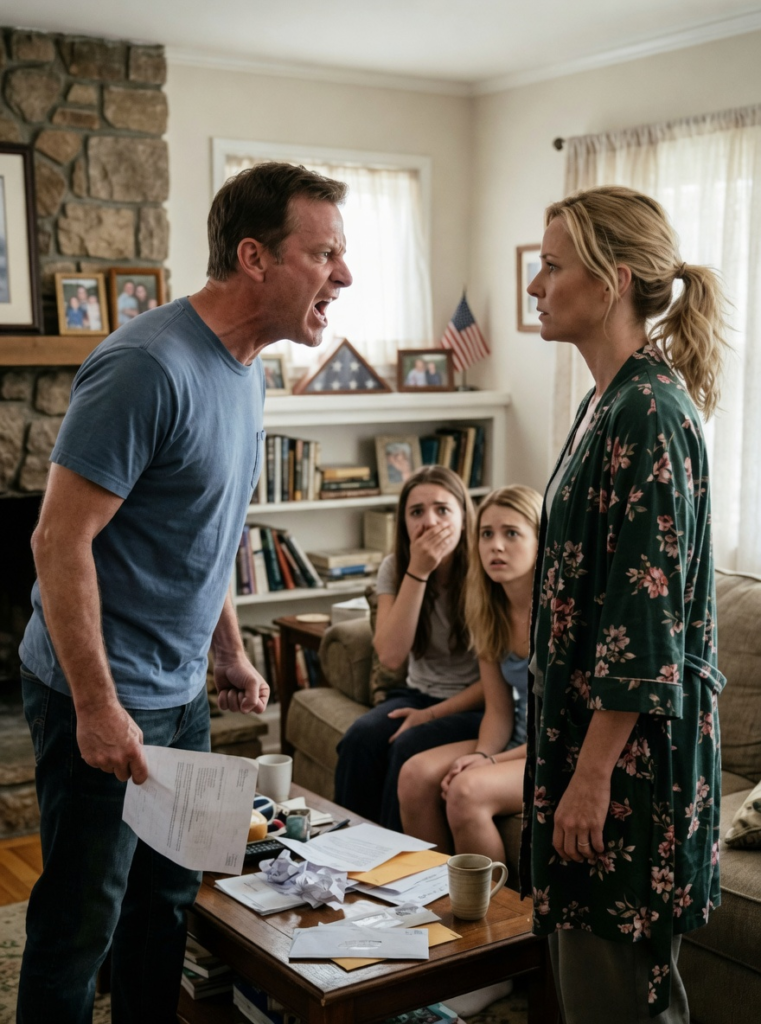
I paid twenty-two thousand dollars for a family vacation to Hawaii and got excluded from it by text.
Not before booking. Not during planning. Not after some dramatic fight that at least would have made the cruelty honest. I mean I paid for the flights, the beachside rental house, the airport transfers, the luau package my mother insisted was “non-negotiable,” and the upgraded ocean-view rooms because my father said, If we’re doing this as a family, let’s do it right.
Then, two weeks before I was supposed to fly out and meet them in Maui after a work conference in Seattle, I called my mother to ask whether they wanted me to bring anything for the kids.
There was a pause.
Then she said, far too casually, “Oh. We already went last week.”
At first I thought I had heard her wrong.
“What?”
“We already took the trip,” she said. “It worked better for everyone.”
I was standing in my office in Denver with a pen in one hand and a draft lease amendment open on my laptop, staring through the glass wall toward a city I suddenly couldn’t see clearly.
“You already went,” I repeated.
“Yes.”
“With the booking I paid for.”
Another pause. Then came the sentence that still makes my stomach turn when I think about it.
“Well,” my father said when he took the phone from her, “it was only for family.”
Only for family.
I don’t think I spoke for a full three seconds.
My name is Rachel Mercer. I was thirty-seven years old, single, partner-track at a commercial real estate firm, and apparently not family enough for the vacation I had financed. My younger brother, Caleb, had gone with his wife and their two kids. My older sister, Lindsey, had gone with her husband and their teenage daughter. My parents had gone, of course, because my father had always considered himself the center of any event that involved his last name. And every sunset dinner, every shaved-ice stop, every matching-white-linen beach photo had gone on without me.
I didn’t know all of that yet.
At first, there was just the sentence.
Only for family.
Then the shape of it arrived all at once.
They had used my money to take the trip without me.
I leaned one hip against my desk and asked, very quietly, “What does that mean?”
My father gave the dry little sigh he used whenever he thought I was being too sensitive to a decision he’d already made. “Rachel, you’re always working. It would have been awkward with your schedule. The kids wanted just immediate family.”
Immediate family.
Meaning my siblings, their spouses, their children, and my parents.
Meaning the daughter who paid was still somehow outside the circle.
My mother cut back in with that false-soft voice she always used when the truth looked ugly in daylight. “Don’t make this bigger than it is.”
That was the exact moment something inside me went cold.
Not broken.
Cold.
Because this was not confusion. It was not oversight. They had planned it. Coordinated it. Packed for it. Boarded planes with my card covering the reservations, and not one of them—not one—felt obligated to tell me before posting photos from a balcony I had paid for.
So I smiled.
They couldn’t see it, but I smiled anyway.
“I understand,” I said.
And that was the last easy sentence I gave them.
After I hung up, I stood in my office for maybe a minute, maybe three. Time gets strange when humiliation is fresh. People outside my glass wall moved past with files and coffees and phones pressed to their ears. Somebody laughed near the copier. One of the junior associates knocked lightly and mouthed, You good? through the glass.
I nodded because that is what women like me do in professional spaces. We nod first. We bleed later.
Then I closed the office door, sat down, and opened Instagram.
My mother’s profile was private except to family, which included me because my mother liked an audience even when she didn’t like accountability. The first photo was from six days earlier. A sunset over black lava rock and brilliant blue water. The caption read, Blessed beyond words. Family makes everything sweeter.
The next was of my parents at the luau I paid for. My mother in a white maxi dress. My father in linen and self-importance. My father had his hand at the small of her back and the smile he always used when a camera meant proof of a life he felt he deserved.
Then Lindsey.
Then Caleb’s wife, Nora.
Then Lindsey’s daughter, Ava, wearing the flower crown package my mother had insisted every woman should get “for the pictures.”
Then the worst one.
All of them together on the beach outside the rental house. Bare feet in the sand. White clothes. Arms around one another. The ocean behind them and the sky gone molten gold. The exact kind of expensive family photo people frame in hallways to prove that love and money found each other in the same room.
I stared at it until the edges of the phone blurred.
Lindsey had captioned that one: Making memories with the people who matter most.
My first real thought was not anger.
It was precision.
I wanted details.
I opened the booking folder I kept for personal travel and pulled up every reservation I had made. Seven round-trip tickets. One beachside rental house in Wailea for eight nights. Three ocean-view rooms, two standard rooms, one SUV upgrade, the luau package, snorkeling for the adults, surf lessons for the kids, and a private family dinner at Mama’s Fish House because my mother had seen it on someone else’s Facebook and said, If we’re already spending this kind of money, let’s do one thing properly.
All billed to my card.
All confirmed.
The original dates had been built around my conference in Seattle. I was supposed to fly to Maui on a Friday and join them that evening. That had been the plan for months. My assistant knew it. My father knew it. My siblings knew it. There had been a group text in March where Lindsey said, Finally, one trip where Rachel can’t say work got in the way.
I opened the airline confirmations.
The dates had changed.
Not cancelled. Changed.
Shifted forward by nine days.
The new flights had been confirmed under the same reservation structure. Same card. Same everything. The only person removed from the itinerary was me.
I actually laughed when I saw that.
It came out sharp and short and made my own empty office sound unfriendly.
They hadn’t just taken the trip.
They had edited me out of it.
I called the airline first.
There are times when customer-service menus feel like personal insults, and I spent nine minutes listening to synthetic ukulele music before a woman named Colleen came on the line and, after hearing enough of the story to understand the shape of it, turned from politely neutral to professionally alert.
“Ms. Mercer,” she said, “the dates were modified through the primary reservation contact last Tuesday.”
“Who was that?”
She hesitated just long enough to tell me she wasn’t supposed to answer but was about to anyway. “The change was requested by a Susan Mercer.”
My mother.
Of course.
“What exactly was said?”
“She indicated one traveler would no longer be joining the family group and asked that the reservation be shifted forward to better accommodate the group’s needs.”
One traveler.
Not daughter. Not payer. Not even Rachel.
One traveler.
I thanked Colleen, wrote down the change log, and asked for the full record to be emailed to me. Then I called the rental company.
That conversation was worse.
The villa manager—an older man named Emil who sounded genuinely unsettled once I explained who I was—told me my mother had called there too. She had said the person originally scheduled to arrive later was no longer attending. Could they please reset the room allocations so the grandparents had the primary ocean-facing suite and “the family with children” could have the downstairs wing?
I had paid for my own room.
My parents had slept in it.
Or rather, they had slept in the room I booked for myself because my mother had decided the daughter paying for the trip was now conceptually separate from the family using it.
That was a level of theft so intimate it almost became art.
By the time I got off the phone with Emil, I was no longer surprised by anything.
Just colder.
The next person who called was Lindsey.
I let it ring once, then answered.
“Well?” she said brightly. “Did Mom explain?”
Did Mom explain.
As if this were weather. As if there were a version of this that made sense once correctly framed.
“I understand what happened,” I said.
“Oh good.” She exhaled audibly, relieved that I was playing my part. “Because honestly, it just worked better this way. Seattle was already weird timing, and the kids wanted it to feel like a real family trip.”
I sat back in my chair and looked at the skyline.
“Explain that phrase to me,” I said.
“What phrase?”
“Real family trip.”
Lindsey was silent for a beat.
Then she said, with the defensive impatience of someone who knows they’ve stepped into the truth and wants to drag it back into euphemism, “You know what I mean.”
“No,” I said. “Say it.”
She laughed, a little meanly. “Rachel, come on. It’s not a personal attack just because you don’t have the same kind of life.”
There it was.
Not a misunderstanding.
Not even really about scheduling.
My kind of life.
My unmarried, childless, partner-track, always-working, financially useful, emotionally peripheral kind of life.
Meaning the daughter who could fund the family beach house but made the photos less complete because she arrived without a husband, without children, without the right shape of belonging.
It was so naked I almost admired the efficiency.
“I see,” I said.
“Don’t do that.”
“Do what?”
“That cold voice. It’s manipulative.”
I closed my eyes.
Of course.
When I sound calm, I am manipulative. When they lie, they are being practical.
I thought about the first time Lindsey taught me that lesson, though I didn’t know it yet. I was fourteen and she was seventeen, and our mother had bought her a prom dress that cost more than our entire back-to-school budget. When I said it seemed unfair that I had to reuse my winter coat again, Lindsey had put a hand dramatically to her chest and said, “God, Rachel, why do you make everything about money?”
I had learned then that in our family, the person noticing the ledger was always more offensive than the person spending from it.
“Enjoy Maui,” I said, and hung up.
My phone kept buzzing for the next hour.
My mother, twice.
My father.
Caleb.
Then my father again.
I ignored all of them until after six, when the office had emptied out and Denver had gone dusky blue beyond the windows and I was finally alone enough to hear myself think without pretending I was still in a workday.
That was when Caleb texted.
I thought you knew.
I stared at that sentence for a long time.
Then I typed back, Did you?
Three dots appeared. Disappeared. Appeared again.
Dad said you couldn’t make the new dates.
That one landed differently.
Because it had plausibility in it. Not enough to exonerate him. But enough to rearrange the cruelty. Caleb had not helped cut me out while knowing exactly what he was doing. Caleb had gone along because our father said something in a confident voice, and Caleb had spent his whole life confusing confidence with fact.
I wrote back, I booked the original trip around my conference so I could make it. They changed the dates and removed me.
No answer for almost five minutes.
Then: I’m sorry.
I looked at the screen and felt nothing warm toward him.
But I also didn’t feel the clean disgust I felt toward Lindsey.
What I felt was older and sadder.
My younger brother had always been the soft one. Not weak exactly. Just built with more hesitation than the rest of us, which in my family meant he grew up practiced at accepting whatever narrative arrived first from the loudest parent. If Lindsey was our mother’s golden child, Caleb was my father’s unfinished project: a decent man taught too often that peace mattered more than clear sight.
I typed, Were the kids told I couldn’t come?
He answered immediately this time.
Yes. I thought you chose work.
Work.
Of course.
Work was the family’s favorite explanation anytime something cruel needed smoothing. Rachel’s too busy. Rachel’s always working. Rachel doesn’t care about these things the way the rest of us do. It was perfect because it turned my ambition into consent.
I locked my office, took the elevator down sixteen floors, and drove home through city traffic while my family enjoyed the sunset on my money.
My house in Denver sat in Washington Park West on a block of old brick homes, big trees, and people with expensive dogs. I had bought it five years earlier with the first serious bonus I made after landing two major retail redevelopment clients in the same quarter. It had a narrow porch, original molding, a kitchen I paid too much to renovate because someday had finally become a word I could afford, and a small detached garage where my father liked to stand when he visited and say, “For one person, this is a lot of house.”
He always said it like observation.
He meant indictment.
The house was part of the family math the same way my salary was. If I had more than they thought a single woman should need, the excess entered a moral gray zone where redistribution became, in their minds, virtuous.
That night I did what I always do when I need to stop feeling and start seeing.
I opened a spreadsheet.
Column one: date.
Column two: expense.
Column three: who asked.
Column four: amount.
At first I meant only to note Hawaii. Twenty-two thousand. Flights, villa, transfers, luau, upgrades, activities.
Then I added the rent.
Because the rent was already sitting there in my life like a habit too old to feel dramatic.
Every month, on the first, I sent my mother thirty-two hundred dollars for the townhouse in Littleton where my parents lived. They had lost the house I grew up in after my father sank the remains of his retirement into a restaurant supply business with a partner who “understood opportunity” and then understood bankruptcy better. My mother had called me crying the day the bank notice came. Lindsey had said she wished she could help but she and Brent were “already stretched.” Caleb had two young kids and an HVAC business just finding its feet.
So I covered the rent.
At first for six months.
Then another six.
Then a year.
By the time Hawaii happened, I had been paying for that townhouse for twenty-three months.
I added it to the spreadsheet.
Then my mother’s car repair from the winter before.
Then my father’s dental implants, because he refused the clinic my insurance-connected dentist friend recommended and wanted “someone reputable.”
Then Caleb’s daycare deposit when Nora went back to work after maternity leave.
Then Lindsey’s daughter Ava’s debate camp because Lindsey called it “such a shame” that Ava might miss the opportunity over money and I was stupid enough to believe helping a teenager was morally separate from subsidizing her mother.
Then Christmases.
Birthdays.
Emergency vet bill for my parents’ golden retriever.
Lindsey’s husband Brent’s shoulder MRI after he lost his job and their COBRA coverage lapsed.
Two years of “just until next month” school tuition assistance for Ava when Lindsey insisted public school was “destroying her confidence.”
I kept adding.
By midnight the total sat at $286,430.
I stared at it for a long time.
Not because I regretted every dollar.
Some of it I gave willingly. Some with love. Some to children who had done nothing wrong except be born into our family’s accounting system. Some because my parents were old enough that fear changes shape when it comes for them. But seeing it like that, line after line after line, did something important. It gave form to what had always been treated as mood.
I was not occasionally generous.
I was infrastructure.
The next morning my mother called before eight.
I let it ring until voicemail.
Then she texted: Please don’t be childish.
That one made me laugh.
I sent back one sentence.
I’m not the one who took a vacation on someone else’s card and forgot to mention it.
She didn’t answer that directly.
Instead she sent: We’ll talk when you calm down.
I put the phone down and went to work.
For the next month, I said almost nothing to them.
That drove my family crazier than yelling would have.
My mother left long voicemails about misunderstanding and gratitude and how painful it was to be treated like a thief.
My father sent one text that read, You are embarrassing yourself.
Lindsey sent me links to school photos and soccer schedules and one especially offensive image of Ava eating shaved ice in Maui with the caption She misses you, as if nostalgia were currency and I should be thrilled to have been remembered after the money cleared.
Caleb called twice. I didn’t answer. Then he sent: I really didn’t know, Rach.
I believed him, or mostly believed him, which was not the same thing as absolution.
A week after they got back from Hawaii, my mother posted a photo album titled Mercer Family Memories.
Not Hawaii.
Family.
The title mattered.
All those photos, all that ocean and white linen and staged affection, were now enshrined not as a trip I had missed, but as an event that defined who counted.
I did not comment.
I took screenshots.
Then I called my bank and removed my father as the emergency user on the secondary travel card I had once given him because “airports are confusing now” and “sometimes your mother needs help.” He had only used it twice before Hawaii, once for a baggage fee and once for lunch in Dallas. I had forgotten he still had access. That particular stupidity cost me an additional $4,982 in room charges, spa fees, and one deep-sea fishing trip my father charged to the villa account because he thought incidentals lived in the same moral gray zone as my presence.
I disputed none of it.
Not because I couldn’t have fought the charges.
Because winning back the money was smaller than understanding what they believed about me.
Thirty-three days after the phone call, my mother called at 9:12 a.m. on a Tuesday while I was between client meetings.
I was in the back of an SUV headed to Boulder with one of our junior partners and a zoning consultant, reviewing a retail site packet, when I saw her name and knew before answering that something practical had gone wrong.
“Hello?”
“Rachel,” she said, no greeting, just panic already blooming. “The rent is overdue. Did you send the money yet?”
There are moments in life when the right sentence arrives fully formed, as if it has been waiting behind your teeth for weeks.
I didn’t have to think.
I leaned back against the leather seat, looked out at the frontage road blurring past, and said, “Only for family, remember?”
Silence.
Then, “What?”
I let her hear the weight of it.
“The rent,” I said. “Only for family.”
She actually gasped.
Not dramatically. Not for show. A real involuntary sound from someone who had not, until that second, believed consequences were attached to anything other than my tone.
“Rachel, don’t do this.”
I smiled and watched a line of construction barrels flash past the window.
“No,” I said. “I think I’m finally not doing it.”
Then I hung up.
The junior partner beside me, a twenty-eight-year-old named Micah who knew enough not to ask too many personal questions, looked up from the packet in his lap and said carefully, “Everything okay?”
I thought about the question.
Then I said, “Better than it was five minutes ago.”
He accepted that because good associates know when partners are speaking in code.
My mother called again before noon.
Then my father.
Then Lindsey.
Then my mother again.
By the time I got back to Denver that evening, there were fourteen missed calls and eleven texts. One from Lindsey read: You’re punishing Mom and Dad over a vacation. Grow up.
I answered that one.
No. I’m correcting a financial misunderstanding.
Then I blocked her for forty-eight hours because I had work to do and Lindsey is the kind of woman who thinks outrage becomes morally persuasive if it arrives in enough paragraphs.
My parents lived in a two-story rental townhouse in Littleton, ten miles south of Denver, with beige siding, an HOA, and the kind of tiny ornamental shrubs developers choose when they want landscaping to look like compliance. I had found it for them after the foreclosure because my mother said an apartment would “feel like failure,” and I was still in the phase of adulthood where I thought protecting my parents from shame counted as virtue.
The rent was due on the first. I had paid it every month by the twenty-eighth so my mother could pretend she was “handling it.” She told people she and Dad were renting by choice after downsizing. She never mentioned my wire transfer.
On the second, the property manager emailed her a late notice.
On the third, she called again.
This time I answered because I was home, fed, and curious to see what register she’d chosen.
She went with injured dignity.
“I cannot believe you did this to us without warning.”
I stood in my kitchen, opening mail with a butter knife because I had lost all the letter openers again.
“You’re welcome for the first twenty-three months.”
“Don’t be ugly.”
I laughed softly. “Mom, you took a Hawaii vacation I paid for and told me it was only for family. I am simply respecting the distinction.”
“That is not the same thing.”
“No?” I asked. “Explain the difference.”
There was a long pause.
Then she tried another route. “Your father’s blood pressure is through the roof.”
I looked at the bills in my hand and thought, there it is. The medically themed guilt branch. Early this month.
“He should see someone reputable,” I said.
She made a sharp, offended sound. “You’re being cruel.”
“No,” I said. “Cruel would have been posting beach photos from my trip and acting confused later.”
“You are still fixated on that.”
I set the envelopes down and leaned against the counter. “Yes. Imagine.”
Her voice dropped lower. “What exactly are you trying to prove?”
That question made me still.
Because that was the shape of it in her mind. Not that I had been hurt. Not that they had done something inexcusable. Only that I must be pursuing some unnecessary point.
“I’m proving,” I said, “that access to my bank account is not hereditary.”
Then I hung up again.
Two hours later, Caleb called from his truck.
I answered.
He didn’t waste time.
“Rach, please tell me you didn’t actually cut off the rent.”
I looked out my front window at the maple tree in the yard and the mailman crossing the street.
“I did.”
He exhaled slowly. “Mom is losing it.”
“That would imply she thought this through.”
He was quiet.
Then, “You know they can’t cover it.”
I thought about my spreadsheet. About the rows. The years. The Hawaii photos.
“Caleb,” I said, “when Dad told you I couldn’t make Maui, did you ask me once?”
Silence.
“No,” he admitted.
“Did you tell me before you left?”
“No.”
“Did Nora?”
“I thought you knew.”
“You keep saying that like it excuses anything.”
He was silent long enough that I knew he was parked now, engine off, just sitting there with the phone in one hand. Caleb always needed stillness to think. It was one of the things I liked about him when I wasn’t furious.
Finally he said, “I’m not saying it excuses it.”
“No?”
“I’m saying I was a coward.”
That got my attention.
Not because it fixed anything. Because my family almost never names the actual sin. They go with stress, misunderstanding, timing, everyone’s feelings, hard choices, a lot going on.
Coward was accurate.
He went on before I could answer.
“Dad said you knew. Lindsey said you’d be fine because you don’t care about family trips the way they do. Nora asked me twice if we should call you and I told her not to make it bigger.” He let out a breath. “I was wrong.”
I didn’t say it’s okay, because it wasn’t.
But I also didn’t flatten him into Lindsey.
“That’s true,” I said.
He laughed once, bleakly. “Yeah.”
Then he asked, “What happens now?”
I looked around my quiet kitchen with its blue tile backsplash, polished counters, bowl of lemons, and the absence of anyone entitled to stand in it uninvited.
“Now,” I said, “the people who were family enough for Hawaii can be family enough for rent.”
He didn’t answer for a second.
Then, very quietly, “That means Lindsey.”
“Yes.”
That was the first time I heard fear in his voice that wasn’t for himself.
Because Caleb knew exactly what I knew: that my parents loved Lindsey in the theatrical, consuming, endlessly excusing way that leaves no room for reality. The moment she became responsible for them materially, the whole family gravity would wobble.
I did not hate the thought of that.
A week later, my father showed up at my office.
Not in my office. In the lobby, which was somehow worse.
Mercer & Sloan Commercial sat on the fourteenth floor of a downtown building with a marble lobby, a coffee bar nobody needed, and two security guards who have seen every variety of rich-person emergency and therefore do not startle easily. When I came off the elevator from lunch, my father was standing by the reception desk in his good navy blazer with his jaw set and his hands on his hips, looking like a man who thought architecture would side with him if he carried enough certainty into it.
Our receptionist, Eva, caught my eye and made a minute helpless gesture that translated perfectly into: He said he was your father and then talked too loudly to ignore.
Of course he did.
“Rachel,” he said the moment he saw me, like I had kept him waiting on purpose.
I looked at him for one long second.
“You should not come here.”
He laughed once, harshly. “I shouldn’t have to come here. I should be able to call my own daughter and get a straight answer.”
“You have the answer.”
He stepped closer, lowering his voice into what he probably imagined was a private register. “The rent is three days overdue.”
“Yes.”
“You really think you can do this and walk around like some kind of victim?”
There are men who speak in accusations because they don’t know any other way to stay upright after losing leverage.
“I don’t think I’m a victim,” I said. “I think I’m done sponsoring people who don’t believe I belong.”
His face darkened. “That’s melodramatic.”
Eva was pretending to answer emails while hearing every word. One of the litigation partners walked by, clocked the posture of the scene instantly, and kept going with the tact of a man who knows billing disputes come in many forms.
“Did you know about Hawaii?” I asked.
“What?”
“The change. The dates. The removal. Did you know?”
He looked offended by the question, which is how I knew the answer immediately.
“Your mother handled the details.”
There it was. He had accepted the trip. Worn the linen. Taken the fishing charter. Slept in the ocean-view room I paid for. But the logistics? That was women’s work, apparently. Too soft and domestic to count as theft once he benefited from it.
“So yes,” I said.
He shook his head. “You’re twisting this.”
“No,” I said. “I’m untangling it.”
That made his nostrils flare.
“I have done everything for this family.”
I almost smiled.
“Everything except pay your own rent.”
His face went red.
For a second I thought he might actually make a scene in the middle of the lobby, and part of me hoped he would because certain truths get cleaner under bad lighting and witness statements. But he stopped short of public explosion. Men like my father usually do. They live at the edge of humiliation without falling into it because someone has always protected them from the cost.
“I raised you,” he said instead.
There it was. The old ledger.
I looked at him with something close to pity.
“Yes,” I said. “And now you’d like interest.”
Then I turned to Eva and said, very calmly, “If Mr. Mercer returns without an appointment, security can handle it.”
My father stared at me as if I had slapped him.
I held his gaze until he looked away first.
That mattered more than I want to admit.
He left without another word.
When I got to my office, there was an email waiting from Ava.
Subject line: I didn’t know Grandma meant never tell you
Ava was sixteen, all elbows and sharp intelligence, and the only member of Lindsey’s household I had ever consistently liked without reservation. She loved architecture, hated small talk, and had once told me over Christmas dinner that commercial zoning maps were “weirdly soothing.” I had been paying for her debate camp for two summers not because Lindsey deserved a subsidy, but because the kid had an actual mind and I did not believe children should have to wait for better adults before receiving opportunities.
Her email had two screenshots attached.
The first was from a family group text I was not on.
The name of it was Core Family.
I stared at that title for a long second before opening the image.
My mother had written: Let’s not say anything to Rachel until it’s done. She’ll make it emotional and the kids want this to feel simple.
Lindsey had replied: She’d just be on calls anyway.
My father: If she’s paying, she can manage one disappointment.
Then, from Caleb, a single thumbs-up.
The second screenshot was later.
My mother: If she asks, we say the earlier dates worked better for immediate family.
Lindsey: Exactly. It’s not like she has kids to juggle. She can take her own trip later if she wants.
And then the line that made me set the phone down.
My father: She contributes better from a distance.
I sat there staring at the edge of my desk until the grain came back into focus.
She contributes better from a distance.
There are sentences that do the work of years of therapy all at once, not because they heal anything, but because they clarify the wound so completely that you can no longer misname it.
That was what I had been to them.
Not daughter.
Not sister.
Not even really person, not in the full difficult sense.
Resource.
One best used at a distance.
I picked the phone back up and wrote Ava one line.
Thank you for telling me the truth.
She answered almost immediately.
I’m sorry.
I wrote back: None of this is your fault.
Then I called Caleb.
He answered on the first ring.
“I know why you’re calling,” he said.
“Do you.”
He exhaled. “Ava sent you the chat.”
“Yes.”
“I’m sorry.”
“No.” My voice stayed level. “Try again.”
He was quiet.
Then: “I knew it was wrong.”
There it was.
Not confusion. Not Dad said. Not I thought.
Wrong.
“What did the thumbs-up mean?”
“That I didn’t want a fight.”
I laughed once without humor. “You got one anyway.”
“Yeah.”
He sounded tired then. Older than his thirty-four years. Nora had probably already had her own say about all this, and I have always suspected that if Caleb ever grew a spine, it would happen because a better woman finally got tired of dragging one around for him.
“I can’t fix it,” he said.
“No.”
“But I can tell you Nora didn’t know about the group chat. She asked why you weren’t in it and Mom said you didn’t like phone clutter.”
I shook my head.
Of course.
Every exclusion in my family came wrapped in a version of my own preferences. Rachel likes her space. Rachel’s so busy. Rachel hates drama. Rachel doesn’t care about these little things. It made their choices look like respect instead of curation.
Caleb said quietly, “I’m ashamed of it.”
I believed him this time.
Shame is different when it stops performing and starts costing.
“You should be,” I said.
Then I hung up and opened the spreadsheet again.
At the bottom, under the $286,430 total, I typed one new line.
Mercer Family Hawaii — $22,000 — excluded by design.
Total: $308,430.
The number itself didn’t matter. Not exactly.
What mattered was that it now had a shape I could see without anyone else’s language touching it.
They kept calling through September.
My mother took to leaving voicemails that sounded like hostage negotiations with sentimentality.
Your father isn’t sleeping.
Lindsey and Brent are already stretched.
We never imagined you’d take one ugly misunderstanding and turn it into a crusade.
A mother should not have to beg her daughter over rent.
That last one was almost enough to make me call back.
Not from guilt.
From anthropological curiosity.
What did she think the last two years had been?
A mother not having to beg?
No. She had just learned how to ask like it was still her right.
Instead of answering, I sent one email.
Subject: Financial Boundaries
Mom and Dad,
Effective immediately, I will no longer provide monthly housing support, utility support, or any discretionary family subsidies. This includes direct and indirect financial assistance to you, Lindsey, Brent, or any household expenses routed through third parties.
I will continue paying directly for previously committed expenses through December 31 for Ava’s debate program and for Caleb’s son’s speech therapy. Those payments will be made to the providers directly, not to family members.
This is not a misunderstanding. It is a boundary.
Rachel
My mother replied within six minutes.
You’re punishing children to hurt adults.
I answered only once.
Read more carefully.
Then I stopped.
Lindsey, unable to survive silence, went public first.
Not on Facebook. That would have been too obvious. Instead she called my cousin Melanie, who called my aunt Jean, who called my mother’s best friend, who then “happened” to bring it up at church. By the next weekend, enough versions of the story were moving through the family that two people texted me some variation of I heard you cut off your parents after all they’ve done for you.
I did not defend myself to either of them.
The first I ignored.
The second I answered: If you’re this interested, ask them about Hawaii.
That slowed the gossip stream in exactly the way I wanted. Small families are powered by scandal, but they prefer scandal with clean heroes and villains. Once you introduce a luxury beach vacation funded by the alleged villain and attended by everyone but her, the moral geometry gets inconvenient.
Thanksgiving was where it all finally cracked.
My mother hosted every year, even after they lost the old house. “Hosted” was generous. She orchestrated. Assigned dishes, seating, timing, emotional roles. Holidays in my family had always been less about gratitude than stage management.
That year, three days before Thanksgiving, she sent a group text.
I think it’s time we all sit down like adults and stop this bitterness before the holidays become unrecognizable.
Like adults.
Meaning she wanted me in a room where my refusal could be framed as immature and everyone else’s dependence as sacred.
Before I could answer, Lindsey texted: Agreed.
Then my father: This has gone far enough.
Then, unexpectedly, Nora: I’ll come if Rachel wants me there.
I stared at that one for a second.
Nora, Caleb’s wife, had always been better than the family she married into. Practical, observant, and allergic to nonsense in the quiet way competent women often are. She rarely challenged my parents directly because she loved Caleb and had children to protect, but she noticed everything.
I wrote back: I’ll come.
Then I started assembling a folder.
Not because I planned theatrics. Because I know my family. In a room with enough emotional weather, facts disappear unless stapled.
Thanksgiving took place in the Littleton townhouse whose rent I had stopped covering six weeks earlier.
They were still there because my mother had borrowed from someone—probably Aunt Jean—and because my father had sold a riding mower he no longer had a yard big enough to justify. Temporary fixes. Pride mortgaged in small domestic increments. I knew the shape of it before I saw the evidence. The house looked more tired when I walked in that afternoon. Less because of money than because stress always reveals itself in the corners. The fake mums on the porch were wilted. The coat rack in the hall leaned. My mother’s candles had burned low enough to show panic purchases and bad timing.
Everyone was already there.
Lindsey and Brent in the living room with wine.
Ava on the armchair by the window, eyes dropping immediately to her phone when she saw me.
Caleb in the kitchen pretending to help carve turkey.
Nora actually helping.
My father at the table with his jaw set.
And my mother in her burgundy holiday blouse, moving too fast and smiling too hard.
For one suspended second, I could feel the old roles trying to settle around us like dust.
Rachel the difficult one.
Lindsey the emotional center.
Dad the offended patriarch.
Mom the wounded diplomat.
Caleb the peacemaker.
Nora the outsider-who-sees-too-much.
Ava the child everyone thinks isn’t listening.
Then I walked in carrying my folder, and something in the pattern gave.
“Happy Thanksgiving,” I said.
My mother took that as a kind of opening prayer.
“Oh, honey,” she said, rushing over with both hands outstretched as if the past two months had been a disagreement over cranberry sauce. “I’m so glad you came.”
I let her kiss air near my cheek and moved past her into the dining room.
The table was set for nine.
There was no place card because my mother doesn’t believe in them, only in leaving empty spaces for people to interpret as welcome even when the room has already been arranged around them.
I set my folder beside my plate.
Lindsey saw it first.
“What’s that?”
“Context,” I said.
That shut her up for a minute, which in Lindsey terms counts as prayer.
Dinner got through grace and the first pass of potatoes before my father decided he had suffered enough tension and wanted authority back.
“This has gone on long enough,” he said, setting down his fork.
Every eye at the table shifted.
My mother immediately looked pained, which was her favorite accessory whenever my father said something she agreed with but preferred not to wear herself.
“You embarrassed us,” he went on. “Over one trip.”
I looked at him across the candlelight and turkey platter and thought, you still think it was the trip.
“No,” I said. “You revealed yourselves over one trip.”
Lindsey exhaled sharply. “God, you make everything so dramatic.”
I opened the folder.
The sound of paper moving in a family dining room is one of the most satisfying sounds in the world when the family likes fog better than records.
I took out the spreadsheet first and slid copies across the table.
One for my parents.
One for Lindsey.
One for Caleb.
One for Nora, because respect should be documented where it’s due.
Ava leaned across her mother and took Lindsey’s before she could.
My mother frowned. “What is this?”
“The last eleven years,” I said. “Organized.”
Silence.
My father put on his reading glasses.
That alone almost made the whole exercise worth it.
He read the first page once, then again more slowly.
Lindsey’s face changed first. Not into shame. Into offense. Because people like her find accounting vulgar when it interrupts entitlement.
“This is disgusting,” she said.
“No,” I said. “This is arithmetic.”
Caleb had gone very still.
Nora was reading with the expression of a woman whose instincts had just been confirmed at industrial scale.
At the bottom of the second page, highlighted in pale yellow, sat the total.
$308,430.
I let them reach it in their own time.
My mother actually put a hand to her throat. “You kept score?”
That sentence will live in me forever.
Not because it was original.
Because it was inevitable.
“Yes,” I said. “Someone had to.”
“Families don’t do this,” Lindsey snapped.
I looked at her. “Families also don’t take a vacation funded by one member and exclude her by design.”
My father slapped the table lightly with his palm. “That again.”
“Yes,” I said. “That forever.”
Ava made a sound that might have been a laugh disguised as a cough.
My mother shot her a look.
Nora, without looking up from the sheet in her hand, said, “I didn’t know it was this much.”
Nobody answered her.
Because that was the thing. In the abstract, generosity can be romanticized. In columns, it becomes infrastructure. And no one at that table had ever truly wanted to see how much of their comfort had been scaffolded by the daughter they classified as optional.
I turned a page.
“This,” I said, touching the Hawaii line, “was not a family misunderstanding. It was theft with better weather.”
My father’s face reddened. “That is ridiculous.”
“Is it?”
“You paid for a family trip.”
“Yes. Then you told me I wasn’t family.”
His mouth opened. Closed.
So I kept going.
“You changed flights through Mom. You removed me from the reservations. You upgraded yourselves into the ocean-view room I booked for myself. You told Caleb I chose work. You told Nora I hated clutter. You told Lindsey’s daughter to keep quiet. And when I found out, you still expected the rent on the first like my role in this family was simply to fund the part that looked best in photos.”
The room had gone so quiet I could hear the refrigerator hum in the kitchen.
Ava looked at me with a kind of fierce relief I didn’t know what to do with.
Lindsey recovered fastest, because she always does when the room turns and she needs to spin victimhood before it sets.
“You are unbelievable,” she said. “Do you know how ugly this is in front of Ava?”
Ava looked at her mother and said, before I could stop her, “What’s ugly is that you all made a group chat called Core Family.”
Lindsey went white.
I looked at Ava.
She lifted one shoulder, almost apologetically, but there was steel in her jaw. Good.
That girl was going to get out of us if she survived long enough.
My mother turned on her. “You had no right—”
“No,” I cut in. “Let’s not do that. Let’s not scold the child who told the truth when the adults were busy choreographing lies.”
Nora set down her copy of the spreadsheet and folded her hands.
“I want to ask one question,” she said into the middle of the silence. “And I’d like a real answer.”
No one objected, probably because they were too busy realizing Nora had moved from in-law to witness.
She looked at my parents.
“When you told Rachel the trip was only for family,” she said, “did you already assume she’d still cover the rent?”
Nobody answered.
My father tried first with anger. “That has nothing to do with—”
“It has everything to do with it,” Nora said, and for the first time in the six years I’d known her, I heard her use a voice sharp enough to slice through Mercer family weather. “Because if the answer is yes, then what you’re saying is she was family enough to pay and not family enough to come.”
There it was.
The whole rotten structure in one clean sentence.
My mother blinked too fast.
Lindsey reached for her wine and missed the stem the first time.
Caleb looked like a man standing on the thin end of a bridge he had helped build and just realized it crossed nothing.
I leaned back in my chair and said, very calmly, “Exactly.”
My father took off his glasses and set them down with unnecessary force. “You all want to paint us like monsters over a vacation and some money.”
“No,” I said. “I want to describe a pattern accurately.”
He laughed bitterly. “Pattern.”
“Yes. Lindsey needs something, everyone adjusts. You need something, Mom cries. Caleb hesitates, someone lies to him. I provide money, time, logistics, planning, solutions. Then I am told I’m too busy, too distant, too single, too cold, too much work, not the right kind of family, until there’s a bill due. That is a pattern.”
Nobody interrupted me.
So I let the truth have its full size.
“You do not get to define me as outside the circle emotionally while keeping me at the center financially.”
My mother’s eyes filled then, because tears are never far away when speech fails her.
“We never meant—”
I held up one hand.
“No.”
She stopped.
“I’m not interested in what you meant. I’m interested in what you did.”
That was the line.
I knew it when I said it.
You could feel the room tilt around it.
Because intent had always been their exit ramp. They never meant to hurt, never meant to exclude, never meant to make it look like favoritism, never meant to make me feel used. Meaningless phrases, all of them, because the outcome was constant.
Lindsey stood abruptly enough to jostle her chair.
“So what now?” she asked. “You punish Mom and Dad until they’re homeless? Is that the fantasy?”
I looked at her over the candle flames.
“No. That would be your version. My version is simpler.”
I took out one last paper from the folder and slid it toward my parents.
My mother frowned at it.
“What is this?”
“An email from your property manager,” I said. “I called her last week.”
My father’s head snapped up. “You what?”
“I told her I would cover one final month. December. After that, the lease is yours to manage without me.”
My mother looked stunned.
Not grateful.
Stunned.
Because somewhere beneath all the tears and offense, she had still believed this would reverse. That the tension, the meeting, the holiday, the spectacle of family assembled would do what it always had: press me back into usefulness.
It was almost touching, that faith in my old obedience.
Then my father made the mistake of asking the obvious question.
“And if we can’t?”
I folded my hands in front of me.
“Then the family who qualified for Maui can figure it out.”
Lindsey went red. “Excuse me?”
“There are two married children in this room who counted as immediate family when that mattered,” I said. “Use the same definition.”
“That is unbelievably petty.”
“No,” I said. “It’s structurally fair.”
Ava laughed then. Out loud. Brief, shocked, instantly regretted. But it was enough. The truth had crossed generations.
Lindsey spun on her. “This isn’t funny.”
Ava looked down at her plate. “No,” she said. “It’s just finally honest.”
I wanted to hug her and drive her to college that second.
Instead I stayed where I was, because the adults still had a bill due in their souls and I was not leaving until it had at least been placed on the table.
Caleb spoke then, so softly I almost missed it.
“I’ll help,” he said.
Everyone turned.
He looked at our parents, not me. “I’ll help with a place. But not like this. Not if this is how we’re doing things.”
Lindsey stared at him like he had grown another head. “What does that mean?”
“It means,” he said, gaining steadiness as he heard himself tell the truth for maybe the first time in years, “I’m done pretending we didn’t use Rachel.”
The room seemed to shrink.
My mother’s tears started in earnest then.
“Caleb—”
“No, Mom.” He shook his head. “No. We all knew enough. Maybe not all the details. But enough. And we let it happen because Rachel always pays and never makes the kind of mess Lindsey makes when you tell her no.”
Lindsey pushed back from the table. “You spineless little—”
“Enough,” Brent said.
That startled everyone.
Brent rarely spoke at Mercer family dinners except to ask where the gravy was and agree with whichever opinion sounded safest. He was Lindsey’s husband, broad-shouldered, handsome in the shrugging kind of way, and usually content to let stronger personalities do the moral labor. But even he looked sick of the room by then.
He turned to Lindsey. “He’s right.”
She stared at him.
“You knew what we were doing looked bad,” he said. “That’s why you didn’t post anything until after.”
She actually recoiled.
And there it was—the second crack. Not because Brent had become noble. Because even weak men eventually get tired of carrying a lie that begins to smell on them.
My mother cried harder.
My father stood up.
He always stands when he’s losing.
“Rachel,” he said, voice thick with that old patriarchal fury he thinks makes him sound injured instead of cornered, “if you walk away from us over this, don’t expect to come back later pretending you did the right thing.”
I stood too.
Not because I needed height.
Because I wanted him to hear me at full volume of person.
“You already told me not to expect to come back,” I said. “You just used Maui instead of words.”
Then I gathered my papers, nodded to Nora, met Caleb’s eyes long enough to tell him I heard what he had finally managed to say, and left.
No slammed door.
No dramatic pause.
Just me, my folder, and the first clean exit of my life from a room that had always wanted me smaller.
By Christmas, my parents were moving.
Not because I had them thrown out into the snow like Lindsey later told three different cousins.
Because the townhouse lease renewed at a higher rate, and without my money, they could not manage it.
Caleb and Nora took them temporarily.
Not out of romance.
Out of obligation, decency, and the hope that if you help the wounded version of a thing long enough, maybe it becomes less of what wounded you.
I knew better, but I didn’t say it.
Lindsey, who had spent the whole fall calling me heartless, refused to take them because “the condo is too small” and “Ava needs stability” and “Brent works from home.” My mother apparently cried for three days over that particular revelation, which I am not proud to say gave me a satisfaction so pure it almost felt medicinal.
Ava kept texting me through all of it.
Not gossip exactly. Just small truths from inside the walls.
Grandma keeps saying she never thought you’d do this.
Mom says you’re enjoying it.
Dad asked if I still wanted to do the Chicago architecture camp this summer.
I stared at that last message for a long time.
Then I wrote back: Do you still want to go?
Her reply came instantly.
Yes.
So I paid the deposit directly to the program and told Ava no one else needed to be involved.
Not because I wanted to rescue Lindsey through her child.
Because family, real family, is sometimes the decision not to let one generation inherit the financial lies of another.
That spring I made partner.
No one in my immediate family came to the dinner.
Caleb sent flowers.
Nora sent champagne.
Ava sent a photo of a badly hand-lettered sign she had made in art class that read, You were never the extra one.
I kept that photo longer than I kept the flowers.
My mother called two weeks later asking if I wanted to have lunch “as women.”
I almost admired the phrasing.
As if gender could now do the work blood had failed at.
I met her anyway, at a café in Cherry Creek where she liked the salads and I liked the publicness. She wore a cream cardigan and pearls and looked thinner than she had a year earlier. Grief does that. So does rent.
She did not apologize first.
Of course she didn’t.
She ordered tea, rearranged the napkin twice, and said, “You’ve changed.”
I smiled. “I know.”
“You used to be softer.”
“No,” I said. “I used to be available.”
That line stayed between us for a while.
Then she said the thing I think she had come to say all along. “You have to understand, Rachel. It was never that we didn’t love you.”
I looked at her.
She meant it. Or rather, she believed she did. That was the tragedy of my mother. Her love had always been real to her, even when it came braided so tightly with entitlement that you could barely separate them.
“I know,” I said. “You just didn’t think love required respect.”
That hurt her.
I could see it.
For a second I almost wanted to take it back.
Then I remembered the group chat title.
Core Family.
No.
Some truths earn their sting.
She looked down at her tea. “Your father still says the trip was a mistake, not a betrayal.”
I laughed softly. “That sounds like him.”
“He doesn’t know how to come back from humiliation.”
I thought about that for a moment.
Then I said, “That’s because he thinks the humiliation was being seen. It wasn’t. It was doing it.”
She closed her eyes briefly.
When she opened them again, she looked older. Less polished. More like the woman who used to fold laundry at midnight because quiet tasks were the only place she could let her face go blank.
“I do miss you,” she said.
There are moments when an honest sentence arrives far too late and still matters.
I believed her.
That did not mean I changed anything.
“I miss the idea of us too,” I said.
Her eyes filled.
But she nodded.
And that, oddly, was the closest we came to peace.
I never resumed the rent.
I never rejoined the old family group text.
I never again paid for a trip that required my own exclusion to feel complete.
Caleb and Nora eventually bought a larger house out in Castle Rock. Not quickly. Not easily. But honestly. My parents stayed with them for almost seven months, long enough for everyone involved to discover what I had known for years: dependence is only noble in theory if you have never had to structure your life around someone else’s unmanaged need.
By the end of that arrangement, my father barely spoke to anyone. My mother got quieter. Nora learned to lock her office door. Caleb aged five years and finally, finally began saying no to my parents in full sentences.
Lindsey remained Lindsey.
Offended.
Underfunded.
Certain that other people’s boundaries were personal attacks.
She and Brent separated for six months, got back together after counseling, and spent one disastrous Christmas trying to host the whole family in their condo, which resulted in my father insulting the thermostat settings, my mother crying over oven space, and Ava leaving early to come drink hot chocolate in my kitchen and help me wrap gifts for a nonprofit toy drive.
That night, as we sat at my table with scissors and ribbon and a playlist of old jazz standards Mara used to love, Ava said, “Grandma still talks like Hawaii was your overreaction.”
I taped a box shut and looked at her.
“What do you think?”
She shrugged with all the weary elegance of a teenager already older than the adults around her. “I think people call it overreaction when they benefited from what hurt you.”
I stared at her for a second.
Then I laughed.
“Architecture camp is going to make you unbearable.”
She grinned. “You love it.”
I did.
By the second anniversary of the trip, the phrase only for family had lost its ability to cut and become what it should always have been: evidence.
Not of my exclusion.
Of their definition.
A definition so small it could fit only people who needed me to fund the room without entering it fully.
I went to Maui that year.
Not with them.
Alone.
Well—not entirely alone. I went with two friends from the firm, a woman I’d met through a local housing-rights board, and three uninterrupted days where nobody asked me to subsidize the emotional weather. We rented a smaller place than the one I had paid for before. We ate wherever we wanted. We skipped the luau because once was enough for that particular brand of theater. I walked on the beach at sunrise and understood, for the first time without bitterness attached, that exclusion had only worked on me as long as I believed I wanted back into the exact room that had cut me out.
I didn’t.
Not anymore.
On the third evening, sitting on a balcony with salt in the air and a glass of wine in my hand, my phone buzzed.
It was a text from my mother.
The HOA fee’s gone up at the new place. Could you help just this once?
I stared at the screen.
Then I set the phone face down on the table and watched the sun go down over water that owed nobody anything.
I did not answer.
Because by then I finally understood something that had taken me almost forty years and three hundred thousand dollars to learn:
Generosity without respect is just another extraction.
They called Hawaii only for family.
In the end, they were right about one thing.
It was.
Just not theirs.
THE END