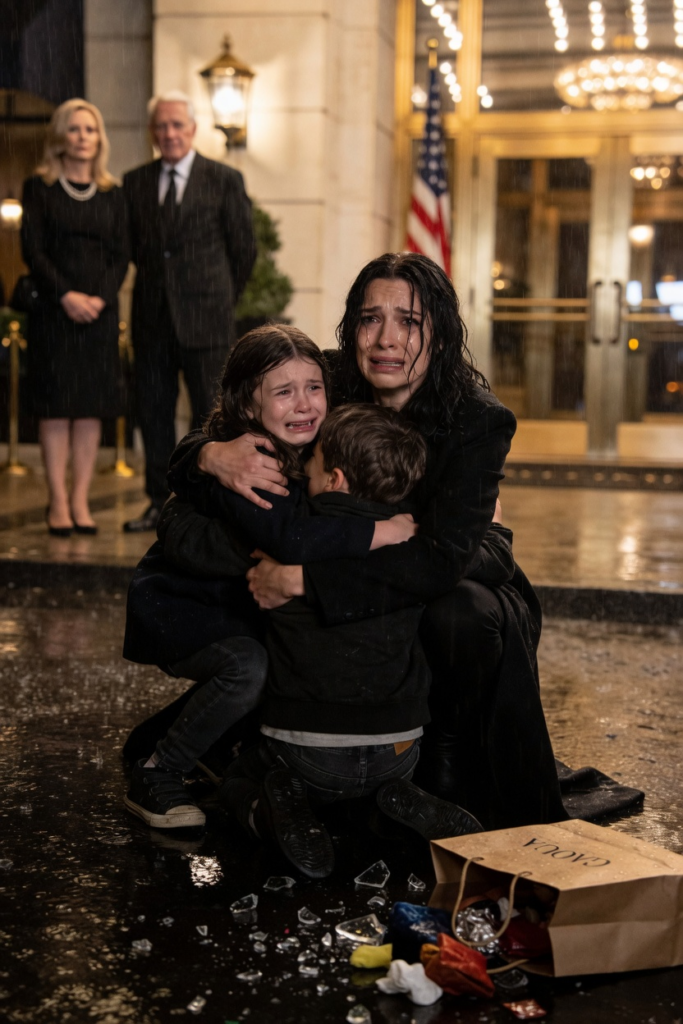
“My Parents Kicked My Children And Me Out Of Their Anniversary Party Like We Were Embarrassing Strangers. I Had Paid Their Mortgage In Secret For Three Years While They Praised My Sister’s Perfect Life And Looked Down On Mine. My Son Spilled Water, My Mother Called Us A Disruption, And My Father Told Me My Divorce Had Consequences. I Drove Home Crying, Then My Daughter Tore Up A Family Portrait And Whispered…
I thought paying my parents’ mortgage in secret was love.
Not sacrifice. Not weakness. Not a silent plea for approval. Love.
For three years, every month, I opened my banking app after the kids went to bed, stared at the number that could have gone toward a down payment on a safer home for my children, and sent it anyway to the lender that held the roof over my parents’ heads. I never signed my name in pride. I never told relatives. I never mentioned it at holidays when my mother praised my sister’s new kitchen island or my father admired my brother-in-law’s vacation photos from Cape Cod. I paid quietly because I thought family meant protecting people from shame, even when they had no idea how much you were bleeding to do it.
That was before my parents kicked my children and me out of their fortieth anniversary party like we were embarrassing strangers.
That was before my eight-year-old daughter tore a family portrait down the middle with shaking hands and whispered something that made me finally understand the cost of teaching children to love people who kept hurting them.
My name is Chloe Reed. At thirty-two, I had become very good at making exhaustion look like competence. I was a financial adviser in Boston, which meant I spent my days helping other people prepare for emergencies while pretending my own life was not one missed payment, one sick child, one broken transmission away from unraveling. I wore pressed blouses from clearance racks, smiled across glass conference tables, and spoke calmly about long-term stability while my own children shared a bedroom in an apartment where the radiator knocked like an angry ghost every winter.
Lily was eight, thoughtful and watchful in the way children become when they learn adults are not always safe. Ethan was six, bright and tender and still young enough to believe spilled water could be fixed with enough napkins and apologies.
Their father, Daniel, had left three years earlier with one suitcase, one practiced speech about needing to “find himself,” and a message history with his assistant that explained exactly where he had already been finding comfort. He moved to Chicago less than four months after the divorce was filed. At first, he called twice a week, then once, then only on birthdays and major holidays when guilt prompted him into performance. Child support arrived late when it arrived at all. I stopped expecting him to become decent. Disappointment, when repeated often enough, eventually turns into accounting.
My parents had not reacted to the divorce with comfort. They reacted with embarrassment.
My mother, Susan Reed, never said I had failed directly. She was too polished for cruelty that obvious. Instead, she folded it into passing remarks.
“Marriage takes patience.”
“Children need stability.”
“Sometimes women give up too quickly now.”
My father, David Reed, said even less, which was worse. He had been an engineer before retirement, a man who trusted numbers more than emotions. His silence around my divorce felt like a verdict. He did not ask if I was sleeping. He did not ask if Lily cried at night or if Ethan still waited by the window when Daniel promised to visit and didn’t come. He asked whether the child support arrangement had been “properly documented.”
My younger sister, Sarah, meanwhile, became my parents’ shining example of life done correctly.
Sarah had married Mark Landon, a dentist with good posture, good teeth, and the kind of dependable income that made my parents relax in his presence. They lived four blocks from my parents in a colonial with window boxes and a mudroom big enough to make my whole apartment jealous. Their children, Grace and Leo, attended private school, wore matching holiday outfits without complaining, and smiled in photographs like they had been trained by a lifestyle magazine.
Sarah worked part-time as a graphic designer, chaired school committees, hosted brunches, and had a kitchen so white and spotless it seemed impossible anyone actually cooked in it. My mother praised her constantly.
“Sarah just has such a gift for making a home.”
“Grace and Leo are so well-mannered.”
“Mark is wonderful with the kids.”
“Sarah really understands balance.”
I listened to those comments at Sunday dinners while wiping ketchup from Ethan’s sleeve, while Lily asked if she could bring home leftovers because she liked Grandma’s mashed potatoes, while I calculated whether I could stretch gas money until Friday.
And every month, I still paid my parents’ mortgage.
I had discovered their trouble by accident. Three years earlier, only two months after Daniel left, my mother pulled me into her bedroom during a family dinner and closed the door as if confessing a crime.
Her face had looked smaller that night. Older. She held a letter in trembling fingers.
“We’re behind,” she said.
I thought she meant on taxes or bills. Then I saw the word foreclosure printed in bold.
My father’s pension was less than they expected. Their savings had thinned over the years, not because they were reckless with themselves, but because they had quietly supported Sarah and Mark through every expensive milestone that made their perfect life look effortless. A down payment here. Private school fees there. A renovation loan when the roof leaked. A “temporary” bridge when Mark’s practice was expanding. They called it helping. They called it family. They never called it debt.
They were three months behind on the mortgage.
“I don’t know why I’m showing you this,” my mother whispered. “Please don’t tell Sarah. She has so much going on.”
The sentence should have warned me. Sarah had so much going on. I, apparently, did not. I had a divorce, two grieving children, a full-time job, and a checking account that made me hold my breath near the end of every month, but in my mother’s mind, Sarah’s stress was more deserving of protection.
Still, I took the letter from her hands.
“I’ll help,” I said.
She looked up sharply. “Chloe, no. You can’t.”
“I can.”
“You have the children.”
“I know what I have.”
Eighteen hundred dollars a month. Not forever, my father said when my mother told him. Six months, maybe a year, until they could refinance, downsize, figure things out. My father had difficulty looking at me when he thanked me. His pride looked like a wound.
At first, there was gratitude. Awkward dinners. Quiet thank-yous in hallways. My mother hugged me once after Thanksgiving and whispered, “You saved us.”
Then time did what it always does. It made miracles ordinary.
After six months, no one mentioned stopping. After a year, my parents accepted the payments as if they had always existed. After two years, my mother was criticizing my apartment for being cramped while sitting under a roof I kept above her head. After three, my father was telling relatives that Sarah was “settled” and I was “still rebuilding.”
I swallowed it all.
I told myself love did not keep score.
The invitation to their anniversary party came in a cream envelope thick enough to feel expensive. Gold embossing shimmered under my kitchen light.
David and Susan Reed request the pleasure of your company in celebration of forty years of marriage.
The Westbrook Hotel. Formal dinner. Cocktail attire. Live music.
I knew Sarah had planned it the moment I opened the envelope. My parents would never choose gold embossing. Sarah loved presentation. Sarah understood how things should appear.
Lily found the invitation on the table and traced the letters with one finger.
“Is it fancy?” she asked.
“Very fancy,” I said.
“Do we get to go?”
I hesitated.
At first, my mother had implied the event would be adults-only. She mentioned the hotel, the late evening, the speeches, the formal atmosphere. She never directly told me not to bring the kids, because direct cruelty left fingerprints. Instead, she let me understand.
So I arranged a sitter. I bought a navy dress on sale that still made me feel guilty. I found dress shoes for Lily at a consignment shop and a clip-on tie for Ethan because he loved the idea of looking “like a businessman.” I spent three nights after bedtime making a custom photo album for my parents, scanning old pictures from shoeboxes, arranging them by year, adding small handwritten captions because my mother loved sentimental things as long as they could be displayed tastefully.
The morning of the party, my sitter called at seven.
Her voice was clogged and apologetic. “Chloe, I’m so sorry. I have a fever. I can barely stand.”
I stood in my kitchen in pajamas, coffee untouched, and looked at my children eating cereal at the table.
“It’s okay,” I said, though nothing felt okay. “Feel better.”
For the next five hours, I called everyone. Friends from school. A neighbor. A coworker with teenage daughters. The backup babysitter who had helped once during a snow day. No one was available.
At noon, I called my mother.
She answered on the fourth ring, breathless.
“Chloe, I hope this is quick. Sarah is here helping with the final table cards.”
“My sitter canceled,” I said. “She’s sick. I’ve tried everyone.”
Silence.
“I’m so sorry,” I continued. “I know this isn’t ideal. But Lily and Ethan can come with me. They’ll behave. We won’t stay late.”
My mother released a sigh so heavy it felt staged.
“Oh, Chloe.”
Two words. One accusation.
“I know,” I said.
“Sarah worked very hard to make this an elegant evening.”
“I understand.”
“It isn’t really a child-friendly event.”
“I understand that too. But they’re not toddlers. Lily is eight. Ethan is six. I’ll bring coloring books. We’ll sit quietly.”
Another pause.
“Fine,” she said at last. “I suppose it can’t be helped. Just make sure they’re dressed appropriately.”
I hung up feeling twelve years old and inadequate.
By four, the apartment was chaos. Lily’s cardigan had disappeared and then been found under Ethan’s dinosaur blanket. Ethan kept touching his tie and asking whether Grandpa would think he looked handsome. I ironed Lily’s purple dress with the focus of a surgeon. I curled her hair at the ends because she asked me to make it “party pretty.” I polished Ethan’s shoes with a paper towel. I put on my navy dress, a pair of earrings I hadn’t worn since before Daniel left, and lipstick that made me look more confident than I felt.
Lily carried a handmade anniversary card. She had drawn my parents standing beneath a heart, holding hands, with all four grandchildren around them. Ethan had added glitter. Too much glitter. It clung to the table, the floor, my wrist, and somehow my cheekbone.
“Grandma likes sparkly things,” he said.
“She does,” I told him.
On the drive to the Westbrook Hotel, the kids were quiet at first. Then Ethan asked, “Will Daddy be there?”
My hands tightened on the steering wheel.
“No, honey.”
“Because he’s in Chicago?”
“Yes.”
“Does Grandpa still like Daddy?”
The question landed with unfair accuracy. Children feel truths before adults explain them.
“I don’t know,” I said carefully. “But tonight is about Grandma and Grandpa.”
Lily looked out the window.
“Do they like us?”
My throat tightened.
“Of course they do.”
Even then, part of me knew I was lying. Or maybe I was telling the truth badly. My parents loved them in theory. They loved the idea of grandchildren, the Christmas photos, the school concerts when convenient, the handmade cards they could save in drawers. But they did not love the inconvenience of Lily’s questions or Ethan’s sensitivity. They did not love the way my children carried evidence of my broken marriage into their polished family story.
The Westbrook Hotel rose from the corner of Arlington Street like something built to make ordinary people feel underdressed. The windows glowed amber. A valet in a black coat opened the door of a sleek SUV ahead of us. When I pulled up in my aging Honda, he smiled professionally, but his eyes flicked over the dent near my bumper and the booster seat in the back.
“I’ll self-park,” I said before he could ask.
Inside, everything glittered. Marble floors. Fresh flowers. Soft piano music drifting from somewhere unseen. The ballroom doors were open, spilling golden light into the hallway.
At the entrance stood a large framed photo of my parents from their wedding day. My mother at twenty-two, slim and radiant in lace. My father with thick dark hair and an expression so serious it was almost funny. Beside it, a newer portrait showed them sitting on their back porch, older, smiling, hands folded together.
Lily stopped in front of the photos.
“Grandma was pretty,” she said.
“She still is,” Ethan said earnestly.
I smiled despite myself. “Go tell her that.”
The ballroom looked like a movie set for a wealthy family I did not belong to. Crystal chandeliers cast warm light over round tables dressed in ivory linens. Gold chargers gleamed beneath folded napkins. Tall centerpieces of white roses and eucalyptus blocked half the view across each table. A string quartet played near the dance floor. Along the far wall, a photo backdrop read David and Susan, 40 Years of Love in elegant gold script.
My parents stood nearby, greeting guests.
My mother wore a silver dress that made her look regal and untouchable. Her hair was swept into a soft updo. My father stood beside her in a charcoal suit, his posture straight, his expression proud.
For one foolish second, I felt happy for them.
Then my mother saw us.
Her smile paused. Not vanished. Paused. Like a computer freezing before resuming its program.
“Chloe,” she said as we approached. “You made it.”
“Happy anniversary, Mom.”
I kissed her cheek. Her skin smelled like expensive powder and roses.
“This is from us.” I handed her the gift bag with the photo album inside.
Lily stepped forward, holding out the card.
“I made this,” she said. “It’s you and Grandpa with everyone.”
My mother took it carefully, as if glitter were contagious.
“How creative,” she said. “Thank you, Lily.”
Ethan stepped from behind me.
“Happy anniversary,” he whispered.
My father looked down at him. “Well. Don’t you look grown up.”
Ethan beamed and touched his tie.
Before the moment could soften, Sarah appeared.
She moved through the ballroom like she owned not just the party but the entire idea of family. Her emerald dress fit perfectly. Her blond hair fell in glossy waves over one shoulder. Mark stood behind her in a dark suit, one hand resting lightly on her back. Grace and Leo hovered nearby, both dressed in cream and navy, spotless and composed.
“Mom, the photographer needs you before guests start sitting,” Sarah said, then turned to me.
Her smile changed.
“Chloe. I thought this was adults-only.”
“My sitter canceled,” I said. “Mom said it was okay.”
Sarah’s eyes shifted to our mother, and I saw the tiny flash of irritation pass between them.
“Oh,” Sarah said. “Well, the seating chart was finalized.”
“We can make it work,” I said.
“I suppose they can sit at your table.”
My table. Not our table. Not family.
Lily stepped closer to me.
Sarah looked at Lily’s cardigan, then Ethan’s clip-on tie.
“They look sweet,” she said, in the tone people use for homemade decorations at a luxury event.
“Thank you,” I replied.
“The photographer wants immediate family first,” Sarah continued. “Mom, Dad, Mark, the kids, and me. Then we can do extended family afterward.”
I felt the words more than I heard them.
Immediate family.
Extended family.
My father looked away.
My mother adjusted her bracelet.
I stood there with my children and understood exactly where we had been placed.
“That’s fine,” I said.
It was not fine.
We were seated near the back of the ballroom, close to a table of my father’s former colleagues and two distant cousins I barely knew. Sarah’s family sat near the head table, where Grace and Leo had little place cards with gold calligraphy. Lily and Ethan’s names had been handwritten on folded blank cards, probably added after my call.
Lily noticed.
“Why is mine different?” she whispered.
“Because we were added late,” I said.
“Did we do something wrong?”
“No.”
I said it too quickly.
Dinner began with salad neither child liked. Ethan stared at a beet as if it had personally betrayed him. Lily tried to eat politely but kept glancing toward the front where Grace sat beside my mother, laughing softly at something Sarah said.
“They get to sit with Grandma,” Lily murmured.
“Yes.”
“Because Aunt Sarah planned the party?”
“Something like that.”
The speeches began between courses. Mark stood first and spoke about love, dedication, and the example my parents had set. He was smooth, charming, funny at the right moments. Everyone applauded.
Then Sarah spoke.
She cried delicately, just enough to be touching without ruining her makeup. She talked about growing up in a home filled with commitment. She said my parents had shown her what a strong marriage looked like, what family loyalty meant, what it meant to stand by each other through difficult seasons.
I sat in the back, listening to my sister praise the people whose mortgage I had been paying because they had emptied themselves helping her maintain the life she now presented as proof of virtue.
My mother wiped her eyes.
My father squeezed Sarah’s hand.
I looked down at my plate and felt something old and tired twist inside me.
Ethan whispered, “Mommy, when do we clap?”
“When she finishes.”
He nodded solemnly.
During the main course, Ethan tried. He really did. He cut tiny pieces of salmon with the edge of his fork. He took one bite, made a face, then swallowed because I gave him the look. Lily ate three bites of risotto and whispered that it tasted like “wet cheese rice,” which nearly made me laugh for the first time all night.
Then Ethan reached for his water.
His fingers brushed the glass too high. It tipped. Water spread across the tablecloth in a shimmering wave, soaking his napkin and touching the bread plate.
It was only water.
No glass broke. No one screamed. No food was ruined.
But Ethan’s face collapsed.
“I’m sorry,” he whispered, already close to tears. “Mommy, I’m sorry.”
“It’s okay,” I said instantly. “Accidents happen.”
I grabbed napkins and began blotting. One of my father’s former colleagues kindly handed me his unused napkin too.
“No harm done,” he said.
But my mother had seen.
She crossed the ballroom with a smile still fixed for guests, but when she reached our table, her voice dropped low and sharp.
“Chloe.”
I kept blotting. “It’s water. I’ve got it.”
“This is exactly what I was afraid of.”
Ethan shrank in his chair.
“Mom,” I said softly, “not here.”
“The children have been fidgeting all evening.”
“They’ve been sitting through speeches and adult food for almost two hours.”
“Grace and Leo manage.”
There it was. The comparison. Always waiting. Always loaded.
I looked up at her.
“Ethan apologized. It was an accident.”
My mother’s nostrils flared slightly.
“I think it would be best if you took them home.”
The napkin in my hand stopped moving.
“What?”
She straightened, still smiling faintly for anyone watching.
“This is not the right setting for them. They are uncomfortable. You are uncomfortable. It would be better for everyone.”
Lily stared at her grandmother.
“Grandma, I’m not uncomfortable.”
My mother ignored her.
My father appeared beside my mother, drawn by the tension.
“What happened?”
“Ethan spilled water,” I said before my mother could turn it into a flood. “We’re cleaning it up.”
Susan exhaled.
“The children are having trouble with the formal setting. I suggested Chloe take them home before the next round of speeches.”
Dad looked at the damp tablecloth, then at Ethan’s red eyes.
For one breath, I hoped.
Then he said, “That’s probably best.”
Something inside me went very still.
“You want us to leave?”
“Chloe, don’t make a scene.”
“I’m asking a question.”
His jaw tightened. “This is an important evening. Your mother and Sarah worked hard. We have friends here. Former colleagues. People who came to celebrate us.”
“And your grandchildren are an embarrassment?”
“That is not what I said.”
“It’s what you mean.”
Sarah arrived as if summoned by the scent of conflict.
“What’s going on?”
“Nothing,” I said.
My mother said, “Chloe is going to take the children home.”
Sarah glanced at the table, then at Ethan, who was now crying silently. Her mouth tightened with satisfaction she did not bother to hide completely.
“That might be best,” she said. “The photographer will need everyone back near the front for the cake cutting soon, and it’s already been a little distracting.”
“Distracting,” I repeated.
Lily’s hand slipped into mine under the table.
I looked around. Guests were pretending not to listen. That was almost worse than staring. Their silence created a ring around us, polite and suffocating.
I stood.
“Come on, kids.”
Ethan began crying harder.
“I’m sorry,” he said again. “I didn’t mean to.”
I crouched in front of him, ignoring the entire room.
“Look at me.”
He lifted his wet eyes.
“You did nothing wrong. You spilled water. That’s all. I am not upset with you.”
“But Grandma is.”
“That is Grandma’s choice.”
My mother made a small sound. “Chloe, honestly.”
I rose and gathered Lily’s cardigan, Ethan’s little jacket, my purse, the untouched dessert forks, the coloring books, the handmade card my mother had set aside on a side table without opening fully.
As we walked toward the exit, Lily held her chin high in a heartbreaking imitation of me. Ethan clung to my hand. The string quartet kept playing, something gentle and expensive, as if humiliation needed a soundtrack.
In the hallway, away from the chandeliers, I finally breathed.
Then I heard my father behind us.
“Chloe, wait.”
I turned near the coat check.
He approached with that controlled expression he used when he believed he was being reasonable.
“Don’t leave like this.”
I almost laughed. “You just asked us to leave.”
“Your mother asked you to take the children home. There’s a difference.”
“No, Dad. There isn’t.”
He glanced toward the ballroom doors.
“Lower your voice.”
That did it. Not the spill. Not Sarah. Not my mother’s icy dismissal. The fact that his concern, even now, was volume.
I bent and helped Ethan into his jacket. My hands shook.
“Kids, go stand by the window for a second.”
Lily hesitated.
“It’s okay,” I said. “I can see you.”
They moved a few feet away.
I faced my father.
“You kicked your daughter and grandchildren out of your anniversary party because a six-year-old spilled water.”
His eyes hardened.
“It was not just the water.”
“Then say it.”
“They were whispering. Coloring. Fidgeting. This was a formal event.”
“They are children.”
“Sarah’s children are children too.”
“Do not compare them again.”
His mouth pressed into a thin line.
“I’m trying to help you understand that choices have consequences.”
The words struck harder than I expected.
“My choices?”
“You know what I mean.”
“No, I want you to say it.”
He looked tired suddenly, as if I were the burden.
“Your life has been unstable since the divorce. Children absorb that.”
I stared at him.
“Daniel cheated.”
“I know that.”
“He left.”
“I know.”
“He moved states away and forgets birthdays.”
“I am aware, Chloe.”
“And somehow their lack of etiquette is my consequence?”
“I’m saying there are always two sides to a marriage failing.”
For a moment, I was not thirty-two. I was a child again, standing in front of him with a report card, waiting for the one point he would find missing.
“There were not two sides to him sleeping with his assistant while I was home nursing our son,” I said.
He looked away.
“Chloe.”
“No. You don’t get to make my pain more comfortable for yourself by pretending it was balanced.”
A hotel guest passed behind us, slowing for half a second before continuing.
Dad noticed. Of course he noticed.
“Call your mother tomorrow when everyone is calm.”
I reached into my purse and pulled out the parking ticket with too much force.
“I have paid your mortgage for three years.”
His face changed.
Not enough. But enough.
“I have sent eighteen hundred dollars every month while you sat at dinners praising Sarah’s beautiful life, the one you helped finance until you nearly lost your house. I kept your secret. I protected your pride. I let my children live in a cramped apartment so you and Mom could stay in the home where Sarah’s kids get praised for behaving properly at Sunday dinner.”
His eyes flicked toward Lily and Ethan.
“Keep your voice down.”
“No.”
It was the first time in my life I had said that word to my father and meant it fully.
“No, I will not keep my voice down so you can keep pretending. I will not calm down tomorrow so Mom can explain why humiliating my children was actually kindness. I will not let you treat Lily and Ethan like stains on your perfect evening.”
His expression stiffened.
“You’re overreacting.”
There it was. The family emergency exit. When truth became inconvenient, I became dramatic.
I laughed once. It sounded ugly.
“I’m done.”
“You don’t mean that.”
“I do.”
“Chloe, don’t be foolish. We can discuss this later.”
“We have nothing to discuss tonight.”
I turned away.
He caught my arm lightly, not hard enough to hurt, but enough to remind me he still expected obedience.
I looked down at his hand.
“Let go.”
He released me.
In the car, Ethan cried until he hiccupped. Lily sat silent, her small hands folded tightly in her lap. I drove through Boston streets blurred by tears I refused to let fall completely because I had two children in the backseat and no room to collapse.
“I ruined the party,” Ethan whispered.
“No,” I said.
The word came out too sharp, so I softened it.
“No, sweetheart. You did not ruin anything.”
“Grandma said we were disruptions.”
Lily’s voice was flat.
I glanced at her in the rearview mirror. Her face looked pale in the passing streetlights.
“Grandma was wrong.”
“Then why did Grandpa agree?”
I had no answer that would not wound her more.
So I told the truth as gently as I could.
“Sometimes adults care too much about how things look. And when they do that, they forget what matters.”
“Do we matter?” Ethan asked.
I nearly pulled over.
“Yes,” I said. “More than anything.”
The apartment felt dim when we got home. Our living room was small, cluttered with library books, school folders, and a laundry basket I had not folded. The contrast between our home and the ballroom hit me so hard I had to grip the kitchen counter after setting down my purse.
Lily took off her cardigan and placed it carefully on a chair. Ethan removed his tie and held it in both hands.
“I don’t want this anymore,” he said.
“You don’t have to wear it.”
“No. I don’t want it ever.”
He dropped it into the trash.
I let him.
I made hot chocolate because I did not know what else to do. I gave them marshmallows, too many. Ethan sat on the couch under his dinosaur blanket, staring at the mug like it might explain the evening. Lily disappeared into the hallway.
I found her in their bedroom.
She was standing in front of the corkboard above her dresser, where she had pinned drawings, birthday cards, and a family photograph taken two summers earlier in my parents’ backyard. In it, my parents sat on the porch steps. Sarah and Mark stood behind them with Grace and Leo. I stood at the edge with Lily and Ethan. Daniel was absent, already gone. I remembered that day clearly because my mother had insisted we all dress in coordinated blue and white, then complained that Ethan’s sneakers were too bright.
Lily had taken the photo down.
“Lily?”
She did not look at me.
Her hands trembled around the paper.
Then she tore it.
Once down the middle.
Then again.
The sound was small but violent.
“Baby.”
She turned, face wet, eyes burning with a rage too old for her.
“They don’t get to be our family if they make Ethan cry.”
I could not move.
She looked down at the torn pieces, then whispered, “Why do you keep loving people who are mean to us?”
That question entered me like a blade and found the truth waiting there.
Because I had been taught that family meant endurance.
Because I thought being good enough long enough would make them gentle again.
Because I wanted my children to have grandparents.
Because if my own parents could look at me and decide I was less worthy than Sarah, then maybe I was terrified that somewhere deep down they were right.
I sat on Lily’s bed and pulled her into my arms. For a moment, she resisted, stiff with hurt. Then she folded into me and sobbed.
Ethan appeared in the doorway.
“Is Lily mad at me?”
She lifted her head instantly.
“No,” she cried. “No, Ethan. I’m mad at them.”
He climbed onto the bed, and I held them both until my legs went numb and the hot chocolate cooled untouched in the living room.
That night, after they fell asleep tangled together in Lily’s bed, I sat at the kitchen table with my laptop open.
My banking app glowed on the screen.
The automatic payment was scheduled for three days later.
Eighteen hundred dollars.
I stared at it for a long time.
Then I canceled it.
The confirmation button asked if I was sure.
For three years, I had never been sure of anything less. In that moment, I had never been sure of anything more.
I clicked yes.
The next morning, my mother called at 8:12.
I watched her name flash on my phone while pouring cereal. Lily saw it and stiffened.
“You don’t have to answer,” she said.
She sounded like she was giving me permission to protect us.
So I didn’t answer.
My mother called again at 8:19. Then texted.
We need to talk about your behavior last night.
Not our behavior. Not what happened. Yours.
I deleted the message.
At 9:03, Sarah texted.
Mom is devastated. You really upset everyone. I know things are hard for you, but last night wasn’t about you.
I looked at those words and felt something inside me cool into shape.
I replied with one sentence.
You’re right. Last night was about Mom and Dad, and they showed us exactly who they are.
Sarah did not respond immediately. When she did, it was a paragraph about stress, elegance, expectations, and how I had always been sensitive to criticism. I did not read past the first line.
At noon, my father called.
I answered because some part of me wanted to hear him try.
“Chloe.”
“Dad.”
His voice was clipped. “Your mother has been crying all morning.”
“Ethan cried all night.”
A pause.
“That was unfortunate.”
“Unfortunate.”
“You know what I mean.”
“No, I don’t think I do.”
He sighed. “We should all sit down and discuss this calmly. Family disagreements happen.”
“Family disagreements are not the same as humiliating children.”
“Nobody intended to humiliate them.”
“But you did.”
“Your mother was trying to preserve the event.”
“And I’m trying to preserve my children.”
Silence.
Then his voice lowered.
“About what you said last night. The mortgage.”
I waited.
“That was private.”
I almost smiled.
“Interesting that privacy matters now.”
“You had no right to throw it at me in public.”
“In public? We were in a hallway.”
“There were people nearby.”
“Good.”
“Chloe.”
“No, Dad. Maybe someone should know. Maybe someone should know that while you were treating me like the family failure, I was paying for the house you stood in while judging me.”
His breathing changed.
“We never treated you like a failure.”
“You did. You do.”
“That is your interpretation.”
“That is my experience.”
He had no answer to that, because men like my father respected facts until they came from someone’s heart.
“The payment is due soon,” he said finally.
There it was. Not apology. Not concern. The payment.
I closed my eyes.
“I canceled it.”
The silence on the line was complete.
“You what?”
“I canceled the automatic payment.”
“Chloe, don’t be rash.”
“I’m not being rash. I’m being clear.”
“You know we rely on that money.”
“Yes. I relied on you to love my children.”
“That is manipulative.”
“No, Dad. Manipulative was accepting my money in private while shaming me in public. Manipulative was letting me sacrifice for you while telling me my divorce had consequences. This is a boundary.”
“You would let your mother and me lose our home over a family argument?”
“You almost lost it before I stepped in. And you still have options. Sarah and Mark can help.”
His laugh was bitter.
“Sarah has obligations.”
“So do I.”
“You know they have tuition.”
“I have rent.”
“They have a mortgage.”
“So do you. That’s the problem.”
“Chloe, be reasonable.”
“For once, I am.”
I hung up before he could say my name again.
My hands shook afterward. Not because I regretted it. Because peace after obedience breaks can feel like danger at first.
For two days, the calls came. My mother. My father. Sarah. Mark once, which was almost funny because Mark had never involved himself in family matters unless money or appearances were involved.
He left a voicemail.
“Hey, Chloe. It’s Mark. I think emotions are running high, and maybe we can all figure out a solution that doesn’t hurt your parents. They’re older, you know. Stress isn’t good for them.”
He did not mention my children.
No one did.
On the third day, my mother came to my apartment.
She arrived at 6:30 in the evening, just as I was helping Ethan with spelling words and Lily was setting forks on the table. I opened the door and found her standing in the hallway wearing a beige coat and the expression of a woman prepared to be wounded publicly if necessary.
“Mom.”
“May I come in?”
I wanted to say no. The word was there, ready.
But Lily and Ethan were watching.
I stepped aside.
My mother entered and looked around the apartment in that subtle way she had, taking inventory while pretending not to. The shoes by the door. The stack of library books. The secondhand couch. The drying rack near the window because the building laundry room had ruined two of Lily’s sweaters.
“Children,” she said.
Ethan looked down.
Lily did not answer.
My mother flinched slightly, unused to being denied automatic affection.
“I brought cookies,” she said, holding up a bakery box.
Lily looked at me.
“You can have one after dinner,” I said.
My mother set the box on the counter.
“Chloe, can we speak privately?”
“No,” Lily said.
We all looked at her.
Her chin trembled, but she kept it raised.
“If it’s about us, we should hear.”
My mother’s lips parted.
“She’s eight,” she said to me.
“She is also the person you hurt.”
My mother’s face tightened.
“I never meant to hurt anyone.”
Ethan whispered, “You told us to leave.”
“I suggested your mother take you home because you seemed tired.”
“That’s not true,” Lily said.
The room went very quiet.
My mother looked genuinely shocked. Not because Lily was wrong, but because she had spoken plainly.
“Lily,” I said softly, not to scold, only to steady.
Lily’s eyes filled.
“You said we were disruptions. Ethan cried because he thought he ruined your party. He didn’t. He’s little. He spilled water.”
My mother stood frozen.
For one brief second, I thought it might reach her. The sight of her granddaughter defending her brother with a shaking voice. The simple clarity of it.
Then my mother’s gaze shifted to me.
“You see? This is what concerns me. They are carrying adult emotions.”
A laugh escaped me, humorless.
“No, Mom. They are carrying the emotions you handed them.”
She drew herself up.
“I came here to make peace.”
“Did you come to apologize?”
“I came to explain.”
“Then you didn’t come to make peace.”
Her cheeks colored.
“You have become very hard, Chloe.”
“No. I have become tired.”
“Your father and I have been under tremendous stress.”
“I know. I’ve been paying for it.”
She looked sharply toward the children.
“Must you say that in front of them?”
“Yes.”
“Why would you burden them with adult financial matters?”
I felt my anger sharpen, clean and bright.
“You were comfortable burdening them with adult shame.”
My mother took a breath.
“We should never have accepted your help.”
“At least we agree on something.”
Her eyes dampened then. My mother could cry beautifully. Softly. Without blotching. It had worked on me for years.
“Do you want us to lose the house?” she asked.
“No.”
“Then why are you doing this?”
“Because I cannot keep funding people who treat my children as less worthy.”
“They are not less worthy.”
“Then why didn’t you take Grace and Leo aside when they laughed during Mark’s speech?”
She blinked.
“They didn’t.”
“They did. Quietly. Like children. No one cared.”
“That’s different.”
“Why?”
She had no answer.
Lily stood beside Ethan’s chair, hand on his shoulder.
My mother noticed. Her face softened for half a second.
“Ethan,” she said, “I’m sorry you were upset.”
I closed my eyes.
Not sorry I hurt you. Sorry you were upset.
Ethan nodded without looking up.
“Lily,” Mom said, “I’m sorry you felt unwelcome.”
Lily’s mouth tightened.
“We were unwelcome.”
My mother turned back to me, frustration breaking through.
“What do you want me to say?”
“The truth.”
“I don’t know what truth you want.”
“That you were embarrassed by us.”
She looked away.
There it was. The answer.
I felt it move through the room.
Lily went still. Ethan stared at his spelling worksheet.
My mother pressed a hand to her necklace.
“It was a formal event,” she whispered. “There were people there we hadn’t seen in years. Sarah planned everything so beautifully. And when you came in with the children after we had discussed the atmosphere, I panicked. I thought people would think…”
She stopped.
“Think what?” I asked.
“That things were messy.”
The word landed softly and destroyed something.
Messy.
My life was messy. My children were messy. Divorce was messy. Need was messy. Spilled water was messy. Their presence had threatened the clean lines of Sarah’s perfect celebration.
I nodded slowly.
“Thank you for being honest.”
My mother looked relieved.
“Then you understand?”
“Yes. I understand that you care more about appearing like a perfect family than being one.”
The relief vanished.
“That is unfair.”
“No. It’s overdue.”
She left without staying for dinner. The bakery cookies remained on the counter. No one ate them.
That night, Ethan asked if Grandma thought he was messy.
I pulled him onto my lap even though he was getting too big for it.
“Grandma was wrong to think that. People are not messy because they have feelings or accidents. Families are supposed to make room for each other.”
“Are we still family?”
I looked at Lily, sitting cross-legged on the floor, pretending not to listen.
“We are,” I said. “The three of us. Always.”
The mortgage payment failed three days later.
I knew because my father called five times before 10 a.m.
I was at work, between client meetings, standing in the hallway outside a conference room with a folder pressed against my chest. His messages appeared one after another.
Call me immediately.
This is serious.
The payment did not go through.
Your mother is extremely upset.
Do not punish us like this.
I turned my phone face down and went into my meeting.
For the first time in years, I discussed another person’s financial future while not actively sabotaging my own.
By Friday, Sarah called me at work. I let it go to voicemail.
Her voice was tight and angry.
“Chloe, this has gone far enough. Mom and Dad are terrified. You can’t just yank support away because you had your feelings hurt. They’re your parents. They took care of you for eighteen years. You owe them more than this.”
I listened twice.
Then I saved it.
Not because it hurt. Because it proved something.
That evening, I sat at my kitchen table and made a list. My real expenses. My goals. My emergency fund. The amount I had sent my parents over three years.
Sixty-four thousand eight hundred dollars.
I stared at the number until it blurred.
Sixty-four thousand eight hundred dollars that could have been a down payment. Therapy for Lily. Summer camp for Ethan. A safer car. A cushion. Breathing room.
I did not regret helping them at first. I regretted abandoning myself in the name of helping people who had come to see my sacrifice as their right.
On Saturday morning, there was a knock at the door.
This time, it was Sarah.
She wore leggings, a cream sweater, and irritation like perfume. Her SUV was visible through the front window, idling at the curb even though there was a no-parking sign.
“Can we talk?” she asked.
“The kids are here.”
“Fine. Then step into the hall.”
“No.”
She looked past me into the apartment, her gaze landing on the breakfast dishes.
“Chloe, don’t be difficult.”
I almost closed the door.
Instead, I stepped aside.
Sarah entered and immediately lowered her voice.
“You need to fix this.”
“Good morning to you too.”
“I’m serious. Dad said the bank called.”
“I’m sure they did.”
“How can you be so cold?”
I folded my arms.
“Careful, Sarah. You’re standing in the apartment where my children live because I sent Mom and Dad nearly sixty-five thousand dollars.”
Her expression flickered. She had known I was helping. Maybe not the exact amount. But she had known enough.
“Mom said it was temporary.”
“Three years ago.”
“They were embarrassed.”
“Not too embarrassed to cash the help.”
Sarah’s mouth tightened.
“You always do this.”
“Do what?”
“Act like a martyr.”
I stared at her.
“A martyr is someone who suffers for a cause. I suffered for people who still seated me in the back of a ballroom.”
“That was about logistics.”
“It was about hierarchy.”
“Oh my God, Chloe. Not everything is a personal attack.”
“No. But that was.”
Sarah moved closer, lowering her voice even more.
“You have no idea how much pressure I’ve been under because of this.”
I laughed. I could not help it.
“You?”
“Yes, me. Mom and Dad are calling me nonstop. Mark is furious. We have tuition, the practice loan, the home equity line from the renovation. We can’t just suddenly take on their mortgage.”
“Then don’t.”
“They’ll lose the house.”
“Then maybe they should sell it.”
Sarah looked horrified.
“Sell our childhood home?”
“Our childhood home is apparently too formal for my children.”
“That’s not fair.”
“What part?”
She glanced toward the living room, where Lily and Ethan were watching cartoons with the volume too low.
“Your kids were overwhelmed. Everyone saw it.”
“Ethan spilled water.”
“After whispering through dinner.”
“He is six.”
“Grace and Leo knew how to behave at that age.”
There it was again.
The old script.
I walked to the door and opened it.
“You should go.”
Sarah blinked.
“We’re not done.”
“We are.”
“You’re really choosing pride over your parents?”
“No. I’m choosing my children over people who taught me to confuse love with submission.”
Her face hardened.
“You’ve changed.”
“I hope so.”
She left furious, her tires squealing slightly as she pulled away.
From the couch, Lily said, “Aunt Sarah is loud.”
Ethan nodded. “And she didn’t bring cookies.”
I laughed for real then. It surprised all three of us.
The next weeks were ugly.
My mother sent messages that alternated between sorrow and accusation. My father sent numbers, as if the right calculation could restore my obedience. Sarah sent guilt. Mark sent one email with the subject line Family Responsibility, which I deleted unread because no email titled that had ever improved anyone’s life.
Then my aunt Rebecca called.
Aunt Rebecca was my father’s younger sister, blunt, divorced twice, and permanently unimpressed by family theater. She lived in Maine and visited only when absolutely necessary, usually bringing blueberry jam and uncomfortable truths.
“I heard there was a scene at the anniversary party,” she said.
I closed my eyes. “I’m sure you did.”
“I heard your boy spilled water and Susan acted like he set fire to the drapes.”
Despite everything, I smiled.
“That’s one version.”
“It’s the version from Cousin Linda, which means it came with embellishments but probably a truthful spine.”
I leaned against the kitchen counter.
“Dad told everyone I stormed out.”
“I bet he did. Did you?”
“After they asked us to leave.”
Aunt Rebecca was quiet.
Then she said, “Those fools.”
The words were so immediate, so firmly on my side, that my eyes filled.
“I canceled the mortgage payment,” I said.
“I know.”
“Dad told you?”
“Your mother did. She called crying about betrayal.”
“Of course.”
“She left out the part where you’d been paying for three years.”
My silence answered.
Aunt Rebecca swore softly.
“Chloe.”
“I know.”
“No, I don’t think you do. That was not a small favor.”
“I thought I was helping.”
“You were. They turned help into entitlement. Happens all the time in families that worship appearances.”
I wiped my cheek.
“I don’t want them homeless.”
“They won’t be homeless. They own a house with equity. They have options. They just don’t like options that make them look less comfortable.”
That sentence stayed with me.
Options that make them look less comfortable.
A week later, a certified letter arrived at my apartment.
For one wild second, I thought my parents had sent legal papers, which would have been both absurd and perfectly fitting.
It was from the mortgage lender.
My name appeared because, in the original arrangement, I had been added as an authorized third-party payer so I could make payments directly. The letter notified me that the loan was delinquent and requested contact.
I put it in a folder.
Then another letter came.
Then my father finally sent a text that did not try to soften anything.
If you do not resume payments, we will be forced to sell.
I stared at it for a long time.
Then I replied.
That sounds like a responsible decision.
He did not answer.
The decision to sell shattered my family’s illusion more than the delinquency itself. My parents could have framed financial struggle as temporary, private, dignified. Selling the house was visible. Neighbors would know. Sarah’s children would ask questions. Relatives would whisper. My mother would have to explain why the Reeds were leaving the home they had occupied for thirty-one years.
Sarah blamed me.
She called one night after the kids were asleep, and I answered because I was tired of messages.
“Are you happy?” she demanded.
“No.”
“Mom is packing boxes and crying. Dad looks ten years older. They met with a realtor today.”
“That’s probably good.”
“You are unbelievable.”
“They can’t afford the house.”
“They could if you helped.”
“I did help.”
“And now you stopped.”
“Yes.”
“You’re punishing them.”
“I’m allowing consequences.”
Sarah laughed bitterly.
“That sounds like something you learned in therapy.”
“I hope to afford therapy soon.”
“You know, maybe Daniel left because you became this hard.”
The silence that followed was different from all the others.
It had edges.
Sarah seemed to realize she had gone too far, but pride pushed her forward.
“I didn’t mean—”
“Yes, you did.”
“Chloe—”
“No. You said what this family has been circling for years. That if a man betrays me, it must be because I failed. That if my children struggle, it must be because I’m unstable. That if I need help, I’m a burden, but if I give help, I should disappear quietly.”
“That’s not fair.”
“Stop saying that when things are accurate.”
She exhaled sharply.
“I don’t know how to talk to you anymore.”
“Try starting with the truth.”
“Fine. The truth is Mom and Dad are not perfect, but they are our parents. They gave us everything.”
“No. They gave you everything. They gave me expectations.”
Sarah went quiet.
For the first time, I wondered if she knew. Truly knew. Not the vague outline, not the family myth, but the actual math of what she had received and what I had been asked to supply.
“Did you know they were behind because of money they gave you?” I asked.
Her silence stretched.
“Sarah.”
“Mark’s practice had delays,” she said defensively. “They offered.”
“How much?”
“I don’t know.”
“You don’t know?”
“It was different things. The down payment gift. Some school tuition when Mark’s cash flow was tight. The renovation after the pipe burst.”
“And you never paid them back?”
“They said we didn’t have to.”
“But I did.”
She had no response.
I could hear her breathing.
“I didn’t know it was that bad,” she said at last.
“Because you didn’t ask.”
The next Saturday, Lily had a school art fair.
She had painted a picture of three birds sitting on a telephone wire under a storm cloud, with sunlight breaking open on one side. The teacher told me Lily had called it After the Rain. I stood in the school gym between folding tables and construction paper displays, looking at my daughter’s painting while trying not to cry in public.
Ethan tugged my sleeve.
“Can we get cookies from the bake sale?”
“After we look at Lily’s picture.”
He studied it seriously.
“The birds are us.”
Lily shrugged, embarrassed. “Maybe.”
“The big one is Mommy,” he said. “Because it has tired eyes.”
I laughed so hard I had to cover my mouth.
Lily smiled.
It was a small moment. Fluorescent lights. Paper cups of lemonade. Kids running between art displays. No chandeliers. No gold chargers. No one performing elegance.
And I felt more at home there than I ever had in my parents’ ballroom.
Two days later, my father came to my office.
The receptionist called back to say David Reed was waiting. I almost told her to say I was unavailable. But something in me wanted the conversation away from my apartment, away from the children, in a place where I was not his daughter first.
I met him in a small conference room.
He looked thinner. His suit was neat but older than the one he had worn at the party. He held a folder in both hands.
“Thank you for seeing me,” he said.
I sat across from him.
“What do you need?”
He flinched slightly at the directness.
“I wanted to talk.”
“All right.”
He opened the folder and slid papers across the table. Mortgage statements. Realtor estimates. A list of expenses in his precise handwriting.
“I thought perhaps if you saw the numbers, you might reconsider a partial payment arrangement until the sale closes.”
I looked at the papers but did not touch them.
“You came to my workplace to ask for money.”
His face reddened.
“I came to my daughter because we are in trouble.”
“You were in trouble three years ago. I helped. Then you humiliated my children.”
His jaw moved.
“I have thought about that night.”
“And?”
“And your mother and I could have handled it better.”
I leaned back.
“That is not an apology.”
“It is an acknowledgment.”
“It’s a corporate sentence.”
His eyes flashed.
“I am trying.”
“Are you?”
He looked down at the papers.
“I don’t know how to do this.”
The admission was quiet. For the first time, my father sounded less like a judge and more like an old man who had misplaced the instructions to his own life.
I softened, but only a little.
“Try saying what you did.”
He stared at the table.
“We made Lily and Ethan feel unwelcome.”
“Yes.”
“We treated the spill as more important than Ethan’s feelings.”
“Yes.”
“We compared them to Sarah’s children.”
“Yes.”
He swallowed.
“And I said something cruel about your divorce.”
My throat tightened despite myself.
“You did.”
“I should not have.”
“No, you should not have.”
He looked up then, and his eyes were wet. My father crying was so rare that part of me wanted to abandon every boundary just to make it stop.
“I was angry,” he said. “And embarrassed. Not by you. By myself.”
I said nothing.
“When your mother told me you could help with the mortgage, I was relieved. Then ashamed. Then, after a while, I let the relief win. Every month you paid, I felt smaller. Instead of thanking you properly, I avoided thinking about it. And when I saw you at the party with the children, sitting at the back…”
He stopped.
“Go on,” I said.
“I knew it was wrong.”
The words entered me slowly.
“I knew,” he repeated. “I knew Sarah had placed you too far away. I knew your mother was tense. I knew Ethan was just being a child. But people were watching, and I chose the room over you.”
My eyes burned.
“That is the truth,” I whispered.
He nodded once.
“I’m sorry.”
It did not fix anything. But it was the first real apology I had heard from him in years.
“What about Mom?”
His mouth tightened.
“Your mother is having a harder time.”
“That means no.”
“It means she is ashamed.”
“No, Dad. Shame is what people feel when they know they did wrong. Mom feels exposed.”
He did not argue.
I pushed the papers gently back toward him.
“I’m not resuming payments.”
He closed his eyes.
“Chloe.”
“I’m not. I have to build a life for Lily and Ethan. I should have done that sooner.”
“We may lose money if we sell quickly.”
“I’m sorry.”
He nodded, though pain tightened his face.
“I understand.”
“I hope you do.”
He gathered the papers slowly.
At the door, he paused.
“Could I see the children?”
I thought of Ethan crying over his tie. Lily tearing the photograph. Their bodies stiffening at the sound of my mother’s name.
“Not yet.”
The answer hurt him. I saw it. For once, I let him carry it.
“All right,” he said.
After he left, I sat alone in the conference room for several minutes, staring at the chair where my father had been.
Healing, I realized, was not the same as returning.
The house went on the market in May.
My mother did not call me when the sign went up. Aunt Rebecca sent a photo with the message, Big day. Susan pretending not to care. David pretending not to be devastated. Classic.
I stared at the photo of my childhood home. White siding. Black shutters. The maple tree in the yard where Sarah and I had once hung a tire swing. The porch steps where Lily’s torn family photo had been taken. For a moment, grief rose in me so unexpectedly I had to sit down.
That house had held birthday cakes and slammed doors, Christmas mornings and college acceptance letters, my wedding shower, Sarah’s baby shower, Daniel’s first charming dinner, the day I brought Lily over as a newborn and my mother cried over her tiny fingers.
It had also held comparison, silence, favoritism, secrets, and debt.
A house can be both shelter and witness. Letting it go can feel like betrayal even when staying would be worse.
My mother finally called two weeks later.
I almost did not answer.
“Hello?”
She was quiet for so long I checked the screen to see if the call had dropped.
“Mom?”
“I found the photo album.”
I closed my eyes.
The anniversary gift. In the chaos of that night, I had forgotten it.
“It was in the bag from the party,” she said. “I hadn’t opened it.”
Of course she hadn’t.
“I see.”
“I looked through it today.”
I waited.
“You wrote captions.”
“Yes.”
Her voice trembled.
“The one from the Cape trip. You remembered your father dropped the cooler.”
“It rolled down the beach.”
“You laughed for ten minutes.”
“So did you.”
Another pause.
“I forgot that.”
I sat at the kitchen table while Lily read on the couch and Ethan built a block tower on the floor.
“I forgot many things,” my mother said.
It was not apology yet. But it was something.
“I don’t know what to say to you,” she continued.
“Start with the truth.”
A long breath.
“I was embarrassed.”
The words were barely audible.
“I know.”
“I hated that I was. The moment I saw the children, I thought about the seating chart, the photos, what people would think. I didn’t think about them. I didn’t think about you.”
“No.”
“I told myself I was protecting the evening. But I was protecting the picture in my head.”
My eyes stung.
“Mom.”
“I did not want our family to look broken.”
I looked around my apartment. Ethan’s blocks. Lily’s book. The dishes in the sink. The shoes by the door.
“It was broken whether people saw it or not.”
She made a small sound, almost a sob.
“Yes.”
For the first time in years, my mother and I sat in silence without it feeling like punishment.
“I’m sorry,” she said.
I closed my eyes.
“For what?”
She inhaled shakily.
“For making Lily and Ethan feel unwanted. For comparing them to Sarah’s children. For treating your divorce like a flaw in you instead of a wound you survived. For accepting your help and still making you feel small.”
The apology was imperfect. Her voice carried shame, grief, maybe fear. But it had names. Specifics. Weight.
“Thank you,” I said quietly.
“Can I see them?”
I looked toward Lily. She had stopped reading. She was watching me.
“I don’t know.”
“I understand.”
“Do you?”
“I’m trying to.”
That was the best answer she had ever given me.
The house sold faster than anyone expected.
A young couple bought it. They had a toddler and another baby on the way. My mother found this poetic and unbearable. My parents moved into a two-bedroom condo fifteen minutes away from Sarah, smaller but manageable. The sale paid off the mortgage and left them with enough to breathe if they lived carefully.
Sarah hated the condo.
“It’s so small,” she complained during one of the few calls I answered.
I looked around my apartment and smiled without humor.
“How terrible.”
She heard it and went quiet.
Over time, Sarah changed in uneven, reluctant ways. Not because she suddenly became selfless. People rarely transform that cleanly. But truth, once loose, kept making messes she could not fully avoid.
She learned how much my parents had given her. Aunt Rebecca, apparently, had decided silence was overrated and sent Sarah a blunt email with numbers attached. Sarah called me afterward, defensive at first, then crying, then angry at Mark, then angry at herself, then somehow angry at me again before finally landing on exhausted honesty.
“I didn’t ask because I didn’t want to know,” she admitted.
“That sounds right.”
“I liked being the easy daughter.”
“I know.”
“I don’t know who I am if I’m not.”
That surprised me.
For the first time, I saw Sarah not only as the favored child but as someone trapped by the role too. She had been rewarded for perfection until she could not admit need without feeling like death. My parents had placed her on a pedestal and me beneath it, but pedestals are also prisons. That did not erase what she had done. It made it more understandable. Understanding, I had learned, was not the same as excusing.
“I’m sorry I said what I said about Daniel,” she told me.
“You should be.”
“I am.”
“Good.”
“I’m sorry about the party too.”
I looked through the kitchen doorway at Lily helping Ethan with a puzzle.
“You need to say that to them someday. Not now. Someday, if they want to hear it.”
“I will.”
Months passed.
Without the mortgage payment, my life changed in ways that felt almost obscene at first. I built an emergency fund. I enrolled Lily in an art class she had wanted for a year. I signed Ethan up for a weekend soccer program where he mostly chased butterflies at first but eventually learned to kick the ball in the correct direction. I replaced my car before it could betray us. I began looking at small condos outside the city, not dream homes, not Sarah homes, but places with enough room for Lily and Ethan to have separate bedrooms and maybe a little balcony where I could drink coffee before the world needed me.
I also started therapy.
My therapist, Dr. Elaine Morgan, had silver hair, kind eyes, and an unsettling ability to let silence force me into honesty.
During our fourth session, I told her, “I think I kept paying because I wanted them to need me.”
She tilted her head.
“Not love you?”
I swallowed.
“That too.”
“What did being needed give you?”
I looked at the tissue box beside me.
“Proof I mattered.”
“And did it work?”
I laughed, then cried.
“No.”
Need, I learned, is not love. Sometimes it is only hunger with better manners.
In August, my parents asked to meet Lily and Ethan at a park.
Not their condo. Not Sarah’s house. Neutral ground. My mother said she understood if the answer was no. My father said they would follow my lead. That mattered.
I asked the kids.
Ethan shrugged.
“Will Grandma be mad if I spill juice?”
My heart cracked.
“No,” I said. “And if she is, we leave.”
Lily crossed her arms.
“Do we have to hug them?”
“No.”
“Do we have to call them Grandma and Grandpa?”
“You can call them whatever feels okay.”
She thought about that.
“I’ll go if Ethan wants.”
Ethan looked at her.
“I’ll go if you want.”
They were protecting each other. That made me proud and furious at the same time.
We went.
My parents were waiting near a picnic table under a large oak. My mother held a paper bag. My father stood with his hands in his pockets, looking nervous in a way I had never seen at work presentations, family dinners, or my wedding.
Ethan hid behind me.
Lily stood beside him, chin up.
My mother crouched, carefully keeping distance.
“Hi, Lily. Hi, Ethan.”
Neither answered.
My father cleared his throat.
“Thank you for coming.”
Lily looked at him.
“Mom said we don’t have to hug you.”
My father nodded solemnly.
“That’s right. You don’t.”
My mother’s eyes filled, but she kept herself steady.
“I brought sandwiches,” she said. “Peanut butter for Ethan. Turkey for Lily. But only if you want them.”
Ethan peeked out.
“Did you bring cookies?”
For a second, everyone froze.
Then my mother laughed. Not her social laugh. A real one, surprised and wet.
“Yes,” she said. “I brought cookies.”
The park visit was awkward. Healing often is. My parents apologized again, this time to the children.
My father sat on the bench, hands clasped.
“Ethan, I am sorry I made you feel like spilling water was a terrible thing. It wasn’t. Everyone spills things. Grown-ups too.”
Ethan looked skeptical.
“Do you spill things?”
“Yes,” Dad said. “I spilled coffee on a tax form last week.”
Ethan’s eyes widened. “Did Grandma kick you out?”
My mother covered her mouth.
My father’s lips twitched.
“No. She did not.”
“Good,” Ethan said.
My mother turned to Lily.
“And Lily, I am sorry I made you feel unwelcome. You were right to be angry. You were protecting your brother.”
Lily’s face remained guarded.
“You called us disruptions.”
“I did.”
“That was mean.”
“Yes.”
“Don’t do it again.”
“I won’t.”
Lily nodded once, granting nothing more.
It was enough for one day.
That fall, I found a condo.
It was not big. It was forty minutes from my office if traffic behaved, which it rarely did. But it had three bedrooms, a little kitchen with yellow morning light, and a small balcony overlooking a courtyard with a maple tree. The building was older but well-kept. The schools were good. The mortgage, with my savings and careful planning, was possible.
When I told Lily and Ethan, they screamed so loudly our downstairs neighbor banged on the ceiling.
“Separate rooms?” Lily asked.
“Separate rooms.”
“Can mine be purple?”
“Yes.”
“Can mine be space?” Ethan asked.
“Absolutely.”
“Can we bring the couch?” Lily asked.
“The couch is coming.”
Ethan looked worried.
“What about Daddy? Will he know where we live?”
The question dimmed the room slightly.
“Yes,” I said. “But this is our home.”
“Our real home?” Lily asked.
I looked around the apartment that had sheltered us through abandonment, humiliation, and the slow rebuilding of courage.
“This was real too,” I said. “But the new one will be ours in a different way.”
We moved in October.
Aunt Rebecca came down from Maine with jam, two lamps, and an opinion about every box. My parents asked if they could help. I said yes, with limits. Sarah came too, surprising me by arriving in jeans and old sneakers, no makeup, ready to work. Mark stayed home with the kids, which was probably best for everyone.
My father assembled Ethan’s bed and only swore once. My mother lined the kitchen shelves with contact paper and asked where I wanted things instead of deciding. Sarah painted Lily’s room purple, getting a streak in her hair that made Lily laugh.
At lunch, we sat on the floor eating pizza from paper plates.
Ethan spilled soda.
It tipped right off his plate and splashed onto the hardwood.
The room froze for half a breath.
Ethan’s face went white.
Then my father stood, grabbed paper towels, and said, “Good thing floors are washable.”
My mother added, “And good thing pizza tastes better with a little chaos.”
Ethan stared at them.
Then he smiled.
It was small. But it was real.
By Thanksgiving, we hosted dinner at my condo.
It was not elegant. The turkey was slightly dry. The folding chairs did not match. I forgot cranberry sauce until the last second and had to serve it still shaped like the can because Ethan thought the ridges were funny. Lily made place cards with everyone’s names in purple marker. She hesitated over my parents’ cards before writing Grandma Susan and Grandpa David instead of just Grandma and Grandpa. My mother saw and said nothing, which was exactly right.
Sarah brought sweet potatoes. Mark brought pies from a bakery and, to his credit, did not pretend he had baked them. Grace and Leo were less perfect in a less formal setting. Leo argued about peas. Grace whispered to Lily that her private school teacher was mean. Lily showed her the balcony. Ethan and Leo built a block tower that fell three times and nearly took out Aunt Rebecca’s wine.
No one was kicked out.
Before dinner, my father stood awkwardly near the table.
“I’d like to say something.”
My stomach tightened.
Aunt Rebecca muttered, “Careful, David.”
He nodded as if accepting the warning.
“I am thankful Chloe invited us here.”
His voice caught slightly.
“I am thankful for Lily and Ethan’s patience with adults who needed to learn better manners.”
Ethan giggled.
My father smiled at him.
“And I am thankful that family is not proven by looking perfect in photographs, but by what we do after we have hurt each other.”
The room went quiet.
My mother reached for his hand.
I looked at Lily. She listened carefully, her face unreadable.
My father turned to me.
“And I am thankful for my daughter, who carried more than she should have, and then had the courage to put it down.”
I had promised myself I would not cry over my father’s words anymore.
I broke that promise.
After dinner, Lily asked if we could take a new picture.
Everyone gathered awkwardly in the living room. Aunt Rebecca balanced my phone on a stack of books and set the timer. The first photo caught Mark blinking. The second caught Ethan making antlers behind Leo’s head. The third was not perfect. My mother’s eyes were still red. My father’s smile was crooked. Sarah’s hair was frizzing from the kitchen steam. Lily leaned against me. Ethan sat on my lap though he was too big. Grace and Leo were laughing. Aunt Rebecca appeared at the edge, half in frame, raising a glass.
It was messy.
It was true.
Later that night, after everyone left and the kids were asleep in their separate rooms, I stood alone in the quiet living room. The new family photo sat on the bookshelf in a simple frame. Not replacing the torn one. Nothing could replace what had been broken. But it stood as evidence that something else could exist afterward.
My phone buzzed.
A message from my mother.
Thank you for today. Your home feels warm.
I looked around at the mismatched chairs, the leftover dishes, the crooked curtain rod I still needed to fix.
For once, I believed her.
A second message appeared.
I am proud of you.
I stared at those five words until the screen dimmed.
There had been a time when I would have handed over anything to receive them. Money. Forgiveness. Silence. Myself.
Now they mattered, but they did not save me.
I had already done that.
In the months that followed, my family did not become perfect. Real families rarely do. My mother still sometimes slipped into comparison, then caught herself and apologized. My father still struggled with feelings that could not be organized into spreadsheets. Sarah and I rebuilt slowly, with honesty that sometimes sparked and sometimes soothed. Daniel remained Daniel, calling late, promising visits, disappointing the children less often only because I stopped letting him promise without plans.
But our home became steady.
Lily’s art filled the hallway. Ethan’s space-themed room glowed with plastic stars stuck to the ceiling. I drank coffee on the balcony on cold mornings wrapped in a blanket, watching the maple leaves change, then fall, then bud again.
One spring afternoon, nearly a year after the anniversary party, Lily came home from school with a drawing.
It showed three birds on a branch, but this time there was no storm cloud. Behind them stood a small yellow house with a purple door and a rocket ship in the yard because Ethan had contributed ideas.
At the bottom, she had written in careful letters: Our family.
I looked at the picture, then at my daughter.
“Where should we hang it?”
She thought seriously.
“Near the new photo.”
So we did.
That evening, Ethan spilled orange juice at dinner. He froze for half a second out of old habit.
Lily passed him a towel.
“No big deal,” she said.
“No big deal,” he repeated.
I watched them clean it together, sunlight stretching across the table, and felt something inside me settle at last.
For years, I had mistaken sacrifice for love because sacrifice was the only language my family seemed to understand from me. I had believed that if I gave enough, paid enough, endured enough, someday my parents would look at me and see not the divorced daughter, not the messy one, not the cautionary tale beside Sarah’s polished success, but the woman who had kept showing up with open hands.
But love that requires you to disappear is not love.
Family that only welcomes you when you are easy is not safety.
And children should never have to earn tenderness by behaving like decorations.
My parents did not lose everything when I stopped paying their mortgage. They lost an illusion. So did I.
What we found afterward was smaller, humbler, imperfect, and far more honest.
And in the end, it was enough.
THE END