Three hours before my grandmother’s will was read, my mother squeezed my wrist hard enough to leave marks and whispered, “If you get a single penny, I will make your life a living hell.”
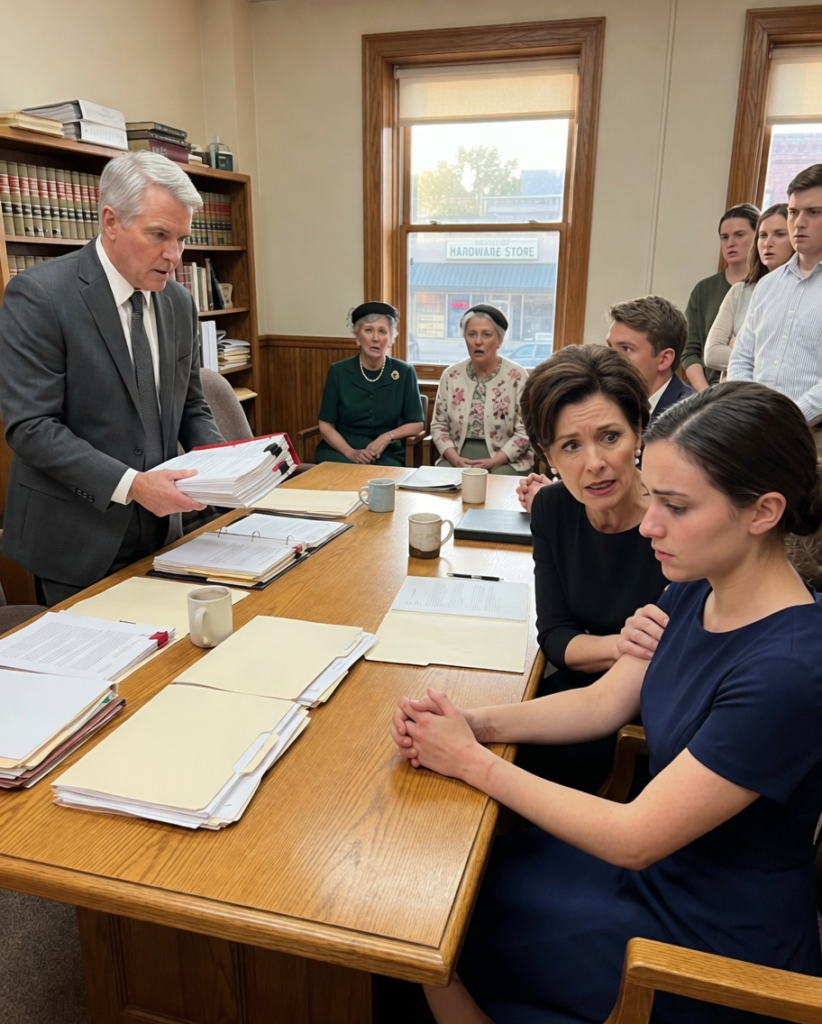
She said it in a lawyer’s office above the hardware store on Main Street, leaning across a polished oak table as if we were sharing a secret instead of a threat.
Her nails pressed into my skin.
Her perfume wrapped around the words.
And when I looked at her, really looked at her, what I saw beneath the anger was something I had almost never seen in Diane Meyers.
Fear.
I am Grace Meyers, twenty-eight years old, second-grade teacher at Milbrook Elementary, and that was the moment I understood my mother had not walked into that office certain.
She had walked in hoping the story she’d built for months would hold.
The story she had built was simple.
She had been the devoted daughter.
I had been the selfish granddaughter.
My grandmother, Elaine Whitfield, had been helpless, grateful, and too weak to question any of it.
The truth was uglier.
My grandmother had raised me in all the ways that mattered.
When my mother forgot parent-teacher meetings, Grandma showed up in a cardigan with lemon candies in her purse.
When I came home crying because some girl in middle school had told me my voice was too soft, Grandma sat me at her kitchen table, rolled out pie dough, and said, “Soft is not the same thing as weak.” When my mother treated affection like a reward for obedience, Grandma loved me like it was oxygen.
So when Elaine Whitfield called me six months before her death and said, in a thin, trembling voice, “Gracie, no matter what happens, I’ve taken care of it,” I knew something was wrong.
I had been sitting at my kitchen table grading spelling tests.
I remember because one of my students had spelled giraffe as jeraf, and I had just smiled to myself before my grandmother’s voice changed the temperature of the room.
I asked her what she meant.
She deflected.
Asked about my students.
Asked if I was eating enough.
Asked if the little boy who drew horses on every worksheet was still doing it.
She gave me scraps of normal conversation with the careful gentleness of someone trying not to alarm me while already alarmed herself.
The next morning, I called back.
My mother answered.
“Mom’s resting,” she snapped.
“Don’t call this number again.”
Then she hung up.
I called eleven times over the next week.
I kept tally marks on a yellow sticky note because after the fifth unanswered call I needed proof for myself that I wasn’t imagining the pattern.
Three calls went to voicemail.
Two were answered and disconnected.
The rest rang until the silence on the line felt deliberate.
On the eighth day, I drove to Maple Street.
My grandmother’s porch light was off.
That shook me before anything else did.
She kept it on every evening until ten, always.
“A house should look like it’s expecting someone,” she used to say.
I knocked.
No answer.
I knocked again, harder.
Finally the door opened, and there was Rick, my stepfather, filling the doorway in muddy work boots Grandma would have barked at him for wearing over her rug.
“Your mother said no visitors,” he told me.
“Elaine needs rest, not drama.”
I tried to look past him.
I smelled roast beef.
Furniture polish.
Lavender.
I saw the edge of the hallway table and the umbrella stand by the door.
I did not see my grandmother.
The next day, I called Mrs.
Patterson next door.
She sounded relieved to hear my voice, then uncomfortable.
“Your mother said Elaine was moved to Ridgewood,” she told me.
“I assumed you knew.”
But that night I drove by again, and through the curtain I saw the yellow-shaded lamp glowing in my grandmother’s bedroom.
She had not been moved anywhere.
My mother was keeping her in the house and keeping me out of it.
The months that followed were some of the most humiliating of my life.
There is a special kind of helplessness in knowing someone you love is close enough to drive to and still impossible to reach.
Every Sunday, I mailed Grandma a card.
I wrote about my class, the weather, the grocery store peaches that were all mealy that week, the science project that had exploded dirt all over my windowsill.
I wrote ordinary things because ordinary things were what our relationship had always been built on.
Small details.
Shared routines.
The comfort of being thought of.
I did not know if she received any of them.
The only time my mother called me during those three months was to discuss paperwork.
“Mom’s changing her estate documents,” she said.
“Focus on your little teaching job and let the adults handle this.”
My little teaching job.
Even then, even with my grandmother clearly declining, she could not resist making me feel lesser.
Smaller.
Easier to dismiss.
I looked into hiring an elder-law attorney.
I spent one night staring at websites and consultation fees until the numbers blurred.
The retainer one office quoted me was nearly two months of my rent.
I had suspicion, but not proof.
A locked door, a blocked call, a lie to the neighbors, and a twisting certainty that something rotten was happening behind closed curtains.
Then, late one night in November, I got a text from an unknown number.
Your grandmother is in hospice now.
She asks about you every day.
I’m sorry.
I can’t say more.
Please don’t give up on her.
I read that message so many times I could have recited it in my sleep.
The next morning, I tracked down the hospice through an old insurance contact Grandma had once made me copy on an index card.
When I found the building and walked in, the woman at the desk checked the visitor list, looked back up, and said my name was not authorized.
I stared at her, numb.
“I’m her granddaughter.”
She lowered her voice.
“I’m sorry.”
I went back to my car and cried so hard I gave myself a headache.
A few minutes later, a woman in scrubs came out the side entrance.
She looked exhausted.
She looked at me through the windshield with open sorrow and held my gaze just long enough for me to understand one thing.
Someone inside knew what was being done.
I would later learn her name was Nora Bennett.
At the funeral, my mother performed grief so expertly it made me sick.
She wore black silk, held tissues she barely used, and told everyone within earshot, “I was with her every day until the end.” She said it like proximity and love were interchangeable.
She said it as if keeping someone near you meant you had cared for them well.
People looked at me from the back pew with quiet judgment.
In a small town, silence fills quickly with whatever story reaches it first.
Then I felt a hand on my shoulder.
I turned and found the same nurse from the hospice parking lot.
“She talked about you every day,” she whispered.
Before I could ask her anything else, she was gone.
A week later, the law office emailed me the time for the will reading.
Before I finished the message, my phone rang.
My mother.
“You got the email?” she asked.
“Yes.”
“Then show up and keep quiet.”
I asked why.
She paused just long enough for her control to show a crack.
“Because I made sure of it.”
The night before the meeting, I sat on my bed with a shoebox of photographs.
There was one of Grandma at the county fair with one hand on my shoulder and flour still on her sleeve because we had baked before we left.
There was another of us on my graduation day, her smile wider than mine.
There was one on the porch swing where she had told me, after one of my mother’s cruel little tirades, “You have more spine than you think, Gracie.”
I repeated that sentence to myself the next afternoon as I climbed the narrow staircase to Howard Callahan’s office.
My mother was already there.
Hair perfect.
Black dress pressed.
Grandma’s pearl earrings in her ears.
That detail hit me harder than it should have.
It felt like theft disguised as tribute.
Rick sat beside her with his arms crossed.
Aunt Linda was near the end of the table, staring at her purse like she wished she could crawl into it.
Two women from Grandma’s church sat by the window pretending not to watch me.
At the head of the table sat Howard Callahan, silver-haired and unreadable, with two stacks of documents in front of him.
One clipped in blue.
One clipped in red.
I noticed the red clip immediately.
I could not have said why.
It just looked different from everything else in the room, like a warning light.
I took the last empty chair.
That was when my mother grabbed my wrist and whispered her threat.
I did not pull away.
Mr.
Callahan saw the marks she left.
Then he began to read the blue-clipped file.
The house on Maple Street to Diane Meyers.
The liquid savings accounts to Diane Meyers.
Jewelry and personal property at Diane’s discretion.
Rick’s expression loosened.
My mother actually looked peaceful by the end of the reading, as if she had already stepped into ownership.
Then she stood and delivered her final scene.
“I gave up everything to care for Mom,” she said, pressing a tissue to the corner of one dry eye.
“Grace didn’t even bother to visit once in those last three months.”
Rick nodded in grave support.
One of the church women looked down.
Aunt Linda’s eyes filled, but she said nothing.
And I felt, in one awful wave, the room starting to accept the lie.
Then Howard Callahan did not close the folder.
He set the blue stack aside and rested one hand on the red-clipped file.
My mother saw it.
I watched the exact second her certainty faltered.
“There is an amendment to this will,” he said, “filed three days before Elaine Whitfield died.”
My mother let out a thin, humorless laugh.
“That’s impossible.”
Mr.
Callahan turned a page.
“Your mother left written instructions that the prior draft be read first if, and I quote, ‘my daughter arrives already wearing victory.’”
Aunt Linda made a small choking sound.
Mr.
Callahan continued.
“Mrs.
Whitfield also instructed that if Diane claimed Grace abandoned her, I was to call in a witness waiting downstairs.”
He nodded toward the door.
Nora Bennett stepped in carrying a manila envelope and a small silver recorder.
“My name is Nora Bennett,” she said evenly.
“I was Elaine Whitfield’s night nurse.”
My mother stood up so fast her chair legs scraped the floor.
“This is absurd.”
Nora ignored her and placed the envelope in front of Mr.
Callahan.
He opened it and spread the contents across the table.
My Sunday cards.
Every single one.
Sunflower stamps.
Blue ink.
My handwriting.
Most unopened.
I stared at them, unable to breathe.
Nora finally looked at my mother.
“Elaine told me her daughter had been withholding Grace’s mail.
She also told me where it was hidden.
Mr.
Callahan recovered these when he came to the hospice for the codicil signing.”
The room changed shape around those words.
Nothing was abstract anymore.
There was evidence now.
Paper.
Postmarks.
Dates.
“Elaine requested Grace every day,” Nora said.
“Every day.
She was told Grace was too busy, Grace had moved on, Grace chose not to come.
Elaine did not believe it.”
My mother’s face hardened.
“She was confused.”
Howard Callahan slid another page forward.
“That is why the codicil includes a competency certification from Dr.
Shah, two witness affidavits, and a personal statement from Elaine Whitfield recorded the same afternoon.”
He lifted the recorder.
On a strip of masking tape in my grandmother’s neat handwriting were the words: Play this if Diane lies.
The silence that followed was so complete I could hear the old radiator tick.
Mr.
Callahan pressed play.
My grandmother’s voice filled the room.
Frail, yes.
But clear.
“If this recording is being played,” she said, “then Diane has told people Grace abandoned me.
That is not true.
Grace called.
Grace came to the house.
Grace tried to visit me.
She wrote to me.
Diane kept her away.”
I put my hand over my mouth.
Grandma continued, breathing carefully between sentences.
“I did not raise my granddaughter to believe silence means guilt.
If she is hearing this, I want her to know I knew.
I always knew.”
My mother made a noise then, something between outrage and panic, but Howard held up one hand and let the recording continue.
“No one who isolates a dying woman from the person she asks for every day should be rewarded for it,” Grandma said.
“This amendment reflects my final wishes.”
The recorder clicked off.
Nobody looked at my mother anymore.
They looked at the table, at the cards, at me, at anything except the woman who had just been caught dismantling her own story in public.
Howard read the codicil.
Diane was removed as executor immediately.
The house on Maple Street passed to me.
Elaine’s personal letters, recipe boxes, jewelry, and household contents passed to me, except for a cedar chest and two quilts she left to Aunt Linda.
A portion of her brokerage account was designated to create the Elaine Whitfield Reading Fund for Milbrook Elementary so children who needed books could take them home without paperwork or embarrassment.
And Diane Meyers was left five dollars.
Nothing else.
Not the house she thought she had secured.
Not the savings she had circled like prey.
Not the jewelry she had already started wearing.
In fact, Howard added in the same calm voice he had used all afternoon, the pearl earrings currently in her ears remained part of the estate inventory and were to be surrendered before she left or returned within twenty-four hours.
Aunt Linda actually laughed through her tears at that.
My mother turned on me then.
“You did this.”
The accusation was so wild, so desperate, that for the first time it did not pierce me.
It only revealed her.
I looked at her and saw not power, not authority, not even motherhood.
I saw a woman who had mistaken control for love for so long that she had forgotten there was a difference.
“No,” I said quietly.
“Grandma did.”
Rick stood, but not to defend her.
He stepped back from the table and rubbed a hand over his face like a man realizing the floor beneath him was less stable than he had assumed.
One of the church women asked in a broken voice whether Elaine had really asked for me that often.
Nora answered, “Every single day.”
My mother threatened to contest the will.
Howard informed her that the codicil contained a no-contest clause, that the competency documentation was airtight, and that the hospice records reflected interference with visitation.
If she chose to litigate, she would be spending money she no longer had a claim to while drawing more attention to conduct already documented.
For the first time that day, Diane had no line ready.
The meeting ended without drama because the drama had already happened.
On the stairs outside, Nora stopped me.
Up close, she looked as tired as she had in the parking lot, but gentler.
“I sent the text,” she said.
“I’m sorry I couldn’t do more sooner.
She asked me not to risk getting barred until the codicil was signed.
She was afraid your mother would move her before Howard got there.”
I nodded because if I had tried to speak, I would have started crying again.
Nora handed me one last envelope.
Elaine’s handwriting.
I did not open it until I was sitting on the porch swing at Maple Street three days later, after the locks had been changed, after Aunt Linda had helped me inventory the house, after my mother had returned the pearl earrings in a padded mailer without a note.
Inside was a letter written in the shaky but unmistakable hand I had known since childhood.
Gracie,
If you are reading this, then I ran out of time to say all this to your face.
I am sorry for that.
I am sorrier still that I could not stop every hurt before it reached you.
But I could stop one thing.
I could stop Diane from rewriting our ending.
You did not abandon me.
I knew you were trying.
I knew because love leaves traces, and yours was everywhere.
The cards.
The calls.
The knocking at the door.
The porch after dark.
You have more spine than you think.
Use it to build a life, not just survive one.
Love always,
Grandma
I cried harder over that letter than I had cried at the funeral.
Maybe because grief finally had room now that shame had been pulled out of it.
In the months that followed, the town corrected itself in that clumsy, embarrassed way towns do.
The women from church stopped me after Sunday services to say they were sorry.
Aunt Linda helped me repaint the back bedroom.
I fixed the porch light and put it on every evening until ten.
At school, the first shelves of the Elaine Whitfield Reading Fund went up in my classroom, and the children treated the new books like treasure.
My mother called twice.
I let both calls ring out.
Money did not make anything clean.
The house did not erase the fact that I lost the chance to sit by my grandmother’s bed and hold her hand at the end.
There is no legal document on earth powerful enough to give someone that back.
But what my grandmother left me was bigger than property.
She left me proof.
She left me the truth in a room full of people who had nearly believed the lie.
She protected me one last time, not by giving me more, but by refusing to let my mother decide who I had been to her.
Sometimes, late at night on the porch swing, I still think about how close Diane came to getting away with it.
How easily love can be cut off, then repackaged as neglect by the person holding the scissors.
I think about whether some people deserve forgiveness just because they ask for it, or whether the bigger mercy is simply refusing to carry what they tried to put on you.
I still do not know the full answer to that.
I only know that every night, just before ten, the porch light glows across Maple Street like my grandmother is still expecting someone—and in a way, she is.
She is expecting me to keep standing up straight in the life she fought to hand back to me. just been caught dismantling her own story in public.
Howard read the codicil.
Diane was removed as executor immediately.
The house on Maple Street passed to me.
Elaine’s personal letters, recipe boxes, jewelry, and household contents passed to me, except for a cedar chest and two quilts she left to Aunt Linda.
A portion of her brokerage account was designated to create the Elaine Whitfield Reading Fund for Milbrook Elementary so children who needed books could take them home without paperwork or embarrassment.
And Diane Meyers was left five dollars.
Nothing else.
Not the house she thought she had secured.
Not the savings she had circled like prey.
Not the jewelry she had already started wearing.
In fact, Howard added in the same calm voice he had used all afternoon, the pearl earrings currently in her ears remained part of the estate inventory and were to be surrendered before she left or returned within twenty-four hours.
Aunt Linda actually laughed through her tears at that.
My mother turned on me then.
“You did this.”
The accusation was so wild, so desperate, that for the first time it did not pierce me.
It only revealed her.
I looked at her and saw not power, not authority, not even motherhood.
I saw a woman who had mistaken control for love for so long that she had forgotten there was a difference.
“No,” I said quietly.
“Grandma did.”
Rick stood, but not to defend her.
He stepped back from the table and rubbed a hand over his face like a man realizing the floor beneath him was less stable than he had assumed.
One of the church women asked in a broken voice whether Elaine had really asked for me that often.
Nora answered, “Every single day.”
My mother threatened to contest the will.
Howard informed her that the codicil contained a no-contest clause, that the competency documentation was airtight, and that the hospice records reflected interference with visitation.
If she chose to litigate, she would be spending money she no longer had a claim to while drawing more attention to conduct already documented.
For the first time that day, Diane had no line ready.
The meeting ended without drama because the drama had already happened.
On the stairs outside, Nora stopped me.
Up close, she looked as tired as she had in the parking lot, but gentler.
“I sent the text,” she said.
“I’m sorry I couldn’t do more sooner.
She asked me not to risk getting barred until the codicil was signed.
She was afraid your mother would move her before Howard got there.”
I nodded because if I had tried to speak, I would have started crying again.
Nora handed me one last envelope.
Elaine’s handwriting.
I did not open it until I was sitting on the porch swing at Maple Street three days later, after the locks had been changed, after Aunt Linda had helped me inventory the house, after my mother had returned the pearl earrings in a padded mailer without a note.
Inside was a letter written in the shaky but unmistakable hand I had known since childhood.
Gracie,
If you are reading this, then I ran out of time to say all this to your face.
I am sorry for that.
I am sorrier still that I could not stop every hurt before it reached you.
But I could stop one thing.
I could stop Diane from rewriting our ending.
You did not abandon me.
I knew you were trying.
I knew because love leaves traces, and yours was everywhere.
The cards.
The calls.
The knocking at the door.
The porch after dark.
You have more spine than you think.
Use it to build a life, not just survive one.
Love always,
Grandma
I cried harder over that letter than I had cried at the funeral.
Maybe because grief finally had room now that shame had been pulled out of it.
In the months that followed, the town corrected itself in that clumsy, embarrassed way towns do.
The women from church stopped me after Sunday services to say they were sorry.
Aunt Linda helped me repaint the back bedroom.
I fixed the porch light and put it on every evening until ten.
At school, the first shelves of the Elaine Whitfield Reading Fund went up in my classroom, and the children treated the new books like treasure.
My mother called twice.
I let both calls ring out.
Money did not make anything clean.
The house did not erase the fact that I lost the chance to sit by my grandmother’s bed and hold her hand at the end.
There is no legal document on earth powerful enough to give someone that back.
But what my grandmother left me was bigger than property.
She left me proof.
She left me the truth in a room full of people who had nearly believed the lie.
She protected me one last time, not by giving me more, but by refusing to let my mother decide who I had been to her.
Sometimes, late at night on the porch swing, I still think about how close Diane came to getting away with it.
How easily love can be cut off, then repackaged as neglect by the person holding the scissors.
I think about whether some people deserve forgiveness just because they ask for it, or whether the bigger mercy is simply refusing to carry what they tried to put on you.
I still do not know the full answer to that.
I only know that every night, just before ten, the porch light glows across Maple Street like my grandmother is still expecting someone—and in a way, she is.
She is expecting me to keep standing up straight in the life she fought to hand back to me.