Part 2
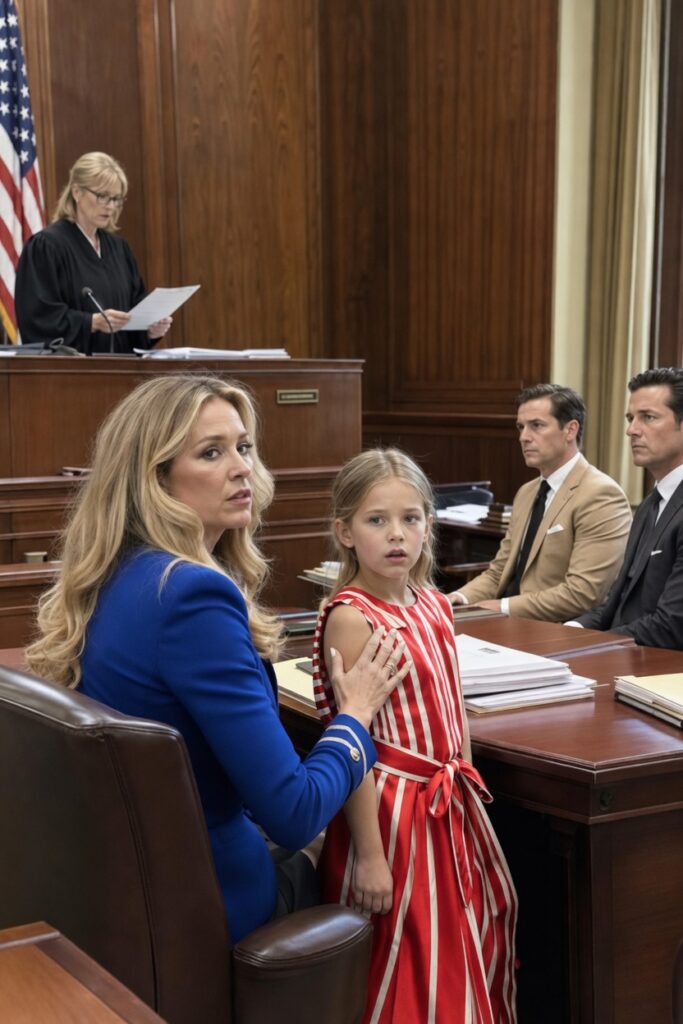
“Before this court makes a final ruling on custody,” the judge said, her voice steady enough to make every whisper behind us die, “we need to address what Ms. Whitaker documented about the man who just spoke in this courtroom… because the first line of her statement reads—”
She looked down.
Then she read it aloud.
“If this letter is being opened in the presence of Daniel Reeves, then he has finally run out of rooms where he can hide what he is.”
For one suspended second, no one moved.
Not the clerk.
Not the attorneys.
Not the bailiff near the door.
Not my husband.
Daniel’s face had gone perfectly still, the way water stills before something breaks the surface.
“That’s absurd,” he said.
But the words had less force now.
Less arrogance.
The judge continued, “Ms. Whitaker goes on to state that she first became aware of Mr. Reeves two years ago, after witnessing an incident involving Mrs. Reeves and the minor child outside Westbrook Pediatric Clinic.”
My heart stopped.
Westbrook.
I remembered that day.
Lily had been six, feverish and miserable, leaning against me in the parking lot with one mitten missing. Daniel had driven us there because my car battery had died. He had been angry about missing a client lunch.
I remembered his hand closing around my arm near the passenger door.
Not enough to bruise where anyone could easily see.
Just enough to remind me.
I remembered Lily crying.
I remembered looking across the parking lot and seeing an elderly woman sitting in a black sedan, watching.
I had forgotten her.
Or maybe I had forced myself to.
The judge’s voice softened, but only slightly. “Ms. Whitaker states she observed Mr. Reeves grab his wife, shake her, and tell the child, quote, ‘This is what happens when your mother makes me look bad.’”
Daniel’s chair scraped backward.
“That is a lie.”
“Sit down,” the judge said.
“I said that’s a lie.”
The bailiff stepped forward.
Daniel looked at him, then at the judge, then slowly lowered himself back into the chair. His lawyer put one hand on his sleeve, whispering urgently, but Daniel jerked away.
I stared at the table.
The groove in the varnish blurred.
Lily’s small body pressed closer to mine.
She remembered too.
That was the part people never understood.
Children remembered.
Not always in full sentences.
Sometimes they remembered in flinches, in stomachaches, in refusing to speak when a man raised his voice in a grocery store aisle.
The judge turned another page.
“Ms. Whitaker further states that after this incident, she became concerned for the welfare of Mrs. Reeves and the child. She made discreet inquiries through legal counsel and subsequently learned of several public and private business disputes involving Mr. Reeves.”
Daniel’s lawyer stood. “Your Honor, I must object to the inclusion of untested allegations by a deceased third party. We have no opportunity to cross-examine—”
“You will sit down, Mr. Harris,” the judge said, “until I finish explaining why this statement was admitted under seal.”
The attorney froze.
Then he sat.
The judge folded her hands over the page. “This is not being considered in isolation. It accompanies bank records, signed affidavits, contemporaneous notes, email correspondence, photographs, and recordings obtained lawfully and submitted by counsel for Ms. Whitaker’s estate.”
Daniel’s breathing changed.
I heard it.
A sharp inhale.
A trapped sound.
His lawyer heard it too.
For the first time all morning, Mr. Harris looked not annoyed, not smug, but alarmed.
The judge looked at me again.
“Mrs. Reeves, were you aware Ms. Whitaker had named you as beneficiary of her estate?”
My throat tightened.
“No, Your Honor.”
“Were you aware she had been collecting documentation regarding your husband?”
“No.”
Daniel let out a bitter laugh.
“Of course she wasn’t. Because this is insane.”
The judge’s eyes snapped to him. “One more outburst, Mr. Reeves, and you will be removed from this courtroom.”
His jaw flexed.
But he said nothing.
The judge looked back to me. “Did you know Eleanor Whitaker personally?”
I swallowed.
“Yes, Your Honor.”
“Please explain.”
I felt every eye in the courtroom move toward me.
For years, I had learned to make myself smaller when people watched. Daniel had trained that into me without ever admitting he was training anything.
Don’t embarrass me.
Don’t talk too much.
Don’t correct me in public.
Don’t make people uncomfortable.
Don’t act like a victim.
But Eleanor Whitaker was dead.
And somehow, impossibly, she had still found a way to stand beside me.
So I lifted my head.
“I met her at the library,” I said. “About eighteen months ago. Lily and I went every Wednesday after school. Mrs. Whitaker attended the afternoon book club there. She liked Lily.”
Lily’s fingers tightened again.
“She always brought butterscotch candies,” I continued. “She said they were terrible for her teeth and excellent for her mood.”
A faint smile touched the judge’s mouth, then disappeared.
“She was kind,” I said. “But I didn’t know she was wealthy. I didn’t know anything about her estate. She told me she had no close family left.”
Family
Daniel muttered something under his breath.
The judge ignored him.
“Did she ever discuss your marriage with you?”
I hesitated.
Because this was the place where truth became dangerous.
Not dangerous because it was false.
Dangerous because it was real.
“She asked me once if I had somewhere safe to go,” I said.
The courtroom was silent.
“I told her I was fine.”
The words came out hollow.
Everyone in that room knew what they meant.
Women like me had said I’m fine with bruises under sleeves, with emergency cash hidden in tampon boxes, with children sleeping in beds they didn’t want to leave because at least the monster in the house was predictable.
The judge nodded slowly. “And were you fine, Mrs. Reeves?”
My eyes burned.
I could feel Daniel looking at me.
I could feel him warning me without speaking.
But his power was thinner now.
Like ice under too much weight.
“No, Your Honor,” I said. “I was not.”
Lily’s face turned into my side.
The judge let the silence settle.
Then she continued reading.
“Ms. Whitaker’s statement says she attempted to offer help on multiple occasions, but Mrs. Reeves declined. She believed Mrs. Reeves was afraid of retaliation.”
Daniel slammed his palm against the table.
“That old woman was unstable!”
The bailiff moved instantly.
“Mr. Reeves,” the judge said.
“No, I’m serious. You’re letting some dead stranger destroy my life?”
“Your life,” the judge said coldly, “is not the issue before this court. Your daughter’s safety is.”
At that word—daughter—Daniel looked briefly at Lily.
Not with love.
With calculation.
Like she had become another asset slipping from his reach.
The judge turned another page. “Ms. Whitaker also retained a private investigator after observing Mr. Reeves at the library parking lot on March seventeenth of last year.”
My stomach twisted.
March seventeenth.
I remembered rain.
I remembered Daniel parked across the street from the library when he was supposed to be in Chicago.
I remembered him asking later why Lily smelled like crayons.
Why my coat was damp.
Why I had been out longer than I said.
I had thought I was losing my mind.
I had thought fear had made me paranoid.
The judge continued, “The investigator documented repeated surveillance of Mrs. Reeves, including monitoring her vehicle, following her to the grocery store, and photographing her meeting with a domestic violence advocate.”
A sound escaped me before I could stop it.
Not a sob.
Not quite.
More like my body recognizing the truth before my mind could decide what to do with it.
Daniel had known.
He had known about the advocate.
That was why he had been so calm that night when I came home.
That was why he had cooked dinner.
That was why he had poured me wine and asked, “Make any new friends today?”
That was why, two days later, my emergency folder disappeared from the back of the linen closet.
My birth certificate.
Lily’s social security card.
The copy of our marriage license.
Gone.
And when I asked him about it, he looked wounded.
“Why would I touch your things?”
Then he didn’t speak to me for three days.
Which, at the time, had felt like peace.
The judge’s voice became firmer. “The court has also received documentation that Mr. Reeves transferred funds from marital accounts into shell entities during the pendency of this divorce, despite standing orders prohibiting dissipation of assets.”
Mr. Harris closed his eyes.
Just for a second.
But I saw it.
So did Daniel.
“You said that couldn’t be traced,” Daniel hissed.
His lawyer went pale.
The judge heard him.
Everyone heard him.
The clerk stopped typing again.
Daniel realized what he had done.
The courtroom seemed to lean toward him.
Mr. Harris stood immediately. “Your Honor, I request a recess to confer with my client.”
“Denied for the moment,” the judge said.
“Your Honor—”
“I said denied.”
Daniel was breathing through his nose now, fast and shallow.
The judge turned to the bailiff. “Please bring in the estate attorney.”
The side door opened.
A tall woman in a navy suit entered carrying a leather folder. Her silver hair was pinned low at her neck, and her eyes were sharp in a way that reminded me of Eleanor.
She walked with the calm of someone who had come prepared for a storm.
“State your name for the record,” the judge said.
“Margaret Vale, counsel for the estate of Eleanor Ruth Whitaker.”
Daniel stared at her.
Ms. Vale did not look at him.
Not once.
The judge said, “Ms. Vale, are you prepared to authenticate the documents submitted this morning?”
“I am, Your Honor.”
“And you confirm the beneficiary designation naming Mrs. Clara Reeves was executed while Ms. Whitaker was of sound mind?”
“I do. Two physicians certified her capacity. The execution was witnessed, recorded, and notarized.”
Daniel’s lawyer rose again. “We will contest that.”
Ms. Vale finally looked at him.
“Of course you will,” she said. “Mrs. Whitaker expected that.”
A ripple moved through the courtroom.
The judge gave Ms. Vale a warning look.
Ms. Vale bowed her head slightly. “My apologies, Your Honor.”
But she did not sound sorry.
The judge asked, “Can you explain why Ms. Whitaker chose Mrs. Reeves as beneficiary?”
Ms. Vale opened her folder.
“Mrs. Whitaker had no surviving spouse, siblings, or children. Her only daughter, Amelia Whitaker, died twenty-seven years ago.”
Daniel’s expression flickered.
So quickly most people might have missed it.
But I had spent eleven years reading the smallest changes in his face.
He knew that name.
Amelia.
He knew it.
Ms. Vale continued, “Amelia was engaged to a man who isolated her from friends, controlled her money, and used threats to keep her from leaving. Mrs. Whitaker failed to recognize the pattern until it was too late.”
The courtroom became so quiet I could hear the hum of the lights overhead.
“After Amelia’s death,” Ms. Vale said, “Mrs. Whitaker spent the remainder of her life funding shelters, legal aid programs, and private relocation assistance for women and children escaping domestic abuse.”
My heart hurt.
Not from fear this time.
From grief.
From gratitude.
From the terrible knowledge that kindness often came from wounds no one saw.
“Mrs. Whitaker believed Mrs. Reeves and Lily were in danger,” Ms. Vale said. “She wrote that if Mrs. Reeves would not accept help while she was alive, then Mrs. Whitaker intended to leave her the means to become unreachable after her death.”
My hand flew to my mouth.
Lily looked up at me.
“Mommy?” she whispered.
I bent and kissed her hair.
“I’m here,” I whispered back. “I’m right here.”
The judge nodded to Ms. Vale. “And the sealed statement?”
Ms. Vale’s jaw tightened. “Mrs. Whitaker recorded it two weeks before her passing. She requested that it be submitted only if Mr. Reeves sought custody or attempted to portray Mrs. Reeves as financially unstable.”
Daniel’s attorney looked down at his notes.
Because that was exactly what they had done.
Page after page.
Motion after motion.
Clara lacks stable income.
Clara is emotionally fragile.
Clara has no independent residence.
Clara has attempted to alienate the minor child.
Clara is dependent on Daniel Reeves for financial support.
Each sentence had felt like a stone placed on my chest.
And Eleanor, from somewhere beyond the grave, had removed them one by one.
The judge asked, “Does the recording contain information relevant to the minor child’s welfare?”
“Yes, Your Honor.”
“Play it.”
Daniel stood.
“No.”
The bailiff stepped closer.
Daniel pointed at me.
“You did this.”
I stared at him.
For the first time in years, I did not look away.
“No,” I said quietly. “You did.”
His face twisted.
There he was.
Not the polished businessman.
Not the charming husband.
Not the father who smiled in Christmas photos with one hand pressed too tightly on my shoulder.
Just Daniel.
Bare and furious.
“You think money makes you safe?” he said. “You think some dead woman’s charity changes what you are?”
The judge’s voice cracked across the room. “Remove him if he speaks again.”
Daniel’s mouth shut.
But his eyes stayed on me.
Ms. Vale handed a small device to the clerk. The clerk connected it.
A moment later, Eleanor Whitaker’s voice filled the courtroom.
Thin with age.
But clear.
“My name is Eleanor Ruth Whitaker. I am making this statement on the seventeenth day of August. I am eighty-one years old, dying, and very tired of men like Daniel Reeves being believed because they own better suits than the women they destroy.”
A few people behind me inhaled sharply.
Eleanor continued.
“I first saw Clara Reeves in a pediatric clinic parking lot. Her husband had his hand on her arm, and she was trying not to frighten her child. I knew that look. My Amelia wore it for three years before she died.”
My tears spilled then.
Silent and hot.
“I followed Clara at a distance after that—not because I wished to intrude, but because cowards like Daniel Reeves thrive in privacy. I watched. I documented. I paid professionals to document what I could not. What we found was not one bad day. It was a pattern.”
Daniel’s face had gone gray.
The recording went on.
“He followed her. He intercepted her mail. He removed documents from their home. He transferred marital funds. He instructed an employee to alter business ledgers to reduce visible income during divorce proceedings. That employee later contacted my investigator and provided copies.”
Mr. Harris turned to Daniel.
Daniel did not look at him.
The judge’s face remained unreadable.
Eleanor’s voice grew weaker, but sharper.
“Most troubling, however, was what I witnessed on June ninth. I was parked outside the Reeves residence after receiving word that Clara intended to leave that week. I saw Daniel Reeves carry a suitcase from the trunk of Clara’s car into the garage. I later learned Clara believed she had misplaced it. The suitcase contained clothing and documents for herself and Lily.”
The room tilted.
I remembered that suitcase.
Blue.
One wheel broken.
I had packed it while Daniel was at work.
Three outfits for me.
Four for Lily.
Her stuffed rabbit.
Cash from grocery money.
A burner phone I never got to use.
I had searched for it for two hours that night while Lily sat on the stairs with her backpack on.
Then Daniel came home early.
He found us there.
He smiled.
“What’s all this?”
And I unpacked Lily’s backpack with shaking hands while he watched.
The recording continued.
“Later that evening, audio captured by my investigator from the public sidewalk recorded Mr. Reeves shouting inside the home. I will not repeat every word here. The court has the transcript. But I will say this: a man who tells a child that her mother will disappear if she disobeys him should not be trusted with that child.”
Lily went rigid.
Her face was buried against me, but I felt her stop breathing for a second.
The judge saw.
Her eyes softened.
Then Eleanor said the words that changed everything.
“I am leaving my estate to Clara Reeves not because she is weak, but because she survived. I am leaving it to her because her daughter deserves a life where love does not sound like footsteps in a hallway. And I am submitting this statement because Daniel Reeves will try to take the child when he can no longer control the mother.”
The recording clicked off.
No one spoke.
Then Lily whispered, so softly I barely heard it, “She knew.”
I held her tighter.
“Yes, baby,” I said. “She knew.”
The judge removed her glasses and set them on the bench.
For a long moment, she looked at Daniel.
When she spoke, her voice had changed.
Not louder.
Not emotional.
But final.
“Mr. Reeves, based on the evidence submitted today, this court has serious concerns regarding your credibility, your compliance with financial disclosure obligations, and your conduct toward both Mrs. Reeves and the minor child.”
Daniel’s attorney rose slowly. “Your Honor, we request a continuance to review and respond.”
“You will have time to respond to the financial allegations,” the judge said. “But custody requires immediate action.”
Daniel leaned forward. “She’s my daughter.”
Lily flinched.
The judge saw that too.
“Yes,” the judge said. “And that makes your conduct more serious, not less.”
She turned to me.
“Mrs. Reeves, do you currently have safe housing?”
Before today, the answer would have humiliated me.
No.
Not truly.
I had been staying in a month-to-month rental above a closed florist shop, where the pipes groaned at night and the lock stuck when it rained.
But now Eleanor’s gift stood between me and every locked door Daniel had ever built around my life.
“I can arrange it, Your Honor,” I said.
Ms. Vale stepped forward. “The estate has already secured temporary housing in Mrs. Reeves’s name, at Ms. Whitaker’s instruction. The address has not been disclosed to Mr. Reeves or his counsel.”
Daniel’s head snapped toward her.
“You can’t do that.”
Ms. Vale’s expression did not change. “We did.”
The judge nodded. “The address will remain sealed.”
Daniel laughed again, but it cracked in the middle.
“This is kidnapping.”
“No,” the judge said. “This is protection.”
Then she issued the order.
Temporary sole legal and physical custody to me.
Supervised visitation for Daniel, pending further review.
No direct contact with me except through attorneys.
No contact with Lily outside court-approved supervision.
No access to our location.
Immediate forensic accounting of all marital and business assets.
Referral to the district attorney’s office for review of possible perjury, financial misconduct, witness intimidation, and coercive control.
Each sentence landed like a door closing.
Not on me.
On him.
Daniel stood there as the judge spoke, and for the first time since I had known him, he looked small.
Not harmless.
Never harmless.
But smaller.
A man whose power had depended on everyone agreeing to look away.
And today, no one did.
When the judge finished, she looked directly at Lily.
Her voice softened.
“Young lady, none of what happened in this courtroom is your fault.”
Lily lifted her face.
Her cheeks were wet.
The judge continued, “Adults are responsible for how they speak and how they behave. Children are never responsible for keeping adults calm.”
A sob broke out of Lily then.
I pulled her into my lap even though she was almost too big for it.
The judge gave us a few moments.
Daniel watched, expression hardening.
I knew that look.
He was not finished.
Men like Daniel rarely were.
But something fundamental had changed.
He could still be cruel.
He could still be angry.
He could still try.
But he was no longer the only person in the room with weapons.
We had truth now.
We had record.
We had help.
We had Eleanor.
The hearing ended with the bang of the gavel.
The sound should have frightened me.
Instead, it felt like a lock turning open.
Outside the courtroom, Daniel tried one last time.
The bailiff was walking him toward a side exit when he twisted around and called my name.
“Clara.”
I stopped before I could help it.
His voice softened.
That old voice.
The one he used after breaking things.
After screaming.
After making me apologize for bleeding on the rug.
“Clara, don’t do this,” he said. “You’re confused. People are using you. We can fix this.”
For half a heartbeat, my body believed him.
That was the worst part.
Some frightened, trained part of me still wanted to step toward the familiar cage because at least I knew where the bars were.
Then Lily’s hand slipped into mine.
Small.
Warm.
Trusting.
And I remembered Eleanor’s voice.
Her daughter deserves a life where love does not sound like footsteps in a hallway.
I looked at Daniel.
“No,” I said.
His face changed.
“You’ll regret this.”
The bailiff tightened his grip.
I did not answer.
I turned away.
Ms. Vale was waiting near the elevator.
Up close, I saw the tiredness around her eyes.
Not weakness.
History.
She handed me an envelope.
“Mrs. Whitaker asked me to give you this after the custody order.”
My hands shook as I took it.
On the front, in slanted blue handwriting, was my name.
Clara.
Not Mrs. Reeves.
Not Daniel’s wife.
Clara.
I could not open it there.
Not in the courthouse hallway, with lawyers passing and Daniel’s voice still echoing somewhere behind me.
Ms. Vale seemed to understand.
“There is a car downstairs,” she said. “It will take you and Lily to the temporary residence. Security has swept it. New locks, cameras, and a protection team for the first week. After that, we can reassess.”
I blinked at her.
“That’s too much.”
“No,” she said gently. “It is not.”
I looked down at Lily.
She was staring at Ms. Vale with wide eyes.
“Is there a bed?” Lily asked.
Ms. Vale’s face softened.
“Yes.”
“Can my mom sleep there too?”
Something in me broke.
Ms. Vale crouched slightly. “There are several beds. But you can choose whatever makes you feel safest tonight.”
Lily considered this seriously.
“Can I bring Rabbit?”
“Rabbit is already in the car,” Ms. Vale said.
Lily gasped. “How?”
“Mrs. Whitaker was very thorough.”
For the first time that day, my daughter smiled.
It was small.
Fragile.
But real.
And I nearly sank to the courthouse floor from the force of it.
The house was not a mansion.
That surprised me.
Some part of me had expected Eleanor’s money to look like marble floors and cold rooms.
Instead, the car took us to a quiet white cottage at the end of a tree-lined street twenty minutes outside town. It had blue shutters, a porch swing, and a garden gone a little wild with lavender and rosemary.
Inside, the air smelled faintly of lemon polish and old books.
Lily walked from room to room holding Rabbit against her chest.
There was a yellow bedroom with a quilt folded at the foot of the bed.
A kitchen with copper pots hanging above the island.
A living room with shelves full of children’s books, novels, and framed photographs of people I did not know.
On the dining table sat a vase of fresh tulips.
Beside it was a note from Ms. Vale.
Groceries in the refrigerator. Security system code written inside the pantry door. Call anytime.
Lily touched the quilt in the yellow room.
“Is this mine?”
“For now,” I said.
She looked at me carefully.
“For how long?”
I knelt in front of her.
I wanted to promise forever.
I wanted to tell her no one would ever scare us again.
But children who have lived with fear deserve truth more than fantasy.
“For tonight,” I said. “And tomorrow. And we’ll figure out the rest together.”
She nodded.
Then she whispered, “Can he find us?”
“No.”
“Do you promise?”
I took both her hands.
“I promise that I will do everything in my power to keep you safe. And now there are other people helping me.”
She searched my face.
Children know when adults lie.
Finally, she leaned into me.
“Okay.”
That night, Lily fell asleep in my bed with Rabbit tucked under her chin.
I stayed awake beside her long after the house went quiet.
The envelope from Eleanor sat on the nightstand.
Clara.
I stared at it until my vision blurred.
Then, carefully, I opened it.
Inside was a letter written on thick cream paper.
My dear Clara,
If you are reading this, then I am gone, and I was too late to tell you all of this properly.
Forgive me.
You reminded me of my daughter the first time I saw you, and for a while I hated that. Not you. Never you. I hated that the world had made another woman carry the same expression.
The one that says: please do not notice me, because noticing me may make things worse.
I wanted to help you immediately.
But women in cages do not always run when someone opens the door. Sometimes they are too tired. Sometimes they are protecting a child. Sometimes they have been told for so long that the cage is their fault that freedom looks suspicious.
So I waited nearby.
I am sorry for the intrusion. I am not sorry for the evidence.
You may feel that this money is too much. You may feel unworthy of it. You may tell yourself that other women deserve it more.
Do not insult my final wishes by arguing with a dead woman.
I laughed through tears.
The page trembled in my hands.
Eleanor continued:
This money is not a reward for suffering. Suffering is not noble. It is not a test women must pass to earn peace.
This money is a tool.
Use it to build a life where your daughter learns the difference between love and ownership.
Use it to hire excellent lawyers.
Use it to sleep.
Use it to become boringly, beautifully safe.
And when you are ready—not before—use some of it to open doors for someone else.
Not because you owe me.
Because one day you will recognize that look on another woman’s face, and you will know what it means.
Live, Clara.
That will be thanks enough.
Eleanor
I pressed the letter to my chest and cried without covering my mouth.
For the first time in years, I did not worry who might hear.
Months passed.
Not easily.
Freedom, I learned, was not a single door opening.
It was a hallway of doors.
Some stuck.
Some terrified me.
Some led to rooms I did not know how to stand in yet.
Daniel contested everything.
Of course he did.
He claimed Eleanor had been manipulated.
He claimed I had seduced a lonely old woman for money.
He claimed the recordings were fabricated, the investigator biased, the financial records misunderstood.
Then the forensic accountant found three hidden accounts.
Then Daniel’s former employee produced emails.
Then the private investigator testified.
Then the domestic violence advocate confirmed I had come to her office, shaking so badly she had offered to call emergency services.
Then Lily’s therapist submitted a report.
Not full of dramatic accusations.
Just the quiet, devastating language of trauma.
Hypervigilance.
Sleep disruption.
Fear response to male anger.
Protective attachment to mother.
Anxiety related to unsupervised paternal contact.
Daniel hated that report most of all.
Because he could dismiss me as bitter.
He could dismiss Eleanor as unstable.
He could dismiss lawyers as greedy.
But he could not charm his way through Lily’s nightmares.
At the final custody hearing six months later, Daniel arrived in a darker suit and a humbler expression.
He had learned the costume of remorse.
He spoke softly.
He said therapy had helped him understand how “stress” had affected his behavior.
He said he loved his daughter.
He said he wanted healing.
I listened.
My hands were folded in my lap.
They did not shake.
Not because I was unafraid.
Because fear no longer made my decisions for me.
When it was my turn to speak, I stood.
The judge was the same woman.
Rimless glasses.
Steady expression.
But this time, I did not stare at the table.
I looked at her.
“For years,” I said, “I thought being a good mother meant keeping the peace. I thought if I could keep Daniel calm, Lily would be safe. But children do not feel safe because the dangerous person is temporarily calm. They feel safe when the danger is gone.”
Daniel stared straight ahead.
“I am not asking the court to punish him for being a bad husband,” I continued. “I am asking the court to protect Lily from a pattern of control and fear that has already shaped too much of her childhood.”
My voice cracked once.
I let it.
Then I finished.
“She deserves to grow up without learning how to disappear inside herself to survive someone else’s anger.”
When I sat, Lily’s therapist squeezed my shoulder.
The judge issued her final ruling that afternoon.
Sole legal and physical custody to me.
Therapeutic supervised visitation for Daniel, contingent on sustained compliance with counseling, financial restitution, and no further violations of protective orders.
No overnight visitation.
No unsupervised contact unless recommended by Lily’s therapist and approved by the court.
A revised financial settlement including penalties for concealed assets.
Referral of Daniel’s financial misconduct remained active.
Daniel did not shout this time.
He had learned shouting cost him.
But when he passed me on the way out, he leaned close enough that only I could hear.
“This isn’t over.”
Once, those words would have followed me home and crawled into bed beside me.
This time, I looked at him and said, “For us, it is.”
And I meant it.
One year later, Lily and I moved into a house of our own.
Not Eleanor’s cottage, though we kept it.
I could not sell it.
It had been the first place where silence felt peaceful instead of dangerous.
Our new home had a red front door because Lily chose it.
“It looks brave,” she said.
So red it was.
She chose a room with windows facing the maple tree.
I chose a bedroom with a lock I rarely used.
The first night there, Lily asked if we could eat pancakes for dinner on the floor.
So we did.
She spilled syrup on a moving box labeled KITCHEN and laughed so hard she hiccupped.
I laughed too.
Not the careful laugh I used to give at dinner parties.
A real one.
Messy.
Loud.
Mine.
Over time, our lives became full of ordinary miracles.
Lily joined the school art club.
She stopped asking whether every car outside belonged to her father.
She slept through storms.
She invited friends over.
She learned to ride a bike on the sidewalk in front of our house, wobbling while I ran behind her with one hand near the seat and my heart in my throat.
“Don’t let go!” she yelled.
“I won’t until you’re ready!”
Then one day, she yelled, “Let go!”
And I did.
She pedaled six whole yards before tumbling into the grass.
For one terrible second, I thought she would cry.
Instead, she rolled onto her back and laughed at the sky.
“I did it!”
“Yes,” I said, tears in my eyes. “You did.”
I started a foundation with Eleanor’s name.
Not immediately.
Eleanor had told me to sleep first.
So I did.
I slept.
I went to therapy.
I learned how to eat breakfast without checking anyone’s mood.
I learned how to make decisions without hearing Daniel’s voice in my head.
Small ones first.
Curtains.
Coffee mugs.
A haircut.
Then bigger ones.
Lawyers.
Investments.
School choices.
A life.
When I was ready, Ms. Vale helped me establish the Whitaker House Fund, offering emergency legal assistance, relocation grants, and document recovery services for women leaving abusive homes.
The first woman we helped was named Marisol.
She arrived with two sons, one backpack, and the same expression Eleanor had recognized in me.
Please do not notice me.
Please help me.
Please don’t make it worse.
I sat across from her in a quiet office with warm lamps and tissues on the table.
I did not tell her what to do.
I did not tell her she was brave.
Women in danger hear that word and wonder why bravery feels so much like terror.
Instead, I said, “Here are your options. You choose. We will help either way.”
She stared at me.
“You believe me?”
“Yes,” I said.
She cried then.
I knew that cry.
The cry that comes when the world finally stops asking for proof of your pain before offering you a chair.
Years continued.
Daniel’s world shrank.
Mine expanded.
His business never recovered from the investigation. He avoided prison through a plea agreement, restitution, and probation, but the man who had once commanded rooms with charm found that charm less useful when court records followed him.
He saw Lily only under supervision for a while.
Then less often.
Then rarely.
At thirteen, Lily asked the court to suspend visits until further notice.
The judge listened.
So did I.
I did not celebrate.
That surprised people.
They expected victory to look like revenge.
But there was nothing joyful about a child choosing distance from her father.
There was only relief.
And grief.
And the quiet hope that the space would let her heal.
On Lily’s sixteenth birthday, she asked to visit Eleanor’s grave.
We drove on a bright October morning, the trees burning gold and red along the road.
Lily was taller than me by then, with long dark hair and Daniel’s sharp cheekbones softened by her own kindness.
She carried a bouquet of tulips.
Yellow ones.
At the cemetery, we found Eleanor’s stone beneath an oak tree.
Eleanor Ruth Whitaker
Beloved Mother
1929–2011
She Opened Doors
Lily stood very still.
“I don’t remember her face clearly,” she said.
“You were little.”
“I remember the candy.”
I smiled. “Butterscotch.”
“And I remember her voice in court.”
The wind moved through the oak leaves.
Lily knelt and placed the tulips against the stone.
“Thank you,” she whispered.
I looked away because some moments belong to children, even when mothers witness them.
After a while, Lily stood beside me.
“Mom?”
“Yes?”
“Do you think I’m like him?”
The question pierced me.
I turned to her.
“No.”
“But I get angry sometimes.”
“Anger doesn’t make you like him.”
“I hate him sometimes.”
“Hurt does not make you like him either.”
She looked at Eleanor’s grave.
“What does?”
I thought carefully.
“Refusing to care who your anger hurts,” I said. “Believing love means control. Making other people smaller so you can feel powerful.”
Lily was quiet.
Then she asked, “What am I like?”
I touched her hair.
“You are like yourself.”
She leaned her head on my shoulder.
It was rare now, that easy closeness from childhood.
I held still so I wouldn’t scare it away.
Then she said, “I want to help with the foundation this summer.”
My throat tightened.
“Only if you want to.”
“I do.”
“Then we’ll find a way.”
She smiled faintly.
“Eleanor said to open doors, right?”
“Yes,” I said. “She did.”
Five years after that first courtroom hearing, I stood in another courtroom.
Not as a frightened wife.
Not as a defendant in the story Daniel had written for me.
As a witness.
The Whitaker House Fund had helped pass a state bill expanding protections for survivors of coercive control in custody disputes. I had been asked to speak about hidden abuse, financial manipulation, and the danger of mistaking calm men for safe ones.
Before I walked to the microphone, Lily texted me.
You’ve got this, Mom. Make them listen.
I smiled down at the screen.
Then I stepped forward.
The room was full of officials, advocates, attorneys, and reporters. Cameras lined the back wall.
Once, being watched would have emptied me.
Now it filled me with purpose.
“My name is Clara Reeves,” I began. “For eleven years, people told me I was lucky. Lucky to have a successful husband. Lucky to live in a beautiful house. Lucky my daughter had a father who provided. But provision is not protection. A house is not a home simply because the bills are paid. And a man is not safe because he knows how to lower his voice in public.”
Pens moved.
People listened.
So I kept going.
I told them about financial control.
About missing documents.
About the way children learn to read footsteps.
I told them that courts must look beyond bruises.
That abuse often arrives dressed as concern, discipline, tradition, stress, or love.
I did not tell them everything.
Some memories belonged only to me.
But I gave enough.
When I finished, the room stood.
Not everyone.
But enough.
I thought of Eleanor.
I thought of Amelia.
I thought of the woman I had been, staring at scratches in a courtroom table while my husband told me to take my brat and go to hell.
I wished I could go back to her.
Not to warn her.
She had already been warned by every nerve in her body.
I wished I could stand beside her and say:
Hold on.
One day, he will speak that way in front of the wrong woman’s ghost.
One day, your daughter will laugh without fear.
One day, the life he told you you could never build will have a red door.
That evening, Lily and I returned to Eleanor’s cottage.
We still went there on important days.
Ms. Vale came too, older now, carrying a pie from the bakery and pretending she had made it.
We ate on the porch as the sun lowered behind the trees.
Lily talked about college applications.
Ms. Vale complained about young lawyers.
I listened to them and felt something I once thought belonged only to other people.
Peace.
Later, after Ms. Vale left and Lily went inside to find blankets, I remained on the porch swing.
The garden smelled of rosemary.
The sky turned lavender.
I took Eleanor’s letter from my bag.
The folds were soft now from years of reading.
I did not need to open it.
I knew every word.
Still, I unfolded it carefully.
Live, Clara.
I looked through the window at my daughter moving around the kitchen, tall and bright and free.
Then I whispered into the evening, “I did.”
Inside, Lily called, “Mom, do you want tea?”
I folded the letter and smiled.
“Yes,” I called back. “Butterscotch if we have it.”
She laughed. “That’s not tea.”
“It is tonight.”
A minute later, she came onto the porch with two mugs and a handful of candies.
She dropped into the swing beside me, shoulder warm against mine.
For a while, neither of us spoke.
We watched fireflies blink awake over Eleanor’s wild garden.
Tiny lights.
Here, then gone.
Here again.
Lily rested her head against me.
“I like it here,” she said.
“Me too.”
“Do you ever miss the old house?”
I thought of marble countertops, locked rooms, Daniel’s keys hitting the bowl by the door, the way my body used to go cold before I heard his voice.
“No,” I said. “Not anymore.”
“Good.”
She slipped her hand into mine.
Her fingers were no longer tiny.
No longer curled desperately in my sleeve in a courtroom where cruelty had echoed off wood paneling.
But I felt that first grip still.
I always would.
Only now, it did not hurt.
Now it reminded me of the moment everything changed.
Not because Daniel was exposed.
Not because money arrived.
Not because a judge believed us.
Those things mattered.
They saved us.
But the true change had begun when I looked at the man who had taught me fear and finally said no.
The word had been small.
Quiet.
Almost nothing.
But some words are doors.
And once opened, they do not close again.
Lily squeezed my hand.
I squeezed back.
The house behind us glowed warm through the windows.
The red door waited at home.
Eleanor’s garden breathed around us.
And for the first time in my life, the future did not feel like something coming to hurt me.
It felt like a road.
Wide.
Unfenced.
Ours.