The woman standing in the doorway was not a notary.
It was Julia Castañeda, your attorney, wearing a dark blazer, rain still shining on her shoulders, and a look on her face sharp enough to cut glass. Behind her stood two hospital security guards, a uniformed police officer, and a man you did not recognize carrying a folder marked Accident Reconstruction Report.
Darío’s hand went stiff around yours.
Renata’s perfume suddenly seemed too sweet, too rotten, too obvious.
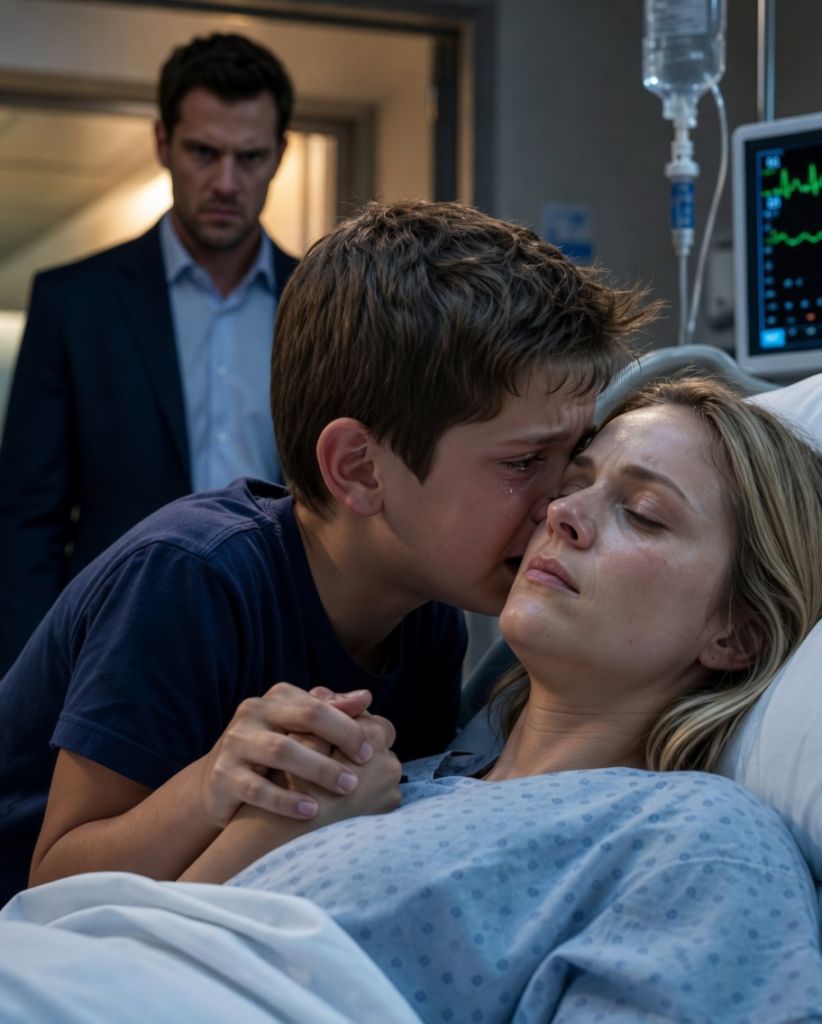
For twelve days, they had spoken over your body like you were already a memory. They had called you a vegetable, planned your death, discussed taking your son out of the country, and waited for your body to give up. But now someone had walked into the room who did not look at you like a dying woman.
Julia looked at you like a witness.
Darío recovered first, the way liars always do when they have practiced being charming.
“Julia,” he said, forcing a tired smile. “This is a family matter. Isabel is not conscious, and you have no right to come in here making accusations.”
Julia did not blink.
“Emiliano called me at 6:14 this morning from a nurse’s station phone,” she said. “He told me his father was pressuring doctors to withdraw care and that his aunt Renata was talking about taking him out of Mexico once his mother died.”
Renata’s face changed.
Just a little.
But you saw it through the darkness behind your eyelids.
Darío released your hand.
“That boy is traumatized. He misunderstood.”
Julia stepped farther into the room.
“He also told me his mother said to call me if anything happened after she refused to sign property transfer documents.”
The silence that followed was so heavy you could almost feel it pressing against your chest.
You wanted to open your eyes.
You wanted to scream.
You wanted to tell Julia that Emiliano was telling the truth, that your son had saved you while adults around him tried to erase you.
But your body stayed trapped.
So you waited.
Darío laughed once, but there was no confidence in it.
“This is absurd. Isabel had an accident. Everyone knows that.”
The man with the folder opened it.
“Actually,” he said, “that is now in question.”
Julia turned slightly.
“This is Victor Luján, an independent forensic mechanic hired under Isabel’s emergency legal authorization. Her brake line was intentionally cut. Not worn. Not damaged by impact. Cut.”
Renata took one step back.
Her heel clicked against the tile.
Darío stared at the folder as if it had grown teeth.
“You inspected my wife’s vehicle without permission?”
Julia’s voice went colder.
“Your wife gave me written emergency authority three weeks before the crash, after telling me she was afraid something would happen to her.”
For the first time, Darío had no answer ready.
And that was when your son moved.
Emiliano had been standing near the far wall, small and pale in a blue hoodie, his face swollen from crying. But now he stepped toward Julia, clutching a folded paper with both hands. His voice shook, but he did not run.
“My mom gave me this,” he whispered. “She said if she got sick, or if Dad got scary, I should give it to you.”
Renata lunged before Darío did.
“Give me that,” she snapped.
Julia moved faster.
The police officer stepped between them, and Renata froze with her hand in the air, her pretty mask finally cracking in front of everyone.
Your heart slammed against your ribs.
Emiliano handed Julia the folded paper.
You remembered writing it.
You had done it late at night at the kitchen table while Darío showered upstairs. Your hands had trembled then, not because you were certain he would hurt you, but because you were terrified you had finally become the kind of woman who needed escape plans. You had written down bank accounts, document locations, and one sentence you hoped nobody would ever need.
If I am injured, missing, or declared incapable, do not trust Darío or Renata.
Julia unfolded the paper.
She read it once.
Then she looked at Darío.
“Security, nobody leaves this room until the officer takes statements.”
Darío’s face darkened.
“You cannot hold me here.”
“No,” Julia said. “But he can ask why you requested withdrawal of medical support less than twenty-four hours after your wife showed signs of neurological response.”
The officer took out a notebook.
Renata pressed a hand to her throat.
“What neurological response?”
Doctor Herrera entered at that moment, his white coat open, his expression tight with controlled anger.
“Isabel’s brain activity improved yesterday evening,” he said. “We informed Mr. Darío that continued care was medically justified. He became aggressive and demanded another opinion.”
Your mind flashed back.
Yesterday evening.
You had heard voices, distant and underwater, but you had not understood. You remembered Darío swearing somewhere near the doorway. You remembered Renata telling him to calm down because “the papers mattered more than the machines.”
Now Julia knew.
Everyone knew.
Darío suddenly looked toward your bed.
For the first time, you felt his fear.
Not grief.
Fear.
He was wondering how much you had heard.
He stepped closer, lowering his voice into the warm tone he used in public.
“Isa,” he said softly. “Baby, if you can hear me, you know I would never hurt you.”
The lie crawled over your skin.
You could not move.
But you did not need to.
Because Emiliano turned to him and said, “Then why did you tell Aunt Renata you needed Mom gone before Friday?”
Nobody spoke.
Renata whispered, “Emiliano.”
The boy flinched at her voice, but he did not stop.
“I heard you in the hallway. You said the company shares would be harder to touch if she woke up. You said the judge would listen to Mom because she had proof.”
Darío’s face went red.
“He’s a child.”
Julia raised the paper.
“And children hear what arrogant adults say when they think no one matters.”
That was when your finger moved again.
Not much.
Just one small twitch against the sheet.
Doctor Herrera saw it.
Julia saw it.
Emiliano saw it.
Darío did too.
His eyes widened, and for one terrifying second, you knew exactly what he wanted to do. He wanted to lean over you, cover your mouth, crush the fragile return of your life before it became dangerous to him. But the room was full now.
He had waited too long.
Doctor Herrera came to your bedside.
“Isabel,” he said clearly, “if you can hear me, try to move your finger again.”
Every part of your body screamed.
The pain was enormous, bright, impossible.
But somewhere beneath it was your son’s voice telling you not to open your eyes because your husband was waiting for you to die.
And that made you stronger than pain.
You moved one finger.
Then another.
Emiliano sobbed.
“She’s awake,” he cried. “My mom is awake.”
Darío backed away as if your hand had become a weapon.
Maybe it had.
Because from that moment on, your silence no longer belonged to him.
The next hours came in fragments.
Doctors.
Questions.
Lights.
Hands checking your pupils.
Machines.
Julia’s voice telling you she was staying.
Emiliano’s face above yours, wet with tears, whispering, “I knew you were still there.”
You still could not speak clearly, only make small sounds that tore at your throat. But you could blink. Once for yes. Twice for no. Julia understood immediately.
“Did Darío ask you to sign documents before the crash?”
One blink.
Yes.
“Did you refuse?”
One blink.
Yes.
“Did he become angry?”
One blink.
Yes.
“Did Renata know?”
Your eyelids trembled.
Then you blinked once.
Yes.
Renata made a sound like she had been slapped.
Darío shouted that this was manipulation, that you were sedated, that none of it would hold up anywhere. But the officer had already heard enough to separate him from the room. Security escorted him out while he yelled your name like he still owned it.
He did not.
Not anymore.
Renata tried a different method.
She came to the foot of your bed with tears shining in her eyes, hands clasped like she was praying.
“Isa,” she whispered. “You’re confused. You hit your head. I love you. I would never hurt you.”
You looked at her.
You remembered childhood mornings when she braided your hair before school. You remembered her teaching you how to use eyeliner, sharing secrets under blankets, crying in your arms after her first heartbreak. You remembered trusting her with the parts of yourself you hid from everyone else.
Then you remembered her voice over your bed.
Qué bonita se ve dormida… casi parece buena esposa.
You blinked twice.
No.
Renata’s mouth opened.
Julia stepped between you.
“You need to leave.”
“She’s my sister.”
Julia’s eyes sharpened.
“Then you should have acted like one before you helped plan her funeral.”
Renata slapped Julia.
The sound cracked through the room.
For a second, everyone froze.
Then the police officer took Renata by the arm.
That was how your sister left your hospital room: not crying over you, not begging forgiveness, but screaming that you were ungrateful while handcuffs closed around her wrists.
You slept after that.
Not peacefully.
Not deeply.
But alive.
When you woke again, Julia was sitting beside the bed with Emiliano curled in a chair, finally asleep under a hospital blanket. His little face looked exhausted, but his hand was still stretched toward yours, as if even unconscious he refused to let go.
Julia leaned forward.
“Your son saved your life,” she said softly.
You tried to answer, but your throat failed.
So you cried.
Julia placed a tissue carefully near your hand.
“I know,” she whispered. “I know.”
Over the next week, the truth came apart piece by piece.
Your crash had not been an accident. Victor’s report confirmed the brake line had been cut cleanly before the vehicle went over the mountain road. Security footage from your gated parking area showed Darío entering the garage at 1:42 a.m. the night before the crash, wearing a dark hoodie and carrying something in his right hand.
He had told police he was asleep.
That was lie number one.
Phone records showed Renata called him fourteen times that morning before your accident. Messages recovered from her deleted cloud backup showed fragments that turned your stomach cold.
She won’t sign.
Then make her unable.
What about Emi?
Afterward, we take him. He’ll adapt.
You had to read those messages three times before your mind accepted them.
Your sister had not been manipulated.
She had not misunderstood.
She had helped.
The motive was uglier than you expected, though maybe you should have seen it sooner. Darío’s construction company was drowning in debt. He had used your name to secure personal loans, drained joint accounts, and forged signatures on two property-backed credit applications. When you discovered the irregularities, you went to Julia, changed your will, moved your inheritance shares into a trust for Emiliano, and began preparing divorce papers.
Darío found out.
Renata found out because she was not simply helping him.
She was sleeping with him.
Julia told you gently, but nothing could make it gentle.
Your sister and your husband had been having an affair for almost a year. They had rented an apartment in Querétaro under a shell company. They had planned to sell your house, access your business holdings, and move with Emiliano to Spain under the excuse of “fresh beginnings” after your death.
You listened from your hospital bed, unable to speak more than a few broken words, while your old life burned down in front of you.
Then Julia showed you the worst document.
A draft guardianship petition.
In it, Darío claimed that after your death, he would need help raising Emiliano because your son was “emotionally unstable” and “deeply attached” to Renata as a maternal figure.
Renata had already signed a supporting declaration.
You turned your head toward the sleeping child beside you.
That was the moment grief turned into rage.
Not loud rage.
Not reckless rage.
The kind that lives long enough to become strategy.
You spent the next month learning how to come back to your own body.
At first, even lifting a spoon felt like climbing a mountain. Your voice returned slowly, scratched and thin, and the first full sentence you managed was not poetic or dramatic. It was simply, “Where is my son?”
Everyone laughed and cried at the same time.
Emiliano visited every day under Julia’s supervision. He brought drawings, homework, and small updates about school, though you could see the fear in him. He kept asking whether you were tired, whether the machines were working, whether Dad could come back.
You promised him no.
Again and again.
No, he cannot come into this room.
No, he cannot take you away.
No, you did not do anything wrong.
At night, when the hospital quieted, you stared at the ceiling and replayed everything. Darío’s strange smile. The documents he wanted you to sign. Renata insisting you were paranoid when you told her your brakes felt soft two days before the crash.
You had gone to your sister for comfort.
She had taken your fear straight back to the man causing it.
That betrayal hurt differently than Darío’s.
Darío had always loved control more than love. But Renata had known your childhood wounds, your private doubts, your soft spots. She knew exactly where to press because you had trusted her with the map.
When you were strong enough, Julia brought a tablet and played the recording Emiliano had made on his small watch.
You did not know he had recorded anything.
He had activated it under his sleeve while Darío and Renata whispered over your hospital bed, believing he was too scared to understand. The audio was shaky, muffled, but clear enough.
Darío: “Once she’s gone, nobody can undo the transfer.”
Renata: “And the boy?”
Darío: “He’ll do what we say. He’s nine.”
Renata: “If he talks?”
Darío: “Kids forget.”
The tablet nearly slipped from your hands.
Kids forget.
You looked at Emiliano, sitting across from you with his knees tucked to his chest. Your son had heard adults discuss his future like he was luggage. He had been terrified, but he had still called Julia. He had still protected you.
You opened your arms.
He ran into them carefully, mindful of your injuries, and cried into your hospital gown.
“I didn’t forget,” he sobbed.
You pressed your lips against his hair.
“I know, baby. You remembered enough for both of us.”
The custody hearing happened before you could walk without assistance.
Julia arranged for you to appear through video from a hospital conference room. Your face was pale, your voice weak, and a soft brace supported your neck. But your eyes were open.
That alone was enough to make Darío look sick.
He appeared in court wearing a suit and a victim’s face. Renata sat behind him, no longer glamorous, her makeup heavy under tired eyes. Their attorneys argued that the investigation was ongoing, that emotions were high, that Emiliano needed stability with his father.
Then the judge heard the hospital audio.
Darío lowered his head.
Renata stared at the floor.
When the recording ended, the courtroom was silent.
Julia stood.
“Your Honor, this child did not need protection from grief. He needed protection from the adults waiting for his mother to die.”
Temporary sole custody was granted to you. Darío was denied contact with Emiliano pending criminal proceedings. Renata was prohibited from approaching you, your home, your son’s school, or the hospital.
For the first time since waking, you slept four full hours.
It felt like a miracle.
Two months later, you returned home.
Not to the house you had shared with Darío.
Never there.
Julia had arranged a secure apartment under the emergency clause in your trust, a quiet place with a balcony, good locks, and wide morning light. Emiliano chose the room with a window facing jacaranda trees because he said purple flowers looked like “the opposite of hospitals.”
You let him pick the first thing you bought for the home.
He chose a blue kettle.
You asked why.
“So when you make tea, I’ll hear it whistle and know you’re awake,” he said.
You cried in the kitchen, holding that ridiculous little kettle like it was made of gold.
Recovery was not beautiful the way people imagine it.
It was painful.
It was humiliating.
It was asking for help to shower, learning to balance again, forgetting words when you were tired, crying because your body could not do what it used to do. It was Emiliano waking from nightmares and checking your breathing. It was you waking from nightmares and hearing Darío’s voice call you a burden.
But every day, you were less trapped.
Every day, your hands grew steadier.
Every day, you found one more piece of Isabel that Darío had not destroyed.
The criminal case moved faster than anyone expected because Darío made the mistake arrogant men always make.
He underestimated the people he thought were beneath him.
He had dismissed Emiliano as a child, Victor as a mechanic, hospital staff as background, and Julia as “a divorce lawyer with attitude.” He had not counted on garage footage, call logs, cloud backups, financial trails, life insurance emails, pharmacy records, or the notary downstairs who later admitted Darío had pressured him to prepare documents for an incapacitated woman.
That notary turned witness.
So did Darío’s assistant, who provided messages showing Darío had asked how long a spouse had to be unconscious before “medical decisions became practical.” The phrase made your stomach twist every time you heard it. Practical. As if your death were a calendar problem.
Then came the financial motive.
Darío had taken out a secret life insurance policy eight months before the crash. The payout would have cleared his debts. Your death would have opened access to assets he could not touch while you were alive, especially after you changed your will.
Renata’s motive was not only love.
It was envy.
That hurt more than you wanted to admit.
Investigators found messages where she called you “the lucky one” because your late grandfather left you shares in the family logistics company. She said you “never appreciated having stability” and complained that Darío deserved a wife who looked at him like a king. She wrote that Emiliano would be “better off away from Isabel’s anxiety.”
You read that line alone.
Then you closed the file and walked to your son’s room.
He was sleeping with one arm around a stuffed dinosaur, his face soft in the purple window light. You stood there for a long time, one hand over your scar, and understood something terrible and freeing.
Some people do not betray you because you failed them.
They betray you because your existence reminds them of what they cannot steal honestly.
Darío tried to reach you once from jail.
You did not take the call.
Then he wrote a letter.
Julia asked whether you wanted to read it. You said no at first, then changed your mind. Not because you needed his apology, but because you wanted to see if monsters sounded different when they ran out of power.
They do not.
His letter was three pages of polished poison.
He said he had been under stress. He said Renata manipulated him. He said you had become distant after changing your will. He said the crash was never supposed to be fatal, only “a scare” to make you reconsider divorce. He said Emiliano needed a father and that you should think of the child instead of revenge.
You read it twice.
Then you wrote one sentence back through Julia.
My son needed a father before his father tried to make him an orphan.
You never answered him again.
Renata’s letter came later.
Unlike Darío’s, hers was messy, full of crossed-out words and stains where tears may have fallen. She wrote that she had hated living in your shadow, hated how everyone respected you, hated that even when you were quiet, people trusted you. She said Darío made her feel chosen.
You almost laughed at that.
Chosen.
That was the word people used when they wanted betrayal to sound romantic.
She wrote that she never believed he would actually hurt you.
Then, three lines later, she admitted she knew about the brakes.
You folded the letter carefully.
Not because it deserved care.
Because you did.
You placed it in a box marked Evidence and gave it to Julia.
At the trial, you wore white.
Not because you were pure, or forgiving, or trying to look innocent. You wore white because Renata had once told you it washed you out and made you look invisible. You wanted her to see you clearly.
The courtroom was packed.
Reporters had picked up the story months earlier: wealthy businesswoman wakes from coma, son exposes attempted murder plot, husband and sister charged. They turned your life into headlines, some cruel, some sympathetic, all too small for the truth. No headline could capture what it felt like to hear your child whisper for you not to open your eyes because your husband was waiting for you to die.
Darío avoided looking at you.
Renata did not.
She stared as if eye contact could rebuild a bridge she had burned with both hands.
You gave your testimony slowly.
You described the documents Darío wanted you to sign. You described the brake failure, the impossible pressure under your foot, the curve opening in front of you, the sickening realization that the car would not stop. You described waking inside your own body and hearing the people you trusted plan your death.
The prosecutor asked, “What did you feel when your son warned you not to open your eyes?”
You looked at Emiliano, seated safely beside Julia in the protected witness area.
“I felt terror,” you said. “Then I felt grateful. Because my nine-year-old understood the danger before the adults around me had the courage to say it out loud.”
Darío’s attorney tried to make you look confused.
He asked about brain injury. Medication. Memory gaps. Emotional trauma.
You answered everything calmly.
Then he made his worst mistake.
“Mrs. Morales,” he said, using your married name, “is it possible that your anger toward your husband has influenced your interpretation of what you heard?”
You turned to him.
“I heard him call me a vegetable,” you said. “I heard him say he would not keep paying for me. I heard him discuss taking my son out of the country after I died. My anger did not create those words. It survived them.”
The courtroom went still.
Even the judge looked up.
Darío’s attorney sat down soon after.
Emiliano testified in a closed session, away from reporters. You were not allowed inside for every part, and those minutes in the hallway nearly broke you. Julia sat with you, her hand on your shoulder, while you listened to the muffled sound of justice asking a child to repeat the worst day of his life.
When he came out, he looked exhausted.
But not broken.
You hugged him carefully.
“I told the truth,” he said.
You kissed his forehead.
“That is all you ever had to do.”
The verdict came three days later.
Darío was found guilty of attempted murder, conspiracy, fraud, and child endangerment. Renata was found guilty of conspiracy, attempted fraud, and child endangerment, with additional charges tied to evidence tampering. The sentences were long enough that your son would grow up without watching them walk freely through his life.
When the judge read the decision, Darío finally looked at you.
There was no love in his face.
Only disbelief that consequences had found him.
Renata collapsed into sobs.
You felt nothing at first.
Then Emiliano slipped his hand into yours, and the feeling came back all at once.
Not happiness.
Not revenge.
Release.
Outside the courthouse, reporters shouted questions.
“Isabel, do you forgive your husband?”
“Do you forgive your sister?”
“What will you tell your son?”
You stopped only once.
You looked into the cameras and spoke slowly.
“I will tell my son that love does not require silence. I will tell him that family does not mean protecting people who hurt you. And I will tell him that he saved my life, but he never should have had to.”
Then you walked away.
The rest of your life did not begin all at once.
It began in small ordinary moments.
The first morning you made breakfast without needing to sit down halfway through.
The first time Emiliano went to school without calling three times to make sure you were still home.
The first time you laughed at something so hard your scar hurt, and you did not mind the pain because it came from joy.
Julia became more than your attorney. She became the person who taught you that preparation is not paranoia when someone has given you reason to be afraid. She helped you create a foundation for children who witness domestic violence, especially those who are forced to become protectors before they are old enough to understand what protection costs.
You named it The Emiliano Project.
He hated the attention at first.
Then he asked if the logo could have a small lighthouse.
“Because I called for help,” he said. “And help came.”
So the foundation logo became a lighthouse with one small window glowing.
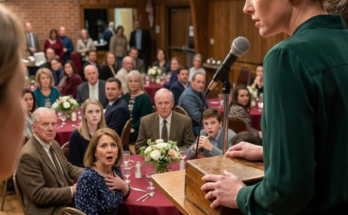
Your first public speech was in a community center with plastic chairs and bad coffee. Your hands shook so badly you almost dropped the microphone. Then you saw three mothers in the front row holding their children’s hands the way Emiliano had held yours.
So you spoke.
You told them that warning signs often arrive dressed as concern. A husband asking you to sign “protective” papers. A sister telling you not to overreact. A family member saying you are paranoid because your instincts are inconvenient.
You told them to write things down.
Tell one safe person.
Keep copies.
Believe the child who whispers.
Afterward, a woman approached you with a black eye hidden under makeup and a little boy pressed against her side. She did not say much. She only asked, “Can I call your foundation tomorrow?”
You gave her the direct number.
Then you watched her leave alive.
That was when you knew your survival had become more than survival.
It had become a door.
One year after waking up, you and Emiliano drove the road toward Toluca again.
Not the exact curve.
Not at first.
Your therapist had warned you not to rush. Julia had offered to go with you. But Emiliano said he wanted to come, and you realized both of you had been living with the same invisible cliff in your minds.
You stopped at a lookout point before the dangerous stretch.
The air was cold and clean.
Emiliano stood beside you, taller now, his face less haunted, though childhood had not fully returned to him. You hated that. You hated Darío for stealing something no sentence could restore.
But then Emiliano reached into his backpack and pulled out a small toy car.
It was blue.
He placed it on the stone wall overlooking the valley.
“What is that?” you asked.
He shrugged.
“For the old car,” he said. “So it doesn’t feel lonely down there.”
Your throat tightened.
You put your arm around him.
Neither of you spoke for a while.
Then he said, “Mom?”
“Yes?”
“When Dad gets out someday, will he find us?”
You breathed in slowly.
You wanted to lie.
You wanted to say never, impossible, don’t worry. But your son had survived because he knew truth mattered more than comfort.
“He might try,” you said. “But we will be ready. And you will never have to protect me alone again.”
He nodded.
Then he leaned against you.
That was enough.
You sold the old house six months later.
Before handing over the keys, you walked through it one final time with Julia waiting outside. The bedroom where Darío had slept beside you felt smaller than you remembered. The hallway where Renata once hugged you while hiding your husband’s messages seemed colder.
In the kitchen drawer, you found one forgotten photo.
You, Darío, Renata, and Emiliano at his seventh birthday. Everyone smiling. Cake on the table. Your sister’s hand resting lightly on Darío’s arm, a detail you had never noticed before.
You stared at it for a long time.
Then you tore the photo in half.
Not dramatically.
Not angrily.
Just enough to separate yourself and Emiliano from the people who had turned love into a crime scene.
You kept your half.
You burned theirs in the sink.
The new apartment eventually became a real home.
Not because it was perfect, but because nothing inside it required fear. You and Emiliano painted one wall lighthouse blue. He insisted the kitchen needed yellow curtains because mornings should look “awake.” You bought plants and killed three before learning how not to overwater them.
Life became soft in places you had forgotten softness could exist.
Sunday pancakes.
School projects.
Movie nights.
Physical therapy.
Bad jokes.
Julia coming over with too much takeout and pretending it was a legal meeting.
On your second birthday after the crash, Emiliano gave you a handmade card. On the front, he drew a hospital bed, a lighthouse, and a woman standing with her eyes open. Inside, he wrote only one sentence.
You woke up, so I did too.
You had to sit down.
He panicked, thinking he had made you sad.
You pulled him into your arms and held him until he laughed.
“These are good tears,” you whispered.
He smiled.
“I know.”
And you realized he did know.
Because both of you had learned the difference between pain that destroys and pain that finally leaves the body.
Years later, people would still ask about the story.
They would ask how you survived, how you knew, how you found the strength, how your son had been brave enough to call Julia. They always wanted one clean answer, one lesson they could frame neatly and carry home.
But the truth was not clean.
You survived because a child loved you enough to whisper.
Because a lawyer answered her phone.
Because a doctor refused to treat you like a body without a future.
Because evidence existed.
Because your finger moved.
Because somewhere deep inside you, beneath sedation, betrayal, and broken metal at the bottom of a ravine, you had not agreed to die.
On the third anniversary of the crash, you stood at the foundation’s new safe house opening. A mural of a lighthouse covered the front wall, painted by children who had once hidden under tables, behind doors, inside closets while adults destroyed rooms around them. Emiliano, now twelve, cut the ribbon with Julia beside him.
He smiled at the cameras, nervous but proud.
Then he handed you the scissors.
“You should finish it,” he said.
You shook your head.
“No, baby. You made the call.”
He looked at you.
“You moved your finger.”
So you finished the cut together.
The ribbon fell.
People clapped.
Inside the safe house, there were clean beds, locked doors, therapy rooms, legal offices, and a small kitchen with a blue kettle on the stove. When you saw it, you laughed through tears.
Julia had arranged that.
Of course she had.
That evening, after everyone left, you and Emiliano sat on the front steps watching the sun go down. He rested his head on your shoulder, no longer a terrified little boy, not fully healed, but healing.
“Do you ever miss them?” he asked.
You knew who he meant.
Darío.
Renata.
The family that existed before truth.
You thought carefully.
“I miss who I thought they were,” you said. “But I don’t miss being unsafe.”
He nodded like that made sense.
Then he whispered, “I’m glad you opened your eyes.”
You looked at the glowing windows of the safe house.
“I am too.”
Because the man who shared your bed had waited for your ending.
Your sister had helped him write it.
But your son interrupted the story.
And you woke up just in time to take the pen back.