PART 2 — Box 214
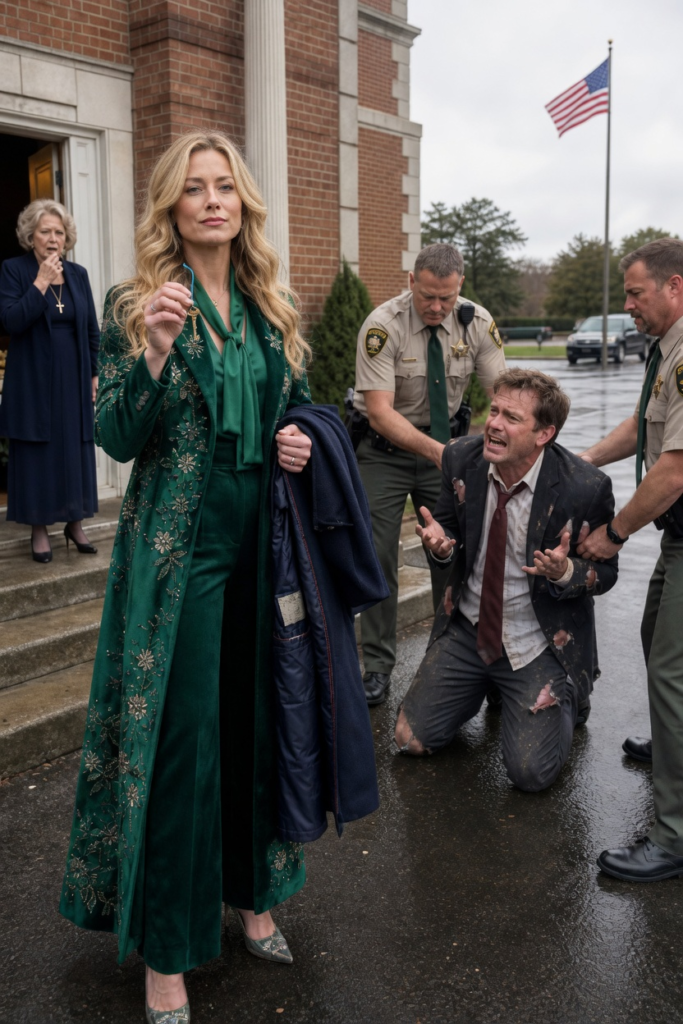
My mother’s coat no longer felt like fabric draped over my arm.
It felt like the corner of a curtain lifting over a room my family had kept dark for twenty years.
Family
I stood in the nursery with the brass key pressed into my palm while a paper moon mobile turned slowly above my head. Rain clicked against the window. Somewhere down the hall, people were laughing too softly at a funeral dinner because grief makes some people uncomfortable and cruelty makes others hungry.
If Evan lies, open Box 214.
Ask what happened the night your father fell.
I read the words again.
Then again.
My father had died when I was sixteen.
That was the official version.
A fall.
Basement stairs.
Bad weather.
A slick step.
A cracked skull.
A tragedy with no villain, only timing.
My mother had gone quiet afterward in a way I had never understood. She didn’t collapse. She didn’t rage. She paid bills, folded laundry, packed lunches, went to church, and grew smaller without ever asking permission. Evan had become “the man of the house” overnight, though he was only nineteen, and he wore that title like an inherited crown.
For twenty years, I thought my father’s death was the wound that split our family.
Family
Now I wondered if it was the lie that held us together.
I tucked the key into the inside pocket of my dress and folded the scrap of fabric into my wallet. Then I repaired the coat lining with three loose stitches from the nursery sewing kit, because my mother had taught me that even when something was broken open, you did not leave the evidence sloppy.
When I stepped back into the fellowship hall, Evan was holding court near the coffee urn.
Of course he was.
His tie had loosened just enough to look exhausted. His eyes were red just enough to look devoted. One hand rested over his heart as he spoke to Pastor Bell and two women from Mom’s garden club.
“She hated legal mess,” he was saying. “That’s why I’ll be handling everything. Claire has her life up north, and I don’t want her burdened.”
Burdened.
That was Evan’s favorite word for power he wanted to keep.
I walked toward him with Mom’s coat over my arm.
He saw me coming and smiled.
Not warmly.
Victoriously.
“Claire,” he said. “I was just telling Pastor Bell that we’ll keep the estate process as peaceful as possible.”
“Peaceful,” I repeated.
Pastor Bell looked between us.
“Your mother valued peace, children.”
I looked at the pastor. He was a kind man in the abstract way people are kind when they do not want to choose sides. He had prayed over my mother’s hospital bed. He had brought peach preserves and sat with her during the last week. But he had also nodded along while Evan rewrote my absence into abandonment.
“My mother valued truth more,” I said.
Evan’s smile tightened.
“Today is not the day.”
“That’s funny,” I said. “You seemed to think it was.”
Aunt Marjorie appeared beside him, clutching a napkin. “Claire, honey, emotions are high.”
“They were high when he said I had no right to my mother’s estate in front of half the church.”
Her mouth closed.
Evan set down his coffee cup.
“I said what everyone was thinking.”
“No,” I said. “You said what you needed people to believe.”
The room shifted.
A few heads turned.
Evan’s eyes hardened, but his voice stayed smooth.
“Don’t do this to Mom’s memory.”
That old trick.
Put the dead body between yourself and the truth.
I looked at him, then at the coat in my arms.
“Mom’s memory is exactly why I’m leaving.”
His face changed.
“Leaving?”
“I have an errand.”
“The attorney is coming by the house at four.”
“I know.”
“You need to be there.”
“Do I?”
His smile vanished.
“Claire.”
I stepped closer, lowering my voice enough that only he could hear.
“If you need me there so badly, Evan, you should stop telling people I have no right to anything.”
For the first time that day, he looked uncertain.
Only for a second.
But I saw it.
Then he leaned down slightly.
“You don’t want to start digging,” he whispered.
My pulse slowed.
There it was.
Not Don’t be dramatic.
Not You’re grieving.
Not I’m your brother.
A warning.
“You’re right,” I said softly. “I want to finish.”
I left before he could answer.
Downtown Savannah looked washed clean by rain, though nothing was clean beneath it. The streets glistened under gray light. Spanish moss hung dark and heavy from live oaks, dripping like old secrets. Tourists hurried beneath umbrellas, passing antique storefronts and wrought-iron balconies without knowing that somewhere nearby, a dead woman had sewn a key into her coat because she did not trust her son.
The bank was on Bull Street, old marble front, brass doors, and a lobby quiet enough to make shoes sound guilty.
I walked to the private client desk and placed the key on the polished wood.
The woman behind the desk looked at it.
Then at me.
“I need to access Box 214,” I said.
“Name?”
“Claire Whitaker.”
Her expression changed very slightly.
Not surprise.
Recognition.
“Please wait here.”
She disappeared through a side door.
I stood beneath a chandelier shaped like an upside-down wedding cake and tried not to think about my father at the bottom of the basement stairs.
Five minutes later, an older man in a charcoal suit came out.
“Ms. Whitaker?”
“Yes.”
“I’m David Mercer, branch manager. We were instructed to assist you personally if you came in.”
My throat tightened.
“My mother gave instructions?”
“Mrs. Whitaker was very specific.”
Of course she was.
“May I see identification?”
I handed him my license. He checked it, copied it, then led me through a locked door into a corridor lined with small numbered boxes.
Box 214 was waist-high.
He inserted the bank key.
I inserted the brass key Mom had sewn into her coat.
The lock turned.
Mr. Mercer pulled the long metal box free and carried it to a private room.
“Take your time,” he said.
Before he left, he paused.
“Your mother came here three weeks ago. She was very weak. Our staff offered to send someone to her home, but she insisted on coming in person.”
I closed my eyes.
Three weeks ago, I had been sitting beside her hospice bed reading aloud from an old Agatha Christie novel while Evan kept stepping into the hallway to “take estate calls.”
Mom had already been moving pieces across the board.
“What did she say?” I asked.
Mr. Mercer’s face softened.
“She said, ‘My daughter will need one room where nobody interrupts her.’”
The door closed behind him.
For a moment, I could not open the box.
Grief had been pressing on me all day like wet wool, heavy and shapeless. But that sentence—my daughter will need one room where nobody interrupts her—nearly broke me.
Because Mom knew.
She knew Evan would perform.
She knew no one at church would defend me.
She knew I would need to leave the room to hear her clearly.
I opened the box.
Inside was a thick cream envelope with my name written across the front.
Claire.
Beneath it lay a flash drive, a small leather notebook, a stack of bank statements, a copy of my father’s death certificate, a sealed evidence bag containing an old silver watch, and a photograph.
The photograph stopped me first.
My father stood on the back porch of our old house, one arm around Mom, the other around me. I was fifteen, wearing a green sweater and trying not to smile. Mom looked younger than I remembered. Dad looked alive in the unfair way photographs preserve what time has already taken.
Evan was not in the picture.
Not cropped out.
Not absent by accident.
On the back, in Mom’s handwriting:
The last good Sunday before your father understood.
Understood what?
My hands shook as I opened the envelope.
The letter began:
Claire,
If you are reading this, then Evan has done what Evan does. He has stood in public, made himself the grieving son, and turned your absence into his sacrifice.
Do not waste energy defending yourself to people who prefer a clean lie.
Open the box.
Read everything.
Then decide whether your brother gets to keep my silence.
I sat down.
The chair felt too low. The room too quiet.
I kept reading.
I should have told you the truth years ago. I did not because I was afraid. At first, afraid for you. Later, ashamed of myself. By the time I understood what silence had cost, the only thing left was to make sure you had proof.
Your father did not simply fall.
I stopped breathing.
The sentence sat on the page, black and still.
Your father did not simply fall.
Mom’s letter continued.
The night he died, he and Evan argued in the basement over money. Not a small amount. Your father had discovered withdrawals from the business account and forged signatures on documents tied to the Savannah property. Evan was nineteen, but he had already learned how to make entitlement sound like destiny.
Your father told him he would go to the bank in the morning.
He never made it to morning.
I covered my mouth with one hand.
Rain blurred against the small private room window.
Evan had always said Dad slipped.
Evan had found him.
Evan had called 911.
Evan had stood at the funeral with one hand on my shoulder and whispered, “You need to be strong for Mom.”
Strong.
The word guilty people use when they need someone else not to collapse.
Mom wrote:
I did not see Evan push him.
I need you to read that carefully. I did not see it.
But I heard the argument. I heard your father say, “Get your hands off me.” I heard something hit the wall. I heard the stairs. I heard the fall.
When I reached the basement door, Evan was standing at the top of the stairs. Your father was below.
Evan told me he slipped.
I wanted to believe him.
God forgive me, I wanted to believe him so badly that I did.
For a while.
My eyes burned.
I forced myself to continue.
Years later, when I found your father’s watch hidden in Evan’s old tackle box, I knew.
The crystal had cracked at 11:42 p.m.
The official report said your father fell at 12:18 a.m.
Evan had moved time itself, Claire.
That was when I began keeping records.
I looked at the evidence bag.
The silver watch inside had a cracked face.
The hands stopped at 11:42.
Beneath the letter was the leather notebook. I opened it.
Dates.
Names.
Amounts.
Mom’s handwriting, tighter than usual.
Evan’s withdrawals from estate accounts.
Checks written to contractors who never existed.
Insurance payments rerouted.
The sale of Dad’s old hunting land undervalued to a company connected to Evan’s college roommate.
Mom had written everything down.
Not emotionally.
Meticulously.
Like a woman building a staircase out of facts because the first staircase had taken her husband.
At the back of the notebook, a page was folded.
I opened it.
Evan told me today that Claire “doesn’t need to know” about the Savannah property. He says she left. He says I owe him control because he stayed.
He does not understand.
Claire left because I told her to survive.
Evan stayed because power is easier to hold when everyone else is grieving.
I pressed the notebook against my chest.
My mother had not been fooled.
She had been afraid.
There is a difference.
Not an absolution.
But a difference.
The flash drive contained a video.
I knew before opening it that it would destroy me.
I clicked anyway.
Mom appeared on-screen sitting in her hospice bed. Her hair was wrapped in a blue scarf. Her face was thin, almost translucent, but her eyes were sharp.
“Claire,” she said.
I broke at the sound of her voice.
Not a memory.
Not imagination.
Her.
“I hope you are not watching this at church,” she said, and almost smiled. “If you are, your brother has already made a scene, and I apologize for raising one child with theater and another with guilt.”
A laugh escaped me through tears.
Mom coughed softly, then continued.
“I need to say this out loud because paper can be challenged, but a dying woman’s face is harder to interrupt.”
She looked directly into the camera.
“Evan has been stealing from me for years.”
The words filled the small bank room.
“He calls it management. He calls it reimbursement. He calls it what he deserves. But it is theft.
Your father suspected him before he died. I suspected him after. I proved it too late.”
She paused, breathing carefully.
“The estate is not Evan’s. It is not yours either, not as a prize. It is a responsibility.
Here is what I have done.
I changed my will.
I created the Whitaker Family Foundation for widows, hospice caregivers, and women leaving abusive marriages with no safety net. I know that last part matters to you, Claire. I remember why you left at twenty-two. I remember what I told you. Go somewhere you can breathe.
You did.
I was proud of you.
Even when Evan told people you abandoned us, I was proud.”
I covered my mouth again.
Mom’s voice softened.
“You are the executor. You are trustee. The Savannah house, the investment accounts, the river property, and the life insurance proceeds go into the foundation after specific bequests.
Evan receives enough to pay off legitimate debts I verified. Nothing more unless he cooperates with the audit.
You receive my personal letters, my jewelry, Dad’s watch, and the right to decide whether Evan’s conduct goes to court.
I do not ask you to protect him.
I do not ask you to punish him.
I ask you to tell the truth where I failed to.”
She leaned closer to the camera.
“And Claire, about your father.
I do not know if Evan meant to kill him.
But I know he lied.
I know he delayed calling for help.
I know he moved the watch.
I know he hid the papers your father had gathered.
And I know I let fear make a widow out of me twice—once when your father died, and again every day I lived under Evan’s version of the story.
Do not be my second silence.”
The video ended.
For a long time, I sat in that room with my mother’s dead voice echoing inside me.
Do not be my second silence.
When I returned to the church fellowship hall, the room was almost empty.
Only family remained now, along with Pastor Bell, Aunt Marjorie, two cousins, and Evan’s wife, Lila, who sat near the window with her arms crossed tightly across her chest.
Family
Evan was by the coat rack.
He had noticed the missing coat.
He turned as soon as I entered.
“Where were you?”
I looked at him.
For the first time in my life, I saw him not as the brother who had stayed, not as the son who had handled things, not as the man everyone trusted because he spoke first.
I saw him as a boy at the top of the basement stairs.
“What happened the night Dad fell?”
The question changed his face.
Not dramatically.
Just enough.
The small tightening near the mouth.
The quick glance toward Aunt Marjorie.
The way his right hand closed around the edge of the folding table.
“What?”
I stepped closer.
“What happened the night Dad fell?”
Pastor Bell stood.
“Claire, perhaps this conversation should wait.”
“No,” I said. “It waited twenty years.”
Evan laughed once.
“You’re grieving. You’re not thinking clearly.”
“You said Dad fell at 12:18.”
His smile faded.
“That’s what the report says.”
“His watch stopped at 11:42.”
The room went still.
Lila looked at Evan.
“What watch?”
Evan’s eyes narrowed.
“I don’t know what game you’re playing.”
“The one Mom left instructions for.”
At the word Mom, something ugly crossed his face.
“She was sick.”
“She was precise.”
“She was drugged.”
“She had a physician sign a capacity letter the same day she changed the will.”
That landed.
Aunt Marjorie gasped.
“The will?”
Evan’s eyes burned.
“What did you do?”
I almost smiled.
That was the wrong question.
Not What did Mom do?
Not What did she leave?
What did you do?
“I opened Box 214.”
The color left his face.
For a second, nobody breathed.
Then Lila stood slowly.
“Evan?”
He ignored her.
“You had no right.”
“It was addressed to me.”
“She didn’t know what she was doing.”
“She knew you’d say that.”
Evan moved toward me.
Not fast.
But with that old older-brother authority, the one he used when we were children and he wanted me to hand over something of mine because he had already decided he deserved it.
I did not move back.
He stopped inches away.
“You think you can come down here from Boston, wave some old papers around, and steal what I built?”
“What did you build?”
His jaw tightened.
“I took care of her.”
“You controlled access to her.”
“I paid bills.”
“With her money.”
“I stayed.”
“So did mold in the basement. Staying is not virtue by itself.”
A cousin made a small choking sound.
Evan turned red.
Then he said the sentence that told me everything.
“You don’t know what Dad was going to do.”
The room froze.
I felt my pulse in my throat.
“What was Dad going to do?”
Evan’s mouth closed.
Too late.
Lila whispered, “Evan, what does that mean?”
He stepped back.
“Nothing.”
I took the leather notebook from my bag and placed it on the nearest table.
Then the bank statements.
Then the copy of the watch photograph.
Then Mom’s letter.
“I have enough to begin with probate court,” I said. “Enough to trigger a forensic accounting. Enough to challenge every transfer you made under power of attorney. Enough to freeze the estate before you move another dollar.”
His eyes flicked toward the documents.
There it was again.
Fear.
Not of grief.
Of records.
“You wouldn’t do that to your own brother,” he said.
“You humiliated me beside our mother’s funeral ham.”
Aunt Marjorie whispered, “Lord.”
I looked at him.
“You made this public.”
His face twisted.
“You always were dramatic.”
“No,” I said. “I was quiet. You built a whole reputation on that mistake.”
Pastor Bell moved closer to the table, reading the first page upside down. His face changed as he recognized Mom’s handwriting.
“Evan,” he said softly. “What is this?”
Evan pointed at me.
“She is trying to turn everyone against me.”
“No,” Lila said.
Her voice was quiet.
But it cut through the room.
Evan turned.
She was holding one of the bank statements.
“When did you take a loan against your mother’s house?”
His face hardened.
“That is not your concern.”
Lila’s eyes filled.
“I signed our mortgage refinance because you said it was to cover medical expenses.”
“It was.”
“This transfer went to your LLC.”
He stepped toward her.
“Put that down.”
She did not.
For the first time, I wondered how much Lila had been told. She was quiet, elegant, always one step behind Evan at family events. I had mistaken her silence for agreement.
Family
Maybe she had simply learned survival in the same house where I learned distance.
Evan looked around the room and saw it happening.
The audience changing.
The story leaving his hands.
So he did what men like Evan always do when facts corner them.
He reached for grief.
“I was the one here!” he shouted. “I was the one watching her die! I was the one dealing with hospice and medication and insurance and every disgusting detail while you flew in for visits and let everyone call you devoted!”
My voice stayed calm.
“I was there for three weeks in July.”
“Three weeks,” he spat. “I gave years.”
“And billed for them.”
He flinched.
The truth had teeth now.
I picked up Mom’s coat from the chair beside me.
“She sewed the key into the lining because she knew you’d lie before her body was cold.”
His expression cracked.
Aunt Marjorie began crying.
Pastor Bell sat down heavily.
Evan stared at the coat.
For one second, I saw the boy he had been. Nineteen. Angry. Afraid. Standing at the top of the stairs while everything below him changed forever.
Then the man returned.
“She turned you against me,” he said.
“No. She left me a map.”
I gathered the documents.
“Nathan Briggs is meeting me at Mom’s house in thirty minutes.”
Evan stiffened.
Nathan Briggs was Mom’s estate attorney.
Apparently, my brother knew the name.
“I’m going to give him the box,” I said. “Then I’m going to request a full accounting.”
Evan’s voice dropped.
“If you do this, you’ll destroy this family.”
I looked at the fellowship hall.
The folding chairs.
The half-empty casseroles.
The coffee gone cold.
The coat that carried a key because my mother could not trust her own son at her funeral dinner.
“This family was destroyed in the basement,” I said. “I’m just turning on the light.”
Family
At 4:00 p.m., Nathan Briggs arrived at my mother’s house.
So did Evan.
So did Lila.
So did Aunt Marjorie, who claimed she was there “for moral support,” though she kept clutching her rosary like she expected the walls to confess.
The house looked unchanged and completely different.
Mom’s reading glasses on the side table.
Her blue mug near the sink.
The quilt folded over the couch.
The faint smell of lavender soap and medicine.
Everything ordinary.
Everything evidence.
Nathan was a tall, silver-haired attorney with careful eyes and a voice that never hurried. He accepted the box inventory without surprise.
That told me he had been waiting too.
“Mrs. Whitaker instructed me to delay full disclosure until after the funeral dinner,” he said.
Evan exploded.
“You knew about this?”
Nathan looked at him.
“I knew your mother had revised her estate plan.”
“You let her do it while she was dying.”
“I assisted a competent client in executing lawful documents.”
“She wasn’t competent.”
Nathan opened his briefcase and removed a folder.
“Her physician disagreed. So did the independent evaluator. So did the notary. So did the video.”
Evan sat back as if struck.
Nathan continued.
“Your mother anticipated your objection.”
Lila covered her mouth.
I stood near the fireplace, Mom’s coat still over my arm. I had not been able to put it down.
Nathan opened the will.
The terms were exactly as Mom had described.
Specific bequests.
Foundation.
Executor: Claire Whitaker.
Trustee: Claire Whitaker.
Forensic accounting mandatory if Evan challenged, concealed, or attempted to control estate assets prior to probate.
Nathan read that clause aloud twice because Evan interrupted the first time.
Then came the final section.
“If my son, Evan Whitaker, contests this will, challenges my competency in bad faith, destroys or conceals documents, intimidates my daughter, or attempts to interfere with the administration of my estate, his conditional bequest shall be reduced to one dollar.”
Evan went still.
One dollar.
It was not the money.
Not only.
It was the humiliation of being predicted.
Mom had known the shape of his greed so clearly she had written a cage around it.
Nathan removed another page.
“There is also a sealed statement concerning the death of Thomas Whitaker.”
My father’s name entered the room like a cold wind.
Evan stood.
“No.”
Nathan looked at him.
“Sit down.”
The command was quiet.
It worked because Nathan was not family.
Family
Evan sat.
Nathan unfolded the statement.
My mother had written it in affidavit form.
Detailed.
Chronological.
The argument.
The missing funds.
The shout.
The impact.
Evan at the top of the stairs.
The delayed call.
The moved watch.
The hidden papers.
The years of fear.
When Nathan finished, nobody spoke.
Lila was crying silently now.
Aunt Marjorie whispered a prayer.
Evan’s face had gone flat.
“What are you going to do with that?” he asked.
Nathan looked at me.
So did everyone else.
There it was.
Mom’s final burden.
The right to decide whether Evan’s conduct goes to court.
I had spent the drive from the bank imagining revenge.
Police.
Headlines.
Handcuffs.
My brother dragged from the house he tried to own.
But sitting there in my mother’s living room, surrounded by the remains of a family that had already lost too much to silence, revenge felt too small.
Truth needed structure.
Not spectacle.
“I’m submitting everything to probate court,” I said. “And to the county district attorney.”
Evan’s eyes widened.
“Claire.”
“I’m not deciding whether you killed Dad. That is not mine to decide.”
His breath shook.
“But I will not hide what Mom left.”
Lila stood then.
“I want copies of the financial records.”
Evan turned.
“Lila.”
She stepped back from him.
“No. If our finances are tied to this, I need a lawyer.”
“You’re my wife.”
Her face crumpled.
“And apparently I’m also collateral.”
That silenced him.
The weeks after the funeral became a second burial.
We buried the family story.
Family
Not all at once.
One document at a time.
Probate court froze questionable transfers.
Nathan filed for a forensic accounting.
The district attorney reopened the review of my father’s death as a suspicious incident, though everyone warned me that twenty years had passed and proof would be difficult.
Difficult was fine.
Hidden was not.
The audit was uglier than I expected.
Evan had taken nearly $640,000 over twelve years through inflated caregiver reimbursements, fake contractor invoices, unauthorized transfers, and “management fees” Mom never approved.
He had mortgaged one of her rental properties without proper consent.
He had diverted insurance proceeds.
He had sold Dad’s hunting land through a shell entity at a deep discount, then resold it at market value six months later.
And the documents Dad had gathered before he died?
They were in the box too.
Copies.
Not originals.
Mom had found them hidden inside an old tax binder years later.
Dad had known enough to go to the bank the next morning.
He never made it.
The DA could not charge Evan with murder.
There was no direct evidence of intent.
But financial exploitation, fraud, forgery, elder abuse, and obstruction tied to estate documents were different matters.
Paper survives where witnesses fail.
Evan took a plea fourteen months later.
Five years in prison.
Restitution.
Full forfeiture of his estate bequest.
Formal admission that he had financially exploited our mother.
No admission regarding Dad.
That absence hurt.
It always would.
At sentencing, the judge asked if I wanted to speak.
I did.
I stood with Mom’s brass key hanging from a chain around my neck.
Evan would not look at me.
So I spoke to the room.
“My mother was not weak because she was afraid. She was human. But she was wrong to stay silent, and she knew it. Before she died, she did the bravest thing she could still do. She left proof.
My brother did not just steal money. He stole the story of our family. He made himself the devoted son and made my mother’s fear look like trust. He made my absence look like abandonment when it was actually survival. He made my father’s death look simple because complexity would have pointed toward him.
Family
Today does not give me my parents back.
It does not answer every question.
But it does something my family should have done twenty years ago.
It puts the truth where people can see it.”
Evan looked up then.
His eyes were wet.
Maybe with shame.
Maybe with rage.
Maybe only with the grief of being caught.
“I didn’t mean for him to die,” he whispered.
The courtroom went still.
His attorney grabbed his arm.
The judge leaned forward.
I could barely breathe.
Evan’s face collapsed.
“I didn’t push him. Not like that. We were arguing. He grabbed the folder. I grabbed it back. He slipped. I panicked. I thought if I called right away, they’d blame me.”
His voice broke.
“Then I waited. I waited too long.”
A sound left Aunt Marjorie that I will never forget.
Lila covered her face.
I stood frozen.
Twenty years.
Twenty years, and the truth finally arrived not as a verdict, but as a coward’s exhausted confession.
The DA reopened the death case again.
This time with Evan’s statement.
He received additional time for obstruction and manslaughter tied to delayed aid.
Not enough.
No sentence would ever be enough to equal a father at the bottom of stairs and a mother living two decades with fear under her tongue.
But the lie was dead.
That mattered.
The estate settled two years after Mom’s funeral.
The Whitaker Family Foundation launched from the old Savannah house, which I refused to sell. The front rooms became offices for legal aid and hospice caregiver support. The carriage house became temporary housing for women leaving dangerous marriages with nowhere to go.
Mom’s church ladies volunteered first.
Aunt Marjorie ran the donation pantry like a military operation.
Pastor Bell, humbled by his silence at the funeral dinner, offered the fellowship hall for support meetings and never again preached peace without mentioning courage.
Lila divorced Evan and later joined the foundation board after proving, with painful honesty, that she too had been lied to and used. I did not become close with her quickly. Trust does not bloom because two people share the same villain. But eventually, over spreadsheets, court filings, and donation drives, we built something respectful.
That was enough.
As for me, I stayed in Boston but returned to Savannah every month.
At first, the city felt like a wound.
Then like a responsibility.
Eventually, like a place I could enter without becoming twenty-two again.
On the third anniversary of Mom’s funeral, I stood in the church nursery where I had cut the key from her coat.
The paper moon mobile was still there, though faded now.
A young woman and her six-year-old son were sleeping in the foundation’s emergency housing across town because her husband had emptied their accounts and locked her out of their apartment.
Her file sat in my bag.
So did three grant approvals.
So did my mother’s leather notebook, which I carried on days when the work felt too heavy.
Aunt Marjorie found me in the doorway.
“You all right, honey?”
I looked at the little table where Mom’s secret had dropped into my palm.
“Yes,” I said. “I think so.”
She touched the key at my neck.
“Your mama was something.”
“She was afraid.”
“She was,” Aunt Marjorie said. “And then she wasn’t.”
That was the truest thing anyone had said about her.
Later that evening, I drove to the cemetery.
The rain had finally stopped.
My parents were buried side by side beneath a live oak. For years, Dad’s grave had felt like a question and Mom’s like an apology.
Now they felt like witnesses.
I placed fresh flowers between them.
Not roses.
Mom hated funeral roses.
Too dramatic, she always said.
I brought blue hydrangeas and white lilies.
Then I sat in the damp grass with the brass key warm against my chest.
“I opened it,” I told her.
Wind moved through the oak branches.
“I opened the box. I opened the file. I opened the story.”
My voice shook.
“I wish you had told me sooner.”
No answer.
Of course.
Only the moss moving lightly in the evening air.
“But you told me before it was too late for the truth.”
I looked at Dad’s name.
“I’m sorry nobody called sooner.”
That grief had no place to go.
So I let it sit beside me.
After a while, I stood.
As I turned to leave, I noticed something at the base of Mom’s headstone.
A small envelope, sealed in plastic.
My name on it.
Claire.
For one wild moment, I thought she had reached from the grave again.
Then I recognized Nathan’s handwriting on the back.
He had mentioned once that Mom left one final note to be delivered after the estate closed.
I opened it under the live oak.
Claire,
If you are reading this, the estate is settled, or close enough that Nathan finally stopped arguing with me from beyond the grave.
I hope you told the truth.
I hope it did not cost you too much.
But if it did, remember this: silence had already been charging interest.
I do not ask you to forgive Evan. That belongs to you.
I do not ask you to forgive me. That also belongs to you.
I only ask that you not let what happened in our house make you believe leaving was wrong.
Leaving saved you.
Coming back with proof saved more than you know.
The coat key was small because courage often is.
Small enough to hide in a hem.
Strong enough to open what fear locked away.
Live freely, my girl.
And never again let anyone call your survival abandonment.
Love,
Mom
I read it twice.
Then I folded it carefully and placed it in my wallet beside the scrap of coat lining.
The sun was lowering over Savannah, turning the wet stones gold.
For most of my life, I thought inheritance meant what people leave you after death.
Money.
Houses.
Jewelry.
Land.
But my mother left me something stranger.
A key.
A burden.
A truth.
A way out of the story my brother tried to own.
At the funeral dinner, Evan said I had no right to Mom’s $3.8 million estate.
He was wrong.
I had no right to her silence.
No right to her fear.
No right to spend my life defending myself against a lie she finally chose to expose.
But I did have a right to the truth.
So I opened Box 214.
I opened the past.
I opened the room my family had kept dark for twenty years.
Family
And when the light finally entered, it did not bring my parents back.
It did something else.
It freed the living from kneeling beside the wrong grave.