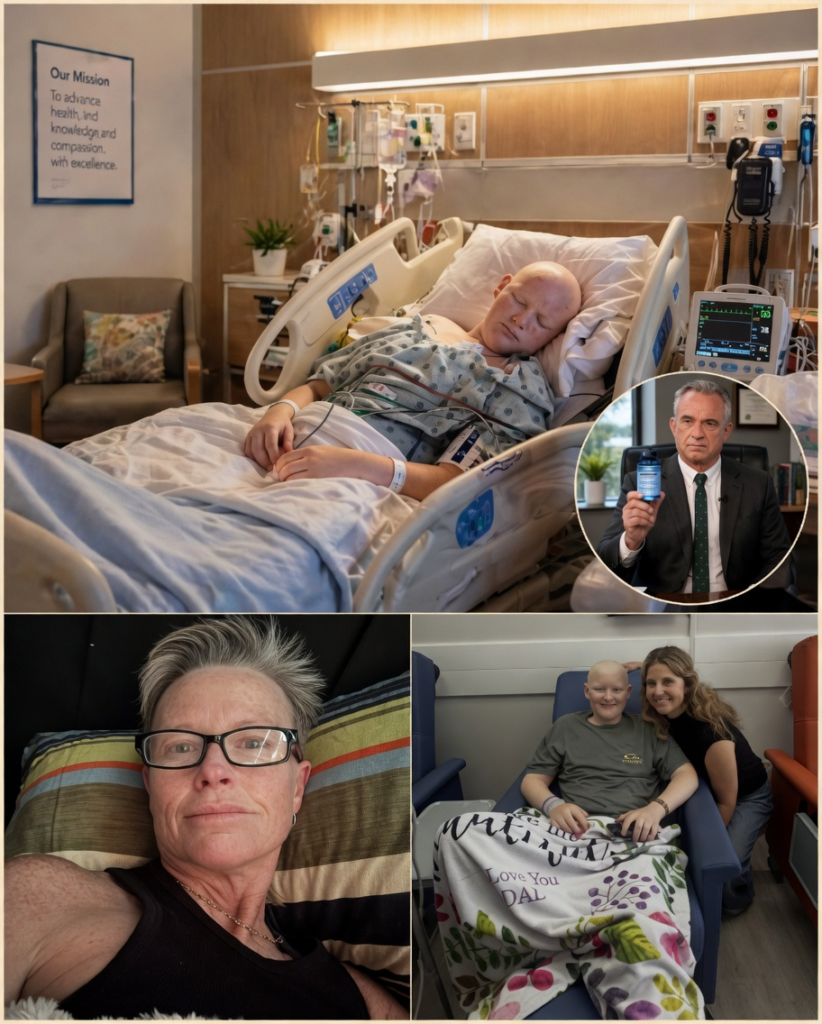
A Family’s Emotional Journey Is Now Fueling Questions Across the United States
What began as one family’s desperate search for hope has now evolved into a national conversation that is rapidly spreading across social media, cancer support communities, and online medical discussions throughout the United States.
At the center of that conversation is 15-year-old Will Roberts — a teenager whose ongoing cancer battle has drawn emotional support from thousands of Americans — and the experimental treatment drug his family says may be giving them hope after months of devastating setbacks.
Now, recent comments made by Will’s mother about the treatment have sparked growing public debate over the origins, effectiveness, and availability of a drug many Americans say they had never even heard of before.
The treatment, known as DeltaRex-G, is being discussed online as a possible breakthrough therapy for certain aggressive cancers. According to information shared publicly by Will’s family, the drug reportedly showed encouraging results during the early stages of his treatment while also appearing to reduce some of the harsh side effects commonly associated with traditional chemotherapy.
But what has shocked many people following Will’s journey is another claim now circulating widely online:
the treatment has reportedly already been approved or used in several countries outside the United States.
That revelation alone has ignited a wave of emotional reactions and difficult questions from families impacted by cancer.
“Why Haven’t We Heard About This Before?”
Across social media platforms, thousands of users are now asking variations of the same question:
If treatments like this already exist elsewhere, why do so many American families feel like they are only discovering them now?
For parents navigating serious illnesses, the emotional impact of that question is enormous.
Many families dealing with cancer often spend months or years researching possible treatments, consulting specialists, and exploring experimental options after standard therapies fail to provide the results they hoped for.
Stories like Will’s resonate deeply because they reflect the reality many families fear:
that somewhere, somehow, there may still be another option they simply haven’t been told about yet.
That emotional uncertainty is exactly why the conversation surrounding DeltaRex-G has expanded so rapidly online.
Some users describe the treatment as a “potential breakthrough.”
Others remain cautious, warning against drawing conclusions too early.
But regardless of where people stand, one thing is becoming increasingly clear:
Americans are paying attention.
What Is DeltaRex-G?
DeltaRex-G is an experimental targeted gene-based cancer therapy that has drawn attention in medical circles for years due to its unique approach to attacking certain cancer cells.
Unlike traditional chemotherapy, which often impacts both cancerous and healthy cells throughout the body, targeted therapies aim to focus more specifically on cancer-related biological mechanisms.
Supporters of targeted therapies argue they may eventually help reduce some of the devastating side effects commonly experienced during conventional chemotherapy treatment.
According to reports surrounding Will’s treatment journey, one of the biggest emotional moments for his family involved seeing him reportedly experience fewer severe side effects compared to previous treatments.
His mother shared online that for the first time in a long time, there were moments when Will appeared to have more energy, fewer complications, and a better overall recovery experience after treatment sessions.
For families familiar with the physical toll chemotherapy can take on patients — especially children and teenagers — those updates immediately captured public attention.
Why the Drug’s Availability Is Becoming Controversial
Much of the growing debate now centers around reports that DeltaRex-G has already received approval or clinical usage in some countries outside the United States.
That detail has sparked emotional conversations across online communities focused on cancer treatment and medical advocacy.
Many people are now asking whether promising treatments sometimes become available internationally long before reaching American patients.
Medical experts note that treatment approval systems vary significantly between countries.
Some nations approve therapies more quickly under certain medical circumstances, particularly for patients with limited remaining treatment options.
In the United States, however, the Food and Drug Administration (FDA) maintains one of the strictest medical approval systems in the world.
Experts say that process exists for a reason.
Before therapies become widely available to the public, researchers must typically complete years of:
- laboratory testing,
- safety analysis,
- clinical trials,
- data review,
- and long-term effectiveness monitoring.
The goal is to protect patients from treatments that may appear promising initially but later prove ineffective or dangerous over time.
Still, stories like Will’s often reignite emotional public frustration surrounding the pace of medical innovation.
For families living through life-threatening illnesses, waiting years for answers can feel unbearable.
Experts Urge Caution Amid Growing Public Attention
Despite the emotional momentum surrounding DeltaRex-G online, medical professionals continue emphasizing the importance of caution and scientific verification.
At this time, there is no official medical consensus suggesting DeltaRex-G should replace traditional chemotherapy for most cancer patients.
Experts warn that early optimism surrounding experimental treatments does not always translate into broad long-term success across larger patient populations.
Cancer itself is also highly complex.
Different cancers respond differently to treatments, and therapies that help one patient may not produce the same results for another.
Medical professionals continue encouraging families to rely on licensed oncologists and evidence-based treatment plans rather than social media discussions alone.
Still, even cautious experts acknowledge the emotional significance stories like Will’s can have.
Families facing serious illness naturally search for hope wherever they can find it.
And when traditional treatment journeys become emotionally devastating, conversations about alternative or emerging therapies often gain powerful momentum.
Why Will’s Story Is Resonating Nationwide
What makes Will Roberts’ story so emotionally compelling is not just the treatment itself — it’s the deeply human reality behind it.
His family’s updates reflect experiences countless Americans understand:
fear,
exhaustion,
uncertainty,
and the willingness to pursue any possible chance to save someone they love.
For months, supporters following Will’s journey watched as his family endured setbacks, frightening complications, emergency hospitalizations, and emotional exhaustion.
Then came California.
Then came DeltaRex-G.
And suddenly, for the first time in a long time, there appeared to be signs of hope.
That emotional transition is exactly what captured public attention.
For many people online, Will’s story no longer feels like just another medical update.
It feels personal.
Parents see their own children in him.
Cancer survivors see reflections of their own battles.
Families see the emotional weight of searching desperately for answers while time feels painfully limited.
Social Media Is Transforming Medical Conversations
Will’s story also highlights the growing role social media now plays in shaping public conversations about medicine and healthcare access.
Years ago, discussions about experimental treatments often remained confined to medical journals, specialist conferences, or clinical research communities.
Today, one emotional family story can spread across millions of screens within hours.
As a result, patients and families are becoming more informed — but also more overwhelmed — than ever before.
Supporters argue this increased visibility empowers patients to ask better questions and explore additional treatment possibilities.
Critics worry it can also unintentionally spread misinformation, unrealistic expectations, or incomplete medical context.
In Will’s case, both dynamics appear to be unfolding simultaneously.
The emotional reaction surrounding DeltaRex-G continues growing rapidly online, even while experts stress that scientific conclusions require far more data than individual stories alone can provide.
The Emotional Divide Between Hope and Evidence
One of the biggest tensions in modern healthcare conversations is the emotional divide between hope and scientific caution.
Families facing life-threatening illness often live in emotional survival mode.
Every possible breakthrough feels important.
Every success story matters.
Meanwhile, medical researchers are trained to focus on long-term evidence, large-scale studies, and statistically verified outcomes.
Those two perspectives can sometimes clash emotionally.
For families, waiting years for certainty may feel impossible.
For scientists, moving too quickly can create dangerous consequences.
The DeltaRex-G discussion now unfolding online reflects that exact tension.
Supporters see possibility.
Skeptics urge restraint.
And families caught in the middle simply want more chances to survive.
Why Americans Are Paying Attention
The reason this story continues spreading is because it touches a nerve many Americans already feel deeply:
the fear that life-saving treatments might exist somewhere just out of reach.
Whether those fears are fully justified or not, the emotional power behind them is undeniable.
Cancer affects millions of families across the United States every year.
Almost everyone knows someone who has battled the disease directly or indirectly.
As a result, stories involving experimental treatments naturally attract intense public interest.
Especially when those stories involve children.
Especially when those stories involve hope.
The Conversation Is Far From Over
For now, Will Roberts continues treatment while supporters across the country closely follow his journey.
His family says they remain cautiously hopeful but understand there are still no guarantees.
Meanwhile, online discussions surrounding DeltaRex-G continue expanding rapidly as more Americans search for information, share opinions, and debate what this treatment could potentially mean for the future of cancer care.
Whether DeltaRex-G ultimately proves to be a major medical breakthrough or simply one part of a much larger scientific conversation remains uncertain.
But one thing is already clear:
Will’s story has reignited national attention surrounding experimental cancer treatments, healthcare access, and the emotional realities families face when searching desperately for hope.
And for thousands of families watching closely tonight, that conversation feels deeply personal.