Chapter 1: The Invoice of Grief
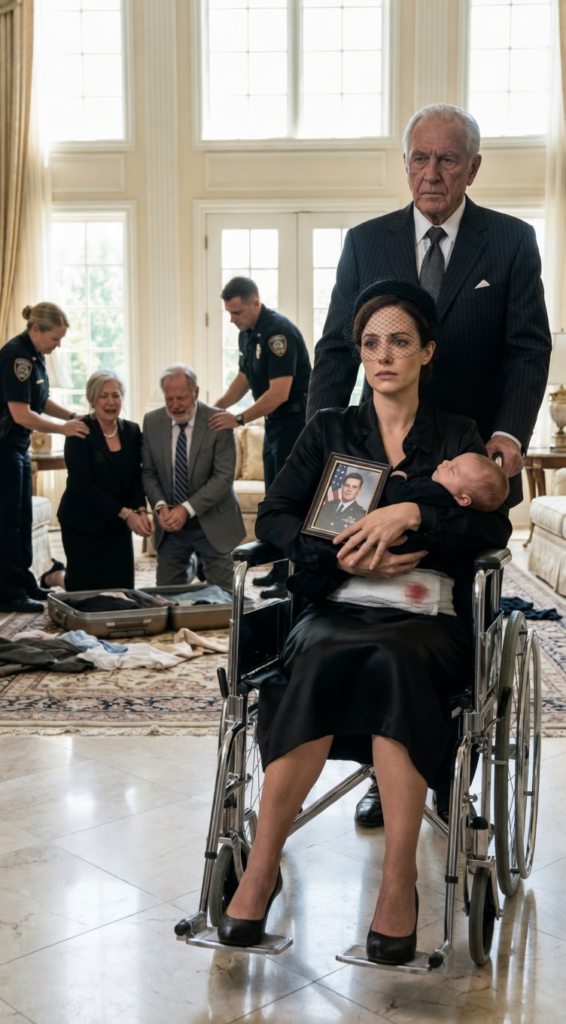
They say grief is a phantom limb, an ache for something irrevocably severed. But in those first few days, grief wasn’t an ache; it was a physical crushing weight, a suffocating pressure sitting directly on my chest. Or perhaps that was just the reality of my newly emptied womb and the tiny, fragile life now sleeping against my collarbone.
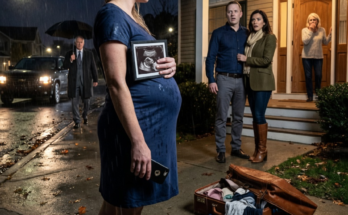
My name is Rita. I was twenty-eight years old, confined to Room 3B of Saint Vincent Medical Center, bleeding onto sterile white pads and shivering under a thin, scratchy hospital blanket. It was November 28th, exactly three days after I had been sliced open in an emergency C-section to deliver my son, Owen. And it was exactly ten days since my husband, Aaron, had been burned alive.
The fluorescent lights above buzzed with a low, mechanical indifference. I listened to the rhythmic, comforting wheeze of Owen’s breathing. He was six pounds, three ounces of absolute perfection, born a week early because my traumatized body simply could not harbor him a second longer. I had delivered him entirely alone in a room full of masked strangers.
I was exhausted down to the marrow of my bones. But the true test of my endurance hadn’t even begun.
The sound arrived before they did. The walls in the maternity ward were paper-thin, allowing me to map the ecosystem of the hallway. I knew the soft, rubber-soled shuffle of the nurses during the 2:15 PM shift change. I knew the brisk, purposeful click of the attending physicians. But these footsteps were entirely alien to this floor of healing and new life. They were heavy. Deliberate. The sharp thud of leather work boots striking the linoleum like a gavel.
The door to Room 3B swung open, disrupting the stale, antiseptic air.
My father, Gerald Howard, stepped into the room. He didn’t offer a tentative smile. He didn’t rush to the bedside to inspect the miraculous rise and fall of his new grandson’s chest. His eyes, cold and calculating, swept the perimeter, taking inventory of the space. He noted the empty bassinet near the frosted window, the steady drip of my IV bag, the stack of discharge papers resting on the laminate counter. He looked at everything except the infant resting against my heart.
My mother, Judith Howard, materialized like a shadow behind him. Her arms were devoid of flowers, lacking balloons or plush toys. Instead, she clutched a thick manila folder, its edges bristling with bright yellow sticky tabs. She approached the side of my bed and dropped the folder onto my lap. It landed with a dull, heavy thwack. It felt less like a visit and more like the serving of a subpoena.
“When are they discharging you?” my father demanded. No preamble. No ‘How is the pain?’ or ‘He looks just like Aaron.’ Just a logistical inquiry from a man impatient with the timeline.
I shifted my weight, wincing as a lance of fire shot through my healing abdomen. I instinctively cupped a trembling hand over Owen’s tiny back. “December 1st. Maybe the 2nd,” I rasped, my throat raw. “They want to monitor my blood pressure. It keeps crashing.”
Gerald checked his wristwatch. It was 2:19 PM. He sighed, a sharp exhalation of profound annoyance, and checked it again thirty seconds later.
Judith took a half-step back toward the threshold, creating a buffer zone between herself and her only daughter. Seventy-two hours since I had been split open, and she still refused to make eye contact with the infant.
“We need to discuss logistics. What happens next,” my father announced, his voice devoid of warmth. “Aaron’s family should be handling this. You have in-laws for a reason, Rita.”
I stared at him, my mind sluggish from painkillers and trauma. “Handling what?”
“You,” he stated, as if I were a logistical error in a spreadsheet. “You cannot come home with us. We aren’t equipped for a newborn.”
My mother crossed her arms, her face a mask of stone. “You’re an adult now, Rita. You need to figure this out. You’re not our responsibility anymore. You never really were.”
The words felt like a bucket of ice water thrown over my feverish skin. I looked down at the plastic identification band secured around Owen’s microscopic wrist: Baby Boy, November 25th, 2025, 6:23 a.m. “You’re… you’re saying this right now?” I whispered, my voice cracking. “While I’m still bleeding in a hospital bed?”
“When you recover,” Gerald interrupted, waving a dismissive hand, “go to your in-laws. We don’t want you here.”
Silence descended, heavy and absolute, save for a tiny, squeaking sigh from Owen. My mother leaned forward and flipped open the manila folder on my legs.
“Insurance claim forms,” she recited, her tone flat and rehearsed. Three pages stared up at me, marked aggressively with those yellow tabs. “Sign here, here, and at the bottom.”
I blinked, trying to focus my blurred vision on the dense legal text. Page one: my name. Page two: Aaron’s name. I turned to the next sheet. It was page four.
I looked closer. The metal staple in the top left corner had been pried open, the paper slightly torn where a page had been violently extracted. Page three was simply gone.
“What if Aaron’s parents can’t afford to help?” I asked softly, a final, desperate test to see if a shred of parental instinct remained in either of them.
My father was already pivoting toward the exit. “That is not our concern. Figure it out.”
I checked the clock. They had arrived at 2:06 PM. It was now 2:17 PM. Eleven minutes. Eleven minutes to discard their daughter and attempt to secure a signature.
Judith paused at the doorframe. “Call us when you’re settled.”
Settled. A sterile word. Settled meant far out of their jurisdiction. Settled meant silenced. The heavy door clicked shut behind them.
Alone again, the hum of the hospital returned. I sat paralyzed, processing the sheer, calculated cruelty of their timing. They had intentionally arrived precisely at 2:15 PM. The shift change. The fifteen-minute window where the nursing station was abandoned, where the hallways were devoid of witnesses. No one to hear them exile a grieving widow.
But as I stared at the mutilated insurance packet, the fog of grief began to lift, replaced by the sharp, crystalline clarity of adrenaline. I reached for my phone resting on the tray table. They believed they had outsmarted a broken woman. But they had made a fatal miscalculation.
They didn’t realize I already knew about the fire.
Chapter 2: The Paper Trail in the Dark
The manila folder sat untouched on my lap for three agonizing hours. Owen slept, oblivious to the treacherous currents swirling around him. The afternoon bled into dusk, the hospital room dimming into a palette of bruised purples and grays.
Aaron’s parents, Tom and Linda, had retreated to their nearby hotel to sleep. They had driven eight punishing hours through the night from Boise the moment they got the call, their eyes swollen and voices shattered. They had held Owen and wept openly for the son they had lost. They were my sanctuary. My own blood, however, had waited ten days to show up for an eleven-minute ambush.
With trembling fingers, I finally opened the folder again. My eyes traced the missing staple mark. Something dark and venomous was hiding in the margins of these documents.
I unlocked my phone and scrolled back through my digital archive. Past the frantic texts of the last two weeks, past the ultrasound photos, back to the golden warmth of early autumn. September 15th.
I vividly remembered that Sunday. I was seven months pregnant, navigating the terrifying thrill of impending motherhood. Aaron and I were sitting in our kitchen when my father arrived unannounced, clutching the battered leather briefcase he hadn’t used since retiring from his insurance firm three years prior.
“Young families are incredibly vulnerable,” Gerald had lectured, pacing our linoleum floor while Judith nodded dutifully from the sofa. “What if a tragedy befalls Aaron? What if something happens during the birth? You need comprehensive life insurance. I’m looking at significant coverage. $825,000.”
Aaron, his hands rough and calloused from years of shaping oak and walnut, had frowned, shifting uncomfortably. “That’s a massive policy, Gerald. I’m a custom woodworker, not a corporate executive.”
“You’re about to be a father,” Gerald had snapped back, weaponizing Aaron’s sense of duty. “This is basic responsibility. Do you care about my daughter’s financial future or not?”
It was an ultimatum wrapped in a guilt trip. Aaron had looked at me, his eyes soft, pleading for a read on the situation. I had squeezed his hand and whispered, “It’s okay. Dad knows this industry inside out.” Because I loved my husband, and he loved me enough to endure my father’s overbearing nature to keep the peace.
We had signed where Gerald pointed. Page seven. I was the Primary Beneficiary. Aaron was the Spouse. Gerald had hovered over the documents, his hand strategically blocking the upper paragraphs as he acted as the witness. The very next morning, my father paid the first six months of premiums—$3,200 in crisp, untraceable cash. “Consider it an early baby gift,” he had declared.
Now, sitting in the blue light of the hospital room, I pulled up a specific note from Aaron’s phone, which the police had recovered from his parked truck. Aaron had written it late on the night of September 16th.
‘G pushed wildly hard for $825k. Deflected when I asked for the math behind that specific number. Why not 500k? Why not an even million? $825,000 feels weirdly calculated. Rita trusts him so I’ll drop it, but my gut says something is fundamentally wrong.’
My beautiful, intuitive husband had sensed the snare tightening, but he had walked into it anyway, just to protect me from my own family’s wrath.
Five days after signing, Aaron had quietly photocopied the entire policy, sealing it in a manila envelope labeled Important – Keep With You. He had tucked it into my hospital go-bag weeks before my due date.
I reached down to the canvas duffel bag resting by the bed rails and extracted Aaron’s pristine copy. I laid it side-by-side with the butchered version my parents had just delivered.
The missing Page Three was titled: Beneficiary Rights, Declinations, and Options. It outlined in plain legal jargon how a primary beneficiary could contest a payout, redirect funds to a trust, or demand an independent review. Gerald had removed it to keep me blind to my own agency.
But the true horror was buried on Page Four.
In my parents’ copy, the page was standard. In Aaron’s unredacted copy, there was an addendum, signed in a slightly different blue ink. My father had added himself as the Secondary Beneficiary (50%) alongside my mother (50%), in the event of the primary beneficiary’s death. If Aaron and I had both perished in that fire, Gerald and Judith would have walked away with nearly half a million dollars each.
And beneath that, a clause my father had clearly intended for me to blindly initial today: Financial Guardian Designee for Minor Child. By signing the papers he brought to the hospital, I would have legally surrendered the entire $825,000 payout directly into Gerald’s control on Owen’s behalf.
My breath hitched, catching in my throat like shards of glass.
I pulled up my text message history with Gerald. November 17th. The night before the world ended. I had been admitted to the hospital for false labor.
11:52 PM – Gerald: How are you feeling, sweetie? Did they send you home yet? 11:55 PM – Me: Still here. Contractions stopped but they are keeping me overnight for observation.
Then, I looked at Aaron’s recovered phone.
11:58 PM – Gerald: Hey Aaron. Rita is staying at the hospital tonight. You doing okay alone at the house? Need anything? 12:04 AM – Aaron: I’m good, thanks. Grinding out the Brennan dining table order. Should be out in the workshop until 2 AM.
At exactly 2:06 AM, the fire ignited. Exactly two hours after my father confirmed the perimeter was clear and his target was isolated.
My hands shook violently, threatening to drop the devices. I scrolled back to a photo Aaron had casually snapped of our kitchen table on September 15th, meant to show off a new centerpiece, but capturing Gerald’s open briefcase in the background. I zoomed in, the pixels blurring before sharpening into focus.
Visible on a legal pad inside the briefcase, written in Gerald’s aggressive cursive, were the words: Accelerant Coverage Clause – $825,000 Term.
My father hadn’t been securing my future. He had been pricing out a hit. He had been researching fire investigations two full months before the match was ever struck.
I stared at the wall, the pieces locking together with sickening precision. My father had orchestrated my husband’s murder. He had intended to kill me too, hoping I’d be asleep in the house. When I unexpectedly survived because of a hospital stay, he pivoted his strategy to steal the blood money right out of my grieving hands.
A cold, terrifying calm washed over me. I wasn’t just a widow anymore. I was the only thing standing between a monster and my son.
At 11:30 PM, I dialed a number I had saved days ago. The phone rang four times, echoing in the quiet room.
“This is Clayton,” a gruff voice answered.
“Clayton,” I whispered, gripping the phone like a lifeline. “This is Rita. Aaron’s wife. I need to ask you something about the fire investigation.”
There was a heavy pause. When the Fire Marshal spoke again, the professional distance was gone. “Rita. I’m profoundly glad you called. I’ve been hitting walls trying to reach your family. There is something fundamentally wrong with this fire.”
I squeezed my eyes shut, a tear finally escaping. “My father… he told me he was the first one at the scene.”
Clayton’s voice dropped an octave. “Yes. Your father arrived at the perimeter at 2:11 AM. The 911 call from your neighbor came in at 2:09 AM. My crew didn’t arrive until 2:14. He beat the sirens.”
“He lives eighteen minutes away,” I breathed into the receiver. “In zero traffic.”
“I know,” Clayton said softly. “So, Rita… how did he do it?”
“I have the answer,” I told him. “And I have the proof.”
“Don’t sign a single thing,” Clayton ordered, his voice suddenly sharp with command. “I’ll be there in forty-eight hours. I’m bringing a homicide detective.”
Chapter 3: The Trap is Set
Sleep was a biological impossibility. For the next two days, I existed in a state of hyper-vigilance, nursing Owen every three hours while my mind sprinted through the horrific timeline.
September 15: The policy is forced upon us. September 16: Gerald pays the premium in cash. November 17: Gerald confirms my absence and Aaron’s exact location. November 18, 2:06 AM: The inferno begins. November 18, 2:11 AM: Gerald arrives on the scene, defying the laws of physics unless he was already parked down the street, watching it burn.
People often wondered why I remained in the hospital for two straight weeks. They assumed I was fragile, paralyzed by the thought of facing the world. They didn’t understand the physical reality. The fire hadn’t just consumed Aaron’s workshop; the accelerant had burned so violently that it leaped to the main structure. By 2:14 AM, the home we had built was a towering column of ash and roaring orange flame. The nursery I had painstakingly painted with woodland creatures, the handcrafted crib, the wedding albums—incinerated into white dust. I stayed in the hospital because I was a homeless, widowed mother recovering from major abdominal surgery.
I spent November 29th documenting everything. I laid out the manipulated hospital forms next to Aaron’s pristine copy, photographing the discrepancies, the forged beneficiary lines, and the hidden guardianship clauses. I screenshotted the text messages. I sent a secure, encrypted file of twelve high-resolution images directly to Clayton.
11:54 PM – Clayton: Received. We are coming tomorrow afternoon. Keep your doors locked. Tell absolutely no one.
The afternoon of November 30th arrived with a suffocating tension. At exactly 3:00 PM, a sharp knock rattled my door.
“Come in,” I called out, my voice steadier than my pulse.
Clayton entered first. He was no longer the sympathetic friend from the funeral; he was clad in his full Portland Fire and Rescue uniform, his gold badge gleaming under the harsh lights. Behind him walked a woman in a sharp blazer, her posture rigid, a detective’s shield clipped to her leather belt.
“Rita,” Clayton said, removing his cap. “This is Detective Elaine, Arson and Homicide Division.”
Homicide. Hearing the word spoken aloud sucked the oxygen from the room.
Elaine stepped forward, unzipping a sleek leather portfolio. “Mrs. Howard. I need to state for the record that this is now an active criminal investigation. We have reviewed your digital submissions. They are compelling.” She paused, her eyes softening slightly as she looked at Owen. “We also have physical forensic evidence that corroborates your theory.”
“What did you find?” I asked, clutching the bedsheets.
Clayton pulled a specialized tablet from his bag and tapped the screen, bringing up high-definition photos of the blackened ruins of Aaron’s workshop. “Fires tell a story, Rita. They leave scars. Look at these char patterns on the foundational beams. We found three distinct ‘V-shapes’—one in the northeast corner, one in the southwest, and one in the southeast.”
He zoomed in on a massive, charred gouge in the wood. “Accidental fires do not originate in three separate corners simultaneously. This was a synchronized, intentional ignition.”
“And the catalyst?” I asked.
Elaine laid a clear plastic evidence bag on my tray table. Inside was a printed receipt. “The laboratory isolated heavy traces of mineral spirits. Industrial grade paint thinner. Aaron was a renowned eco-woodworker. We pulled his supply manifests. He hasn’t ordered a petroleum-based product in over three years.”
She tapped the bag. “This receipt was recovered via subpoena from Benson’s Hardware. Dated November 16th. Two days prior to the blaze. Two gallons of mineral spirits, paid for in cash. The security footage shows your father at the register.”
My stomach bottomed out. He had bought the murder weapon forty-eight hours before pulling the trigger.
“We are preparing a warrant for his phone’s GPS data and financial records,” Elaine explained, leaning in. “But we need his verbal statement first. We need to catch him in the lie before we show our hand.”
Before I could process her strategy, the sound we had all been waiting for echoed through the room.
Knock. Knock. Knock. Three sharp, impatient raps. Then, without waiting for permission, the door handle turned.
My father strode into Room 3B, a strained, patronizing smile plastered across his face. My mother trailed slightly behind him, wringing her hands. Behind them both was a nervous-looking man in a cheap suit, clutching a briefcase.
“Rita, honey,” Gerald began, his voice pitched an octave higher than usual, dripping with false saccharine. “We decided not to wait. We brought a notary public to help you finalize this paperwork so you can just—”
The words died in his throat.
Gerald froze. His eyes darted from my face, to the imposing figure of Detective Elaine, and finally locked onto the stark white uniform of Fire Marshal Clayton.
The color drained from my father’s face with alarming speed, leaving his skin the color of dirty ash.
“Mr. Howard,” Clayton said, his voice a low, dangerous rumble. “I’ve been looking forward to this conversation.”
Chapter 4: The House of Cards Burns
The atmosphere in the room shifted from sterile to highly combustible.
Gerald’s knuckles turned white as he gripped the doorframe. His fight-or-flight response had violently overridden his bravado. “We… we will come back at a better time,” he stammered, already pivoting his body toward the hallway.
“Sir.” Detective Elaine moved with startling speed, inserting herself between my father and the exit. “We have a few standard inquiries regarding the events of November 18th. Please, have a seat.”
Judith looked frantically between the uniforms and her husband. “Gerald? What is going on? Why are the police in Rita’s room?”
The notary public, possessing the survival instincts of a cornered rabbit, slowly backed out of the room, his cheap shoes squeaking on the linoleum before he vanished down the corridor entirely.
“Mr. Howard,” Clayton began, not offering a chair. “I need you to clarify a chronological discrepancy for my incident report. How did you manage to arrive at the Willow Creek property at precisely 2:11 AM?”
Silence. Only the hum of the monitors filled the void.
“Your residence is an eighteen-minute drive in optimal conditions,” Clayton pressed, stepping closer. “Yet you arrived five minutes after the initial 911 call was dispatched. You beat my engine company. How is that physically possible?”
Gerald’s mouth opened and closed like a suffocating fish. “I… I couldn’t sleep. I was driving around. Clearing my head.”
“At two in the morning?” Elaine arched an eyebrow. “On a random Tuesday? You were just casually cruising through your daughter’s specific suburban subdivision?”
“I saw the smoke!” Gerald barked, his voice cracking. “I saw the smoke from the highway!”
“Through two miles of dense pine trees and residential zoning?” Clayton countered effortlessly. He pulled up the tablet. “Let me show you what the smoke left behind, Gerald.”
Clayton flipped the screen to face my parents. He swiped through the grisly photos of the three V-patterns. “You spent thirty-five years underwriting insurance claims, Mr. Howard. You know exactly what a multi-point origin indicates. You know electrical faults don’t spawn in three corners at once.”
Judith let out a pathetic, trembling gasp. “What… what does that mean?”
“It means your son-in-law was murdered, Mrs. Howard,” Elaine stated, her eyes locked on my mother. “With two gallons of mineral spirits purchased from Benson’s Hardware on November 16th. By your husband.”
Elaine slid the copy of the receipt across the tray table. Judith stared at the timestamp, her hands flying to her mouth to stifle a scream. “Gerald?” she whimpered, backing away from him as if he were radioactive.
Gerald remained mute, his eyes darting frantically toward the window, looking for an escape that didn’t exist.
“Let’s review the digital footprint,” Clayton continued mercilessly. “At 11:58 PM, you texted Aaron to confirm he was alone on the property. Aaron was wearing heavy, noise-canceling earmuffs to operate his industrial sander. He was utterly vulnerable. He wouldn’t have heard the door open. He wouldn’t have smelled the fumes until the conflagration had already sealed both exits.”
I squeezed my eyes shut, a tear hot and heavy sliding down my cheek. I pictured Aaron, focused on his craft, the sudden terrifying heat, the realization of betrayal.
“The accelerant burned incredibly fast,” Clayton said softly, glancing at me with deep sorrow. “Aaron succumbed to smoke inhalation rapidly. He didn’t suffer the flames. That is the only mercy I can offer you.”
Judith collapsed into the visitor’s chair, her sobs wracking her frail frame.
“But we aren’t finished,” Elaine said, her tone hardening into steel. “The fire didn’t stop at the workshop. We found heavy concentrations of mineral spirits poured across the threshold of the primary residence. Specifically, leading into the master bedroom.”
The blood in my veins turned to ice. My bedroom. Elaine looked directly at me. “Your father didn’t just want to stage a tragic workshop accident. He saturated the house. If you had not been admitted to this hospital for false labor, Rita… you would have burned in your bed.”
A collective gasp sucked the air from the room.
“You tried to kill her?” Judith shrieked, launching herself out of the chair, her fists pounding against Gerald’s chest. “You tried to kill our daughter?!”
Gerald caught her wrists, his face contorted in a grotesque mask of panic and rage. “I was trying to save us!” he roared, his voice echoing off the sterile walls. “The payout would have set us up for the rest of our lives! Both of you would have—”
He stopped. The echo of his own words hung in the air like a guillotine blade.
Both of you.
Clayton slowly lowered his tablet. Elaine unclipped the handcuffs from her belt. A recorded, verbal admission of intent.
“Gerald Howard,” Elaine announced, stepping forward and swiftly securing his wrists behind his back. The metallic click-clack was the most beautiful sound I had ever heard. “You are under arrest for first-degree murder, felony arson, insurance fraud, and the attempted murder of your daughter.”
As she read him his Miranda rights, my father finally looked at me. His arrogant facade had melted away, leaving a pathetic, terrified old man.
“Rita,” he begged, his voice a pathetic whine. “You’re doing this? To your own flesh and blood?”
I adjusted Owen in my arms, ensuring his delicate neck was supported. I looked my father dead in the eye, feeling nothing but a vast, frozen wasteland where my love for him used to reside.
“You burned my husband alive,” I said, my voice eerily calm, cutting through his panic. “You are not my father. You are just the man who is going to die in a cage.”
Chapter 5: Out of the Embers
The hallway was lined with nurses, orderlies, and patients holding up smartphones as Detective Elaine marched Gerald Howard out of Room 3B. He was paraded through the maternity ward, a murderer among the newborn. He tried to look back at me one last time, but I turned my head, denying him even the comfort of my hatred.
The heavy door clicked shut, leaving me alone with Owen, and a hyperventilating Judith.
A nurse rushed in to administer oxygen to my mother, who was crumpled in the chair, weeping hysterically. Elaine returned a moment later, her expression businesslike.
“Mrs. Howard,” Elaine addressed my mother. “We will need your formal statement regarding your knowledge of these events. You have the right to counsel.”
“I’ll tell you everything,” Judith sobbed, her makeup running down her face in dark, muddy rivers. She crawled toward my bed, clutching at the hem of my blanket. “Rita, I swear to God I didn’t know. I thought it was an accident. I didn’t know he lit the match!”
I looked down at her. “I believe you.”
She exhaled a ragged breath of relief. “Oh, thank God. Rita, I love you so much—”
“But you knew I was alone,” I interrupted, my voice devoid of inflection.
Judith froze.
“You didn’t know about the murder,” I continued, staring at the ceiling. “But you knew my husband was dead. You knew my house was gone. And you waited ten days to visit me. You came in here today, before you knew the police were coming, and you told me I was a burden. You told me I was never your responsibility. You watched me bleed, holding your orphaned grandson, and you told me to leave.”
“I was just following Gerald’s lead, I was scared of him—”
“You made a choice,” I stated firmly, looking back into her terrified eyes. “Whether Dad killed him or not, you decided that I didn’t matter. You chose his money and his comfort over my survival.”
“Please, Rita…”
“Get out,” I whispered. It wasn’t a yell; it was an eviction notice from my life. “I am making my choice now.”
She stumbled out of the room, guided by the pitying nurse. And finally, the silence in Room 3B was peaceful. I looked down at Owen. His tiny fingers curled around the edge of my hospital gown. It’s just us now, I thought. And we are going to be magnificent.
Fourteen days after I arrived at Saint Vincent, I was discharged. Tom and Linda were waiting in the lobby. They had rented a massive suite in Portland, stocking it with diapers, formula, and a wooden bassinet Tom had carved himself in the last week.
“You stay with us until the end of time, if you need to,” Tom had said, kissing my forehead.
By January, the charges against Gerald were formalized, upgraded by a zealous DA aiming for life without parole. The evidence—the hardware receipts, the cell tower pings, Aaron’s hidden notes, and the hospital room confession—was an insurmountable mountain.
I didn’t stick around to watch the circus. In February, I packed up Owen and moved to Seattle, a safe, rainy distance away. I found a bright apartment in Capitol Hill. I hung a massive portrait of Aaron in his workshop directly above Owen’s crib. I wanted my son’s first memories to be of the man who loved him enough to die protecting his future.
Aaron’s sister, Bethany, drove in from Spokane every other weekend. We drank wine, assembled baby furniture, and laughed until we cried.
On Valentine’s Day, a thick envelope arrived via my attorney. The return address belonged to Judith. I held the letter for three days, feeling the weight of the paper, imagining the desperate apologies and the pleas for reconciliation written inside.
On the fourth day, I struck a match, held the corner of the envelope to the flame, and dropped it into my stainless-steel sink. I watched the paper curl, blacken, and turn to ash. It smelled like smoke, but this time, it smelled like freedom.
Forgiveness and access are two vastly different concepts. My therapist asked me if I would ever let the anger go. I realized sitting on a park bench in June, watching seagulls dive over the Puget Sound while Owen giggled in my lap, that I already had. I wasn’t angry anymore. I was just done.
Family is not an unbreakable blood pact demanding blind loyalty in the face of abuse. It is not a debt you owe simply because someone financed your childhood. Family is an architecture you build. It is forged by the people who drive eight hours through the night to hold your hand when the world burns down. It is the people who teach you lullabies, who protect your peace, and who never, ever calculate your worth on a ledger.
My parents gave me my life. But Aaron, Tom, Linda, Bethany, and little Owen—they gave me my sanctuary. And no one will ever set fire to my home again.