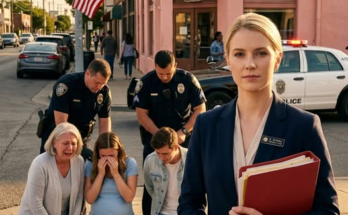
I Saw the Message Carved Into My Daughter’s Back, Then Learned Her Husband Wasn’t the Monster
My phone rang at 11:43 p.m.
At my age, nothing good comes from a phone call that late. Retired surgeons know that better than anyone. Midnight calls mean complications, crashes, blood loss, families pacing hallways, and someone somewhere praying a doctor can do what the human body refuses to do for itself.
But I had been retired for almost five years. No one called me for emergencies anymore.
So when the screen lit up with Victor Hayes, my stomach went cold before I even answered.
Victor and I had worked together at St. Andrew’s Medical Center for more than twenty years. He had stood beside me in operating rooms through ruptured aneurysms, impossible traumas, and nights when both of us went home with other people’s blood dried beneath our fingernails. He was steady. Brilliant. Controlled.
But the voice on the phone that night was not controlled.
“Thomas,” he said. “Get to St. Andrew’s now.”
I sat up in bed. “What happened?”
“It’s Lily.”
My daughter’s name hit me harder than any diagnosis ever had.
I was already reaching for the sweater on the chair. “Is she alive?”
A pause.
That pause nearly stopped my heart.
“She’s alive,” Victor said. “But you need to come now.”
“What happened to her?”
“She came in forty minutes ago. Severe trauma to her back. Possible assault.” His voice dropped. “You need to see it yourself.”
I don’t remember locking the front door. I don’t remember the drive except for the red lights, the empty streets, and my own hands gripping the wheel so hard they cramped.
I made it to St. Andrew’s in ten minutes.
The ambulance entrance smelled exactly as I remembered: antiseptic, wet pavement, old coffee, adrenaline. The sliding doors opened, and for one strange second I felt like I was walking back into my former life.
Then I saw Victor standing outside Trauma Room Two.
His face was pale.
In all the years I had known him, I had seen him calm during disasters that would have broken younger doctors. I had seen him hold pressure on a wound while the patient died under his hands. I had seen him tell parents their son was gone.
I had never seen him look like that.
“Where is she?” I asked.
He didn’t answer.
He only pulled back the curtain.
My daughter was lying face down on the trauma bed, sedated, her blonde hair damp with sweat and stuck to her cheek. Her hospital gown had been cut open down the back. A nurse stood beside her IV pole, eyes lowered, as if she could not bear to look at me.
At first, I thought the dark marks across Lily’s skin were bruises.
Then I stepped closer.
They were not bruises.
They were words.
Someone had carved a message into my daughter’s back.
The cuts were shallow, but deliberate. Fresh enough that blood still beaded along the edges. Not frantic. Not random. Whoever had done it had taken their time.
Across Lily’s shoulder blades, in jagged letters, it said:
HE LIED TO YOU TOO.
Below that, smaller and lower, almost hidden near her ribs:
ASK HIM ABOUT DENVER.
The room tilted.
For thirty-six years, I had opened bodies, repaired organs, removed bullets, stitched arteries, and fought death with everything I had. I had seen horror. I had trained myself to stay calm inside horror.
But this was my daughter.
My Lily.
And for a moment, the retired surgeon vanished, and only the father remained.
I stepped closer, my knees suddenly unsteady.
Then I saw something clutched in her trembling right hand.
A torn strip of fabric.
White dress shirt. Blood-soaked. Monogrammed.
Three initials stitched in navy thread.
R.J.C.
Ryan James Carter.
My son-in-law.
I stared at those initials until they seemed to burn themselves into my vision.
Ryan had married Lily three years earlier. He sold medical equipment, at least that was what he told everyone. He was polished, polite, successful, the kind of man who remembered birthdays and brought good wine to dinner. I had never loved him, but Lily did, and that had been enough.
Until that moment.
I reached toward the strip of cloth.
Before my fingers touched it, Lily’s eyes snapped open.
Her pupils were glassy with medication and pain, but she knew me.
“Dad,” she whispered.
I leaned over her. “I’m here, sweetheart. I’m right here.”
Her fingers tightened around the fabric.
“Don’t let him know,” she breathed.
“Don’t let who know?”
Tears slid into her hairline.
“Don’t let him know I’m still alive.”
I thought I knew exactly who she meant.
I was wrong.
And over the next few hours, the truth would tear through my life with the same precision as the words cut into my daughter’s skin.
Victor moved toward her IV. “Lily, don’t try to talk.”
“No.” Her voice was barely there, but fear gave it force. “No more waiting.”
I took her hand. “Did Ryan do this?”
She closed her eyes.
For one second, I believed she would say yes.
Instead, she shook her head.
“Not alone.”
Victor and I looked at each other.
“Lily,” I said carefully, “what does Denver mean?”
Her body went rigid.
The monitor beside the bed began to climb.
“Thomas,” Victor warned. “Stop. Her heart rate’s spiking.”
But Lily was staring at me now, horrified.
“You saw it,” she whispered. “Oh God. You saw it.”
Then her eyes rolled back, and she went limp.
Everything moved fast after that. Victor ordered more medication, imaging, bloodwork, and a police notification. Nurses came in. A young resident asked me to step back. Someone took the fabric from Lily’s hand and sealed it in an evidence bag.
I stood in the hallway with dried blood on my fingers and felt something inside me harden.
Then I called Ryan.
He answered on the second ring.
“Thomas?” His voice was breathless. “Have you heard from Lily? I’ve been trying to reach her. She left after dinner and—”
“She’s at St. Andrew’s.”
Silence.
Then, very softly, “Is she okay?”
The concern sounded real.
That made me angrier.
“Get here now,” I said.
I hung up before he could ask another question.
The police arrived fifteen minutes later.
Detective Carla Reyes walked in like a woman who had spent most of her life entering rooms where everyone was lying. Mid-forties, dark hair pulled back, sharp eyes, no wasted motion. She listened as I explained the call from Victor, the message carved into Lily’s back, the initials on the fabric, and Lily’s warning not to tell him she was alive.
Reyes did not react the way I expected.
She did not immediately ask about Ryan’s temper, drinking, marriage, or history of violence.
Instead, she asked, “Has your daughter ever mentioned a storage unit?”
I stared at her. “What?”
“Or a safety-deposit key?”
“No. What does that have to do with my daughter?”
Reyes studied me for a long second, then removed a photo from a folder and handed it over.
It was Ryan.
Not a family photo. Not a picture from Lily’s wedding. It was grainy surveillance footage. Ryan stood beside a black SUV outside a federal building in Denver, Colorado.
The timestamp was six weeks earlier.
My throat tightened.
“What is this?”
“We’ve been investigating a financial fraud case tied to a biomedical startup called HelixCore Biotech,” Reyes said. “Shell companies. Stolen patient data. Illegal testing contracts. Possible deaths covered up as unrelated medical complications.”
I looked back at the photo. “Ryan sells medical equipment.”
“That’s the cover.”
Victor, standing beside me, folded his arms. “Detective, what exactly are you saying?”
Reyes didn’t take her eyes off me.
“Your son-in-law’s name surfaced six weeks ago. We believe he had access to internal contracts and financial channels. We also believe your daughter found out more than she was supposed to.”
For a moment, I heard only the distant beeping of monitors.
Lily and Ryan had seemed happy. Not perfect, but happy enough. They came over for Sunday dinners. Lily laughed at his dry jokes. He held her coat. He sent flowers to the clinic where she volunteered.
Had I missed everything?
Or had I seen only what I wanted to see?
“Why haven’t you arrested him?” I asked.
“Because we couldn’t prove the conspiracy,” Reyes said. “Not yet. Then yesterday, a witness disappeared in Kansas City. Tonight your daughter gets dumped outside this hospital with a message cut into her back.”
A cold weight settled in my chest.
This was not just a violent marriage.
This was something larger.
And Ryan was at the center of it.
He arrived just before midnight.
I heard him before I saw him, shoes striking fast against the floor, his voice rising at the nurses’ station.
“My wife, Lily Carter. Someone called and said she’s here.”
He rounded the corner with his tie loose, hair damp with sweat, face pale. When he saw me, he stopped.
“Thomas.”
Detective Reyes stepped in front of him.
“Ryan Carter?”
He looked at her badge.
It was quick, almost invisible, but I saw it.
A flinch.
Then the worry returned.
“She’s my wife,” he said. “Where is she?”
I pulled the evidence bag from the counter where Reyes had set it down and held it up.
The bloodstained fabric hung inside the plastic.
His eyes dropped to the initials.
And that was the first crack.
He did not look guilty.
He looked terrified.
“That’s not mine,” he said.
“It has your initials.”
“I know what it has.”
“It was in her hand.”
“Then someone wanted it there.”
Reyes watched him closely. “Where were you between eight and ten tonight?”
“At home,” Ryan said. “Then driving around looking for Lily.”
“Can anyone confirm that?”
He opened his mouth.
Closed it.
“No,” he said.
It should have sounded damning.
Instead, it sounded like the answer cost him something.
I stepped closer. “She told me not to let you know she was alive.”
Pain flashed across his face.
Then something else.
Recognition.
He whispered, “She said that?”
“Yes.”
Ryan swallowed hard. “Then he got to her.”
“Who?”
Before Ryan could answer, Victor’s pager buzzed.
He looked down, frowned, then turned toward me.
“Thomas,” he said. “Radiology has the CT. You should see this.”
I did not want to leave Ryan alone with Reyes. I did not want to leave Lily. I did not want to walk another step into whatever nightmare had opened beneath my family.
But I followed Victor.
Old habits are powerful. A doctor says a scan needs to be seen, and the surgeon follows.
Radiology was dim except for the blue-white glow of the monitor. Lily’s spinal images appeared on the screen, each slice moving in ghostly layers. Victor zoomed in near the left shoulder blade.
I leaned closer.
I had spent my life looking at the inside of the human body. I knew what belonged there.
This did not.
A small metallic object sat beneath the skin near her left shoulder blade. Too clean to be shrapnel. Too deliberate to be debris. Not surgical hardware. Not a bullet.
Victor adjusted the image.
A capsule.
My mouth went dry.
“A tracker,” I said.
Victor said nothing.
I looked at him. “Who puts a tracking implant in a woman’s back?”
Before he answered, the power went out.
The screen went black.
The overhead lights died.
For one second, the entire hospital seemed to inhale.
Then emergency lights flickered on, staining the hallway red.
A scream echoed from Trauma Room Two.
I ran.
I had not run like that in years, but fear does not care about age. Victor was behind me. Nurses shouted. Somewhere down the hall, equipment alarms shrieked into the dark.
When I tore through the curtain, Lily’s bed was empty.
For one frozen second, I thought someone had taken her.
Then I saw the trail of blood leading toward the bathroom.
I pushed the door open and found her crouched on the tile floor, one hand pressed to her shoulder, IV torn out, blood running down her arm. Her face was gray. Her body trembled violently.
“Dad,” she gasped. “They cut the power because they’re here.”
I dropped beside her. “Who?”
She looked past me, toward the trauma room.
“Not Ryan.”
Those two words stopped everything.
Victor stepped inside and locked the bathroom door.
“Lily,” he said quietly. “You are confused. You need sedation.”
She recoiled from him.
Not from me.
From Victor.
I saw it.
So did Reyes, who appeared in the doorway with her gun drawn.
“Everybody stay where you are,” she said.
Victor turned slowly. “Detective, she’s medically unstable.”
“Then step away from her.”
The bathroom seemed too small for all of us. Lily pressed herself against the tile wall, shaking, bandages loose against her back.
“Talk to me,” I said. “Right now.”
Lily swallowed. “Ryan found out six months ago. HelixCore wasn’t just selling medical technology. They were using hospital data to identify vulnerable patients for illegal drug trials. People in rehab. Cancer patients. Uninsured patients. People no one would listen to if they complained.”
My mind struggled to keep up.
“Ryan knew?”
“He found out after he was already in too deep,” she said. “He thought he was helping with sales contracts. Then he saw names. Patient records. Payments routed through fake companies.”
“Why didn’t he go to the police?”
“He did,” Reyes said from the doorway. “Quietly. Through federal contacts.”
I turned toward her.
She nodded once. “That’s why Denver mattered.”
Lily’s eyes filled with tears. “Denver was where Ryan met a compliance officer who said she could help. But it wasn’t safe. Someone inside the investigation was leaking information back to HelixCore.”
I could barely speak. “Who?”
Lily looked at me.
Then her gaze shifted past me.
To Victor.
My head turned slowly.
Victor Hayes stood beside the sink, his face still.
No confusion.
No outrage.
No denial.
Only calculation.
My voice came out broken. “Victor?”
Lily whispered, “He was the leak.”
The words were so impossible that my mind rejected them.
Victor, who had worked beside me for two decades.
Victor, who had held pressure with me through impossible nights.
Victor, who had called me when Lily arrived.
Victor, who had told me I needed to see it myself.
Detective Reyes raised her gun a fraction higher.
“Dr. Hayes,” she said. “Step away from the door.”
Victor smiled.
I had seen that smile a thousand times in hospital hallways, at charity dinners, after difficult surgeries. It had always seemed calm. Professional.
Now it looked like a mask finally slipping into place.
“You should’ve stayed retired, Thomas,” he said.
The words hit me like a blade.
Everything rearranged in my mind.
Victor insisting I come.
Victor controlling Lily’s medication.
Victor handling the scan.
Victor standing beside me when I saw the fabric.
Victor knowing there was something under her skin before he ever showed me the CT.
“The implant,” I said. “You knew it was there.”
“Of course I knew.”
“You put it there?”
“Not personally,” he said. “But it was necessary.”
“Necessary?”
“We needed to know where she would go if she ran.”
Lily began to cry silently. “He told me Ryan betrayed me. He said Ryan had been using me. He said if I talked, Ryan would die first.”
I stared at Victor, rage rising so fast I could barely breathe.
“You carved those words into her back.”
Victor’s expression barely changed.
“I needed you angry,” he said. “Not careful. Angry fathers make useful mistakes.”
My hands curled into fists.
“Why call me at all?”
“Because Lily trusts you. Because Ryan would come for her. Because the drive was missing.” He glanced at Lily’s side. “And because I needed to know where she hid it.”
Reyes shifted. “What drive?”
Lily pointed weakly to the bandage taped along her right ribs.
“Dad,” she whispered. “Take it.”
I tore the edge loose with shaking hands.
Beneath the gauze, sealed in plastic, was a thin flash drive.
Victor’s eyes sharpened.
For the first time, real emotion crossed his face.
Fear.
“That belongs to me,” he said.
“No,” Lily whispered. “It belongs to everyone you hurt.”
Victor moved faster than I expected.
He grabbed the metal oxygen canister beside the sink and hurled it at Reyes.
She fired.
The shot went wide as the canister smashed into the mirror, exploding glass across the bathroom. Lily screamed. I threw myself over her. Victor slammed into me with his shoulder, knocked me sideways, and tore open the bathroom door.
Then he ran.
Reyes cursed and went after him.
I started to follow, but Lily clutched my sleeve.
“Dad, Ryan.”
My phone was ringing.
Ryan’s name flashed across the screen.
I answered on speaker.
“Thomas,” he said, voice rough and urgent. “Don’t trust Hayes. I’m in the hospital garage. I have copies of everything. Someone’s following me.”
A crash echoed behind him.
“Ryan,” I said. “Listen to me. Lily’s alive.”
Silence.
Then a sound like he had been punched in the chest.
“Oh God,” he breathed. “Oh God, I thought—”
“She’s alive,” I said. “Get to the south stairwell. Now.”
“I’m coming.”
I helped Lily up because she refused to stay behind. Every step cost her. I wrapped her in a clean gown and kept one arm around her waist while alarms continued to scream through the darkened wing.
The hospital was in chaos. Emergency generators had restored partial power, but half the hallway lights still flickered. Nurses moved patients away from the trauma area. Security guards ran toward the elevators.
Down the corridor, I heard Reyes shouting.
“Stop! Police!”
Then another crash.
Victor had not gone far.
When we reached the nurses’ station, two security officers had him pinned against the floor. Reyes stood over him, breathing hard, her gun trained down. Blood ran from a cut near her temple where glass had caught her.
Victor looked up at me.
For twenty years, I had thought I knew that face.
Now I saw only a stranger.
“You don’t understand what you’re holding,” he said.
I kept Lily behind me. “I understand enough.”
“No, you don’t. HelixCore is bigger than me. Bigger than Ryan. Bigger than your daughter. That drive won’t save anyone.”
Reyes snapped cuffs onto his wrists.
“Then you should’ve picked a better retirement plan,” she said.
A door slammed open at the south stairwell.
Ryan burst through, bruised, breathless, one sleeve torn, blood at the corner of his mouth. For a second, his eyes searched wildly.
Then he saw Lily.
Everything in him broke.
He stopped like he was afraid that if he moved too quickly, she would disappear.
“Lily,” he whispered.
She leaned harder against me, crying now.
Not from fear.
From relief.
Ryan came forward slowly, his hands open.
“I thought he killed you,” he said.
“I thought you betrayed me,” she whispered.
He fell to his knees in front of her.
“I never would.”
She looked at him for one long second.
Then she nodded.
Only then did he touch her.
He wrapped his arms around her carefully, avoiding the wounds on her back, and held her like she was the only real thing left in the world.
I watched them from a few feet away, and shame moved through me like a slow knife.
Because I had been ready to destroy him.
I had seen three initials and decided that was enough.
Reyes took the flash drive from my hand and sealed it into evidence.
“This is enough to start,” she said. “If it matches what Ryan already gave the federal team, Hayes is finished. And HelixCore may be too.”
Victor laughed from the floor.
“You think one drive ends this?”
Reyes looked down at him.
“No,” she said. “But it opens the door.”
The FBI arrived before dawn.
By then, Lily was back in surgery, this time with a police guard outside the operating room and no one touching her medication unless Reyes personally cleared it. Victor Hayes had been taken away in handcuffs, still wearing the white coat he had used like armor for decades.
Ryan sat across from me in the surgical waiting room, elbows on his knees, both hands clasped as if praying.
For a long time, neither of us spoke.
I studied him in the gray light of morning.
He looked younger than I had ever seen him. Not polished. Not successful. Not the smooth son-in-law I had kept at a careful distance.
Just a man who had been terrified for his wife.
Finally, I said, “Why didn’t you come to me?”
Ryan looked up.
“Because I thought I could protect her without dragging you into it.”
“That was arrogant.”
“Yes,” he said. “It was.”
“And stupid.”
“Yes.”
“And it almost got her killed.”
His eyes filled, but he did not look away.
“I know.”
The honesty disarmed me more than any excuse would have.
He reached into his jacket and pulled out a folded envelope. Reyes had already searched him, but apparently she had let him keep this.
“I wrote this for Lily,” he said. “In case I didn’t make it tonight.”
I did not take it.
“Tell her yourself.”
He nodded and put it away.
After a while, he said, “I didn’t know about Hayes at first. I swear I didn’t. I thought the leak was someone in compliance. Maybe someone federal. When Lily found the emails on his tablet, everything changed. She wanted to tell you immediately.”
“Why didn’t she?”
“Because Hayes threatened you.”
The words landed quietly.
Ryan continued, “He told her he could make it look like you were involved. Old patient files. Old surgical records. Financial transfers. He had access to enough to ruin anyone.”
I looked toward the operating room doors.
Of course Lily had stayed silent to protect me.
That was exactly the kind of foolish, brave thing my daughter would do.
“What happened tonight?” I asked.
Ryan rubbed both hands over his face.
“We were supposed to leave town. Not forever. Just long enough to get the drive to the federal team without Hayes knowing. I hid it under Lily’s bandage because she was the one person he wouldn’t search right away if she made it to a hospital.”
My voice sharpened. “You hid evidence on my daughter?”
“She insisted.”
That sounded like Lily too.
Ryan swallowed. “We split up in the parking garage near our apartment because we thought we were being followed. She was supposed to drive to you. I was supposed to lead whoever it was away. But Hayes already knew. He got to her before she reached the car.”
“And you?”
“I found blood near her parking spot. Then I got a text from her phone.”
“What did it say?”
He closed his eyes.
“It said, ‘She knows what you did.’”
The same manipulation.
The same poison.
Victor had tried to turn all of us against each other.
I sat back, suddenly exhausted.
“I believed it,” I said quietly.
Ryan looked at me.
“I believed you did it.”
“I know.”
“You don’t sound angry.”
“I was too,” he said. “For a while. I thought Lily believed him. I thought she ran from me.”
He looked toward the operating room.
“Then I realized that was exactly what Hayes wanted.”
At 5:18 a.m., the surgeon came out.
For one split second, I was not a retired doctor. I was every family member I had ever spoken to in a waiting room. Every father waiting for a sentence that would either save him or end him.
“She’s stable,” the surgeon said. “We cleaned and closed the wounds. Removed the implant. No spinal damage. She’ll need time, antibiotics, trauma care. But she’s going to recover.”
Ryan bent forward and covered his face.
I closed my eyes.
For the first time since 11:43 p.m., I breathed.
Later, just before sunrise, they let us see her.
Lily slept in a private room under police watch, her back heavily bandaged, her face pale against the pillow. The city outside the window was turning blue-gray. Morning traffic had begun. Somewhere in the hospital, a baby cried. Somewhere else, a family received terrible news.
Life did what it always does.
It continued.
I sat beside Lily’s bed and held her hand.
Ryan stood near the window at first, as if he did not believe he had the right to be closer. When Lily stirred and opened her eyes, she saw him.
Her lips trembled.
“Come here,” she whispered.
He did.
I stood to leave, but Lily squeezed my fingers.
“No,” she said. “Stay.”
So I stayed.
Ryan sat on the other side of the bed. He looked like a man who wanted to apologize for every breath he had ever taken.
“I should’ve told you everything sooner,” he said.
Lily’s eyes filled. “I should’ve trusted you longer.”
“You were trying to survive.”
“So were you.”
Their hands met carefully across the blanket.
I looked away, not because I was embarrassed, but because some moments are too intimate for witnesses, even fathers.
A few minutes later, Detective Reyes came in with two federal agents. She told us what they had confirmed. The drive contained names, payments, altered trial reports, patient records, and correspondence tying Victor Hayes to HelixCore’s illegal program. Ryan’s copies matched. Hayes had been more than a legal adviser.
He had been the medical gatekeeper.
He had used his reputation, his hospital access, and his friendships to protect a company that treated desperate patients like inventory.
Patients I might have passed in these halls.
Patients Lily had wanted to help.
Patients whose names were now on a flash drive because my daughter had refused to look away.
Reyes did not promise instant justice. Real justice, she said, took paperwork, warrants, indictments, testimony, and time. But Hayes would not walk out of custody that morning. HelixCore’s offices were being searched. Federal subpoenas were already moving.
The machine had finally started turning.
When the room emptied, Ryan stepped out to get coffee.
Lily watched him go.
“You thought he did it,” she said.
I looked at her. “Yes.”
“I did too for a while.”
“I should have known better.”
She gave the faintest smile. “Dad, I was holding fabric with his initials.”
“That’s not an excuse.”
“It’s a pretty good excuse.”
I almost laughed. It came out as something broken.
Lily’s eyes softened.
“You came,” she said. “That’s what matters.”
I shook my head.
“No. What matters is I almost let anger choose the truth for me.”
She was quiet for a moment.
Then she whispered, “Victor knew you would.”
That hurt because it was true.
Victor had known me better than I wanted to admit. He knew my pride. My temper. My love for my daughter. He knew that if I saw Ryan’s initials in Lily’s hand, I would stop asking careful questions.
He had counted on the father overpowering the surgeon.
And he had almost been right.
Ryan returned with two coffees and one terrible vending-machine muffin he had bought because Lily always claimed she hated them but ate half of mine whenever we were at the hospital.
She saw it and smiled.
It was small, but it was real.
He handed me a coffee first.
“I know you hate that I kept things from you,” he said.
“I hate that my daughter almost died because decent people waited too long to speak the truth.”
He nodded once.
“That’s fair.”
I looked at him for a long time.
Then I said something I had not expected to say when I walked into that ER.
“You saved her.”
His eyes reddened.
“No,” he said. “She saved herself.”
Lily, half-asleep again, murmured, “Both of you stop making speeches.”
And for the first time all night, I laughed.
Not because anything was funny.
Because she was alive.
The days that followed were not clean or easy.
The story hit the news by the end of the week. At first, reporters called it a “medical fraud investigation.” Then the details started leaking: stolen patient data, illegal trials, falsified records, a respected trauma surgeon arrested, a whistleblower couple nearly silenced.
They did not publish Lily’s name at first. Reyes made sure of that. But people always find ways to talk.
Some called Ryan a hero. Others called him a criminal who had changed sides too late. Maybe both things were true. People love simple stories, but real life rarely gives them any.
Lily refused interviews.
“Healing is not content,” she told one reporter through the door.
That was my daughter.
Hayes pleaded not guilty, of course. Men like Victor never confess when denial is still available. But more witnesses came forward after his arrest. Nurses. Data analysts. Former HelixCore employees. Families who had been told their loved ones died from natural complications when the records suggested otherwise.
One by one, the names surfaced.
The dead returned as evidence.
The living found their voices.
A month after the attack, Lily came home to my house to recover. Ryan stayed in the guest room because she wanted him near but still needed space, and he accepted that without argument. Every morning, he made coffee. Every afternoon, Lily walked slow laps around the backyard while I pretended not to hover. Every night, she slept with the hall light on.
The wounds on her back healed into pale lines.
The words faded, but they did not disappear.
Some wounds become scars.
Some scars become testimony.
One evening, I found her standing in front of the bathroom mirror, looking over her shoulder at the marks. Her face was calm, but her hand trembled.
I stood in the doorway. “Do you want me to go?”
“No,” she said. “I want to stop being afraid of seeing them.”
I leaned against the doorframe.
“When I was still operating,” I told her, “patients used to ask if scars ever stop feeling like part of the injury.”
“What did you tell them?”
“I told them the truth. Not right away.”
She nodded, eyes still on the mirror.
“But eventually?”
“Eventually, they become proof that the injury ended.”
Lily breathed in slowly.
“I like that.”
From the hallway, Ryan called, “Dinner’s ready.”
She wiped her eyes before turning around.
“What did he make?”
“Something involving chicken and too much confidence.”
She smiled.
It was not the same smile she had before. It was quieter. More careful.
But it was there.
Two months later, Victor Hayes was denied bail after prosecutors argued he was a flight risk and a danger to witnesses. HelixCore’s CEO resigned. Federal investigators froze accounts, seized servers, and expanded the case across three states. Ryan testified before a grand jury. Lily did too, though I begged her not to until she was stronger.
She looked at me and said, “Dad, stronger is what I’m doing.”
So I drove her to the federal building and waited outside the room until she came out.
Ryan was there too.
When she emerged, pale but steady, he reached for her hand.
This time, she took it without hesitation.
I understood then that forgiveness is not a door you walk through once. It is a hallway. Some days you move forward. Some days you stand still. Some days you turn back and wonder if you were foolish to start.
But they were walking it.
Together.
As for me, I had my own hallway.
I had to replay twenty years of friendship with Victor Hayes and look for signs I had missed. The offhand comments about “difficult patients.” The private consulting work he never explained. The way he dismissed certain lawsuits as “noise.” The expensive watch I once joked about, and the way he smiled without answering.
Maybe the signs were there.
Maybe they weren’t.
But I had learned something I should have known after a lifetime in medicine: monsters do not always look like monsters. Sometimes they wear clean coats. Sometimes they stand beside you for decades. Sometimes they know exactly which words to say because they helped build your trust one ordinary day at a time.
The night Lily came into the ER, I wanted revenge.
I wanted a name.
I wanted someone to hate.
Victor gave me Ryan.
And I nearly accepted the gift.
That is the part I still carry.
Not just the horror of what was done to Lily, but the horror of how easily grief can be aimed like a weapon.
Three months after the attack, Lily asked me to come with her to St. Andrew’s.
I didn’t want to.
Neither did she.
But she said she needed to walk through the ambulance entrance without being carried, sedated, or bleeding. So we went early on a Saturday morning, when the hospital was quieter than usual.
Ryan came too, but stayed a few steps behind.
Lily stood outside Trauma Room Two for a long time.
A new curtain hung there. New supplies. New staff. The room did not remember.
But we did.
Victor’s name had already been removed from the department wall. His framed awards were gone. In their place was an empty rectangle where the paint had faded around what used to be a reputation.
Lily stared at it.
“Good,” she said.
Then she turned around and walked out.
That was all.
Sometimes victory is not dramatic.
Sometimes it is just leaving a room on your own feet.
Outside, the morning sun hit the parking lot, bright and ordinary. Ryan unlocked the car, then paused.
Lily looked at me.
“Dad?”
“Yes?”
“Are we going to be okay?”
It was the kind of question parents are supposed to answer with certainty. Yes. Of course. Everything will be fine.
But I had spent too many years watching bodies betray certainty.
So I gave her the truth.
“Not all at once,” I said. “But yes.”
She nodded.
Ryan opened the passenger door for her. Before she got in, she turned back and hugged me carefully.
Her back was still tender.
So I held her gently.
When she let go, I saw the woman she had become through all of this. Not unharmed. Not unchanged. But alive, brave, and still capable of love.
The revenge I imagined that night never came the way I expected.
My son-in-law was not the monster.
The monster had stood beside me in operating rooms for twenty years, wearing my trust like a borrowed coat.
And my daughter, wounded and terrified, had still found a way to carry the truth out of the dark.
That is what saved us.
Not anger.
Not suspicion.
Not revenge.
The truth.
And the courage to look at it, even when it was carved into someone you love.
The Truth After Denver
Three months after my daughter walked out of St. Andrew’s on her own feet, the first dead man called my house.
At least, that was what it felt like.
It was 2:17 in the morning, a time of night that still had the power to turn my blood cold. I had never completely recovered from late-night phone calls. Doctors never do. We can retire, sell the lake house we never used, donate the old journals, stop checking our pagers even though pagers no longer exist in any meaningful way. But something inside us remains trained to wake in terror.
I came upright before the second ring.
Across the hallway, my house was quiet. Lily had moved back into her own home with Ryan two weeks earlier, against my preference but with the kind of steady determination that made arguing pointless. I had told myself this was good. Normal. Healthy. Adult daughters were not meant to live under their fathers’ roofs forever, even after monsters carved warnings into their skin.
But the silence in my house felt too large now.
The phone rang again.
Unknown Number.
I stared at it, my thumb hovering above the screen.
There are moments when the body knows before the mind does. My pulse began climbing. My mouth went dry. The bedroom, lit only by the pale blue glow of the phone, seemed suddenly unfamiliar, as if the walls had moved closer while I slept.
I answered.
For a moment, there was only static.
Then a man said, “Dr. Whitaker?”
The voice was low, scratchy, warped by distance or damage. It sounded like someone speaking from the bottom of a well.
“Who is this?” I asked.
“You don’t know me.”
“That’s a poor reason to call at two in the morning.”
A breath. Wet. Labored.
“My name is Marcus Vale.”
The name hit me in a place I did not expect.
Marcus Vale was dead.
At least, officially.
He had been one of the first witnesses tied to the HelixCore investigation. A mid-level data compliance analyst, thirty-nine years old, father of two, found in a rental car outside Kansas City the night before Lily was attacked. Carbon monoxide. Suicide, the initial report said. Then Victor Hayes was arrested, and the report became suspicious. Then federal agents quietly stopped answering questions about it.
I got out of bed.
“Marcus Vale is dead,” I said.
“Not yet.”
The words were followed by a coughing fit so harsh I could hear him gag.
I switched on the lamp. “Where are you?”
“If I tell you, you’ll call Reyes.”
“I’m absolutely going to call Reyes.”
“No.” Panic sharpened his voice. “Listen to me. You have to listen. They have someone inside. Not like Hayes. Higher. Federal.”
I stood very still.
The house seemed to shrink around that word.
Federal.
The machine that Detective Reyes had told us was finally turning. The machine we had trusted because we were too exhausted not to. The machine that had swallowed flash drives, testimony, hospital records, grief, and promises.
“You’re saying someone inside the FBI is helping HelixCore?”
“I’m saying HelixCore was never the top of it.”
He coughed again. This time he did not recover quickly.
“Marcus,” I said, because using a dying man’s name sometimes keeps him alive for another sentence. “Where are you?”
“They called it Eden.”
“What is Eden?”
“Not what. Who they were building it for.”
A floorboard creaked somewhere downstairs.
Every nerve in my body fired at once.
I turned toward the bedroom door.
“Dr. Whitaker?” Marcus whispered.
I lowered my voice. “Someone is in my house.”
On the other end of the line, Marcus went silent.
Then he said, very softly, “Then they know I called you.”
The bedroom door was open four inches. Beyond it, the upstairs hallway sat dark and still. I had lived in that house for thirty years. I knew every sound it made: the sigh of old pipes, the occasional pop of cooling wood, the faint electrical hum from the thermostat outside the bathroom.
This was different.
This was weight shifting on wood.
I opened the drawer beside the bed and took out the old revolver I had bought after my wife died and I realized grief made a house feel breakable. I had never fired it outside a range. I had never imagined needing it. But there are many things a person never imagines until the night they happen.
“Call Reyes,” Marcus said.
“You just told me not to.”
“Call her from another phone. Not yours. And Dr. Whitaker?”
“What?”
“Don’t let Lily testify next week.”
The line clicked dead.
Downstairs, glass broke.
I moved.
Age is a strange thing. It steals from you gradually, then returns certain instincts in full when fear demands payment. My knees hurt. My back protested. But my hands were steady, and that steadiness had carried me through four decades of surgery. I stepped into the hallway barefoot, gun low, breath controlled.
A shadow moved below.
Not one man.
Two.
I heard the muted click of a door being opened. The kitchen door, most likely. I had locked it. They had not broken in like thieves. They had entered like people with keys.
That frightened me more.
I backed into the hall bathroom and locked the door behind me. Then I climbed onto the edge of the tub, pushed open the small frosted window, and thanked whatever stubborn part of me had refused the contractor’s suggestion to seal it years earlier.
Getting out was not dignified.
I scraped my ribs, tore my pajama shirt, and nearly dropped the revolver into the hydrangeas. But I lowered myself onto the sloped roof above the porch and crawled to the gutter while footsteps moved through my bedroom behind me.
A flashlight swept across the bathroom door.
Then a man’s voice said, “He’s gone.”
Another voice, calm and female, replied, “No, he isn’t.”
The bathroom door handle rattled.
I slid over the porch roof and dropped eight feet into the bushes.
Pain burst through my left ankle, hot and bright. I bit down hard enough to taste blood and rolled under the porch steps just as the bathroom window opened above me.
The female voice floated into the night.
“Dr. Whitaker,” she called. “We only want to talk.”
That was how I knew they were there to kill me.
Nobody breaks into a retired surgeon’s house at two in the morning to have a conversation.
I crawled through wet mulch, ankle screaming, and made it to the side yard. My car was in the garage. The garage was useless. My phone was compromised. The nearest neighbor was eighty-two years old and slept with hearing aids in a bowl beside her bed.
So I did the only thing I could think to do.
I limped three houses down and stole a bicycle from a twelve-year-old.
Technically, I borrowed it.
But at the time, theft seemed like a forgivable sin.
The bike had a flat rear tire and a sticker that said RIDE OR DIE across the frame, which I found insulting under the circumstances. I pedaled through the sleeping streets of Westlake with one good ankle, a revolver tucked into the waistband of my pajama pants, and the terrible certainty that the nightmare we had survived had merely changed rooms.
I made it six blocks before I saw headlights.
A black sedan rolled slowly through the intersection ahead.
I turned hard into an alley, nearly went over the handlebars, and coasted behind a row of trash bins. The sedan passed. Its windows were tinted. Its engine was too quiet.
I waited until it disappeared.
Then I rode to the only person I could still trust who was awake at that hour.
Detective Carla Reyes opened her apartment door with a gun in one hand and a toothbrush in the other.
For a full second, she stared at me: barefoot, bleeding, muddy, wearing torn pajamas, holding a child’s bike by the handlebars.
Then she said, “Please tell me this is a senior fitness thing.”
I leaned against the doorframe.
“Marcus Vale just called me.”
The toothbrush lowered.
The humor left her face.
“Come in.”
Her apartment was small, neat, and almost painfully functional. One framed photograph on a shelf showed Reyes standing beside an older woman with the same fierce eyes. No children. No clutter. No sign that she ever fully unpacked her life anywhere.
She locked three deadbolts behind me and set a chair under the knob.
That told me more than I wanted to know.
“You believe me,” I said.
“I believe weird things happen at 2:17 a.m. to people tied to federal investigations.” She nodded toward my ankle. “Sit down before you pass out on my floor.”
“I’m not going to pass out.”
“You are bleeding into my welcome mat.”
I sat.
She put the toothbrush in the sink and retrieved a first-aid kit from the kitchen cabinet. I watched her move with the same economy I had admired in emergency nurses. Reyes was not gentle, but she was competent, and sometimes competence is its own form of kindness.
While she wrapped my ankle, I told her everything.
The call. Marcus Vale. Eden. The warning about Lily’s testimony. The break-in. The woman’s voice. The key.
Reyes did not interrupt once.
When I finished, she sat back on her heels.
“Your house has cameras?”
“Front door. Driveway. Kitchen entrance.”
“Cloud backup?”
“Yes.”
“Password?”
I looked at her.
She rolled her eyes. “Thomas, unless the password is your blood type or your daughter’s birthday, just give it to me.”
I gave it to her.
She opened her laptop at the kitchen counter, typed fast, frowned faster.
“What?” I asked.
“Your cameras went offline at 2:05.”
“Of course they did.”
“Not cut. Disabled through the account.”
“They had my password?”
“They had more than that.” She turned the screen toward me. “They logged in using your phone’s authentication token.”
I remembered the unknown call. The static. The delay.
Marcus had called my phone and somehow that call had opened a door.
Or someone had used him to open it.
Reyes saw my face. “Don’t go there yet.”
“Where?”
“To the place where everything becomes a trap and nobody is real. We need evidence before paranoia eats the room.”
“Someone was in my house.”
“That part can be paranoia with footprints.”
She typed again.
I said, “Marcus mentioned someone inside the federal team.”
“I heard you.”
“You don’t seem surprised.”
“I’m a homicide detective. Surprise is a luxury item.”
She stood and went to a locked metal box beneath the small table near the window. From it, she removed a burner phone still in plastic packaging.
“You keep disposable phones in your living room?” I asked.
“You keep a revolver in pajama pants. We all have hobbies.”
She opened the package, powered on the phone, and dialed from memory.
A man answered after the first ring.
Reyes said, “It’s me. Emergency channel. Vale may be alive.”
A pause.
“No, I’m not drunk.”
Another pause.
“Because Whitaker is sitting in my kitchen bleeding on the floor.”
She listened. Her face changed slowly.
“What do you mean the marshals moved Lily?”
I stood too fast. Pain shot through my ankle.
Reyes raised a hand at me, but her eyes stayed fixed on the middle distance.
“When?” she asked. “Who authorized it?”
Her jaw tightened.
“Send me the name.”
She hung up.
The apartment seemed to tilt.
“What happened to Lily?” I asked.
Reyes did not answer quickly enough.
I grabbed the back of the chair.
“Carla.”
She looked at me.
“Lily and Ryan were taken from their house forty minutes ago by a federal protective detail.”
I could not breathe.
“That sounds good.”
“It would be,” Reyes said, “if there had been a protective detail scheduled.”
For the second time that night, the world dropped out beneath me.
I reached for my phone, then remembered it was poison.
Reyes was already moving. She took a go-bag from the bedroom closet, shoved the burner phone into my hand, and opened a gun safe hidden behind a row of legal books.
“You are going to listen to me very carefully,” she said.
I nodded once.
“Do not call Lily. Do not call Ryan. Do not call anyone from your old hospital. Do not call the FBI field office. Whoever moved them had enough authority to make it look official. That means they have badges, paperwork, radios, and probably an entire story ready for anyone who asks.”
“What do we do?”
“We find the one person they didn’t expect us to trust.”
“Who?”
Reyes checked a magazine, slid it into her pistol, and looked up.
“Victor Hayes.”
I almost laughed.
The sound died in my throat.
“No.”
“Yes.”
“He tried to kill my daughter.”
“He also knows where the bodies are buried.”
“He is one of the bodies that should be buried.”
“Probably,” Reyes said. “But right now he’s a scared man in federal custody who may realize his friends are cleaning house. If Marcus Vale is alive, if Lily and Ryan were moved, and if someone came to your house tonight, then the case is shifting. Hayes may be next.”
“Good.”
“Thomas.” Her voice softened just enough to be dangerous. “Your daughter is missing.”
The anger in me did not vanish.
It focused.
“Where is Hayes?”
“County medical hold.”
“Not federal?”
“Not yet. His lawyers filed a motion claiming untreated cardiac symptoms. Judge ordered an evaluation before transfer.”
“That’s convenient.”
“It’s also why he might still be alive.”
We left her apartment through the back stairwell just as dawn began to gray the eastern sky. Reyes drove an old blue pickup that looked like it belonged to a plumber who had given up on hope. She said it was her brother’s. I did not ask why she had the keys.
The city at that hour felt suspended between crimes. Delivery trucks idled. Streetlights blinked off. Somewhere, a jogger moved through the park with headphones on, utterly unaware that evil was not waiting for night anymore.
My ankle throbbed with every bump in the road.
Reyes drove without sirens.
“Why didn’t you tell me you suspected a federal leak?” I asked.
“Because I didn’t suspect it. I feared it.”
“That distinction comforts no one.”
“It matters. Suspicion requires a target. Fear is just a shadow.”
“And now?”
“Now the shadow has keys to your house.”
She turned onto the access road behind County Medical and killed the headlights before we reached the staff entrance.
“Stay close,” she said.
“I’m seventy-one with a bad ankle. Wandering off dramatically is not on the schedule.”
“Good. Try not to improvise.”
“I was a surgeon.”
“My point exactly.”
County Medical was not a hospital so much as a compromise with infection. It held inmates too sick for jail and too accused for regular wards. The corridors smelled like bleach, stale sweat, and institutional coffee. Two deputies at the rear desk looked up when Reyes flashed her badge.
“Need to speak with Hayes,” she said.
The older deputy frowned. “He’s not taking visitors.”
“This isn’t a visit.”
“Federal hold says nobody talks to him without clearance.”
Reyes leaned closer. “And yet he is still in county custody, in a county facility, with county liability attached to his county-monitored pulse. Are you the deputy who wants to explain why a material witness died because you blocked a homicide detective?”
The deputy looked at me.
I gave him my best old-doctor stare, the one that had once made interns confess sins from residency applications.
He sighed.
“Five minutes.”
Victor Hayes was not the man I remembered.
That should have pleased me.
It did not.
He lay handcuffed to a narrow bed, his face gray, his hair unwashed, his once-perfect white beard reduced to patchy neglect. There were EKG leads on his chest and a blood pressure cuff around his arm. His eyes opened when we entered, and for the briefest second, fear moved through them.
Then he saw me.
The old mask attempted to return.
“Thomas,” he said. “You look terrible.”
“I had guests.”
“I assume they weren’t mine.”
Reyes shut the door behind us.
Hayes glanced at her. “Detective Reyes. I wondered when you would come begging.”
“I’m not begging. I’m offering you a chance to die slightly later.”
His smile weakened.
“Lily and Ryan were taken,” I said.
That got him.
The mask did not just slip. It cracked.
“Taken by whom?”
“That’s what you’re going to tell us.”
Hayes looked from me to Reyes.
“I don’t know.”
I stepped closer to the bed. “Victor.”
He flinched at the use of his first name.
Good.
“You carved words into my daughter’s back. You put a tracker under her skin. You used my friendship to hurt my family. I am not here to exchange clever dialogue.”
His eyes remained on mine.
“Then why are you here?”
“Because I need my daughter alive more than I need to hate you.”
For a moment, the room held still.
Then Victor turned his head toward the barred window.
“They are not HelixCore,” he said.
Reyes moved closer. “Who are they?”
“There was a group before HelixCore. Private investors, government contractors, pharmaceutical executives, former intelligence people. HelixCore was just a machine they used. A very profitable machine.”
“What was Eden?” I asked.
The heart monitor changed rhythm.
Not much.
Enough.
Victor said nothing.
I leaned over him. “Marcus Vale said they called it Eden.”
Victor closed his eyes.
“If Vale is alive, they will burn half the country to find him.”
“Why?” Reyes asked.
“Because he had the clean list.”
“The clean list of what?”
“Names not buried under shell companies. Real beneficiaries. Judges. donors. board members. agency contacts. Every person who took money, approved a waiver, buried a file, changed a cause of death.”
“And Lily?” I asked. “Why take her now?”
Victor opened his eyes again. They looked older than his face.
“Because she saw more than I thought.”
“What did she see?”
He did not answer.
Reyes drew a small recorder from her pocket and set it on the tray beside his bed.
“Say it for the record.”
Victor laughed without humor. “The record is exactly the problem. Records can be lost. Edited. Sealed. Misfiled. You still think paperwork saves people.”
“No,” Reyes said. “People save paperwork. Then paperwork saves other people.”
Victor looked almost amused.
Then the door opened behind us.
A nurse stepped in carrying a medication tray.
I knew immediately.
Not because I recognized her face.
Because she did not look at the monitors first.
Real nurses check the patient before the room. Even when angry. Even when overworked. Especially then.
This woman looked at Victor.
Then at the IV line.
Then at me.
Her eyes were calm.
Too calm.
“Medication update,” she said.
Reyes turned halfway. “We’re in the middle of an interview.”
“Doctor’s orders.”
“What doctor?”
The nurse smiled.
Then she dropped the tray.
The metal clatter was deafening in the small room. Reyes looked down for half a second. The nurse’s hand came out from under the folded towel holding a syringe.
I moved before I thought.
There is a kind of speed that belongs to memory. My body remembered operating rooms, sudden bleeds, instruments slipping, the instant when hesitation kills. I grabbed the woman’s wrist as she lunged toward Victor’s IV.
She was strong.
You never expect assassins to be strong until one is trying to drive a needle into a patient’s line.
Reyes slammed into her from the side. All three of us crashed against the bed. Victor shouted. The monitor screamed. The syringe flew, struck the wall, and shattered. A clear liquid ran down the paint in thin, glittering streams.
The woman twisted with trained efficiency and drove her elbow into Reyes’s temple.
Reyes staggered.
I grabbed the woman’s scrub top with both hands and held on like a dying man holding a rope. She hit me in the ribs. Pain flashed white. She hit me again. I lost my grip.
Then Victor Hayes, handcuffed, half-sick, and cornered by his own sins, did something I never expected.
He grabbed the woman’s arm with his free hand and pulled her toward the bed rail.
“Thomas!” he shouted.
I seized the fallen tray and swung it into the side of her head.
The sound was ugly.
She went down.
For a second, nobody moved.
Then Reyes kicked the syringe pieces away and cuffed the woman with a spare restraint from the bed.
Victor lay back panting, sweat bright on his forehead.
I stared at him.
He looked at me and tried to smile.
“Still a surgeon,” he whispered.
“Still a bastard,” I said.
“Yes.”
The deputy outside finally burst in, saw the woman on the floor, the shattered syringe, Reyes bleeding from the brow, and me holding a bent medication tray.
“What the hell happened?” he demanded.
Reyes looked at him. “Your federal hold sent a nurse.”
The deputy went pale.
We got seven minutes after that.
Seven minutes before County Medical became a swarm of sirens, shouting deputies, administrators, federal supervisors, and men in suits who looked too clean to have been awake all night.
Seven minutes before Reyes’s shadow network inside the police department started calling her every name except lucky.
Seven minutes before Victor Hayes stopped answering questions forever if we did not use him quickly.
Reyes leaned close to him.
“Where would they take Lily and Ryan?”
Victor swallowed.
“There’s a transfer site. Not official. A private medical facility outside Morrow County. Used to stabilize trial subjects before transport.”
“Name.”
“Westbridge Recovery Center.”
I knew it.
Everyone in the medical community knew Westbridge. A luxury addiction treatment facility for CEOs, celebrities, judges’ nephews, and anyone whose shame could afford marble bathrooms. It sat on two hundred acres behind iron gates, with horse trails, private therapy cottages, and a waiting list longer than most transplant registries.
“Westbridge treats addiction,” I said.
Victor looked at me with something like pity.
“Westbridge treats secrets.”
Reyes took out the burner phone and photographed him holding up his cuffed hand.
“For the record,” she said, “you are giving this voluntarily?”
“I am giving this because I would like not to be murdered by my co-conspirators before breakfast.”
“Good enough.”
He grabbed my sleeve as I turned away.
His grip was weak, but desperate.
“Thomas.”
I looked down at the hand touching me and considered breaking it.
“What?”
“If they took Lily, it is not just because of what she knows.”
“Then why?”
Victor’s eyes flicked toward Reyes, then back to me.
“Because her bloodwork was flagged.”
My stomach tightened.
“What does that mean?”
“I don’t know all of it.”
“Victor.”
“I don’t.” He coughed, winced, and lowered his voice. “After the implant was removed, St. Andrew’s ran a standard infection panel. Someone in the lab triggered a silent alert. It was not for law enforcement. It went to HelixCore’s old network.”
“What alert?”
“The Eden marker.”
For a moment, I heard nothing but the monitor.
“No,” I said.
“I don’t know what it means.”
“You know enough to be afraid of it.”
He looked at me then, and for the first time in all the years I had known him, Victor Hayes had no answer.
Reyes pulled me toward the door.
“We move now.”
But I stayed one second longer.
“If Lily dies,” I told Victor, “there will not be a prison safe enough.”
He nodded once.
Not because he believed I could reach him.
Because he believed I might be right.
The drive to Westbridge took forty-one minutes.
Reyes made it in twenty-eight.
I do not recommend riding with a homicide detective who believes the federal government might be compromised, your daughter might be a biological target, and the speed limit is a suggestion written by cowards.
She called two people on the way. One was a state trooper she trusted because he had once arrested the governor’s cousin. The other was a journalist named Dana Pike.
That one surprised me.
“You called the press?” I asked.
“I called insurance.”
“Against what?”
“Against disappearing.”
Dana Pike answered with the alert fury of someone who slept with a laptop open on her chest.
Reyes said, “You still want HelixCore?”
I could hear the voice through the phone even without speaker.
“Depends. Are you finally giving me something I can print?”
“I’m giving you a name. Westbridge Recovery Center. Private medical transfer site. Possible kidnapping of two protected witnesses. Possible attempted murder inside County Medical.”
Dana went quiet.
Then, “That sounds extremely unprintable.”
“Not asking you to print it. Asking you to watch it. If I don’t call in thirty minutes, publish everything I sent you last month.”
“Carla.”
“Thirty minutes.”
Reyes hung up.
“You sent a journalist evidence last month?” I asked.
“She doesn’t have names. Just enough smoke to make people look for fire.”
“Is any part of your job legal?”
“Most of it.”
Westbridge appeared just after sunrise, rising behind a line of old oaks like a college for the emotionally wealthy. Brick buildings. White columns. Manicured lawns. A pond with a gazebo nobody in real distress would ever use. The front gate was black iron and closed.
A guard stepped out of the booth as we approached.
Reyes slowed the truck.
“Let me talk,” she said.
“Do I look like I’m in shape to storm a gate?”
“No. You look like someone’s abducted grandfather.”
The guard came to my window. “Can I help you?”
Reyes leaned across me and flashed her badge.
“Detective Reyes. We need access to the main facility.”
“Do you have an appointment?”
I laughed.
He did not appreciate it.
Reyes said, “Open the gate.”
“I’ll need to call administration.”
“No, you need to open the gate before I arrest you for obstruction.”
His hand moved toward the radio on his shoulder.
Then the side mirror shattered.
The gunshot came from somewhere behind the gatehouse.
Reyes shouted and shoved me down as another round punched through the windshield. Glass exploded across the dashboard. The guard dropped flat. Reyes threw the truck into reverse, tires screaming, then slammed forward into the gate.
Iron bars do not open politely when hit by a pickup truck.
But they do bend.
The first impact jolted every bone in my body. The second broke something metallic beneath the hood. The third tore the gate inward enough for the truck to lurch through trailing sparks and a sound like the end of a piano.
We roared up the driveway while bullets struck the rear of the truck.
Reyes was grinning.
Actually grinning.
“You are enjoying this,” I yelled.
“I’m having a productive morning.”
The truck died fifty yards from the main building.
We climbed out and ran, or in my case performed an urgent, limping interpretation of running. Behind us, men shouted near the gate. Ahead, the front doors of Westbridge stood open.
Too open.
Reyes stopped.
“No reception staff,” she said.
“Maybe gunfire lowers attendance.”
She gave me a look.
Inside, the lobby looked like a hotel pretending to be a monastery. Stone fireplace, linen furniture, abstract art, a water feature trickling into polished black rock. A plaque behind the reception desk read HEALING BEGINS WITH HONESTY.
I nearly shot it.
Reyes moved toward the desk and checked the computer.
“System’s locked.”
I looked around.
There were scuff marks on the marble floor.
Fresh.
Two parallel lines, as if a gurney had been pushed fast toward the east corridor.
“This way,” I said.
Reyes followed.
The east corridor led past therapy rooms, meditation suites, and offices with frosted glass. We passed a group room where chairs sat in a circle around an empty tissue box. On the whiteboard, someone had written TODAY’S WORD: ACCOUNTABILITY.
The universe, I have learned, has a cruel sense of humor.
At the end of the hall, we found an elevator requiring a keycard.
Reyes shot the reader.
The elevator did not open.
“Worth a try,” she said.
I pointed to the stairwell door beside it. “Hospitals and clinics hide secrets underground. Basements are where the truth goes to get refrigerated.”
The stairwell smelled of disinfectant and damp concrete.
We descended two flights. At the bottom was a steel door with a biometric panel.
Reyes looked at it.
“Do not say shoot it.”
“I wasn’t going to.”
She raised an eyebrow.
“I was thinking it.”
Voices echoed faintly on the other side.
One male. One female.
Then another sound.
A woman crying.
My daughter.
I hit the door with my shoulder before Reyes could stop me. Pain flared through my ribs. The door did not move.
“Lily!” I shouted.
The voices stopped.
Reyes cursed under her breath. “Subtle.”
A speaker above the door crackled.
Then a woman’s voice said, “Dr. Whitaker. You are persistent.”
The same voice from my house.
I stepped close to the intercom.
“Where is my daughter?”
“Safe for the moment.”
“Open the door.”
“Detective Reyes, please place your weapon on the floor.”
Reyes glanced at the ceiling corners. Cameras. Small. Recessed.
“Not really my style,” she said.
The woman on the speaker sighed. “Then Ryan Carter dies first.”
A monitor mounted beside the door came alive.
The image showed Ryan strapped to a medical chair in a bright room. His face was bruised. Blood had dried beneath one nostril. One eye was swollen almost shut. He was conscious.
Lily sat in another chair beside him, wrists bound, hospital-blue restraints around her arms. Her hair was tangled. Her face was pale with terror, but she lifted her chin when she saw the camera.
“Dad,” she said.
The word nearly ended me.
Beside her stood a woman in a cream-colored suit.
Fifty, maybe fifty-five. Elegant. Silver hair cut to her jaw. Calm eyes. A small lapel pin shaped like a dove.
Not a doctor.
Not a mercenary.
Something worse.
A person accustomed to being obeyed.
“My name is Evelyn Shaw,” she said.
Reyes went still.
I looked at her.
“You know her?”
“Former deputy director at HHS,” Reyes said. “Now runs a healthcare policy foundation.”
Evelyn Shaw smiled faintly on the monitor. “Among other things.”
“What do you want?” I asked.
“From you? Cooperation. From your daughter? Clarification.”
“On what?”
Evelyn looked at Lily with something that resembled scientific interest.
“On why she survived.”
The sentence made my skin crawl.
Ryan strained against his restraints. “Leave her alone.”
A man off-screen struck him hard across the face.
Lily screamed his name.
I lunged toward the monitor.
Reyes grabbed my arm.
Evelyn’s expression did not change.
“Dr. Whitaker,” she said, “you were a surgeon. So let us avoid sentiment and speak in terms of outcomes. Your daughter has in her bloodstream a marker associated with Eden candidates. She should not have it. She was never part of any trial we can find. Yet her immune response after the implant injury showed a pattern that we have spent years trying to reproduce.”
“She is not your experiment.”
“No. She is an anomaly.”
“That is not better.”
Reyes stepped forward. “You have state police coming.”
“Do I?” Evelyn asked.
At that moment, Reyes’s phone buzzed. She checked it.
Her face tightened.
“What?” I asked.
She did not answer.
Evelyn did.
“The state trooper you called was diverted to a fatal crash on Route 16. Your journalist is currently being visited by two very polite attorneys. Your backup, Detective, is a wish.”
Reyes looked into the camera.
“You made a mistake showing your face.”
“Only if there is someone left to testify about it.”
Lily leaned toward the camera as far as the restraints allowed.
“Dad, don’t give her anything.”
Evelyn turned and slapped her.
I do not remember moving.
One moment I was standing in the basement corridor. The next I had my hands around the biometric panel, ripping at plastic and wiring with a violence so pure it frightened even me. Reyes was shouting something. The speaker crackled. Somewhere above us, a door opened.
Then gunfire erupted at the top of the stairs.
Reyes shoved me behind the corner and returned fire upward. The stairwell filled with thunder. Concrete spat dust. A man screamed. A body tumbled down half a flight and came to rest near the landing.
Reyes grabbed his dropped keycard.
“Sometimes,” she said, breathing hard, “people bring solutions.”
She swiped the card against the panel.
Red light.
Denied.
“Of course,” she snapped.
I stared at the dead man’s hand.
“Biometric.”
Reyes looked at me.
“No.”
“Yes.”
“Thomas.”
“I was a surgeon.”
“Again, not always comforting.”
We dragged the body to the door. His right hand was limp and warm. I pressed his thumb to the scanner.
The panel blinked green.
The lock opened.
Beyond the door lay a facility that did not belong beneath any recovery center. White walls. Negative-pressure rooms. Medical gas lines. Observation windows. A nurses’ station with no nurses. Freezers with biometric locks. A hallway stretching deep under the manicured grounds.
Westbridge was not hiding a clinic.
It was hiding a laboratory.
The alarm began as soon as we entered.
Not a loud siren. Something softer. A pulse. Three tones repeating through the walls like a mechanical heartbeat.
“Move,” Reyes said.
We followed signs toward Treatment Suite C. Halfway there, a man stepped from a side room holding a rifle.
Reyes fired first.
He went down.
She did not look at him twice.
I had seen death in many forms, but the efficiency of violence outside an operating room remained obscene to me. In surgery, we fought to keep bodies intact. In places like this, people broke them with purpose.
At Suite C, the door was locked from inside.
Through the observation window, I saw Lily.
She saw me too.
Her eyes widened.
Evelyn Shaw stood beside a rolling tray loaded with syringes, vials, and a compact centrifuge. Ryan had blood running down his chin. A doctor in a gray coat adjusted an IV line in Lily’s arm.
I slammed my palm against the glass.
“Lily!”
Evelyn turned.
For the first time, surprise crossed her face.
Not fear.
Annoyance.
She spoke to someone out of sight.
The doctor picked up a syringe.
Ryan began fighting so hard the chair rocked.
Reyes shot the lock.
This time it worked.
The door burst inward.
Everything happened at once.
The doctor lunged toward Lily’s IV. Ryan threw his weight sideways, chair and all, crashing into the doctor’s legs. Evelyn backed toward another exit. Reyes fired at the ceiling above her head.
“Stop!”
Evelyn stopped.
I went to Lily.
My hands found the restraints, fumbled, failed, found the release. Her wrists were bruised. The IV in her arm was taped badly, inserted by someone who cared more about access than comfort.
“Dad,” she whispered.
“I’m here.”
“You always say that.”
“I keep meaning it.”
I ripped the IV out and pressed gauze to the site.
Behind me, Ryan groaned from the floor.
“Help him,” Lily said.
“He’ll survive a minute.”
“Dad.”
“Fine.”
I freed Ryan, who immediately tried to stand and nearly fell. He grabbed the edge of Lily’s chair.
“You okay?” he asked her.
She nodded, crying now. “Are you?”
“No.”
“Good. Then we match.”
Even in hell, my daughter remained herself.
Reyes had Evelyn on her knees, hands behind her head.
“You are under arrest,” Reyes said.
Evelyn laughed softly.
“Detective, you do not understand what room you’re standing in.”
“I understand enough.”
“No. You understand crimes. You understand victims. You understand motives small enough to fit in case files.” Evelyn looked at me. “You, Dr. Whitaker, understand bodies. Repair. Damage. Mortality. Surely you can appreciate the ambition here.”
I helped Lily stand.
“You call this ambition?”
“I call it continuation.”
“Of what?”
“Us.”
The alarm tones changed pitch.
A computerized voice came over the speakers.
“Containment protocol initiated.”
Reyes looked up.
Evelyn smiled.
“That,” she said, “is unfortunate.”
Steel shutters began sliding down over the observation windows.
Ryan grabbed Lily’s hand.
“What does containment mean?”
Evelyn looked almost bored.
“It means this facility will sterilize the lower level.”
“With what?” I asked.
“Heat, chemicals, oxygen displacement. It varies by zone.”
“You built a kill switch.”
“We built a clean room.”
Reyes hauled Evelyn to her feet. “Turn it off.”
“I cannot.”
Reyes pressed the gun under her chin.
Evelyn’s smile remained.
“Detective, if I could be frightened by theatrical urgency, I would have chosen a different line of work.”
A door sealed at the far end of the suite.
Then another.
The facility was locking section by section.
I looked at the doctor on the floor. He was conscious, groaning, one hand pressed to his knee where the chair had struck him.
“You,” I said. “How do we stop it?”
He looked at Evelyn.
I stepped on his injured knee.
He screamed.
“Thomas,” Reyes said.
“I asked a question.”
The doctor gasped, “Manual override. Security control. West corridor.”
“Code?”
“I don’t have it.”
I pressed harder.
“Evelyn has it!” he shouted.
Reyes looked at Evelyn.
Evelyn said nothing.
Lily, pale and shaking, looked around the room and suddenly focused on the tray.
“Dad,” she said. “The vials.”
“What?”
“She took my blood.”
On the tray were six small tubes labeled CARTER, L. Two were already sealed in a transport case.
Ryan saw them and moved first.
He grabbed the case.
Evelyn’s calm finally broke.
“No.”
Ryan looked at her.
Then he smashed the case against the floor.
Glass shattered. Blood spread across the tile like dark ink.
Evelyn lunged with a sound not human enough to be called a word.
Reyes caught her and slammed her against the wall.
“Code,” she said.
Evelyn breathed hard through her nose, eyes locked on the broken vials.
“You have no idea what you destroyed.”
Ryan wiped blood from his mouth. “Something that belonged to my wife.”
The temperature in the room began to rise.
Not dramatically.
Not yet.
But enough that sweat appeared at my collar.
“West corridor,” Reyes said.
We moved.
I took Lily’s weight on one side, Ryan on the other. Reyes pushed Evelyn ahead of us at gunpoint. Behind us, the doctor crawled toward the corner and whimpered.
I did not help him.
Perhaps that should trouble me more than it does.
The west corridor was already partially sealed. One steel barrier had dropped to within two feet of the floor and stopped, either jammed or delayed. Reyes ducked under first, then Evelyn, then Lily and Ryan.
I was last.
Halfway under, my bad ankle caught.
The barrier jerked downward.
Lily screamed.
Ryan grabbed my arms.
For a terrible second, I was trapped between one life and another, my chest scraping the floor, metal pressing into my back.
Then Reyes jammed her pistol into the side track and fired twice.
The mechanism sparked.
Ryan pulled.
I came through hard enough to skin both elbows.
The barrier crashed down behind me, cutting off the hallway with a finality that seemed personal.
We found security control behind a reinforced door marked AUTHORIZED PERSONNEL ONLY.
The keypad beside it required a six-digit code.
Reyes turned Evelyn toward it.
“Open it.”
“No.”
Reyes hit her across the face with the butt of the gun.
Evelyn fell to one knee.
Lily flinched.
I did not.
Evelyn slowly stood, blood at the corner of her mouth.
“You think violence makes you different from us?” she asked.
“No,” Reyes said. “I think motive does.”
The computerized voice returned.
“Sterilization in four minutes.”
Ryan stepped close to Evelyn.
He did not threaten her. Did not raise a hand.
He simply said, “You wanted to know why Lily survived.”
Evelyn looked at him despite herself.
Ryan continued, “You thought it was blood. Chemistry. A marker. Some perfect little answer in a tube. But she survived because people came for her. Because she is loved. You can’t patent that. You can’t isolate it. You can’t steal it out of her arm.”
Evelyn stared at him.
For the first time, she looked truly angry.
Not because he had insulted her.
Because he had made her sound small.
“Sterilization in three minutes.”
Lily stepped forward.
Her voice was quiet.
“What was your daughter’s name?”
Evelyn went still.
Reyes glanced at Lily.
Lily swallowed. “I saw the photo in your file. The one on the tablet in Denver. You had a daughter. She was sick.”
Evelyn said nothing.
Lily took another step.
“Was Eden for her?”
The air changed.
I saw it happen.
Not mercy. Not remorse.
A crack.
Evelyn’s eyes shifted, not away from Lily but through her, into some room none of us could see.
“Her name was Grace,” Evelyn said.
The words came out flat.
“She was nine.”
Lily’s voice trembled. “I’m sorry.”
“Do not be sorry.”
“I am. But what you did didn’t bring her back.”
Evelyn’s face twisted.
“You think I don’t know that?”
“Then why?”
“Because no one should have to sit beside a child and hear doctors explain that research is promising but not available. That treatment is years away. That trials have criteria. That money can build wings on hospitals but cannot buy time.”
Her eyes moved to me.
“You know that room, Dr. Whitaker. You have stood in it. You have delivered the sermon of medical helplessness and called it compassion.”
I had no answer.
Because yes.
I knew that room.
Every doctor does.
But grief is not a license.
I said, “You turned other people’s children into fuel for yours.”
Grace vanished from Evelyn’s eyes.
The director returned.
“History is built by people willing to be hated by those too weak to understand necessity.”
“Sterilization in two minutes.”
Lily looked at the keypad.
“Grace’s birthday,” she said.
Evelyn blinked.
“The code,” Lily said. “It’s her birthday.”
Evelyn’s face betrayed nothing.
But nothing, sometimes, is answer enough.
“What date?” Reyes asked.
Lily closed her eyes. “I saw it. The file. August… no. April. There was a foundation gala every year. Grace Shaw Memorial, April 12.”
Reyes typed 041212.
Red light.
Denied.
“Try year first,” Ryan said.
Reyes typed 120412.
Denied.
“Sterilization in ninety seconds.”
Evelyn smiled again.
Lily grabbed the keypad herself.
“Not death day. Birthday.”
She typed 061706.
Green light.
The door opened.
Evelyn’s smile died.
“How did you—”
“Your password is grief,” Lily said. “People repeat what they worship.”
Inside security control, monitors showed the entire lower facility in thermal colors and surveillance boxes. Red zones flashed along the laboratory wing. A central console displayed PROTOCOL EDEN-9 ACTIVE.
I stared at the screen.
Eden-9.
Nine years old.
Grace.
Reyes shoved Evelyn into a chair. “Shut it down.”
“I told you—”
Reyes fired into the wall beside her head.
Evelyn did not flinch as much as I had hoped.
Ryan pushed past us to the console.
“I can do it.”
I looked at him.
“I thought you sold medical equipment.”
He was already typing. “I lied.”
Lily almost laughed, then winced. “Worst time to be funny.”
“I wasn’t being funny.”
Ryan’s fingers moved across the keyboard. Windows opened, failed, reopened. He bypassed one login, then another. The clock on the wall kept counting down.
Sixty seconds.
Fifty.
The temperature climbed.
My shirt stuck to my back. Lily leaned against the console, pale and sweating.
“Ryan,” I said.
“I know.”
Forty seconds.
Reyes kept the gun on Evelyn, but her eyes flicked to the timer.
Thirty.
Ryan whispered, “Come on.”
Twenty.
A new prompt appeared.
MANUAL ABORT REQUIRES BIOMETRIC AUTHORIZATION.
Evelyn laughed.
“Mine,” she said. “And I would rather burn.”
Reyes grabbed her arm.
Evelyn jerked away and slammed her palm onto the edge of the desk, dislocating her own thumb with a wet pop.
Lily gasped.
Evelyn held up the ruined hand, smiling through pain.
“Still need me?”
Ten seconds.
I looked at the screen.
Biometric required.
Not fingerprint.
Retinal.
There was a scanner mounted beside the console.
“Hold her,” I said.
Reyes and Ryan seized Evelyn. She fought like an animal, elegant no longer. I grabbed her head with both hands and forced her face toward the scanner.
Eight.
She closed her eyes.
I pressed my thumb beneath her brow and forced one eyelid open.
Six.
The scanner flashed.
AUTHORIZATION ACCEPTED.
Three.
Ryan hit abort.
The tones stopped.
For a moment, nobody breathed.
Then the ventilation system roared back to life, and cool air poured into the room.
Lily slid down the wall and began laughing.
Not happy laughter. Shock laughter. The kind that comes when the body cannot decide whether it is still dying.
Ryan dropped beside her.
I stood over Evelyn Shaw, my hands shaking.
“You lose,” Reyes said.
Evelyn looked at Lily.
“No,” she whispered. “We all did.”
The state police arrived nineteen minutes later.
Dana Pike’s first story went live fourteen minutes after that.
By noon, every news helicopter in the state seemed to be circling Westbridge. By evening, the country knew that a luxury recovery center had hidden a private biomedical facility beneath its therapy rooms. By midnight, Evelyn Shaw’s face appeared on every screen beside words like conspiracy, illegal human trials, witness abduction, and federal inquiry.
But the truth, as always, was messier than the headline.
The people who had taken Lily and Ryan were not all captured. Two escaped through a service tunnel before law enforcement sealed the grounds. One dead man in the stairwell carried no identification. The doctor who tried to inject Lily lawyered up before his knee was even treated. Evelyn Shaw said nothing after her arrest except the name Grace, once, in the ambulance, when she thought nobody heard.
I heard.
I wished I had not.
We spent the next forty-eight hours inside a secured hospital wing three counties away. Not St. Andrew’s. Never St. Andrew’s again. Lily refused the first room because it faced a parking garage. Ryan refused to leave her side long enough to get stitches until she threatened to call me in as backup.
I had three cracked ribs, a sprained ankle, a cut elbow, and the deep exhaustion of a man who had done too much surviving after promising himself he was finished with emergencies.
Reyes had a concussion and no patience.
The FBI sent a new team.
Reyes made them wait in the hallway for six hours.
When they finally came in, there were four of them: two agents from the inspector general’s office, one prosecutor from Main Justice, and a woman named Special Agent Naomi Feld, who looked as if she had been assembled entirely from caffeine and distrust.
She introduced herself, showed us credentials, and placed her phone in a signal-blocking pouch on the table without being asked.
That, more than anything she said, made Reyes allow her to sit.
“We believe the compromised federal contact was Assistant Special Agent in Charge Paul Merrick,” Feld said.
Reyes’s face remained still.
I noticed Lily’s hand tighten around Ryan’s.
“Merrick was assigned to the HelixCore financial trail,” Feld continued. “He disappeared this morning.”
“Convenient,” Reyes said.
“Deeply.”
Feld looked at Lily.
“Mrs. Carter, I know you’ve been asked too many questions by too many people. But I need to know exactly what Evelyn Shaw said about Eden.”
Lily sat upright in bed.
Her face was bruised where Evelyn had struck her, her wrists bandaged, her back still marked by scars that had not finished healing from the first nightmare before the second arrived. But her voice was steady.
“She said I was an anomaly.”
Feld wrote that down.
“She said my immune response showed a pattern they had spent years trying to reproduce.”
Feld stopped writing.
“What?” Lily asked.
Feld looked at the prosecutor, then back at Lily.
“Eden was not just a drug trial.”
Ryan leaned forward. “Then what was it?”
“A platform. Gene therapy, immune modulation, targeted delivery systems. Publicly, HelixCore claimed to be developing tools for cancer and autoimmune disease. Privately, according to what we recovered so far, Eden was meant to identify and manipulate rare immune-response profiles.”
“Manipulate for what?” I asked.
Feld did not answer.
That was answer enough.
I had been a surgeon too long not to understand what powerful people do when medicine becomes militarized, monetized, or both.
Lily looked at me.
“Dad?”
I forced my face to remain calm.
Feld said, “We do not believe you were intentionally enrolled in any trial. But we need to run independent bloodwork.”
“No,” Ryan said immediately.
The room turned toward him.
He did not apologize.
“No one touches her blood until we know exactly where it goes, who sees it, and how it is stored.”
Feld nodded. “That is reasonable.”
“It shouldn’t have to be,” he said.
“No. It shouldn’t.”
Lily looked between them. “What happens if I say no?”
Feld met her eyes.
“Then you say no.”
I watched her carefully.
So did Reyes.
Power reveals itself in how it reacts to refusal. Evelyn Shaw had responded to no with restraints. Feld responded by taking her pen off the page.
That did not make her trustworthy.
But it made her different.
Lily nodded once. “I’ll think about it.”
Feld stood.
“One more thing.”
Reyes sighed. “There is always one more thing.”
Feld removed a printed photograph from her folder and placed it on the table.
Marcus Vale.
Not dead in a rental car.
Alive, photographed outside a rural gas station thirty miles from my house the night before he called me.
His face was thinner than the news photos. Beard grown in. Baseball cap low over his eyes. But it was him.
“He surfaced on a camera at 10:48 p.m.,” Feld said. “Then vanished again.”
“He called me at 2:17,” I said.
“Yes.”
“Then find him.”
“We’re trying.”
Reyes picked up the photograph.
“Maybe he doesn’t want to be found by you.”
Feld did not argue.
Again, that counted for something.
After they left, Lily stared at the ceiling for a long time.
Ryan sat beside her, thumb moving slowly over the back of her hand.
I knew that look on her face. It was the same one she had worn at seventeen when her mother died and she realized grief was not a storm that passed but weather she would have to live inside.
“I’m so tired,” she said.
Ryan bent his head.
“I know.”
“No, I mean I’m tired of being evidence.”
No one spoke.
She turned her face toward me.
“Dad, when does it end?”
There it was again.
The question parents cannot answer honestly without breaking something.
I sat on the edge of the bed.
“When we make it too expensive for them to continue.”
Lily closed her eyes.
“That sounds like something Reyes would say.”
From the chair in the corner, Reyes muttered, “It’s better when I say it.”
Lily smiled faintly.
But her fingers remained locked around Ryan’s.
On the third day, Ryan disappeared.
Not physically. Not dramatically. He was still in the hospital wing, still wearing the same wrinkled shirt, still sleeping in a chair beside Lily whenever exhaustion defeated his guilt.
But something in him went elsewhere.
I noticed it first during breakfast.
Lily was picking at scrambled eggs she had no intention of eating. Reyes was arguing with a deputy about hallway assignments. I was attempting to drink coffee that tasted like apology.
Ryan sat near the window with his laptop open.
His expression changed.
Just slightly.
But I had learned to watch faces. In operating rooms, the smallest shift in an anesthesiologist’s eyes could tell you the patient was crashing before the monitor did.
Ryan’s face had crashed.
“What?” I asked.
He shut the laptop too fast.
Lily looked up. “Ryan.”
“It’s nothing.”
“No,” she said. “We don’t do that anymore.”
He looked ashamed before he looked afraid.
Then he reopened the laptop and turned it toward us.
An encrypted email sat on the screen.
No sender name.
Subject line: FOR CARTER ONLY.
The message contained one sentence.
If you want Marcus Vale alive, come alone to the place where Grace learned to swim.
Attached was a photo.
Marcus Vale sat in a chair, wrists zip-tied, one eye swollen shut. A newspaper was taped to his chest, dated that morning.
In his lap was a child’s pink swim cap.
Lily’s face went pale.
Reyes crossed the room, read it once, and said, “Absolutely not.”
Ryan looked at her. “We need to know where that is.”
“We need to not let you walk into a trap constructed by people who enjoy traps.”
“They sent it to me because I can find it.”
“How?” I asked.
He hesitated.
Lily’s voice hardened. “Ryan.”
He rubbed both hands over his face.
“When I first started consulting for HelixCore, before I knew what they were doing, I helped map facilities tied to private patient transport. Not just hospitals. Rehab centers, retreat sites, off-books clinics. One of the files had Shaw family assets buried in it. A lake property. Grace Shaw had physical therapy there after chemo. There was a pool.”
Reyes pointed at him. “You are not going.”
“If Marcus has the clean list, they’ll kill him.”
“If you go alone, they’ll kill both of you.”
Ryan looked at Lily.
That was his mistake.
Because she knew him too well.
“You already decided,” she said.
“No.”
“Yes.”
“I’m trying not to.”
Her eyes filled with angry tears. “Trying isn’t the same as telling us.”
“I know.”
“Then tell us.”
The room went quiet.
Ryan swallowed.
“I think Marcus asked them to send this.”
Reyes frowned. “Explain.”
“The wording. The place where Grace learned to swim. That’s not Shaw. She wouldn’t use a sentimental clue unless she wanted someone specific to understand it. Marcus knew I had the asset map. He knew I could find the property. Maybe he found the clean list and got caught. Maybe he needs us to bring the right people.”
“Or,” Reyes said, “maybe you desperately want your past mistakes to produce a useful clue.”
Ryan took that without flinching.
“Maybe.”
Lily looked at me.
I hated what I saw there.
Not fear.
Recognition.
She knew Ryan was right. Or thought he might be. And after everything, might was enough to make decent people do stupid things.
Agent Feld was called.
She arrived in twenty minutes, read the email, and said the same thing Reyes had said, only with federal vocabulary.
No one goes alone.
No one responds directly.
No one moves without surveillance, tactical support, warrants, drones, maps, and at least three acronyms I had no patience for.
It was all sensible.
It was all too slow.
By then, I knew enough about evil to know it does not wait for institutions to complete their forms.
The lake property belonged to a shell foundation associated with Shaw’s memorial trust. It sat ninety miles north, in a wooded pocket near the state line. A main house, a boathouse, an indoor therapy pool, and enough land to hide whatever rich people preferred not to explain.
Feld got a warrant.
Reyes got body armor.
Ryan got told to stay behind.
Lily got furious.
I got coffee.
Bad coffee, yes, but I had learned to accept whatever weapon was available.
The official plan was for a federal tactical team to approach the property from the south while state police blocked the access road. Reyes would observe. Feld would command from a mobile unit. Ryan would remain in the hospital. Lily would rest.
It was an excellent plan.
Naturally, it fell apart before we reached the parking lot.
A nurse came into Lily’s room with discharge papers nobody had requested.
Reyes saw it first.
The nurse saw Reyes see it.
She ran.
Reyes tackled her in the hallway so hard a flower arrangement exploded across the floor. The woman screamed that she was just doing her job. Feld checked the tablet in her hand and found an order transferring Lily to a private immunology unit in another city.
The order carried Agent Feld’s authorization signature.
Feld stared at it.
“I didn’t sign this.”
Reyes looked at her. “Your system did.”
The compromised network was not gone.
It had adapted.
That was when Lily made her decision.
“I’m going,” she said.
“No,” four people said at once.
She sat upright in bed.
“I am not staying here to be transferred, kidnapped, studied, protected, hidden, or explained. Marcus Vale might have the list that ends this. Shaw wanted my blood. Merrick is gone. Victor’s half-confessing. Everybody keeps moving me around like I’m a package with a pulse.”
She swung her legs over the bed.
“I’m done.”
Ryan went to her. “Lil, you can barely stand.”
“Then you can help me.”
“That is not a plan.”
“It’s better than being left behind with forged paperwork and a fake nurse.”
Reyes looked at Feld.
Feld looked at the forged transfer order.
Then she said something I did not expect from a federal agent.
“She has a point.”
So Lily came.
Not into the raid itself. That was the compromise. She rode in Feld’s mobile command van under guard, wearing a borrowed sweatshirt, hospital socks inside Reyes’s spare boots, and the expression of a woman who had been underestimated too many times to tolerate it quietly.
Ryan sat beside her.
I sat across from them.
Reyes leaned against the rear doors with a rifle across her knees.
“You know,” I said, “when I imagined retirement, there were fewer tactical vehicles.”
Lily looked at me. “You imagined retirement?”
“Briefly.”
Ryan managed a tired smile.
It felt good to see.
Not normal. We were far past normal.
But human.
The lake house appeared on the command screens just after noon. Drone footage showed a long gravel driveway, dark pines, a gray stone house, a detached garage, and a boathouse near the water. No visible movement.
That made everyone nervous.
Empty places are rarely empty.
The tactical team moved in cleanly at first. Four agents through the tree line. Two near the garage. Two toward the boathouse. State police sealed the road.
Then the drone feed glitched.
The screen froze.
Feld cursed.
“Jammed.”
Gunfire erupted over the radio.
Not from the house.
From behind us.
The command van rocked as bullets struck the side panels. Lily ducked. Ryan pulled her down. Reyes kicked open the rear door and returned fire into the trees.
The attack had not been waiting at the lake house.
It had followed the command team.
Feld shouted into her radio, trying to redirect units. The driver was hit before he could move the van. He slumped against the wheel, horn blaring. I crawled forward, checked his neck. Alive. Bleeding from the shoulder. Arterial? No. Heavy venous. Treatable if I had hands, pressure, time.
Time was not abundant.
“Thomas!” Reyes shouted.
I pressed my palm hard into the driver’s wound and looked back.
A dark SUV had rammed one of the escort vehicles. Two masked men advanced from the trees. Reyes dropped one. The other vanished behind the van.
Ryan shoved Lily behind a storage cabinet and moved toward the rear door.
Lily grabbed him. “Don’t you dare.”
“I’m not leaving you.”
“You’re literally moving away from me.”
“I’m blocking the door.”
“Use clearer language when we’re being shot at.”
Even under fire, marriage persists in tone.
A smoke canister rolled beneath the van.
White gas filled the cabin.
My eyes burned. Lily coughed. Feld yelled for masks we did not have. Reyes backed in, slammed the rear door, and shouted, “Out the side! Now!”
We spilled from the van into ditch grass and gunfire.
The world narrowed to mud, smoke, shouting, and the terrible vulnerability of people you love moving too slowly across open ground.
Ryan carried half of Lily’s weight. I dragged the wounded driver with Feld’s help. Reyes covered us, firing in controlled bursts toward shapes in the smoke.
We made it to a drainage culvert beneath the access road.
Barely.
The culvert was cold, wet, and just large enough to crawl through if pride remained outside. We dragged the driver in first. I tore off my overshirt and packed it against his shoulder.
Lily knelt beside me, coughing hard.
“Is he dying?” she asked.
“Not if he listens.”
The driver, a young agent with terror-wide eyes, nodded rapidly.
“Good,” I said. “That’s my favorite kind of patient.”
Outside, the gunfire shifted away from us.
Feld checked her radio. Static.
“Jammer’s still active.”
Reyes reloaded. “Then we’re on foot.”
“To where?” Ryan asked.
Reyes pointed through the culvert toward the lake property.
Of course.
We crawled.
There are indignities in life for which no medical training prepares you. One of them is belly-crawling through muddy runoff at seventy-one while your daughter, recently abducted and medically traumatized, tells you to stop breathing so loudly.
At the far end, we emerged behind a slope of pine needles overlooking the boathouse.
The main tactical team was pinned near the garage. I could hear gunfire from that direction. But the boathouse door stood open.
A light was on inside.
Ryan saw it too.
“Marcus,” he said.
Reyes grabbed his jacket. “No hero runs.”
He looked at Lily.
“No,” Lily said. “We go together.”
“That is worse,” I said.
“It’s also what’s happening,” she replied.
Feld stayed behind with the wounded driver and tried to regain radio contact. Reyes took point. Ryan helped Lily. I brought up the rear with a pistol Reyes had handed me and a growing list of objections nobody wanted to hear.
Inside the boathouse, the air smelled of gasoline, lake water, and old wood. Canoes hung from ceiling hooks. Life jackets lined one wall. At the far end, a heated therapy pool had been built into an enclosed addition, its surface still and blue under fluorescent lights.
The place where Grace learned to swim.
Marcus Vale sat beside the pool.
Zip-tied.
Alive.
Barely.
His head lifted when we entered.
“Ryan?”
Ryan rushed to him. “Marcus.”
Reyes swept the room with her weapon.
“Clear,” she said, though none of us believed the word.
I checked Marcus quickly. Dehydrated. Beaten. Two cracked ribs, probably. Pulse fast but present.
“You called me,” I said.
His swollen eye tried to focus.
“Dr. Whitaker.”
“Why?”
“Because you were outside the system.”
“That has become less comforting.”
Ryan cut the zip ties with a pocketknife.
Marcus slumped forward. Lily caught his shoulder before he fell.
“The list,” Reyes said. “Where is it?”
Marcus laughed weakly.
“Everyone asks that before asking how I am.”
“How are you?” Lily asked.
He looked at her with something like gratitude.
“Terrible.”
“Now where’s the list?” Reyes said.
He nodded toward the pool.
Of course.
Ryan followed his gaze. “In the water?”
“Under it. Drain access. I sealed a drive in the filtration compartment.”
Reyes moved toward the pool controls.
Marcus grabbed her wrist.
“Wait.”
We all froze.
His eyes moved to the far wall.
I followed them.
There, above a row of towels, was a small camera.
Its red light was on.
A speaker crackled.
Then Assistant Special Agent in Charge Paul Merrick said, “Hello, Ryan.”
Agent Feld’s missing federal leak had a voice made for committee hearings: calm, reasonable, faintly annoyed by disorder.
Ryan turned slowly toward the camera.
“Merrick.”
“You always were sentimental.”
Reyes aimed at the camera.
Marcus shouted, “No!”
Too late.
Reyes fired.
The camera shattered.
The pool lights went red.
A metal cover began sliding across the water.
Marcus tried to stand. “The filtration lock—if the cover seals, the compartment floods with acid.”
“What?” I said.
“Cleaning system. Modified.”
Ryan was already moving.
He kicked off his shoes and jumped into the pool.
Lily screamed his name.
The cover slid steadily across the surface.
Ryan dove beneath it.
For a second, I saw only bubbles.
Then his hand broke the surface near the far wall, gripping the edge of a metal grate. He pulled, dove again, vanished under the moving cover.
Lily started toward the pool.
I held her back.
“Let me go!”
“No.”
“He can’t—”
“He can,” I said, because lying is sometimes what love does when the truth has no use.
The cover reached halfway.
Ryan surfaced, gasped, held up nothing, cursed, and dove again.
Marcus whispered, “Lower right. The latch sticks.”
I shouted it.
“Lower right!”
The cover passed three-quarters.
Ryan surfaced under the narrowing gap, one hand holding a small black waterproof case.
He tried to swim back.
The cover pinned his shoulder.
Lily screamed again.
Reyes and I grabbed the edge of the cover and pulled. It did not stop.
Ryan’s face twisted in pain.
The mechanism groaned.
Marcus, barely able to stand, staggered to the control panel and opened the lower compartment with his good hand. Wires spilled out.
“Marcus,” Reyes said, “tell me you know what you’re doing.”
“No.”
He ripped out a bundle of wires.
The cover stopped.
Ryan slid free and collapsed against the pool edge, coughing water, the case still clenched in his hand.
Lily dropped beside him, crying and furious.
“You idiot.”
He coughed. “Got it.”
“I don’t care.”
“You care a little.”
She kissed him hard enough to punish him.
For a brief, impossible second, no one shot at us.
Then the boathouse doors burst open.
Merrick walked in with six armed men.
He was younger than I expected. Early forties, neat hair, clean shave, expensive tactical jacket over a federal vest. He looked like the kind of man who knew exactly how to phrase a lie so it sounded like procedure.
“Everybody down,” he said.
Reyes raised her gun.
Three rifles centered on Lily.
Reyes lowered it.
Merrick smiled. “Good choice.”
Ryan stood slowly, soaking wet, the case hidden behind his leg.
Merrick noticed anyway.
“Ryan. Please.”
“Come get it.”
“That kind of defiance only works in movies.”
“And yet you’re standing in a boathouse monologuing.”
Lily, despite everything, snorted.
Merrick’s smile thinned.
He looked at Marcus. “You should have died in Kansas City.”
“I get that a lot lately.”
“Give me the drive.”
Marcus shook his head.
Merrick sighed. “Do you know how many people are on that list? Not criminals in alleyways. Not cartoon villains. People who keep hospitals open. People who fund research. People who approve emergency response budgets. You think exposing them brings justice? It brings collapse.”
Reyes said, “I’ve heard this speech twice this week. Does your club issue a handbook?”
Merrick ignored her.
He looked at me.
“Dr. Whitaker, you of all people should understand triage.”
“No,” I said.
He paused.
“I haven’t made my argument.”
“You people keep making the same one. Hurt some to save more. Hide bodies to protect systems. Call murder strategy and grief research. I understood it the first time. It was filth then too.”
For the first time, Merrick looked irritated.
“You are an old man protecting a fantasy of moral purity.”
“I am an old man protecting my daughter. Moral purity can take a number.”
Merrick nodded to one of his men.
The man stepped toward Ryan.
Before he reached him, a shot cracked from outside.
The man dropped.
Then all hell arrived.
Federal tactical agents stormed the boathouse from both side entrances. State police came through the rear windows. Reyes tackled Lily and Marcus behind a stack of life jackets. Ryan threw the waterproof case under the pool deck. I hit the floor and discovered that being shot at is no less unpleasant the third time in a week.
Merrick ran.
Of course he ran.
Men like him always believed survival was proof of intelligence.
Ryan saw him go and started after him.
Lily grabbed his wet pant leg.
“No.”
He stopped.
That may have been the bravest thing he did all day.
Reyes went instead.
She chased Merrick through the side door toward the lake.
I do not know exactly what happened outside because I was busy holding pressure on Marcus Vale’s reopened wound while tactical agents shouted confusing orders at everyone not already bleeding.
But I heard two shots.
Then silence.
Then Reyes’s voice over someone’s radio.
“Suspect down. Alive. Unfortunately.”
A cheer went up from no one.
We were too tired for cheering.
The clean list was inside the waterproof case.
Names. Payments. Dates. Dead drops. Foundation transfers. Private emails printed from accounts that should not have existed. Medical trial authorizations tied to judges, agency officials, politicians, hospital administrators, biotech investors, defense contractors, and three people whose names I recognized from Sunday morning television.
Marcus Vale had not stolen evidence.
He had built a map.
And the map was ugly enough to make powerful people panic.
Dana Pike published the first verified excerpt that night after Feld’s office confirmed Merrick’s arrest. By morning, national outlets had picked it up. By the next evening, Congressional committees were announcing hearings with grave expressions and carefully selected verbs.
Evelyn Shaw’s foundation collapsed in forty-eight hours.
HelixCore’s board scattered.
Victor Hayes requested protective custody and began naming names with the desperation of a man discovering that betrayal has a long waiting list.
Merrick’s lawyers called his arrest politically motivated.
Nobody believed them.
Not at first, anyway.
But truth has enemies with money, and money hires patience.
The weeks that followed became a second war, fought not with guns but with subpoenas, sealed motions, public statements, private threats, leaked emails, missing records, and the slow grinding terror of realizing that a conspiracy does not die when exposed. It mutates into a defense strategy.
They called Lily unstable.
They called Ryan complicit.
They called Marcus unreliable.
They called Reyes reckless.
They called me grieving.
That last one was true, though not in the way they meant.
I grieved the country I had thought I understood. I grieved medicine as I had wanted it to be. I grieved the years I stood beside Victor Hayes and mistook proximity for knowledge. I grieved my own certainty, which had nearly cost an innocent man his life and almost blinded me to the monster wearing an old friend’s face.
But grief, I had learned, is not weakness.
It is evidence that something mattered.
Three months after Westbridge, Lily testified before a federal grand jury again.
This time, the building was surrounded by press, protesters, security barriers, and people holding photographs of loved ones who had died in trials no one had been able to explain until now.
Some shouted thank you.
Some shouted murderer at Ryan.
He took both without reacting.
Lily wore a navy suit with a high-backed blouse that covered the scars. Not because she was ashamed of them. Because, as she told me, “They don’t get to look at my pain unless I invite them.”
I walked beside her up the courthouse steps.
Ryan was on her other side.
Reyes followed a few paces back, scanning the crowd with the warm optimism of someone expecting violence from every direction.
At the top of the steps, a reporter shouted, “Mrs. Carter, do you forgive your husband?”
Lily stopped.
I felt Ryan stiffen.
Reyes muttered, “Keep walking.”
But Lily turned.
The cameras swung toward her like a flock of hungry birds.
She looked at the reporter.
“My husband made mistakes,” she said. “So did I. So did my father. So did people who were scared, people who were paid, people who looked away because looking closer would have cost them something.”
The crowd quieted.
“But forgiveness is not the story today. Accountability is. Ask me who built the system. Ask me who funded it. Ask me who signed the forms. Ask me why patients without power became data points for people with too much. Ask better questions.”
Then she turned and walked inside.
I have been proud of my daughter many times.
That day was different.
That day, pride felt too small a word.
Inside the grand jury room, she spoke for six hours.
Ryan spoke for four.
Marcus Vale spoke for two, then vomited into a trash can and kept going.
I was not allowed inside. Neither was Reyes. We waited in a hallway with vending machines and federal carpeting. She drank coffee. I drank water because my cardiologist had become increasingly unreasonable.
After a while, Reyes said, “You ever miss surgery?”
I looked at her.
“Yes.”
“Even after all this?”
“Especially after all this.”
She frowned.
“In surgery, the enemy is usually clear. Bleeding. Infection. Tumor. Rupture. Not easy, but honest. You know what you’re fighting.”
“And now?”
“Now the disease has lawyers.”
Reyes nodded slowly.
Then she said, “You would’ve made a terrible cop.”
“I choose to accept that as praise.”
“It mostly is.”
When Lily emerged, she looked exhausted but unbroken.
Ryan came out behind her. He had been crying. He did not try to hide it anymore.
That, I thought, was progress.
The indictments came in waves.
First Hayes. Then Shaw. Then Merrick. Then HelixCore executives. Then two hospital administrators in Denver. Then three shell company directors. Then a judge no one expected and a senator everyone pretended to be shocked about.
The country devoured the scandal for two weeks.
Then it moved on to a celebrity divorce, a hurricane, and a football injury.
But the families did not move on.
Neither did Lily.
She began meeting with victims’ families quietly, at first against my advice. I worried it would destroy her to sit with so much pain. She told me pain was already in the room whether she opened the door or not.
Ryan went with her when invited and stayed away when not. He accepted anger from strangers with a humility that looked painful because it was real. Some families forgave him. Some never would. He stopped asking for either.
One afternoon, I found him alone on my back porch after a meeting with the mother of a man who had died in one of the unauthorized trials.
He sat with his elbows on his knees, staring at the yard where Lily had once walked slow recovery laps after Victor’s attack.
“She told me I should’ve gone to prison,” he said.
“The mother?”
He nodded.
“What did you say?”
“I said she might be right.”
I sat beside him.
For a long time, we listened to the wind move through the trees.
Then he said, “Do you think I’m a good man?”
It was a dangerous question.
Not because the answer was no.
Because the answer was not simple.
“I think you are a man who did wrong things, then risked everything to stop worse ones.”
“That’s not what I asked.”
“It’s the answer I have.”
He nodded slowly.
After a while, he said, “Is it enough?”
I looked through the window at Lily, who was sitting at the kitchen table with a yellow legal pad, drafting testimony notes in handwriting that looked like her mother’s when she was angry.
“No,” I said.
Ryan flinched.
“Enough is the wrong goal. You don’t balance the scale one time and walk away. You keep choosing. That’s all any of us get.”
He looked at me.
“Does that include you?”
“Yes.”
“And Victor?”
I almost answered too quickly.
Then I stopped.
Victor Hayes had begun cooperating fully. His testimony would likely put away people who deserved it. His information had helped identify bodies, families, money, influence. Prosecutors were already discussing reduced charges if he continued.
I hated that.
I understood it.
Both things could be true.
“I don’t know what redemption is for a man like Victor,” I said. “I know it is not mine to give.”
Ryan nodded.
Inside, Lily laughed at something on the phone.
Both of us turned toward the sound.
There are sounds that become sacred after you nearly lose them.
Her laugh was one.
The trial of Evelyn Shaw began eleven months after the night Westbridge tried to burn us alive.
By then, winter had passed, spring had arrived, and my ankle still predicted rain better than most meteorologists. Lily’s scars had faded from angry red to silver. Ryan had taken a job with a patient advocacy nonprofit and made half the salary he used to pretend did not matter. Reyes had been reprimanded twice, cleared once, and promoted accidentally after public pressure made punishing her inconvenient.
She hated the promotion.
Naturally.
Victor testified on the eighth day.
I had told myself I would not go.
Then I went.
The courtroom was packed. Reporters lined the walls. Evelyn Shaw sat at the defense table in a charcoal suit, silver hair immaculate, posture perfect. She looked less like a defendant than a woman waiting for a board meeting to begin.
Victor entered in a dark suit that hung loose on him.
He had aged ten years in one.
When he swore to tell the truth, he looked directly at me.
I gave him nothing.
The prosecutor walked him through HelixCore, the illegal trials, the patient data, Westbridge, the hidden network, Evelyn’s role, Merrick’s role, his own role.
Victor did not minimize.
That surprised me.
He said he had accepted consulting money. He said he had dismissed patient complaints. He said he had altered records. He said he had identified vulnerable candidates through hospital systems. He said he had ordered Lily’s attack, though he had not physically carved the words. He said he had used my love for my daughter as a weapon because he believed I would react with rage instead of thought.
Every word was a blade.
Then the prosecutor asked, “Why are you cooperating now?”
Victor’s lawyer looked nervous.
Evelyn Shaw looked mildly amused.
Victor gripped the edge of the witness box.
“Because Dr. Lily Carter survived me,” he said.
The courtroom went silent.
He continued, “I spent my career telling myself outcomes justified compromises. That medicine required ugly choices. That the people hurt by our work were statistically unfortunate but historically necessary. Then I saw a woman I had harmed still choose to save others. She did what I claimed to be doing, without cruelty, without profit, without hiding bodies behind language.”
His voice shook.
“I am not cooperating because I became good. I am cooperating because I finally ran out of lies that worked on myself.”
For a moment, I forgot how to hate him.
Then I remembered.
But it had changed shape.
Hatred, sustained too long, becomes a room you live inside. I was tired of living in Victor’s room.
During cross-examination, Evelyn’s attorney tried to paint him as a desperate liar trading stories for leniency.
Victor agreed.
“Yes,” he said.
The attorney paused.
“Yes, what?”
“Yes, I am desperate. Yes, I am a liar. Yes, I hope my cooperation reduces my sentence. All of that is true.”
The attorney smiled.
Victor leaned toward the microphone.
“But the documents are also true. The payments are true. The dead patients are true. Mrs. Shaw’s signatures are true. And your client knows it.”
Evelyn did not move.
But her hand tightened around a pen until it snapped.
Lily sat beside me, very still.
Ryan sat beside her.
When Victor stepped down, he passed within ten feet of us. For one impossible second, I thought he would stop.
He did not.
Good.
I did not know what I would have done.
Evelyn Shaw testified in her own defense.
Her lawyers fought it.
She did it anyway.
Power, I think, becomes addictive because it convinces people their voice can still rearrange reality after facts have failed.
She spoke beautifully.
That was the worst part.
She told the jury about Grace. About illness. About experimental treatments denied by regulations written too slowly for dying children. About bureaucracies that protect themselves while families bury sons and daughters. About science stalled by fear. About courage misunderstood as crime.
Some jurors cried.
So did Lily.
That surprised me until she whispered, “She loved her.”
Yes.
Evelyn Shaw had loved her daughter.
And then she had made that love into a furnace and fed strangers to it.
The prosecutor let Evelyn speak for a long time.
Then she asked one question.
“Mrs. Shaw, how many patients died in unauthorized Eden-linked trials?”
Evelyn lifted her chin.
“I do not accept the framing of unauthorized.”
“How many?”
“Medical advancement carries risk.”
“How many?”
Evelyn looked at the jury.
“Fifty-seven confirmed adverse outcomes.”
A sound moved through the courtroom.
Not a gasp.
A wound opening.
The prosecutor said, “How many of those patients consented?”
Evelyn did not answer.
The silence did what no speech could.
Three weeks later, the jury found her guilty on all major counts.
Outside the courthouse, rain fell hard enough to blur the cameras.
Lily stood under an umbrella between Ryan and me while reporters shouted questions.
Someone asked if she felt justice had been done.
She looked toward the courthouse doors, where families were emerging one by one, some crying, some holding each other, some looking as lost as they had before the verdict.
“No,” Lily said.
The reporters leaned in.
“Justice would have been them alive. This is accountability. We needed it. But don’t confuse it with repair.”
Then she walked away.
That night, we ate dinner at my house.
Not because anyone felt like celebrating. Because after long days in court, people still need food, and grief does worse on an empty stomach.
Ryan cooked chicken with slightly less confidence than before.
Lily ate half a vending-machine muffin for dessert because she said tradition mattered.
Reyes came late, still in court clothes, bringing a bottle of wine she refused to explain and a stack of paperwork she claimed was unrelated to the case, which meant it was deeply related to the case.
Marcus Vale joined by video from a protected location. He looked healthier. Still haunted, but then again, so did all of us.
At one point, the conversation faded.
We sat around the table in the warm yellow light of the kitchen, five people connected by horror, survival, and the strange intimacy of having seen each other when masks were useless.
Lily raised her glass of water.
“To bad questions,” she said.
Ryan looked confused. “What?”
She smiled. “People kept asking the wrong ones. Who’s the monster? Who do we hate? Who do we blame first? Maybe the better question is what did we miss, and why were we so willing to miss it?”
Reyes lifted her wine. “That is too thoughtful for a toast.”
“To better questions, then,” Lily said.
We drank.
Months passed.
The world did what the world does. It absorbed scandal into memory. Laws were proposed. Some passed. Some died quietly in committees with expensive fingerprints on them. A victims’ fund was created, argued over, underfunded, expanded after public outrage, and finally administered by people Lily personally threatened to haunt if they misused it.
Ryan testified in civil suits. Marcus Vale entered witness protection for real this time. Reyes built a task force she claimed she did not want and then ran it like a woman born to terrify corruption into making mistakes.
Victor Hayes was sentenced to thirty-two years.
He wrote me one letter.
I left it unopened for six days.
On the seventh, Lily found it on my kitchen counter.
“You don’t have to read it,” she said.
“I know.”
“You also don’t have to not read it just because you think that proves something.”
I looked at her.
“You have become very inconvenient.”
“I learned from you.”
So I opened it.
Victor’s handwriting was still neat. Of course it was. Some habits survive disgrace.
He did not ask forgiveness.
That was wise.
He did not apologize in broad dramatic language. That was wiser.
He wrote three pages describing patients whose records he had altered, including two I had operated on years earlier without knowing their complications had been manipulated afterward. He included names, dates, and locations of archived files investigators had not yet found. At the end, he wrote one paragraph meant for me.
Thomas,
I once believed the worst thing a doctor could do was fail to save a life. I was wrong. The worst thing is to stop seeing the life clearly enough to know when you are destroying it. I do not expect you to forgive me. I am writing because truth should not depend on whether the messenger deserves mercy.
Victor
I read the letter twice.
Then I handed it to Reyes.
Evidence, not absolution.
That seemed right.
One year after the night Lily arrived at St. Andrew’s with a message carved into her back, she asked me to drive her there again.
This time, Ryan came. Reyes too. Not as protection, though she insisted on carrying a weapon because apparently personality is difficult to treat.
St. Andrew’s looked the same from the outside. Hospitals always do. They absorb pain, polish the floors, repaint the walls, replace the curtains, and continue. Continuation is both their mercy and their cruelty.
We stood outside Trauma Room Two.
A new plaque hung on the wall where Victor’s awards had once been.
PATIENT ADVOCACY AND ETHICS REVIEW UNIT
Funded in part by the Carter-Whitaker Patient Safety Foundation.
Lily stared at it for a long time.
I did too.
The foundation had been her idea. Ryan helped build it. I donated more money than my financial adviser liked. Reyes called it “surprisingly non-stupid.” Marcus helped design secure whistleblower channels from whatever undisclosed location currently held him.
It would not fix everything.
Nothing does.
But it was a door where a wall had been.
Lily reached for Ryan’s hand.
Then mine.
“Okay,” she said.
That was all.
Outside, the day was bright and ordinary, which still felt miraculous to me.
We walked through the ambulance entrance into sunlight. No alarms. No blood. No one shouting orders. Just cars moving through the parking lot, a delivery truck backing up near the service doors, a young couple carrying flowers toward the main entrance.
Life continuing.
At my car, Lily turned to me.
“Dad?”
“Yes?”
“Do you still think truth saved us?”
I thought about the night I saw Ryan’s initials and mistook evidence for truth. I thought about Victor Hayes wearing friendship like a borrowed coat. I thought about Evelyn Shaw loving her daughter so fiercely she stopped seeing anyone else’s. I thought about Marcus Vale refusing to stay dead, Reyes refusing to stay polite, Ryan refusing to run when Lily asked him not to, and Lily refusing to become only what had been done to her.
“Yes,” I said. “But not truth alone.”
“What else?”
I looked at her.
“The people willing to pay the cost of telling it.”
She nodded.
Her back was straight now. Beneath her blouse, the scars remained. The words had faded, but not vanished. They never would completely. Some messages cannot be erased from the body.
But they can be answered.
Victor’s message had said:
HE LIED TO YOU TOO.
ASK HIM ABOUT DENVER.
We had asked.
We had kept asking.
That was how we found the monster behind the monster, the room beneath the room, the grief beneath the cruelty, the rot beneath the polished language of progress.
Not all at once.
Never all at once.
But enough.
Ryan opened the passenger door for Lily. This time, she rolled her eyes and opened it herself.
He smiled.
I laughed.
Reyes shook her head as if we were the strangest case file she had ever failed to close.
Maybe we were.
As I drove away from St. Andrew’s, I looked in the rearview mirror and watched the hospital shrink behind us. For decades, I had believed my work was done inside buildings like that, under bright lights, with gloved hands and clean instruments.
I had been partly right.
But healing, real healing, continued outside the operating room. It happened in courtrooms and kitchens, in testimony and silence, in apologies that did not demand forgiveness, in love that learned to ask better questions, in people who refused to let pain be converted into profit.
My daughter leaned her head against the window, sunlight moving across her face.
Alive.
Changed.
Not saved once, but saving herself again and again.
And me with her.
That is the part no one tells you about surviving.
You think survival is the moment death misses.
It is not.
Survival is everything after.
It is waking up. Telling the story. Correcting the lies. Holding the people you almost lost. Letting the scars exist without letting them speak last.
The message carved into my daughter’s back began as a weapon.
In the end, it became a question.
And the answer was not revenge.
It was not even justice, not fully.
The answer was this:
We are still here.
And we are no longer looking away.
THE END