For one second, my whole world went silent.
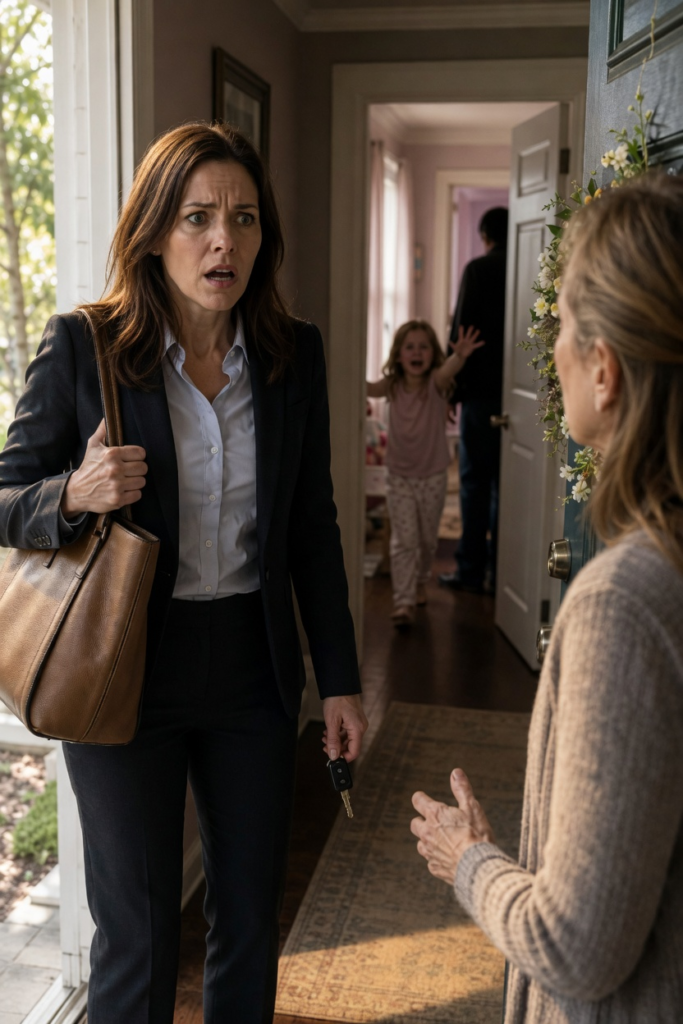
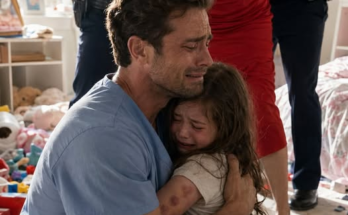
Not quiet.
Silent.
The kind of silence that comes after an explosion, when your ears are ringing and your mind refuses to understand what your body already knows.
I stood in the linen closet with my back against the shelves, my hand pressed so hard to the wall that my palm ached, and I listened to my daughter cry inside my bedroom.
My little girl.
The same girl who used to fall asleep on my chest during thunderstorms. The same girl who once taped a crooked paper crown to my lunch cooler because she said construction workers were “kings of fixing things.” The same girl who had gone quiet right in front of me while I kept calling it teenage moodiness because that was easier than calling it pain.
“I sent the pictures like my mom told me to,” Lily sobbed. “Please don’t make me go back to Dr. Keller’s office.”
The man inside my room made a sound. Not a laugh exactly. Something colder.
“You think tears change anything?” he said.
My vision went red.
I don’t remember deciding to move.
I remember the closet door slamming open.
I remember the hallway tilting.
I remember my own voice, deeper than I had ever heard it, tearing out of me like something wild.
“Get away from my daughter.”
The bedroom door was half-open.
I kicked it the rest of the way.
The man spun around.
He was not Dr. Keller.
He was younger. Maybe thirty-five. Clean shirt. Expensive watch. Hair gelled neatly like he belonged behind a desk instead of standing in my bedroom with my daughter shaking on the edge of my bed.
Lily was fully dressed, thank God. Hoodie. Jeans. Shoes still on. Her face was wet, her hands trembling in her lap, her eyes wide with terror.
The man looked at me, then at the doorway, then at the window like his brain was measuring distance.
I crossed the room in three steps.
“Dad!” Lily screamed.
That word stopped me before my hands closed around his throat.
Dad.
Not Michael. Not please. Not help.
Dad.
The man backed away, palms raised.
“Listen,” he said. “You don’t understand what this is.”
I grabbed the front of his shirt and drove him into the wall hard enough to knock a framed photo crooked.
“No,” I said. “You’re going to explain it to the police.”
His face changed then.
Not fear.
Calculation.
“You call the police,” he said quietly, “and your daughter’s life is over.”
Lily made a broken sound behind me.
I tightened my fist in his shirt.
“What did you say?”
The man swallowed, but his eyes stayed sharp.
“Ask your wife.”
That was when I noticed the phone in his hand.
Not my phone. Not Lily’s.
His.
The screen was lit. Recording.
I ripped it from his fingers and hurled it against the wall. It cracked, bounced off the dresser, and fell face-down on the carpet.
The man lunged for it.
I hit him once.
I am not proud of that.
But I will not lie and say I regret it.
He dropped like a sack of wet cement, clutching his mouth, blood spreading between his fingers.
Lily screamed again, but this time it was fear of me, and that cut deeper than anything.
I stepped back immediately.
“Baby,” I said, turning to her. “Lily, look at me.”
She stared at the floor.
“Look at me.”
Slowly, she raised her eyes.
I had seen my daughter scared before. Bad dreams. Emergency rooms. A fever so high when she was six that I drove through two red lights.
But this was different.
This was fear that had learned to live in her bones.
“I’m here,” I said. My voice broke. “I’m here now.”
The man groaned on the floor.
I took my phone from my pocket with shaking hands and dialed 911.
The dispatcher answered.
I gave my address.
Then I said the words no father should ever have to say.
“There’s a man in my house. He was threatening my daughter. She’s a minor. Send police. Send an ambulance.”
Lily flinched at the word minor like it exposed her.
I moved between her and the man on the floor.
The dispatcher kept asking questions. Was he armed? Was anyone injured? Was the suspect still there?
I answered as best I could while watching him.
He tried to sit up.
“Don’t,” I said.
He froze.
Then, from downstairs, the front door opened.
“Michael?” Maria called.
Her voice floated up the stairs, normal and irritated.
“Why is your truck not—”
She stopped.
Maybe she saw my work boots by the back door.
Maybe she heard Lily crying.
Maybe some guilty part of her already knew the house had changed.
Her footsteps came up the stairs fast.
She appeared in the doorway in her dental clinic scrubs, purse still on her shoulder, mouth open.
Her eyes went first to me.
Then Lily.
Then the man bleeding on the floor.
And finally the broken phone.
For a second, nobody spoke.
Then Maria whispered, “What did you do?”
I almost laughed.
Not because it was funny.
Because those were the first words out of her mouth.
Not Lily, are you okay?
Not who is this man?
Not Michael, what happened?
What did you do?
The truth stepped into the room and stood between us.
I looked at my wife of eighteen years, the woman I had built a life with, the woman who held my hand when Lily was born, the woman who had slept next to me while my daughter disappeared inside herself.
“What did I do?” I said.
Maria’s face hardened.
“Michael, you need to calm down.”
The man on the floor wiped his mouth and said through blood, “Maria, fix this.”
Maria closed her eyes.
Just for a second.
But I saw it.
Recognition.
Not surprise.
Not confusion.
Recognition.
Lily curled forward, both arms around her stomach.
I turned toward her.
“Lily,” I said softly, “do you know him?”
She looked at Maria first.
That answer told me more than words could have.
“Lily,” I said again, “look at me, not her.”
Maria snapped, “Don’t pressure her.”
I stepped between them.
“You don’t get to tell me how to talk to my daughter right now.”
Maria’s face twisted. “You have no idea what’s going on.”
“Then explain.”
She stared at me.
Downstairs, sirens wailed in the distance.
For the first time, Maria looked afraid.
Not for Lily.
For herself.
She dropped her purse on the floor and stepped toward me.
“Michael, listen to me. This is complicated.”
“No,” I said. “It got real simple when I heard my daughter begging a grown man to stop.”
The man on the floor said, “You’re making a mistake.”
I turned on him so fast he leaned back.
“You say one more word before the police get here, and you’ll need a straw for dinner.”
Maria grabbed my arm.
“Michael!”
I shook her off.
Lily whispered, “Dad.”
I looked at her.
Her lips trembled.
“Please don’t let Mom talk to me alone.”
That sentence killed whatever was left of my old life.
I walked to Lily and knelt in front of her.
“I won’t,” I said. “Not ever again.”
The police arrived four minutes later.
Four minutes can be a lifetime.
In those minutes, Maria paced like a trapped animal. The man sat on the carpet with his back against the dresser, glaring at me. Lily didn’t move from the bed. And I stood between all of them, one hand holding my phone, the other clenched so tightly my nails cut into my palm.
When the officers entered, everything happened quickly.
Two patrol officers came up first, hands near their holsters. A third stayed downstairs. I raised both hands and told them I was the homeowner. The man on the floor immediately started talking.
“He attacked me,” he said. “He assaulted me. I was invited here.”
“By who?” one officer asked.
The man hesitated.
Maria said, “By me.”
The room went colder.
The officer looked at Maria. “Ma’am, who is he?”
Maria swallowed. “A coworker.”
Lily made a small sound.
I said, “He threatened my daughter. She said he made her send pictures and mentioned Dr. Keller’s office.”
The officer’s expression changed. Just slightly. Enough.
He looked at Lily.
“What’s your name, sweetheart?”
She didn’t answer.
I said, “Her name is Lily. She’s fifteen.”
The officer’s voice softened. “Lily, are you hurt?”
Maria answered, “She’s fine.”
The officer turned his eyes to her.
“I asked Lily.”
Maria’s mouth shut.
Lily stared at her shoes.
“I don’t know,” she whispered.
That was enough.
The officers separated us.
The man was cuffed first after they found his ID and the broken phone. His name was Eric Vance. I had never heard it before. Maria kept saying it was a misunderstanding, that I had walked in at the wrong moment, that Lily was emotional.
But every time Maria spoke, Lily shrank.
The female officer noticed.
She gently asked Lily if she wanted to wait downstairs away from her mother.
Lily looked at me.
I nodded.
“I’ll be right behind you,” I said.
She stood on shaky legs. When she passed Maria, Maria reached for her wrist.
“Lily, don’t make this worse.”
The female officer stepped between them.
“Do not touch her.”
Maria’s face went white.
Those four words were the first real justice I heard that day.
At the station, the story came out in pieces.
Not all at once.
Trauma doesn’t spill neatly. It leaks. It comes in fragments. A sentence. A pause. A sudden sob. A detail that seems small until it opens a door to something terrible.
I was not allowed in the first interview. That was standard, they told me. They needed Lily to speak freely. A child advocate sat with her. A detective from the Special Victims Unit arrived. A counselor came too.
I sat in a plastic chair under fluorescent lights, my elbows on my knees, staring at a vending machine full of snacks nobody wanted.
Mrs. Alvarez came to the station after an officer called her.
She sat beside me without asking.
For a while, neither of us spoke.
Then she put a hand over mine.
“I’m sorry,” she said.
I looked at that old woman, the one I had dismissed as nosy, lonely, dramatic.
“You saved her,” I said.
She shook her head. “No. She saved herself by surviving long enough for someone to listen.”
I covered my face.
That was when I finally cried.
Not loud. Not dramatic.
Just a broken man folding in half in a police station because the truth had arrived, and it was bigger than anything he knew how to carry.
The detective came out after almost two hours.
Her name was Detective Harris. She looked like someone who had trained herself not to show shock because shock didn’t help victims.
She sat across from me.
“Mr. Torres,” she said, “Lily gave us permission to share some information with you. Not all of it. Some will remain private unless she chooses otherwise.”
I nodded.
My throat was dry.
“Is she safe?”
“She is safe right now.”
Right now.
I hated those words.
Detective Harris opened a folder.
“Your daughter says this began about seven months ago.”
Seven months.
Seven months of dinners. Seven months of school mornings. Seven months of me asking, “You okay?” from the hallway and accepting “fine” like it was an answer.
Detective Harris continued.
“Dr. Alan Keller owns the dental clinic where your wife works.”
I knew that name.
Of course I knew that name.
Maria had mentioned him for years.
Dr. Keller said this. Dr. Keller bought lunch. Dr. Keller gave bonuses. Dr. Keller invited staff to a holiday dinner.
I had shaken his hand once at a charity 5K.
He had complimented Lily’s braces.
My stomach turned.
“According to Lily,” Detective Harris said carefully, “your wife began bringing her to the clinic after school last fall. At first, she told Lily she needed help with filing and cleaning exam rooms. Then Dr. Keller became involved. He gave Lily gifts. Gift cards. Makeup. A tablet. Your wife told Lily to be grateful.”
I stared at the detective.
The vending machine hummed behind me.
“Why?” I asked.
Detective Harris did not answer immediately.
That told me the answer was bad.
“Your wife appears to have significant financial problems.”
I blinked.
“We don’t have money problems.”
Detective Harris looked at me with something like pity.
“You may not have known about them.”
I thought of Maria’s new purse. Her overtime shifts. The credit card statements that came electronically now because she said paper bills were clutter. The way she got angry when I offered to sit down and budget.
Detective Harris went on.
“We’re investigating whether your wife accepted money or favors in exchange for facilitating access to Lily.”
The room moved under me.
I gripped the arms of the chair.
“No,” I said.
Not because I believed Maria was innocent.
Because the sentence was too monstrous to let into the room.
Detective Harris let me sit with it.
Then she said, “Eric Vance appears to be connected to Keller. We believe he was sent to intimidate Lily today because she stopped responding to messages.”
I looked up.
“Messages?”
“Lily kept some of them.”
Hope and horror hit me at the same time.
“She has proof?”
“She may. We have her phone now. We’ll need warrants for the rest.”
“Where is Maria?”
“In custody.”
The words should have relieved me.
They didn’t.
They opened a pit.
“My wife,” I whispered, and then corrected myself because the word had turned poisonous. “Maria. She knew?”
Detective Harris held my gaze.
“Lily believes she did.”
Believes.
That was detective language. Court language. Careful language.
But I had seen Maria’s face in the bedroom.
I knew.
The next time I saw Lily, she was wrapped in a gray blanket that made her look younger than fifteen.
She sat in a quiet room with soft chairs and a box of tissues on the table. Her eyes were swollen. Her hair was loose around her face. She looked exhausted in a way sleep would not fix.
When I walked in, she looked at the advocate beside her.
The woman nodded and stepped out.
I stayed near the door.
“I won’t come closer unless you want me to,” I said.
Lily’s face crumpled.
“Dad.”
I crossed the room and knelt in front of her chair. She leaned forward slowly, like she was afraid she might break, and then she fell into my arms.
I held her carefully.
Not tightly.
Carefully.
Like she was made of glass and fire.
“I’m sorry,” she sobbed.
I pulled back just enough to look at her.
“No.”
“But I lied.”
“No.”
“I didn’t tell you.”
“No, baby. No.”
She shook her head, crying harder.
“I thought you’d hate me.”
That one split my chest open.
I took her face in my hands.
“Listen to me. Nothing that happened is your fault. Nothing. Not one second of it. You hear me?”
Her eyes searched mine like she wanted to believe but didn’t know how.
“I should have known,” I said. “I should have listened. I should have asked better. That is on me. But what they did? That is on them.”
She whispered, “Mom said you’d leave.”
I closed my eyes.
“She said if you found out, you’d look at me different.”
I opened them again.
I made myself say the truest thing I had ever said.
“I do look at you different.”
She froze.
I continued before fear could take her.
“I look at you and see the strongest person I have ever known.”
Her mouth trembled.
“I’m not strong.”
“You survived.”
She shook her head.
“You survived,” I said again. “And now you don’t have to survive alone.”
She folded into me again.
That night, Lily did not come home.
Neither did I.
The police told me the house was part of an active investigation. They needed to collect evidence. Devices. Documents. The broken phone. Maria’s laptop. My desktop. Lily’s room would be photographed, not because she had done anything wrong, but because evidence hides in ordinary places.
I hated the idea of strangers in her room.
Lily hated the idea of going back there even more.
Mrs. Alvarez offered her guest room.
“No,” I said at first. “We can get a hotel.”
But Lily looked at Mrs. Alvarez and whispered, “Can I stay with you?”
Mrs. Alvarez took her hand.
“Mi casa es tu casa, mija.”
So we went next door.
I had lived beside Mrs. Alvarez for eleven years and had never been past her front entryway. Her house smelled like cinnamon and lemon cleaner. There were framed photographs everywhere—children, grandchildren, a husband who had died five years earlier. She made tea neither of us drank and set out blankets.
Lily slept on the couch because she did not want a closed bedroom door.
I slept in the armchair beside her.
At 2:13 a.m., she woke screaming.
I was up before my brain was.
“Lily. Lily, it’s Dad.”
She thrashed once, then opened her eyes.
For a second, she didn’t know where she was.
Then she saw me.
She covered her mouth, embarrassed.
“I’m sorry.”
I had already learned to hate those words from her.
“Don’t apologize.”
Mrs. Alvarez came from the hallway in a robe, holding a small lamp.
“Bad dream?” she asked.
Lily nodded.
Mrs. Alvarez sat on the other end of the couch.
“Then we turn on lights,” she said. “Bad dreams are cowards. They hate lights.”
For the first time in months, Lily almost smiled.
The next morning, my brother Daniel flew in from Denver.
I had called him at dawn and said only, “I need you.”
He didn’t ask for details until he arrived.
Daniel was younger than me by four years, a firefighter, the kind of man who looked calm even when everything burned. When I told him what happened, he stood in Mrs. Alvarez’s kitchen with both hands on the counter and stared out the window for a long time.
Then he turned around and said, “Tell me what you need.”
Not what happened.
Not are you sure.
Not how could Maria.
Tell me what you need.
That was love in its most useful form.
“I need Lily safe,” I said.
“Done.”
“I need a lawyer.”
“I’ll find one.”
“I need to not kill anyone.”
Daniel looked at me.
“I’ll help with that too.”
By noon, he had found a family attorney and a criminal victim advocate. By evening, we had filed for an emergency protective order against Maria and anyone associated with Dr. Keller. The judge granted temporary custody to me and barred Maria from contacting Lily.
Maria tried anyway.
First through calls.
Then texts.
Then from an unknown number.
Lily’s phone was with the police, but Maria messaged my phone.
Michael, this is not what you think.
Please don’t ruin our family.
Lily is confused.
Keller is powerful. You don’t understand who you’re dealing with.
Then, finally:
If you loved your daughter, you would keep this quiet.
I showed the detective.
She read the message, took a screenshot, and said, “That helps.”
I stared at the phone.
My wife had just threatened me using my love for my child.
And for the first time since I kicked open that bedroom door, something inside me settled.
Grief was still there.
Rage too.
But beneath both was clarity.
Maria was not a mystery anymore.
She was a danger.
And dangers get removed.
The arrests began three days later.
Dr. Alan Keller was taken from his clinic at 10:42 a.m. while patients sat in the waiting room and a hygienist cried behind the reception desk. Detectives seized computers, external drives, office cameras, appointment logs, financial records, and a locked cabinet in his private office.
Eric Vance, the man I found in my bedroom, was charged first for entering my home and threatening Lily. More charges came later.
Maria was charged too.
I will not list every charge. Some words do not deserve space.
What matters is this: they thought Lily was alone, and she wasn’t.
They thought fear would keep her quiet, and it didn’t.
They thought money, reputation, and shame would protect them.
They were wrong.
But justice did not feel like victory.
Not at first.
It felt like paperwork.
Court dates. Interviews. Medical appointments. Therapy referrals. School meetings. Insurance calls. Password changes. Bank freezes. Lawyers. Detectives. Advocates. Forms with boxes too small for the size of what had happened.
Lily moved through those first weeks like a ghost.
She ate when I sat beside her.
She slept only with lights on.
She jumped when someone knocked.
She could not stand the smell of mint toothpaste.
The first time she saw a white dental coat on a commercial, she ran to the bathroom and vomited.
I learned quickly that saving someone from danger is not the same as healing them.
The rescue is loud.
Healing is quiet.
Healing is sitting on the floor outside a bathroom door at midnight saying, “I’m here,” even when the person inside cannot answer.
Healing is buying six kinds of toothpaste until one doesn’t make your daughter shake.
Healing is learning that “Do you want a hug?” is better than assuming.
Healing is asking, “Do you want advice, or do you want me to listen?”
Healing is realizing that being a father is not providing a roof.
It is becoming shelter.
A month after the arrests, Lily asked to go home.
Not to live.
Just to see it.
The house had been released back to us. Daniel and I had cleaned it as best we could. We repainted my bedroom. Replaced the bed. Changed every lock. Installed cameras. Threw away anything Maria left behind except legal documents and a few items Lily chose to keep.
Most of Maria’s things went into boxes in the garage.
Lily stood in the driveway staring at the house like it was a person who had betrayed her.
“You don’t have to go in,” I said.
“I know.”
“We can sell it.”
“I know.”
She hugged herself.
“I want to see my room.”
We went inside together.
Mrs. Alvarez watched from her porch, phone in hand, ready to call Daniel if needed.
Lily walked slowly through the living room, past the kitchen, up the stairs. At the top, she stopped outside my old bedroom door.
The new paint was a different color.
The door was open.
She didn’t look inside.
She went straight to her room.
I stayed in the hall.
She stood in the doorway for a long time.
Then she said, “She used to come in here after.”
I closed my eyes.
Maria.
“She’d sit on my bed and tell me I had to be mature,” Lily said. “She said sometimes girls have to do things they don’t like to help their families.”
My hands curled into fists.
Lily turned around.
“She said you’d never understand because you were simple.”
I almost smiled, but it hurt too much.
“She was right about one thing,” I said. “I don’t understand.”
Lily looked down.
“I kept waiting for her to become my mom again.”
I had no answer for that.
So I said the only thing I could.
“I’m sorry she didn’t.”
Lily nodded.
Then she stepped into her room and opened the curtains.
Sunlight filled the space.
Dust floated in the air.
On her desk sat the paper crown she had made me years ago. Crooked. Faded. One corner bent.
I had forgotten it existed.
Lily picked it up.
“You kept this?”
“Of course.”
“You wore it?”
“On lunch break. Whole crew saw it.”
She gave a tiny laugh.
It lasted less than a second.
But it was real.
I held onto it like a match in the dark.
School became its own battlefield.
The administration knew enough to protect her privacy, but teenagers have a way of sensing blood in the water. Rumors started. Not accurate ones. Rumors rarely are. But cruel enough.
Lily lasted three days before calling me from the bathroom.
“Dad,” she whispered, “I can’t.”
I left work immediately.
My foreman, Big Mike, saw my face and didn’t ask.
“Go,” he said.
When I got to the school office, the counselor looked apologetic.
“We can arrange accommodations,” she said.
I looked at Lily, curled in a chair with her hood up.
“What do you want?” I asked.
She blinked like nobody had asked that in a long time.
“I want to go home.”
“Then we go home.”
The counselor started, “Mr. Torres, long term—”
I held up a hand.
“Long term starts tomorrow.”
We enrolled Lily in online classes while we figured out the rest. Daniel helped set up a desk in Mrs. Alvarez’s spare room because Lily still felt safer there during the day.
Mrs. Alvarez became part grandmother, part guard dog.
She made soup.
She watched the street.
She sat with Lily through panic attacks and taught her how to crochet crooked little squares that became crooked little blankets.
One afternoon, I came home and found them at the kitchen table, arguing about a telenovela.
“She should not forgive him,” Lily said.
Mrs. Alvarez gasped. “But he lost his memory!”
“Convenient.”
“She loves him!”
“He lied before the amnesia.”
Mrs. Alvarez pointed at me. “Michael, tell your daughter love is complicated.”
I looked at Lily.
Lily looked at me.
For a second, something heavy passed between us.
Then I said, “Love should not require you to disappear.”
Lily looked back at the TV.
Mrs. Alvarez nodded slowly.
“Fine,” she said. “The girl should leave him.”
Lily smiled.
A real one this time.
Small, but real.
The trial took eleven months to begin.
In those eleven months, Maria changed stories three times.
First, she claimed Lily had invented everything because she was angry about household rules.
Then she claimed Keller manipulated her too.
Then she claimed she had suspected something inappropriate but had been too frightened to stop it.
Her lawyer tried to paint her as another victim.
Maybe some part of that was true.
Maybe Keller had power over her.
Maybe debt had cornered her.
Maybe shame had eaten her alive.
I spent many nights wrestling with those maybes.
But none of them changed the one thing that mattered.
She had a choice.
Lily did not.
At the preliminary hearing, Maria saw Lily across the hallway and started crying.
“My baby,” she said.
Lily stiffened beside me.
I stepped in front of her.
Maria’s lawyer touched her elbow, warning her not to speak.
But Maria kept looking over my shoulder.
“Lily, please. I’m your mother.”
Lily’s hand found mine.
She squeezed once.
Then she stepped around me.
Her voice shook, but it carried.
“No,” she said. “You were supposed to be.”
Maria’s face collapsed.
Lily turned and walked away.
I followed.
That was the day I understood that courage is not loud most of the time.
Sometimes courage is a girl with trembling hands saying one sentence and refusing to look back.
When the trial finally began, the courtroom was smaller than I expected.
I don’t know why that surprised me. Maybe because the pain was so huge I thought the room would have to be huge too.
But it was just benches, tables, flags, microphones, a judge, twelve jurors, and too many people breathing the same air.
Keller wore a gray suit.
Eric Vance wore navy.
Maria wore cream, like innocence could be chosen from a closet.
Lily did not testify in open court the way I feared. The judge allowed accommodations because of her age and the nature of the case. Her recorded forensic interview was played. Additional testimony came from detectives, digital analysts, financial investigators, clinic employees, and one former patient’s mother who had once complained about Keller’s behavior and been ignored.
The evidence was worse than I knew.
Bank transfers.
Encrypted messages.
Deleted files recovered.
Security footage from the clinic.
Appointment logs altered by Maria.
Text messages where she told Lily to “stop being dramatic” and “do what Dr. Keller says or everything falls apart.”
A message from Keller to Maria:
Your husband suspects nothing.
I had to leave the courtroom after that one.
Daniel followed me into the hallway.
I leaned against the wall, shaking.
“Seven months,” I said.
Daniel stood beside me.
“I know.”
“I ate dinner with her.”
“I know.”
“I slept next to her.”
“I know.”
“My daughter was upstairs dying inside, and I slept next to the person helping it happen.”
Daniel grabbed my shoulder.
“You know now.”
I looked at him.
His eyes were wet.
“You know now,” he repeated. “And since the second you knew, you have not left that girl’s side.”
I wanted that to be enough.
It wasn’t.
But it was something.
On the fourth day of trial, the prosecutor called Mrs. Alvarez.
She wore her best blue dress and silver cross necklace. She looked tiny walking to the witness stand, but when she took the oath, her voice was steady.
She told the jury what she heard.
The afternoons.
The crying.
The pleading.
How she first wondered if she was mistaken.
How she finally confronted me.
The defense tried to make her sound like a gossip.
“Mrs. Alvarez,” Keller’s attorney said, “isn’t it true you often pay close attention to your neighbors’ private lives?”
Mrs. Alvarez looked at him calmly.
“When a child screams, privacy is no longer the most important thing.”
The jury heard that.
Everyone did.
The attorney tried again.
“You never saw Dr. Keller in the Torres home, correct?”
“No.”
“You never saw Mr. Vance harm Lily Torres, correct?”
“No.”
“So all you had were sounds through a wall?”
Mrs. Alvarez leaned toward the microphone.
“I had a child’s fear through a wall. That was enough for me.”
The prosecutor did not ask another question.
She didn’t need to.
Maria took a plea before the jury got the case.
I found out in the hallway.
Her attorney approached mine, they spoke quietly, and then my lawyer turned to me.
“She’s pleading guilty to several charges in exchange for testifying against Keller and Vance.”
Lily was sitting beside me, earbuds in but no music playing. She heard everything.
“What does that mean?” she asked.
“It means,” my lawyer said gently, “your mother is admitting guilt.”
Lily stared at the floor.
“Because she’s sorry?”
No one answered fast enough.
So I did.
“Because she’s trying to reduce her sentence.”
Lily nodded like she had expected that.
“Okay.”
“Are you okay?” I asked.
She looked up at me with tired eyes.
“I don’t think okay is the goal today.”
“What is?”
“Not breaking.”
I took her hand.
“Then we’ll do that.”
Maria testified the next morning.
I will never forget the sound of her voice in that courtroom.
Small.
Careful.
Rehearsed.
She admitted Keller had given her money. She admitted she brought Lily to the clinic. She admitted she ignored Lily’s distress. She admitted she lied to me. She admitted Eric Vance had gone to our house to scare Lily into silence.
But even then, she wrapped every admission in excuses.
“I was under pressure.”
“I thought I could control the situation.”
“I didn’t understand how serious it was.”
“I made terrible mistakes.”
Mistakes.
Leaving your keys in the truck is a mistake.
Forgetting an anniversary is a mistake.
What Maria did was not a mistake.
It was a series of doors she opened and then locked behind our daughter.
The prosecutor asked her, “Did Lily ever ask you to stop taking her to Dr. Keller’s office?”
Maria lowered her head.
“Yes.”
“How many times?”
“I don’t remember.”
“More than once?”
“Yes.”
“More than five times?”
Maria started crying.
“Yes.”
“Did you tell her that if she told her father, he would abandon her?”
Maria covered her mouth.
The judge told her to answer.
“Yes.”
Lily stood abruptly.
“I need air,” she whispered.
We left before Maria could look at her.
Outside the courthouse, Lily bent over with her hands on her knees, breathing too fast.
I crouched in front of her.
“In for four,” I said, repeating what her therapist taught us. “Hold for four. Out for six.”
She tried.
Failed.
Tried again.
Daniel blocked the sidewalk so nobody stared too closely.
Mrs. Alvarez rubbed Lily’s back.
Lily gasped, “I hate her.”
I said, “That’s allowed.”
Then she cried harder.
“I still want her to love me.”
I closed my eyes for one second.
“That’s allowed too.”
Because healing was full of contradictions.
She could hate Maria and miss her.
She could be safe and still scared.
She could know it wasn’t her fault and still feel shame.
She could survive and still grieve the girl she had been before.
A week later, the verdict came.
Guilty.
Keller: guilty.
Vance: guilty.
Maria had already entered her plea.
The courtroom did not erupt. Real life is not television. There was no cheering. No dramatic collapse. Just a strange release of breath from people who had been holding it too long.
Keller stared straight ahead.
Vance cursed under his breath.
Maria cried silently.
Lily did none of those things.
She leaned against me and whispered, “Can we go home?”
I knew which home she meant.
Not the old house.
Not yet.
Mrs. Alvarez’s.
“Yes,” I said. “We can go home.”
Sentencing happened six weeks later.
By then, Lily had started therapy twice a week. She had also started painting. Not well, according to her. Beautifully, according to me, though she said fathers were legally required to think that.
She painted doors mostly.
Closed doors.
Open doors.
Doors with light underneath.
Doors in empty fields.
Doors underwater.
I asked once what they meant.
She shrugged.
“I don’t know yet.”
That answer was better than silence.
At sentencing, Lily chose to read a statement.
I asked three times if she was sure.
The third time, she said, “Dad, I need you to trust me.”
So I did.
She stood at a podium too tall for her until the advocate adjusted the microphone.
The courtroom waited.
Maria stared at her like a starving person looking at food.
Lily did not look back.
She looked at the judge.
“My name is Lily Torres,” she began. “For a long time, I thought my life was over. I thought what happened to me would be the only thing people saw when they looked at me. I thought I had become something broken and dirty and impossible to love.”
I gripped the bench.
“But I learned something. I learned that shame belongs to the people who hurt you, even when they try to hand it to you. I learned that fear can live in your body after the danger is gone, but that does not mean the danger won. I learned that sometimes the first person who believes you saves your life.”
Mrs. Alvarez wiped her eyes.
Lily continued.
“My father did not save me because he was perfect. He saved me because when he finally saw the truth, he chose me. Every day since then, he has chosen me. Mrs. Alvarez chose me. My uncle chose me. My therapist chose me. And now I choose me.”
She paused.
Her hands were shaking.
But her voice did not break.
“To Dr. Keller, Eric Vance, and Maria Torres: you do not get the rest of my life. You took enough. I am taking back my name, my body, my room, my future, and my voice. I hope the court gives you enough time to understand what you did. But whether you understand or not, I am done carrying it for you.”
She stepped back.
For a moment, nobody moved.
Then the judge removed his glasses.
I will not repeat everything he said, but I remember one sentence.
“Justice cannot return what was stolen, but it can name the theft and hold the thieves accountable.”
Keller received decades.
Vance received years that would carry him deep into middle age.
Maria received less than Keller, more than she expected, and exactly enough that Lily would be an adult long before Maria walked free.
When the judge read Maria’s sentence, Maria turned around.
Her eyes found Lily.
“I love you,” she mouthed.
Lily looked at her for a long moment.
Then she turned away.
Outside the courthouse, the sky was bright blue and merciless.
Reporters waited near the steps. Our lawyer guided us through a side exit to avoid them. Still, one called out, “Mr. Torres, do you have a statement?”
I stopped.
Lily squeezed my hand.
“You don’t have to,” she whispered.
I looked at her.
“Neither do you.”
She nodded.
So I turned toward the reporter.
“My daughter is not a headline,” I said. “She is a child who deserved protection. Listen when children change. Listen when neighbors warn you. Listen before the screaming gets loud enough to hear through walls.”
Then we left.
A year later, I sold the house.
Not because Lily demanded it.
Because one morning I woke up, walked downstairs, and realized I had been living inside a crime scene with furniture.
I asked Lily what she thought.
She was eating cereal at Mrs. Alvarez’s kitchen table, hair messy, wearing one of my old flannels over her pajamas.
She considered the question seriously.
“Can we choose the next one together?”
“Absolutely.”
“Can it have a room with good light?”
“Yes.”
“And no dental offices nearby?”
I almost choked on my coffee.
She smiled.
Dark humor, her therapist said, could be a bridge.
So I crossed it with her.
“No dental offices nearby,” I promised.
We found a small house fifteen minutes away, close enough for Mrs. Alvarez to visit and far enough that the old street stopped appearing in every dream.
It had three bedrooms, a lemon tree in the backyard, and a front porch with terrible paint.
Lily chose the room facing east.
“Morning light,” she said.
Daniel helped us move. Big Mike and half my crew showed up with trucks. Mrs. Alvarez supervised like a general and scolded everyone who carried boxes incorrectly.
At the end of the day, Lily stood in her new room surrounded by boxes.
I knocked on the open door.
“Pizza’s here.”
She looked around.
“I think I want to paint it yellow.”
“Then we paint it yellow.”
“Not baby yellow. Warm yellow.”
“Warm yellow.”
“And I want a lock.”
That one hit me.
She saw my face and quickly said, “Not because of you. Just because I want to decide who comes in.”
I nodded.
“Then we get a lock. And I knock. Every time.”
Her eyes softened.
“I know.”
I installed the lock the next morning.
Then I stood outside her door and knocked.
She opened it.
I held up the tiny key.
“Yours,” I said.
She took it and closed her hand around it.
That key mattered more than the house deed.
Two years passed.
Not easily.
Not magically.
There were setbacks. Panic attacks. Court appeals. Nights when Lily cried because healing felt unfairly slow. Days when I found myself standing in grocery aisles unable to choose pasta because grief had ambushed me between the sauce and canned tomatoes.
There were also good things.
Small at first.
Then bigger.
Lily went back to school, a different one, halfway through junior year. She joined an art club. She made a friend named Zoe who had purple hair and a laugh like a car refusing to start. She got her driver’s permit. She burned pancakes. She adopted a three-legged orange cat from a shelter and named him Judge Judy.
She started applying to colleges.
Art therapy programs.
Social work programs.
Psychology.
“Maybe I want to help kids,” she said one evening.
We were sitting on the porch, watching Judge Judy stalk a moth he had no chance of catching.
“You don’t have to turn pain into purpose,” I said.
“I know.”
“You’re allowed to just live.”
“I know.”
She leaned her head on my shoulder.
“But maybe living can include helping.”
I kissed the top of her head.
“Then whatever you choose, I’m proud.”
She groaned.
“You say that when I choose cereal.”
“I’m proud of your cereal instincts.”
“Dad.”
“What? Very advanced.”
She laughed.
This time it lasted.
On Lily’s eighteenth birthday, we had a party in the backyard.
Nothing huge. Daniel came. Mrs. Alvarez came with tamales. Zoe came with balloons. A few friends from school. Big Mike stopped by with a toolbox because he said every adult needed one.
Lily wore a green dress and combat boots.
Her hair was shorter now, cut to her chin. She had painted tiny gold suns on her fingernails. Around her neck was a necklace Mrs. Alvarez gave her, a little silver door that opened and closed.
When it was time for cake, she made everyone sing twice because Daniel came in late on the first round.
After she blew out the candles, she looked at me across the table.
There are moments when you see your child not as the baby they were or the adult they’re becoming, but as every age at once.
I saw Lily at three, holding a stuffed rabbit.
At seven, missing both front teeth.
At ten, building a cardboard castle in the living room.
At fifteen, shaking on the edge of my bed.
At eighteen, standing under string lights, alive.
Not unscarred.
Not untouched.
But alive.
Later that night, after everyone left, she found me on the porch.
“You okay?” she asked.
I smiled.
“Isn’t that my line?”
“You overuse it.”
“I’m working on it.”
She sat beside me.
For a while, we listened to the desert night.
Then she said, “I’m glad you came home early.”
My throat tightened.
“Me too.”
“I used to be mad that you didn’t know sooner.”
I looked down.
“You had every right.”
“I know.”
She nudged my shoulder.
“But I’m not mad tonight.”
I nodded, unable to speak.
She continued, “I used to think that day was the day everything ended. But maybe it was the day the lie ended.”
I looked at her.
She was watching the dark street, calm in a way that no longer frightened me.
“The truth hurt,” she said. “But at least it was real.”
I thought about the old house. The closet. The hallway. The scream through the wall. Maria’s face. Keller’s suit. Vance’s blood on the carpet. Mrs. Alvarez’s hand over mine in the police station.
Then I thought about yellow paint. A door lock. Crooked crochet blankets. College brochures. Burned pancakes. Laughter.
“Yes,” I said. “It was real.”
Lily reached into her pocket and pulled out something folded.
Paper.
Old.
Careful.
She handed it to me.
It was the crown.
The one she made when she was little.
The construction-paper crown with crooked points and faded marker.
King of Fixing Things.
I laughed once, but it came out broken.
“I found it when we moved,” she said. “I kept it.”
I ran my thumb over the childish letters.
“I didn’t fix everything.”
“No,” she said. “You didn’t.”
The honesty hurt, but not like before.
“Some things can’t be fixed,” she said. “But they can be protected. They can be rebuilt. They can become something else.”
I looked at my daughter.
She smiled gently.
“You helped me become something else.”
I put the crown on my head.
It barely fit.
Lily laughed so hard Judge Judy ran from under the porch.
And there it was.
The sound I thought I had lost forever.
My daughter’s laughter.
Clear.
Free.
Hers.
Three months later, Lily left for college.
We packed her things into the truck before sunrise because Phoenix heat has no mercy. Mrs. Alvarez cried into a dish towel. Daniel pretended not to cry by checking the tire pressure four times. Zoe hugged Lily like she was leaving for war instead of Tucson.
I carried the last box to the truck.
It was labeled ART STUFF / DO NOT CRUSH / DAD THIS MEANS YOU.
At the dorm, Lily chose the bed by the window.
Morning light again.
I helped assemble shelves and hang string lights. She placed the silver door necklace on her desk. The paper crown went on the top shelf beside a framed photo of us from her birthday.
When everything was done, there was nothing left to fix.
That was the hardest part.
She walked me downstairs.
Students and parents moved around us, carrying laundry baskets and lamps, beginning ordinary lives.
At the curb, I hugged her.
“Call me if you need anything,” I said.
“I know.”
“Any time. Day or night.”
“I know.”
“And lock your door.”
“Dad.”
“And eat real food.”
“Dad.”
“And if anyone makes you uncomfortable—”
She pulled back and gave me a look.
I stopped.
She smiled.
“I know how to ask for help now.”
I swallowed.
“I know you do.”
She hugged me again.
This time, she held on longer.
“Thank you for choosing me,” she whispered.
I closed my eyes.
“Always.”
When I drove away, I looked in the rearview mirror.
Lily stood on the sidewalk in the morning sun, one hand raised.
For a second, I saw the frightened girl in the gray blanket.
Then I blinked, and she was gone.
In her place stood a young woman with scars, strength, keys in her pocket, and a door of her own.
I drove home alone.
The house was quiet when I entered.
Not too quiet anymore.
Just quiet.
Judge Judy limped into the hallway and yelled at me for dinner. I fed him, washed my hands, and stood for a moment in Lily’s yellow room.
The bed was made.
The curtains were open.
Sunlight rested on the floor.
I knocked on the doorframe out of habit.
No answer.
No fear.
No screaming.
Only light.
My phone buzzed.
A text from Lily.
Made it through my first dorm meeting. Weird people. Good weird. Also, I ate a vegetable, so please calm down.
A second message followed.
Love you, Dad.
I sat on the edge of the bed and typed back.
Love you too, baby. Always.
Then I looked at the open door.
For years, I thought being a father meant building walls strong enough to keep the world out.
I was wrong.
Being a father meant listening when something sounded wrong behind those walls.
It meant believing the scream.
It meant opening the door.
And sometimes, if you are lucky, if you are patient, if the people you love are braver than the pain that tried to bury them, you get to watch that same door become an entrance instead of an escape.
That is where our story ended.
Not in a courtroom.
Not in the old house.
Not with punishment, though punishment came.
It ended in a yellow room filled with morning light, with my daughter safe enough to leave, strong enough to live, and loved enough to know she could always come home.
And this time, when the house was quiet, I was not afraid.
Because somewhere, beyond the walls I could no longer see, Lily was laughing.
And no one was making her stop.
Part 3 — The Last Door
For a while, I believed the worst part of our lives had already happened.
That was the first mistake hope made.
Hope is not stupid. People say it is, but it isn’t. Hope is brave. Hope looks at a burned house and says, Maybe something can grow here. Hope sees a girl who once could not sleep without every light on, and then watches her walk across a college campus with a backpack full of sketchbooks, and hope whispers, See? The story can still turn.
And for a while, ours did.
Lily called me every Sunday night.
At first, she called because she promised she would. Then she called because she wanted to. I could hear the difference. In the beginning, her voice carried the tightness of a girl reporting that she had survived another week. Later, slowly, something else returned.
A lift.
A spark.
A little impatience when I asked too many questions.
“Dad,” she said one night, laughing, “I am not going to starve because I forgot to text you a picture of dinner.”
“You sent me a picture of coffee and a granola bar.”
“That is dinner in college language.”
“That is a cry for help.”
“It was almond butter.”
“Oh, well then. A feast.”
She laughed again, and I leaned back on the porch with the phone to my ear, staring at the lemon tree in our backyard like it had personally given me a miracle.
She talked about classes. About Zoe visiting. About a professor who wore turquoise earrings and believed every painting was “an argument with silence.” About a girl on her dorm floor who sang opera in the shower. About a stray campus cat that only trusted Lily.
She was building a life.
Not a perfect one.
She still had bad nights. Sometimes she called at two in the morning and said nothing for a full minute. I learned not to fill the silence too fast.
“I’m here,” I would say.
“I know,” she would whisper.
Sometimes that was all she needed.
During her second semester, she started volunteering at a children’s advocacy center near campus. When she told me, I tried not to react too strongly. I was proud, terrified, and selfishly angry that the world had given her pain and then dared to need her compassion.
“You don’t owe anyone that,” I told her.
“I know.”
“Helping can reopen things.”
“I know.”
“You’re allowed to protect your peace.”
She was quiet for a moment.
Then she said, “Dad, I think this is me protecting it.”
I closed my eyes.
She was eighteen. She had already learned things some adults spend their whole lives avoiding. And still, she wanted to become gentle instead of hard.
That was Lily.
The summer after her freshman year, she came home with two suitcases, three new piercings in one ear, and a painting wrapped in brown paper.
“For the living room,” she said.
The painting was of a door.
Of course it was.
But this one was different from the others. It stood open in the middle of a desert. Behind it was not a room, not darkness, not a hallway.
Behind it was the ocean.
I stared at it for a long time.
“What does it mean?” I asked.
Lily smiled.
“I know now.”
I looked at her.
“It means escape isn’t always running away,” she said. “Sometimes it’s finding a place inside yourself nobody touched.”
I had to turn around and pretend to inspect the frame because my eyes were burning.
She stayed home for eleven weeks.
Those weeks were the closest thing to peace I had ever known.
She worked part-time at a bookstore. She and Mrs. Alvarez watched their telenovelas and yelled at the screen. Daniel came over on weekends. Judge Judy slept at Lily’s feet like he had been waiting all year for his person to return.
Sometimes, late at night, I would pass her yellow room and see light under the door.
I always knocked.
Every single time.
Sometimes she said, “Come in.”
Sometimes she said, “Not now.”
Both answers felt like gifts.
In August, before she went back to Tucson, we drove out to the desert at sunrise. Lily wanted to take photos for a project. She wore a white shirt, jeans, and boots. Her hair was longer again, moving in the warm wind.
She stood on a rock with her camera raised, sunlight spilling over her face.
For one sharp second, I saw everything at once.
The little girl with the paper crown.
The teenager wrapped in a gray blanket.
The young woman standing in morning light.
I took out my phone and snapped a picture.
She turned at the sound.
“Dad, don’t take pictures from that angle.”
“It’s a father angle.”
“That’s not a thing.”
“It is now.”
She rolled her eyes, but she was smiling.
That photo became my favorite.
I did not know it would also become the last picture I took of her.
The call came on a Thursday night in November.
There are sounds a phone can make that divide a life.
Before it rings, the world is one shape.
After you answer, it is another.
I was washing a coffee mug when my phone buzzed on the counter. Unknown number. Tucson area code.
I almost ignored it.
Then something in my chest tightened.
“Hello?”
A woman asked, “Is this Michael Torres?”
“Yes.”
“Mr. Torres, this is Officer Bennett with the Tucson Police Department.”
The mug slipped from my hand and shattered in the sink.
I remember that sound clearly.
Sharp.
Final.
The officer kept talking, but the words came through water.
Collision.
Intersection.
Hospital.
Critical.
Daughter.
Lily.
I do not remember driving to Tucson.
I remember Daniel’s truck because he took my keys from me. I remember Mrs. Alvarez in the back seat praying under her breath in Spanish. I remember gripping my phone so hard the screen cracked at the corner.
I remember calling Lily’s number again and again.
No answer.
No answer.
No answer.
At the hospital, a nurse led us through doors that opened too slowly.
A doctor met us in a private room.
Private rooms are where hospitals put grief before it has a name.
He had kind eyes. I hated him for that.
“Mr. Torres,” he said, “your daughter sustained severe injuries.”
“No,” I said.
He paused.
I heard Daniel inhale behind me.
“We are doing everything we can.”
“No.”
People say denial is refusing reality.
That is not true.
Denial is your body trying to stand in front of a bullet your soul cannot survive.
I asked to see her.
They hesitated.
I said, “I am her father.”
They let me in.
Lily lay in a bed surrounded by machines. Tubes. Wires. Bandages. Her face was swollen, but still hers. A bruise darkened one side of her cheek. Her hand lay on top of the blanket, small and still.
I took it carefully.
Like before.
Like always.
“Baby,” I whispered. “I’m here.”
The machines answered for her.
Beep.
Breath.
Beep.
Breath.
I sat beside her until time stopped meaning anything.
Doctors came and went. Nurses adjusted things. Daniel spoke to people because I could not. Mrs. Alvarez sat in the corner with a rosary wrapped around her fingers.
A detective came sometime after midnight.
The other driver had run a red light.
Drunk.
Speeding.
He walked away with a broken arm.
Lily had been three blocks from the advocacy center.
She had been bringing art supplies for a children’s workshop.
In the passenger seat, they found paper suns she had cut out by hand.
Tiny yellow suns.
For kids she had never met yet.
That detail broke something in me that had held through everything else.
She had survived monsters.
She had survived betrayal.
She had survived courtrooms and nightmares and the kind of fear that makes a child apologize for being hurt.
And then a stranger with alcohol on his breath ran a red light.
I wanted the universe to answer for that.
It never did.
For thirty-six hours, we waited.
I talked to her the whole time.
I told her Judge Judy was being dramatic. I told her Mrs. Alvarez had brought tamales to a hospital waiting room because apparently grief needed feeding. I told her Daniel had cried and would deny it later.
I told her about the lemon tree.
I told her the yellow room was waiting.
I told her she had to come home because I still had not learned how to be a father without worrying, and she still had to teach me.
At one point, near dawn, her fingers moved.
Just slightly.
I jumped.
“Lily?”
Her eyelids fluttered.
The nurse came in.
“Lily, sweetheart,” the nurse said gently, “can you hear us?”
Her eyes opened halfway.
Cloudy. Tired. Far away.
But she found me.
She knew me.
I bent close.
“Dad,” she breathed.
It was barely sound.
“I’m here.”
Her lips trembled.
“Did I… miss Sunday?”
I laughed and sobbed at the same time.
“No, baby. You didn’t miss anything.”
Her eyes shifted toward the window. The blinds were closed, but morning light pressed around the edges.
“Open,” she whispered.
I did not understand.
Then I did.
The blinds.
The light.
I crossed the room and opened them.
Pale sunrise entered slowly, touching the floor, the machines, the white blanket, her still hand.
Lily looked at it.
A tear slipped from the corner of her eye.
“Morning,” she whispered.
“Yes,” I said. “Morning light.”
She tried to smile.
I took her hand again.
She looked at me for a long time, like she was trying to memorize my face, and I wanted to tell her not to do that. I wanted to tell her there would be years. Birthdays. Bad cooking. Graduation. Arguments about rent. Phone calls. Gray hairs. A thousand ordinary things.
But her eyes knew something mine refused to.
“Dad,” she whispered.
“I’m here.”
“Don’t… close… the door.”
My whole body went cold.
“No,” I said. “No, Lily. Don’t say that.”
She squeezed my fingers with the last strength she had.
“Promise.”
I shook my head.
“Baby, please.”
“Promise.”
I could not deny her anything.
Not then.
Not ever.
“I promise,” I said.
Her breathing changed after that.
The machines noticed before I did.
People came into the room quickly. Too quickly. Voices rose. Hands moved. Someone pulled me back. Daniel held me while I fought him without meaning to.
“No,” I said. “No, no, no, no.”
The doctor called time at 7:12 a.m.
Morning light filled the room.
And my daughter was gone.
There is no sound for that.
People think grief is crying.
It is not.
Crying comes later.
Grief, at first, is an empty room inside your body where every wall has collapsed.
I stood beside Lily’s bed and waited for the world to correct itself.
It did not.
I touched her hair.
Still soft.
Still Lily.
I told her I loved her.
I told her again.
I told her until my voice failed.
The funeral was held six days later.
I do not remember choosing flowers. I do not remember approving the photo. I do not remember what I wore.
I remember the line of people.
So many people.
Her professors came. Students from her dorm came. Children’s center staff came carrying a box of the yellow paper suns she had made. Big Mike and my whole crew stood in the back, heads bowed, hands folded in front of them like boys in church.
Mrs. Alvarez sat in the front row and held the silver door necklace in her palm.
Daniel gave the first speech.
He said Lily was not defined by what happened to her, but by what she made after.
Zoe spoke next.
She cried so hard at first she couldn’t read the paper in her hands. Then she put it down and said, “Lily made people feel like locked rooms could have windows.”
No one moved.
Then it was my turn.
I walked to the front with the paper crown in my hands.
The old one.
King of Fixing Things.
I had found it on her dorm shelf when I went to pack her things.
I stood behind the microphone and looked at the crowd.
For a moment, I could not speak.
Then I looked at Lily’s photo.
She was standing in the desert, sunlight on her face, annoyed at my father angle.
“My daughter once believed she was broken,” I said. “She was wrong. The people who hurt her were broken. The systems that missed her pain were broken. The silence around her was broken. But Lily was never broken.”
My hands trembled around the crown.
“She was hurt. She was afraid. She was angry. She was tired. But she was also funny, stubborn, brilliant, and kinder than the world deserved. She survived things no child should survive, and somehow, after all of it, she still wanted to help other children find light.”
I stopped.
Breathed.
Failed.
Tried again.
“When Lily was little, she made me this crown. It says ‘King of Fixing Things.’ I kept it because I thought fathers were supposed to fix everything.”
I looked down at the crooked paper points.
“I know now that some things cannot be fixed. Some losses do not become lessons. Some pain does not turn beautiful because time passes. Sometimes the door opens, and the person you love is still taken from you.”
The room blurred.
“But I also know this. Lily’s life did not end in that hospital room. It lives in every child she helped. Every painting she left behind. Every person who learned from her that shame belongs to the guilty. Every morning I open the curtains because she asked me not to close the door.”
I placed the crown beside her photo.
“I was her father. That was the greatest honor of my life. And if love could have kept her here, she would have lived forever.”
After the funeral, people came to the house.
They brought food. Flowers. Cards. Words that tried to help and mostly failed.
I thanked them because I knew they were trying.
When everyone finally left, the house became quiet.
Too quiet.
For the first time since we moved in, I was afraid of the silence again.
I walked to Lily’s yellow room.
The door was open.
Just as I promised.
Her bed was made. Her books lined the shelf. The painting of the desert door and the ocean behind it hung on the wall. On the desk sat a small box from her dorm.
Inside were sketches.
Notes.
Receipts.
A cracked tube of yellow paint.
And an envelope with my name on it.
Dad.
My hands went numb.
I sat on the floor because I did not trust my legs.
The letter was dated three weeks before the accident.
Dad,
My therapist says I should write letters even when I don’t plan to send them. She says sometimes the heart needs a room where it can speak without being interrupted.
So this is that room.
I want you to know something.
I know you still blame yourself.
You think I don’t see it, but I do. I see it in the way you pause outside my door. I see it when you ask if I’m okay and try to sound casual. I see it when you look at old pictures of me like you’re apologizing to the girl in them.
Dad, I need you to hear me.
You did not destroy me.
They tried to.
You helped me come back.
I was angry for a long time. Sometimes I still am. But I never stopped loving you. Not even in the worst days. Especially not then.
When you opened that bedroom door, I thought my life was over because everyone would know. But now I think that was the first moment my life belonged to me again.
You always say I’m strong.
I think I learned that from you.
Not because you never fell apart.
Because you did fall apart and stayed anyway.
That’s what love is, I think.
Staying.
I don’t know what happens next in my life. I’m scared a lot. But I’m also excited, and that feels like a miracle.
Please be happy someday.
Not instead of missing me.
Just with it.
Like opening curtains in a room that still remembers the dark.
Love you always,
Lily
I read the letter once.
Then again.
Then I folded over it and cried until there was nothing left in me but breath.
Months passed.
Then a year.
The drunk driver went to prison. People told me justice had been served.
I did not argue.
I also did not believe them.
Justice is a word people use when they need grief to stand in a straight line.
Mine never did.
It wandered.
It hid.
It ambushed me in grocery stores when I passed almond butter. It sat beside me on Sunday nights when my phone did not ring. It climbed into my truck when I saw a girl with chin-length hair crossing the street.
But I kept the door open.
Every morning, I opened the curtains in Lily’s room.
I watered the lemon tree.
I fed Judge Judy.
I answered messages from Lily’s friends when they missed her.
I donated art supplies to the advocacy center every November. Yellow paper. Gold paint. Brushes. Sketchbooks.
The center named a room after her.
The Lily Torres Art Room.
On the wall, they hung her painting of the desert door with the ocean behind it.
Children painted there now.
Children who were scared.
Children who were learning that fear was not the end of them.
The first time I visited, a little boy was painting a house with every window open.
I stood in the doorway and cried quietly.
Mrs. Alvarez slipped her hand into mine.
“She is still doing good,” she whispered.
I nodded.
But I wanted her alive more than I wanted her legacy.
That is the ugly truth of grief.
It does not care how meaningful the loss becomes.
It wants the person back.
Years later, people would say I became softer.
Maybe I did.
I listened more.
To children.
To neighbors.
To silence.
Especially to silence.
When a child stopped laughing, I noticed. When a woman down the street said she was worried about the boy next door, I did not brush her off. When someone said, “It’s probably nothing,” I remembered Mrs. Alvarez at my gate, pale and trembling, telling me my daughter screamed every afternoon.
Probably nothing can be a locked door.
Probably nothing can be a child waiting for one adult to care enough to knock.
I never remarried.
I never moved again.
The yellow room stayed yellow.
Some people thought that was unhealthy.
Maybe it was.
But every home has a sacred place, even if nobody calls it that. Lily’s room became mine.
Not a shrine.
A promise.
The door stayed open.
The curtains stayed open.
Morning light came in every day whether I deserved it or not.
On the fifth anniversary of her death, I drove to the desert before sunrise.
I carried the paper crown, now carefully sealed in a clear box, and Lily’s letter folded in my shirt pocket.
The sky slowly turned pink.
Then gold.
Then blue.
I stood where I had taken my favorite photo of her.
For a moment, I could almost see her on the rock again, camera in hand, rolling her eyes at me.
“Dad, don’t take pictures from that angle.”
I smiled.
Then I broke.
“I miss you,” I said to the empty desert.
The wind moved through the brush.
No answer came.
Not really.
But the sun rose anyway.
And maybe that was the cruelest mercy.
The world continues.
Even when your child does not.
I went home after sunrise.
Judge Judy met me at the door, older now, slower, still angry at the universe. I fed him. Made coffee. Walked down the hall.
Lily’s door was open.
Morning light lay across the floor.
On the desk was her letter.
On the wall was a copy of her painting.
On the shelf was a photograph of her laughing under birthday lights.
I stood there for a long time.
Then I knocked on the open door.
Once.
Softly.
Habit.
Love.
Madness.
Prayer.
No one answered.
No one ever would.
I stepped inside anyway and opened the curtains wider.
Because I had promised.
Because she had asked me not to close the door.
Because once, my daughter screamed inside a house and no one listened soon enough.
Because once, she survived.
Because once, she laughed.
Because once, morning light touched her face, and she called me Dad.
The house was quiet.
This time, I was afraid.
But I stayed.
That was all I had left to give her.
So I stayed in the quiet, with the door open, waiting for a voice I would never hear again.
And somewhere beyond every wall I could not break through, beyond every road I could not turn back, beyond every morning that arrived without her permission, my Lily was gone.
The light remained.
But my daughter did not.
For five years, I kept Lily’s door open.
Not halfway.
Not just a crack.
Open.
Every morning, before coffee, before work, before Judge Judy screamed at me from the hallway like a tiny orange landlord, I walked to my daughter’s yellow room and opened the curtains.
Sometimes the sun came in bright.
Sometimes rain grayed the glass.
Sometimes dust floated in the light like the room itself was breathing.
I would stand there for a minute.
Not praying exactly.
Not talking, not always.
Just standing.
A father keeping a promise to a daughter who had asked him, with her last breath, not to close the door.
People called it grief.
Therapists called it ritual.
Mrs. Alvarez called it love.
Maybe it was all three.
But on the morning the envelope came, it felt like the room was waiting for me.
I found it in the mailbox between a grocery flyer and a water bill.
Official state seal.
Department of Corrections.
My name typed neatly across the front.
Michael Torres.
I knew before I opened it.
My hands knew.
My stomach knew.
Some bad news has a smell, even through paper.
I stood in the driveway with the sun hitting my face and the envelope trembling between my fingers.
Mrs. Alvarez was watering her roses across the street. She saw me stop moving.
“Michael?” she called.
I didn’t answer.
I tore the envelope open.
The first sentence blurred.
Then the words sharpened.
Maria Torres has petitioned for a sentence reduction hearing.
For a moment, I was back in that bedroom.
The broken phone.
Lily on the bed.
Maria in the doorway saying, “What did you do?”
Not “Is she okay?”
Not “My baby.”
What did you do?
I folded the letter once.
Then again.
Too carefully.
Like if I made the paper small enough, the past would stay small too.
It didn’t.
Mrs. Alvarez crossed the street in her slippers, water still dripping from the hose behind her.
“What is it?”
I handed her the letter.
She read it once.
Her face hardened in a way I had seen only a few times.
“She wants out?”
“She wants less time.”
“That woman wants many things.”
I laughed once.
It was empty.
“Apparently good behavior. Cooperation. Rehabilitation.”
Mrs. Alvarez looked at me over the top of the page.
“And what do you want?”
I looked toward my house.
Toward the yellow room.
Toward the door that had stayed open all these years.
“I don’t know.”
She folded the letter and handed it back.
“Yes, you do.”
I wanted to say I wanted Maria to rot.
I wanted to say I wanted Dr. Keller and Eric Vance and the drunk driver and every person who had ever looked away from my daughter’s pain to wake up every morning with the kind of grief that chewed bone.
I wanted to say I wanted five minutes alone with all of them.
But Lily’s letter lived in my shirt drawer.
Please be happy someday.
Not instead of missing me.
Just with it.
So I said the truth.
“I want it to be over.”
Mrs. Alvarez’s eyes softened.
“Then maybe this is the last door.”
I hated that word.
Door.
Everything in our lives had become a door.
The closet door I opened too late.
The bedroom door Lily begged me not to close.
The courtroom doors.
The hospital door.
The dorm room door.
The yellow door.
The one I kept open because it was the only thing left I could obey.
I looked at the letter again.
The hearing was in three weeks.
Three weeks.
Long enough for dread to unpack its bags.
Short enough that I couldn’t pretend it was far away.
That night, I called Daniel.
He answered on the second ring.
“Please tell me Judge Judy finally learned manners.”
“Maria filed for a sentence reduction.”
Silence.
Then a chair scraped on his end.
“When?”
“Three weeks.”
“She can do that?”
“Apparently.”
Daniel exhaled hard.
“What are you going to do?”
“I don’t know.”
“That means you know and you hate it.”
I closed my eyes.
My little brother had become annoyingly wise after surviving our worst years beside us.
“I don’t want to see her,” I said.
“Then don’t.”
“I don’t want her thinking silence means forgiveness.”
“Then speak.”
“I don’t want to spend one more second of my life inside what she did.”
Daniel was quiet.
Then he said, “Mike, you won’t be speaking for what she did. You’ll be speaking for who Lily was.”
That sentence stayed with me.
For two days, I carried it around like a stone in my pocket.
Then I drove to Tucson.
Not for the hearing.
Not yet.
I drove to the Lily Torres Art Room.
The children’s advocacy center had grown since Lily first volunteered there. A new wing had been added after a fundraising campaign I had tried to avoid and somehow ended up leading. There was now a small garden out back, a therapy dog named Waffles, and a mural painted along the hallway.
The mural showed a desert, a blue ocean, and a door standing open between them.
Lily’s door.
Her painting had become something larger than canvas.
I stood in front of it with my hands in my pockets.
A woman’s voice behind me said, “She still brings people in.”
I turned.
Maya Reynolds, the center director, walked toward me holding a stack of folders. She was in her early fifties, with silver-streaked hair, tired eyes, and the kind of calm that came from years of helping children carry impossible stories.
“Morning, Michael.”
“Morning.”
She looked at the mural.
“Rough week?”
I almost smiled.
“You read faces for a living?”
“Children’s faces mostly. Adults are easier. They pretend less convincingly.”
I handed her the letter.
She read it without interrupting.
Then she lowered the page.
“Are you going?”
“I don’t know.”
Maya didn’t give me advice right away.
I respected her for that.
She walked with me into the art room.
It was empty at that hour. Small tables. Stacks of construction paper. Washable paint. Crayons. A shelf of clay. Aprons hanging from hooks. On one wall, in simple black letters, were Lily’s words from her statement:
Shame belongs to the people who hurt you.
I had objected to putting her words on the wall at first.
It felt too public.
Too raw.
Then a twelve-year-old girl saw the sentence during opening week, stood still for almost a full minute, and whispered, “Can I write that down?”
After that, I stopped objecting.
Maya set the folders down.
“You know what I think?” she asked.
“What?”
“I think closure is usually a word people use when they want grief to behave.”
I looked at her.
She shrugged.
“I don’t believe in closure. Not the way people sell it. The door doesn’t close. You don’t stop loving them. You don’t stop remembering the before and after.”
“That’s comforting,” I said dryly.
She smiled a little.
“I believe in completion.”
“What’s the difference?”
“Closure says, ‘This no longer hurts.’ Completion says, ‘This no longer controls the whole room.’”
I looked around the art room.
Yellow paper suns hung from the ceiling. Each one had been made by a child. Some were neat. Some were wild. Some were angry black circles with yellow lines stabbing outward.
All of them were still suns.
Maya said, “Maybe this hearing is not about Maria. Maybe it’s about you deciding she doesn’t get the whole room anymore.”
I turned away because my eyes had started to burn.
“I’m tired.”
“I know.”
“I was tired before Lily died. I’ve been tired since.”
“I know.”
“I don’t want to be brave.”
Maya stepped beside me.
“Then don’t be brave. Be honest.”
That was what I did.
For the next three weeks, I wrote.
Not a speech.
Not at first.
I wrote memories.
Lily at three, asleep on my chest during a thunderstorm.
Lily at seven, putting stickers on my hard hat.
Lily at ten, making the paper crown.
Lily at fifteen, whispering, “Please don’t let Mom talk to me alone.”
Lily at eighteen, laughing under string lights.
Lily in the hospital, asking me not to close the door.
I wrote until my hand cramped.
I wrote ugly things.
I wrote kind things.
I wrote things I would never say aloud.
One night, I wrote Maria’s name at the top of a page and stared at it for twenty minutes.
Then I wrote:
You were supposed to love her more than you feared anything.
That was the whole truth.
Everything else was detail.
The morning of the hearing, I put on a dark suit I hated.
Daniel flew in the night before and slept on my couch. Mrs. Alvarez arrived at six with coffee, tamales, and her rosary.
“You are not wearing that tie,” she said the second she saw me.
I looked down.
“What’s wrong with it?”
“It says funeral.”
“It’s black.”
“Exactly. This is not a funeral. This is a witness.”
She reached into her purse and pulled out a blue tie.
“Where did you get that?”
“Lily chose it for your birthday one year. You forgot because men are useless with drawers.”
I touched the fabric.
Small blue pattern.
I remembered suddenly.
Lily had been sixteen, still fragile but trying. She had stood in the store holding three ties and said, “Dad, you dress like a contractor even at restaurants.”
I had said, “I am a contractor.”
She had rolled her eyes.
I put the blue tie on.
Mrs. Alvarez adjusted it herself.
“There,” she said. “Better.”
Daniel drove.
Nobody talked much.
At the courthouse, the hallway smelled like old paper, coffee, and fear.
I had smelled it too many times.
Maria’s attorney was already there.
So was a woman from the corrections department.
So was a victim services advocate who greeted me gently and explained what would happen, though I already knew enough.
Then a door opened.
Maria walked in.
For five years, I had imagined seeing her again.
In my imagination, she looked like the woman from the bedroom doorway.
Sharp.
Defensive.
Clean scrubs.
Hard eyes.
But the woman who entered was smaller.
Thinner.
Hair streaked with gray.
No makeup.
Prison beige.
Her wrists were not cuffed in front of the room, probably because this was not the kind of hearing where they wanted chains to speak before people did.
For a second, she looked almost ordinary.
That angered me more than anything.
Monsters should look like monsters.
Betrayal should mark the face.
It doesn’t.
Maria saw me.
Her mouth opened slightly.
Then her eyes moved past me, searching.
For Lily.
Maybe habit.
Maybe performance.
Maybe punishment from God.
There was no Lily behind me.
Only Daniel.
Only Mrs. Alvarez.
Only the people who had stayed.
Maria sat with her attorney.
She did not look at me again until the hearing began.
The judge was not the same one from the trial. This one was a woman with silver hair and a voice that made nonsense feel unwelcome.
Maria’s attorney spoke first.
He talked about rehabilitation.
Courses completed.
Work assignments.
Good conduct.
Her cooperation in the prosecution of Dr. Keller and Eric Vance.
Her remorse.
That word entered the room like it owned a seat.
Remorse.
I looked at Maria.
She was crying quietly.
I had seen her cry before.
At the trial.
At sentencing.
In the hallway when Lily said, “You were supposed to be.”
I still did not know whether she cried because she understood what she had done or because consequences had finally found her address.
Then Maria spoke.
She stood slowly, hands clasped.
“Your Honor,” she said, “I have spent every day regretting my actions.”
Actions.
Such a clean word for dirty things.
“I failed my daughter. I failed my family. I was manipulated by a powerful man, but I accept responsibility for my part. Prison has changed me. Therapy has changed me. Faith has changed me.”
Mrs. Alvarez made a small sound beside me.
Not loud.
Enough.
Maria continued.
“I know I can never undo the pain I caused. I know Lily suffered because of me.”
Her voice broke on Lily’s name.
My hands closed around the paper in my lap.
“Since my daughter’s death,” Maria said, “I have carried a grief no mother should carry.”
That was when something inside me went still.
No mother should carry.
No mother.
The audacity of it almost made me stand too early.
Maria wiped her face.
“I am not asking the court to forget what happened. I am asking for a chance to serve the rest of my sentence in a way that reflects who I am now, not only who I was at my worst.”
The judge turned to me.
“Mr. Torres, you may speak.”
I stood.
For a second, my knees felt wrong.
Daniel’s hand touched my back once.
Then he let go.
I walked to the podium.
The room narrowed.
Maria was to my right.
I did not look at her.
I looked at the judge.
“My name is Michael Torres,” I began. “I am Lily Torres’s father.”
My voice did not shake.
That surprised me.
“I have listened today to many words. Rehabilitation. Cooperation. Remorse. Good conduct. Change. I do not dismiss those words. Maybe Maria Torres has changed. Maybe prison has taught her things that love, marriage, motherhood, and a terrified daughter could not.”
Maria flinched.
I kept going.
“But this hearing is not only about whether Maria has changed. It is about whether the consequences of what she did should be reduced. And to answer that, the court must remember what she did without making it smaller.”
I unfolded my paper.
Then I didn’t read from it.
I didn’t need to.
“Maria did not make one mistake. She made choices. She chose secrecy. She chose money. She chose fear. She chose to tell our daughter that her father would abandon her if he knew the truth. She chose to let powerful men near a child who begged her to stop.”
The judge watched me closely.
“She has said she failed Lily. That is true. But failure sounds passive. Like something slipped. Like she tried to hold on and couldn’t. That is not what happened. Maria let go.”
Maria covered her mouth.
I finally looked at her.
Only once.
“You were supposed to love her more than you feared anything.”
Her face collapsed.
I turned back to the judge.
“My daughter survived what Maria helped happen. She survived court. She survived shame that was never hers. She survived nightmares, panic attacks, school rumors, therapy, testimony, and the slow work of becoming herself again. She went to college. She painted. She volunteered with children. She laughed again.”
I stopped.
Breathed.
“She died at eighteen because a drunk driver ran a red light. That is another grief. A separate grief. But I need this court to understand something clearly. Maria does not get to use Lily’s death as proof that she has suffered enough.”
The courtroom went silent.
“My daughter’s death did not erase what was done to her. It did not turn Maria into the center of the story. It did not make the harm complete and therefore easier to file away.”
My voice tightened, but it held.
“Lily wrote me a letter before she died. In it, she asked me to be happy someday, not instead of missing her, but with it. I am trying. I am trying every morning when I open her curtains. I am trying when I donate art supplies to the center where she volunteered. I am trying when I speak to parents who are afraid they missed something. I am trying because my daughter wanted life, even after all the people in this room know she had reasons to give up.”
I placed both hands on the podium.
“So I am not here asking for cruelty. I am not here because revenge will bring Lily back. It won’t. Nothing will. I am here asking for the original sentence to stand because some doors should not be opened early simply because the person behind them has grown tired of the room.”
The judge’s expression did not change, but her eyes sharpened.
“Maria Torres had many chances to protect Lily. Lily had no chance to choose Maria as a safer mother. The sentence should remain.”
I stepped back.
That was all.
No shouting.
No collapse.
No dramatic moment.
Just truth placed on the table and left there.
Maria’s attorney tried to respond.
The judge listened.
The corrections representative spoke.
The advocate clarified procedure.
Then the judge denied the petition.
Original sentence affirmed.
Maria made a small wounded sound.
I felt nothing at first.
No victory.
No relief.
Just the strange emptiness that comes when a fight ends and your body does not yet believe it.
The hearing adjourned.
I was almost to the door when Maria said my name.
“Michael.”
Daniel turned first.
Mrs. Alvarez stiffened.
The advocate stepped closer.
I stopped, but I did not turn around.
Maria’s voice shook.
“Please.”
I closed my eyes.
There are moments when silence is mercy.
There are moments when silence is punishment.
There are moments when silence is simply the last clean thing you own.
I turned.
Maria was standing beside her attorney, crying openly now.
“I never got to say goodbye to her,” she said.
The room seemed to tilt.
For one second, I saw Lily in the hospital bed.
Morning light.
Her fingers in mine.
Don’t close the door.
Maria took one step toward me.
“I know you hate me,” she whispered. “But I loved her.”
Mrs. Alvarez made a sharp sound.
Daniel said, “Mike.”
I raised one hand.
Not to stop him.
To steady myself.
Then I looked at the woman who had once been my wife.
“No,” I said.
Maria froze.
“You loved the idea that she belonged to you. You loved being called her mother. You loved having a daughter when it made you feel whole. But love is not ownership. Love is not silence. Love is not asking a child to disappear so an adult can survive her own shame.”
She sobbed once.
I did not soften.
“You don’t get goodbye from me. Lily gave you her last words in court when she said you were supposed to be her mother. That was more than you deserved.”
I turned and walked out.
For the first time in years, I did not feel the hallway follow me.
Outside, the sky was brutally blue.
The same kind of sky from Lily’s sentencing.
The same kind of sky from her funeral.
The world had terrible timing with beauty.
We stood near the courthouse steps.
Daniel looked at me.
“You okay?”
“No.”
He nodded.
Mrs. Alvarez took my hand.
“But I’m done,” I said.
They both looked at me.
I said it again, because I needed to hear it too.
“I’m done with her.”
That night, I went into Lily’s room and opened the curtains even though it was dark outside.
Then I sat on the floor and read her letter.
Please be happy someday.
Not instead of missing me.
Just with it.
For five years, I had understood that sentence as permission.
That night, it felt like an instruction.
So I did something I had avoided for too long.
I took out my phone and called Maya.
She answered even though it was late.
“Michael?”
“I want to make the foundation official.”
She was quiet for a second.
Then she said, “Lily’s foundation?”
“Yes.”
“What changed?”
I looked around the yellow room.
The open door.
The painting.
The paper crown sealed in its clear box.
“Maria doesn’t get the whole room anymore.”
Maya exhaled softly.
“No,” she said. “She doesn’t.”
We built the Lily Torres Foundation slowly.
Correctly.
No glossy tragedy campaign.
No pictures of Lily used to make strangers cry unless I approved every one.
No language that made her sound like a symbol before she was a person.
The foundation had three purposes.
Art therapy scholarships for children who had survived abuse.
Emergency grants for families leaving unsafe homes.
Training programs for parents, teachers, neighbors, and clinic workers on warning signs adults like me once explained away.
The first board meeting happened at my kitchen table.
Daniel came with a laptop and three legal pads.
Maya came with bylaws.
Mrs. Alvarez came with food and informed us she was not on the board because boards were “where people talk too much,” but she would supervise anyway.
Zoe came from Tucson with purple hair now dyed blue.
She carried a folder of Lily’s sketches.
“I think she would want these used,” Zoe said.
I hesitated.
She saw my face and touched the folder.
“Not the private ones. The door drawings. The suns. The hands.”
I opened the folder.
There was a sketch I had never seen.
A small girl standing in front of a wall.
On the wall was a door.
The door had no handle.
But beside the girl stood another person holding out a key.
Under it, Lily had written:
Sometimes help is the handle.
I covered my mouth.
Nobody spoke.
Then Mrs. Alvarez said, “That goes on the brochure.”
Daniel wiped his eyes and pretended to cough.
The first fundraiser was held six months later in a community hall with bad carpet and good lighting.
I expected maybe fifty people.
Over three hundred came.
Construction workers from my old crew.
Teachers from Lily’s second high school.
Her professors.
Children’s center staff.
Neighbors.
Parents I had never met.
Survivors who did not introduce themselves as survivors but whose eyes told me they understood the room.
We displayed Lily’s art along the walls.
Not like a museum.
Like windows.
Doors in fields.
Doors underwater.
Doors with light beneath them.
Suns.
So many suns.
At the front of the room, we placed one photograph.
Lily in the desert.
Morning light on her face.
Annoyed at my father angle.
I stood before the crowd with my hands around the microphone.
Five years earlier, I had spoken at my daughter’s funeral holding a paper crown and believing the best of my life had already ended.
That night, I was still grieving.
But grief had company now.
Purpose.
Community.
A different kind of love.
“I want to tell you something about Lily,” I said. “Not about what happened to her. About her.”
The room quieted.
“She hated mushrooms. She said they tasted like someone dared dirt to be food. She liked bad reality TV, but only if she could criticize everyone’s decisions. She once named a three-legged cat Judge Judy because she said he looked judgmental and had survived enough to earn a title.”
People laughed.
Real laughter.
I smiled.
“She was not an angel. Please don’t turn hurt children into angels. Angels don’t get to be angry. Angels don’t get to be messy. Angels don’t get to burn pancakes and fail parallel parking twice and tell their fathers they dress like contractors at restaurants.”
More laughter.
My throat tightened, but I kept going.
“Lily was a person. A full person. And what we are building in her name is not a monument to her pain. It is a tool made from her courage.”
I looked at the art on the walls.
“I cannot bring my daughter back. I have made peace with the fact that there is no door I can open that leads to that. But I can help open doors for children still here. We all can.”
That night, the foundation raised enough money to fund the art room for three more years.
Enough for emergency hotel stays.
Enough for training programs in twenty schools.
Enough to begin.
Afterward, when the chairs were folded and the hall was nearly empty, Zoe found me standing near Lily’s photo.
“She’d be embarrassed,” Zoe said.
I smiled.
“She would say we were being dramatic.”
“She would say the tablecloths were ugly.”
“They were.”
Zoe laughed, then cried, then hugged me.
“I miss her,” she whispered.
“I know.”
“She should be here.”
“I know.”
“I hate that she isn’t.”
“Me too.”
Then Zoe stepped back and wiped her face.
“But I’m glad this is.”
I looked around the room.
At the leftover programs.
The donation box.
The children’s paintings waiting to be packed.
“Me too,” I said.
That was when I understood something.
Not closure.
Never closure.
Completion.
A grief that no longer controlled the whole room.
Years moved differently after that.
Not faster.
Not easier.
Just differently.
The foundation grew.
We trained teachers to notice when a bright student suddenly stopped turning in homework.
We trained dental assistants, nurses, coaches, church volunteers, bus drivers, neighbors.
We told them the things I wished someone had told me louder.
A child does not have to say the exact words to be asking for help.
Fear can look like anger.
Silence can be a scream with no air.
A “family matter” can be a locked door.
And if something feels wrong, knock.
Then knock again.
Then call someone who can open it.
Every November, on the anniversary of Lily’s accident, we delivered art supplies to centers across the state.
Yellow paper.
Gold paint.
Brushes.
Sketchbooks.
No speeches on those days.
Just boxes.
Just work.
Just Lily’s suns going where they were needed.
Judge Judy died when he was very old and still furious.
He went in his sleep on Lily’s yellow bed, curled in the morning light like he had finally found a court that pleased him.
I buried him under the lemon tree.
Mrs. Alvarez stood beside me with a tissue.
“That cat was rude,” she said.
“He loved you.”
“He judged me.”
“That was his love language.”
She nodded solemnly.
“Then he loved everyone.”
We placed a small stone there.
Lily would have laughed.
Mrs. Alvarez grew older too.
So did I.
My beard went white.
My knees became unreliable.
Daniel’s children started calling me Uncle Mike even though I was technically their uncle already, which they found hilarious for reasons no adult understood.
Sometimes, young survivors who had grown up came back to the foundation.
They sent graduation photos.
Wedding invitations.
Baby announcements.
One girl, now a nurse, wrote:
The Lily Room was the first place I painted myself with a face.
A boy, now in community college, wrote:
I still have the yellow sun. I keep it in my car.
I kept every letter in a wooden box beneath Lily’s painting.
Not because they made the loss worth it.
Nothing made the loss worth it.
But they proved something had grown around the wound.
Not over it.
Around it.
Ten years after Lily died, the state passed a child protection training bill that Maya, Daniel, and I had spent years fighting for.
The press called it Lily’s Law.
I hated and loved that in equal measure.
The law required youth-serving medical offices, after-school programs, and licensed child service providers to complete expanded training on grooming, coercion, mandated reporting, and family-facilitated abuse.
It was not perfect.
No law is.
But it was something.
At the signing ceremony, the governor mispronounced my last name, which would have made Lily snort.
I stood at the podium afterward and looked out at cameras, advocates, legislators, survivors, and families.
There had been a time when reporters made me feel like my daughter was being turned into a headline.
This time, I knew exactly why I was there.
“My daughter once said fear can live in your body after the danger is gone, but that does not mean the danger won,” I said. “Today is not the end of danger. Today is not magic. Today is not a promise that no child will ever be missed again. But today we make it harder for adults to ignore the signs. Today we make it harder for silence to hide behind professionalism, reputation, and family privacy. Today, in Lily’s name, we knock sooner.”
The applause came slowly.
Then all at once.
I looked down at the first row.
Mrs. Alvarez sat there in a wheelchair now, wrapped in a blue shawl, clapping harder than anyone.
Daniel stood behind her.
Zoe stood beside Maya.
For a moment, I saw the shape of a family I had not expected to have.
Not replacement.
Never replacement.
But real.
After the ceremony, a woman approached me with a little girl beside her.
The child was maybe nine.
She held a yellow paper sun.
The mother’s eyes were wet.
“I just wanted to say thank you,” she said.
I nodded, because I had learned that thank you sometimes carried stories people did not want to tell in public.
The little girl looked up at me.
“Was Lily nice?”
The question hit me so cleanly I almost laughed.
“Yes,” I said. “But not boring nice.”
The girl frowned.
“What does that mean?”
“It means she was kind, but she would still tell you if your painting needed more glitter.”
The girl considered this seriously.
Then she held out the sun.
“This is for her.”
I took it with both hands.
“Thank you.”
She looked past me toward the framed photo we had brought for the ceremony.
Lily in the desert.
“She looks happy.”
I looked too.
“Yes,” I said. “She was.”
And for the first time, that sentence did not feel like betrayal.
She was happy.
Not always.
Not enough years.
Not as long as she deserved.
But she had been happy.
Under string lights.
In yellow rooms.
On desert mornings.
With burned pancakes.
With Judge Judy.
With Zoe.
With me.
The story of my daughter was not only terror and loss.
It was also laughter.
It was also paint.
It was also terrible tablecloths.
It was also a girl who made suns for children she had not met yet.
That realization did not heal me.
It freed something.
That evening, I went home alone.
The house was quiet.
Not empty.
Quiet.
There is a difference, though it took me years to learn it.
I fed no cat.
There was no cat left to yell at me.
I made coffee anyway, even though it was too late for coffee. Lily would have judged me for that.
Then I walked down the hall.
The yellow room waited.
The door was open.
The curtains were open.
Morning light was gone now, replaced by the blue softness of evening.
On the desk were Lily’s letter, the paper crown, and the little yellow sun the girl had given me that afternoon.
I stood at the doorway for a long time.
Then I did something I had not done in fifteen years.
I asked the room a question.
“Can I come in?”
Of course, no one answered.
But the silence did not punish me anymore.
I stepped inside.
Sat on the bed.
Took Lily’s letter and read it one more time.
Please be happy someday.
Not instead of missing me.
Just with it.
I folded it carefully.
Then I took out a new sheet of paper.
For years, I had written to courts.
To lawyers.
To donors.
To lawmakers.
To parents.
To anyone who might help me keep another child alive.
But I had never written directly back to Lily.
Not really.
That night, I did.
My Lily,
I kept the door open.
I opened the curtains.
I fed your rude cat until he decided to go argue with God.
I tried to listen better.
I tried to knock sooner.
I failed sometimes. I got angry. I got tired. I missed you so badly that some mornings I hated the sun for coming up without you.
But I stayed.
Like you said love does.
Maria asked to come home early. I told the truth. She stayed where the court put her. Keller never got free. Vance did not get to scare anyone in our name again. The man who ran the red light served his sentence, and I eventually stopped needing him to suffer every minute in order to prove you mattered.
You mattered before anyone was punished.
You mattered before any law carried your name.
You mattered when you were three and sticky with popsicle juice.
You mattered when you were fifteen and scared.
You mattered when you were eighteen and making yellow suns for children.
You matter still.
We built the foundation. We passed the law. We filled rooms with paint and paper and people who listen.
I still miss you.
That part did not get smaller.
But the room got bigger.
There is space now for missing you and loving others.
There is space for grief and coffee.
For tears and bad jokes.
For silence and music.
For the life I did not want after you, but have learned to live because you asked me to.
You told me not to close the door.
I won’t.
But I understand now.
An open door is not only for waiting.
Sometimes it is for letting light out.
Love you always,
Dad
I placed the letter beside hers.
Two letters now.
A conversation grief had delayed but not destroyed.
Then I took the paper crown from its clear box.
It was fragile.
The marker had faded.
King of Fixing Things.
I held it in my lap and smiled.
“I didn’t fix it all,” I said aloud.
The house held the words gently.
“I know that now.”
I set the crown back on the shelf.
Not hidden.
Not sealed.
Just there.
A crooked paper crown made by a little girl who had believed her father could fix anything, and a man old enough to understand that love was never about fixing everything.
It was about staying.
It was about listening.
It was about opening doors.
The next morning, I woke before sunrise.
Habit.
My knees complained when I stood.
I made coffee.
The house smelled like lemon cleaner because Mrs. Alvarez had visited the day before and criticized my standards.
I walked to Lily’s room.
At the doorway, I paused.
For years, I had opened the curtains because I was afraid not to.
Because a promise had become a rope tied around my ribs.
Because if I stopped, maybe I would be leaving her.
But that morning felt different.
I opened the curtains slowly.
Sunlight entered.
Warm.
Ordinary.
Merciless.
Merciful.
It touched the floor, the desk, the letters, the paper crown, the yellow sun, the painting of the desert door with the ocean behind it.
I stood there and waited for the old fear.
It did not come.
Sadness came.
Love came.
Missing came.
But not fear.
I looked at the open door.
Then, for the first time, I understood what Lily had given me.
Not a command to keep grieving forever in one room.
A way out.
Don’t close the door.
She had not meant stay trapped.
She had meant stay open.
Open to pain.
Open to memory.
Open to help.
Open to life.
Open to the children still knocking.
Open to joy when it dared return.
I sat on the edge of her bed and let the morning light touch my hands.
Then my phone buzzed.
A message from Maya.
First training under Lily’s Law starts today. Full room. Thought you’d want to know.
I typed back.
She would want more glitter on the slides.
Maya replied immediately.
Already added.
I laughed.
Out loud.
In Lily’s room.
Not because grief was gone.
Because love was still here.
That afternoon, I went to the advocacy center.
The new training room was packed. Teachers, nurses, receptionists, coaches, volunteers. People who looked nervous. People who looked bored. People who did not yet understand that one sentence in one training might someday make them the adult a child needed.
I stood at the back while Maya spoke.
On the wall behind her was Lily’s door.
The desert.
The ocean.
The impossible passage from one world into another.
Maya pointed to it.
“This painting was made by a young woman named Lily Torres,” she said. “She believed doors mattered. She believed children deserved adults who listened before it was too late. Today we begin there.”
A woman in the front row raised her hand.
“What if we’re wrong?” she asked. “What if we report something and it turns out to be nothing?”
Maya looked toward me.
Not asking me to answer.
Offering.
I walked to the front.
The room turned.
I placed both hands on the podium.
“Then a child learns adults are paying attention,” I said. “That is not nothing.”
No one spoke.
I continued.
“I was wrong once. Not because I suspected and reported. Because I noticed and explained it away. I told myself my daughter was moody. Tired. Growing up. I told myself my wife had things handled. I told myself privacy mattered more than discomfort. I told myself probably nothing.”
I looked around the room.
“Probably nothing is sometimes nothing. Sometimes it is everything. Your job is not to be perfect. Your job is to refuse convenient blindness.”
A man in the second row lowered his eyes.
Good.
Let it land.
After the training, a few people came up to shake my hand. I accepted, but I did not linger. The work was not about me.
I walked into the Lily Torres Art Room.
Children would arrive in an hour.
The tables were ready.
Yellow paper stacked neatly.
Paint jars closed.
Brushes washed.
On the wall, Lily’s sentence remained:
Shame belongs to the people who hurt you.
Below it, someone had added a new framed line from her sketch:
Sometimes help is the handle.
I sat at one of the tiny chairs.
My knees hated it.
I stayed anyway.
A little boy came in early with a counselor.
He stopped when he saw me.
“Are you the art teacher?” he asked.
“No,” I said. “I’m just visiting.”
He looked suspicious.
Children are good judges.
“You look too big for that chair.”
“I made a poor decision.”
He nodded like this confirmed something important.
Then he looked at the yellow paper.
“Can I make a sun?”
“Absolutely.”
He sat across from me.
The counselor gave me a small nod and stayed near the door.
The boy picked up scissors, then paused.
“What if it comes out ugly?”
I thought of Lily.
Burned pancakes.
Crooked crowns.
Doors underwater.
Tiny suns found in a wrecked car.
I slid a sheet of yellow paper toward him.
“Then it will be an honest sun.”
He considered that.
Then he started cutting.
The sun came out lopsided.
Wild.
Perfect.
He held it up.
“It looks weird.”
“Yes.”
“Is that bad?”
“No.”
He stared at it.
Then he smiled.
“It needs glitter.”
I laughed.
“Yes,” I said. “It does.”
And right there, in that room with my daughter’s name on the wall, I felt the story settle.
Not end like a door slammed shut.
End like a house finally safe enough to sleep in.
Maria would remain in prison.
Dr. Keller would die behind walls that could not be bought open.
Eric Vance would grow old with his choices.
The drunk driver would carry Lily’s name through every year he had left.
Mrs. Alvarez would keep correcting my tie.
Daniel would keep showing up.
Zoe would keep changing her hair color.
The foundation would keep opening rooms.
Children would keep making strange, beautiful suns.
And Lily—
Lily would not come back.
That truth stayed.
Clean.
Cruel.
Final.
But she would also not disappear.
Not into a courtroom file.
Not into a hospital record.
Not into a headline.
Not into the silence Maria once tried to build around her.
My daughter had a name.
A voice.
A room.
A law.
A thousand yellow suns.
And a father who finally understood that keeping a promise did not mean standing forever in the same doorway.
It meant carrying the light through it.
That evening, I went home.
I opened Lily’s door.
I opened the curtains.
Then I left the room and walked back into the rest of the house.
For the first time, that did not feel like abandonment.
It felt like permission.
Outside, the lemon tree moved in the wind.
Mrs. Alvarez called from across the street, asking if I had eaten.
Daniel texted a picture of his youngest wearing a construction-paper crown.
Maya sent a photo from the training room: thirty adults holding yellow suns, all of them awkward, all of them listening.
I stood on the porch as the sky turned gold.
The house behind me was quiet.
The door inside was open.
And somewhere in that quiet, not as a ghost, not as a voice, not as a miracle, but as memory strong enough to live with, my daughter remained.
Not trapped in the room.
Not trapped in the day I lost her.
Not trapped in what they did.
Lily was in the light on the floor.
In the paint under a child’s fingernails.
In every adult who knocked sooner.
In every survivor who learned shame had been handed to the wrong person.
In every open door.
I took a breath.
Then another.
The grief stayed.
So did I.
But this time, I did not stay because I was waiting for a voice that would never answer.
I stayed because life was still calling from the other rooms.
And at last, after all the doors we had opened, broken, feared, and kept, I walked toward it.