The night my father smashed a chair into my jaw because I refused to abandon my diner shift and babysit my sister’s child, my mother stood close enough to see the blood and still called me a pig, while everyone in that house acted like I should be grateful for the tiny room over the garage and the scraps of family they threw at me. They had spent years turning my teenage pregnancy, my poverty, and my silence into proof that I could be controlled, but pain has a way of making hidden truths sharp. So I stopped begging, stopped explaining, and remembered the one legal secret they never knew—their precious house was already tied to my name…
I was folding Liam’s little dinosaur pajamas when my sister called and reminded me, without meaning to, that in my family love had always been a ledger, and somehow my name was always written in red.
The room above my parents’ garage was barely large enough for the two of us, but I had learned to make small spaces behave. Liam’s bed was pushed against the wall beneath the slanted ceiling, his stuffed animals lined up along the pillow in a crooked army of bears, dogs, and one one-eyed dragon he refused to throw away because, according to him, “everybody needs somebody.” My bed sat on the opposite side, near the window that looked over the driveway and the big maple tree my grandmother Rose had planted when I was ten. Between our beds stood a dresser I had painted pale blue with leftover paint from a neighbor’s nursery remodel. The drawers stuck in humid weather, the carpet had a stain shaped like Florida near the door, and in winter the draft came up through the floorboards no matter how many towels I rolled against the baseboards.
But it was ours, or at least I had tried to make it feel that way.
That evening, the light came through the cheap curtains in long golden strips, turning the dust in the air soft and almost beautiful. I sat cross-legged on my bed with a pile of clean laundry beside me, folding socks that never seemed to match, tiny T-shirts with faded cartoon rockets, jeans with grass stains at the knees, and the navy sweatshirt Liam insisted made him run faster. Downstairs, through the thin floor, I could hear my mother moving around in the kitchen, cabinet doors closing harder than necessary, the television murmuring in the living room, my father’s voice rising and falling as he argued with some sports commentator who could not hear him. It was an ordinary sound in that house, anger with a remote control in one hand and a beer in the other.
Liam sat on the rug with a plastic truck, making quiet engine noises. He was four then, all brown curls, solemn eyes, and questions big enough to break my heart. He had my mouth, his father’s chin, and a way of tilting his head when he listened that made him look older than he should. I had spent so many nights whispering apologies into his hair while he slept. Sorry the room was so small. Sorry Mommy had to work again. Sorry Grandma and Grandpa were loud. Sorry life began hard. Sorry love had to be something I built for him out of whatever pieces survived the day.
My phone buzzed on the blanket.
Harper.
I should have let it ring.
There are people whose names on a phone screen can change the temperature of a room, and my older sister had always been one of them. Harper did not call to ask. Harper summoned. Harper needed. Harper announced problems as if the rest of us were household staff waiting in closets. She was three years older than me, blonde where I was dark, pretty in the polished way that made strangers helpful, sharp in the private way that made family exhausted. Growing up, Harper had been the kind of daughter my mother understood how to brag about: cheer captain, homecoming court, white smile, good posture, a talent for turning her own convenience into everyone else’s moral obligation. By twenty-seven, she had a daughter, a boyfriend who drifted in and out depending on whether rent was due, and a permanent belief that the world owed her childcare because she had been “through enough.”
I answered because old habits are strong, especially when they have been trained by fear.
“Hey, Harper.”
“You’re watching Mia tonight,” she said.
No hello. No how are you. No are you working. No can you help.
Just the command.
I pressed one of Liam’s shirts flat across my lap. “I can’t tonight.”
There was a pause, short and cold. “What do you mean you can’t?”
“I’m covering a night shift. Carla’s kid has the flu, and they’re short on the floor. I told them I’d come in.”
“You already worked today.”
“I know.”
“So cancel.”
“I can’t just cancel. They need me.”
“I need you.”
I closed my eyes.
That sentence had followed me my whole life. My mother needed me to watch Tyler when she had errands. My father needed me to pick up extra shifts when he lost money again. Harper needed me whenever Mia was inconvenient. Somehow everyone’s need outranked mine because mine sounded like survival, and theirs sounded like expectation.
“Harper, I’m sorry, but I can’t watch Mia tonight.”
Her voice sharpened. “You’re being selfish.”
“I’m working.”
“You’re always working.”
“Yes. That’s what happens when I have bills.”
“Don’t start that martyr act with me.”
Liam looked up from his truck. I forced my face to stay calm and turned slightly away from him.
“I’m not starting anything,” I said quietly. “I’m telling you I can’t.”
“I have plans.”
“I understand.”
“No, you don’t. You think because you made a mess of your life, everyone else has to suffer.”
The words landed in the old bruise.
My mess. That was what my family called Liam when they wanted to pretend they were being gentle. My bad choice. My situation. My consequence. Never my son. Never the best thing that ever happened to me. Never the little boy who kissed my cheek before sleep and saved my life simply by needing me to stay alive.
“I’m not discussing this,” I said.
Harper gave a laugh I knew too well. “Fine. Wait until Dad hears about this.”
My hand tightened around the phone.
That was not a threat in every family. In ours, it was a weather alert.
“Harper—”
She hung up.
I sat there for a moment with the phone still pressed to my ear, listening to nothing. Liam pushed his truck across the rug and made a siren sound, unaware that one sentence from his aunt had turned my stomach hard.
“Mommy?” he asked.
I lowered the phone. “Yeah, baby?”
“Is Aunt Harper mad?”
I smiled because mothers learn to lie with soft faces. “She’s just having a hard day.”
He nodded with the serious compassion children offer before adults teach them who deserves it. “Maybe she needs a snack.”
I laughed despite myself, and for one second the room felt light again.
“Maybe she does.”
I finished folding his clothes slowly, lining them in the dresser by type and color because that little blue dresser was the only place in my life where order stayed after I made it. Hospital schedules changed. Diner shifts changed. My father’s moods changed. Harper’s emergencies multiplied. My mother’s love moved toward whoever screamed loudest. Bills came when I did not have money. But Liam’s socks went in the top drawer. Pajamas in the second. Pants in the third. Shirts folded, stacked, contained. A small kingdom of control.
At eight-thirty, I carried Liam downstairs. My mother, Susan, stood at the kitchen counter packing leftovers into plastic containers she would later accuse me of taking too many of. She was fifty-two then, though she looked older in the evenings when the makeup wore thin and resentment settled around her mouth. She had once been pretty in a soft, tired way, with dark hair and quick hands. Years of my father’s gambling, Harper’s demands, Tyler’s laziness, and her own refusal to call anything by its right name had hardened her into someone who moved through life with a martyr’s sigh and an enabler’s instincts.
“Carla’s kid is sick,” I said. “I’m covering nights. Liam’s already in pajamas. He should sleep through.”
She did not look at me. “Your sister called.”
“I figured.”
“She needed help.”
“I was already scheduled.”
“She said you were rude.”
I adjusted Liam’s backpack on my shoulder. “I told her I couldn’t babysit.”
“You know Harper doesn’t have it easy.”
I almost laughed. Harper lived three streets over in an apartment my parents helped pay for whenever she cried hard enough. Harper worked part-time at a salon and spent more on nails than I spent on groceries. Harper’s daughter Mia had three winter coats, ballet lessons, and an entire extended family trained to rearrange itself around Harper’s plans. Harper’s life was not easy, maybe. But neither was mine, and no one said my name like that.
“I have to leave,” I said.
Mom finally looked at me. Her eyes moved over my scrubs, the dark circles under my eyes, the lunch bag in my hand, Liam half-asleep against my shoulder. For one soft second, I thought she might see me. Really see me. Her daughter at twenty-four, working herself thin, raising a child alone, trying to build a life from exhaustion and stubbornness.
Then her face closed.
“You should have handled it better,” she said.
The sentence lodged somewhere I would not understand until later.
I kissed Liam’s forehead and set him on the couch with his blanket. He murmured but did not wake. I whispered that I loved him, touched his curls once, and left before the house could ask for another piece of me.
The hospital at night is its own world. Bright, artificial, and haunted by the things people are too tired to hide. I worked on a medical-surgical floor where the call lights never stopped, where families slept in chairs with their mouths open, where old men apologized for needing help to stand, where women gripped my wrist and asked if the pain meant something worse was coming. I had fought hard to become a nurse. Four years of night classes, clinicals, certification exams, childcare swaps, diner shifts, and studying in parked cars while Liam slept in his seat after daycare because I could not afford to waste the hour between responsibilities. When I passed the boards, I cried alone in a grocery store parking lot, then bought Liam cupcakes and told him Mommy was official.
At work, people called me Maya and meant it. They asked my opinion. They trusted my hands. They thanked me sometimes. Not always, but enough. It was the one place where my competence did not automatically become someone else’s entitlement.
That night, I moved through the floor on autopilot. Medication rounds. Vitals. Charting. A wound dressing on room 214. A confused patient in 219 trying to climb out of bed. A daughter in 222 asking whether her mother was going to die and then apologizing for asking because she was afraid the question itself might call death closer. I smiled when I needed to, lifted when I needed to, answered gently when I could, and carried Harper’s threat in my chest like a stone.
At two in the morning, during a brief break in the nurses’ station, my coworker Beth looked at me over her coffee.
“You okay?”
I glanced up from charting. “Yeah.”
She gave me the tired nurse look, the one that said she could smell lies through antiseptic. “You look like you’re waiting for bad news.”
“I’m fine.”
“Family?”
I sighed.
She nodded. “That’ll do it.”
Beth was forty-two, divorced, with three teenage sons and a laugh like gravel. She had seen enough human damage to know when not to pry. She simply slid a packet of peanut butter crackers across the desk.
“Eat something before you fall over.”
I did.
The shift ended at midnight because I had started early to cover the worst gap, though by the time I clocked out, my body felt like it had worked three days without permission. Outside, the air was cold enough to sting my face. I sat in my car for a moment before starting it, my hands resting on the steering wheel. The parking lot lights turned the asphalt silver. Somewhere behind me, an ambulance backed toward the ER bay, its beeping steady and indifferent.
I should have driven to a motel. I know that now. I should have called Beth, or my friend Nora from nursing school, or even the police. I should have understood that Harper’s threat had not been empty. But abused people often misread danger as familiar discomfort. I thought I was going home to tension, maybe yelling, maybe a lecture I could survive by lowering my eyes and saying as little as possible. I thought I could collect Liam, carry him upstairs, sleep four hours, and wake to do it again.
I drove back to my parents’ house under a sky with no moon.
The warm glow in the living room window looked wrong when I pulled into the driveway. At midnight, that light should have been off. My father usually fell asleep in his recliner by ten unless a game was on or he was angry enough to stay awake. The porch light buzzed overhead as I climbed the steps. My jaw tightened before anything happened. My body knew.
Inside, the house smelled of stale beer, furniture polish, and the roast my mother had cooked hours earlier. My father sat in his recliner, not asleep. Waiting. Dennis Calloway had been a large man once, broad-shouldered from construction work and old enough now that his size had begun to settle into heaviness. His hair was thinning, his face red around the cheeks, his hands thick and restless. A bottle of beer sat on the side table. The television was off. That was the first warning.
My mother stood in the doorway between the living room and kitchen, arms folded.
Liam was asleep on the couch under his blanket.
I kept my voice low. “I’m just here to get Liam.”
My father did not move. “Sit down.”
“I need to get him upstairs.”
“I said sit down.”
That command had shaped my childhood. Sit down. Be quiet. Come here. Don’t talk back. Say thank you. Apologize to your sister. Help your mother. Give me the money. Family first. Always said with enough force that refusal felt physically dangerous before it became morally condemned.
I sat on the edge of the old floral armchair across from him.
His eyes were bloodshot. “Harper tells me you refused to watch Mia.”
“I was working.”
“You’re always working.”
“Yes.”
“You can’t make time for family?”
“I make time for family constantly. I babysit Mia three nights a week. I clean here on Saturdays. I help with bills. Tonight I had a shift.”
“You’re working because you made bad choices,” he snapped. “Don’t act like it makes you noble.”
There it was again. My bad choices.
“I work to support my son.”
“You live in my house rent-free.”
I heard my mother shift in the doorway but say nothing.
“I babysit,” I said. “I clean. I buy groceries. I gave Mom three hundred dollars last week for the electric bill.”
“You think that covers a roof over your head?”
“I think I’m not freeloading.”
His face darkened. “Ungrateful.”
The word had been used against me so often it should have lost power. It had not. It still found the little girl in me who wanted approval and slapped her awake.
“I’m exhausted,” I said. “I work two jobs. I’m raising Liam. I help whenever I can. But I cannot be everyone’s backup plan every single time.”
My mother’s voice came from the doorway. “Harper just needed one night.”
“I needed to work.”
“She has a child too.”
“So do I.”
My father leaned forward. “Don’t take that tone with your mother.”
“I’m not taking a tone. I’m saying I can’t do everything.”
“You think your little nursing job makes you better than us?”
“No.”
“You think because you got some license, you’re independent now?”
“I never said that.”
He stood.
The room changed.
There is a kind of standing that is just standing. Then there is the kind that announces violence before hands move. My father had stood that second way many times in my childhood. He had thrown plates, punched walls, kicked chairs, slammed doors hard enough to crack frames. He had never hit me with his hands. That technicality had allowed my mother to say he had a temper, not that he was dangerous.
“You’re nothing without this family,” he said.
The words came from somewhere tired, furious, and finally done.
“I’m everything without this family.”
The silence after that was enormous.
For one second, I thought he might simply yell.
Then his hand went to the dining chair beside him.
He picked it up.
My mind could not process the motion quickly enough. It understood the chair as furniture, then object, then weapon too late. He swung it not like a man trying to kill, but like a man trying to teach obedience through impact.
The chair struck the side of my face and jaw.
Pain exploded white.
I hit the floor hard, one hand catching badly beneath me, the world tilting sideways. For a moment, the room became sound without shape: my mother’s sharp inhale, my father’s heavy breathing, the chair clattering down, Liam stirring on the couch, my own heartbeat pulsing in my jaw, my teeth, my skull. I tasted copper. My vision blurred at the edges.
I remember staring at the baseboard. There was dust gathered in the corner. I had cleaned that room three days earlier, but dust always came back. That was the stupid thought my mind chose. Dust always comes back.
Then my mother stepped forward.
Not to help me.
Not to put herself between us.
Not to say his name in horror.
She looked down at me with a face so cold and tired it seemed carved from someone else’s life.
“You should have handled that better,” she said.
The same sentence from earlier.
Only now I was on the floor, bleeding.
Something in me snapped so quietly no one else heard it.
It was not rage at first. Not even grief. It was recognition. A final, clean accounting. My father had hit me. My mother had watched. Harper had lit the match and stayed home. Tyler, my younger brother, wherever he was that night, would say nothing as always. And I, the family workhorse, the nurse, the waitress, the unpaid babysitter, the emergency fund, the daughter who kept protecting everyone from the consequences of their own cruelty, had finally run out of reasons.
I pushed myself up slowly.
My father stared at me as if surprised I had not stayed down longer.
“Maya,” my mother said, and now there was a flicker of something in her voice. Not concern. Alarm. Consequences beginning to occur to her.
I did not answer.
I walked to the couch, lifted Liam into my arms, and he stirred against me, mumbling, “Mommy?”
“I’ve got you,” I whispered.
My jaw throbbed so badly the words came out wrong.
I grabbed his backpack from the floor. My purse was still over my shoulder. I did not go upstairs for clothes. I did not collect toys. I did not take the framed photograph of Liam from the dresser or the nursing textbooks I had not yet resold. I did not take the blue-painted dresser or the little socks stacked inside like proof I had tried to make order.
At the door, my father said, “Where do you think you’re going?”
I turned back once.
He looked angry still, but beneath it there was uncertainty. He was used to apologies after storms. My apologies, usually. My mother’s smoothing. The house returning to normal because normal had always meant nobody named what he did.
I said nothing.
That silence frightened him more than any threat would have.
I drove to a motel off the interstate with Liam asleep in the back seat and blood drying at the corner of my mouth. The night clerk was a woman with gray hair and kind eyes who looked at my face, looked at Liam, and did not ask the questions she could see I was not ready to answer.
“Ground floor?” she asked.
“Please.”
“Cash or card?”
“Card.”
She slid the key across the counter with two extra towels and a small bottle of water.
“If you need anything,” she said quietly, “dial zero.”
In the room, I laid Liam on the bed, tucked the thin motel blanket around him, and sat on the floor with my back against the wall. The room smelled of bleach, old carpet, and lemon air freshener. A muted television glowed in the corner. Outside, trucks hissed along the highway.
My hands shook so badly I had to hold them together.
I should have cried. I expected to. But instead, I sat there with my jaw swelling, my son asleep beside me, and thought about my grandmother Rose.
Six years earlier, Rose Calloway had sat across from me at the kitchen table in that same family house while rain tapped against the windows. She was seventy-eight then, sharp-eyed, thin as a rail, with silver hair pinned at the back of her head and a mouth that had never learned to fear men. She had lived with us during the last two years of her life after a fall made living alone impractical. My father hated having her there because she saw him clearly and said so. My mother tolerated her because Rose’s small pension helped with groceries and because even Susan had not learned how to bully her mother-in-law effectively.
Rose saw everything.
She saw my father’s gambling slips tucked behind books. She saw the men who came by asking for him in low voices. She saw my mother hiding overdue notices under placemats. She saw Harper take and take. She saw Tyler drift through chores like a guest in his own life. She saw me at nineteen, pregnant and terrified, washing dishes after a double shift while my father called me a disgrace from the living room.
One night, after everyone had gone to bed, Rose called me into the kitchen. She had made tea neither of us wanted.
“Dennis is going to lose this house,” she said.
I sat down slowly. “Grandma.”
“He owes money to the wrong people.”
“You don’t know that.”
She snorted. “Child, I knew men like your father before your father knew how to lie. He is not complicated. He is weak with a loud voice.”
I looked toward the doorway, afraid he might hear.
Rose noticed. “You see? A house where truth has to whisper is already in danger.”
“What can we do?”
“I can transfer the deed.”
I stared at her. “What?”
“This house was mine before it was theirs. Your grandfather paid it off with his hands and his spine. I let Dennis and Susan live here because he was my son and because I was foolish enough to think giving a weak man stability might make him strong. It did not.”
I knew the house had belonged to Rose once, but like many things in my family, ownership had been blurred by years of assumption. My parents called it their house. Everyone did. Rose had moved out after Grandpa died, then back in when she fell. I never asked questions. Children raised in chaos often do not ask who owns the roof. They are too busy hoping it stays over them.
“I’ll put it in your name,” she said.
“My name?”
“You’re the only one I trust.”
I laughed nervously. “Grandma, I’m nineteen and pregnant. Dad says I can barely manage my own life.”
“Dennis says whatever keeps you bent.”
I looked down.
She reached across the table and tapped my hand with two fingers. “Listen to me. Harper is selfish. Tyler is useless because everyone allows him to be. Your mother is a coward who has mistaken endurance for goodness. You are the only person in this house who understands consequences.”
“I don’t want the house.”
“That’s why you should have it.”
“What if Dad finds out?”
“He won’t. He is too arrogant to check. And if he does, he can come argue with me in hell.”
I almost smiled despite everything.
“Grandma.”
“I’m serious, Maya. This house needs to be protected from him. And one day, maybe you will need to be protected by it.”
I signed papers in a small attorney’s office two weeks later while morning sickness rolled through me and Rose sat beside me wearing lipstick like armor. The transfer was legal, clean, and deliberate. There was still a small mortgage balance and some tax complications Rose’s attorney explained in language I only partly understood, but the deed moved into my name. Rose retained certain occupancy rights while she lived; after her death, the title was mine. My parents were not told. Rose said telling them would only give Dennis time to find a way to ruin it.
She died six months later.
I kept the secret.
At first, I told myself I was honoring her. Protecting the family. Keeping the house safe. Keeping Liam safe. Avoiding a fight that might tear everything apart. But the motel wall was cold against my back, and truth, once invited, rarely stops at the first polite answer.
I had kept the secret because I was afraid.
Afraid of my father’s rage. Afraid of my mother’s collapse. Afraid of Harper calling me greedy. Afraid of being accused of stealing something they believed was theirs. Afraid that if I claimed what Rose gave me, I would have to admit the family I kept protecting had never protected me.
That night, with my jaw swelling and my son asleep in a motel bed, fear began to rot into something else.
By morning, my face looked worse. The left side of my jaw had puffed out, darkening along the bone. I could open my mouth, but not without pain. Liam woke up disoriented, then delighted by the motel television and tiny wrapped soap.
“Are we on vacation?” he asked.
I sat beside him on the bed, my heart breaking so quietly he did not hear it.
“Kind of,” I said.
“Can we have pancakes?”
“Yes.”
“Your face looks hurt.”
“I bumped it.”
He touched my sleeve with his small hand. “Did Grandpa yell?”
There are moments when motherhood requires lying and moments when lying becomes inheritance. I looked at my son and understood that if I taught him to call violence a bump, I would pass the ledger to him.
“Grandpa hurt me,” I said carefully. “And that was wrong. So we left.”
Liam’s eyes grew solemn.
“Are we going back?”
I looked around the motel room, the ugly carpet, the thin curtains, the plastic ice bucket, the life I had not planned.
“No,” I said. “Not to live.”
I called the hospital and explained enough to get two days off. Beth answered when the charge nurse transferred me.
“Where are you?” she asked.
“A motel.”
“Is Liam with you?”
“Yes.”
“Are you safe?”
“Yes.”
“Do you need me?”
The question nearly undid me.
I swallowed around the pain in my jaw. “Not yet.”
“Send me the address anyway.”
I did.
Then I called Nora, a friend from nursing school who had once told me that if I ever needed to disappear for a night, her couch was ugly but available. She answered on the third ring, voice thick with sleep.
“Maya?”
“I need help finding an apartment.”
She was quiet for one second, then fully awake.
“Okay. What happened?”
“I left.”
“Good. I’ll be there in an hour.”
I also called a real estate attorney.
Her name was Julia Bennett, recommended by Rose’s old lawyer, whose number I found in the contacts Rose had made me save years earlier. Julia’s voice was crisp and calm, the kind of voice that made chaos stand in line.
“I want to sell a property,” I said.
“What’s the address?”
I gave it.
“And you are the owner?”
“Yes. The deed is in my name.”
“Are there current occupants?”
“My parents.”
“Do they have a lease?”
“No.”
“Do they know they don’t own the property?”
“No.”
Silence moved over the line, not judgmental, but careful.
“This may get complicated.”
“I know.”
“Are you safe?”
The question again. Are you safe? A question strangers and friends seemed able to ask more easily than my own mother.
“Yes.”
“Were you assaulted?”
My fingers tightened around the motel phone.
“Yes.”
“Do you have documentation?”
“Not yet.”
“Get medical care. Take photographs. Keep all messages. Do not threaten them. Do not engage in emotional arguments. If you want to proceed, we will verify title, review any mortgage or occupancy issues, and discuss notice requirements before listing.”
“I want to proceed.”
“Understood,” Julia said. “Then let’s do this properly.”
Properly became my lifeline.
I went to urgent care that afternoon with Nora sitting beside me in the waiting room and Liam coloring on her phone. The doctor documented bruising along my jaw and cheek, checked for fracture, asked if I wanted to file a police report. I said not yet. She did not push. She handed me a packet for domestic violence resources even though I said it was my father, not a partner.
“Family violence is still violence,” she said.
I put the packet in my bag.
Nora found us an apartment three days later. It was a one-bedroom in a tired brick building near the hospital, above a laundromat and across from a bus stop. The kitchen had yellowing cabinets, the bathroom fan screamed, and the bedroom was just big enough for my bed and Liam’s toddler mattress. The rent made my stomach hurt. But the lock worked, and no one in my family had a key.
The first night there, Liam slept on the mattress beside my bed while I sat on the floor surrounded by garbage bags of clothes Nora had helped me retrieve from the garage apartment when my parents were not home. We took only essentials. Clothes. Documents. Liam’s favorite blanket. My nursing license. Rose’s quilt. The framed photo of Liam at age two holding a melting popsicle. I left the blue dresser behind because it would not fit in Nora’s car and because some things, I was learning, become symbols of survival only after you no longer need them.
My mother called thirty-six times that first week.
I did not answer.
She texted.
Your father is sorry.
You know how he gets.
Harper is upset too. This is hurting everyone.
Liam needs family.
You can’t just run away from your responsibilities.
That last word made me laugh out loud in my empty kitchen.
Responsibilities.
In my family, responsibilities had always flowed toward me and rights away from me. My responsibility to babysit. My responsibility to contribute. My responsibility to forgive. My responsibility to smooth over my father’s rage, my mother’s cowardice, Harper’s selfishness, Tyler’s silence. But nobody had a responsibility to protect my body. Nobody had a responsibility to let me rest. Nobody had a responsibility to speak truth.
So I stopped answering the ledger.
For six months, I worked and waited.
I picked up extra hospital shifts, not because my family demanded money but because freedom had bills. I kept one weekend shift at the diner for the first three months until I could breathe. The diner was called Jo’s, with red vinyl booths, pie in a spinning case, and regulars who tipped in quarters but asked about Liam like he was a town landmark. I worked there through nursing school, through pregnancy, through every family crisis. The owner, Jo, was a woman in her sixties with a smoker’s laugh and a policy against men raising their voices at waitresses. When she saw my face, she said nothing until closing, then pressed two hundred dollars into my palm.
“No,” I said immediately.
“Take it.”
“I can’t.”
“You can. You will. And before you insult me by calling it charity, it’s back pay for every time I should’ve given you a raise and didn’t.”
I cried in the stockroom between boxes of napkins.
At the hospital, Beth watched me carefully but did not hover. Nora took Liam on Tuesdays so I could sleep after night shifts. Liam adjusted with the heartbreaking flexibility of children who trust the adult they love most. He missed his toys. He asked about the maple tree. He asked once if Grandma was mad. I told him Grandma had big feelings and Mommy was keeping us safe. He accepted that, then asked if our new apartment could have pancakes on Saturdays. It could. So it did.
Julia Bennett verified everything. The deed was mine. The title was clear enough to proceed, though there was still a small mortgage balance tied to an old loan Rose had arranged and paid down. My parents had no ownership interest. They had no lease. They were occupants with a long history of residency, which meant legal notice mattered. Selling the property while occupied would be complicated but possible. Removing them before sale might take time. Listing with formal notice would force the issue and expose the truth.
“What do you want?” Julia asked during our third meeting.
I sat across from her in a conference room that smelled like paper and lemon cleaner, hands wrapped around coffee I had not touched.
“I want out.”
“Out can mean several things.”
“I want the house sold. I want whatever equity remains after the mortgage and costs. I want to buy something for my son. I want my father to never again say I live under his roof.”
Julia nodded.
“That is clear.”
Clear became another lifeline.
Not easy. Clear.
During those months, my family created their own story.
Harper told relatives I had abandoned everyone after “a little argument.” My mother told church friends I was going through an emotional phase. My father, I heard from a cousin, said I had become arrogant because I had “a nurse title now.” Tyler texted once: You okay? I looked at those two words for a long time, then replied: Yes. He sent back a thumbs-up emoji and disappeared again. That was Tyler. Present enough to soothe his conscience, absent enough to avoid cost.
Harper left voicemails that swung between rage and sweetness.
“Maya, this is ridiculous. Mia keeps asking where you are.”
Then:
“I know Dad got mad, but you know how he is. You don’t get to punish my daughter because you’re sensitive.”
Then:
“Please call me. Mom’s crying all the time.”
Then:
“If you think this makes you better than us, it doesn’t. You’re still alone.”
That one hurt because it was close enough to an old fear.
I was alone in many practical ways. Alone when Liam woke up with a fever at two in the morning. Alone when rent was due. Alone when the car needed a new alternator and I had to choose between paying immediately or negotiating with the mechanic. Alone when Liam’s preschool had a “family breakfast” and every table seemed to have two parents or at least grandparents smiling over muffins. Alone when I wanted to collapse and there was no one to catch the laundry before it soured in the washer.
But I was not lonely the way I had been in my parents’ house.
There is a difference between carrying life alone and being surrounded by people who only reach for you when they need weight shifted onto your back.
One night in late September, six months after I left, I sat at my tiny kitchen table after Liam went to sleep, staring at the final listing agreement. Julia had explained the process twice. Formal notice would be delivered to the occupants. The property would go on the market. My parents would rage, threaten, deny, possibly hire an attorney. The deed would hold. The sale might take time. There might be public embarrassment. There might be family fallout I could not control.
I thought of my father swinging the chair.
I thought of my mother’s sentence.
You should have handled that better.
Then I signed.
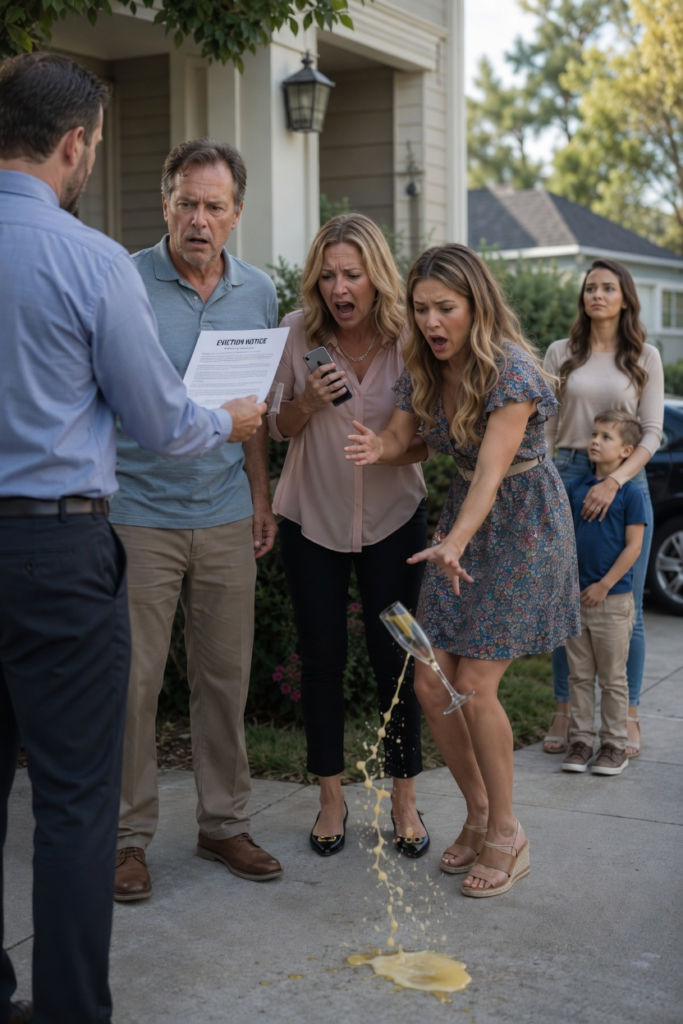
The official notice was delivered on a Thursday afternoon.
I know because my mother called at 3:17 p.m., and when I saw her name on the screen, I knew the old world had ended.
I let it ring.
She called again.
Then Harper.
Then my mother again.
Then a text from Mom.
WHAT IS THIS?
I waited ten minutes before calling back. Not because I wanted to be cruel, but because I needed my hands to stop shaking. I stood in the laundry room of my apartment, one hand braced against the dryer, listening to the machine thump through Liam’s pajamas.
When I called, my mother answered on the first ring.
“What did you do?” she screamed.
Her voice was so shrill I held the phone away from my ear.
“I assume you received the notice.”
“You can’t sell our house.”
“It isn’t your house.”
“What are you talking about?”
“Grandma Rose transferred the deed to me six years ago. Legally. Before she died.”
Silence.
Not confusion. Recognition arriving late.
Then my mother whispered, “You knew?”
“Yes.”
“All this time?”
“Yes.”
“And you’re just telling us now?”
“I kept it secret to protect the house from Dad’s gambling debts.”
She inhaled sharply.
“Don’t you dare talk about your father that way.”
“He hit me with a chair.”
Another silence.
This one was uglier.
“You know he didn’t mean—”
“I am going to stop you there,” I said, surprised by how steady my voice was. “If you finish that sentence, this will be the last time we speak.”
I heard her breathing.
In the background, my father shouted, “Give me the phone.”
My mother’s voice turned frantic. “Maya, please. Whatever happened, we can talk about it. You can’t sell the house. We have nowhere to go.”
“You should have thought about that before you watched him hurt me.”
“I didn’t know what to do.”
“You could have helped me off the floor.”
She began to cry. I had heard my mother cry many times. Often, it had worked. Her tears were the family fire alarm. Everyone ran toward them. That day, I stood still.
“Maya, please. This is my home.”
“It was Rose’s home,” I said. “Then she made it mine.”
“We raised you there.”
“You also broke me there.”
Her sob caught.
“I’ll have Julia send all communication through her office,” I said. “Do not come to my apartment. Do not contact my work. Do not use Liam to reach me.”
“You can’t do this to your family.”
“I’m not doing it to my family,” I said. “I’m doing it for my son.”
Then I hung up.
I expected panic after that. Instead, I felt very still.
The fallout began within an hour.
Harper called from a number I did not recognize after I blocked hers.
“You evil little bitch,” she said when I answered.
I almost smiled at how quickly sweetness evaporated when access was threatened.
“Hello, Harper.”
“You’re destroying this family.”
“No. I’m selling my property.”
“You stole that house from Mom and Dad.”
“Grandma transferred it legally.”
“Because you manipulated an old woman.”
That one sparked anger.
“Careful.”
“What are you going to do? Evict us too? Mia loves that house. Tyler still lives there half the time. Mom and Dad are too old to start over.”
“Dad is fifty-six and strong enough to swing furniture. He can pack boxes.”
She sucked in a breath. “You think you’re so superior because you’re a nurse.”
“No. I think I’m done being abused.”
“Abused.” She spat the word like it offended her. “You always make everything dramatic.”
“There are medical records.”
Silence.
Good.
“You documented it?”
“Yes.”
“Why would you do that?”
“So nobody could call it dramatic later.”
She shifted tactics. “What about Liam? You’re cutting him off from his family.”
“I’m cutting him off from people who think violence is a communication style.”
“You’ll regret this.”
“I already regret staying as long as I did.”
I hung up.
My father’s attorney sent a letter the next week claiming undue influence, elder vulnerability, fraud, unjust enrichment, and several other phrases Julia described as “angry fog.” Rose had not been vulnerable when she transferred the deed. She had been evaluated as competent. The documents were properly executed. The transfer had been recorded. Taxes had been handled. My father had no ownership interest. My mother had no ownership interest. Their lawyer requested a meeting. Julia declined unless they presented evidence. They did not.
The house went on the market occupied but available for possession at closing.
My parents refused showings at first. Then Julia obtained access rights through legal channels that made my father furious and my mother hysterical. I did not attend showings. I did not drive past the house. I did not look at the online listing more than twice because seeing photographs of the kitchen where my mother failed to help me and the living room where my father hurt me made my body feel too small for my skin.
But buyers came.
Some saw outdated cabinets and old carpet. Some saw a solid house in a decent neighborhood with a large yard and good bones. One young couple brought their parents and measured the dining room. An investor made a low offer. Julia advised against it. Another offer came in closer. Then, after three months, the right buyer appeared: a local contractor and his wife, who wanted to renovate it for their family. They offered $285,000.
I accepted.
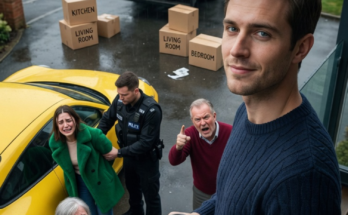
The closing process was strangely quiet. By then, my parents had moved into a rental Harper found for them across town. I heard from Nora, whose aunt knew someone at church, that my mother cried during the move and my father punched a hole in the garage wall before leaving. I did not ask which wall. I did not want to know.
On closing day, I sat in Julia’s office wearing my best black pants and a cream sweater Nora insisted made me look “like someone who reads contracts before signing them.” Liam was at preschool. My hands were calm when I signed the final documents. After the remaining mortgage, closing costs, attorney fees, and a few old property expenses were paid, my share was just over $180,000.
The number appeared on paper.
Real.
Mine.
For a moment, I could not breathe.
Julia slid a tissue box toward me without comment.
I cried then. Not loud. Not pretty. Tears running down my face in a quiet office while a lawyer pretended to organize papers because she understood dignity sometimes needs privacy.
“Do you know what you want to do next?” she asked after a while.
“Yes,” I said.
And I did.
I bought a small house on the edge of town, ten minutes from Liam’s school and fifteen from the hospital. It had two bedrooms, one bathroom, a little front porch, an old oak tree in the backyard, and a kitchen with yellow walls the realtor apologized for and I secretly loved. The floors creaked. The roof had five good years left, maybe seven if I was lucky. The laundry room was barely bigger than a closet. But there was a patch of grass where Liam could run, a bedroom door he could close, and no one inside who believed I owed them my body as rent.
The first time I brought Liam there, he ran from room to room with the same awe other children might reserve for castles.
“This is ours?” he asked.
“It’s ours.”
“Forever?”
“For as long as we want it.”
He stood in the middle of his empty bedroom, hands on his hips. “Can my bed go here?”
“Yes.”
“And my dragon?”
“Definitely.”
“And pancakes?”
“Pancakes can go in the kitchen.”
He nodded solemnly. “Good house.”
I laughed, then cried, then laughed again when he asked if crying meant I did not like it.
We moved in with help from Nora, Beth, Jo, and two nurses from my floor who claimed they were only there for pizza but carried furniture like professionals. Beth installed a new deadbolt. Nora organized the kitchen. Jo brought a casserole and a toolbox, then fixed the loose porch rail while muttering about men who build things badly. Liam placed his one-eyed dragon on the windowsill to “guard the yard.”
That first night, after everyone left, Liam fell asleep on his mattress surrounded by boxes. I sat on the kitchen floor with Rose’s quilt around my shoulders and listened to the house settle.
No shouting downstairs.
No beer bottles clinking.
No footsteps I had to identify by mood.
No one calling my name because they needed money, childcare, cleaning, apology, submission.
Just a small house breathing in the dark.
I worked one job after that.
Only one.
It took time to trust the reduction. My body had become so accustomed to exhaustion that rest felt suspicious. I kept reaching for diner shifts on the schedule, thinking I should do more, save more, prepare for the next disaster. Jo finally sat me down in a booth after lunch rush and said, “Maya, honey, if I see you trying to pick up another shift, I’m going to fire you from a job you already quit.”
“I’m just scared.”
“I know.”
“What if something happens?”
“Something already happened. You handled it.”
That sentence stayed with me.
I stayed at the hospital full-time, picked up occasional overtime when I wanted to, not because someone else’s emergency demanded it. I opened a savings account and watched the balance grow. I met with a financial counselor Julia recommended and learned how to protect the money from the sale, budget for repairs, save for Liam, and maybe, someday, return to school for the teaching degree I had abandoned. Nursing mattered to me, but teaching still lived in the corner of my heart like a lamp I had not turned off.
My family did not disappear immediately.
They tried every door before accepting that I had locks.
My mother left voicemails. At first, they were angry. Then pleading. Then soft in a way that hurt.
“Maya, I miss Liam.”
“Maya, your father isn’t sleeping.”
“Maya, I know things got out of hand, but families forgive.”
“Maya, please call me. I don’t know who I am if I’m not your mother.”
That last one nearly broke me.
I sat on my porch listening to it three times while Liam chased fireflies in the yard.
I wanted to call her. I wanted to ask why being my mother had not mattered when I was on the floor. I wanted to ask whether she missed me or the version of herself who could still believe she had done her best. I wanted a mother so badly that I almost accepted the one who had failed me.
Instead, I saved the message in a folder labeled Do Not Answer When Tired.
Harper sent emails. Long ones. Furious ones. Ones with subject lines like Hope You’re Happy and Your Nephew—she meant Liam, though she called him hers once by mistake—Deserves Better. She accused me of making Mom sick, destroying Dad’s pride, humiliating the family, forcing Mia to move away from the only home she had known, and turning into “some cold nurse robot with a mortgage.” She never apologized for the phone call. Never for sending my father into a rage. Never for years of using me as free labor. Harper did not believe in apologies unless receiving them.
Tyler sent one text after the sale closed.
Heard the house sold. Wild.
I replied: Yes.
He wrote: Hope you’re good.
I wrote: I am.
That was the full extent of our reckoning.
My father never contacted me directly.
That was his punishment and his pride. I heard, again through the family grapevine I stopped watering but could not fully uproot, that he told people I had stolen his inheritance. That he had “let” me live under his roof and I repaid him by making him homeless. That Rose had been confused. That lawyers were thieves. That daughters these days had no loyalty. He did not mention the chair. Men like my father never mention the chair. They mention the roof they provided, not the fear beneath it.
Two years passed.
I turned twenty-six in my own kitchen while Liam, then six, decorated a grocery-store cake with so many sprinkles it looked dangerous. Nora came over with balloons. Beth brought wine. Jo brought a card with fifty dollars tucked inside despite my protests. Liam gave me a drawing of our house with the oak tree, both of us standing in the yard holding hands. Above us, in crooked kindergarten letters, he had written: MOMMY SAFE HOUSE.
I framed it.
By then, our life had rhythms that belonged only to us. Pancakes on Saturday. Library on Wednesday afternoons. Movie night on Fridays with popcorn in the big metal bowl. Liam’s sneakers by the back door. My scrubs washed every other day. Bills paid from my account. Savings untouched except when the water heater died and I replaced it without calling anyone in tears. I planted tomatoes in the backyard because Rose had grown tomatoes, and though mine came in lopsided and stubborn, Liam ate them with salt and declared them “yard candy.”
Sometimes I still woke at night convinced I heard my father downstairs.
Trauma is not evicted as cleanly as people are.
But each time, I would sit up in the dark, listen to my quiet house, and remember: he did not have a key. He did not own the walls. He did not own me.
One afternoon, near the end of summer, I took Liam to the park. He was climbing a rope structure with the fierce concentration of a child trying to prove he could reach the top without help. I sat on a bench under a tree, reading a book about classroom management I had checked out from the library because the lamp in my heart had started glowing again.
A woman sat beside me after a while. She looked familiar in the vague way people from hospital corridors often do. It took me a second to recognize her as the urgent care doctor who had documented my injuries two years earlier.
“Maya?” she asked gently.
“Yes.”
“I’m Dr. Patel. I saw you once.”
“I remember.”
Her eyes moved toward Liam, who had reached the top and was shouting for me to look.
“He looks happy,” she said.
“He is.”
“And you?”
The question did not feel intrusive. It felt like a door opened carefully.
I watched Liam slide down, land badly, pop up laughing.
“I’m getting there.”
Dr. Patel smiled. “Good.”
She did not ask for details. She did not need them. Some professionals learn that survival announces itself in posture, in the way a woman sits with her shoulders no longer braced for impact.
That evening, after Liam went to bed, I filled out the application for a part-time bachelor’s completion program in education.
My hands shook when I clicked submit.
Not because I was afraid of failing.
Because wanting something for myself still felt rebellious.
I was accepted in October.
I cried in the break room at work, and Beth hugged me so hard my badge clipped her chin.
“Teacher Maya,” she said. “Has a ring to it.”
“I’m not leaving nursing yet.”
“Did I say you were?”
“I’m just taking classes.”
“Did I say you weren’t?”
I laughed.
For the first time in years, the future felt like a place I might enter by choice instead of emergency.
The hardest question people ask is whether I regret selling the house.
They ask it carefully if they know the story. Less carefully if they only know pieces. They imagine regret must come from making my parents move, from turning childhood rooms into someone else’s renovation project, from watching the family home disappear into a sale contract and a wire transfer.
I do not regret it.
But I do grieve it.
Those are not the same.
I grieve the maple tree Rose planted. I grieve the kitchen before my father’s anger filled it. I grieve the upstairs room where I painted a dresser blue and tried to make a small safe place for my son. I grieve the version of my mother who might have stood between me and harm. I grieve the father I never had but kept hoping would appear sober, sorry, and soft enough to love without fear. I grieve the siblings we could have been if scarcity and favoritism had not turned us into roles before we understood the script.
The house held those ghosts.
Selling it did not erase them.
It gave me money enough to stop living inside them.
One winter evening, almost three years after I left, Harper came to the hospital.
I was at the nurses’ station finishing charting when I saw her step off the elevator in a camel coat, hair perfect, eyes red. For a second, my body became twenty-four again. Jaw throbbing. Floor spinning. Mother watching. Then Beth, seated beside me, followed my gaze and went still.
“Do you want me to call security?” she asked quietly.
“Not yet.”
Harper saw me and approached slowly, as if even she understood the old rules no longer applied.
“Maya.”
“Harper.”
She looked thinner. Not physically, exactly. Less certain. Mia, now seven, was not with her.
“Can we talk?”
“I’m working.”
“When is your break?”
I almost said no. Then curiosity, or maybe the last thread of sisterhood, made me check the clock.
“Ten minutes.”
We sat in the small courtyard outside the cafeteria, both of us wrapped in winter coats. The hospital lights glowed against the dark windows. Somewhere above us, a helicopter moved toward the landing pad, its blades thudding through the cold air.
Harper twisted her gloves in her lap.
“Dad’s worse,” she said.
I said nothing.
“Not sick. Just… worse. Drinking more. Gambling again. Mom keeps calling me for money.”
The old reflex stirred. Poor Harper. Help. Fix. Give.
I let it pass.
“I’m sorry,” I said.
She gave a short laugh. “That’s all?”
“What do you want me to say?”
“I don’t know.” She looked at me then, and the anger in her face gave way to something closer to exhaustion. “Maybe I wanted you to tell me how to make it stop.”
“You can’t make Dad stop. You can decide what you will fund, tolerate, and excuse.”
She looked away.
“You make it sound simple.”
“It isn’t simple. It is clear.”
For a while, neither of us spoke.
Then Harper said, “I hated you after the house sold.”
“I know.”
“I told everyone you were selfish.”
“I know.”
“I think…” She swallowed. “I think I was terrified because you did what I never had the guts to do.”
I turned toward her.
She stared at her gloves. “You left. You let them fall. I kept thinking if I could make you the villain, then I wouldn’t have to admit I was still volunteering to be trapped.”
My chest tightened.
Harper had never spoken like that to me. Not once.
“What about the phone call?” I asked.
She closed her eyes.
“I lied to Dad,” she whispered.
I waited.
“I told him you said you were done helping any of us. That you thought we were pathetic. I made it worse because I was mad and because I knew he’d scare you into doing what I wanted.” Her voice broke. “I didn’t know he would hit you.”
I looked at her for a long time.
“But you knew he might hurt me.”
She flinched.
There it was.
The difference between confession and accountability often lives in the answer after but.
“Yes,” she said. “I knew he might hurt you. Not like that, maybe, but I knew what he was. I used it anyway.”
The cold air moved between us.
I thought I would feel rage. Instead, I felt the tired sadness of an old bill finally itemized.
“Thank you for telling the truth,” I said.
She cried then, but quietly, without performance.
“I’m sorry,” she said. “I know it’s late. I know it doesn’t fix anything. But I am.”
I looked through the courtyard window at the bright hospital hallway. Nurses moved past, carrying charts and coffee and other people’s pain.
“I’m not ready to be sisters,” I said.
Harper nodded, tears slipping down her cheeks. “I know.”
“But if you want to leave them, really leave the pattern, I can give you Julia’s number. And a therapist Nora recommended.”
Her face crumpled.
“Why would you help me?”
“Because helping you leave is not the same as letting you use me.”
That sentence felt like something I had earned.
I texted her the numbers before my break ended.
For months, I heard nothing.
Then, in spring, Harper sent a photo. Mia standing in front of a small townhouse, grinning, holding a pink backpack. The message said: We moved. Just us. Thank you.
I stared at the picture for a long time.
Then I replied: Good.
That was all I could give.
It was not nothing.
My mother showed up at my house once.
I had imagined that moment many times, usually with dread. In my mind, she arrived screaming or crying, accusing me, demanding Liam, begging for money, collapsing on my porch. But when she came, it was a rainy Tuesday afternoon, and she stood under a black umbrella at the edge of my walkway, looking smaller than memory.
I saw her through the kitchen window while washing a mug.
For a moment, I did not move.
Then I dried my hands, stepped onto the porch, and closed the door behind me.
She looked at the house. The porch. The oak tree. The rain dripping from the gutters.
“It’s nice,” she said.
“Thank you.”
“Liam home?”
“No.”
That was true. He was at school. It was also a boundary.
She nodded.
“I won’t stay.”
“Okay.”
Rain tapped against her umbrella. Her hair, once carefully dyed, showed gray at the roots.
“I came to say something,” she said.
I waited.
“I failed you.”
The words were so plain I almost did not understand them.
She looked down at her shoes. “That night. Before that night. For years.”
My throat tightened.
“I told myself I was keeping peace,” she continued. “I told myself your father was under pressure, Harper was difficult, Tyler was sensitive, and you were strong. I used your strength as an excuse to give you less protection.”
I gripped the porch railing.
“You watched him hit me.”
Her face twisted.
“Yes.”
“And then you blamed me.”
“Yes.”
The rain filled the silence.
“I don’t know how to forgive that,” I said.
“I don’t know if you should.”
That surprised me more than the apology.
She looked up, eyes wet but steady. “I’m not here to ask you for money. Or for Liam. Or to come back. I’m not even asking you to forgive me today. I just needed to say I know what I did.”
I studied her face, searching for the trap, the hook, the hidden invoice.
There may have been one. People do not change cleanly. But I could not find it.
“Are you still with Dad?” I asked.
She nodded.
“Then you don’t know enough yet.”
She flinched, but nodded again.
“You’re right.”
For a moment, she looked like she might step closer. She did not.
“I hope Liam is happy.”
“He is.”
“Good.”
She turned to leave, then paused.
“Your grandmother was right about you,” she said.
“About what?”
“She said you were the only one who knew how to carry fire without burning the house down.” A sad smile crossed her face. “I think maybe she underestimated you. You knew when to burn the right one.”
Then she walked back to her car in the rain.
I did not invite her inside.
I also did not collapse after she left.
That felt like progress.
By the time Liam turned eight, my life had become almost ordinary.
Ordinary, I had learned, was a miracle if you came from chaos.
I worked three twelve-hour shifts a week at the hospital and took classes online. Liam played soccer badly but enthusiastically. We had a dog by then, a mutt named Pancake because Liam said every family should name something after what they love. Pancake had enormous ears, questionable judgment, and a deep suspicion of mail carriers. Our house had a new roof because I paid for one before the leaks started. The tomatoes improved. I learned to make bread. Liam lost his front tooth at school and demanded I write a note to the tooth fairy explaining inflation.
On Friday nights, we still made popcorn in the big pot and watched movies on the couch. Sometimes, halfway through, he would lean against me, warm and solid and safe, and I would feel the old ache move through me. Not because I regretted anything. Because I understood how close I had come to teaching him that love meant enduring harm.
One night, after a movie about a boy and a dragon, Liam asked, “Do you miss Grandma’s house?”
I paused.
He was old enough now to remember pieces. The garage room. The maple tree. Grandma’s kitchen. Grandpa’s shouting, maybe, though children often store fear without labels.
“Sometimes,” I said.
“Why did we leave?”
I could have given the simple answer: because Grandpa hurt me. But he was older now, and truth could grow with him.
“Because some people in that house thought family meant they could treat us badly and still keep us close. I didn’t want you to learn that.”
He thought about it.
“Family should be nice?”
“Family should be safe. Nice is good, but safe matters more.”
He nodded slowly. “Our house is safe.”
I kissed his hair.
“Yes,” I said. “It is.”
When I graduated with my teaching degree two years later, Liam was ten and wore a clip-on tie he hated. Beth, Nora, Jo, and Julia came. Harper came too, sitting near the back with Mia, who had become a tall, shy girl with Harper’s eyes and none of her old sharpness. My mother did not come, but she sent a card. Inside, in careful handwriting, she wrote: I am proud of you. I know pride from me may not mean what it should, but I am sending it anyway.
I kept the card.
After the ceremony, Liam ran toward me with flowers, nearly tripping over his dress shoes.
“Mom! You’re a teacher-nurse now.”
I laughed. “Something like that.”
“Does that mean you know everything?”
“Definitely not.”
“But a lot?”
“A little more than before.”
He hugged me hard.
I looked over his shoulder and saw Harper watching. She mouthed, “Congratulations.” I nodded. Across the courtyard, Julia stood with her arms folded, smiling like a woman who enjoyed seeing paperwork turn into life. Nora was crying openly. Beth pretended she had allergies. Jo shouted that if nobody took pictures soon, she was leaving because her feet hurt.
For one full minute, I let myself feel it.
Not victory over my family.
Not revenge.
Completion of something they had delayed but not destroyed.
I began teaching part-time at a community college while staying on at the hospital. My first class was an introductory course for nursing assistants, many of them young women with tired eyes, complicated families, and schedules that looked impossible on paper. On the first day, I stood at the front of the room and saw versions of myself everywhere.
I did not tell them my whole story.
Not then.
But I told them this:
“Caregiving is honorable work. But being good at caring for others does not mean you are required to abandon yourself. The first patient you are responsible for keeping alive is you.”
A girl in the second row lowered her head and began writing.
I thought of Rose.
I thought of the deed.
I thought of ledgers.
Years after the sale, I drove past the old house once.
I did not plan to. I had taken a wrong turn after dropping Liam at a friend’s birthday party, and suddenly Maple Avenue opened before me, lined with the same trees, the same cracked sidewalks, the same houses wearing new paint over old stories. My hands tightened on the wheel, but I kept driving.
The house was pale green now instead of beige. The new owners had replaced the porch rail, planted hydrangeas, and hung a swing where my father’s broken recliner had once sat inside behind the front window. The maple tree still stood in the yard, larger than before, leaves moving in the wind. A little boy I did not know rode a scooter down the driveway while a woman called after him to be careful.
The house looked happy.
That surprised me.
I had expected it to look haunted, as if pain belonged to walls permanently. But houses are not loyal to suffering. They hold what we bring, then hold something else when we leave.
I pulled over halfway down the block and sat for a moment.
“Good,” I whispered.
Then I drove home.
I am thirty-two now.
Liam is twelve, almost as tall as my shoulder, with braces, opinions, and a habit of leaving soccer cleats exactly where I will trip over them. He knows some of the story and will know more when he is older. He knows Grandpa Dennis is not safe and Grandma Susan is complicated. He knows Aunt Harper is trying. He knows family can be real without being close, and close without being safe. He knows love is shown in patterns, not speeches.
My father died last year.
A stroke. Sudden, according to Harper. I felt less than I expected and more than I wanted. Grief is not always love. Sometimes it is the death of the last chance for a person to become who you needed. I did not go to the hospital. I did attend the funeral, standing in the back with Liam beside me. My mother looked at me across the church aisle but did not approach until after the service.
“He never admitted it,” she said.
“I know.”
“But he knew.”
“That’s not the same.”
“No,” she said. “It isn’t.”
We stood there while people ate funeral sandwiches and told gentle lies about complicated men. Harper hugged me stiffly. Tyler nodded from near the door, still orbiting discomfort at the safest distance. Mia stood beside her mother, holding Liam’s hand because cousins sometimes build bridges adults burned.
Afterward, my mother handed me an envelope.
It contained one photograph: Rose standing in front of the house beside the maple tree, one hand on her hip, chin lifted, eyes bright with trouble. On the back, in Rose’s handwriting, were the words: For Maya, when she needs to remember whose roof it really is.
I laughed and cried in my car after reading it.
My mother moved into a small apartment after Dennis died. She attends a support group now, one for spouses of addicts and people affected by family violence. She has not asked me for money. She sees Liam twice a year at a park or restaurant, always supervised by me, always polite, always careful. I do not know if we will ever be mother and daughter in the way I once wanted. But we are no longer liar and witness. That is something.
Harper and I are not close, but we are honest in small doses. She left the boyfriend. She works full-time now. She apologizes without being prompted sometimes, which still startles me. Mia spends one weekend a month with us and loves Pancake more than anyone else in the family. Once, Harper stood in my kitchen watching our daughters—no, her daughter and my son, but some days they feel like shared proof—argue over a board game, and she said, “I can’t believe you built this.”
I looked around the kitchen. Bread cooling on the counter. Liam’s homework on the table. Pancake asleep in a patch of sun. Bills paid. Doors locked. Air calm.
“Me neither,” I said.
But that was not fully true.
Some part of me had always known I could build a life if I could ever stop paying for theirs.
People still ask if I regret selling the house.
I always say no.
If they press, I tell them regret belongs to choices made against yourself. Selling that house was the first large choice I made for myself and my son. It was the moment I stopped confusing endurance with goodness. It was the day I took the ledger my family had kept in invisible ink and wrote across it in permanent black:
Paid in full.
My father hit me. My mother watched. My sister weaponized my kindness. My brother disappeared into silence. My grandmother, long dead, protected me better than the people living under the roof she left behind.
So no, I do not regret it.
I regret the years I thought love required debt.
I regret every time I handed over money I needed, time I did not have, forgiveness that had not been earned. I regret letting Liam sleep beneath a roof where anger moved around like weather. I regret calling survival selfish only when it was mine.
But the sale? The notice? The day my mother screamed because the house was finally being taken from the people who had taken so much from me?
No.
That day was not cruelty.
It was arithmetic.
I had spent my entire life in the red, owing people who never counted what I had already paid. Then Rose gave me an asset they forgot to value because they forgot to value me. I turned that asset into a home, safety, education, rest, tomatoes in the backyard, pancakes on Saturdays, and a son who knows that family does not get to demand your destruction and call it loyalty.
My name is Maya Calloway.
I am a nurse. A teacher. A mother. A homeowner. A woman who once folded tiny clothes in a room above a garage and believed order could only exist in drawers because the rest of her life belonged to other people.
I was wrong.
Order can be built.
Safety can be claimed.
Families can be left.
Legacies can be rewritten.
And ledgers, no matter how long they have been falsified, can finally be balanced.