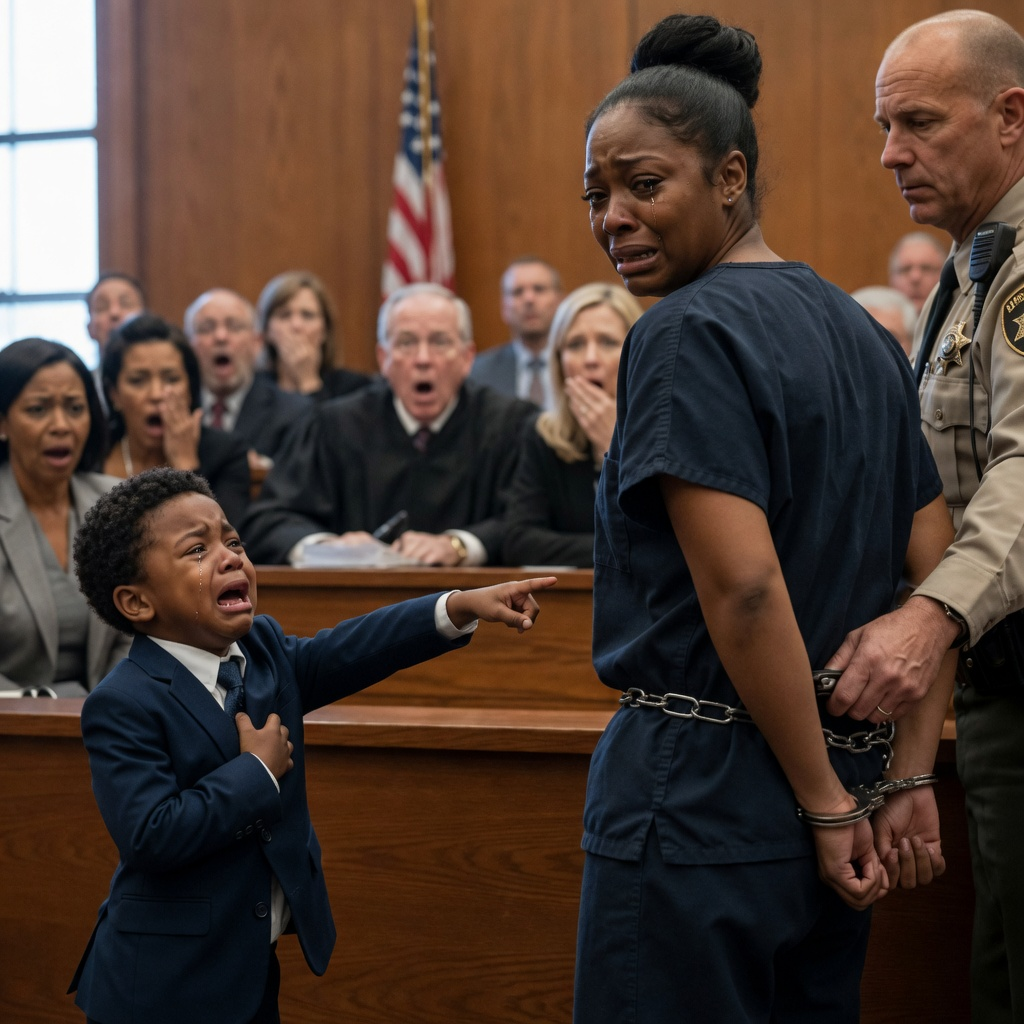
“The boy is traumatized,” Ray stammered, his voice cracking like dry wood. “He’s been through a tragedy. He’s making up stories to cope!”
But the Warden wasn’t listening to Ray. He was looking at the key in his palm. It was an old-fashioned skeleton key, rusted at the edges but solid. He signaled to the guards. “Hold him,” he commanded, pointing at Ray. “And call the District Attorney’s office. Now.”
“You can’t do this!” Ray screamed as two guards grabbed his arms. “This is a legal execution! You have a warrant!”
“I have a witness,” the Warden countered, his voice cold as iron. “And I have new evidence.”
The Descent into the Past
While the prison became a whirlwind of legal chaos, the execution was stayed—not canceled, but frozen in time. My mother was taken back to a holding cell, her face a map of shock and burgeoning hope. Matthew and I were ushered into a small, sterile office.
Matthew sat on the edge of a plastic chair, his feet dangling. He looked so small, yet he had carried a mountain for six years. I knelt in front of him, my hands shaking.
“Matthew,” I whispered, “why didn’t you tell me? Why didn’t you tell the police?”
His lower lip trembled. “Uncle Ray told me he’d kill you, Sarah. He said the police were his friends and they’d help him bury you in the woods behind the house. He said… he said Dad died because he couldn’t keep a secret, and I had to be better at it.”
The silence in the execution chamber wasn’t just quiet; it was heavy, like the air before a massive storm. Uncle Ray’s face, usually a mask of rehearsed grief and stoic support, was disintegrating. The tan he’d maintained from his frequent “business trips” to the coast—trips paid for by my father’s life insurance—had turned a sickly, curdled gray.
“The boy is traumatized,” Ray stammered, his voice cracking like dry wood. “He’s been through a tragedy. He’s making up stories to cope!”
But the Warden wasn’t listening to Ray. He was looking at the key in his palm. It was an old-fashioned skeleton key, rusted at the edges but solid. He signaled to the guards. “Hold him,” he commanded, pointing at Ray. “And call the District Attorney’s office. Now.”
“You can’t do this!” Ray screamed as two guards grabbed his arms. “This is a legal execution! You have a warrant!”
“I have a witness,” the Warden countered, his voice cold as iron. “And I have new evidence.”
The Descent into the Past
While the prison became a whirlwind of legal chaos, the execution was stayed—not canceled, but frozen in time. My mother was taken back to a holding cell, her face a map of shock and burgeoning hope. Matthew and I were ushered into a small, sterile office.
Matthew sat on the edge of a plastic chair, his feet dangling. He looked so small, yet he had carried a mountain for six years. I knelt in front of him, my hands shaking.
“Matthew,” I whispered, “why didn’t you tell me? Why didn’t you tell the police?”
His lower lip trembled. “Uncle Ray told me he’d kill you, Sarah. He said the police were his friends and they’d help him bury you in the woods behind the house. He said… he said Dad died because he couldn’t keep a secret, and I had to be better at it.”
I found him in an interrogation room at the precinct, slumped in a chair. He looked smaller now, stripped of the house, the car, and the authority he had stolen.
“Why?” I asked, my voice barely a whisper.
Ray looked up. There was no remorse in his eyes, only the bitter resentment of a man who had been caught. “Your father was always the ‘good’ one. The one with the family, the job, the moral compass. He was going to ruin everything for a few thousand dollars of ‘misplaced’ city funds. I offered him a cut. He spat on me.”
“So you killed him and framed the woman who treated you like a brother?”
Ray smirked, a jagged, ugly thing. “It was easy. You all believed it. Even you, Sarah. You were the easiest one to convince. You wanted an explanation for the blood, and I gave you a monster to hate. It wasn’t my fault you chose to hate your mother.”
I wanted to scream. I wanted to leap across the table. But then I remembered Matthew’s face—the courage of an eight-year-old who had waited six years to save his mother.
“You didn’t give me a monster, Ray,” I said, standing up. “You were the monster. And the thing about monsters is, they eventually trip over their own shadows.”
The Long Walk Home
The gates of the prison opened three days later. It wasn’t the cinematic moment I expected. There were no cameras, no cheering crowds—just the cold morning air and the sound of a heavy steel door sliding open.
My mother stepped out, wearing the same clothes she’d been arrested in six years ago, now hanging loosely on her thin frame. She looked at the horizon, her eyes squinting against the unaccustomed sunlight.
Matthew didn’t wait. He sprinted across the gravel, his blue sweater a blur of color. “Mom!”
She caught him, collapsing to her knees, burying her face in his neck. I walked slower, my heart pounding against my ribs. I didn’t know if she could ever forgive me for the six years of silence, for the letters I never answered, for the doubt I let fester.
I stopped a few feet away. “Mom…”
She looked up. Her eyes were tired, etched with the trauma of a thousand nights spent waiting for a needle that would never come. She reached out a hand—thin, trembling, but warm.
“Sarah,” she whispered.
“I’m so sorry,” I sobbed, falling into her arms. “I’m so, so sorry.”
“Hush,” she said, pulling us both close. “The truth is a heavy thing to carry alone. We’re not carrying it alone anymore.”
Epilogue: The Aftermath
The trial of Raymond Miller was the biggest scandal the city had seen in decades. The “Kitchen Knife Killer” headline was replaced by “The Innocent Mother” and “The Contractor’s Greed.” Victor Vane was indicted shortly after, and the web of corruption Dad had died to expose was finally unraveled. Matthew is fourteen now. He’s quiet, observant, and fiercely protective of us. He still has nightmares sometimes, but he doesn’t have to hide them anymore.
My mother never regained those six years. She still jumps at loud noises, and she can’t stand to be in small, windowless rooms. But every morning, she sits on the porch with a cup of coffee and watches the sun rise, a luxury she almost lost.
I kept the ledger. Not to dwell on the pain, but as a reminder. My father died for the truth, my brother lived for it, and my mother was saved by it.
And as for Uncle Ray? He’s currently serving a life sentence in the very prison where my mother spent six years. Sometimes, when the world feels unfair, I think about him sitting in that cell, staring at the same four walls he tried to trap her in.
Justice isn’t always fast. It isn’t always clean. But as I look at my family sitting around the dinner table—whole, safe, and finally free—I know that it is enough. We are the survivors of a lie, and we are finally living the truth.
The silence in the execution chamber wasn’t just quiet; it was heavy, like the air before a massive storm. Uncle Ray’s face, usually a mask of rehearsed grief and stoic support, was disintegrating. The tan he’d maintained from his frequent “business trips” to the coast—trips paid for by my father’s life insurance—had turned a sickly, curdled gray.
“The boy is traumatized,” Ray stammered, his voice cracking like dry wood. “He’s been through a tragedy. He’s making up stories to cope!”
But the Warden wasn’t listening to Ray. He was looking at the key in his palm. It was an old-fashioned skeleton key, rusted at the edges but solid. He signaled to the guards. “Hold him,” he commanded, pointing at Ray. “And call the District Attorney’s office. Now.”
“You can’t do this!” Ray screamed as two guards grabbed his arms. “This is a legal execution! You have a warrant!”
“I have a witness,” the Warden countered, his voice cold as iron. “And I have new evidence.”
The Descent into the Past
While the prison became a whirlwind of legal chaos, the execution was stayed—not canceled, but frozen in time. My mother was taken back to a holding cell, her face a map of shock and burgeoning hope. Matthew and I were ushered into a small, sterile office.
Matthew sat on the edge of a plastic chair, his feet dangling. He looked so small, yet he had carried a mountain for six years. I knelt in front of him, my hands shaking.
“Matthew,” I whispered, “why didn’t you tell me? Why didn’t you tell the police?”
His lower lip trembled. “Uncle Ray told me he’d kill you, Sarah. He said the police were his friends and they’d help him bury you in the woods behind the house. He said… he said Dad died because he couldn’t keep a secret, and I had to be better at it.”
A cold chill washed over me. For six years, I had lived under the same roof as a monster, eating the food he bought with my father’s money, while he held a metaphorical gun to my little brother’s head.
The Secret Drawer
The Warden returned two hours later, accompanied by a frantic-looking detective and a forensic locksmith. They had gone to our old house—the house Ray had claimed as his own.
They found the wardrobe. It was a massive, antique mahogany piece that had belonged to our grandmother. Dad used to joke it was a portal to another world. In a way, he wasn’t wrong.
Behind a false panel in the base, triggered by the key Matthew had hidden in his toy box for half a decade, they found a leather-bound ledger and a single, grainy photograph.
The Warden laid the photo on the desk in front of us. It wasn’t just a photo of Ray. It was a photo of Ray shaking hands with a man named Victor Vane—a notorious local developer who had been under investigation for a multi-million dollar arson scam six years ago.
But it was the ledger that broke the case wide open.
The Ledger of Lies
My father hadn’t been a perfect man, but he was a meticulous one. He was an accountant for the city, and he had discovered that Uncle Ray, working as a contractor, had been inflating costs and funneling city funds into Vane’s shell companies.
The final entry in the ledger was dated the night of my father’s death:
“Ray came by tonight. He tried to buy my silence. When I told him I was going to the DA in the morning, he didn’t even argue. He just looked at me with a look I’ve never seen before. If something happens to me, look for the knife. He’s been eyeing the kitchen set all night. He thinks he’s clever. He doesn’t know I’ve seen him talking to Vane. God help us.”
The realization hit me like a physical blow. Ray hadn’t just killed my father; he had meticulously staged the scene to destroy my mother. He knew she had a history of sleepwalking. He knew she had been treated for depression. He played on the world’s willingness to believe in a “snapped” housewife rather than a corrupt brother-in-law.
The Confrontation
The legal gears turned with a speed I hadn’t thought possible. With the ledger, the photo, and Matthew’s testimony, the DA’s office moved to vacate my mother’s conviction.
But I needed to see him. I needed to see Ray before they hauled him away to the county jail.
I found him in an interrogation room at the precinct, slumped in a chair. He looked smaller now, stripped of the house, the car, and the authority he had stolen.
“Why?” I asked, my voice barely a whisper.
Ray looked up. There was no remorse in his eyes, only the bitter resentment of a man who had been caught. “Your father was always the ‘good’ one. The one with the family, the job, the moral compass. He was going to ruin everything for a few thousand dollars of ‘misplaced’ city funds. I offered him a cut. He spat on me.”
“So you killed him and framed the woman who treated you like a brother?”
Ray smirked, a jagged, ugly thing. “It was easy. You all believed it. Even you, Sarah. You were the easiest one to convince. You wanted an explanation for the blood, and I gave you a monster to hate. It wasn’t my fault you chose to hate your mother.”
I wanted to scream. I wanted to leap across the table. But then I remembered Matthew’s face—the courage of an eight-year-old who had waited six years to save his mother.
“You didn’t give me a monster, Ray,” I said, standing up. “You were the monster. And the thing about monsters is, they eventually trip over their own shadows.”
The Long Walk Home
The gates of the prison opened three days later. It wasn’t the cinematic moment I expected. There were no cameras, no cheering crowds—just the cold morning air and the sound of a heavy steel door sliding open. Matthew didn’t wait. He sprinted across the gravel, his blue sweater a blur of color. “Mom!”
She caught him, collapsing to her knees, burying her face in his neck. I walked slower, my heart pounding against my ribs. I didn’t know if she could ever forgive me for the six years of silence, for the letters I never answered, for the doubt I let fester.
I stopped a few feet away. “Mom…”
She looked up. Her eyes were tired, etched with the trauma of a thousand nights spent waiting for a needle that would never come. She reached out a hand—thin, trembling, but warm.
“Sarah,” she whispered.
“I’m so sorry,” I sobbed, falling into her arms. “I’m so, so sorry.”
“Hush,” she said, pulling us both close. “The truth is a heavy thing to carry alone. We’re not carrying it alone anymore.”
Epilogue: The Aftermath
The trial of Raymond Miller was the biggest scandal the city had seen in decades. The “Kitchen Knife Killer” headline was replaced by “The Innocent Mother” and “The Contractor’s Greed.” Victor Vane was indicted shortly after, and the web of corruption Dad had died to expose was finally unraveled.
We didn’t go back to the old house. We sold it and moved to a small town near the coast, far away from the whispers and the stares.
Matthew is fourteen now. He’s quiet, observant, and fiercely protective of us. He still has nightmares sometimes, but he doesn’t have to hide them anymore.
My mother never regained those six years. She still jumps at loud noises, and she can’t stand to be in small, windowless rooms. But every morning, she sits on the porch with a cup of coffee and watches the sun rise, a luxury she almost lost.
I kept the ledger. Not to dwell on the pain, but as a reminder. My father died for the truth, my brother lived for it, and my mother was saved by it.
And as for Uncle Ray? He’s currently serving a life sentence in the very prison where my mother spent six years. Sometimes, when the world feels unfair, I think about him sitting in that cell, staring at the same four walls he tried to trap her in.
Justice isn’t always fast. It isn’t always clean. But as I look at my family sitting around the dinner table—whole, safe, and finally free—I know that it is enough. We are the survivors of a lie, and we are finally living the truth.