My name is Eleanor Grace Whitmore, and at sixty-eight, I thought I understood hardship.
For nearly fifty years, my husband Richard and I built Hazelbrook Orchards in Pennsylvania from nothing—just hard work, faith, and patience. Every tree we planted, every fence we fixed, every harvest we gathered was a reflection of our life together. The orchard wasn’t just a business. It was our story made real.
Then Richard passed away from pancreatic cancer, and the silence he left behind felt heavier than anything I had ever faced. I was still surrounded by grief when my children, Darren and Samantha, came home. At first, I told myself their coldness was just sorrow. But by the next morning, I saw the truth—they weren’t grieving. They were calculating.
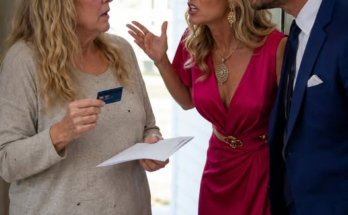
They sat me down in my own kitchen and spoke to me not as their mother, but as an obstacle. They said I was too old to manage the orchard, that a care facility would be better for everyone. Then they placed documents in front of me, demanding I sign Hazelbrook over to an investor for seven million dollars. Darren even showed me a will he claimed Richard had signed—but I knew instantly it was fake. I had watched my husband sign his name for decades. That paper had his name, but none of his hand.
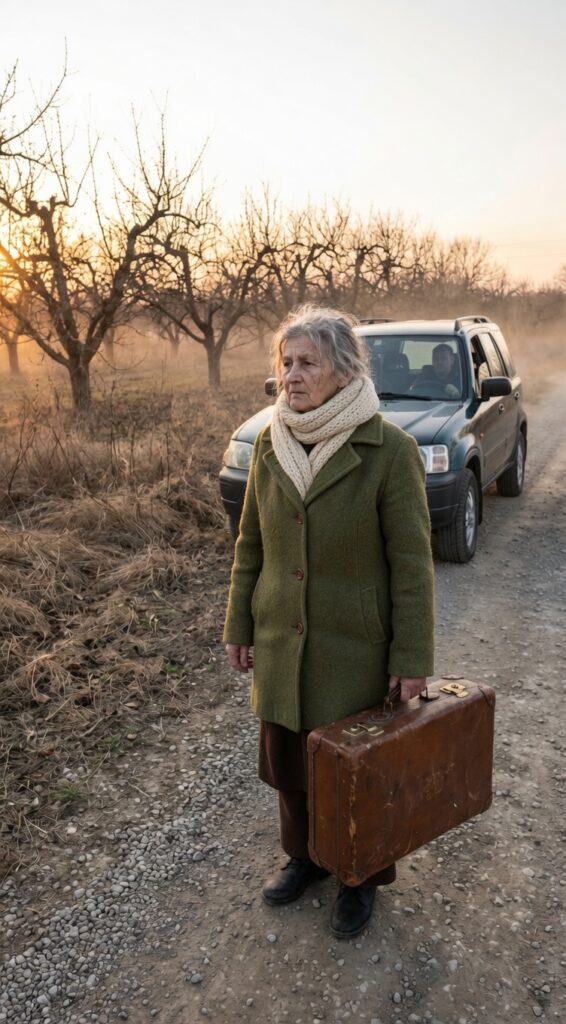
When I refused, their patience disappeared. Darren drove me away from the farm under the pretense of giving me time to think. Instead, he left me on a quiet roadside with a suitcase and told me the home and business were no longer mine. As his car disappeared, I stood there—widowed, betrayed, and alone.
But I didn’t break.
I picked up my suitcase and walked. Years of surviving storms, losses, and hardship had taught me something they never understood—silence is not weakness.
What they didn’t know was that I still held something crucial. In my bag were the original deeds to twenty acres bordering the orchard—land I had purchased in my own name before I married Richard. That land held the orchard’s only natural water source. Without it, Hazelbrook could not survive.
I went straight to our longtime lawyer, Harold Jennings. He confirmed what I already knew—the will was forged. My children hadn’t just betrayed me emotionally. They had committed fraud.
Harold acted quickly. He notified the investor that the sale involved disputed ownership and a critical water source outside my children’s control. The investor backed out immediately. Just like that, the seven-million-dollar deal collapsed.
That’s when my children panicked. Their calls shifted from anger to desperation. I didn’t answer. For the first time, I understood something clearly: I didn’t owe access to people just because I had given them life.
I didn’t want revenge. I didn’t want drama. I wanted control over my own future—and dignity.
So I made a choice they never expected.
Instead of reclaiming everything and fighting endlessly, I donated the water rights from my land to a local agricultural cooperative. That ensured the orchard’s survival without allowing anyone—especially my children—to exploit it. It was my way of protecting what Richard and I had built without returning power to those who tried to take it.
Then I walked away.
I rented a small apartment in town. It was simple, quiet, and finally mine. I began teaching gardening—sharing what I had learned about patience, growth, and care. And in doing that, I found myself again.
Darren and Samantha lost more than money. They lost trust, reputation, and the illusion that inheritance could replace integrity.
I still grieve—not just for my husband, but for the children I thought I had raised. But I no longer carry their choices as my burden.
If my story means anything, it’s this:
Never mistake quiet strength for weakness.
Some people don’t need to shout to stand firm.
They endure. They watch. They remember.
And when the time comes…
they stand on truth others were too blind to see