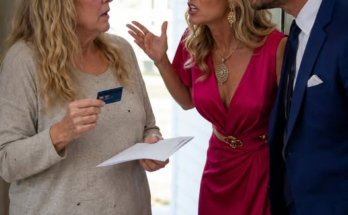
My mom raised her glass, smiled at my sister, and announced, “She’s The Daughter I’m Proud Of.” Then seconds later, the waiter dropped the $3,450 bill directly in front of me like it had been planned all along. My sister smirked while the whole table went quiet, waiting for me to silently pay for another celebration that wasn’t about me. Nobody thanked me. Nobody even looked embarrassed. So I slowly stood up… picked up the bill… and slid it right back across the table. The entire room went silent.
Part 1
My name is Sophia Burke, and for most of my life, I thought being the dependable daughter was a compliment.
I was thirty years old, a high school history teacher, and I lived in a two-bedroom apartment on the east side of the city with my boyfriend, Jacob. Our place wasn’t fancy, but it was clean. We had secondhand bookshelves, a couch with one soft dip in the middle, and a balcony just big enough for two chairs and a dying basil plant I kept promising I would revive.
I liked stability. I liked schedules, grocery lists, lesson plans, and knowing exactly how much money was in my checking account every Friday morning.
My family called that boring.
My younger sister, Lauren, was different. She was thirty-two, somehow still “the baby,” and her life was always described in dramatic words. She wasn’t unemployed; she was building a brand. She wasn’t late on rent; she was investing in her future. She didn’t ask for money; she let family support her dream.
That night, we were at The Monarch, the most expensive restaurant in the city, celebrating her birthday and what Mom kept calling “Lauren’s official lifestyle brand launch.”
The private room smelled like butter, truffle oil, and money. Gold light spilled over the white tablecloths. Crystal glasses caught every flicker from the wall sconces. My mother had insisted on the private room because Lauren needed “good content,” and apparently regular restaurant lighting was an act of violence against creativity.
I sat between Jacob and my father, my hands folded tightly in my lap. I had worn a navy dress from Target and a pair of black heels I only used for parent-teacher conferences. Lauren wore ivory satin and diamonds borrowed from Mom. Every few minutes, she angled her chin toward her phone while her friend Madison filmed her laughing.
“Natural,” Lauren whispered.
She said it while holding her champagne glass perfectly tilted under the light.
I smiled because that was what I did. I smiled when Dad ordered the seafood tower without checking the price. I smiled when Mom waved over another bottle of champagne. I smiled when Lauren ordered two desserts because she “needed options for the grid.”
Then my mother stood up.
She tapped her spoon against her glass. The room quieted. Outside the private room, I could hear the soft murmur of the main dining area, forks chiming against plates, someone laughing too loudly near the bar.
Mom raised her glass toward Lauren. Her eyes were glossy, but not from sadness. From performance.
“To Lauren,” she said, her voice warm and trembling. “The creative genius of this family. The one who always dared to dream bigger than the rest of us.”
Everyone smiled.
Lauren pressed a hand to her chest like she had just won an Oscar.
Mom’s gaze swept the table, skipped over me, and landed back on my sister.
“She is the daughter I am truly proud of.”
For one second, the room went soft around the edges.
I heard clapping. I felt Jacob’s hand pause beside mine. I saw Dad lift his glass like nothing had happened. I saw Lauren glow under the attention, soaking it in like sunlight.
I clapped too.
Because the body remembers its training before the heart can object.
I told myself Mom didn’t mean it that way. She was excited. She was emotional. She had always been better at loving Lauren out loud. I was the practical one. The stable one. The one who didn’t need much.
Then the waiter came in with the bill.
He didn’t give it to Dad. He didn’t place it in the middle of the table. He didn’t hand it to Lauren, whose birthday and brand launch we were supposedly celebrating.
He walked straight to me.
The black leather folder landed beside my untouched dessert with a soft slap.
My fingers went cold before I opened it.
The total was $3,450.
Mom leaned close enough for me to smell her rose perfume and whispered, “Teacher salaries are stable, Sophia. Support your sister.”
The numbers blurred, then sharpened again, cruel and neat in black ink. And for the first time that night, I understood that everyone had known where the bill was going before we even sat down.
I looked at my mother’s smiling face, then at Lauren’s champagne glass, then back at the total.
For once, I did not reach for my credit card.
Part 2
The leather folder felt heavier than it should have.
I slid it back across the table with two fingers. The bottom edge scraped against the white tablecloth, dragging through a smear of chocolate sauce from Lauren’s second dessert.
“I’m not paying for this,” I said.
I didn’t say it loudly. I didn’t stand up and throw my napkin. I didn’t make the kind of scene my mother would later claim I made.
I simply said no.
That tiny word cracked the room open.
Mom’s smile stiffened first. Dad lowered his glass slowly. Lauren blinked at me as if I had started speaking another language.
“Sophia,” Mom hissed, still smiling for the guests, “don’t be dramatic.”
“I’m not.”
“You’re embarrassing us.”
I looked around the room. Madison had lowered her phone. Lauren’s boyfriend, Tyler, was suddenly very interested in the ceiling. My aunt Becky stared at me with the disappointed expression she usually reserved for waiters who forgot lemon wedges.
“I didn’t order most of this,” I said. “I wasn’t asked if I could cover it. So I’m not covering it.”
Dad cleared his throat. He always did that before pretending his irritation was wisdom.
“Your mother means you should help,” he said. “You know Lauren’s business is in an important growth phase.”
Lauren’s business was an Instagram page, a Canva logo, and a website with three blog posts, two of which I had proofread for free.
“It’s her birthday,” Mom said. “Don’t punish her for being celebrated.”
That hit the old bruise. The one they had pressed on for years.
I could feel myself weakening. My hand twitched toward my purse. If I paid, the room would breathe again. Mom would relax. Dad would stop looking at me like I had tracked mud across his carpet. Lauren might even hug me in the hallway and say, “I knew you’d come through.”
But Jacob shifted beside me.
Not much. Just enough for his knee to touch mine under the table.
I remembered what he had said once, after I paid Lauren’s car insurance for the third time.
“You call it helping. They call it access.”
I pushed my chair back.
The legs made a sharp sound against the polished floor.
“I’m leaving,” I said.
Mom’s face changed so fast it almost frightened me. The warmth vanished. The grief vanished. Even the embarrassment vanished. What remained was anger.
“You sit down right now.”
I picked up my purse.
Lauren’s eyes flashed. “Are you serious? You’re doing this tonight?”
“Yes.”
“You’re jealous,” she snapped. “You couldn’t stand one night being about me.”
That almost made me laugh. One night? My whole life had been about not disturbing Lauren’s spotlight.
I looked at her satin dress, the champagne, the half-eaten lobster, the phone mounted on a tiny tripod near her plate.
“No, Lauren,” I said. “I think tonight has been very clear.”
I walked out before anyone could block me.
The hallway outside the private room smelled like steak smoke and polished wood. My heels sank into the deep carpet. Every step felt too loud. I passed the hostess stand, then the main dining room where couples leaned over candlelit tables and a man in a gray suit cut into a steak that probably cost more than my weekly groceries.
The night air hit me hard when I stepped outside.
It was cold enough to make my eyes water. Or maybe that was just me.
I stood under the black awning with The Monarch written above me in gold letters. Cars slipped past on the wet street, their headlights stretching across the pavement. I had no plan. My heart was hammering so hard I could feel it in my throat.
A minute later, the door opened.
Jacob came out.
He didn’t ask if I was okay. He knew I wasn’t. He just handed the valet ticket to the young man at the curb and stood beside me, close enough that our shoulders touched.
When our four-year-old sedan pulled up between a Porsche and my father’s leased Mercedes SUV, I almost laughed.
“I’ll drive,” I said.
Jacob handed me the keys without arguing.
Inside the car, the city lights streaked red and white across the windshield. I gripped the steering wheel until my knuckles hurt.
For three blocks, neither of us spoke.
Then Jacob said, “You know they planned that.”
I swallowed.
“What?”
“The bill,” he said. “They planned for you to pay before dinner even started.”
My stomach twisted, but not because I thought he was wrong.
Because I knew he was right.
At the next red light, my phone began buzzing inside my purse like an angry insect trapped in a jar.
And somehow, I knew the bill wasn’t the worst thing waiting for me that night.
Part 3
The first message came from Mom.
Where did you go?
Then another.
The waiter is standing here.
Then Lauren.
Are you kidding me right now?
Dad.
Unacceptable behavior, Sophia. Pick up the phone.
I parked in our apartment garage with my hands still shaking. The concrete smelled damp, and the fluorescent lights above us made everything look washed out and cheap. I sat there with the engine off, listening to my phone buzz again and again.
Jacob didn’t touch it. He didn’t tell me what to do. He just sat beside me, steady and quiet.
“They’re still there,” I whispered. “What if they can’t pay?”
“They can pay,” he said.
“You don’t know that.”
“Sophia, your father drives a Mercedes. Your mother wears diamond earrings to brunch. Lauren has a Gucci bag she calls ‘vintage’ because she bought it used for only nine hundred dollars. They can pay. They just don’t want to.”
My phone lit up again.
Mom: The manager is threatening to call the police if we don’t settle this. Is that what you want? Your father arrested?
The words hit exactly where she meant them to.
I imagined Dad standing at the hostess stand, red-faced and humiliated. I imagined Mom crying in front of strangers. I imagined Lauren’s launch night collapsing into gossip. Shame rose in me like heat.
My thumb moved toward the screen.
Jacob covered my hand gently.
“Don’t.”
“My dad—”
“Will use a credit card,” he said. “Like adults do.”
I stared at the dashboard. A gas receipt was tucked in the cup holder. A little crack ran across the plastic near the radio. Our car smelled faintly like coffee and the lavender air freshener Jacob had bought at a car wash.
We lived carefully. We packed lunches. We bought store-brand cereal. We waited for sales before buying shoes.
And my family had eaten their way through $3,450 with no intention of paying for it themselves.
“I feel sick,” I said.
“You should,” Jacob replied.
I turned to him, surprised.
He softened. “Not because you did anything wrong. Because tonight was wrong. Deeply wrong.”
Upstairs, our apartment was quiet, warm, and dim. I kicked off my heels by the door, and one of them toppled sideways like it had given up too. My phone kept buzzing in my purse.
I placed it on the kitchen island.
The screen filled with messages.
Lauren: You ruined my night.
Lauren: Everyone saw.
Lauren: You’ve always hated that I’m creative.
Dad: We raised you better than this.
Dad: Cheap behavior.
Mom: Family supports family.
Mom: I expect you to fix this before the night is over.
I read them all. I wish I could say I was strong enough not to. But I read every word, because a part of me was still looking for concern.
Not one message asked where I was.
Not one asked if I was okay.
No one said, “You left suddenly. Did something happen?”
They only cared that I had removed myself as the solution.
That realization felt like a door closing in my chest.
I sat on the bar stool and scrolled upward through old conversations. There it all was, years of small emergencies dressed up as family.
Lauren: Can you Venmo me $80? Brunch thing. Forgot my wallet.
Dad: Need temporary help with the mortgage. Banking issue. Will repay Friday.
Mom: Your sister needs a deposit for her branding photos. It would mean the world.
There were no follow-ups saying thank you.
No repayments.
No casual “How was your week?”
Just requests. Just transfers. Just me, answering every crisis like a fire department that never closed.
“They don’t love me,” I said.
The sentence came out before I could stop it.
Jacob stepped closer.
“They love what you do for them,” I said, and my voice cracked. “That’s not the same.”
He wrapped his arms around me.
For a minute, I let myself cry against his shirt. It smelled like cedar laundry detergent and the faint smoke from the restaurant grill. My tears were hot and ugly. I hated that they came. I hated that even after everything, I still wanted my mother to text me and say she was sorry.
Then my phone buzzed again.
Mom: We paid it. I used the emergency card. You will transfer $3,500 by tomorrow morning, plus apologize to your sister in writing.
I stared at the number.
$3,500.
The bill had been $3,450.
They had rounded up.
Something inside me went very still.
I turned off my phone, held the power button until the screen went black, and set it facedown on the counter.
Jacob watched me.
“What now?”
I walked to the living room, opened my laptop, and pulled up a blank spreadsheet.
“Now,” I said, “I find out exactly how much my family has cost me.”
The empty grid glowed in the dark like a confession waiting to happen.
Part 4
At first, I thought I would find a few bad decisions.
Maybe ten thousand dollars. Maybe fifteen, if I counted the DUI.
That would have been painful, but understandable in the messy way family can be painful. A little help here, a crisis there, a few moments when I gave more than I should have because I didn’t know how to say no.
I made four columns.
Date. Person. Reason. Amount.
Then, after staring at the screen for a long moment, I added a fifth.
What it cost me.
Jacob brought me water and sat beside me without speaking. The apartment was dark except for the laptop glow and the small lamp near the couch. Outside, sirens wailed somewhere far off, then faded into the city noise.
I started with the current year.
January 8. Dad. Mortgage help. $2,000.
What it cost me: canceled dental cleaning, dipped into savings.
January 22. Lauren. Car insurance. $450.
What it cost me: skipped buying new winter boots.
February 3. Mom. Spa birthday package she “accidentally” booked under my card. $600.
What it cost me: told myself it was cheaper than a fight.
February 18. Lauren. Website hosting and design template. $300.
What it cost me: three nights helping her edit copy after grading essays until midnight.
March 1. Family dinner. $280.
What it cost me: Dad joked teachers “get summers off anyway” while I paid.
The numbers began stacking fast.
My fingers moved over the keyboard with a rhythm that felt almost mechanical. Search, scroll, enter. Search, scroll, enter.
I opened my banking app. Then my credit card portal. Then Venmo. Then PayPal. Then Amazon.
Every platform had evidence. Every statement had another little betrayal hidden between normal life.
Groceries. Electric bill. Drugstore. Lauren’s lashes. Mom’s face cream. Dad’s golf balls.
I found the DUI from two years earlier.
Lauren had called me at 1:13 a.m., sobbing so hard I could barely understand her. She said she couldn’t call Mom and Dad because it would destroy them. She said she needed bail money. She said she was scared.
I drove to the police station in sweatpants and an old college hoodie. The waiting area smelled like burnt coffee and bleach. A vending machine hummed in the corner. Lauren came out with mascara down her cheeks and accused me of looking disappointed.
I paid the bail bond. I paid the lawyer. I paid towing fees. I took a sick day from school because I had been awake all night.
Total: $5,200.
What it cost me: emergency fund emptied, migraine, Lauren later said I should have been at the party to stop her.
Jacob exhaled sharply when I typed that.
“She blamed you?”
“She said if I wasn’t so judgmental, she would have called me for a ride.”
He looked like he wanted to say something unkind. He didn’t. He just leaned back and rubbed both hands over his face.
I kept going.
The Florida trip. Mom had called it “family bonding.” They booked a huge Airbnb near the beach and told me everyone would split costs.
When we arrived, Dad’s card was “having trouble.” Mom looked at me across the marble kitchen island of that rental house with its ocean view and said, “Sophia, can you just put it down for now?”
So I paid the deposit.
Then groceries.
Then the rental car.
Then dinner out because “no one wanted to cook on vacation.”
Lauren got the main bedroom because she needed good light for content. I slept on a pullout couch that smelled faintly of mildew and sunscreen.
Total: $3,500.
What it cost me: paid vacation spent cooking, cleaning, and sleeping badly while everyone called it relaxing.
By 1:30 a.m., the total crossed $25,000.
By 2:15, it passed $35,000.
I stopped when I reached five years.
The total at the bottom of the spreadsheet read $42,350.
I stared at it until the number stopped looking like money and started looking like a sentence.
Forty-two thousand three hundred fifty dollars.
That was a down payment.
That was a master’s degree.
That was freedom with a front porch and a locked door no one else had keys to.
“I could have bought a house,” I whispered.
Jacob’s voice was low. “They stole your future.”
The word stole made my stomach tighten.
I wanted to object. Family didn’t steal. Family struggled, borrowed, forgot, leaned too hard.
Then I opened my Amazon order history and saw purchases I had never made.
A silk pillowcase shipped to Mom.
Bluetooth earbuds shipped to Lauren.
A pack of premium golf gloves shipped to Dad.
My card. My account. Their addresses.
I clicked into one order, then another.
They had not even bothered to hide it.
That was when Jacob pointed at a credit card transaction from six months earlier.
“Sophia,” he said carefully, “what’s this?”
I leaned closer.
July 14. The Monarch Restaurant. $1,500.
My skin went cold.
Because I had not been to The Monarch in July.
And the transaction description said: Private room reservation. Burke anniversary.
Part 5
August 20 was my parents’ thirtieth wedding anniversary.
I remembered it clearly because I had called Mom two weeks before to ask what they wanted to do. I had been standing in my kitchen chopping onions for soup, the kind that came in a netted yellow bag from the discount grocery store. The fan above the stove rattled because we still hadn’t replaced it.
“Oh, honey,” Mom had sighed over the phone. “We’re not doing anything this year. Money is tight. Your father’s business has been slow.”
I had stopped chopping.
“Are you sure? Thirty years is a big one.”
“It’s fine. We’ll probably order Chinese food and watch an old movie.”
She had sounded so small. So tired.
I had felt guilty immediately, as if their anniversary disappointment were somehow my failure.
So I mailed them a card with a $200 check tucked inside.
Have a nice dinner on me, I wrote.
They cashed it two days later.
Now I was staring at a $1,500 deposit for a private room at The Monarch.
Jacob didn’t say anything. He didn’t have to.
I opened Instagram with hands that felt numb.
Lauren’s profile was public because attention was oxygen to her. I scrolled back through her beach photos, coffee shots, outfit reels, and inspirational captions about discipline written by a woman who had never paid her own phone bill.
August 20.
There it was.
The first photo was my parents clinking champagne glasses under the gold lights of The Monarch’s private room.
The same private room.
Mom wore a silver dress I had never seen before. Dad had on a navy suit and a pink tie. Lauren stood between them in emerald green, laughing with her mouth open and one hand lifted like someone had caught her mid-blessing.
The caption read:
Cheers to 30 years of love. So proud to celebrate the best parents in the world in style. Family is everything.
Family is everything.
I swiped.
Photo two: Lauren and Tyler holding cocktails.
Photo three: my aunt Becky kissing Mom’s cheek.
Photo four: cousins, neighbors, family friends.
Photo five: a long table full of lobster, steak, champagne, flowers, and gold-rimmed plates.
Twenty people, maybe more.
Everyone was there.
Except me.
I went to the comments.
Aunt Becky: Such a beautiful night.
Cousin Mike: Great food, great company.
Mom: Thank you for organizing this, Lauren. You are such an angel.
I read that sentence three times.
Thank you for organizing this, Lauren.
My credit card had paid the deposit. My mother had accepted my $200 pity check. And Lauren had received the praise.
A sound came out of me, not quite a laugh and not quite a sob.
Jacob put one hand on the back of my chair.
“Did they invite you and you missed it somehow?”
I shook my head. My throat felt tight.
“No. Mom told me there was no party.”
“Why?”
The answer came slowly, ugly and obvious.
“Because if I was there, I would know how much it cost.”
Another answer followed behind it, darker.
“And because I didn’t fit.”
I thought of my navy Target dress. My practical shoes. My car with the cracked dashboard. My teacher salary. My lack of Instagram followers.
Lauren’s brand was all soft luxury and curated family moments. I was the person who paid for the lighting but ruined the shot.
I zoomed in on one photo.
There was the floral arrangement in the center of the table. White roses. Gold candles. A small printed menu that said The Burke Anniversary Dinner.
In the corner of the frame, half hidden behind a champagne bucket, sat a black leather bill folder.
My stomach turned.
“They stole from me for a party they excluded me from,” I said.
Jacob’s jaw tightened.
“Sophia, that’s fraud.”
The word landed differently this time.
Not dramatic. Not emotional.
Accurate.
I took screenshots of everything. The bank transaction. The Instagram post. The comments. The photos. Then I opened Amazon again and downloaded receipts showing my card shipping items to their addresses.
After that, I printed the spreadsheet.
The printer in the corner coughed and clicked, spitting out page after page. The sound seemed too loud in the quiet apartment. Black ink formed neat lines of damage.
I found a manila folder in the hall closet, the kind I used for school handouts, and slid everything inside.
The folder was heavier than paper should be.
“What are you going to do?” Jacob asked.
I looked at my phone. It was still off, black and silent.
“I don’t know yet.”
That was a lie.
Maybe I didn’t know the whole plan, but I knew one thing.
I was done being useful.
The intercom buzzer screamed through the apartment.
Once.
Twice.
Then a long, impatient buzz that vibrated through the wall.
Jacob walked to the panel and pressed the speaker.
My mother’s voice snapped through the static.
“Sophia, we are downstairs. Buzz us up. We need to talk.”
I looked at the folder in my hand, at the printed number $42,350 staring back at me.
For the first time all night, I stopped shaking.
“Let them in,” I said.
Part 6
The sound of their footsteps came up the stairwell before they reached the door.
Mom’s heels clicked fast and sharp. Dad’s heavier steps followed like a warning. Lauren’s voice floated up between them, high and wounded.
“She’s literally insane.”
I placed my phone face up on the coffee table and started recording.
Jacob saw it and raised his eyebrows.
“For my memory,” I said.
“For evidence,” he corrected.
I didn’t argue.
My apartment looked smaller as I waited. The old couch. The discount rug. The stack of essays on the side table. The ceramic mug with pens in it. Nothing matched, but everything was paid for.
The knock came hard.
Bang. Bang. Bang.
I opened the door.
Dad stood in front, red-faced and broad-shouldered, smelling like whiskey and expensive aftershave. Mom stood beside him clutching her purse with both hands. Lauren was behind them in her satin dress, her eyes puffy but dry.
They entered without being invited.
Dad looked around and made a small sound through his nose. The same sound he made when a restaurant seated him too close to the kitchen.
“Nice,” Lauren muttered. “Cozy.”
She said cozy like poor.
I shut the door and locked it.
“You humiliated us,” Mom said immediately.
Not hello. Not are you all right.
“You walked out in front of everyone,” Dad said. “At a family event.”
“It was Lauren’s event,” I said. “Apparently I was just the payment processor.”
Lauren threw herself onto my couch, careful to arrange her dress around her knees. “My launch is ruined. Madison already said the energy got weird.”
“Energy,” Jacob repeated under his breath.
Mom pointed at him. “This is family business.”
“He is my family,” I said.
That stopped her for half a second.
Dad stepped forward. “You owe your sister an apology. You owe your mother an apology. And you owe us the dinner money. Your little stunt forced us to put the entire bill on our emergency card.”
“The one for medical bills,” Mom added, her voice trembling on cue.
I looked at her diamond earrings. They caught the lamplight every time she moved her head.
“I’m not paying.”
Lauren sat up. “You can’t be serious.”
“I am.”
Dad gave a short laugh. “Enough. This isn’t cute anymore.”
“I agree,” I said.
I picked up the manila folder from the coffee table.
Mom’s gaze dropped to it.
“What is that?”
“A ledger.”
“A what?” Lauren asked.
I opened it and spread the first pages across the table. The spreadsheet looked almost elegant in its neatness. Dates. Names. Reasons. Amounts. Costs.
Dad stared down at it.
“What the hell is this?”
“This is what I’ve paid for in the last five years.”
Mom rolled her eyes, but I saw the flicker of nerves in her face.
“Oh, Sophia, don’t be petty. Everyone helps family.”
“Do they?” I asked. “Because when my car broke down last year, Dad told me to figure it out. When I needed dental surgery, Mom said money was tight. The next week you went to that casino resort.”
Dad’s face hardened. “We have obligations.”
“So did I.”
I pointed to the first page.
“Mortgage help. Car insurance. Bail. Legal fees. Vacation deposits. Groceries. Restaurant bills. Lauren’s website. Mom’s spa package. Dad’s golf club fees.”
Lauren snorted. “Golf club fees? That was networking.”
“You don’t even have a job,” I said.
She flinched as if I had slapped her.
Mom gasped. “Do not speak to your sister that way.”
“I paid $42,350,” I said.
The room went silent.
Even Dad looked down again.
“In five years,” I continued. “That is what I can prove. It doesn’t include cash. It doesn’t include hours. It doesn’t include days off work. It doesn’t include the times I went without something because one of you had an emergency.”
Mom recovered first.
“You kept score?” she whispered, disgusted.
“No,” I said. “I kept receipts.”
I pulled out the screenshots from The Monarch anniversary party and placed them on top.
Mom’s lips parted.
Dad’s eyes moved from the bank transaction to the Instagram photo. Lauren stood from the couch.
“What is that?” she demanded.
“July 14. My credit card. $1,500 deposit. Private room reservation for the Burke anniversary party.”
No one spoke.
I tapped the Instagram photo.
“August 20. The party Mom told me didn’t exist.”
Mom reached for the paper. I moved it away.
“You took my card information,” I said. “You used it without permission. You lied to me. You took my $200 check. Then you celebrated family without me and thanked Lauren for organizing it.”
Lauren’s expression shifted from panic to irritation.
“Oh my God,” she said. “Is this about not being invited?”
The emotional flip was so sharp I almost lost my breath.
Not sorry we stole.
Not sorry we lied.
Just annoyed I had noticed.
Mom’s voice softened. “Sophia, honey, you wouldn’t have enjoyed that party.”
I stared at her.
“It was a certain crowd,” she said carefully. “It would have made you uncomfortable.”
Dad sighed. “Your sister knows how to handle those environments.”
I looked at Lauren, then at my parents, and something old inside me finally broke clean instead of bending.
“You mean rich people,” I said.
Mom said nothing.
“You mean people you wanted to impress with my money.”
Lauren crossed her arms. “You always make everything ugly.”
“No,” I said. “I just stopped paying to make it pretty.”
Dad’s face darkened.
“You should be careful,” he said. “Accusing your family of fraud is serious.”
“So is committing it.”
His eyes flicked to my phone on the table.
For the first time, he realized it was recording.
And for the first time, he looked afraid.
Part 7
Fear did not make my father smaller.
It made him meaner.
“You think you can threaten me?” he said, voice low.
“I think I can tell the truth.”
Mom looked at the phone, then at me. “Sophia, turn that off. This is private.”
“So was my credit card.”
Lauren scoffed. “You’re acting like we robbed a bank. It was a party.”
“You used my card without permission.”
“You’ve paid for family dinners before.”
“I was invited to those.”
Dad jabbed a finger toward me. “You are not some victim. You have always had a roof over your head, food on the table, private school—”
“Public school,” I corrected.
He ignored me.
“Your mother and I sacrificed for you.”
I laughed once. It came out cold.
“You mean I owe you for raising me?”
“You owe us respect.”
“I gave you money instead. Apparently that was what you wanted.”
Mom pressed a hand to her chest. “How can you say that?”
“Because tonight you stood up in a restaurant and said Lauren was the daughter you were truly proud of,” I said. “Then you had the waiter hand me the bill.”
Mom’s eyes filled. “I didn’t mean it like that.”
“Yes, you did.”
Her tears paused.
That was how I knew.
I had spent years translating cruelty into misunderstandings so I could survive it. Mom didn’t mean to forget my birthday dinner. Dad didn’t mean to call my job “glorified babysitting.” Lauren didn’t mean to spend the rent money I lent her on extensions.
But sometimes people mean exactly what they say.
Lauren stepped closer to the coffee table and snatched up one of the spreadsheet pages.
“This is pathetic,” she said. “Like, genuinely. Who makes a spreadsheet about their own family?”
“A person who finally wants the truth in numbers.”
She scanned the page, and her mouth tightened at the DUI line.
“Take that off.”
“No.”
“That was a private situation.”
“It was my money.”
“You promised you wouldn’t tell anyone.”
“I also thought you would pay me back.”
Her face flushed. “I was in a bad place.”
“You were drunk behind the wheel.”
Mom snapped, “That is enough.”
“No, it isn’t,” I said. “It has never been enough. That is the problem. There is always a reason. Lauren was in a bad place. Dad had a business delay. Mom was stressed. The card machine failed. The bank made an error. The restaurant overcharged. Someone forgot. Someone cried. Someone needed me.”
My voice rose, but it didn’t shake.
“And I kept showing up.”
Jacob stood quietly near the wall, his arms crossed. He looked proud and furious at the same time.
Dad noticed him again.
“You did this,” he said to Jacob. “You filled her head with nonsense.”
Jacob smiled without warmth. “I wish I had done it sooner.”
Mom turned to me. “Sophia, listen. You’re upset. We can discuss repayment later.”
The word repayment was bait.
My heart kicked.
For years, that was how they kept me hooked. Later. Soon. When things settle. After Lauren’s launch. After Dad’s deal closes. After the holidays.
Later was a country where my money went to die.
“No,” I said.
Dad blinked. “No what?”
“No repayment plan. No family meeting. No apology dinner. No fresh start.”
Mom’s expression sharpened. “Don’t be ridiculous.”
“I’m closing every account you have access to. I’m changing every password. I’m disputing any unauthorized charges I can still dispute. And I’m done giving you money.”
Lauren laughed. “For how long? A month?”
“Forever.”
The word hung in the room like smoke.
Mom’s tears returned, bigger now. “Sophia, you don’t mean that.”
“I do.”
“You would abandon your own mother?”
“I am abandoning the role you assigned me.”
Dad shook his head. “You’ll regret this. When you’re alone, when you need us—”
“I needed you plenty of times,” I said. “You weren’t there.”
His mouth closed.
That one landed.
I pointed toward the door.
“Leave.”
Lauren gave an ugly laugh. “I’m not leaving until you apologize.”
I picked up my phone.
My thumb hovered over the emergency call screen.
“I can call the police and report the unauthorized $1,500 charge,” I said. “I can also report the Amazon purchases. I have the receipts. I have delivery addresses. I have this conversation recorded.”
Mom went pale.
Dad looked at her, then at Lauren.
“Let’s go,” he said.
“What?” Mom snapped. “No. She’s bluffing.”
Dad’s eyes never left mine.
“No, she isn’t.”
The room shifted.
For the first time in my life, my father believed me.
Not because he respected me.
Because he feared consequences.
I held out my hand.
“Your keys.”
Mom frowned. “What?”
“The spare keys to my apartment. All of you have one. Put them on the table.”
Lauren rolled her eyes. “I don’t carry yours.”
“You used it two months ago to pick up the boots you borrowed and never returned.”
Her mouth opened, then closed.
“Keys,” I said. “Or I make the call.”
Lauren dug through her purse and threw a key onto the coffee table. It bounced off the wood and landed beside the spreadsheet.
Mom pulled hers out slowly. Tears slid down her cheeks.
“This is cruel,” she whispered.
“No,” I said. “This is overdue.”
Dad slammed his key down so hard it skidded across the table and fell onto the rug.
“You’re making the biggest mistake of your life,” he said.
I picked up the fallen key.
“No,” I said. “I already made it every time I paid you.”
They moved toward the door.
Lauren paused in the doorway, eyes bright with hate.
“You’re going to ruin my life.”
For once, I didn’t comfort her.
“No,” I said. “I’m taking mine back.”
The door closed behind them with a final click, but the silence that followed was not empty.
It was the sound of a lock finally working.
Part 8
The first morning after I cut them off, I woke up expecting punishment.
Not a logical punishment. I was thirty years old. I paid my rent. I had a job, health insurance, and a coffee maker that usually worked if I hit the side just right.
But my body didn’t know that.
My body expected Mom to appear in my doorway, crying. It expected Dad’s voice on the phone telling me I was selfish. It expected Lauren’s crisis to become my assignment.
I opened my eyes before sunrise and stared at the ceiling.
The room smelled faintly of rain because we had left the window cracked. Jacob was still asleep, one arm thrown over his face. The city outside made its early morning sounds: a bus sighing at the curb, tires hissing through wet streets, someone dragging a trash bin down the alley.
My phone sat on the nightstand.
Silent.
I reached for it and turned it on.
The screen exploded.
Thirty-four missed calls.
Twenty-seven text messages.
Six voicemails.
Three unknown numbers.
I didn’t open the voicemails. I read only the previews.
Mom: I hope you are proud of yourself.
Dad: Call me before this gets worse.
Lauren: You psycho.
Aunt Becky: Your mother is devastated.
Cousin Mike: Not cool, Soph.
Unknown: This is Pastor Dan. Your parents are worried about your heart.
I almost laughed at that one.
My heart was the only thing anyone had never worried about.
Jacob woke when I sat up.
“How bad?”
I handed him the phone.
He scrolled. His face darkened. “Block them.”
“I should maybe respond once.”
“Why?”
“So they don’t think—”
He waited.
I couldn’t finish the sentence because I didn’t know what I was trying to protect anymore. Their feelings? Their version of me? The fantasy that if I explained well enough, they would finally understand?
I got out of bed and made coffee.
The kitchen tiles were cold under my bare feet. The coffee maker sputtered, coughed, then filled the room with the smell of burnt comfort. I opened my laptop and pulled up the spreadsheet again.
At the bottom, beneath the total, I typed one line.
Paid in full.
Then I took a screenshot and sent it to the family group chat before anyone could remove me.
I wrote:
I have paid $42,350 over five years, not including cash, unpaid labor, and unauthorized purchases. I am no longer available for money, emergencies, emotional manipulation, or guilt. Do not contact me unless it is to arrange repayment through writing.
I stared at the message.
Then I added:
The Bank of Sophia is permanently closed.
I hit send.
For three seconds, nothing happened.
Then the dots appeared.
Mom typing.
Lauren typing.
Dad typing.
I blocked them all before the messages arrived.
The quiet that followed was so sudden it made my ears ring.
I went through my accounts next. I changed every password. Netflix. Amazon. Spotify. Banking. Credit cards. Email. Even the old grocery rewards account Mom used because it had “good coupons.”
On Amazon, I removed their addresses. Mom’s house. Lauren’s apartment. Dad’s office. Each deletion felt small and ceremonial.
Delete.
Delete.
Delete.
Then I called my credit card company.
The customer service representative had a calm Midwestern voice. Her name was Angela. I told her I suspected unauthorized family charges.
There was a pause, then her voice softened in a way that told me she had heard this before.
“I’m sorry that happened,” she said. “Let’s go through them together.”
For forty minutes, we marked transactions. The Monarch deposit was outside the easiest dispute window, but Angela opened a case anyway. The recent Amazon purchases were still eligible. She recommended replacing my card entirely.
“Yes,” I said. “Please.”
When she asked whether I wanted to add a note about trusted users, my throat tightened.
“No one is authorized except me.”
After the call, I sat at the kitchen island and watched the rain streak the window.
Jacob made toast and set a plate beside me. One piece was slightly burned around the edge, the way I liked it.
“You okay?”
“No.”
He nodded.
“But I think I’m getting there.”
At work that Monday, I taught Reconstruction to juniors who mostly wanted to be anywhere else. Chalk dust clung to my fingertips. The classroom smelled like dry-erase markers and cafeteria pizza. The ordinary chaos steadied me.
Then, during lunch, my classroom door opened.
Lauren walked in.
She was wearing oversized sunglasses even though the hallway had no windows.
I froze with half a sandwich in my hand.
She shut the door behind her.
“You blocked me,” she said.
My pulse jumped.
This was new information.
They could still reach me if they were willing to cross lines in person.
And judging by the way Lauren locked my classroom door, they were willing to cross more than I thought.
Part 9
The first thing I noticed was her perfume.
Vanilla, amber, and something sharp underneath, like hairspray sprayed too close to a candle. It filled my classroom fast, pushing out the smell of pencil shavings and microwaved cafeteria food.
“Unlock the door,” I said.
Lauren ignored me.
She walked between the desks, trailing one hand over the backs of the chairs as if she were inspecting a place beneath her. Her sunglasses stayed on. That bothered me more than it should have.
“You really embarrassed Mom,” she said.
“I’m at work.”
“Oh, now you care about professionalism?”
I set my sandwich down. My lunch period was twenty-three minutes. I had essays to grade, a parent email to answer, and no patience left for theatrics.
“Lauren, unlock the door or I’m calling security.”
She stopped near my desk and lowered her sunglasses just enough for me to see her eyes.
They were red.
For a second, old instinct surged in me.
What happened? Are you okay? Do you need money?
I almost asked.
Almost.
Then she said, “Do you know how many people saw what you did?”
The instinct died.
“You mean at The Monarch?”
“I mean online.”
My stomach tightened.
“What did you do?”
She smiled. It was small and mean.
“I didn’t do anything. People just care about me.”
She pulled out her phone and turned it toward me.
There was an Instagram story. A photo of Lauren looking tearful in soft lighting, wrapped in a blanket, with text over her face.
When your own sister tries to sabotage your dream because she can’t stand seeing you shine.
Under it, a poll:
Have you ever dealt with jealous family?
Yes, stay strong.
Sadly yes.
My hands went cold.
Below that was another slide.
Family betrayal hurts different.
Then a third.
Some people think because they have “stable jobs,” they can control everyone with money.
I stared at the screen.
The hallway outside buzzed with students changing lunch periods. Lockers slammed. Someone laughed too loudly. Life kept moving while my sister turned me into content.
“You posted about me?”
“I didn’t name you.”
“You didn’t have to.”
She slipped the phone back into her purse. “Take accountability, apologize, and I’ll say we talked privately.”
I laughed. I couldn’t help it.
“You’re blackmailing me with Instagram stories?”
“I’m protecting my brand.”
“You don’t have a brand. You have a camera and parents who pay for brunch.”
Her face changed. The hurt act vanished.
“You think you’re better than me because you have some sad little job teaching teenagers who don’t even care?”
I stood up.
“No. I think I’m better than who I was when I kept paying for you.”
She flinched.
I walked around my desk and stopped a few feet away from her.
“Unlock the door.”
“No.”
I picked up my classroom phone and dialed the main office.
Lauren’s eyes widened.
“Sophia.”
I held her gaze as the receptionist answered.
“Hi, Marcy. My sister is in my classroom and refusing to leave. Could you send security?”
Lauren hissed, “Are you insane?”
“No,” I said into the phone. “I’m fine. Thank you.”
I hung up.
Lauren grabbed her purse. “You are so dramatic.”
“You came to my workplace.”
“Because you blocked me.”
“Because I don’t want to talk to you.”
She moved toward the door, then turned back.
“You know Mom cried all night?”
“I’m sure she did.”
“Dad says you’re dead to him.”
I absorbed that one quietly.
It hurt. Of course it hurt. Even infected roots ache when they’re pulled.
But beneath the pain was something stronger.
Relief.
“Okay,” I said.
Lauren stared at me. “Okay?”
“If I’m dead to him, he can stop asking me for money.”
Her mouth tightened.
A knock came at the door. Mr. Alvarez, the assistant principal, stood in the hallway with campus security behind him.
Lauren unlocked the door fast.
“This is a misunderstanding,” she said, suddenly sweet.
Mr. Alvarez looked at me.
I was calm. That mattered.
“She needs to leave,” I said.
Lauren gave me one last look.
“You’ll regret choosing strangers over family.”
Then she walked out, her heels clicking down the hallway like Mom’s had in the stairwell.
I thought that was the end of it.
But at 3:42 p.m., as I packed my bag after the final bell, Mr. Alvarez returned with a strange expression.
“Sophia,” he said, “there’s something you should see.”
He handed me a printed email.
It was from an anonymous parent account, sent to the principal.
Subject line: Concern about Ms. Burke’s financial coercion and instability.
My sister hadn’t just brought the fight to my school.
She had brought a match.
And she was trying to burn down my life.
Part 10
The email was three paragraphs long.
It accused me of using money to control vulnerable relatives. It said I had a “history of emotional instability.” It claimed I had abandoned my family in a public restaurant and forced elderly parents to pay a bill they could not afford.
My parents were not elderly. My father could carry two golf bags at once when he wanted to impress people.
But lies don’t need accuracy to be dangerous.
They only need timing.
Mr. Alvarez shut my classroom door gently.
“Do you know who sent this?”
I looked at the email address.
“No,” I said. “But I can guess.”
He leaned against a student desk. He was in his fifties, with kind eyes and the permanently tired posture of someone who had survived public education for a long time.
“Do we need to be concerned?”
The question was fair.
It still made shame crawl up my neck.
“No,” I said. “My family and I had a financial disagreement. I have documentation.”
He waited.
So I told him enough.
Not everything. Not the way Mom’s voice sounded when she said Lauren was the daughter she was proud of. Not how it felt to realize my family saw me as a wallet with a pulse.
But I told him about the unauthorized charges. The restaurant bill. The classroom visit.
I showed him the spreadsheet, the Monarch deposit, the Instagram stories Lauren had posted.
His face grew serious.
“This is harassment,” he said.
“I know.”
“If your sister comes here again, she’ll be removed immediately.”
“Thank you.”
“And Sophia?”
I looked up.
“You’re a good teacher. Whatever this is, don’t let them make you forget that.”
I nearly cried then, not because it was dramatic, but because it was simple.
Good teacher.
Not stable daughter. Not family helper. Not boring Sophia.
Good teacher.
That evening, I filed a police report for documentation. The officer at the desk had a buzz cut and a tired expression. He told me family fraud cases could get messy.
“They already are,” I said.
He took copies of the receipts and gave me a report number.
I didn’t press charges that night. Not because I forgave them, but because I wanted my next move to be controlled, not emotional. I froze my credit. I ordered a new card. I changed the locks on my apartment even though I had gotten the keys back.
The locksmith came at 8 p.m., smelling like cigarettes and peppermint gum. His drill whined through the hallway while Jacob held the door open.
“Bad breakup?” the locksmith asked.
“Something like that,” I said.
When the new deadbolt clicked into place, I felt safer than I had in years.
The next week was a storm.
Aunt Becky left voicemails from unknown numbers. Cousin Mike sent a message saying I was “airing dirty laundry.” Lauren posted vague quotes about narcissists. Mom mailed me a greeting card with a watercolor bird on it.
Inside, she had written:
A daughter’s anger is still a daughter’s love asking to come home.
There was no apology.
No check.
No mention of the $42,350.
I put the card in the evidence folder.
Jacob said, “That’s creepy.”
“It’s Mom.”
“Those can both be true.”
The first real consequence arrived eleven days after The Monarch dinner.
A letter from my credit card company.
They had reversed three Amazon charges and opened a deeper investigation into The Monarch deposit. They needed written confirmation that I did not authorize the charge, did not attend the event, and did not benefit from the transaction.
I wrote the statement in one sitting.
My hand cramped by the end.
The next morning, Dad called from a blocked number while I was brushing my teeth.
I answered by accident.
“Sophia,” he said.
I froze, toothbrush in hand, mint foam burning my tongue.
His voice sounded different. Smaller.
“We need to talk before you make this worse.”
I spit into the sink.
“There’s nothing to talk about.”
“You filed something with the credit card company.”
“Yes.”
“Do you know what that could do?”
“To you?”
Silence.
Then his voice hardened. “You are being vindictive.”
“No. I’m being accurate.”
He breathed heavily into the phone.
“Your mother is not sleeping.”
“Tell her to try paying her own bills. It’s peaceful.”
“Sophia.”
For a second, I heard my father beneath the anger. The man who taught me to ride a bike in a church parking lot. The man who once carried me inside when I fell asleep in the car after fireworks.
Then he said, “If you don’t withdraw that claim, I will make sure everyone knows what kind of daughter you are.”
The old memory turned to ash.
“Then I’ll make sure they know what kind of father you are.”
I hung up.
My hands were shaking, but I did not call back.
That afternoon, an envelope arrived in my mailbox with no return address.
Inside was a printed photo from the anniversary party.
Someone had circled my mother’s necklace in red marker.
On the back, in Lauren’s handwriting, were five words:
Ask Mom where it came from.
For the first time since the restaurant, I wondered if Lauren had been hiding something too.
Part 11
The necklace was hard to ignore once I saw it.
In the Instagram photos, Mom’s silver dress had distracted me. So had the champagne, the private room, the smiling guests, the fact that I had been erased from a family celebration my card helped fund.
But now my eyes went straight to her throat.
A gold pendant with a deep blue stone rested against her collarbone.
I knew that necklace.
Or I thought I did.
My grandmother had owned a sapphire pendant shaped like a teardrop. She wore it every Christmas with a black velvet dress and red lipstick. When I was little, I used to sit on the carpet by her chair and watch the stone catch the tree lights.
She called it her “blue moon.”
After she died, Mom told me the necklace had gone missing during the estate cleanup. She said it probably got mixed in with donations. I remembered crying in the bathroom because Grandma had once told me, half joking and half serious, “Someday, this should go to Sophia. She notices old things.”
At the time, Mom said grief made people remember incorrectly.
Now there it was.
Around her neck at a party I was not invited to.
I zoomed in until the image blurred. The pendant was unmistakable.
I called my aunt Becky.
Not because I trusted her. I didn’t.
But because Aunt Becky loved family secrets more than she loved family peace.
She answered on the second ring.
“Well,” she said. “Look who finally remembered she has relatives.”
“I have one question.”
“How cold.”
“Grandma’s sapphire necklace. Did Mom get it?”
Silence.
Then fabric rustled, like she was sitting up.
“Why are you asking?”
“Because Mom wore it at the anniversary party.”
Aunt Becky sighed.
“Oh, honey.”
That tone told me everything and nothing at once.
“Aunt Becky.”
“Your grandmother left that necklace to you.”
My grip tightened around the phone.
“What?”
“It was in her handwritten list. Not the formal will, but the personal items list. Your mother said you were too young to care and that she would hold it for you.”
I sat down slowly on the edge of the bed.
I was twenty-five when Grandma died.
Not too young.
“Do you have proof?”
“I might have a copy somewhere.”
“Send it to me.”
“Sophia, don’t start more drama.”
I laughed softly. “You all keep calling it drama when I find out the truth.”
She lowered her voice. “Your mother was always sensitive about you and your grandmother.”
“Why?”
Another pause.
“Because your grandmother saw things clearly.”
The line went quiet except for Aunt Becky’s breathing.
Then she said, “I’ll send what I have.”
The email arrived twenty minutes later.
A scanned page. Grandma’s handwriting, thin and slanted.
Blue sapphire pendant — Sophia.
I stared at my name.
There are moments when betrayal becomes so layered it almost feels absurd. Like a cake made of knives.
My mother had taken my money. My credit card. My labor. My place at the table.
And before all of that, she had taken the one thing Grandma wanted me to have.
Jacob found me sitting on the bed, the laptop open beside me.
“What happened?”
I showed him.
His face changed.
“That necklace is yours.”
“It was supposed to be.”
“No,” he said. “It is.”
I didn’t cry. That surprised me. The sadness was there, deep and old, but rage had built a floor beneath it.
I emailed Mom.
For the first time since blocking her, I contacted her directly.
Subject: Sapphire Necklace
Body:
Grandma left the blue sapphire pendant to me. I have the written list. You have 48 hours to return it or provide proof that it was legally transferred to you. Do not call. Reply by email only.
I hit send before I could soften it.
Mom replied in nine minutes.
Sophia, I cannot believe you are doing this. That necklace is a family heirloom and I have cared for it lovingly. Your grandmother would be heartbroken by your greed.
Greed.
I laughed so hard I scared myself.
Then another email came.
This one from Lauren.
I told you to ask. Mom said I couldn’t wear it for the launch because it was “too meaningful.” She wore it herself after saying Grandma wanted her to have it. I’m not taking the fall for that too.
That too.
I read the line three times.
Lauren wasn’t confessing out of kindness.
She was separating herself from a sinking ship.
But hidden inside her selfishness was another clue.
I typed back:
What else are you not taking the fall for?
Her reply came late that night.
One sentence.
Ask Dad about the card with your name on it.
The room seemed to tilt.
Because I had frozen my credit only a week earlier.
And suddenly I wondered what I would have found if I had checked sooner.
Part 12
The credit report looked ordinary at first.
Student loan paid off. Car loan current. Credit card balances low. No collections.
Then I saw it.
A retail credit line opened eighteen months earlier.
Limit: $8,000.
Balance: $6,740.
Authorized user: Sophia Burke.
Primary account address: my parents’ house.
I stared until my eyes watered.
I had never opened that account.
The creditor’s name was familiar. A luxury home store Mom loved. The kind of place that sold candles for $90 and chairs that looked too uncomfortable to cost that much.
My hands went numb.
Jacob sat beside me at the kitchen table, reading over my shoulder.
“Call them,” he said.
I did.
The first representative transferred me. The second asked security questions I could barely answer because the account had been opened with my Social Security number but my parents’ address. The third finally confirmed that purchases had been made in-store over the last eighteen months.
“Can you send statements?” I asked.
“We can mail them to the address on file.”
“No,” I said sharply. “That address is part of the fraud.”
There was a pause.
Then she transferred me to the fraud department.
By then, the kitchen smelled like cold coffee and stress. Rain tapped against the balcony door. Jacob had placed a notepad beside me, and I wrote every name, every extension, every case number.
The fraud specialist told me I would need a police report.
“I have one.”
I would need a sworn statement.
“I’ll write it today.”
I would need to confirm whether any family members had permission to use my information.
“No,” I said. “They did not.”
My voice did not shake.
When I hung up, I opened the statements they agreed to send through a secure portal.
There were purchases for a dining table, two lamps, bedding, a gold bar cart, and something called an artisan entryway mirror.
Delivery address: Mom and Dad’s house.
My parents had furnished parts of their home in my name.
I thought about all the times Mom had invited people over and said, “We’ve been slowly upgrading.” I thought about Dad complaining about my old couch. I thought about the anniversary photo with that gold bar cart in the background, champagne lined up on top of it like trophies.
The fraud was not one bad night.
It was a system.
I printed everything.
The evidence folder became a box.
At noon, I drove to the police station with Jacob. The waiting area was the same dull beige as every government office in America. A vending machine buzzed near the corner. The officer behind the desk recognized my case number and listened as I added identity theft to the report.
This time, I did press charges.
I signed the statement with a black pen that skipped twice.
When it was done, I sat in the car and looked out at the wet windshield.
“I feel awful,” I admitted.
Jacob turned toward me. “Because you did something wrong?”
“No. Because I did something irreversible.”
He nodded. “Sometimes that’s the point.”
The arrests did not happen dramatically. There were no sirens outside a mansion, no neighbors peeking through curtains while Mom cried in pearls.
But consequences arrived.
Dad called from yet another unknown number. I didn’t answer.
Mom emailed.
Sophia, please. This has gone too far. Your father could lose his position at the club. Lauren is getting hateful messages. We are still your family.
I replied once.
You used my identity to open credit. You stole Grandma’s necklace. You used my card for a party you excluded me from. All future communication must go through legal channels.
She sent four more emails.
I archived them unread.
The necklace came back by certified mail three days later.
No note.
Just the pendant wrapped in tissue paper inside a small jewelry box that smelled faintly of Mom’s perfume.
I held it in my palm and cried then.
Not for Mom.
For Grandma.
For the little girl on the carpet watching blue light dance across a Christmas tree.
I put the necklace on and looked in the bathroom mirror. The stone rested just below my throat, cool against my skin.
I looked tired. Pale. Older than I had a month before.
But I also looked like someone returning to herself piece by piece.
The final confrontation came two weeks later in a courthouse hallway.
Mom looked smaller without her audience. Dad looked furious in a suit that no longer seemed powerful. Lauren stood apart from them, scrolling her phone, pretending none of it had anything to do with her.
Mom saw the necklace around my neck and began to cry.
“Sophia,” she whispered. “Please. I’m your mother.”
I looked at her tears. I had obeyed those tears for thirty years.
Not anymore.
“And I was your daughter,” I said. “You should have remembered that before you stole from me.”
Her face crumpled.
Dad started to speak, but I turned and walked away before he could spend one more breath trying to own me.
Behind me, Mom called my name.
For the first time in my life, I did not turn around.
Part 13
Six months later, my phone no longer made me flinch.
That sounds small unless you have lived the other way.
Unless you know what it feels like to see a parent’s name on your screen and instantly scan your bank balance. Unless you have pulled into a grocery store parking lot and sat there sweating because your sister texted “emergency” without context. Unless love, in your family, always arrived carrying a receipt.
My life did not become perfect.
Real freedom is quieter than revenge fantasies.
I still had papers to grade. The upstairs neighbor still stomped around like he was training horses. The basil plant on the balcony finally died, and Jacob held a ridiculous funeral for it using a takeout chopstick as a marker.
But my paycheck stayed mine.
That changed everything.
I built my savings back slowly. First $1,000. Then $3,000. Then $8,400. I opened a separate account and named it Tokyo Fund because I had wanted to go to Japan since I was twelve years old and read about Kyoto temples in a library book with cracked plastic over the cover.
Every payday, I transferred money into it.
No guilt.
No explanation.
No one called to say Lauren needed new tires or Dad had a temporary cash-flow issue or Mom had found “the perfect thing” and just needed me to cover it until Friday.
Friday never came for people like them.
The legal process moved slowly, the way legal processes do. The credit line was removed from my report after the fraud investigation. My credit card company refunded the eligible charges. The Monarch deposit became part of the case file. Dad’s club suspended him. Mom sold the boat she always claimed was “basically free” because they barely used it.
Lauren got a job at a boutique downtown.
I found out from Aunt Becky, who created a new number to tell me, as if the news would heal something.
“Your sister is struggling,” she said.
“Then she’s learning.”
“She misses you.”
“No,” I said. “She misses access.”
Aunt Becky sighed. “You’ve become hard.”
I looked around my classroom, where thirty-two students had just turned in essays on civic responsibility. Sunlight came through the blinds in bright stripes. Chalk dust clung to my skirt.
“No,” I said. “I’ve become unavailable.”
I blocked that number too.
The last message from Mom came through email in early spring.
Subject: Easter
Sophia, holidays are not the same without you. I know mistakes were made on both sides. Your father is willing to move forward if you are. Lauren has been humbled. I hope you can find it in your heart to forgive. Family is all we have.
I read it once.
Mistakes were made.
Not I stole.
Not I lied.
Not I let you sit at a table while I praised your sister and handed you the bill.
I closed the email and made tea.
The apartment smelled like lemon, toast, and the lavender candle I bought without checking whether anyone else needed money first. Jacob sat at the kitchen table comparing flight prices.
“Cherry blossom season is expensive,” he said.
“Good,” I said. “I want expensive flowers.”
He grinned.
We booked the tickets that night.
Two round-trip flights to Tokyo.
Paid from the account that had once been drained by emergencies that were not mine.
The morning we left, I wore Grandma’s sapphire necklace under my sweater. At the airport, while Jacob stood in line for coffee, I watched families move around me. A mother fixing her child’s backpack. A father holding passports. Sisters laughing over a shared phone.
For a moment, grief rose up.
Not regret.
Grief.
There is a difference.
I grieved the family I had wanted. The mother who might have been proud of me without needing my card. The father who might have protected me instead of my usefulness. The sister who might have loved me without measuring the spotlight.
But wanting them had not made them real.
Jacob returned with coffee and touched my shoulder.
“You okay?”
I looked at the departure board. Tokyo blinked in white letters.
“Yes,” I said. “Actually, yes.”
On the plane, I opened my notebook to a fresh page.
For years, my lists had been about other people’s needs. Mortgage help. Car insurance. Birthday dinner. Bail money. Apology flowers. Emergency transfer.
Now I wrote:
Things I want.
The list came slowly at first.
A home with a yellow kitchen.
More sleep.
Sushi in Tokyo.
A class on pottery.
A life where love does not require proof of purchase.
When we landed in Japan, the air smelled like rain and jet fuel. The airport was bright and clean, full of soft announcements and rolling suitcases. Outside, cherry blossoms trembled pale pink against a gray sky.
I stood under them and took a picture.
Not for proof.
Not for content.
Not to show my family what they had lost.
Just because I was there.
A week later, Mom emailed again.
I didn’t open it.
A month later, Lauren messaged from a new account.
I blocked it.
A year later, Dad sent a letter saying he hoped time had taught me perspective.
It had.
Time taught me that love without respect is just hunger.
Time taught me that late apologies without accountability are invitations back into the same cage.
Time taught me that I could miss people and still never let them near me again.
I never forgave them in the way they wanted.
I did not return for Christmas. I did not attend Lauren’s next birthday. I did not send money when Dad’s business finally collapsed under debts he could no longer hide. I did not comfort Mom when she told relatives I had abandoned her.
Maybe that sounds cold.
It was not cold.
It was clean.
I chose peace, and peace required a locked door.
Sometimes I still think about that night at The Monarch. The gold lights. The truffle smell. Mom lifting her glass. Lauren glowing. The waiter placing the black leather folder in front of me like it belonged there.
For most of my life, I would have paid it.
I would have swallowed the insult, smiled through the ache, and gone home poorer in every possible way.
But that night, my mother said Lauren was the daughter she was proud of.
Then she handed me the $3,450 bill.
And without meaning to, she gave me the most expensive gift I had ever received.
She showed me exactly who they were.
So I left the table.
And I never went back.
THE END!