The first thing I remember about that Texas morning is the sound of coffee dripping too slowly into my favorite mug. It clicked, paused, clicked again, filling the kitchen with the smell of burnt grounds and damp heat.
I was barefoot on cool tile when the unknown Ohio number appeared. I had moved states, changed routines, and stopped answering calls that looked like old trouble. Still, my body recognized the danger before I did.
Officer Hughes from the Lincoln Police Department asked whether I was still connected to 842 Maple Drive. He said the address carefully, like he was testing whether the number alone might break something open.

It almost did. Maple Drive was not just a house. It was eight years of Army discipline, deployment checks, overtime, closed windows in winter, and every small luxury I had denied myself to buy one safe place.
I painted the trim white on a weekend when my hands blistered. I fixed the back door twice. I planted rosemary along the fence because I wanted the yard to smell like something alive.
The house became proof that I could build a life without asking the Whitakers for permission. That was what made it intolerable to them. They could ignore my peace, but they could not ignore my ownership.
My family had always treated boundaries like temporary obstacles. Gerald Whitaker believed volume was authority. Patricia Whitaker believed guilt was a form of motherhood. Lydia Whitaker believed rescue was something other people owed her.
For years, I was the dependable one. The soldier. The daughter who sent money quietly. The sister who paid a bill and never mentioned it again. I gave them trust, access, and too many chances to rewrite my kindness as obligation.
The first public fracture came five years earlier at Sunday dinner. Lydia arrived with color-coded printouts, trembling hands, and a voice designed to make refusal sound cruel before I had spoken.
The roast was still steaming. The gravy boat sat between us. The ceiling fan clicked above the table while my father explained that family takes care of family, as though he had invented love and could charge rent for it.
My mother’s glass hovered halfway to her mouth. My uncle stared down at the saltshaker. Lydia spread the papers beside her plate and said she only needed one chance.
That was how they always began. One chance. One emergency. One decent thing. The amount changed over the years, but the structure never did. Their crisis became my character test.
When I said my savings were for a house, Gerald’s face hardened. He pointed at me across the table and said, “If you won’t hand it over, then you’re not my daughter.”
No one corrected him. No one told him that a daughter was not an account balance. Forks stayed suspended, glasses stayed untouched, and the gravy continued to drip from the spoon onto the runner.
I remember the humiliation more clearly than the anger. Rage can make noise, but humiliation gets quiet. It sits under your ribs and teaches you where the exits are.
I walked out that night. I blocked numbers, stopped attending family events, and built a smaller life. At first, the silence felt like punishment. Then it began to feel like oxygen.
Maple Drive came later. I signed the closing documents with a hand that barely shook. The deed had my name on it, and for once, nobody in my family could vote on what I deserved.
For a while, that was enough. I worked, repaired the house, and learned which floorboards creaked at night. Marcus came into my life during that calmer season, and he never mistook my independence for distance.
He was the first person who noticed when old fear returned. Three months before the call from Officer Hughes, my mother sent an email with the subject line LIFE OR DEATH.
Lydia, she wrote, owed $150,000 to dangerous people. The only decent thing left for me to do was sell my house and save my sister. Patricia made it sound like a moral invoice.
I read the email twice. The first time, my hands shook. The second time, I noticed there was no document attached, no creditor named, and no explanation beyond panic carefully aimed at me.
I answered once. No. That was the entire message. I did not argue. I did not defend. I had learned that explanations only give people like my father more handles to pull.
After that, the pressure escalated. Letters came without return addresses. Voicemails arrived after midnight. A sedan idled near my driveway long enough for me to photograph the license plate.
Gerald appeared one afternoon while I was carrying groceries. He grabbed my arm hard enough to leave four finger-shaped bruises above my wrist. His voice was low when he said I had always thought I was better than them.
I did not scream. I did not swing at him. I looked at his hand on my skin and understood that he still believed I was property, just more expensive property than before.
Marcus saw the bruises under the bathroom light. He did not soften the truth. “We have to stop treating this like a misunderstanding,” he said.
That sentence changed the next month of my life. I started documenting everything. Screenshots. Call logs. Photos of bruises. Dates, times, license plates, email headers, voicemail exports.
I created a folder on my laptop called FAMILY HARASSMENT. Inside were the LIFE OR DEATH email, the late-night threats, a photo stamped 11:43 p.m. showing the sedan near 842 Maple Drive, and notes from every unwanted visit.
This was not revenge. It was evidence. When people spend years calling you dramatic, documentation becomes a second language.
The practical decision came quickly. I contacted a real estate agent, disclosed what needed to be disclosed, and accepted a fast sale. The deed transfer was signed. The keys were handed over.
I packed in under a week. Not everything. Just what belonged to me, what mattered, and what would fit in the version of my life where no Whitaker knew my address.
Marcus and I drove to Texas without a family announcement. We did not post photos. We did not forward mail to any place they could trace. For the first time in months, I slept through the night.
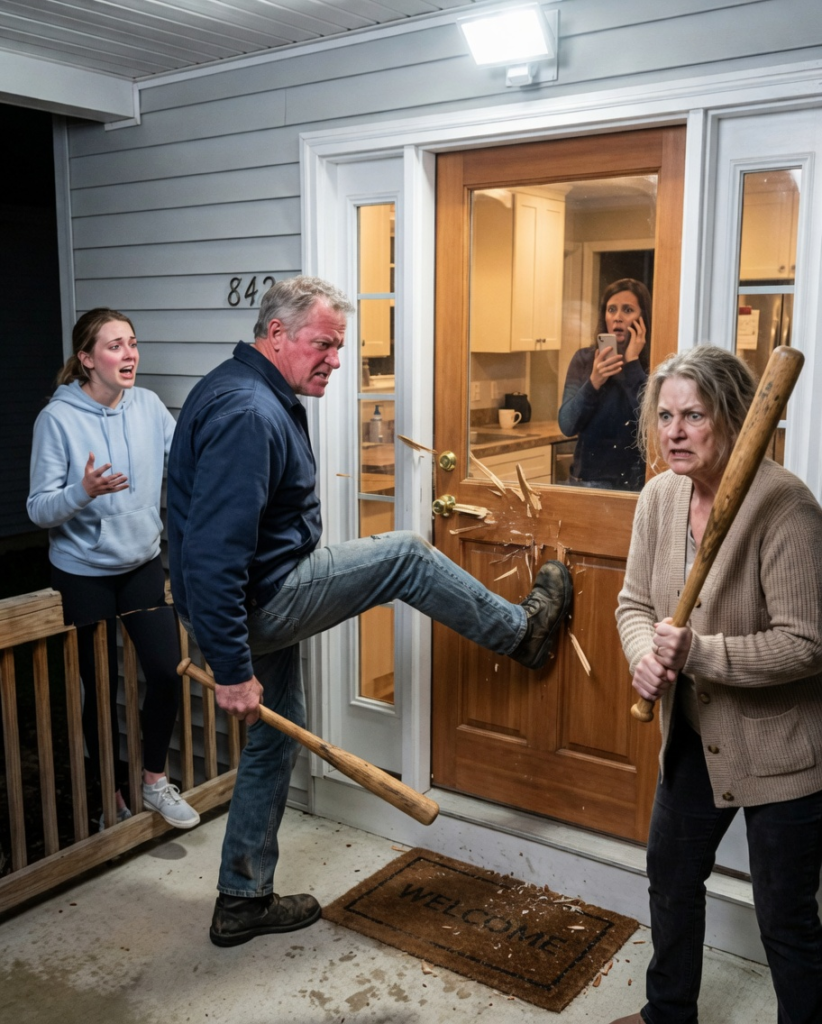
Then Officer Hughes called. Three people had forced entry into the home at 842 Maple Drive the night before. They were carrying baseball bats. The current homeowner found them inside.
He told me there was serious damage. A broken rear door. Torn drawers. Smashed hallway glass. The suspects were in custody, and they were insisting it was a family matter involving me.
When he named them, I closed my eyes. Gerald Whitaker. Patricia Whitaker. Lydia Whitaker. My father, my mother, and my sister had walked into a house I no longer owned and tried to take what they thought still belonged to me.
Officer Hughes asked whether I had proof of the sale and any records showing harassment. My voice sounded steadier than I felt when I said, “I have everything.”
Marcus was beside me before I finished the call. He stood quietly while I opened the laptop and found the folder. The kitchen seemed too bright, too ordinary, for what was happening.
The deed transfer went first. Then the emails. Then the voicemails. Then the photographs. Each file attached with a small click that sounded cleaner than any argument I had ever won.
A few minutes later, the department sent a link to doorbell footage. I should not have watched it. Of course I watched it.
The video opened on the rear porch at Maple Drive. Patricia came into frame first, gripping a baseball bat in both hands. Her cardigan swung as she moved, and her face was set with terrifying certainty.
Gerald followed, scanning the yard like he expected enemies. Lydia lingered behind them, bouncing on her toes and breathing fast. Then Gerald drove his boot into the rear door.
The sound cracked through my speakers. Even from hundreds of miles away, I flinched. My body remembered that door, that yard, the old fear of footsteps where they did not belong.
Patricia rushed in after him. Lydia shouted for them to find the safe and the file box before anyone got there. Her voice broke on the last word, but she did not sound sorry.
That was the line that ended the last soft thing in me. They had not come to talk. They had come to take.
The current homeowner was the one who called police. He had purchased the house legally and moved in believing he had bought a quiet place with good light and a stubborn back door.
Instead, he found three strangers inside with baseball bats, searching rooms that were no longer mine. According to the report, he retreated, called 911, and waited outside until officers arrived.
My family tried to explain themselves at the scene. Gerald said it was his daughter’s house. Patricia said I was forcing their hand. Lydia cried and claimed there was money hidden inside that could save her life.
The problem with lies is that they become less flexible in front of paperwork. The current deed did not list me. The sale records matched. The homeowner had no connection to the Whitakers.
By the time the detective called me, their story had shifted. Now they were claiming I had set them up on purpose by selling the house without warning them.
The detective’s voice was tired when he said Lydia insisted she had proof. She had apparently produced a file with my name, the old address, and a claim that I still controlled something inside the property.
When I received the image of that file, I understood the deeper lie. It was not proof. It was a collection of copied fragments, old mail, and a printed page Lydia had marked up to make it look official.
One page showed an outdated insurance statement. Another had my old address circled. A third included a handwritten note in Lydia’s slanted script: safe and file box in back closet.
There had never been a safe. The file box had held tax papers, Army records, and home repair receipts. The mythology of hidden money had been built from desperation and entitlement.
The detective asked me to confirm what was false. I did. Then I forwarded the original sale documents again, along with the harassment record and the bruise photograph.
What happened after that was less theatrical than people imagine. There were statements, charges, bond conditions, and phone calls from numbers I did not answer.
Gerald was no longer a father making demands at a dinner table. Patricia was no longer a mother pleading in moral language. Lydia was no longer a desperate sister with printouts. They were suspects in a criminal case.
That change mattered. Authority had finally moved the story out of the family’s vocabulary and into the public record. It was not a misunderstanding. It was forced entry, damage, threats, and a pattern.
The current homeowner repaired the rear door. I sent him an apology he did not deserve to need, and he answered with more kindness than anyone in my family had shown me that year.
Marcus and I stayed in Texas. I changed more settings, saved more documents, and learned how peaceful a phone can feel when you stop treating every ring as a summons.
There was grief in it. I will not pretend otherwise. Cutting off family does not feel clean just because it is necessary. Sometimes survival still aches where love used to be.
But the ache did not mean I was wrong. It meant I had spent years hoping people would become safe simply because I needed them to be.
Near the end, the sentence I kept returning to was the one I heard on the footage. Find the safe and the file box. Lydia had said it before anyone got there.
They had not come to talk. They had come to take. And once I admitted that, I stopped trying to explain my way out of a room I had already left.
The house at 842 Maple Drive became someone else’s home. My life became quieter. Not perfect, not painless, but mine in a way the Whitakers could no longer enter with a bat and a story.
I used to think freedom would arrive like triumph. Instead, it came like a clean deed, a locked door, a saved folder, and a morning in Texas where the coffee kept dripping after the call ended.