ACT 1 — The House I Thought Was Safe
David Miller built his career on anticipating failure. As a senior project manager, he could look at a schedule, a budget, or a building plan and see pressure points before anyone else admitted they existed.
At home, he believed love worked differently. Home was supposed to be the place where vigilance could sleep. It smelled of laundry soap, baby lotion, and the faint sweetness of formula warming in the kitchen.
Sarah had given birth to Leo two weeks earlier after a delivery that turned from joy to terror in minutes. A postpartum hemorrhage nearly took her life before the doctors stabilized her and sent David home with instructions.
The discharge packet from Harborview Women’s Unit was clear: no lifting, no housework, no unnecessary movement, and strict rest until her follow-up appointment. David placed the papers on the refrigerator where everyone could see them.
Evelyn, his mother, arrived the next morning with soup, folded towels, and the brisk confidence of a woman who believed every room became hers once she stepped inside. David wanted to feel relieved.
For most of his life, Evelyn had presented control as competence. She remembered birthdays, organized funerals, and cleaned kitchens before guests arrived. People called her dependable because they only met her in public.
David knew she could be sharp, but he told himself sharp was not the same as cruel. He gave her the alarm code, the nursery routine, and a key because Sarah needed help.
That was the trust signal he would regret most. He had invited danger into our house and called it help. He would repeat that sentence later, after the locks changed and silence finally returned.
ACT 2 — Warnings Under the Clean Floors
Evelyn did not begin by shouting. She began by moving things. Sarah’s water glass appeared farther from the bed. Leo’s diapers were placed across the room. The clean towels vanished into a cabinet Sarah could not reach.
When David noticed, Evelyn smiled and said she was only restoring order. She spoke softly in front of him, but the softness had corners. Sarah became quieter each time Evelyn entered the room.
The night before everything changed, David found his mother standing in the hallway, staring at a laundry basket. Sarah was propped in bed, pale and trembling, while Leo slept against her chest.
“In my day, David,” Evelyn said, “we didn’t turn our homes into emergency rooms just because a baby was born. Laziness is a parasite that takes root in the postpartum room.”
David told himself it was old-fashioned thinking. He told himself his mother did not understand modern recovery. He told himself a lot of things because the alternative was too ugly to face.
The bedroom camera had been installed before Leo was born, not to spy on anyone, but to help David check the nursery when Sarah slept. It saved motion clips automatically with timestamps.
On the day of the incident, David left for a company meeting on the forty-second floor. He kissed Sarah’s forehead, touched Leo’s tiny hand, and reminded Evelyn that Sarah was not to stand.
Evelyn nodded without looking at him. Her eyes were on the floorboards near the kitchen, where a thin streak of spilled milk had dried beside the baseboard.
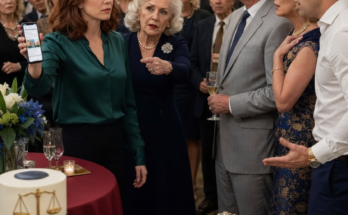
At two in the afternoon, in the middle of a company meeting, David nervously checked the bedroom camera to see how his wife and their two-week-old son were doing.
ACT 3 — What the Camera Saw
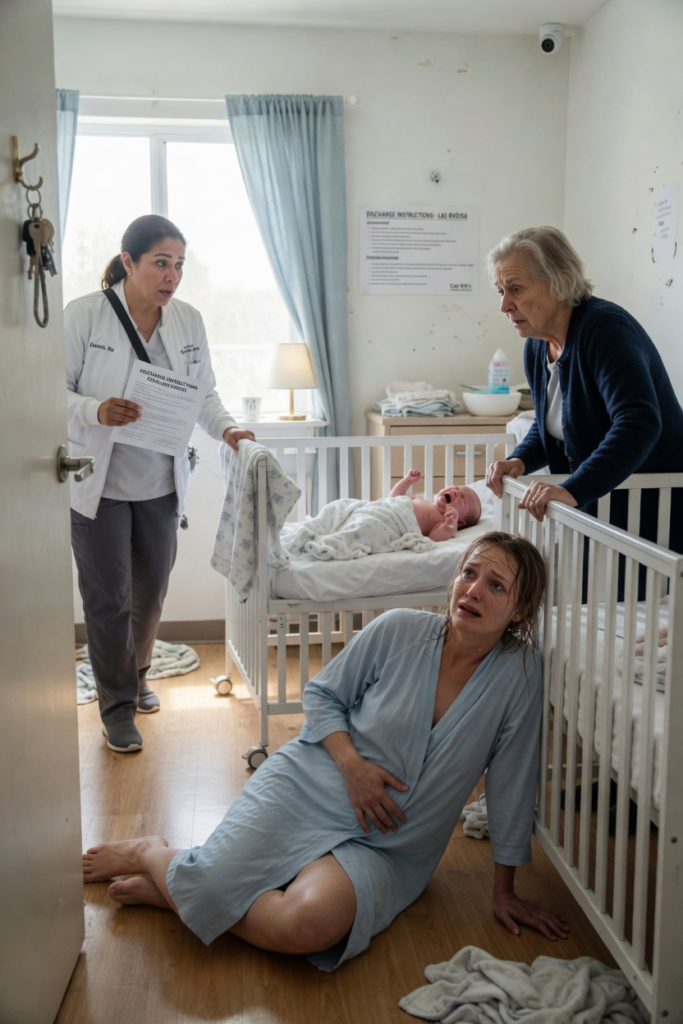
The first thing he saw was not Leo. It was Sarah’s hand dragging across the wooden floor. Her fingers trembled as she reached toward the crib, and her other hand pressed hard against her abdomen.
The boardroom around David blurred. Burnt coffee. Printer toner. The cold shine of polished mahogany. Outside the glass, the water flashed with sunlight, indifferent and bright.
On the screen, Evelyn stepped into frame. She did not bend toward Sarah. She did not look frightened. She stood over her daughter-in-law with the stillness of someone inspecting an unfinished chore.
“Blood loss is no excuse for a dirty house,” Evelyn hissed. “Get up and mop the floor.” The camera was nearly silent, but the words were visible in the cruel shape of her mouth.
Sarah tried to lift herself. Her face folded with pain. She reached for the crib rail, not for balance alone, but because Leo had begun fussing under the blanket.
Then Evelyn moved. She snatched the baby from Sarah’s arms and shifted him against her shoulder with practiced possession. Her body blocked Sarah from the crib.
The company meeting froze around David. One director stopped mid-sentence. A legal advisor lowered his pen. An assistant looked at David’s phone, saw only a glimpse, and covered her mouth.
Nobody moved. It was not their home, not their mother, not their wife on the floor, but for one suspended second the room understood that a private emergency had broken through glass and status.
David’s rage went cold. He wanted to scream, but screaming into a screen would not lift Sarah. He saved the clip, stood up, and walked out without explaining.
The elevator ride felt endless. He called emergency services first, then a locksmith. By the time he reached the lobby, his voice sounded steady enough to scare him.
ACT 4 — The Threshold
When David reached the house, the locksmith was behind him with a tool bag, confused by the urgency but alert enough not to waste words. Through the phone, Sarah was still on the floor.
The smell met David at the door: bleach, sour milk, and metallic fear beneath the artificial clean. Evelyn had always believed a spotless house could excuse almost anything.
“David?” Evelyn called from inside, and for the first time she did not sound powerful. She sounded caught. That small fracture in her voice told him she knew exactly what she had done.
The deadbolt clicked. David opened the door before she could compose herself. Evelyn stood in the hallway with Leo against her shoulder, her cardigan neat, her mouth tight with outrage.
Sarah lay near the nursery entrance, one hand pressed over her stitches. Her robe was damp with blood near the abdomen, and her eyes moved slowly toward David as if focusing cost strength.
The locksmith stepped back. He saw the blood, the baby, the older woman holding herself like the victim, and the man in the doorway holding a phone with the recording still open.
On the kitchen counter, David found the discharge papers. One corner was wet. The top sheet had been folded under a sponge, but Sarah’s handwriting was visible.
“David, please show this to your mom. The doctor said I cannot stand.” Beneath it, Evelyn had written one word with enough pressure to scar the page: “Excuses.”
That page changed the room. It was no longer a misunderstanding, no longer generational tension, no longer a stressed grandmother overwhelmed by a newborn. It was evidence.
Evelyn began to speak. “She exaggerates. She always has. You know how women get after babies.” David lifted one hand, and she stopped because he had never looked at her that way before.
“Put my son in the crib,” he said. His voice did not rise. The quietness frightened her more than shouting would have. “Then step away from my wife.”
For one second, Evelyn held Leo tighter. The locksmith shifted forward. Sarah whispered David’s name, and Leo began to cry again, thin and desperate.
Evelyn finally placed the baby in the crib. David moved between her and Sarah, not touching his mother, not giving her the drama she wanted. His restraint was deliberate.
Emergency responders arrived minutes later. They documented Sarah’s condition, checked Leo, and asked Evelyn to wait outside. She protested until one responder pointed to the blood on the floor.
ACT 5 — What Was Never Allowed Back In
Sarah was taken back to the hospital for observation. The wound had reopened, but the doctors stabilized her before it became another catastrophe. David sat beside her bed with Leo sleeping in a bassinet nearby.
He brought the discharge papers, the camera recording, the emergency call log, and the locksmith invoice. Every item told the same story from a different angle. Evelyn had known the rules and ignored them.
No dramatic courtroom scene followed that week. The first consequence was quieter and more permanent. David changed every lock, reset the alarm code, removed Evelyn from the approved pickup and contact lists, and sent one written message.
“You will not enter our home again. You will not contact Sarah while she recovers. Any future contact goes through me in writing.” He read it twice before sending, then blocked her number.
Evelyn tried other routes. Relatives called. One aunt said David was being cruel. A cousin said Evelyn had only wanted to help. David sent them the still image of Sarah on the floor.
After that, the calls changed. Some stopped. Some apologized. A few insisted family problems should stay private, which taught David exactly who had mistaken secrecy for loyalty.
Sarah’s healing was slow. The body remembers fear even after the bleeding stops. Some nights she woke at small noises in the hallway, and David would walk through the house turning on lights.
Leo grew stronger. His cries became louder, his cheeks fuller, his tiny fists more demanding. Sarah learned to hold him without flinching. David learned that protection was not control; it was presence.
Months later, Sarah placed the hospital discharge packet in a folder with the camera stills and the message David sent Evelyn. Not because she wanted revenge, but because memory deserved proof.
The house became quiet again. Not perfect. Not spotless. Real. There were bottles in the sink, burp cloths on chairs, and dust beneath furniture nobody had the strength to move.
David no longer mistook clean floors for love. He no longer believed that blood ties granted endless access. He understood that a threshold is not just wood and metal.
It is a promise.
Near the end of Sarah’s recovery, David reread the first saved line from that awful day: At two in the afternoon, in the middle of a company meeting, he checked the bedroom camera.
He could still feel the boardroom freezing, the cold phone in his hand, and the moment the truth arrived. He had invited danger into our house and called it help.
But he had also learned what help was supposed to look like. It looked like calling emergency services. It looked like changing locks. It looked like standing between his wife and anyone who believed cruelty could be renamed family.