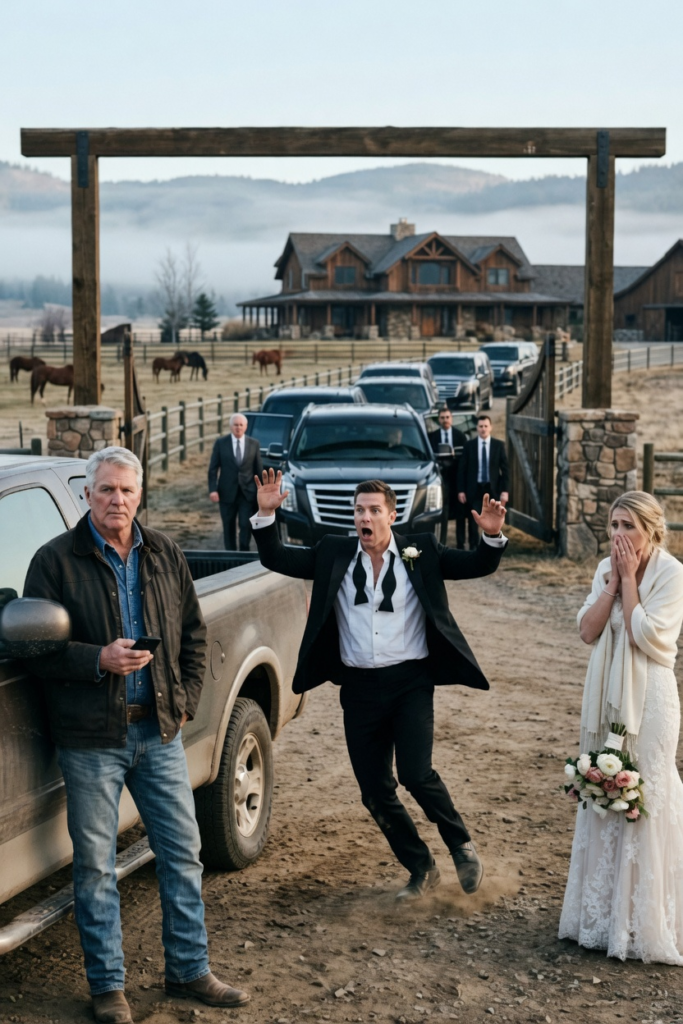
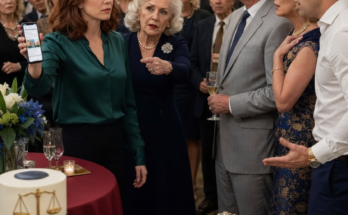
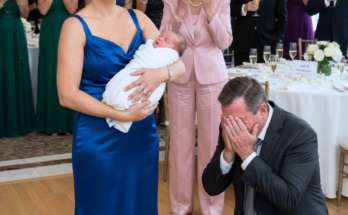
The first time my son-in-law raised his hand to me, he did it under chandeliers, in front of two hundred witnesses, with my daughter still wearing her wedding dress and my dead wife’s lace brushing the marble floor.
For one impossible second after his palm cracked across my face, no one moved. The string quartet had stopped playing. The waiters froze with silver trays balanced on their fingertips. Champagne bubbles kept climbing in crystal flutes as if the rest of the world had not just split open. I remember the heat of the slap before I remember the pain, the sharp white flash behind my left eye, the sudden betrayal of my own boots sliding on polished marble, and the ugly, helpless way my body went down in front of everyone who had come to celebrate my daughter’s new life.
My name is Clifford Wellington. I was sixty-eight years old that day, though I had never felt old until the moment I saw my daughter standing ten feet away, both hands pressed to her mouth, crying but not coming toward me.
That was when I understood Alan Peterson had done more than strike me.
He had already struck her first, quietly, over months, maybe years. Not with his hands, perhaps. Not where I could see. But with words. With suggestions. With concern sharpened into a weapon. With the kind of poison that turns a daughter’s love into doubt before she realizes she has swallowed anything.
And as I lay there with blood in my mouth, tasting iron and humiliation, looking up at the man my daughter had just married, I knew two things with a clarity that made the whole room seem suddenly silent and bright.
First, Alan thought he had won.
Second, Alan had no idea who really owned the Double C Ranch.
The day had begun beautifully. That was the cruel part. If the morning had been stormy, if the cake had collapsed, if Alan had shown up drunk before the ceremony, maybe what happened later would have felt like part of the same disaster. But the morning had been clear and gold, the kind of spring Texas day that makes a man believe, against evidence and experience, that mercy might still be in the weather.
Avery looked like her mother.
I had told myself I would not think that when I saw her, but the vow broke the instant she stepped out of the bridal room at the old chapel. She wore Margaret’s wedding dress, vintage ivory lace with tiny pearl buttons running down the back and sleeves that came to the wrist. Margaret had worn it thirty-two years earlier when she married me under a rainstorm that beat so hard on the chapel roof we had to shout our vows and laughed through half of them. Avery had found the dress wrapped in tissue in the cedar trunk at the foot of my bed, and when she asked if she could wear it, I had gone outside and stood by the barn until I could answer without my voice breaking.
Now there she was, my little girl, twenty-eight years old, radiant and trembling, holding a bouquet of white roses and bluebonnets. Her hair was pinned loosely at the nape of her neck. Her eyes were Margaret’s eyes, soft hazel with a gold ring around the pupil, eyes that could turn stubborn faster than a summer storm.
“Dad,” she whispered when I offered my arm, “do you think Mom can see?”
The question went straight through me.
“I think,” I said, forcing the words past the stone in my throat, “your mother has had the best seat in the house since sunrise.”
Avery smiled, and for a moment I saw her at seven, barefoot in the kitchen, standing on a chair to help Margaret roll biscuit dough. I saw her at twelve, furious because I would not let her ride the new gelding alone. I saw her at sixteen, covered in dust and laughter, driving the old ranch truck across the south pasture with me pretending not to notice she was going too fast. I saw every age she had ever been, all of them gathered inside the woman beside me.
Then the chapel doors opened, and everyone stood.
Alan waited at the altar in a black tuxedo that fit him too well. That was the kind of man he was. Polished. Groomed. Shined into acceptability. His dark hair was combed back, his smile careful, his posture just humble enough to charm older relatives and just confident enough to impress younger ones. When Avery saw him, her fingers tightened around my arm.
I wanted to hate him outright. It would have been easier if I could. But Alan had not arrived in our lives wearing horns. Men like him never do. He brought flowers to Sunday dinners. He called me “sir” for the first six months. He listened when Avery spoke, or at least appeared to. He remembered birthdays. He asked about Margaret with a solemn expression that had fooled me the first time and embarrassed me by the third.
Most people saw charm.
I had spent a lifetime with cattle, weather, banks, droughts, and men who could smile while stealing water rights. I had learned to look longer.
By the time Avery and I reached the altar, Alan’s eyes flicked from my daughter’s face to mine, then down to the hand I had resting over hers. It was fast. No one else would have noticed. But I saw it. Irritation. Possession. A groom annoyed that the bride had belonged to anyone before him.
I kissed Avery’s cheek. Her skin was warm.
“Love you, Daddy,” she whispered.
“Love you more.”
I placed her hand in Alan’s.
He squeezed too hard. Not enough for her to wince. Enough for me to see the tendons shift.
The ceremony was beautiful because Avery made it beautiful. She smiled through the vows. She laughed when Alan stumbled over the word cherish. She cried when the minister spoke of joining two families. I stood in the front pew with my sister Martha and stared at the stained-glass window above the altar, where sunlight broke into red and blue over the polished floor, and I prayed to Margaret that I was wrong.
I had been praying that for two years.
The trouble had begun so quietly I almost missed it.
“Dad seems tired lately, doesn’t he?” Avery said one Sunday afternoon about eighteen months before the wedding.
We were on the back porch of the ranch house, drinking iced tea while the sun went down beyond the west pasture. Alan sat beside her in linen pants and loafers that had no business within twenty miles of working cattle. He had visited the ranch three times by then and still looked offended every time dust touched his shoes.
“I’m sixty-seven,” I said. “Tired comes with the warranty.”
Avery smiled, but Alan did not.
“I just think,” he said smoothly, “that managing eight hundred acres by yourself at your age is a lot. Nobody would blame you for needing help.”
“At my age,” I repeated.
He lifted both hands in a friendly surrender. “No offense meant. I admire what you’ve done here. Truly. It’s just, Avery worries.”
Avery looked at him, then at me. “I do worry.”
That should have warmed me. A daughter worrying about her father ought to be a tender thing. But something about the way she said it felt borrowed. The sentence did not sit naturally in her mouth.
“I’ve got Ray and Tommy helping with the herds,” I said. “And I’ve been running this place longer than Alan’s been alive.”
Alan laughed, but his eyes stayed cool. “Experience is valuable. So is planning.”
That word began appearing everywhere after that.
Planning.
Alan thought we should plan for succession. Alan thought we should plan for tax efficiency. Alan thought we should plan for emergencies. Alan thought Avery deserved clarity about her inheritance. Alan had read articles. Alan had spoken to attorneys. Alan had contacts in Houston who specialized in family property transitions. Alan had suggestions, always offered with the grave concern of a man doing you a favor by asking how soon he could begin measuring your coffin.
At first, Avery repeated his ideas as if they were interesting possibilities.
“Dad, have you ever thought about putting the ranch in a trust?”
“Dad, Alan says estate taxes can get complicated.”
“Dad, Alan thinks it might be smart if I had some legal claim before anything happens to you.”
Then the tone changed.
“Dad, you’re being stubborn.”
“Dad, Alan is just trying to help.”
“Dad, why do you get defensive whenever we talk about the future?”
The future. As if the ranch were not made of everything that had come before.
The Double C Ranch had been in my family since 1923, at least as far as the county records were concerned. My grandfather, Caleb Wellington, homesteaded the first section after coming back from a war he never spoke about. My father added acreage one hard year at a time. I had grown up repairing fences under a sun that did not care whether a boy was tired. By the time Margaret and I married, the ranch was more than land. It was history with a water bill. It was obligation. It was pride. It was debt and sunrise and calves pulled slippery into the world at three in the morning. It was where Avery took her first steps in the kitchen and where Margaret planted lavender along the porch because she said a house full of men and cattle needed at least one civilized smell.
But the truth about the Double C was more complicated than Avery knew.
That truth began twenty-five years earlier, on the worst day of my life.
Margaret had been fighting cancer for eighteen months. Ovarian. Stage three when they found it, stage four before we had finished learning how to pronounce half the medications. We sold equipment. We refinanced. We borrowed against everything that would hold still. We drove to Houston for treatments that made her so sick she apologized to me for needing help to stand. Imagine that. Margaret Wellington apologizing for being ill, as if illness were bad manners.
The bills came in stacks.
When she died, Avery was seven.
Three days after the funeral, I sat in a hospital billing office staring at an invoice total north of three hundred thousand dollars while a woman with tired eyes explained payment options in a voice gentle enough to make the cruelty sound accidental. I remember nodding because men like me nod when we cannot afford to collapse.
That afternoon, my ranch foreman found me in the parking lot.
“Mr. Clifford,” he said, hat in hand, “I hate to bring trouble today, but we got cattle down in the east pasture.”
Drought.
The worst in fifty years.
Wells running low. Grass burned yellow. Cattle dropping weight. The bank had already begun circling. I had no wife, no money, a little girl who woke up crying for her mother, and eight hundred acres of land that might not survive me.
That evening, a black sedan drove up to the ranch house.
A man got out wearing a suit too fine for our gravel drive. He was in his forties then, clean-shaven, calm, carrying a leather briefcase. He introduced himself as Robert Hawthorne from the Meridian Investment Consortium.
“If you’re here to buy me out cheap,” I told him, “get back in your car.”
He looked toward the pastures, then at the porch where Margaret’s empty rocking chair still sat. “I’m here to keep you from losing your home.”
I almost shut the door in his face.
But exhaustion can make room for things pride would refuse.
Robert explained the arrangement at my kitchen table while Avery slept upstairs clutching one of Margaret’s sweaters. Meridian purchased family farms and ranches in crisis, he said. Not to break them up. Not to strip them. To preserve them. Wealthy investors, agricultural heritage, long-term land strategy, tax structures I barely understood. They would buy the ranch, pay off the bank, cover the medical debt, drill new wells, restore operations, and hire me as ranch manager with full autonomy, a salary, benefits, and a guarantee that Avery would have the first option to buy back the ranch if she ever wanted it and could afford it.
It sounded impossible.
“What do you get?” I asked.
“Land,” Robert said. “Preserved, productive land. Appreciation over decades. Public silence. Responsible management.”
“There’s always a catch.”
“The ownership structure is confidential. Meridian doesn’t want publicity. You continue publicly as Clifford Wellington of the Double C. We own the deed. You run the ranch. If the arrangement becomes public in a way that creates risk to Meridian, the board can terminate your management contract.”
“And my daughter?”
“When she’s old enough, you may tell her. If she wants to take over someday, the board will consider it. But legally, nothing passes to her unless Meridian sells.”
I should have told Avery when she turned eighteen. Then twenty-one. Then after college. I know that now. At the time, I told myself I was protecting her. She had lost her mother. I did not want her childhood shadowed by the knowledge that the land under her feet had been saved only because I no longer owned it. She believed the ranch was hers someday, and that belief gave her roots. I let her keep it.
For twenty-five years, the arrangement worked. Meridian did everything Robert promised. They paid the debt. Drilled wells. Improved fencing. Covered veterinary emergencies. Sent quarterly reports and checks. Robert visited four times a year, drank coffee at my table, walked pastures with me, and never once told me how to run cattle on land my family had worked for generations.
From the outside, nothing changed.
That was the danger.
Avery grew up believing I owned the ranch outright. So did the neighbors. So did Alan.
The first time Alan visited the Double C, he asked about mineral rights before he asked where the bathroom was.
We were walking near the barn, and he had his phone out, pretending to take pictures of the sunset while angling the camera toward the equipment shed, the water tanks, the north road.
“Beautiful spread,” he said. “How many acres exactly?”
“Eight hundred.”
“All contiguous?”
“Mostly.”
“Any easements? Existing leases? Oil or gas rights?”
I stopped walking. “You planning to ask for my daughter’s hand or drill under my pasture?”
He laughed too quickly. “Sorry. Business brain. I work with commercial properties in Houston. Can’t help noticing value.”
“Value,” I said, “is a funny word. Means different things depending on whether you’re standing on dirt or a spreadsheet.”
He smiled. “Fortunately, I understand both.”
He did not.
Alan understood leverage.
Over the next year, his visits became more frequent and less innocent. He asked to see old maps. He asked Avery where I kept records. He made comments about land values rising in the county. I caught him once standing by the barn on the phone, speaking in a low voice.
“Eight hundred acres,” he said. “Road access on the south side. Could be divided in phases if the family agrees.”
When he saw me, he ended the call.
“Client,” he said. “You know how it is.”
“I don’t.”
He laughed again.
That night, I called Robert.
“We may have a problem,” I told him.
“What kind?”
“Avery’s boyfriend is asking questions about the property.”
“How serious is he?”
“Serious enough that he’s started using words like inheritance.”
Robert was quiet. “Then it may be time to tell your daughter.”
“I know.”
But knowing a thing and doing it are different kinds of work.
Every time I tried to speak to Avery alone, Alan appeared. If I invited her for dinner, she brought him. If I called, he was in the background. If she visited the ranch, he drove. Slowly, without announcing it, he inserted himself between us like a wedge tapped into wood.
And he began rewriting me.
“Dad told me he’s relieved Alan wants to help with the ranch,” Avery said one evening.
I looked up from my plate. “When did I tell you that?”
“Last week. By the south pasture.”
I remembered that conversation. Alan had cornered me while I checked a broken fence line and asked about operating costs. I had given him three short answers and walked away.
“I did not say I was relieved.”
Avery frowned. “Alan said you seemed relieved.”
“Those are different things.”
She studied me with an expression I had started to dread. Concern. Not ordinary concern, but the kind Alan planted and watered.
“Dad, are you sure you remember?”
It took all my strength not to slam my fist on the table.
“Yes,” I said. “I remember.”
But after that, she watched me more closely. If I forgot where I set my reading glasses, I saw her glance at Alan. If I paused to think before answering a question, her face tightened. If I repeated a story, she looked sad.
Alan was turning my age into evidence.
So I began collecting my own.
I called my attorney, Jim Morrison, who had handled my personal affairs for twenty years.
“Has anyone contacted you about transferring the ranch?” I asked.
“No,” he said slowly. “Should someone have?”
“Alan Peterson has been telling Avery property transfers are common for tax purposes.”
Jim sighed. “Clifford.”
“I know.”
“Does she know Meridian owns the land?”
“Not yet.”
“You need to tell her before he uses the lie you kept to build a bigger one.”
Then I called Dr. Patricia Santos.
Patricia had been our family doctor since before Avery was born. She held Margaret’s hand during chemo, stitched my palm when a gate latch tore it open, and once drove out to the ranch during a storm because Avery had a fever that would not break.
“I need a full physical and cognitive evaluation,” I told her.
“You had your annual three months ago.”
“I need documentation.”
She paused. “Is someone questioning your competency?”
I told her everything.
When I finished, Patricia said a word I had never heard her use in twenty-five years.
Then she said, “That is textbook elder abuse, Clifford. Gaslighting, isolation, financial exploitation. I’ll run every test we have.”
She did.
Blood work. Neurological screening. Memory assessment. Balance. Reflexes. Stress test. Physical capacity evaluation.
The report came back clear: I was healthy, competent, and physically capable beyond average for my age.
I put the report in my safe.
Then Jim ran a background check on Alan.
What came back made my stomach turn.
A first marriage that ended after his wife discovered he had borrowed against her inherited property. A former fiancée whose credit was ruined after he forged her signature on loan documents. Failed business partnerships. Debt hidden behind expensive clothes and leased cars. Gambling obligations. Credit cards maxed out. And, most recently, an internal investigation at his company for unauthorized expenses and client billing irregularities.
Alan was not ambitious.
He was hungry.
I should have told Avery then. I have replayed that mistake until the grooves of it are worn smooth. I should have driven to Houston, sat across from her, and laid out every document. But I was afraid. Afraid she would think I had investigated him because I disliked him. Afraid she would choose him because choosing him had become part of proving she was grown. Afraid she would look at me with the concern Alan had taught her and ask whether I was confused again.
I kept waiting for the perfect moment.
Perfect moments are cowardice dressed up as timing.
Then came the wedding.
The reception was held at the Bellamy Hotel in Houston, in a ballroom with marble floors, cream walls, and chandeliers that made the whole place shine like a jewelry box. Two hundred guests filled the room. Alan’s people were easy to spot: city men with expensive watches, women with smooth hair and hard smiles, business associates who shook hands like negotiations. Our side had ranch families, cousins, church friends, a few of Avery’s college girlfriends, and my sister Martha, who had distrusted Alan from the start and made no effort to hide it.
“He has fox eyes,” she told me during cocktail hour.
“Martha.”
“What? Foxes are handsome too.”
I tried to laugh.
Across the room, Avery glowed. She moved from group to group in Margaret’s dress, smiling, embracing, thanking people. Every time I looked at her, my heart hurt. I wanted that day to be hers. I wanted, for one night, to be wrong about everything.
I was near the bar nursing a whiskey when Alan appeared beside me.
His bow tie was loosened. His cheeks were flushed with champagne. But it was his eyes that made my hand tighten around the glass. The charm was still there, but thinner now, like paint wearing off metal.
“Clifford,” he said, clapping a hand on my shoulder with enough force to make the whiskey tremble. “We need to talk.”
“About what?”
“The ranch.”
“No.”
His smile stiffened. “No?”
“Not today.”
He leaned closer. “Actually, today is perfect.”
I looked at him then, really looked. Around us, conversations softened. Not stopped. Not yet. But people sensed the change in air pressure. Alan had chosen his location carefully. Near the bar, visible from half the room, surrounded by his family, his associates, his witnesses.
“Enjoy your wedding,” I said.
“Our wedding is exactly why this matters.” His voice rose a little. “Avery’s future matters. Our future.”
“This is not the place.”
“Oh, I think it is.” He reached into his jacket pocket. “All these people who love Avery. All these people who understand family. Generosity. Legacy.”
He pulled out a small velvet box.
For half a second, I thought it was another gift. Then he opened it.
Inside were keys.
My keys.
The front door. The barn. The equipment shed. The fuel tank lock. The old brass key to the office filing cabinet. All copied. All arranged inside the velvet like jewelry.
My blood went cold.
“How did you get those?”
Alan smiled. “Avery made copies.”
“She what?”
“She thought it would be symbolic. But I think we both know symbols only go so far.” He lifted the box, letting the people nearby see. “We need the originals too. Along with the deed transfer documents.”
The room quieted completely.
I could hear ice settling in someone’s glass.
“The what?” I asked.
“Don’t play dumb, Clifford.” His voice sharpened. “Avery is your only child. This ranch should be hers. Which means it should be ours. We’re married now. It’s time to stop pretending you can carry it alone.”
I looked past him and saw Avery across the ballroom laughing with two bridesmaids. She had not noticed yet.
“Alan,” I said carefully, “you are drunk and embarrassing yourself.”
His face twitched. “I am securing my wife’s future.”
“You are demanding property at your wedding reception.”
“I am asking an old man to do what he should have done years ago.”
A few guests gasped. Martha stepped forward, but her husband caught her arm.
Alan seemed energized by the sound. He turned slightly, performing now. “Look at him. Nearly seventy. Living alone out there, struggling with cattle and accounts and God knows what else. Avery spends half her life worrying he’ll fall in a pasture and nobody will find him.”
That cut deeper than I wanted it to.
Not because it was true. Because I knew Avery had said something close to it once, in fear, and Alan had taken that fear and forged it into a blade.
“The ranch,” I said, “is not yours.”
“It will be.”
“No.”
The word landed between us cleanly.
Alan’s eyes hardened. “Excuse me?”
“I said no.”
I saw the exact moment his plan failed. Public pressure was supposed to bend me. Guests were supposed to shame me into generosity. Avery was supposed to cry. I was supposed to hand over keys to avoid making a scene. Alan had built the moment like a trap, and my refusal snapped its teeth shut on empty air.
His face twisted.
“You stubborn old fool,” he hissed. “Do you have any idea who you’re messing with?”
“Apparently a man who doesn’t understand the word no.”
His hand moved before anyone could stop him.
The slap cracked across my face so loudly the sound seemed to hit the chandeliers and fall back down.
Pain exploded along my cheek. My foot slipped. My hip struck marble. Then my shoulder. The whiskey glass shattered somewhere near my hand. My tongue caught between my teeth, and blood filled my mouth.
For a second there was no sound.
Then the room broke.
“Oh my God.”
“Did he hit him?”
“Security!”
“Alan!”
I pushed myself up on one elbow. My hip screamed. My cheek pulsed. Alan stood over me with his chest heaving and his fists clenched, looking shocked by his own violence, which made me despise him more. Men like Alan always want credit for surprise after doing exactly what they are.
Then I saw Avery.
She stood at the edge of the crowd, tears streaming down her face. Her hands covered her mouth. But she did not run to me.
She looked at Alan with fear.
Not disbelief.
Fear.
That was how I knew.
Slowly, I got to my feet. Someone reached to help me, but I waved them off. I would not be lifted in front of him. I stood because my father had taught me stubbornness before he taught me kindness, and that day I was grateful for the order.
My gaze swept across the ballroom. Friends. Family. Strangers. Two hundred witnesses. Then I looked at Alan.
“I think,” I said, my voice quieter than I expected, “this reception is over.”
I turned and walked out.
Behind me, Alan’s voice rose, frantic now. “Clifford, wait. That got out of hand. I didn’t mean— We can fix this.”
I did not turn around.
Every step hurt. My hip throbbed. My cheek burned. I could feel blood at the corner of my mouth. The hotel lobby blurred under gold light and polished stone. A young man at the front desk stared at me but did not speak.
Outside, the evening air was warm and smelled faintly of rain on pavement.
I climbed into my truck, closed the door, and sat in the dark cab until my breathing steadied.
Then I called Robert Hawthorne.
He answered on the second ring. “Clifford? How was the wedding?”
I closed my eyes.
“Robert,” I said, “I need you to come to Houston tonight. It’s time.”
A pause.
“Are you sure?”
I looked through the windshield at the hotel entrance. Figures moved behind the glass. Somewhere inside, Avery was crying. Somewhere inside, Alan was probably already rewriting what everyone had seen.
“I’m sure,” I said. “It’s time everyone knew the truth about the ranch.”
As I drove away, I saw Alan in my rearview mirror. He had come outside, phone pressed to his ear, face white with panic. He looked small under the hotel lights.
Good, I thought.
Start there.
The drive back to the ranch was twenty-five miles of darkness, memory, and pain.
My cheek had begun swelling. My hip ached each time I shifted in the seat. The keys Alan had copied hung heavy from the ignition, the originals he had demanded as if possession could be performed into ownership. I kept one hand on the wheel and one near my ribs, breathing through the anger.
By the time I turned through the Double C gate, I had missed fourteen calls. Avery. Martha. Unknown numbers. Alan twice. I ignored them all.
The ranch house stood under a wide black sky, porch light glowing, the lavender Margaret planted silvered in moonlight. Cattle lowed somewhere beyond the barn. The land did not know what had happened in Houston. That steadiness nearly broke me.
Inside, I washed blood from my mouth, pressed a cold cloth to my cheek, and played Alan’s voicemail.
“Clifford,” he said, voice too smooth, “look, things got emotional. I had too much champagne, and you were being… difficult. But we’re family now. Family works things out. Call me back. We need to discuss how we move forward.”
Move forward.
I deleted nothing.
I had learned over the past year to keep evidence.
Robert called again just after midnight. “The board is assembling. We’ll be at the ranch by seven-thirty.”
“The whole board?”
“You said it was time.”
“It is.”
“What happened?”
I told him.
His voice changed. Not louder. Colder.
“He assaulted you?”
“In front of two hundred people.”
“And demanded keys to property he believes you own?”
“Yes.”
“Do not speak to him alone again unless we are recording.”
“I figured you’d say that.”
“Get some rest if you can.”
I almost laughed. “Rest.”
“Then sit down, at least.”
I did not sleep. I sat at the kitchen table until dawn with folders spread around me: the Meridian contract, my medical evaluations, Jim’s report on Alan, my notes from conversations, screenshots of texts, copies of ranch records Alan had requested through Avery. I listened to the house settle. At five, habit pulled me outside to check the east pasture. Pain lanced through my hip when I stepped off the porch, but I kept moving.
Morning came pale and thin.
At seven-thirty, three black SUVs rolled up the ranch road, dust rising behind them.
Robert stepped out of the first vehicle, older than he had been twenty-five years before but still carrying himself with the same composed authority. With him came five people I had only seen on quarterly reports and secure video calls: Margaret Caldwell, chairwoman of Meridian; James Morrison, chief financial officer; David Chen, legal counsel; Thomas Wright, operations director; and Patricia Vasquez, risk management.
They wore city clothes, but they did not look foolish in the country. That was the first thing I noticed. Some wealthy people stand on land as if it is a carpet. These people looked around as if the place mattered.
Margaret Caldwell was in her sixties, silver-haired, with eyes the color of storm clouds and a posture that made apology seem unlikely. She shook my hand, then studied my bruised cheek.
“Mr. Wellington,” she said, “Robert briefed us on the assault. Are you in need of medical care?”
“Nothing broken.”
“That was not my question.”
“I’ll live.”
Her mouth tightened. “That answer is common among men who should see doctors.”
“Patricia already documented my health last month.”
“Good. Then we will add photographs of your injuries to the file.”
Within minutes, my kitchen had become a command center. David Chen set up a laptop and recording equipment. Patricia Vasquez photographed my face and hip bruise with clinical precision. Thomas Wright took statements. Robert reviewed my files. Margaret stood at the window looking out over the pastures Alan had intended to carve into luxury lots.
David had already pulled fresh information overnight.
“Alan Peterson is in worse financial condition than your attorney’s initial report suggested,” he said, turning his tablet toward me. “Approximately one hundred fifty thousand dollars in personal debt, including gambling obligations. His employer has completed its internal investigation. They plan to terminate him next week and may refer the matter to prosecutors.”
Margaret added, “He likely knows. That explains the urgency.”
Patricia tapped another file. “His pattern is consistent. Romantic targeting of women connected to assets. Emotional isolation. Credibility attacks on family members. Attempts to gain legal control through marriage, power of attorney, or property transfer. The incident last night escalates the pattern to overt violence.”
Hearing it named made me feel both vindicated and sick.
“What about Avery?” I asked. “Does she know any of this?”
“No,” Robert said gently. “Most likely not.”
My phone rang.
Alan.
Everyone looked at it.
David pressed a button on his recorder. Margaret nodded.
I answered on speaker.
“Alan.”
“Clifford, thank God.” He sounded relieved, almost cheerful. “I was worried you’d do something dramatic.”
“You hit me at your wedding.”
“I know, and I feel terrible. Truly. But let’s be honest, tensions were high. You were upset. I was upset. Weddings are emotional.”
Margaret’s eyebrows rose.
Alan continued. “I think the best thing we can do is sit down today and finish what we started. Get the ranch transfer handled. Give Avery peace of mind.”
“After last night?”
“Especially after last night. People saw how agitated you got. They saw you fall. Avery is terrified, Clifford. She cried all night asking if you’re losing your grip.”
My hand tightened around the phone.
David silently gestured for me to keep him talking.
“You’re saying I fell because I was agitated?”
Alan sighed, as if disappointed by my stubbornness. “I’m saying you got worked up. Maybe you swung first. Maybe you don’t remember it clearly. I’m not trying to embarrass you.”
I looked at the faces around my kitchen. Margaret had gone still as carved stone.
“What do you want, Alan?”
“I want what’s best for everyone. Sign over the ranch to Avery and me. We’ll handle the business side. You can stay in the house, of course. Help out. Be a consultant or something. A comfortable retirement.”
“And if I refuse?”
His voice dropped. “Then things get hard. Lawyers. Doctors. Competency hearings. Avery having to make painful decisions. Nobody wants that.”
“There it is,” Patricia whispered.
I swallowed. “So if I sign the ranch over, all those concerns disappear?”
“Exactly. We start fresh. Family dinner. Forgiveness. I’m willing to be generous here, Clifford.”
Generous.
A man who had copied my keys, struck me in public, threatened to have me declared incompetent, and intended to sell land he did not own was offering generosity.
“I need to think,” I said.
“Don’t take too long. I can come by at noon. Have the deed ready.”
He hung up.
For a moment, no one spoke.
Then Margaret Caldwell said, “Call him back.”
I looked at her.
“Tell him you agree,” she said. “Tell him to come to the ranch at noon to sign the papers.”
Robert nodded slowly. “Let him state his intentions in person.”
David said, “We will record everything.”
Patricia said, “And if he threatens you again, we add extortion and elder abuse to the assault.”
Thomas Wright had already taken out his phone. “I’ll arrange security.”
“Security?” I asked.
Robert’s smile was grim. “Meridian protects its investments, Clifford. And its people.”
I thought of Avery in some hotel room, still in the ruins of her wedding day, believing perhaps that I had caused the disaster, that Alan had only reacted, that her old father had embarrassed her in front of everyone.
“She needs to know,” I said.
“She will,” Margaret replied. “But first, Mr. Peterson needs to reveal himself without her in the room.”
I called Alan back.
He answered before the first ring finished. “Clifford?”
“I’ll meet you at the ranch at noon.”
“With the deed?”
“With paperwork.”
I could hear his smile through the phone. “You’re doing the right thing.”
“No,” I said. “For the first time in too long, I’m doing what I should have done earlier.”
He mistook that for surrender.
“Good,” he said. “We’ll make this painless.”
He arrived fifteen minutes early in his leased BMW, driving up my ranch road like he already owned the dust.
From the kitchen window, I watched him park too close to the porch, check his reflection in the side mirror, smooth his hair, and lift a leather briefcase from the passenger seat. He looked refreshed, confident, almost triumphant. The bruise on my face must have given him courage. Men like Alan believe visible damage means invisible defeat.
What he did not see were the Meridian board members positioned in the barn with clear sight lines to the house. He did not see the three security men placed around the property. He did not see the recording devices already running, or David Chen listening through an earpiece from the office.
I opened the door before Alan knocked.
He stepped inside without being invited.
“Clifford,” he said briskly. “I’m glad you came to your senses.”
“Come in.”
He set his briefcase on the dining table—the same table where Margaret once helped Avery with spelling homework—and began removing documents.
“These are standard transfer forms. Deed, power of attorney, management authorization, preliminary sale consent. We can get notarization this afternoon.”
“You came prepared.”
“I believe in planning.”
“How long have you had these?”
He glanced up. “Does it matter?”
“Yes.”
“A few weeks. I wanted to be ready when you accepted reality.”
Reality. That word again, from a man who had never met it socially.
I sat across from him. The recorder in my shirt pocket pressed lightly against my ribs.
“Tell me something,” I said. “What exactly do you plan to do with the ranch once Avery and I are out of your way?”
His jaw tightened. “No one is pushing Avery anywhere.”
“And me?”
“You need rest.”
“I asked about the ranch.”
Alan exhaled, annoyed by the need to explain obvious things to an old fool. “This operation barely breaks even. You know that. Cattle margins are terrible. Equipment costs are up. Labor is impossible. The land is the asset, Clifford. Not the cows.”
“Go on.”
His eyes brightened. He opened his phone and pulled up images. “There’s a development group out of Dallas. Luxury residential community. Ranch View Estates. Two hundred homes, clubhouse, golf course, retail near the south road. They love the location.”
He turned the phone toward me.
There it was: the Double C rendered into beige rooftops and fake lakes. The east pasture where Avery learned to ride became a golf fairway. The hill where Margaret was buried beneath the live oak became a scenic overlook beside a clubhouse. The barn became an event center with string lights.
I kept my face still.
“You already spoke to developers.”
“Preliminary discussions.”
“How much?”
“They’re willing to offer four point eight million for the full eight hundred acres.”
“And your cut?”
He hesitated.
“There’s a finder’s fee. Standard.”
“How much?”
“Two percent.”
“Nearly a hundred thousand.”
“Actually, with closing incentives, closer to two hundred.” He said it quickly. “But this is not about me.”
“No?”
“It’s about family. Avery deserves security. You deserve retirement. I can structure everything so the money works for all of us.”
“All of us.”
His patience snapped. “Don’t do that.”
“Do what?”
“Act like I’m the villain because I’m the only one being practical. You’re sixty-eight years old. You’re one fall from a nursing home, one drought from bankruptcy, one bad day from leaving Avery with a mess she can’t handle. I’m trying to turn this into something valuable.”
“You hit me.”
He looked irritated, as if I had introduced an irrelevant detail. “I apologized.”
“No, you didn’t.”
“I said things got out of hand.”
“That is not an apology.”
He leaned forward. “Fine. I’m sorry you fell.”
There it was again, the rewrite.
I almost smiled.
“Alan,” I said, “what would you do if I told you I don’t own the ranch?”
He blinked. Then laughed.
“Excuse me?”
“I said I don’t own it.”
His smile faded. “That’s not funny.”
“No.”
“You’re lying.”
“I wish I were.”
His eyes moved around the room—to the old photographs, the ranch ledger on the sideboard, the keys by the door—as if the truth might be contradicted by decoration.
“The Wellington family has owned this land for a century,” he said.
“The Wellington family owned this land until 1998. After Margaret died, I was broke. Meridian Investment Consortium bought the ranch and hired me to manage it. I am an employee, Alan. A well-paid one. A trusted one. But I have no deed to transfer.”
His face went slack.
Then red.
Then white.
“No,” he said.
A knock sounded at the door.
I stood. “That would be the owners.”
When I opened the door, Margaret Caldwell stood on the porch with Robert, David, Patricia, Thomas, and James behind her. She entered like a verdict.
“Mr. Wellington,” she said formally, “thank you for making us aware of the attempted unauthorized transaction involving our property.”
Alan backed away from the table.
Margaret turned to him. “You must be Mr. Peterson.”
He looked at the documents scattered across the table, then at her. “This is a setup.”
“No,” she said. “This is due diligence.”
David Chen stepped forward and placed a folder beside Alan’s papers. “The Double C Ranch is owned by Meridian Investment Consortium. Mr. Wellington has served as ranch manager for twenty-five years. He has no authority to transfer ownership to you. Neither does his daughter.”
Alan’s mouth opened, but no sound came out.
Patricia said, “We also have recordings of your threats this morning and your statements here regarding your intent to force a transfer, obtain power of attorney, and sell the land for personal financial benefit.”
Thomas added, “Including your admission regarding the developer’s finder fee.”
Alan looked at me with hatred so pure it almost restored his dignity.
“You recorded me?”
“Yes,” I said.
“You can’t use that.”
David smiled thinly. “Texas is a one-party consent state.”
Margaret stepped closer. “Mr. Peterson, you assaulted a sixty-eight-year-old Meridian employee in front of approximately two hundred witnesses. You then attempted to extort him through threats of competency proceedings in order to gain control of property owned by this consortium. You have also, by your own admission, solicited offers to purchase land you do not own from developers.”
Alan gripped the back of a chair. “I didn’t know.”
“That is not the defense you think it is,” David said.
“You people can’t threaten me.”
Margaret’s expression did not change. “We are not threatening you. We are informing you. The district attorney will receive the assault complaint. Your employer has already been contacted through appropriate legal channels regarding concerns relevant to their internal investigation. Your creditors are not our concern, but they may become yours very soon. As for Ms. Wellington, our investigators have uncovered information suggesting your marriage may not be legally valid.”
Alan froze.
I looked at Margaret.
She had saved that piece from me too.
David opened another document. “There appears to be no final divorce decree from your first marriage.”
Alan whispered, “That’s impossible.”
“Is it?” Patricia asked.
His panic then was different. Not anger. Not calculation. Animal fear.
“Avery doesn’t need to know all this,” he said.
I felt something cold move through me. “Avery needs to know everything.”
Alan turned on me. “You’ll destroy her.”
“No,” I said. “You already tried.”
The security team appeared in the doorway, three men large enough to make Alan reconsider whatever last performance he had in mind.
Margaret placed one final document on the table.
“This is notice that you are prohibited from entering Meridian property. You will have no contact with Mr. Wellington. Any attempt to do so will result in immediate legal action. If Ms. Wellington wishes to speak with you, that is her decision after she has been informed of the facts. But you will not approach her today.”
“She’s my wife.”
David said, “That remains legally uncertain.”
Alan looked at me one last time. Pleading now. “Clifford. Come on. I made mistakes, but I love Avery.”
“If you loved my daughter,” I said, “you would not have tried to turn her against me. You would not have lied to her. You would not have hit me in front of her. And you sure as hell would not have planned to sell her mother’s grave to a golf course.”
That landed. For the first time, something like shame flickered across his face.
Then it vanished.
Men like Alan do not live in shame. They pass through it on the way back to self-pity.
The security men escorted him to his car. From the porch, I watched the BMW reverse too quickly, spit gravel, and speed down the ranch road. Dust rose behind him and hung in the air long after he disappeared.
No one spoke until it settled.
Then Margaret Caldwell turned to me, and for the first time that morning her face softened.
“Now,” she said, “we need to help your daughter.”
Avery was at the Four Seasons downtown, still in the wedding suite.
She had refused most calls. Martha had gone to check on her but was not allowed past the door. Alan had been calling until shortly before noon. Then he stopped, likely when he realized he had larger problems than a crying bride.
We drove to Houston in two vehicles. I rode with Robert and Margaret. My cheek had darkened to purple. My hip stiffened each time I sat too long.
“You should have told Avery years ago,” Margaret said.
Robert shot her a look.
“No,” I said. “She’s right.”
Margaret looked out the window. “Secrets are sometimes necessary. They are rarely free.”
That sentence stayed with me.
At the hotel, Meridian arranged a private conference room. Avery arrived twenty minutes later escorted by Martha. My daughter still wore Margaret’s wedding dress, but it no longer looked like a bridal gown. It looked like evidence after a disaster. The hem was gray from the floor. Her makeup had streaked beneath her eyes. She looked young in a way she had not looked that morning.
When she saw my bruised face, she flinched.
“Dad,” she whispered.
I stood. “Honey.”
“Where’s Alan?”
No one answered immediately.
Her eyes moved around the room, taking in the strangers in suits, the folders, the careful expressions. “What is this?”
“Sit down,” I said gently. “Please.”
She did, slowly.
“If this is about last night,” she began, “Alan feels terrible. He said you both got heated, and he—”
“Avery,” I said.
She stopped.
“He hit me.”
Her eyes filled. “I know.”
“No,” I said. “You saw it. But I need you to say it plainly. He hit me.”
Her lips trembled. “He hit you.”
“Because I would not give him the ranch.”
She looked down.
Margaret Caldwell leaned forward. “Ms. Wellington, my name is Margaret Caldwell. I chair the Meridian Investment Consortium.”
Avery blinked. “Okay.”
“Meridian owns the Double C Ranch.”
Silence.
Avery turned to me with a confused little smile, as if waiting for me to correct the stranger. “Dad?”
I forced myself not to look away.
“It’s true.”
“No.”
“After your mother died, I was bankrupt. Medical bills. Drought. The bank was going to foreclose. Meridian bought the ranch in 1998 and hired me as manager.”
“No,” she said again, softer now.
“I should have told you years ago.”
“The ranch is ours.”
“It is home. But legally, it belongs to Meridian.”
Her breathing changed. Shallow. Fast.
“So Alan…” She swallowed. “Alan was asking for something you couldn’t give.”
“Yes.”
“And you let me think…”
“I let you think I still owned it.”
Tears spilled down her face. “Why?”
There was no answer that would not sound like an excuse.
“Because I thought I was protecting you,” I said. “Because you had already lost your mother. Because I wanted you to feel secure. Because once enough time passed, telling the truth got harder, and I was a coward about it.”
She looked wounded by that honesty.
Good, I thought miserably. Truth was supposed to hurt the places lies had numbed.
Robert explained the original arrangement gently. The purchase. The management contract. The option for future family buyback. The confidentiality. Avery listened without moving, hands gripping the edge of the table.
Then Patricia Vasquez opened Alan’s file.
“I’m sorry,” she said, “but you also need to understand who Alan Peterson is.”
Over the next half hour, my daughter’s marriage died in documents.
Debts. Gambling. Credit cards. Employment investigation. Prior relationships. Forged signatures. A first marriage with no final divorce decree anyone could find. A development proposal for Ranch View Estates. Alan’s recorded calls. His threats. His plan to sell the ranch and take a finder’s fee.
Avery said nothing while they spoke.
The color left her face piece by piece.
When David played the recording from that morning, she closed her eyes.
Alan’s voice filled the room.
The hard way is lawyers and doctors and competency hearings. The hard way is Avery having to make some very difficult decisions about her father’s mental state.
Avery made a small sound.
I wanted to turn it off.
She lifted one hand. “No. Play it.”
The recording continued.
She spent the whole night crying, asking if her father’s losing his mind.
Avery bent forward as if struck.
When it ended, nobody spoke.
Finally, she looked at me. “I did say that.”
I felt my chest tighten.
“I asked him if you were okay,” she whispered. “I told him I was worried. He kept saying he noticed things too. That you repeated yourself. That you got confused. That you were hiding financial problems. I started watching you. Every time you forgot a word or misplaced something, I thought…”
She covered her mouth.
“I researched nursing homes,” she said.
Martha began to cry.
Avery looked at me with horror. “I was going to talk to a lawyer after the honeymoon. About competency. He said we needed to protect you from yourself.”
I reached for her hand.
This time, she pulled away.
I let her.
“You should have told me,” she said.
“I know.”
“You should have trusted me.”
“I know.”
“I should have trusted you.”
I shook my head. “Alan knew how to twist love into fear. That is not stupidity, Avery.”
“I let him slap you and I didn’t move.”
The sentence broke on the last word.
“You were afraid.”
“I was his wife.”
“You were his target.”
She stood abruptly, tearing at the veil still pinned in her hair. “I need this dress off.”
Martha rose at once. “Come on, sweetheart.”
Avery stopped at the door and looked back at me. “I can’t talk to you right now.”
“I understand.”
“I love you,” she said, and it sounded like an accusation, an apology, and a wound.
“I love you more.”
She left with Martha.
I sat down after the door closed because my legs had started shaking.
Margaret Caldwell did not offer comfort. I appreciated that. Instead, she gathered the documents in silence and said, “She will need time.”
“Will she forgive me?”
“For which part?”
That was the question, wasn’t it?
For lying about the ranch? For failing to expose Alan sooner? For being old enough that his lies sounded plausible? For letting her marry a man I feared because I did not trust my own right to interfere?
“I don’t know,” I said.
Margaret placed a hand briefly on my shoulder. “Then give her truth consistently. It is slower than charm, but it lasts longer.”
Avery did not come back to the ranch for three weeks.
Those were the longest weeks of my life.
Alan vanished from Houston two days after Meridian’s legal team made their move. His employer fired him and referred the expense matter to law enforcement. Creditors began calling. The assault complaint moved forward. The marriage issue became uglier: no final divorce decree from his first wife, who had not been missing in the mysterious way rumors first suggested, but living quietly in Oklahoma under her maiden name after fleeing him years earlier. She had paperwork showing Alan abandoned proceedings before final judgment. Avery’s marriage was voidable, possibly invalid from the start.
Avery stayed with Martha.
She answered my texts with one or two words.
Yes.
No.
I’m okay.
Stop asking.
So I stopped asking. Mostly.
At the ranch, work continued because land has no respect for emotional collapse. Calves needed tagging. Fence posts needed replacing after a storm. Feed deliveries had to be scheduled. A heifer got into the wrong pasture and took three hours to move because she had more stubbornness than sense, which reminded me uncomfortably of every Wellington woman I had ever loved.
Robert visited once during that period.
“You’re limping,” he said.
“I’m fine.”
“That lie gets less persuasive with age.”
We walked toward the barn.
“I may lose her,” I said.
Robert looked out over the pasture. “Maybe. But not to him.”
That was something.
Avery came back on a Sunday afternoon in late July.
I was repairing a gate latch when her truck came through the entrance. I heard the tires before I saw her. My hands froze around the wrench. She parked by the barn, stepped out in jeans, boots, and one of Margaret’s old denim shirts.
She looked tired. Thinner. But her eyes were clear.
“Need help?” she asked.
I looked at the broken latch. “Always.”
She came over, took the wrench from my hand, and fixed it faster than I would have.
“Your mother taught you that,” I said.
“You held the flashlight.”
“I was management.”
She almost smiled.
We walked to the porch without discussing whether she was staying. I poured iced tea. She sat in Margaret’s chair.
For a long time, we watched cattle graze.
“I’m angry at you,” she said.
“I know.”
“Not as angry as I am at him.”
“That’s fair.”
“But still angry.”
“That’s fair too.”
“You lied to me my whole life.”
“Yes.”
“Did Mom know?”
“Yes.”
Avery closed her eyes.
“She agreed?”
“She wanted you to have a childhood without fear.”
“That sounds noble.”
“It was. It was also wrong.”
She opened her eyes. “Both can be true?”
“I’m learning most things are.”
She took a long drink of tea. “The annulment should be straightforward.”
“I’m sorry.”
“Don’t be sorry about that. Be sorry I had to learn my husband was already married from a woman named Patricia with a risk management folder.”
“I am sorry about that.”
This time she did smile, faintly.
Then her face crumpled.
“I loved him,” she said.
“I know.”
“I don’t know how. I don’t know what part was real.”
I wanted to tell her none of it was real so she could hate him cleanly. But grief does not work that way, and neither does love.
“Your love was real,” I said. “His use of it was the lie.”
She began to cry then, and this time when I reached for her, she came into my arms.
I held my daughter on the porch of the ranch I did not own, under the roof I had nearly lost, beside the chair where her mother used to sit. She cried for the marriage, for the humiliation, for the father she had doubted, for the mother who was not there to help her make sense of any of it. I cried too, though more quietly, because men of my generation were raised foolish about tears and some habits die harder than pride.
Three months later, Avery moved back to the ranch.
Not permanently, she said. Just while the legal mess settled. Just until she figured out what came next. She moved into her old bedroom, which still had a faded rodeo ribbon pinned above the dresser and a small dent in the wall from the time she threw a hairbrush at fourteen because I told her she could not drive to Austin with friends.
The first week, she slept late and barely spoke.
The second week, she started joining me for morning rounds.
The third week, she took over the bookkeeping because, in her words, watching my spreadsheet system was “like witnessing a crime committed against arithmetic.”
She was good. Better than good. She found inefficiencies I had stopped seeing. Renegotiated a feed contract. Updated inventory. Built a cash flow model that impressed even James Morrison during Meridian’s quarterly review.
Margaret Caldwell visited in October and watched Avery negotiate with a cattle buyer who arrived thinking he could underpay a wounded bride.
He left paying market plus transport.
Margaret turned to me afterward. “Your daughter is formidable.”
“She gets it from her mother.”
“And her father.”
I pretended not to hear that.
The ranch changed with Avery there. Not in big ways at first. She replaced the office printer that had been threatening retirement since 2014. She organized digital records. She convinced me to install better cameras at the south gate. She labeled every key in the house, then paused when she reached the copied set Alan had made.
We stood together at the kitchen table looking at them.
“I made those,” she said.
“I know.”
“He said it would be symbolic. That giving him copies meant we were becoming a family.”
I picked up the barn key. “Symbols can lie too.”
She took the keys, walked outside, and threw them into the deepest part of the stock pond.
“Probably bad for the environment,” she said when she came back.
“I’ll allow it.”
By December, she was laughing again. Not all the time. Not the same laugh she had before. But real.
One evening near Christmas, we sat on the porch watching the sky turn orange over the west pasture. The air smelled of hay and woodsmoke. Avery had a blanket over her knees. I had coffee I should not have been drinking so late.
“I want to buy the ranch,” she said.
I looked at her.
She kept her eyes on the horizon. “Not because of Alan. Not because I feel guilty. Not because I think I have to repair what happened.”
“That’s a lot of nots.”
“I’ve been practicing.”
“Are you sure?”
“No. But I’m sure enough to start asking.”
“The current value is high.”
“I know. Meridian gave me preliminary numbers.”
“You talked to Margaret?”
“She called me formidable. I assumed that meant she’d lend me paperwork.”
I laughed.
Avery turned serious. “This is home, Dad. Not because of a deed. I understand that now. Home was never the paper. It was Mom planting lavender. It was you teaching me to ride. It was summer storms and fence work and you burning pancakes every Saturday because you refused to admit the skillet was too hot.”
“The skillet was inconsistent.”
“It was cast iron.”
“Exactly.”
She smiled, then looked toward the pasture. “Alan made me ashamed of this place. He made it sound small. Backward. Like honest work was something to escape from if you were smart enough. I hate that I listened.”
“You wanted a future.”
“I had one here too. I just forgot.”
We began negotiations in January.
Meridian did not give the ranch away. They were investors, not fairy godparents. But they honored the original spirit of the arrangement. Avery used savings, a trust from Margaret’s life insurance I had preserved for her, and financing structured over time. Meridian reduced certain appreciation claims in recognition of twenty-five years of management and improvements. It still left Avery with a mortgage large enough to make her whistle when she saw the final number.
“You can walk away,” I told her.
She signed the first preliminary paper and said, “You first.”
The final closing took place six months after Alan slapped me.
Not in a hotel ballroom. Not under chandeliers. In the ranch office, with dust on the windowsills and a pot of bad coffee on the counter. Margaret Caldwell attended with Robert and David. Martha came with a pie. Avery wore jeans, boots, and Margaret’s wedding ring on a chain around her neck—not as a widow, she said, but as a reminder that love should feel like courage, not confusion.
When she signed the final document, her hand trembled.
I stood behind her chair and thought of the night Robert first came to the porch. The hospital bills. The dead wells. Avery asleep upstairs with Margaret’s sweater. I thought of all the years I had carried the secret like a sack of feed across my shoulders, telling myself the weight was love.
Margaret Caldwell raised a glass of champagne Martha had smuggled in despite my protest that champagne did not belong near cattle records.
“Twenty-five years ago,” Margaret said, “Meridian purchased this ranch to preserve it. Today, we sell it back to the family that gave it meaning. May the Double C remain exactly what it has always been at its best: working land, honestly kept.”
Avery cried.
I did not, but only because Martha was watching and would have made a scene.
After the others left, Avery and I walked the fence line together. The sun had dropped low. The cattle moved slow and dark against the grass. The live oak where Margaret was buried stood on the hill, its branches wide enough to hold the evening.
Avery stopped beside the fence.
“Do you regret selling it?” she asked.
“I didn’t sell it. I lost it, then managed it, then watched you buy it back.”
“You know what I mean.”
I leaned my arms on the top rail. “I regret not telling you. I regret letting a secret meant to protect you become a tool someone else used against us.”
“But not Meridian?”
“No. Meridian saved this place when I couldn’t. Pride would have let the bank take it. Help kept it alive.”
She nodded.
“What about you?” I asked. “Do you regret buying it?”
She looked across the pasture. “Ask me after the first drought.”
“That’s the right answer.”
We started walking again.
“Dad?”
“Yeah?”
“At the wedding, when Alan hit you, I froze.”
“I know.”
“I need you to know it wasn’t because I didn’t care.”
“I know.”
“I was afraid of him.”
The sentence was small, but it changed the air around us.
I stopped walking.
Avery looked at the ground. “Not all the time. Not at first. But by the end, yes. Afraid of his moods. Afraid of embarrassing him. Afraid of making him feel unsupported. Afraid he’d leave. Afraid he wouldn’t.”
I wanted to go back in time and break every bone in Alan’s hand before it ever touched her.
Instead, I said, “I’m sorry I didn’t see enough.”
“You saw more than I did.”
“Not enough.”
She took my hand. “We both know now.”
Sometimes that is all truth can give you. Not a clean past. Not justice in proportion to harm. Just the end of not knowing.
Alan did not disappear entirely.
Men like him rarely vanish without leaving debts behind. Investigators placed him first in Louisiana, then in Mexico, then somewhere near Phoenix under a name that fooled no one with access to databases. His employer pursued charges. The assault case remained open. Creditors circled. Occasionally, a lawyer sent a letter with his name on it, all bluster and no teeth. Meridian answered each one with such surgical precision that the letters stopped.
I never saw him again.
I wish I could say I never thought of him. That would be a cleaner ending. But I thought of him whenever Avery flinched at a raised male voice. Whenever she apologized twice for something that was not her fault. Whenever she asked if a decision “made sense” when what she meant was, Am I allowed to trust myself?
Healing from a man like Alan is not a sunrise. It is fence repair. Slow, repetitive, necessary. You find the broken places one by one. You pull the wire tight. You replace what cannot hold. You check again after storms.
Avery did that work.
So did I.
We began having Sunday dinners again. At first, just the two of us. Then Martha came. Then Ray and Tommy. Then neighbors. Avery cooked badly and with confidence. I burned biscuits and blamed the oven. We talked about cattle prices, weather, books, Margaret, sometimes Alan, sometimes not. The ranch house filled slowly with ordinary noise.
One night, nearly a year after the wedding, Avery found Margaret’s old recipe box.
She sat at the kitchen table reading cards written in her mother’s hand.
“Did she really put mayonnaise in chocolate cake?” she asked.
“Secret ingredient.”
“That’s disgusting.”
“You ate it every birthday until you were fourteen.”
She stared at the card. “I miss her.”
“Me too.”
“I wish she’d been at the wedding.”
I thought about that. Margaret watching Alan demand keys. Margaret seeing him strike me. Margaret seeing Avery freeze. My sweet wife had been gentle, but she had not been weak. She would have crossed that marble floor like judgment in ivory lace.
“She was there,” I said.
Avery looked up.
“In the dress. In you. In the fact that you came home.”
Avery wiped her eyes with the back of her hand. “You’re getting sentimental in your old age.”
“Must be incompetence.”
She threw a dish towel at me.
That joke became ours. A way to take back the weapon Alan had tried to use.
If I forgot why I walked into a room, Avery would say, “Competency hearing at noon.”
If she misplaced her phone, I would say, “Nursing home brochure is in the mail.”
Dark humor, maybe. But families survive by turning knives into tools when they can.
Two years after the wedding, the Double C had its best season in a decade.
Avery expanded rotational grazing, renegotiated veterinary services, introduced software I pretended to hate and secretly relied on, and started a modest educational program for local schoolchildren to visit the ranch. Not a wedding venue. Not a luxury retreat. A working ranch that taught children where food came from, what land required, and why old ways only mattered if they were strong enough to learn new ones.
One spring morning, I watched Avery stand by the corral explaining calving season to a group of fifth graders. She wore a straw hat, muddy boots, and an expression so much like Margaret’s that I had to look away.
Robert stood beside me. He still visited quarterly, though now as an adviser rather than owner representative.
“She’s good,” he said.
“She is.”
“You going to retire?”
“No.”
He smiled. “Didn’t think so.”
“I might slow down.”
“No, you won’t.”
“Probably not.”
He looked toward the children. “This is what Meridian wanted, you know.”
“What?”
“For land to end up with people who understand it is not just an asset.”
I watched Avery lift a little boy onto a fence rail so he could see a calf better.
“Funny,” I said. “Took a con man to make us honest enough to get here.”
Robert nodded. “Truth often arrives with poor manners.”
That evening, after the school bus left and the dust settled, Avery and I drove to the live oak on the hill where Margaret was buried. We brought fresh lavender from the porch. Avery knelt and cleared leaves from the stone.
Margaret Elaine Wellington. Beloved wife and mother. 1965–1998.
Avery placed the lavender down.
“I bought it back, Mom,” she said softly. “Not all by myself. But I signed the papers.”
The wind moved through the grass.
I stood behind her with my hat in my hands.
“I think she knows,” I said.
Avery rose and leaned against my shoulder.
“Do you think she’d be proud?”
I looked out over the ranch—the house lights glowing in the distance, the barn roof red in sunset, cattle moving like shadows across land that had been lost and restored, not by miracle, but by work, truth, and enough stubborn love to outlast a predator.
“Yes,” I said. “But she’d also say we both made a mess getting here.”
Avery laughed through tears. “That sounds like her.”
We stayed until the sun disappeared.
People sometimes ask what I would have done differently. I know the expected answer. I should have told Avery the truth sooner. I should have exposed Alan earlier. I should have trusted my daughter with facts instead of protecting her with silence.
All true.
But life is not lived backward, no matter how often regret tries to convince us otherwise. I made the choices of a grieving husband, a frightened father, a broke rancher, a man who accepted help and then hid the cost of it from the person he most wanted to spare. Those choices had consequences. So did Alan’s. The difference is that I finally stood inside mine and told the truth.
Alan wanted keys.
That still amazes me. Keys. As if keys were ownership. As if metal teeth on a ring could unlock history, labor, grief, debt, drought, marriage, burial, forgiveness. As if he could hold the barn key in front of two hundred people and make the land forget who had bled into it.
The original keys still hang by the back door.
Avery has her own set now. Not copied in secret. Given openly. Labeled in her handwriting. Front door. Barn. Shed. Office. North gate. Fuel tank. Equipment lock.
Sometimes I see them there and remember the velvet box in Alan’s hand, his smile, his certainty. I remember the marble floor against my hip. The silence after the slap. My daughter’s fear. My own rage held tight enough to become action instead of spectacle.
Then I step outside.
Morning on the Double C arrives the same way it always has, without applause. The sky pales over the east pasture. Cattle call to one another. Coffee burns if I forget it. Avery curses at the printer in the office. The ranch dog, a half-useless blue heeler named Judge, chases nothing with great conviction. Fence wire shines with dew. The world asks for work, not drama.
That is peace, I think.
Not the absence of harm. Not the undoing of betrayal. Peace is walking land that nearly became a subdivision and finding cattle there instead. Peace is sitting across from your daughter at breakfast with no secrets large enough to choke the room. Peace is knowing the deed is where it belongs and that home, real home, was never something Alan Peterson could understand well enough to steal.
Sometimes the best revenge is not destruction.
Sometimes it is documentation.
Sometimes it is a phone call made from a truck while your cheek is swelling.
Sometimes it is six people in business suits walking up your porch while a thief realizes he has been threatening the wrong old man.
And sometimes, if you are very lucky and very stubborn, revenge becomes something better than revenge.
It becomes your daughter coming home.
It becomes truth spoken before the damage finishes spreading.
It becomes a ranch saved twice.
It becomes the sound of keys hanging openly by the door, belonging at last to the person who earned them.